Your front door opens and you’re standing in the living room. No foyer, no mudroom, no hallway — just one room that starts at the door. Shoes pile up by the threshold, keys vanish into coat pockets, bags land wherever gravity takes them, and the first thing anyone sees when they walk in is clutter. These small entryway organization ideas are built for exactly that layout: the apartment entryway with no foyer. You’ll carve a real drop zone out of thin air with a rug and a visual boundary, mount renter-safe hooks and a shelf, choose furniture that doesn’t fight the door swing, fix the shoe pile for good, and run a 2-minute reset that keeps it all working. No drilling into tile, no landlord negotiations — just a functional entry where there wasn’t one.
Define the zone: rug + visual boundary when there’s no foyer
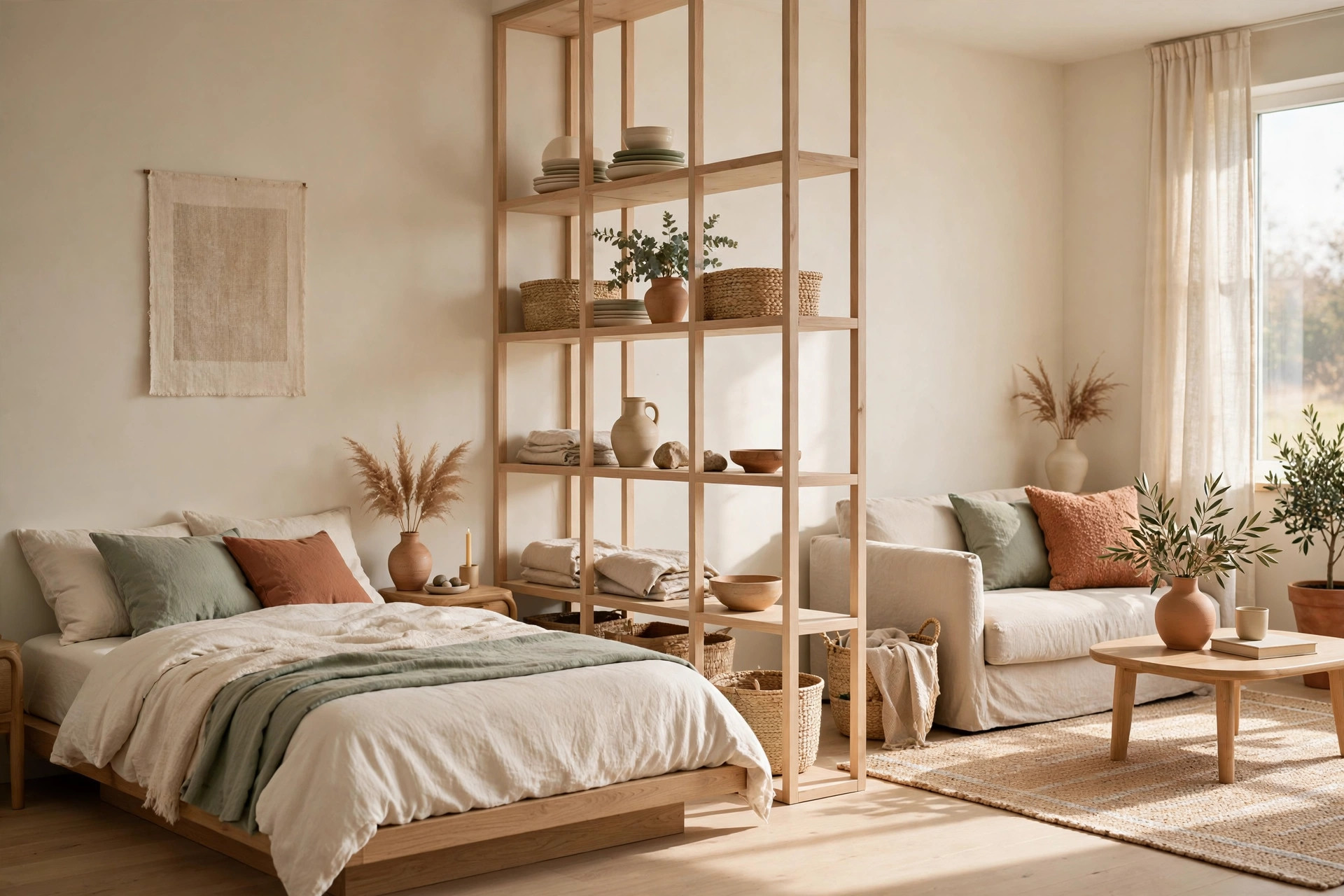
When there’s no architectural entryway, you have to build one visually. The zone needs an edge your brain can read — otherwise “the entryway” is just wherever things get dropped. (Studio apartments are the classic no-foyer layout — if that’s you, our studio zoning guide pairs well with this one.)
1. Lay a rug to draw the line
A rug is the fastest way to say “this is the entryway”: a low-pile, washable 2×3 or 3×5-foot rug just inside the door. Low-pile matters — thick rugs catch on the door. It catches dirt, marks the zone, and gives shoes a home base.
2. Add one vertical cue above the rug
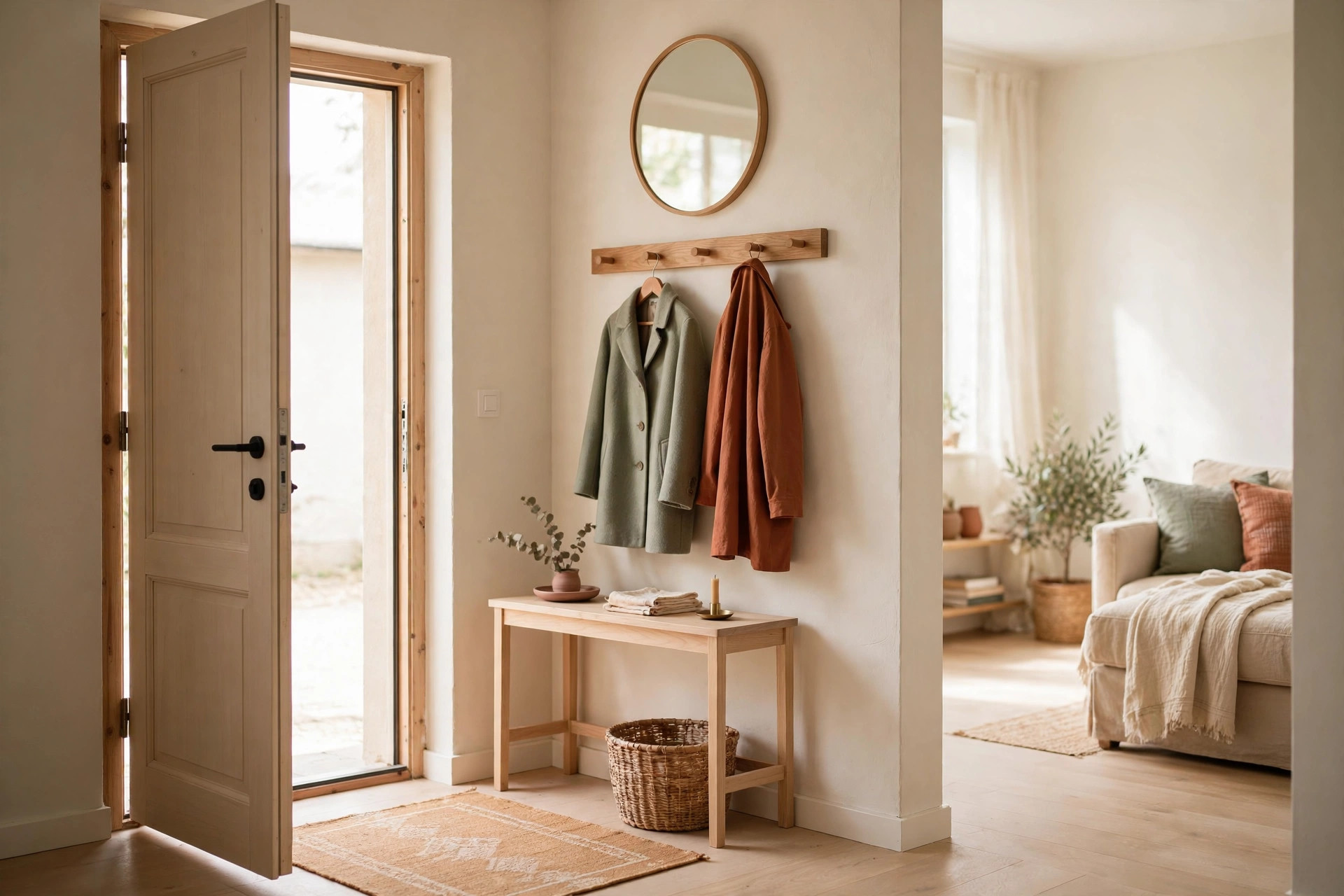
A rug alone reads as decoration. Pair it with one vertical element — hooks, a shelf, or a slim console — and the zone becomes unmistakable. Everything entry-related lives on this one 3–4-foot stretch of wall. Nothing else migrates there.
Wall-mounted hooks and floating shelf (renter-safe options)
Walls are free square footage, and in a no-foyer entry they’re the only square footage you can count on. Everything here must be removable — your deposit depends on it.
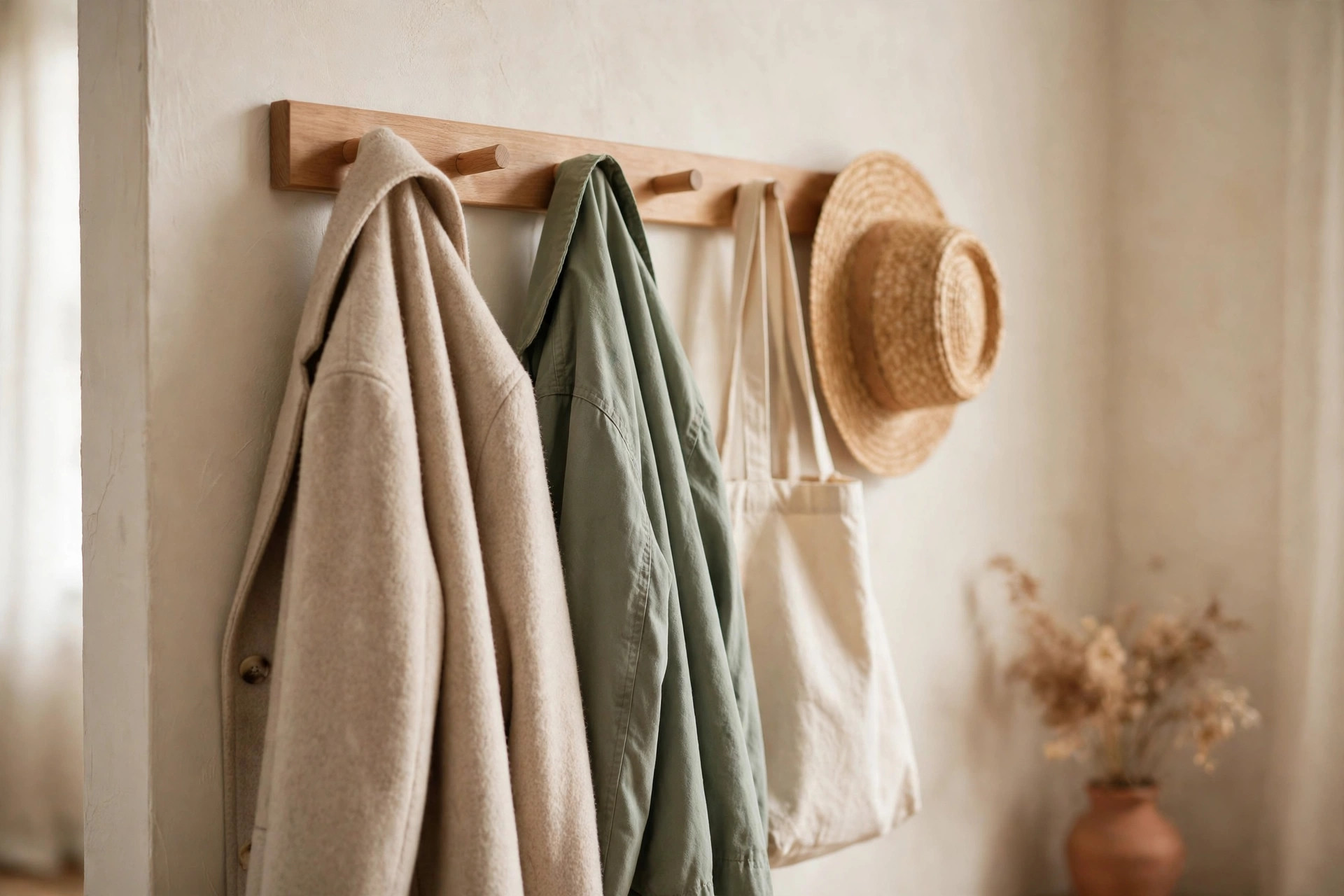
3. Mount a row of 3–5 sturdy hooks
One hook per household member plus one for guests is the formula. Mount them at 60–65 inches high — low enough that coats don’t drag on the floor. Use large adhesive hooks rated for at least 7 lbs each in dry areas (3M Command strips are the renter standard — look for “holds strongly, removes cleanly” on the package). Space hooks 8–10 inches apart so bulky jackets don’t overlap into one sad clump.
4. Add a floating shelf above the hooks
A 24–36-inch shelf, 8–10 inches deep, mounted 12–18 inches above the hook row, holds the small things that otherwise scatter: sunglasses, sunscreen, a tiny basket for spare masks or hand sanitizer, the mail you need to take with you. For light loads use adhesive-mounted shelves rated 5+ lbs; for heavier items use a small bracket shelf with tiny anchors you patch at move-out — two small holes beat a chaotic entry.
Slim console or narrow bench that doesn’t block the door swing
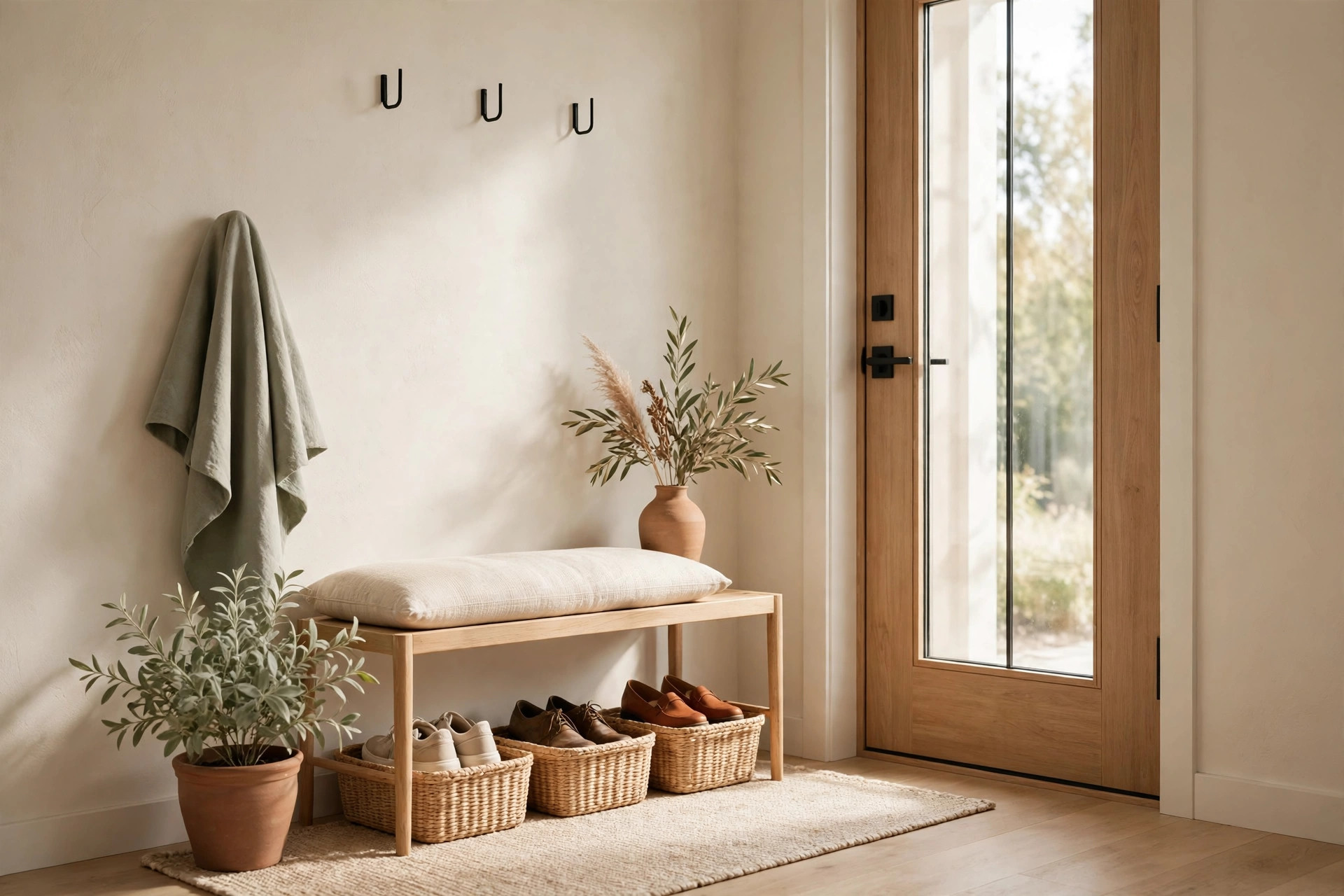
If you have even 10 inches of wall depth to spare, one slim piece of furniture anchors the whole zone. The key word is slim — standard consoles at 14–18 inches deep will eat your walkway alive.
5. Choose a console under 12 inches deep
Look for “narrow console” or “entryway table” listings and filter by depth: 10–12 inches is the sweet spot. You need 36 inches of clear walkway past it (32 at the absolute minimum for comfort). The top holds the key bowl; the lower shelf holds a basket for reusable bags or dog gear. If the door swing reaches the wall, skip the console — hooks and shelf alone are enough.
6. Or use a narrow storage bench instead
A storage bench (roughly 30–36 inches wide, 12–14 inches deep, 18 inches tall) does double duty: a seat for putting on shoes and hidden storage inside for the shoes themselves, umbrellas, or winter accessories. Place it against the wall beside the door, never in front of it. Hinged-top benches beat open cubbies here — closed storage looks tidy from the living room, which matters when your entryway is visible from the couch.
Shoe storage that doesn’t become a pile
Shoes are the number one entryway failure. The pile forms because taking shoes off is a one-second action and putting them away is a ten-second one. Your system has to make “away” as easy as “pile.”
7. Start with a boot tray as the containment zone
A washable boot tray (roughly 30×15 inches) defines where shoes live: on the tray or in the rack, never on the floor beside it. It catches water and mud and turns “the shoe pile” into “the shoe spot.” One tray holds 3–4 pairs — the daily rotation. Everything else lives in closets.
8. Go vertical with a slim rack or tilt-out cabinet
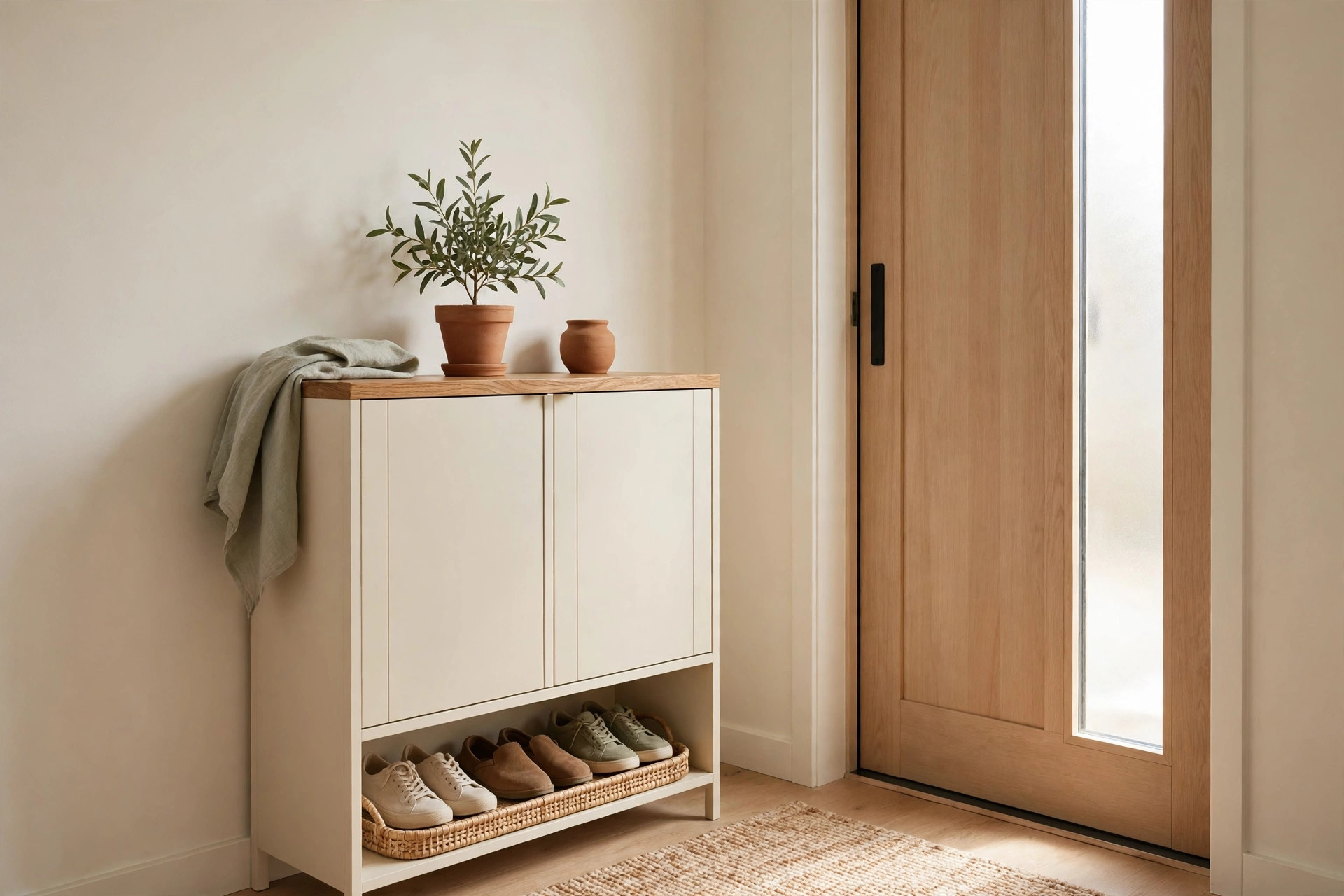
When the tray overflows, add vertical shoe storage beside it: a 2–3 tier bamboo or metal rack about 28 inches wide and 10 inches deep holds 6–9 pairs in the footprint of two. If you hate looking at shoes (understandable when the entry is your living room), a tilt-out shoe cabinet — typically 30 inches wide, 10 inches deep — hides 9–12 pairs behind closed doors and doubles as a console top for keys.
Key/mail/bag landing spot: the “one bowl + one hook” system
Lost keys and mystery mail piles are symptoms of the same disease: no designated landing spot. This system fixes both with two objects.
9. Set out the bowl — one home for pocket items
One small bowl or tray on the console, shelf, or bench. Keys, wallet, sunglasses land here the second you walk in — every time. Keep it small (a 6-inch bowl, not a basket) so it can’t become a junk drawer. If it doesn’t fit in the bowl, it doesn’t live at the entry.
10. Give the daily bag its own hook, and mail its own file
Your everyday bag gets one dedicated hook — never shared with coats. When the hook is empty, the bag is with you. For mail, mount a slim wall file or hang a small basket beside the shelf; process the stack weekly (recycle, file, act). Mail without a home becomes a console pile within days.
Over-the-door organizers for coats and bags
The back of the front door is hidden storage in plain sight — invisible when the door is open, fully accessible when it’s closed.
11. Hang an over-the-door hook rack for coats
A 5-hook over-the-door rack adds instant coat capacity with zero wall damage. Choose one with padded brackets so it doesn’t scratch the door’s finish. Daily coats live on the wall hooks; guest coats and seasonal layers live here. Check the gap above your door first; most racks need about 1.5 inches of clearance.
12. Add a slim over-door pocket organizer for small gear
A narrow fabric organizer with 6–10 pockets hangs flat against the door and swallows the small stuff: umbrellas, the dog leash, reusable bags, a lint roller, spare batteries. Keep it to one organizer — two turns the door into a clutter wall that bangs with every move.
Mirror trick: makes the entry feel bigger and adds function
A mirror is the highest-impact single object in a no-foyer entry. It doubles light, doubles perceived space, and gives you the last-look check before you leave.
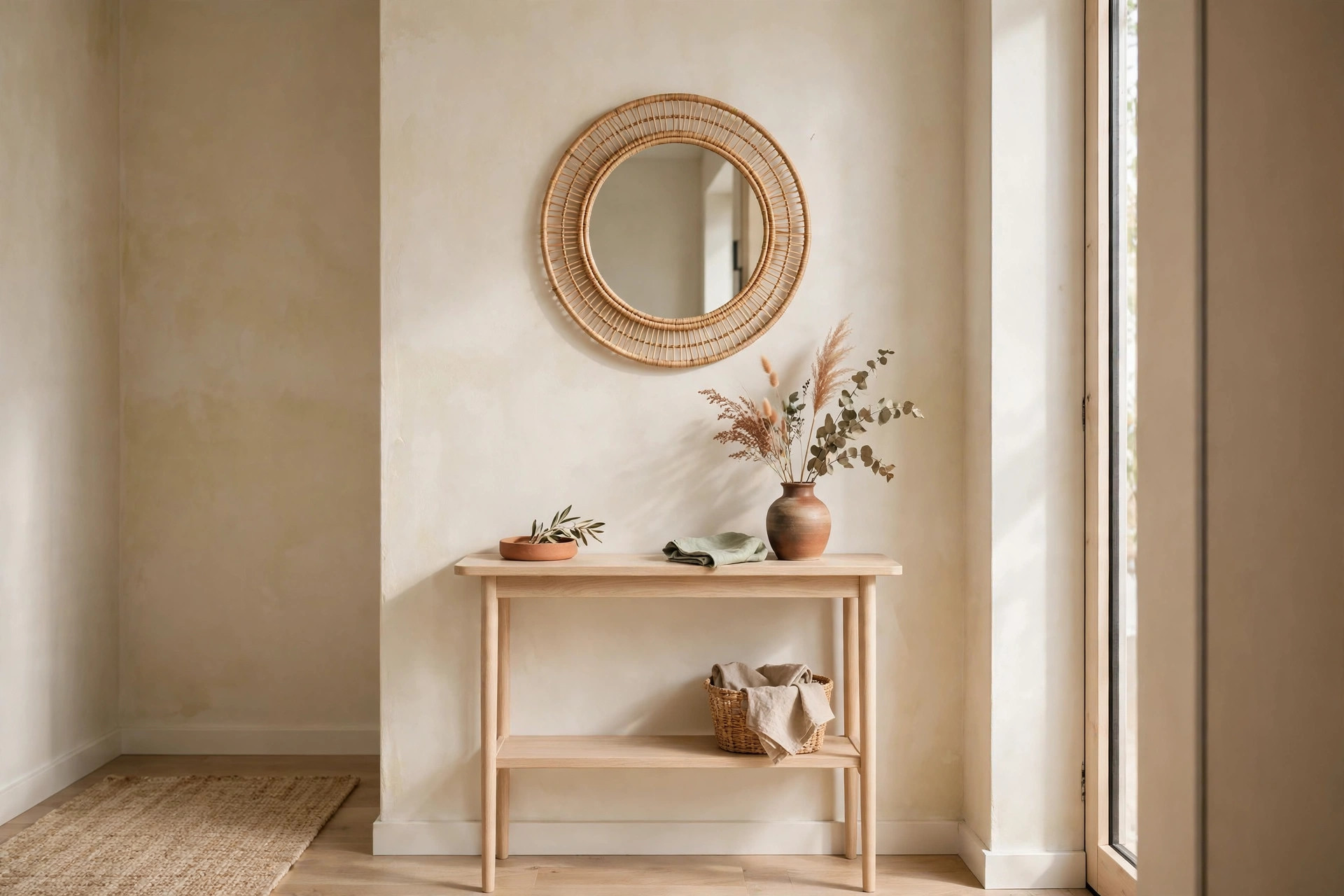
13. Hang a mirror to bounce light and open the space
Place a mirror on the wall beside or opposite the door — never directly facing it, which creates a startling reflection the moment you walk in. A 24×36-inch mirror is plenty; round mirrors soften the hard lines of a small entry. Position it to reflect a window or light source, not a blank wall — a mirror reflecting nothing doubles nothing.
14. Choose a mirror with hidden storage if you can
A shallow mirrored cabinet (4–5 inches deep, the medicine-cabinet style) hides keys, transit cards, and sunglasses overflow behind the glass. Can’t wall-mount? Lean a full-length mirror beside the bench — 6-inch footprint, plus an anti-tip strap for safety with kids or pets.
The 2-minute “leaving the house” reset
15. Run the reset every time you leave
Two minutes on your way out: shoes onto the tray or into the rack (not beside it), bag on its hook, keys in the bowl, mail into the wall file, one glance in the mirror. Do it when you leave — you’ll come home to a clean entry, which makes tomorrow’s reset automatic. No reset ritual, back to a pile within a week.
What NOT to buy for a small entryway
Bulky hall trees. Built for real foyers at 18+ inches deep — they’ll swallow your walkway and block the door swing.
Open shoe cubbies without doors. Twelve pairs on open shelves read as clutter no matter how neat. Closed storage or nothing.
Coat stands. They tip over, eat a 2-foot circle of floor, and look chaotic past three items. Wall hooks do the same job in zero floor space.
Tiny decorative trays that hold nothing. If the “key dish” can’t fit your actual keys plus your wallet, it’s decoration, not organization. Size the bowl to your real pocket contents.
Anything you haven’t measured for. The top entryway waste is furniture bought on vibes: the console 2 inches too deep, the bench blocking the door. Measure first, always. For more room-by-room systems that respect small spaces, browse the guides on the blog.
Frequently asked questions
How do I create an entryway when my door opens straight into the living room?
Define it visually: a washable rug just inside the door marks the floor boundary, and one vertical element — hooks, a shelf, or a slim console — on the nearest wall marks the zone. Keep everything entry-related inside that 3–4-foot stretch.
How can renters mount hooks and shelves without drilling?
Large adhesive hooks rated for 7+ lbs each handle coats and bags on dry walls; adhesive floating shelves work for light loads. Avoid standard adhesive strips in humidity, and always check the weight rating — a hook that fails at 2am takes paint with it.
How do I stop shoes from piling up by the door?
Make “away” as easy as “pile”: a boot tray right where shoes come off, a slim rack or tilt-out cabinet beside it, and a hard rule — daily rotation only (3–4 pairs). Every other pair lives in a closet. The pile forms when off-season shoes compete with daily ones for the same six inches of floor.
What should every small entryway have?
Five things: something that defines the zone (rug), something that holds coats and bags (hooks), something that contains shoes (tray or rack), one landing spot for pocket items (bowl), and a mirror. Everything beyond that is optional — these five solve 90% of entryway chaos.
The bottom line
A missing foyer isn’t a missing room — it’s a zone waiting to be defined. Rug down, hooks up, shoes contained, keys in the bowl, two minutes on your way out. That’s a complete entryway system in about four feet of wall.
Save this pin for your next apartment reset, and explore our small spaces guides for the same systems applied room by room.