Small apartment pantry organization isn’t about buying a matching set of containers and calling it a day. It’s about solving a geometry problem: too much food, too little cubic footage, and shelves spaced like they were designed by someone who never cooked. These 21 ideas are renter-friendly, need zero renovations, and most cost less than a takeout dinner.
Start with the single biggest win: decant into uniform containers
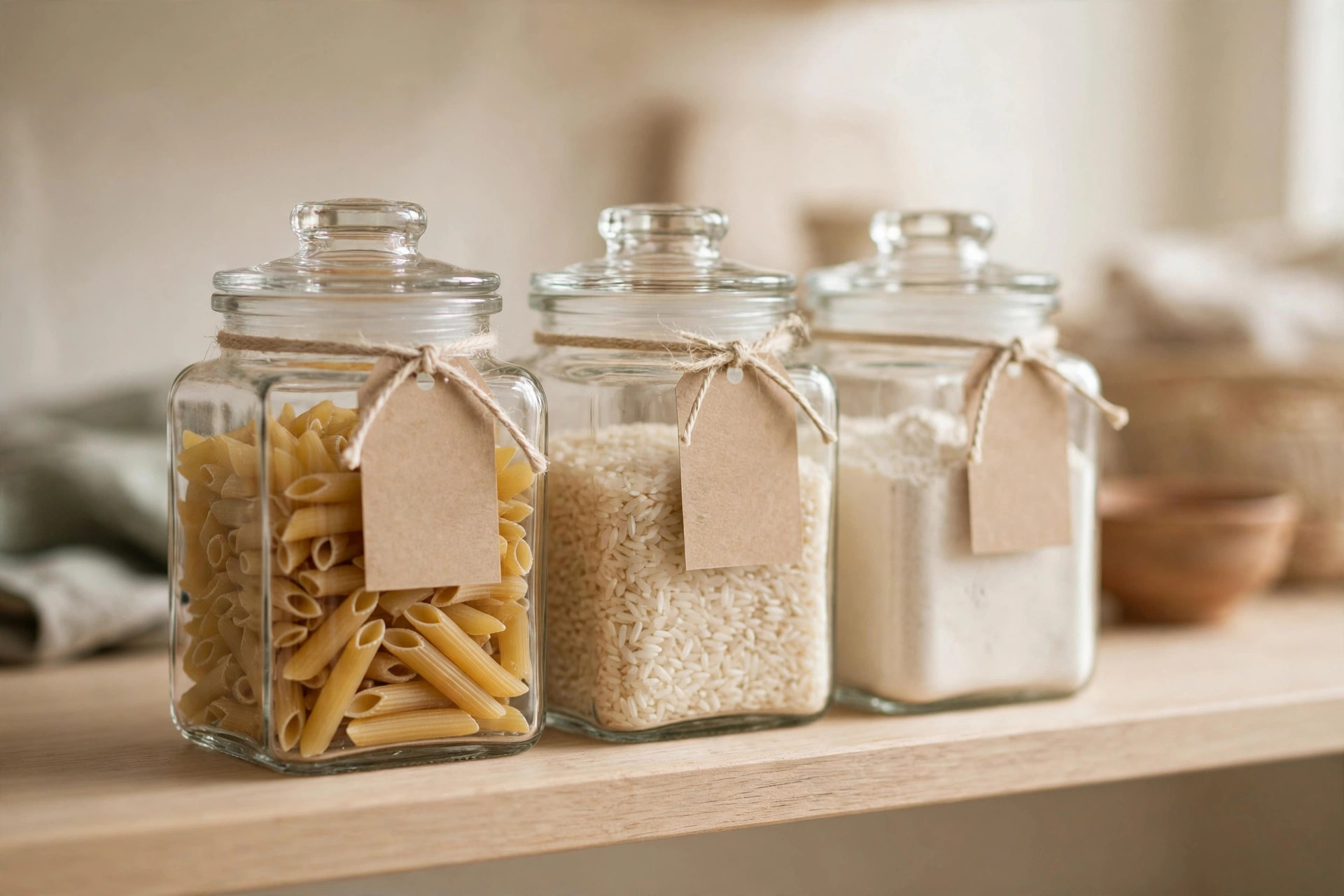
Nothing eats pantry space like packaging. Cereal boxes are 70% air, bags flop over, and half-open boxes go stale. Moving dry goods into uniform, stackable, airtight containers is the highest-impact change you can make. (If your “pantry” is a rolling cart in a studio kitchen, our studio apartment zoning guide shows how to fit it into a one-room layout.) Before decanting anything beyond dry goods, check the USDA food storage charts — some foods don’t belong in airtight containers at room temperature.
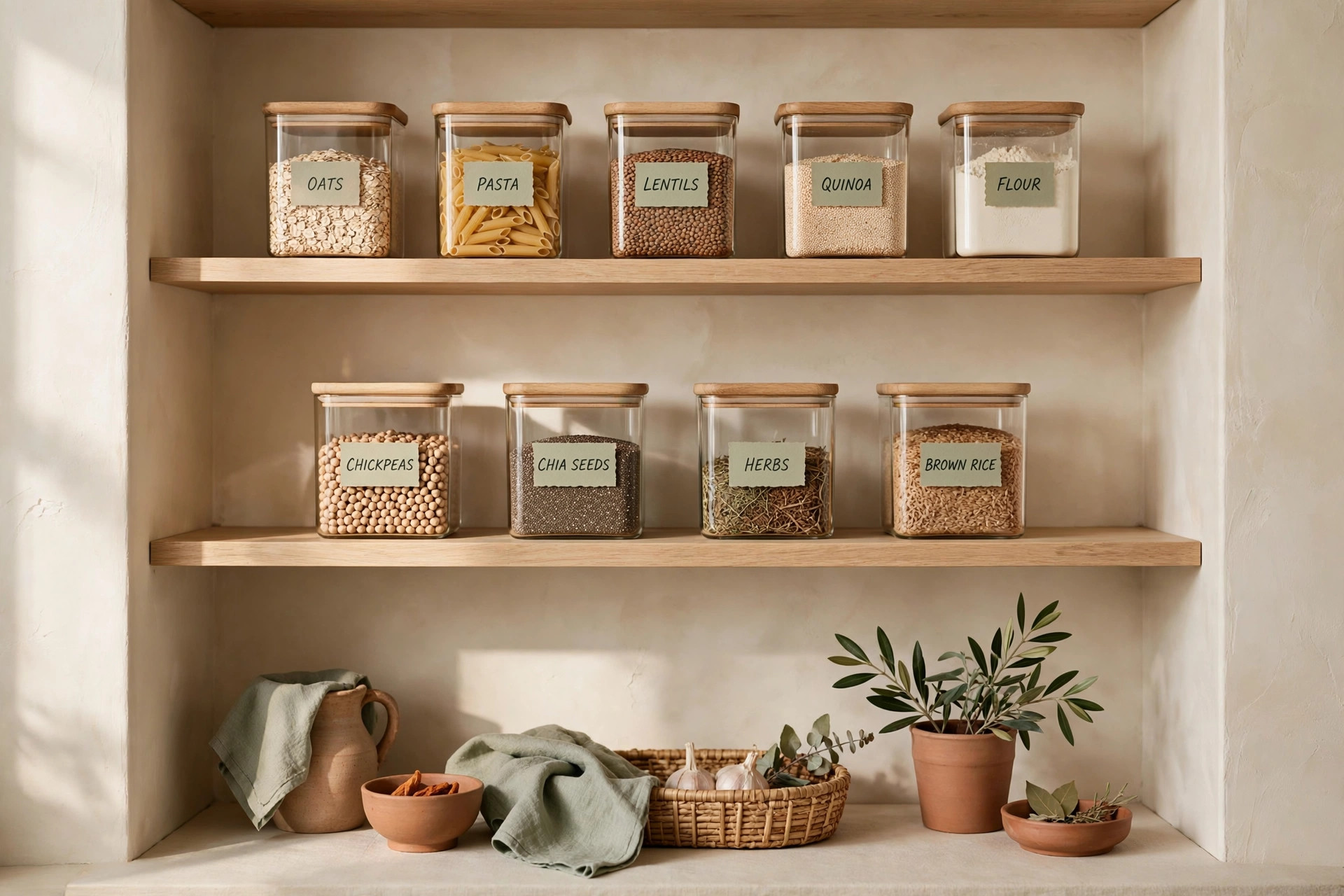
1. Use square or rectangular containers, not round ones
Round canisters waste the corners between them. Square containers tile edge-to-edge and use roughly 25% more of the same shelf. Look for 2–4 litre sizes for flour, rice, pasta, and cereal.
2. Go tall for shelves with vertical clearance
Measure your shelf height first. If you have 30cm+ clearance, tall slim containers (like 1.5L cereal dispensers) use the full height instead of leaving dead air above short jars.
3. Label everything on day one
A label maker is ideal, but masking tape and a marker work. Unlabeled flour and powdered sugar look identical at 7am. Label the front, not the lid — you read shelves at eye level, not from above.
Claim the back of the pantry door
The door is the most underused square footage in a small pantry. It’s narrow, it’s vertical, and it’s perfect for the small stuff that clutters shelves.
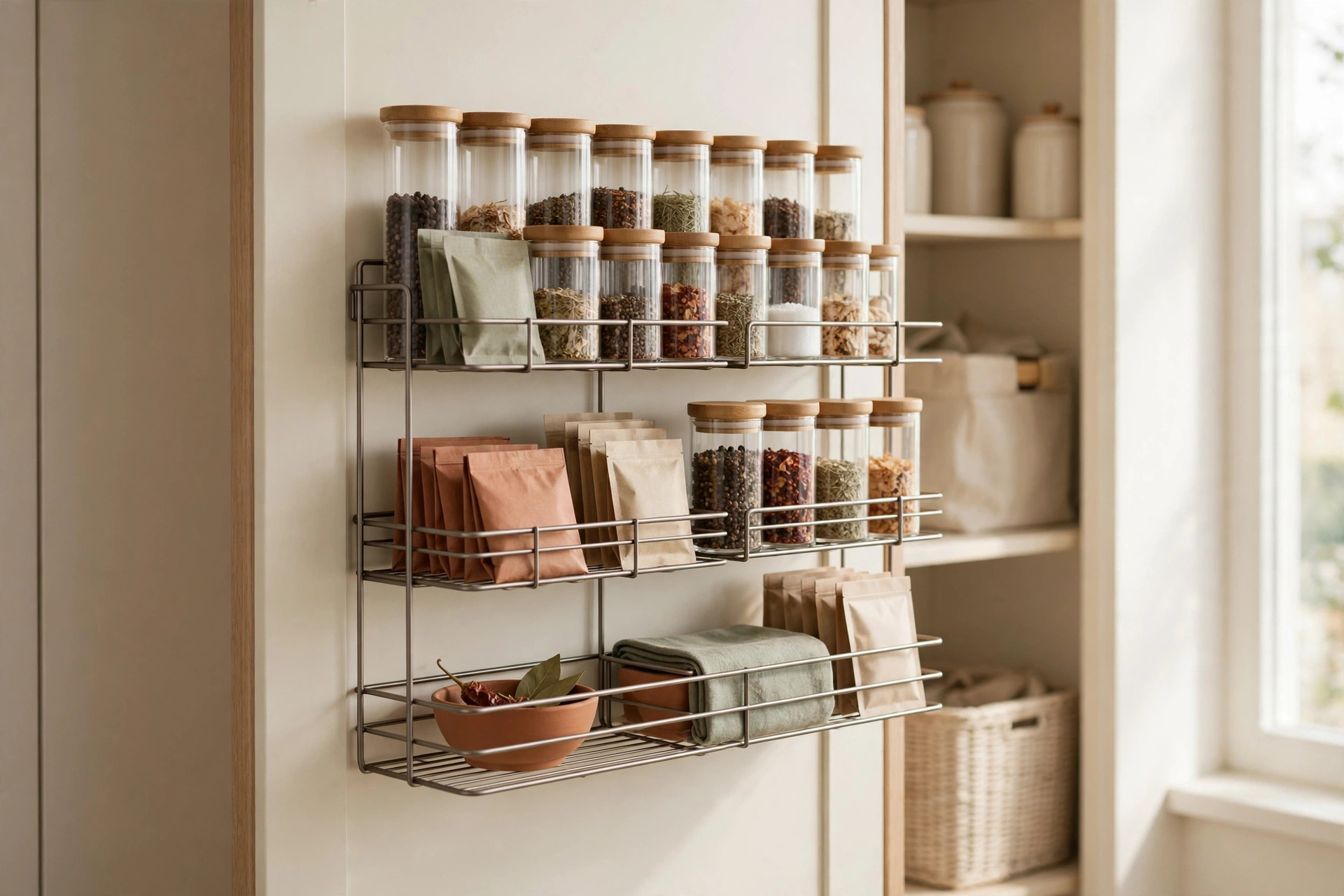
4. Hang an over-the-door wire rack
No-drill over-door racks hook over the top of the door in seconds. Use them for spices, packets, wraps, and foil — the flat, light items that waste deep shelf space.
5. Add a pocket organizer for packets
A clear shoe-style pocket organizer on the door swallows seasoning packets, sauce sachets, tea bags, and snack bars. Each pocket is visible, so nothing hides.
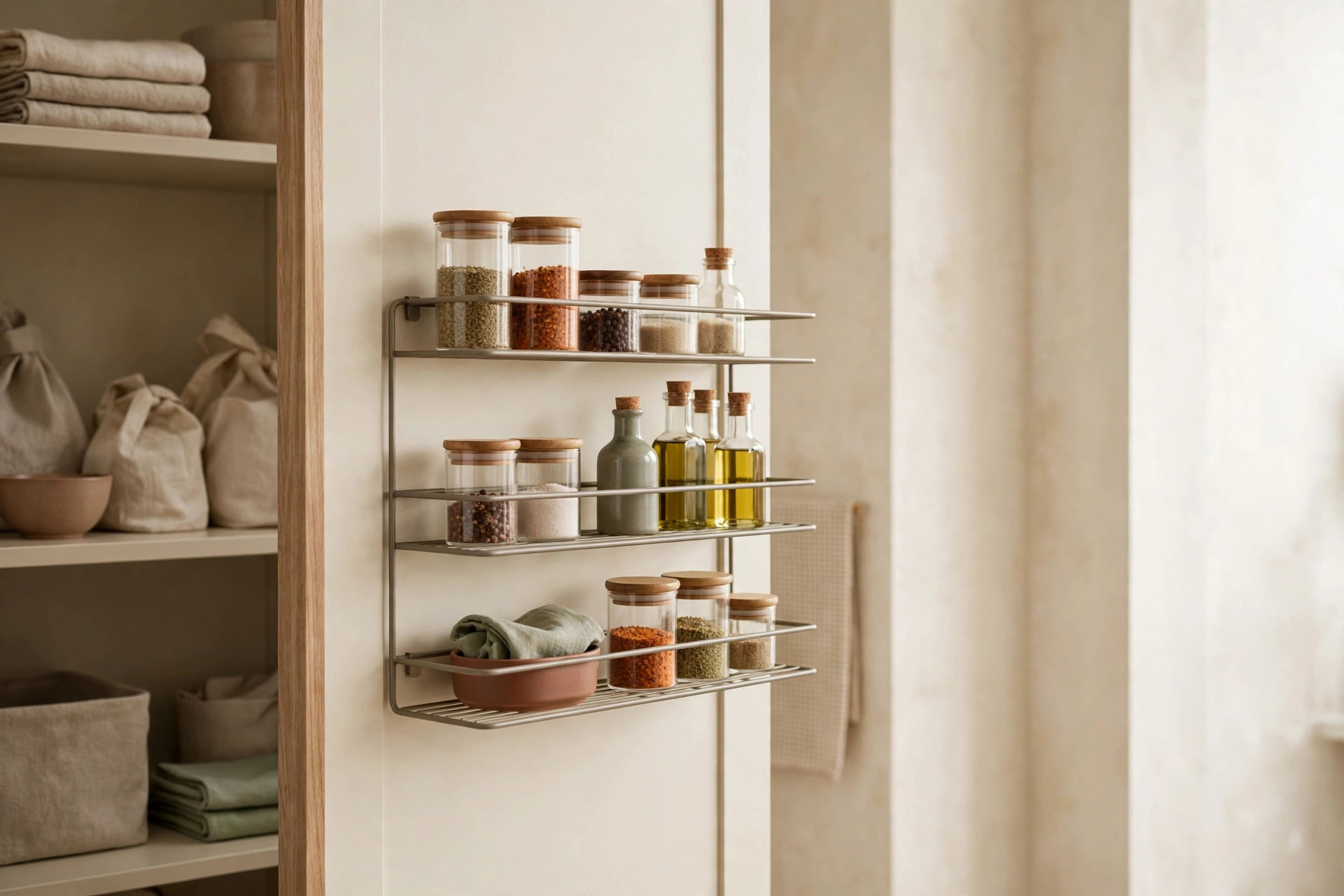
6. Mount a spice rack on the inside of the door
If your door is solid (not hollow-core), two small adhesive-mounted spice rails hold 10–12 jars. Check the door closes fully first — measure the clearance between door and shelf edge.
Build levels: stop storing in a single flat layer
A shelf is a 2D surface; your storage should be 3D. Anything stored one-item-deep in front of another item will be forgotten.
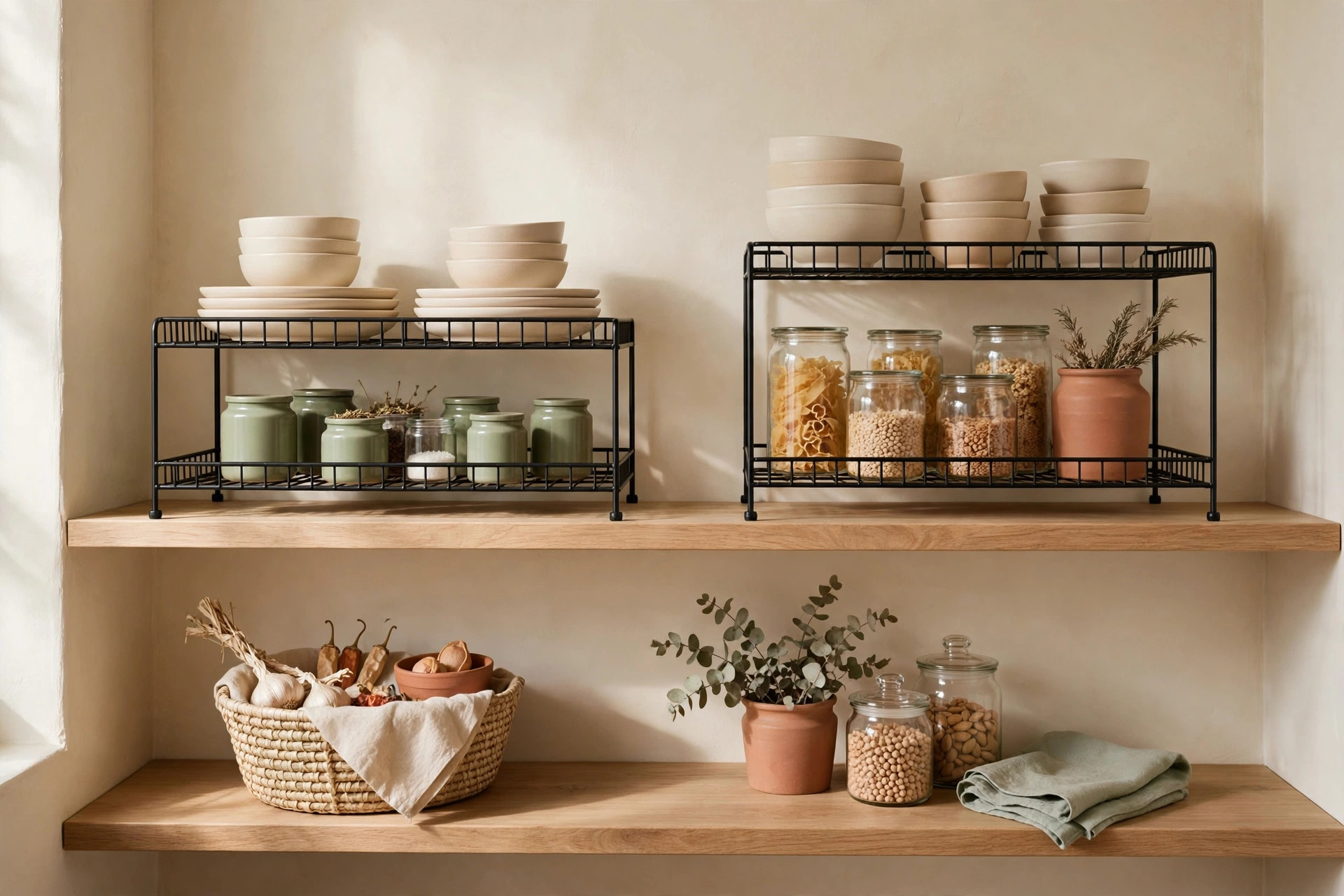
7. Add shelf risers for cans and jars
A $10–15 wire or bamboo shelf riser instantly doubles a shelf: cans below, jars above. Get the expandable kind so it fits your exact shelf width.
8. Use stepped spice shelves
Tiered spice steps (the stadium-style ones) mean you can read every label without moving anything. One 3-tier step holds 12–18 standard spice jars in the footprint of 4.
9. Try under-shelf baskets
Wire baskets that hook onto the shelf above create a hanging layer for onions, garlic, bread, or snack bags. They add storage without using a single centimetre of shelf surface.

Zone the pantry like a tiny grocery store
Grocery stores don’t scatter pasta across five aisles. Your pantry shouldn’t either.
10. Create 4–5 zones and never mix them
Typical zones: breakfast, cooking essentials (oils, sauces), baking, snacks, and backstock. Every item lives in exactly one zone. When zones blur, the system dies.
11. Put daily items at eye level, backstock up high
The things you grab every day — coffee, cooking oil, salt — belong between waist and eye height. Bulk refills and rarely-used appliances go on the top shelf. This one habit cuts daily rummaging in half.
12. Corral each zone in a bin
Open bins (one per zone) turn shelves into drawers you can pull out. A $5–8 plastic or fabric bin per zone is enough. This is what makes the system survive other people — family and roommates can maintain “put it back in the snack bin” even if they won’t maintain a perfect arrangement.
Handle the awkward spaces
Every small pantry has dead zones: deep corners, the floor, the gap above the top shelf.
13. Lazy Susans for deep shelves and corners
A 25–30cm turntable in a deep corner means no more knocking over five jars to reach the soy sauce. Two turntables can rescue an entire deep shelf.
14. Use the floor — deliberately
The pantry floor isn’t failure; it’s square footage. A low rolling cart or a single row of bins on the floor holds heavy items (bulk rice bags, multipacks of cans) that shouldn’t be up high anyway.
15. Add a tension rod as a divider
A $4 spring tension rod wedged vertically between shelves stops the domino effect — no more entire rows of cans sliding when you grab one. It also works horizontally to divide a deep shelf into front/back lanes.
Make it survive real life
The best-organized pantry in the world fails if it needs daily maintenance. Design for laziness.
16. The “one in, one out” rule for duplicates
Small pantries can’t hold three half-used bags of the same flour. Finish or combine before buying another. Tape a tiny note inside the door for the first two weeks until it’s habit.
17. Keep a running “buy” list on the door
A small whiteboard or notepad on the pantry door catches “we’re out of cumin” at the moment you notice it — not at the store, three days later, when you’ve already bought a duplicate.
18. Do a 5-minute reset every Sunday
Not a reorganization — a reset. Put strays back in their zones, toss the expired, wipe one shelf. Five minutes weekly beats a three-hour overhaul every six months.
Small upgrades that punch above their price
19. Battery puck lights for dark pantries
Apartment pantries are often windowless caves. Two or three $3 adhesive LED puck lights (motion-sensor kind) make every shelf readable. You’ll use what you can see.
20. Shelf liner that actually grips
Cheap smooth liner lets everything slide. Get the grippy rubber-mesh kind — it stops the slow migration of jars toward the shelf edge and protects rental shelves from rings and stains.
21. A rolling cart as an overflow pantry
No pantry at all, or one the size of a shoebox? A 3-tier rolling cart (the famous 40×30cm kind) parked beside the fridge is a complete pantry: daily cooking on top, dry goods in the middle, backstock at the bottom. It rolls away for cleaning and moves with you.
Mistakes to avoid
- Buying containers before measuring. Measure shelf height, width, and depth first. Containers that don’t fit the shelf are just expensive clutter.
- Organizing before decluttering. Throw out the expired, combine the duplicates, donate the “someday” gadgets — then organize what’s left. Organizing clutter just makes tidy clutter.
- Copying a big-kitchen system. A system designed for a walk-in pantry will collapse in a 60cm-wide apartment cupboard. Scale every idea down.
- Choosing pretty over practical. Matching glass jars photograph well but weigh a ton and chip. In a rental with wobbly shelves, lightweight BPA-free plastic wins.
- No maintenance plan. Any system without a 5-minute weekly reset has a half-life of about three weeks.
Frequently asked questions
How do I organize a pantry with no shelves?
Use a freestanding 3-tier rolling cart as the pantry itself, plus over-the-door racks if you have any door nearby. Stackable bins on the floor handle the heavy bulk items. You're building vertical storage from scratch — every centimetre of height counts.
What's the cheapest way to organize a small pantry?
Declutter first (free), then spend under $30 total: a tension rod ($4), a shelf riser ($10–15), and masking tape + marker for labels. Zones cost nothing — they're just decisions about where things live.
How do I keep my pantry organized with roommates?
Zone bins. Nobody will maintain your perfect arrangement, but anyone can follow "snacks go in the snack bin." Label the bins, not just the containers, and keep the system to 4–5 zones max.
Should I decant everything?
No — decant the things that come in wasteful packaging (cereal, rice, flour, pasta, snacks in bags). Keep cans, jars, and bottles as they are. Decanting everything is a hobby; decanting strategically is organization.
The bottom line
Small apartment pantry organization comes down to five moves: decant into square containers, claim the door, build vertical levels, zone everything, and do a 5-minute weekly reset. Do those, and a 60cm cupboard can hold what used to need twice the space.
Start with the pantry this weekend — it’s the smallest room with the biggest payoff. Then work outward: the same zoning and vertical thinking fixes closets and kitchens too.