Tiny bathroom organization fails for one predictable reason: people buy storage before they measure the space. That over-the-toilet cabinet looks perfect online, then arrives 2 inches too wide for the gap between your toilet and the wall. These 19 tiny bathroom organization ideas start with the measure-first rule and build from there — vertical storage, under-sink systems, and renter-safe upgrades that fit real bathrooms, not catalog ones. (Small bathrooms are especially common in studio apartments, where every inch counts double.)
The measure-first rule (why most organizers get returned)
1. Measure every zone before buying anything
Grab a tape measure and record four numbers: the width above your toilet (wall to wall), the depth and height inside your under-sink cabinet (accounting for pipes), your drawer interiors, and the back-of-door clearance. Write them in your phone. Roughly 80% of bathroom organizer returns happen because someone guessed — a “standard” over-toilet shelf is 24 inches wide, but many apartment bathrooms only have 20 inches of clearance.
2. Map your plumbing before planning under-sink storage
Open the cabinet under your sink and photograph the pipe layout. The P-trap and supply lines eat the center of the cabinet, leaving two usable side zones. Any organizer you buy must fit around the pipes — measure the clear width on each side of the trap, not the full cabinet width.
Go vertical: the walls are your square footage
Small bathrooms have almost no floor space, but they have plenty of wall. Vertical storage is the highest-impact change you can make.
3. Add above-toilet shelving (the right way)
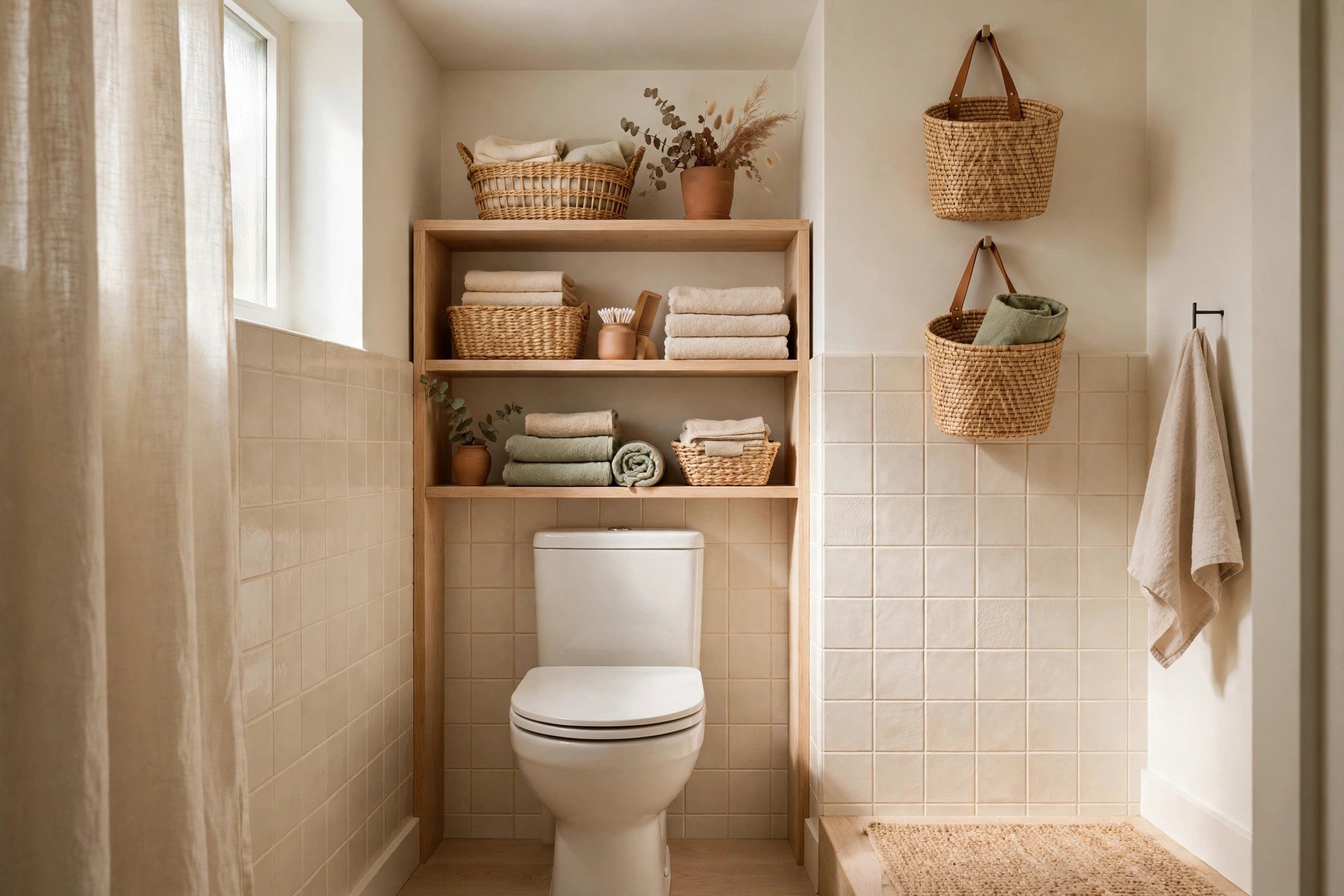
The wall above the toilet is typically 24–30 inches of unused vertical space. Two floating shelves (no-drill adhesive brackets rated for 10+ lbs, or a tension-mounted over-toilet unit) hold daily toiletries, folded towels, and a small plant. Keep it to two shelves — three starts to feel top-heavy and collects dust.
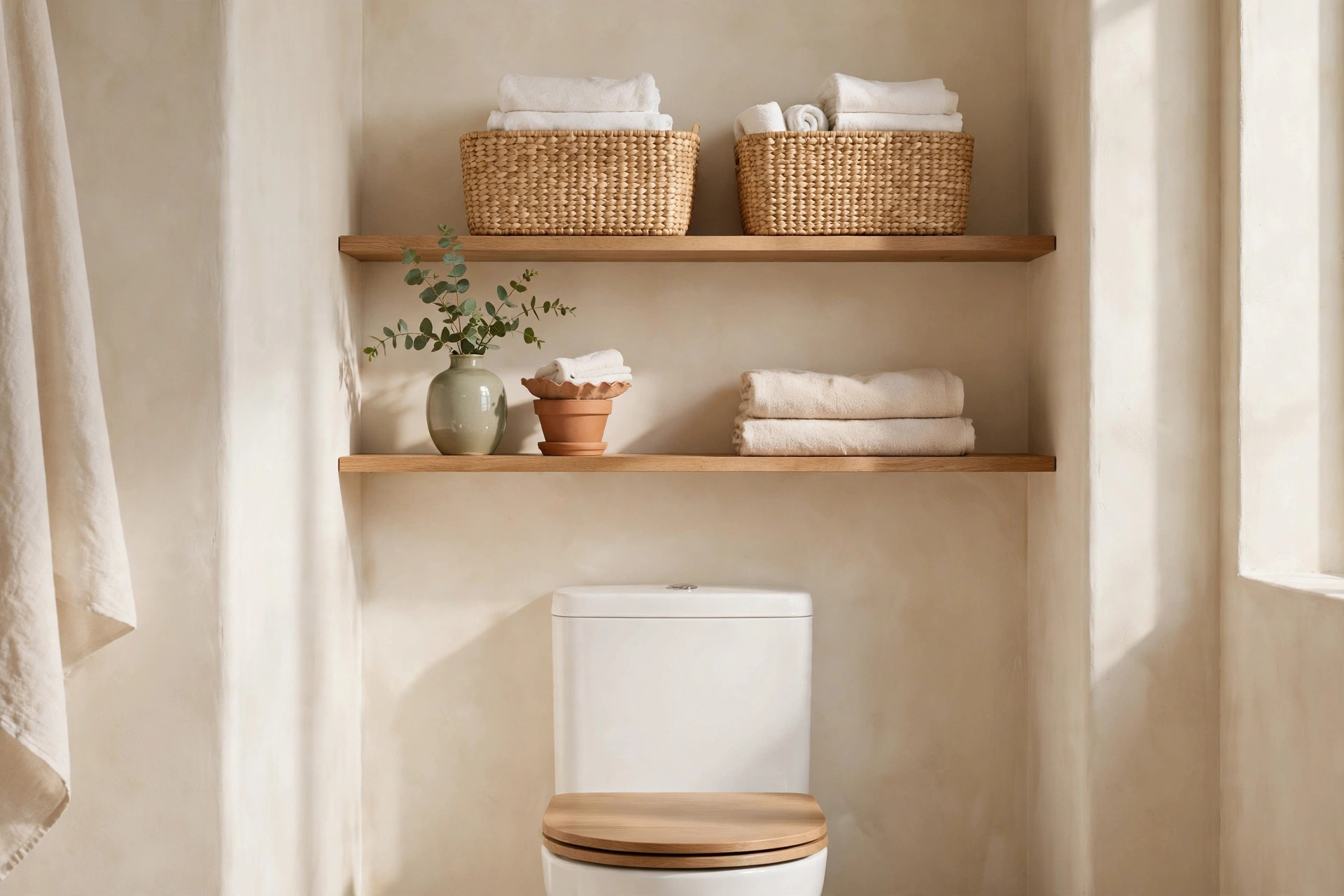
4. Use an over-toilet cabinet when you need hidden storage
Open shelving looks great but shows everything. If your bathroom tends toward visual chaos, a shallow over-toilet cabinet (6–8 inches deep) with doors hides medicine, cleaning supplies, and the twelve half-used bottles. Choose one with adjustable shelves — fixed shelves waste the vertical inches.
5. Hang an over-the-door rack for towels and robes
The back of the bathroom door fits 2–3 hooks or a slim wire rack with zero footprint. Over-door hooks rated for 15+ lbs hold wet towels without pulling the door off balance. If your door is hollow-core (most apartment doors are), avoid screwing into it — use over-the-door brackets that hook over the top.
6. Mount a magnetic strip for small metal items
A 12-inch magnetic knife strip (yes, the kitchen kind) mounted inside a cabinet door or on the wall holds tweezers, nail clippers, bobby pins, and small scissors. These are the items that vanish into drawers — give them a visible home.
Under-sink systems: the most-searched zone
The cabinet under the sink is the Bermuda Triangle of tiny bathrooms. Pipes, weird angles, and a dark interior swallow everything. Systematize it.
7. Install stackable bins around the pipes
Two-tier stackable bins (roughly 10×6×6 inches each) fit in the side zones beside the P-trap. Bottom tier: cleaning supplies and refills. Top tier: daily items. Clear bins win here — you need to see what’s inside without pulling everything out in a dark cabinet.
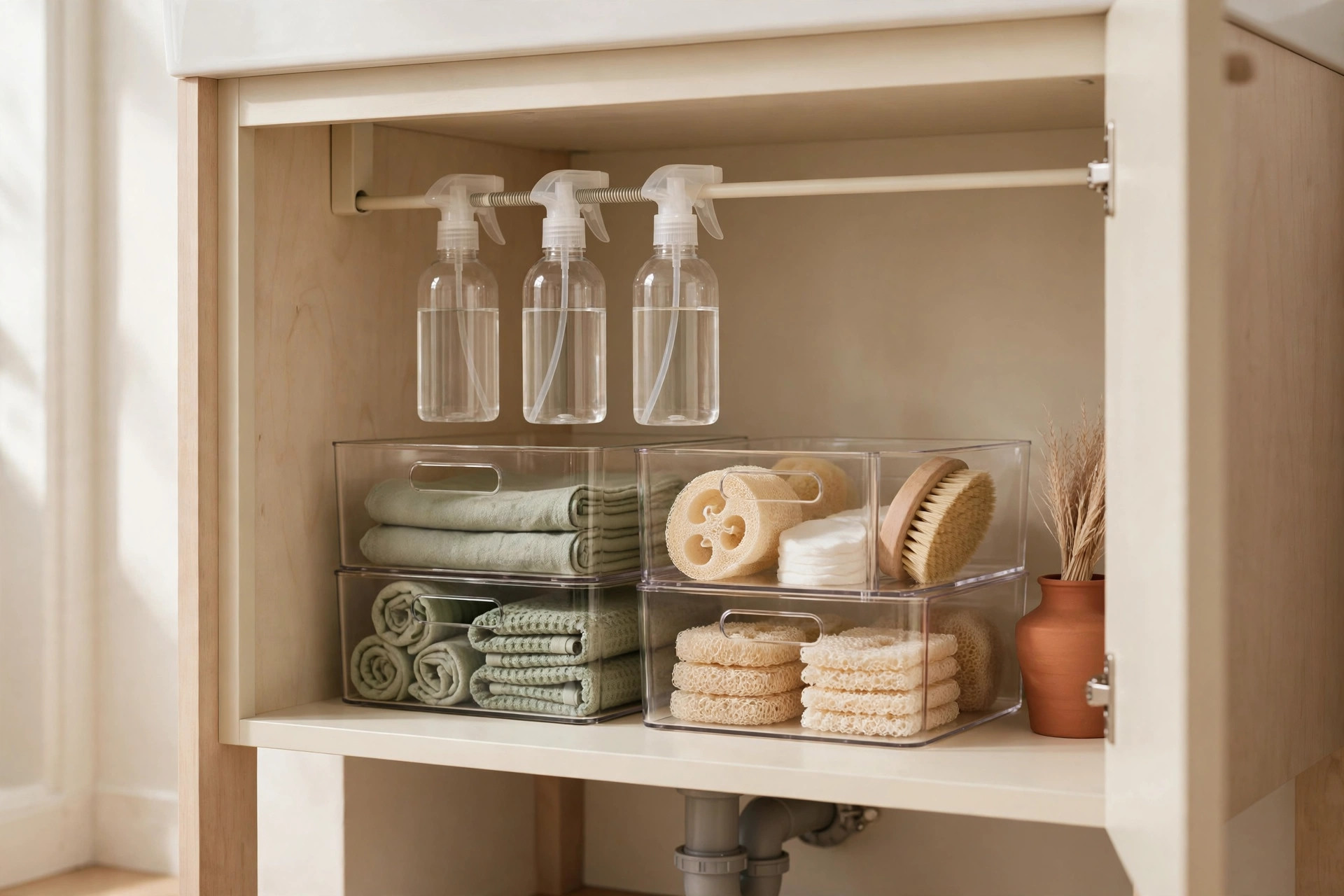
8. Add a tension rod for spray bottles
A small spring tension rod (12–20 inches, under $10) mounted across the cabinet interior, just under the top, holds spray bottles by their triggers. This frees the entire cabinet floor for bins and uses the dead air space around the upper pipes.
9. Hang cabinet-door organizers for flat items
Self-adhesive wire racks on the inside of the cabinet doors hold hair tools, rolls of floss, and flat packets. The door interior is free real estate — a 10×6 inch rack adds a whole extra shelf without taking cabinet space.
10. Decant bulky bottles into smaller dispensers
Full-size shampoo, conditioner, and cleaning bottles are space hogs. Decant daily products into 8–12 oz pump bottles and store the bulk refills elsewhere (a hall closet, under the bed). The under-sink cabinet should hold what you reach for weekly, not the Costco stockpile.
Tame the drawers before they become junk drawers
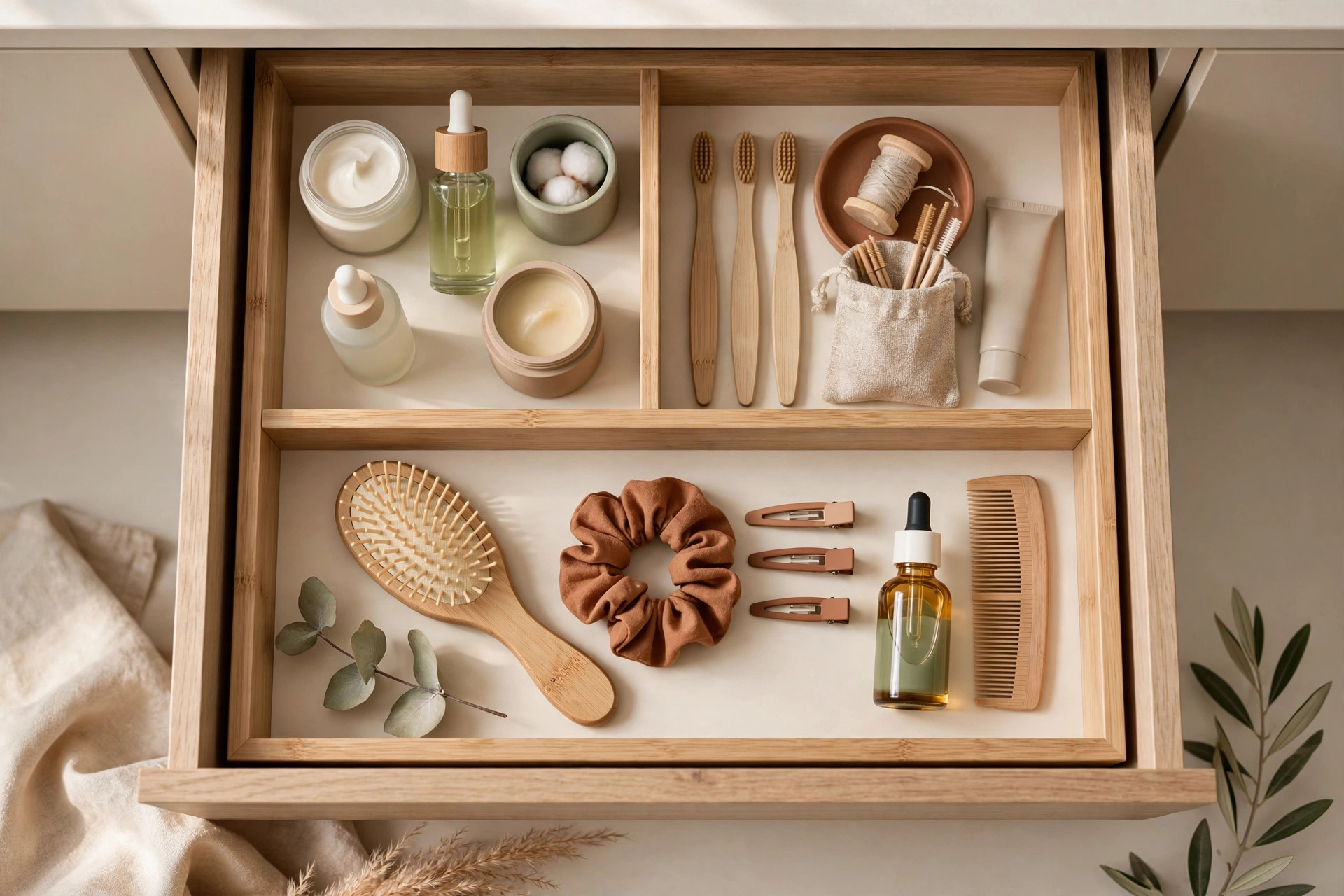
11. Divide every drawer with adjustable organizers
Bathroom drawers become junk drawers faster than any other drawer in the house. Spring-loaded drawer dividers (no measuring needed — they expand to fit) create zones: dental, hair, skincare, first aid. One divider per category, no exceptions.
12. Use small trays for the “daily five”
A slim tray (roughly 10×6 inches) on the counter or in the top drawer holds only the five items you use every morning. Everything else lives behind a door. This single habit does more for countertop calm than any organizer.
Walls, hooks, and the back of the door
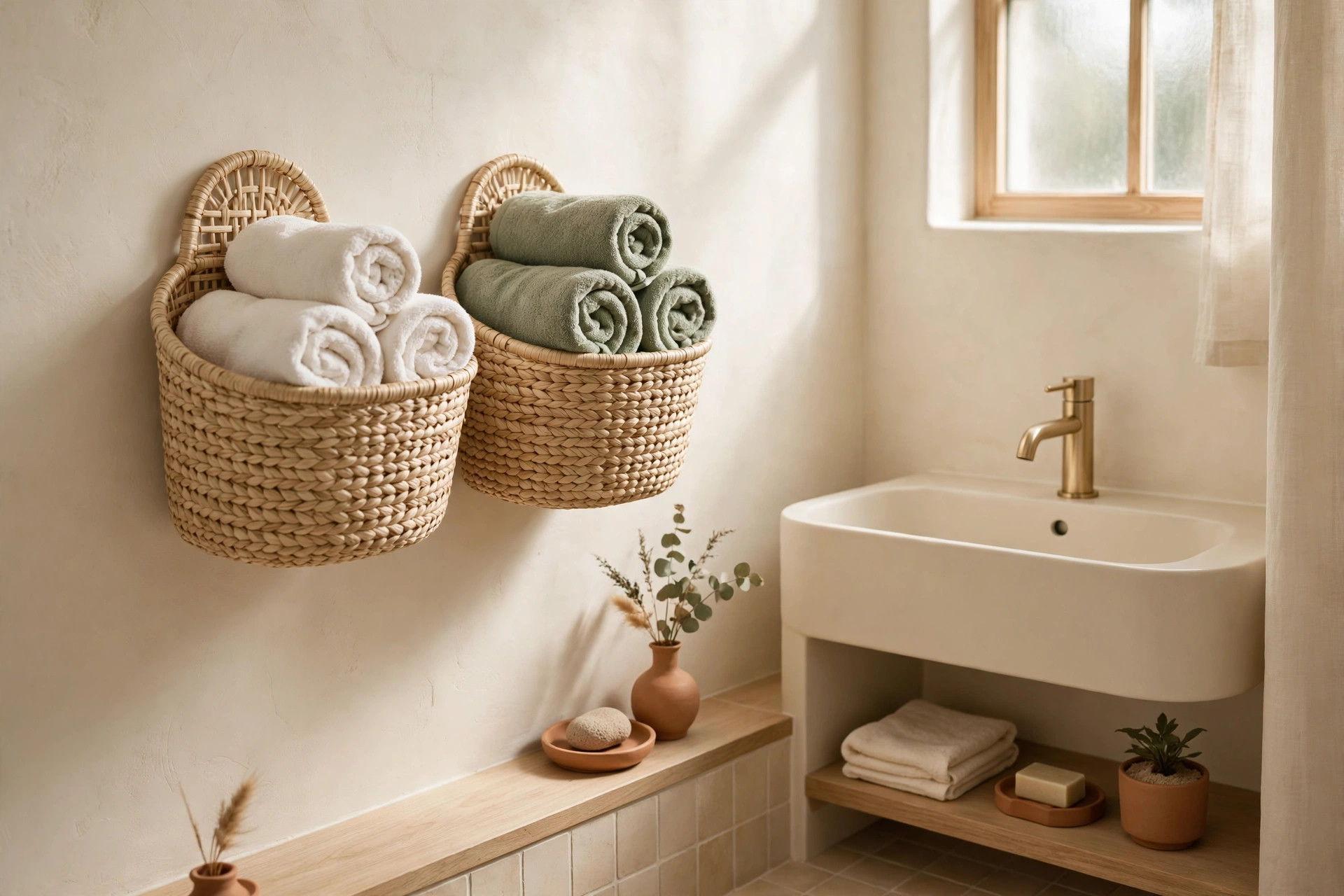
13. Mount wall baskets for towels and toiletries
Wire or woven wall baskets (adhesive-mounted, renter-safe) beside the shower or sink hold rolled towels, washcloths, and daily toiletries at arm’s reach. Rolling instead of folding towels saves roughly 30% of basket space.
14. Put hooks where hands naturally reach
One hook inside the shower for a hanging toiletry bag. One hook by the sink for a hand towel. One hook on the door for a robe. Hooks beat towel bars in tiny bathrooms — they hold more per square inch and don’t require level mounting.
15. Try a shower caddy that hangs from the showerhead
If you have no shower shelf, a hanging shower caddy (stainless steel, not suction-cup plastic which fails in humidity) adds two tiers of storage with zero installation. Look for ones with drainage holes — standing water grows mildew in days (the CDC’s mold cleanup guide is worth a read if you’re fighting bathroom moisture).
The 5-minute daily reset that keeps it working
16. Run the “return to home” reset every evening
Organization systems die from drift, not from bad design. Spend 5 minutes each evening returning every item to its labeled home: bottles back in bins, towels on hooks, counter cleared to the daily-five tray. A tiny bathroom that’s reset daily stays organized with zero weekend overhauls.
17. Keep a small trash bin with a lid — and empty it
Tiny bathrooms generate trash fast (cotton pads, floss picks, packaging). A lidded 1.5-gallon bin tucked beside the toilet or under the sink, emptied twice a week, prevents the slow creep of countertop clutter.
What NOT to buy for a tiny bathroom
18. Skip the giant “bathroom organizer sets”
Those 12-piece matching sets look cohesive online but are designed for average bathrooms, not tiny ones. Half the pieces won’t fit your dimensions. Buy individual pieces matched to your measurements — it costs less and everything actually fits.
19. Don’t buy anything that needs counter space to work
Countertop tiered trays, rotating organizers, and decorative baskets all consume the scarcest surface in a tiny bathroom. If a product’s job could be done on a wall, a door, or inside a cabinet instead, put it there. Counters are for the daily five and nothing else.
Frequently asked questions
How do I organize a tiny bathroom with no storage at all?
Start vertical: over-the-door hooks, an above-toilet shelf, and a shower caddy cover 80% of daily needs with zero built-in storage. Then add under-sink bins if you have a cabinet. Total cost for all three is typically under $60.
What’s the best way to organize under a bathroom sink with pipes in the way?
Work around the P-trap, not against it. Measure the clear zones on each side of the pipes, use stackable bins sized to those zones, add a tension rod above for spray bottles, and mount flat organizers on the cabinet doors. Never try to fit one big organizer across the pipes — it won’t sit flat.
How can renters add bathroom storage without drilling?
Tension rods, over-the-door brackets, adhesive hooks rated for humid environments (look for “bathroom/waterproof” on the package), suction shower caddies on smooth tile, and freestanding over-toilet units. Avoid standard adhesive strips inside the shower — steam defeats them in weeks.
How do I keep a small bathroom from looking cluttered?
Hide 70% of what you own behind doors or in bins, keep only daily items visible, and stick to one color family for visible storage (all white, all bamboo, all clear). Visual clutter reads as mess even when everything has a home.
The bottom line
Tiny bathroom organization is a measurement problem first and a shopping problem second. Measure your zones, go vertical, systematize the under-sink cabinet around its pipes, and run the 5-minute evening reset. Do that, and even the smallest bathroom holds everything you need — with room to spare.
Save this guide for your next bathroom reset, and check our small spaces guides for the same systems applied room by room.