Under bed storage is the highest-value square footage in a small bedroom — typically 25 to 35 square feet of hidden space, roughly the size of a small closet, sitting empty under your mattress. In a studio apartment, it often replaces the dresser entirely. But most people waste it: they shove things underneath with no system, and within months it’s a dusty graveyard of forgotten items. These 17 under bed storage ideas fix that — starting with the measurement everyone skips.
Measure your clearance first (the step everyone skips)
1. Measure floor-to-frame on all four sides
Bed frames aren’t level — floors slope, frames warp. Measure the clearance at all four corners and take the lowest number. Standard clearances: platform beds 6–8 inches, basic metal frames 8–12 inches, storage beds 12–14 inches. Your bins must be at least 1 inch shorter than the lowest measurement, or they’ll scrape every time you pull them out.
2. Check what’s under there now (and evict it)
Pull everything out and sort it into three piles: belongs under the bed (seasonal, rarely used), belongs elsewhere (daily items that migrated there), and trash/donate. Most under-bed zones are 50% things that shouldn’t be there. Start clean.
Rolling bins vs drawers vs bags: pick the right container
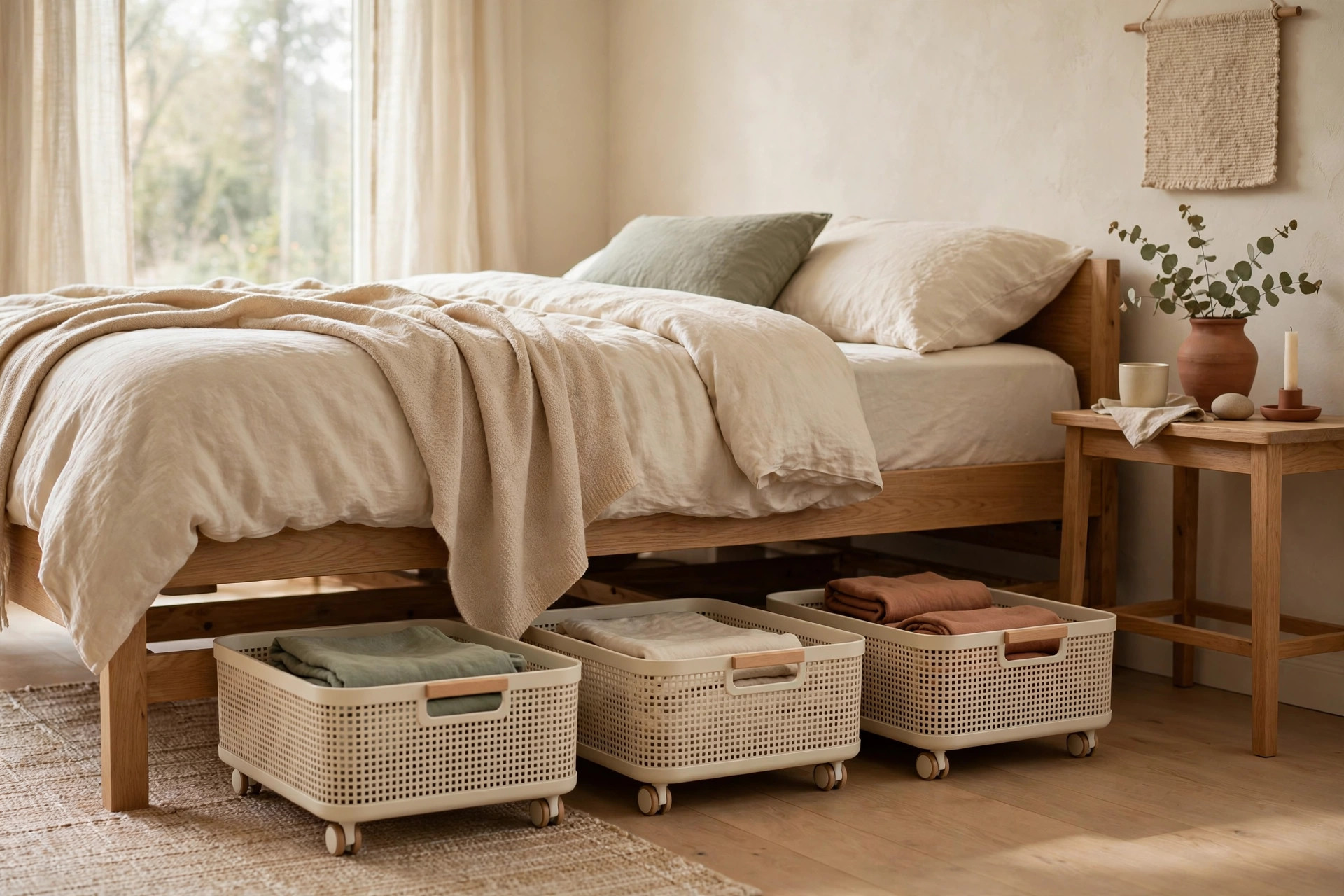
3. Use rolling under-bed bins for frequent access
Bins on wheels (typically 30×16×6 inches) roll out with one pull — ideal for items you grab weekly: spare sheets, gym clothes, kids’ toys. Look for bins with lids; open-top bins collect dust and pet hair within days. Clear or labeled opaque — never unlabeled opaque, or you’ll forget what’s inside.
4. Choose drawers when the bed sits high enough
Under-bed drawer units (12+ inches of clearance needed) feel like real furniture and pull out smoothly on glides. They’re pricier than bins but worth it for daily-use items like work clothes or kids’ school supplies. Measure twice — drawer units can’t flex around bed legs the way soft bins can.
5. Try vacuum bags for seasonal clothes and spare bedding
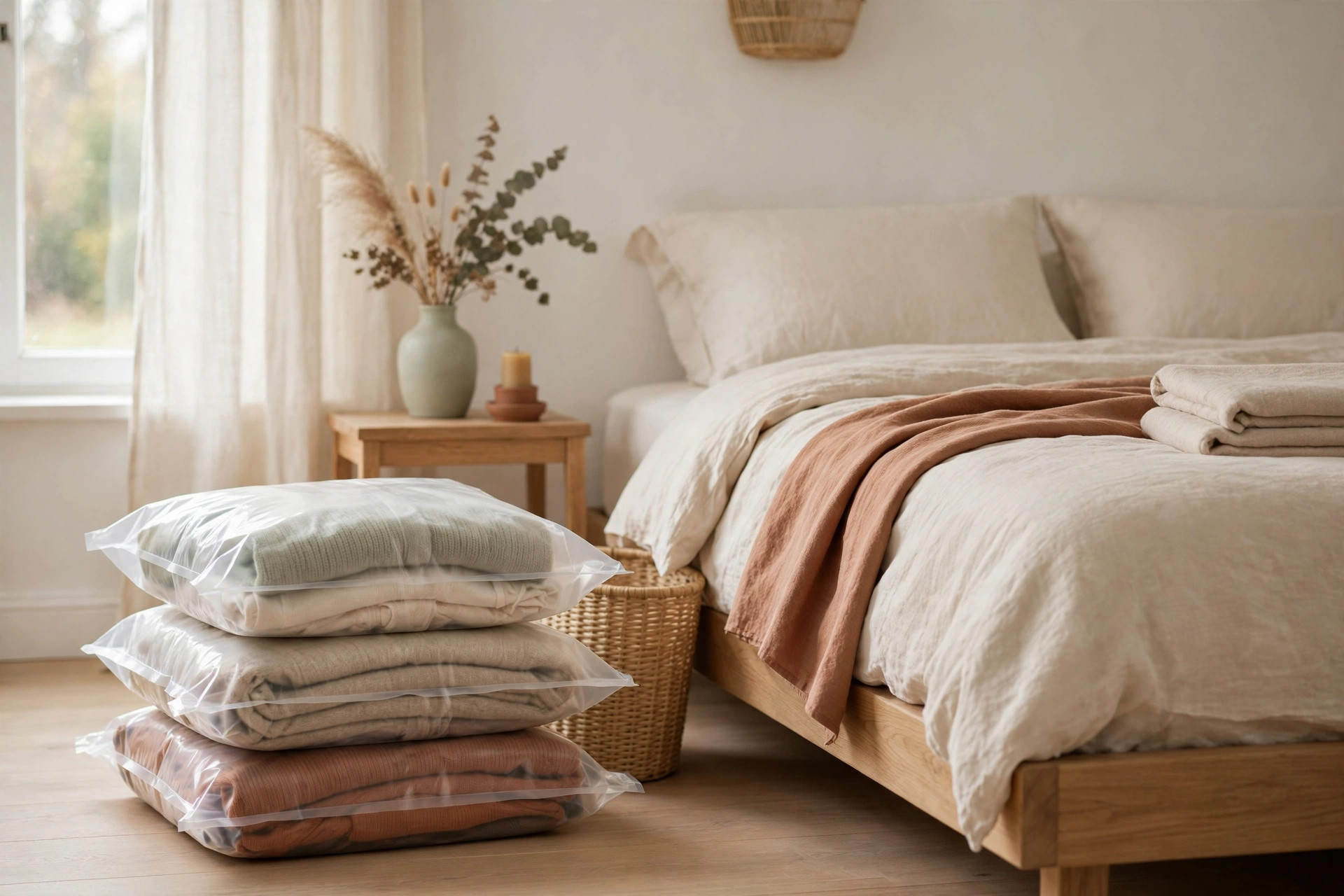
Vacuum storage bags compress bulky winter coats, spare duvets, and out-of-season clothes to roughly one-third of their volume. A $20 set of 6 bags can swallow an entire winter wardrobe into two flat packages that slide under any bed. Pro tip: don’t overfill — bags burst at the seams when packed past the fill line.
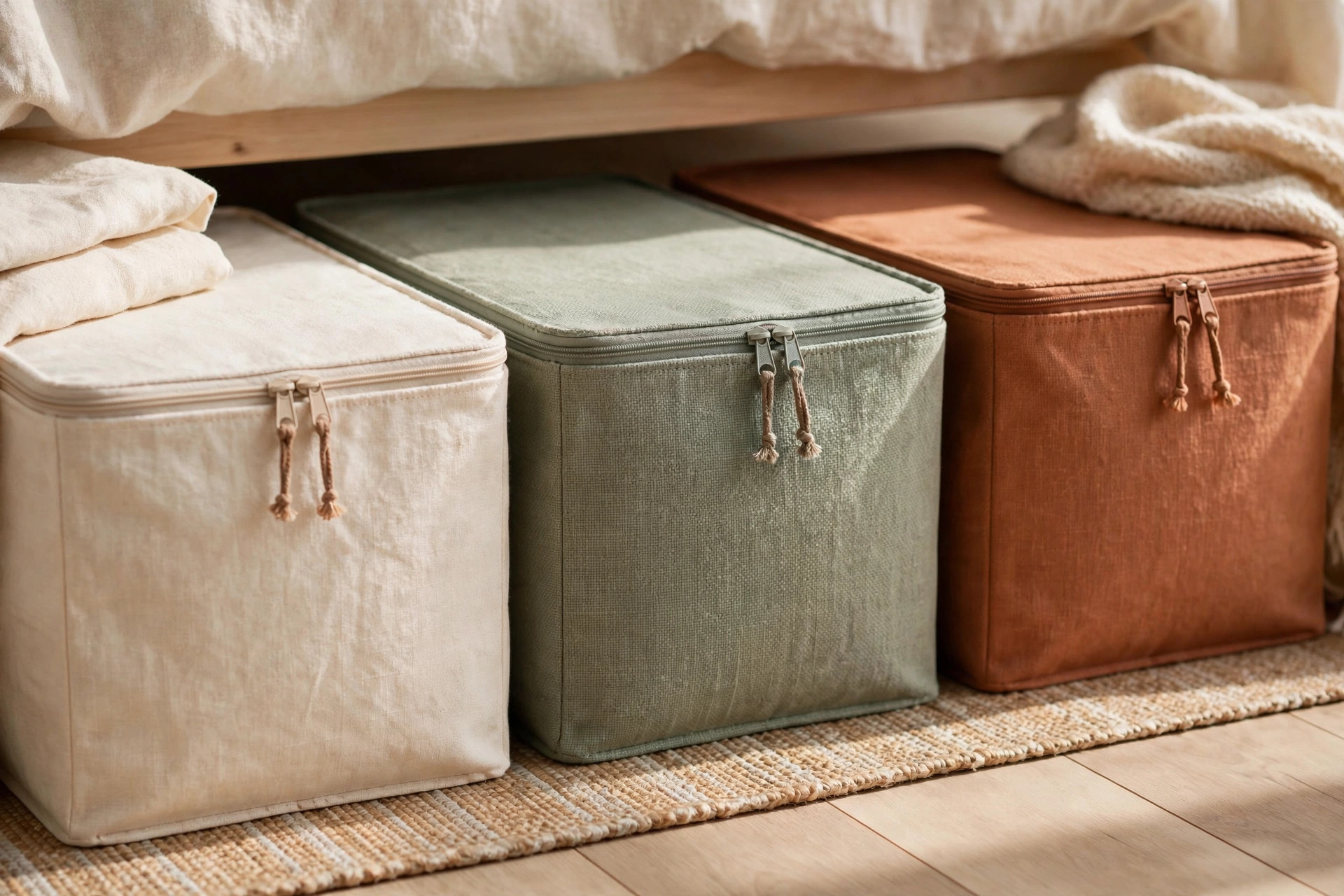
6. Use zippered fabric boxes for soft goods
Soft-sided under-bed boxes with zip tops (no wheels needed if you have 8+ inches of clearance) are perfect for linens, towels, and off-season clothes. The zipper keeps dust out; the fabric sides flex around bed legs. They’re also the cheapest option per cubic foot.
What should NEVER go under the bed
7. Keep moisture-sensitive items out
Under-bed zones have the worst airflow in the bedroom. Never store leather goods, important papers, photographs, or anything that molds — in humid climates, the under-bed microclimate can ruin them in a season. If your bedroom runs humid, add silica gel packets to every bin as insurance.
8. Don’t store daily-use items underneath
If you reach for it every day, it doesn’t belong under the bed. Daily friction — kneeling, pulling, pushing back — is exactly how organized systems die. Under-bed storage is for weekly-or-rarer access. Daily items earn drawer or closet space.
9. Keep pests in mind: no food, no cardboard
Never store snacks, pet food, or anything scented under the bed — it’s an invitation to ants and mice (the National Pest Management Association has room-by-room prevention tips). And skip plain cardboard boxes: they attract silverfish and collapse in humidity. Hard plastic or fabric only.
Create clearance when the bed sits too low
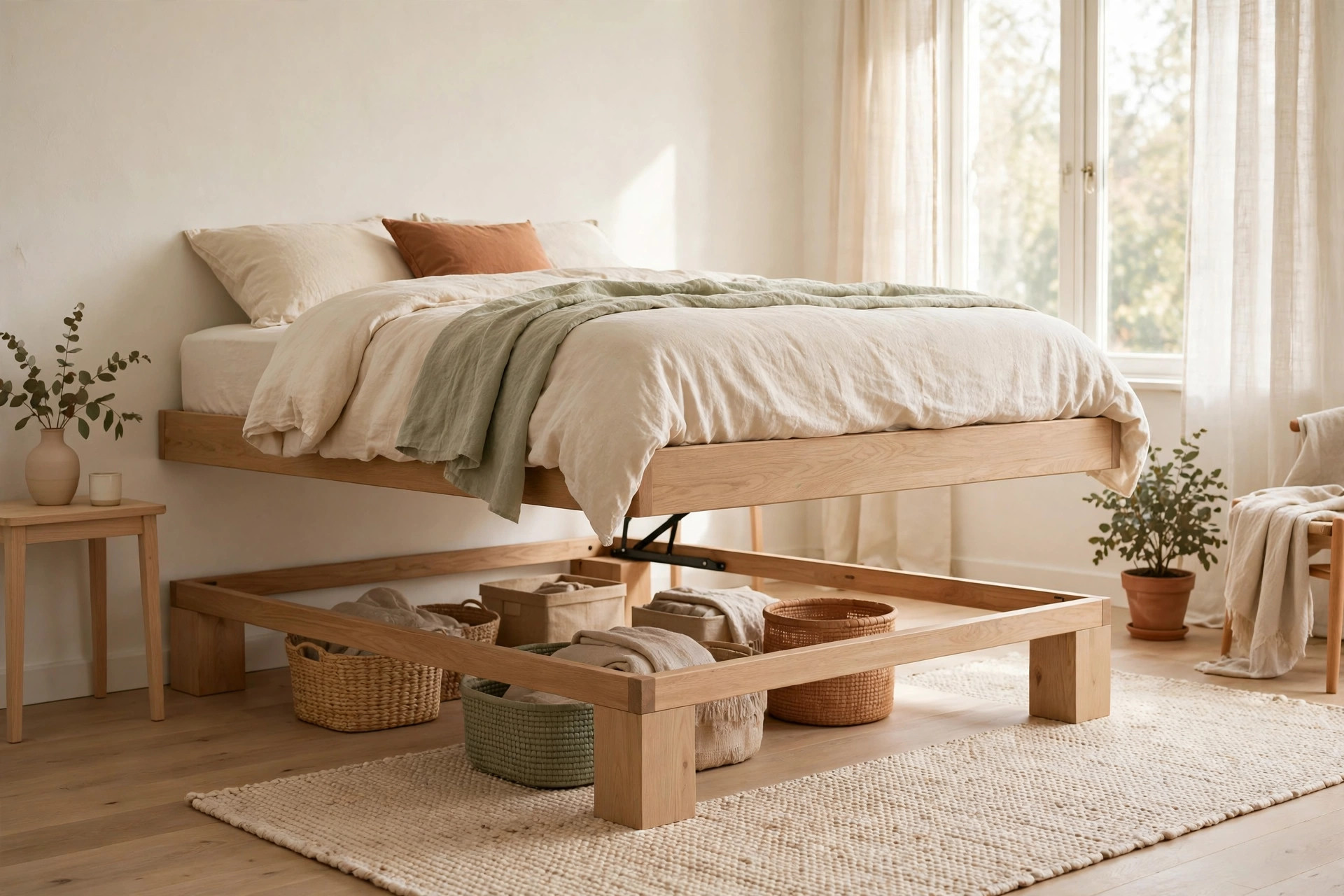
10. Add bed risers for instant extra inches
Bed risers ($15–25 for a set of four) lift most frames 3–8 inches, turning a useless 4-inch gap into a functional 10-inch storage zone. Check your bed’s leg shape first — risers come in round, square, and adjustable versions. For heavy beds (solid wood + memory foam mattress), get steel risers rated for 1,000+ lbs, not plastic.
11. Swap the frame instead of fighting it
If your platform bed has 5 inches of clearance and you need 10, risers only do so much. A basic 14-inch metal platform frame ($80–120) creates a cavernous under-bed zone and eliminates the box spring. Sometimes the right move is replacing the constraint, not working around it.
Zone it: one bin per category, labeled
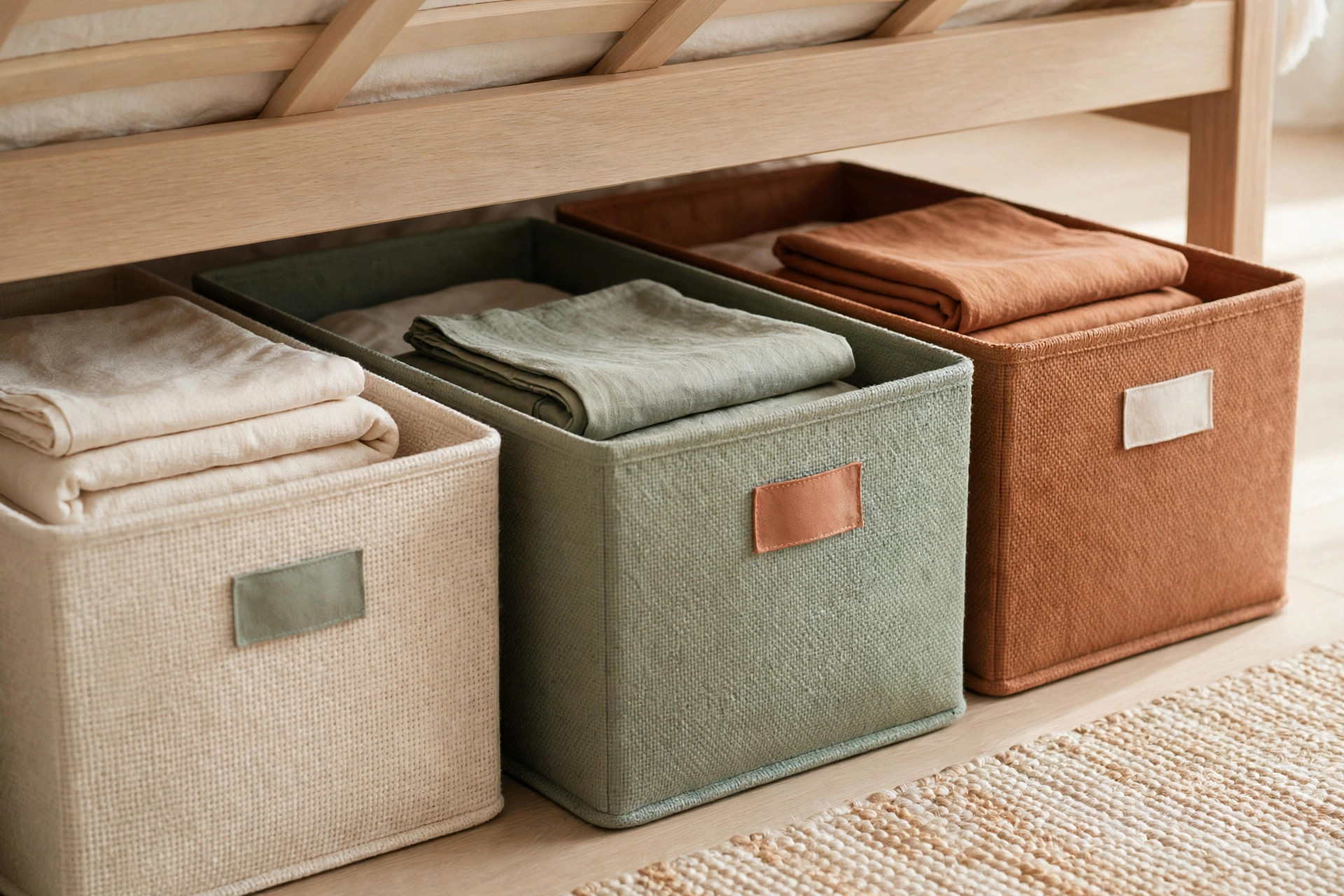
12. Assign one container per category — no mixed bins
“Miscellaneous” bins are where organization goes to die. Each bin gets exactly one category: winter clothes, spare bedding, gift wrap, kids’ art supplies, luggage overflow. When a bin’s category is done, the bin is done — no overflow into a second mystery bin.
13. Label everything on two sides
Labels go on the long side and one short end, because you’ll pull bins out from different angles. A label maker is ideal; painter’s tape and a marker work fine. Label the category, not the contents (“WINTER CLOTHES,” not “sweaters, coats, scarves, gloves”).
14. Build DIY dividers for shallow boxes
Shallow under-bed boxes turn into jumbled layers without dividers. Cut cardboard or foam board into grid inserts (measure the box interior first) to create compartments for shoes, accessories, or craft supplies. One afternoon of cutting saves years of digging.
Keep it dust-free: the maintenance nobody mentions
15. Vacuum under the bed quarterly
Dust bunnies colonize under-bed zones fast because nobody looks there. Every 3 months, pull everything out, vacuum the floor and wipe the bins, then put it all back. Tie it to a season change — “when I swap the seasonal clothes, I clean the zone.”
16. Use lids or zip tops on everything
Open-top storage under a bed is just a dust collection system. Every container needs a lid, a zip top, or a vacuum seal. This single rule eliminates 90% of under-bed maintenance problems.
17. Do the annual “still true?” audit
Once a year, pull every bin and ask: is this category still true? The “baby clothes” bin from three years ago, the “camping gear” for trips you never take — under-bed zones accumulate aspirational storage. If you haven’t opened a bin in 12 months, its contents should probably leave the house, not just the bed.
Frequently asked questions
How much clearance do I need for under bed storage?
Minimum 6 inches for flat vacuum bags and low-profile boxes; 8–10 inches for rolling bins; 12+ inches for drawer units. Measure the lowest corner of your frame — floors slope — and buy containers at least 1 inch shorter than that number.
What is the best under bed storage for small bedrooms?
Rolling bins with lids for items you access weekly, vacuum bags for seasonal/bulky items, and zippered fabric boxes for linens. The “best” depends on your clearance and how often you open them — match the container to the access frequency.
How do I keep under bed storage from getting dusty?
Use lidded or zippered containers only (never open-top), vacuum the zone quarterly, and avoid storing directly on the floor in humid climates — even an inch of elevation on low risers helps airflow.
Can I store clothes under the bed long-term?
Yes, with conditions: clean them first (body oils attract pests and yellow fabric over time), use vacuum bags or zippered boxes with silica gel packets, and keep them out of humid rooms. Audit yearly — forgotten clothes become clutter, not storage.
The bottom line
Under bed storage works when it’s a system, not a shove. Measure your clearance, pick containers matched to access frequency, zone by category with labels, lid everything, and audit yearly. That’s 25+ square feet of closet you already own — use it like one.
Save this for your next bedroom reset, and explore our small spaces guides for the rest of the room.