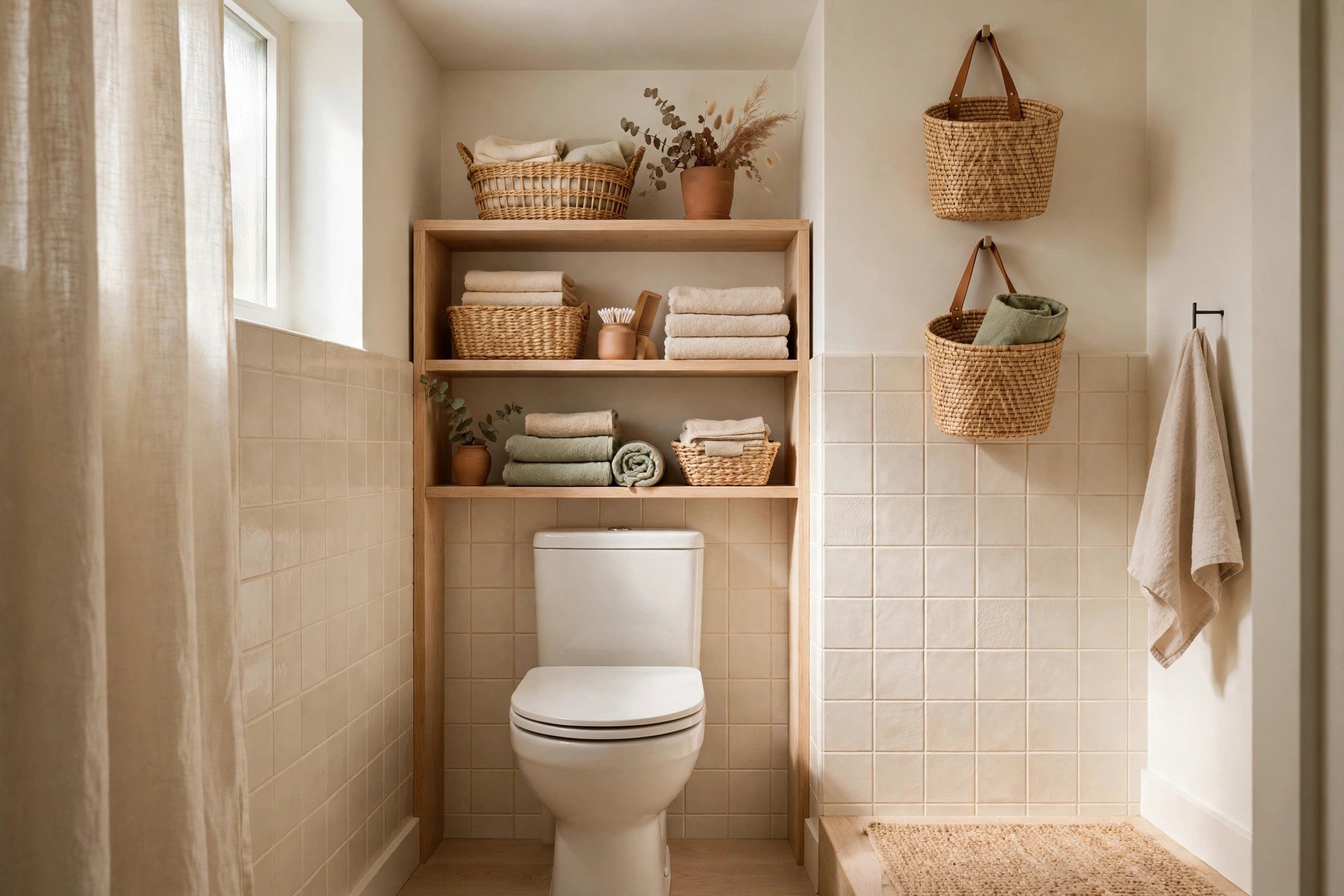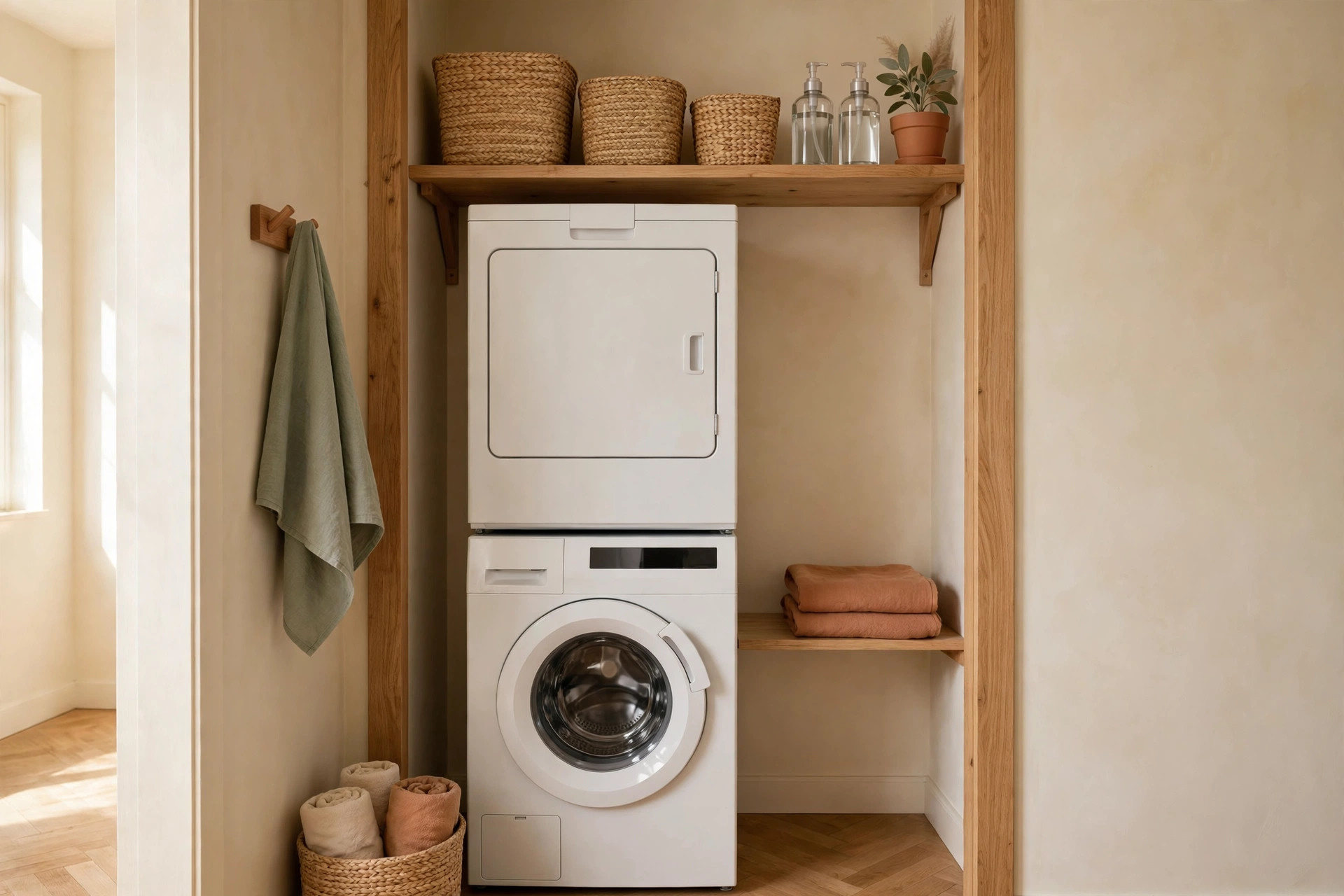
If your “laundry room” is actually a closet with a stacked washer and dryer, you already know the frustration: detergent bottles piled on the floor, a hamper blocking the door, and nowhere to set down the basket of clean clothes. These 16 small laundry closet organization ideas are built for exactly that reality — tiny, rented, and usually shared with the hallway.
Everything here is renter-safe and measured to fit real closets — built around the one thing closet laundry never gives you: floor space.
The vertical rule: laundry closets only work going up
A typical laundry closet is 30 to 36 inches wide and 6 feet tall. The floor holds exactly one thing: the machines. Everything else must go vertical.
1. Map your closet into zones by reach height. The easy-reach zone (hip to shoulder height) holds daily items: detergent, stain remover, dryer sheets. The weekly zone holds fabric softener and bleach. The top zone (step-stool only) holds backups and extra hangers. Zone before you buy — the same trick behind Studio Apartment Organization: How to Create Zones in One Room.
2. Claim the backs of doors and the side walls. Bifold and sliding door interiors are dead space by default, but a 3-inch-deep over-door rack or magnetic hooks turn them into storage for dryer sheets, delicates bags, and the lint roller. Even 8 inches of side wall fits a slim pegboard or adhesive baskets — and nothing here screws into the wall.
Shelf above the machines: what belongs there (and what doesn’t)
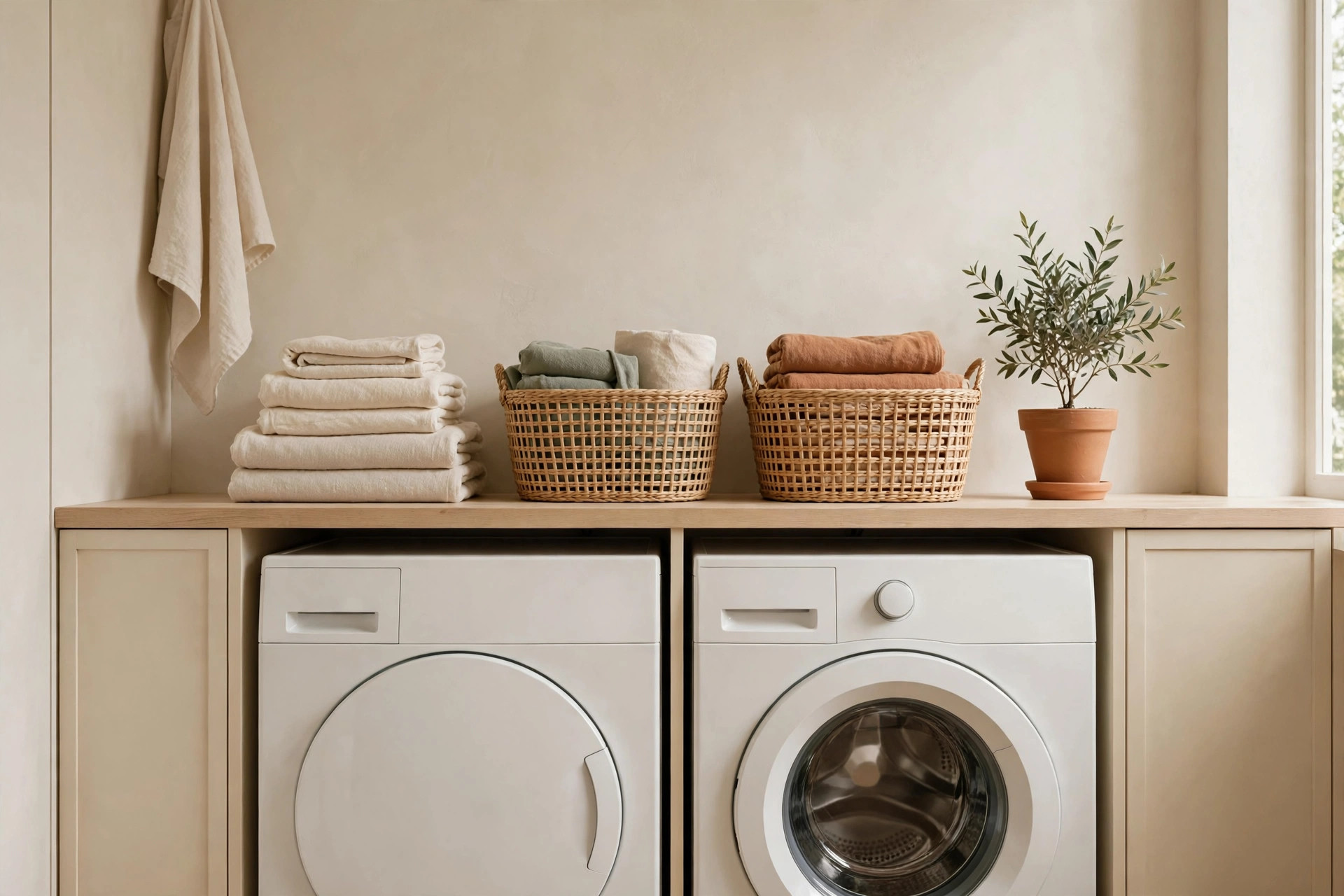
The shelf above your washer is the closet’s prime real estate. It belongs to the small daily lineup you reach for every load — everything else needs a new home.
3. Mount the shelf 6 to 8 inches above the machine tops. That’s enough clearance to lift the washer lid. In a rental, use a freestanding over-the-machine shelving unit — a steel rack straddling the machines costs about $40–$60 and needs zero drilling. Skip tension-mount shelves: machines vibrate, and a friction shelf eventually slides.
4. Keep the shelf to five items, maximum. Five things you touch every week: detergent, stain treatment, dryer sheets or balls, a bin of clothespins, and wrinkle-release spray. Backup jugs and non-laundry supplies get relocated to a hall closet or under the sink. Five items stays usable; twelve becomes a wall you stare at helplessly.
Rolling carts in the 6-inch gap beside the machines
Almost every laundry closet has a 4- to 8-inch gap between the machines and the wall — space most people treat as the place where socks go to die. Measure it: that gap is a storage aisle.
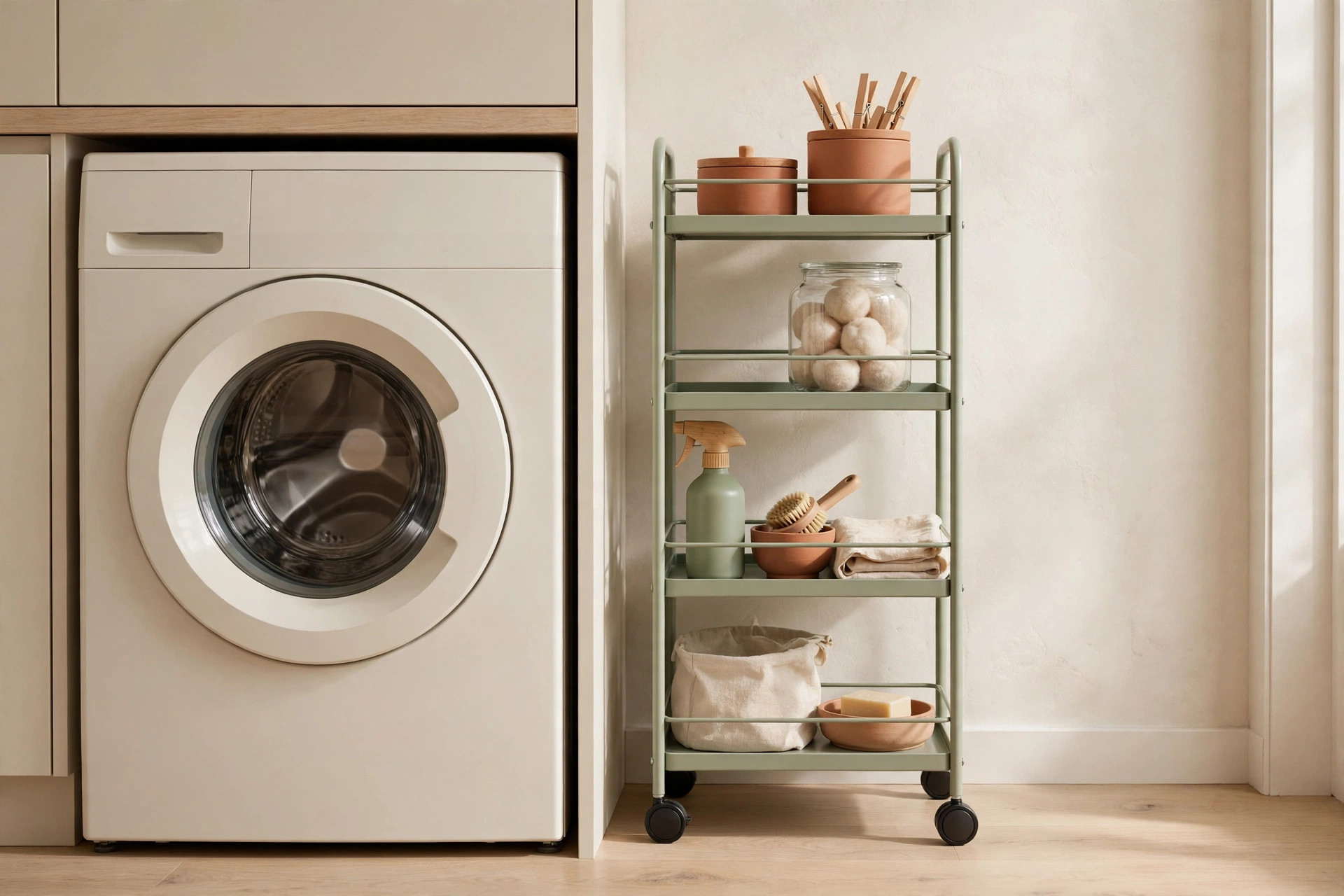
5. Slide a 5- to 7-inch rolling cart into the gap. Slim rolling carts with 3–4 tiers hold your full laundry supply in a footprint smaller than a shoebox. Roll it out to reach the shut-off valves, leaving half an inch of clearance each side so it doesn’t rattle during the spin cycle.
6. Assign each tier a job, top to bottom. Top tier: the grab kit — stain pen, dryer sheets, the delicates bag you always forget. Middle: current-use detergent and softener. Bottom: the heavy backup jug. Heaviest lowest keeps the cart stable. Label each tier so the system survives roommate usage.
Detergent decanting: ditching bulky bottles
Laundry bottles are designed for grocery aisles, not your closet. Decanting into smaller, uniform containers is the fastest way to make a closet look twice its size.
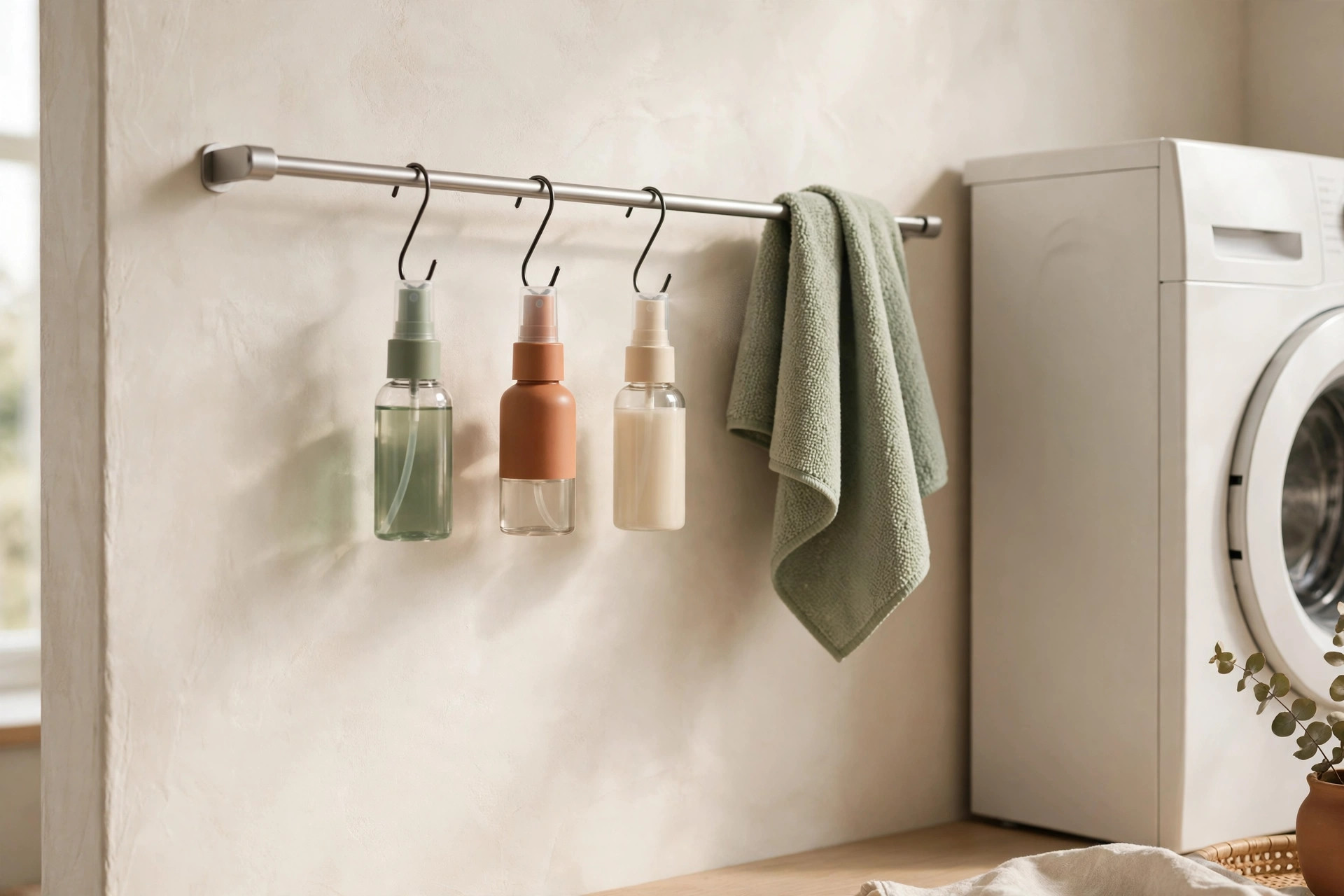
7. Move detergent into a pump dispenser or glass jar. A 32-ounce pump bottle dispenses the dose with one pump and takes up a quarter of the original bottle’s footprint. Pods and sheets go into a wide-mouth mason jar or small lidded canister. Uniform containers read as “organized” even when nothing else has changed — the same logic behind 21 Small Apartment Pantry Organization Ideas That Actually Work, where decanting pantry staples into matching jars is the core move.
8. Keep exactly one refill bottle on hand. Store the big economical jug elsewhere and refill your countertop dispenser weekly. One refill bottle is a stockpile that never clutters your shelf. Date it with masking tape; concentrated formulas lose punch after about a year.
Wall-mounted drying rack vs retractable line
Delicates and anything you don’t want to shrink need air — but a full drying rack doesn’t fit in a closet. Two renter-friendly options do.
9. Install a retractable clothesline for zero-footprint drying. A wall-mounted retractable line extends 5 to 8 feet and disappears into its housing when you’re done. Mount the housing and catch hook on opposite walls — most use two screws, which spackle fixes at move-out. It holds 15 to 20 pounds, plenty for delicates.
10. Use an over-the-door fold-down rack for heavier items. If your lease bans holes, an over-the-door rack hooks over the closet door or the washer lid edge and folds flat when not in use. It handles jeans and towels a retractable line can’t — the trade-off: it only works while the door is closed or partially open.
Sorting system that fits: 2-3 slim hampers, not one giant pile
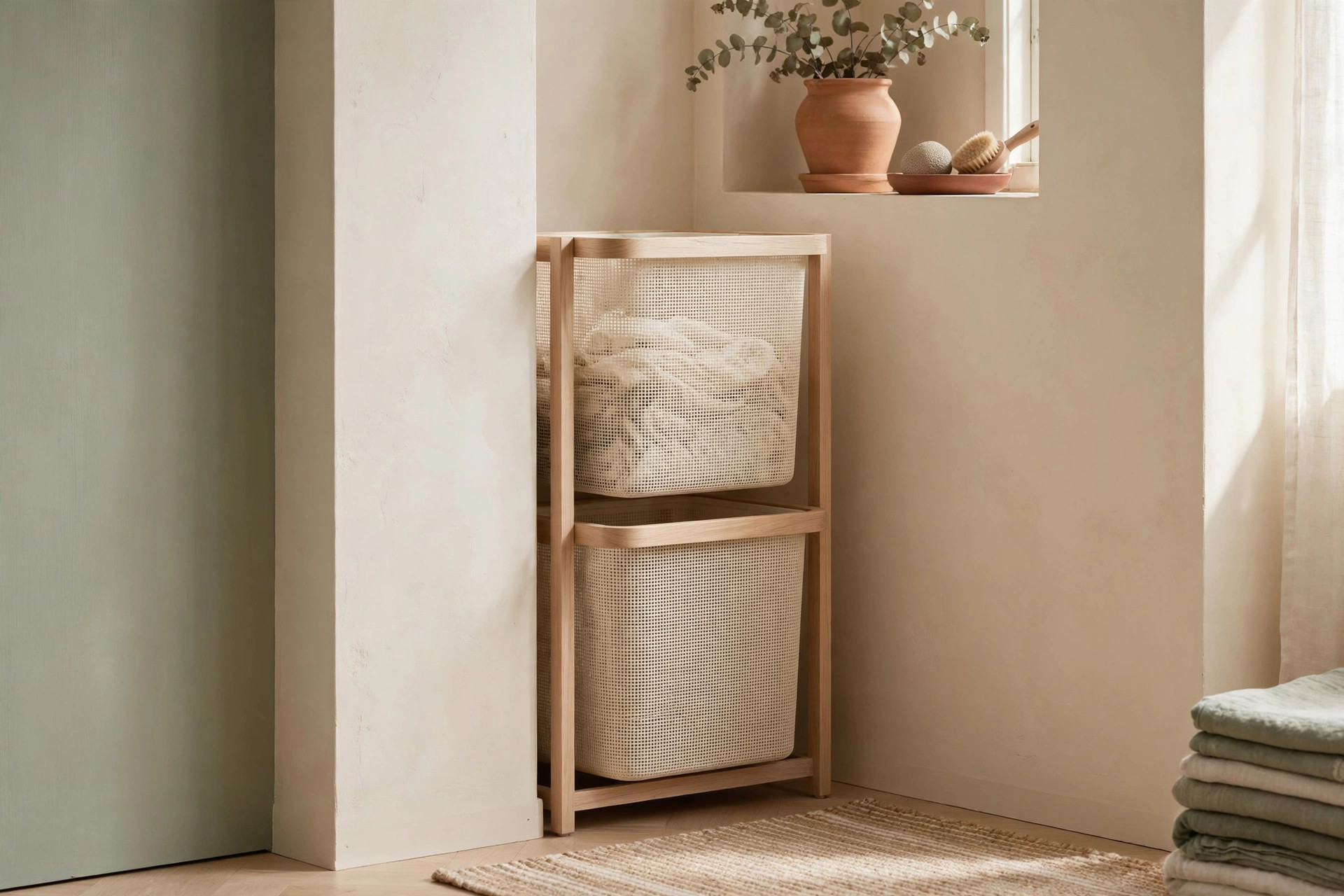
The classic mistake is one giant hamper in a closet with no floor space for it. Sorting needs to go vertical or slim — never wide.
11. Replace the giant hamper with two or three slim ones. Hampers 10 to 12 inches wide slide into the gaps beside machines or against the side wall. Two (lights, darks) is the minimum; three (add delicates) is ideal. A 20×12×24-inch slim hamper holds roughly two loads.
12. Hang slim laundry bags under the shelf. Mesh bags on adhesive hooks under your shelf catch delicates where they won’t get crushed. Delicates go in the hanging bag the moment they come off, and the whole bag goes straight into the machine. No digging, no lost socks.
Hiding the ugly: curtains and bifold-door-friendly solutions
Half of laundry closet frustration is visual: an open closet of machines and bottles looks like chaos even when it’s organized.
13. Hang a curtain on a tension rod inside the door frame. A tension rod with a linen or canvas curtain panel hides everything for under $25, installs in two minutes, and leaves zero holes. Choose a panel that hits just above the floor — too long and it drags through lint. For bifold doors you can’t remove, hang the curtain behind them instead.
14. Use magnetic and over-door storage that survives bifold doors. Magnetic spice racks stick to the washer or dryer side panels and hold dryer sheets, clothespins, and stain pens at hand height — and come off in seconds on moving day. Over-door wire racks designed for bifolds are slim enough that doors still fold; check depth (under 4 inches) before buying, since deeper racks jam the fold.
Lint, dust, and moisture: keeping a closet laundry healthy
A laundry closet is a warm, damp, lint-filled box. Skip maintenance and you get musty smells, a struggling dryer — and in the worst case, a fire hazard.
15. Clean the lint trap every load and the vent quarterly. The lint trap takes ten seconds. Quarterly, vacuum the vent duct behind the dryer with a brush attachment and check the exterior vent for blockages. Dryer vent fires are among the most preventable home fires — the U.S. Department of Energy’s dryer guidance covers vent cleaning as part of safe, efficient dryer use.
16. Ventilate the closet after every cycle. Leave the doors open 30 minutes after each cycle so moisture escapes instead of soaking into the walls. In humid climates, keep a refillable moisture-absorber tub (about $8) on the top shelf and swap the crystals every 60 to 90 days. If the closet smells musty when clean, wipe the front-loader door seal dry after every load and leave the washer door cracked.
If your laundry closet sits next to an equally tiny bathroom, the same moisture rules apply — 19 Tiny Bathroom Organization Ideas to Maximize Every Inch covers ventilation and mildew prevention in small wet spaces.
Mistakes to avoid
- Stacking heavy bottles on a vibrating surface. Washer tops shake and bottles fall. Heavy items belong on the cart’s bottom tier.
- Blocking the dryer vent or the machine’s air gaps. Cramming organizers behind the dryer cuts airflow and overheats the machine. Leave 4 to 6 inches behind the dryer no matter how tight the closet is.
- Storing cardboard boxes in a laundry closet. Cardboard absorbs moisture, harbors mildew, and collapses. Use plastic or fabric bins instead.
- Buying a full-size hamper for a closet with no floor space. Measure the gap first, then buy the hamper that fits it — never the other way around.
- Keeping bleach on a high shelf above the machines. One slip and you’re bleaching everything below. Store bleach at waist height in the cart, upright, in a drip tray.
Frequently asked questions
How do I organize a laundry closet with a stacked washer and dryer?
Go vertical and slim: use the side walls and door backs for shelves, magnetic racks, and hooks; slide a 5- to 7-inch rolling cart into the gap, decant detergent into pump bottles, and sort into slim hampers instead of one wide one.
Can I hang shelves in a rental laundry closet without drilling?
Yes. Freestanding over-the-machine units need zero drilling and hold the most weight. For smaller items, adhesive-mounted shelves and magnetic racks on the washer body work; spackle any drill holes at move-out.
Where should I keep detergent in a small laundry closet?
At hip-to-shoulder height, within arm’s reach of the washer door. Decant daily detergent into a pump bottle; store the backup jug elsewhere.
How do I keep a laundry closet from smelling musty?
Leave the closet doors open for 30 minutes after every cycle, crack the washer door so the seal dries, and keep a moisture absorber on the top shelf. Clean the lint trap every load and the vent quarterly. If the smell persists, run an empty hot cycle with two cups of white vinegar.
Conclusion
A tiny laundry closet doesn’t need more square footage — it needs its vertical space used properly, bottles shrunk down to fit, and a sorting system that doesn’t block the door. Pick two or three of these 16 ideas this weekend. Save this pin for later, or browse more ideas in our small spaces collection.