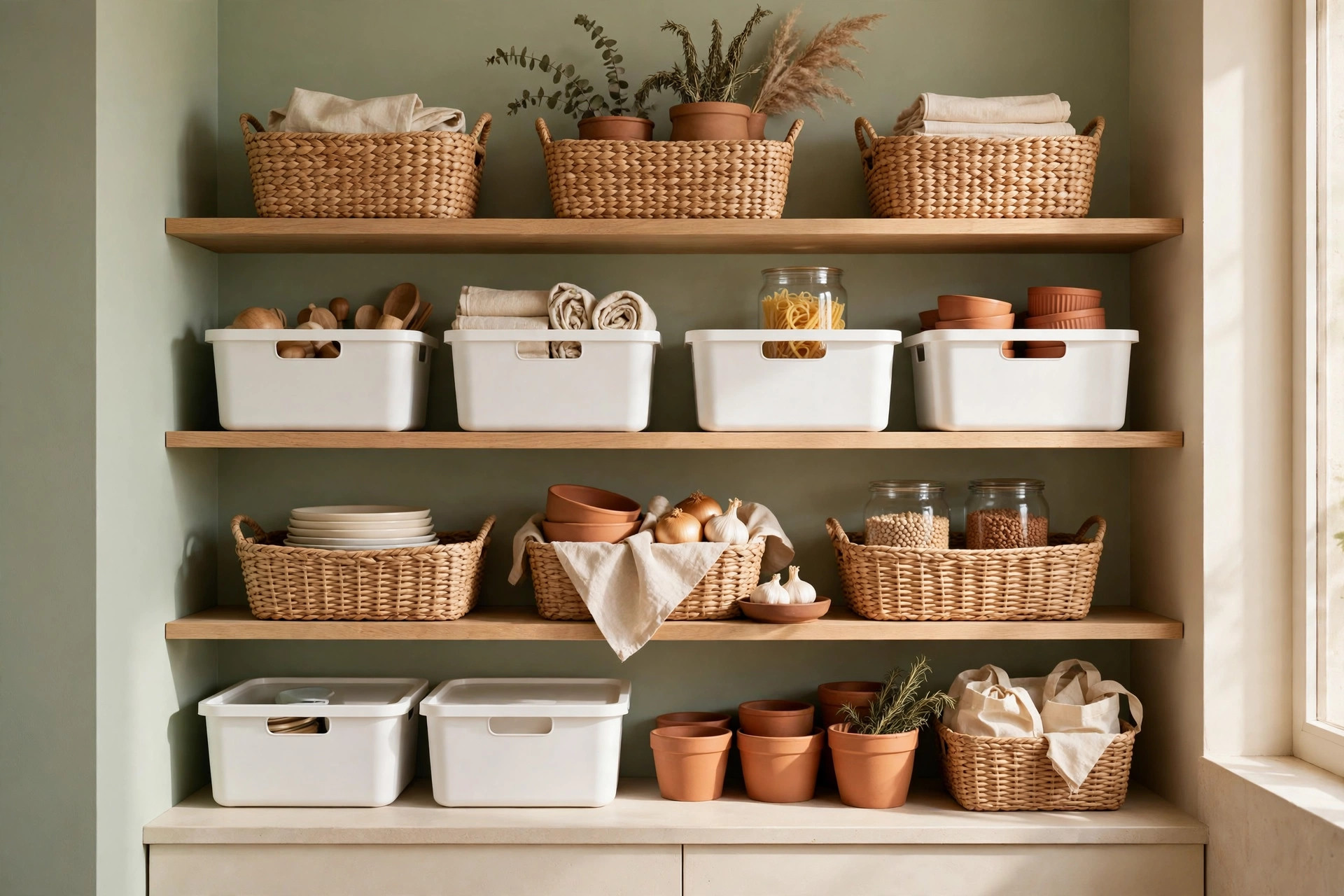
You don’t need a free weekend to fix a cluttered house. You need fifteen minutes, a timer, and a task small enough that you can’t talk yourself out of it. That’s exactly what 15 minute decluttering tasks are for — tiny, timed bursts that fit between dinner and dishes, one zone at a time. Below are 20 of them, each designed to finish before your timer rings. Do one a day, and in under three weeks your home will feel noticeably calmer.

The 15-minute rule: why it works
Big decluttering projects fail for busy people because the decision load is too heavy. You open a stuffed closet, see forty decisions waiting, and close the door. A fifteen-minute task shrinks the job to five or six decisions — small enough that your brain doesn’t argue. The timer gives you permission to stop, removes the pressure of “finishing,” and turns the whole thing into a game with a deadline.
The method: grab a trash bag and a box for donations, set a phone timer for fifteen minutes, and work one tiny zone — a drawer, a shelf, a corner. Stop when the timer rings, even mid-task. Half-finished is fine; you’ll be back tomorrow. Each session removes a little daily friction and sharpens your sense of what “enough” looks like.
Kitchen quick wins
The kitchen is the fastest room to improve because it’s full of small, self-contained zones. Each of these fits one timer.
1. Purge the spice shelf
Pull every jar off one shelf. Ground spices go flat within roughly 6–12 months of opening, so sniff anything you’re unsure of — no smell, no flavor, toss it. Throw out the duplicates you bought because you forgot you already had them. Wipe the shelf and line the survivors up with labels facing out.
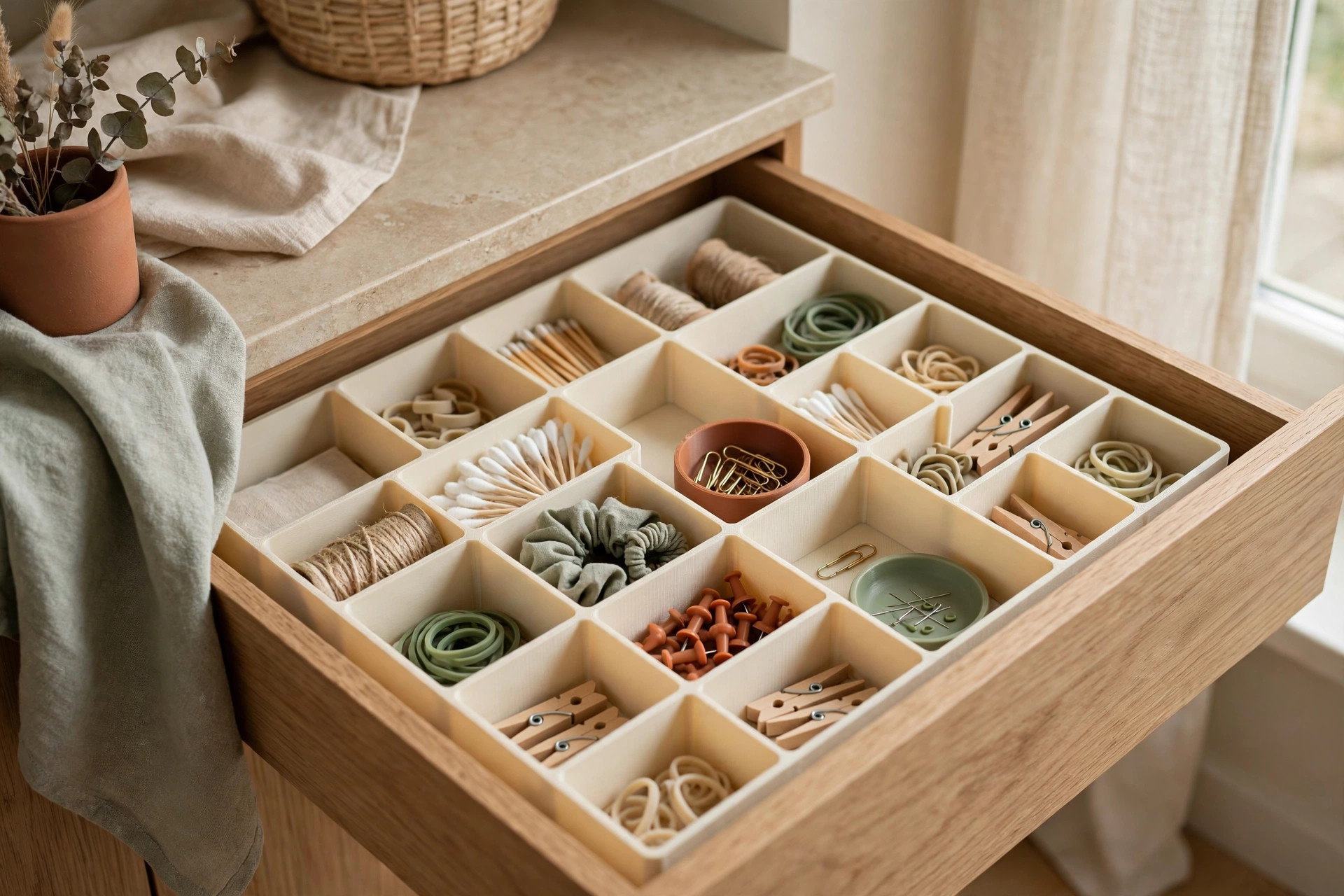
2. Reset the junk drawer
Dump the whole drawer onto the counter and wipe it out. Toss dried-up pens, dead batteries, old takeout menus, and mystery keys you haven’t identified in a year. Keep only what the drawer is actually for — tape, scissors, batteries, a notepad — corralled in one small tray so it can’t spread again.
3. Match the food containers
Pull every container and lid onto the counter and match them. Recycle anything missing its partner — lidless containers and lidless lids are clutter in disguise. Nest the surviving sets with lids on. Aim for roughly one week’s worth of containers for your household, not a lifetime supply. For drawer layouts that keep them tidy afterward, see Kitchen Drawer Organization Ideas for Tiny Drawers.
4. Tame one under-sink cabinet
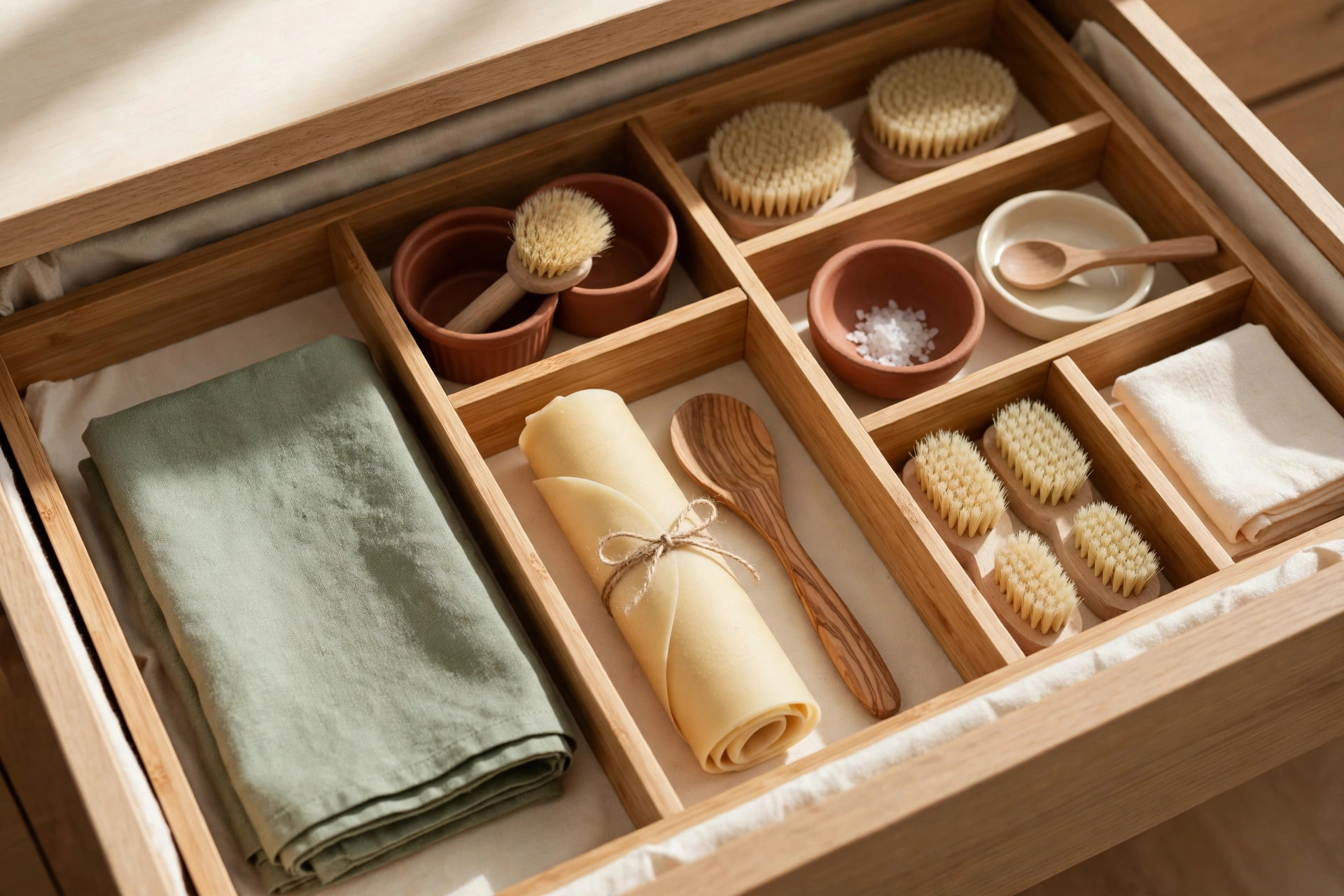
Pull everything out and toss leaking bottles, dried-out sponges, and the fourth half-used bottle of the same cleaner. Wipe the cabinet floor, and lay down a small washable mat if there isn’t one. Keep only the cleaners you use weekly, grouped in a single caddy you can lift out.
5. Clear the fridge door
Check every bottle and jar on the door: toss expired dressings, near-empty duplicates, and anything growing a science experiment. Keep one of each type you actually use. Wipe the shelf before reloading — this one zone visibly changes how the fridge feels when you open it.
Bedroom and closet
Bedrooms should be restful, but they collect the overflow of everything else. Fifteen minutes here pays off every single night.
6. Purge the sock and underwear drawer
Empty it completely. Toss anything stretched out, pilled beyond comfort, missing its partner, or that you always skip over — you already know which ones. Refold the keepers simply, file-folded standing up so you can see everything at a glance. One drawer, done.
7. Reset the nightstand
Clear the top and one drawer. Keep the lamp, your current book, and water — everything else gets a home elsewhere: chargers move to a charging spot, wrappers get binned, stray mail goes to the inbox tray. A clear nightstand is the cheapest bedroom upgrade there is.
8. Do a ten-hanger closet pass
Stand in front of your closet and pull ten items you know you don’t wear — things that don’t fit, are worn past rescue, or duplicate something better. Don’t try on anything; this is a fast pass, not a fitting session. Bag them immediately. For the full overhaul when you’re ready, How to Declutter Your Closet Before January walks through the 3-pile method.
9. Sweep under the bed
Pull everything out and sort in place: keep, toss, relocate. Broken hangers, forgotten gift bags, and the box from a gadget you set up a year ago all leave today. Low flat bins around 5–6 inches tall keep the zone usable without turning it into a second junk drawer.
10. Clear the dresser top
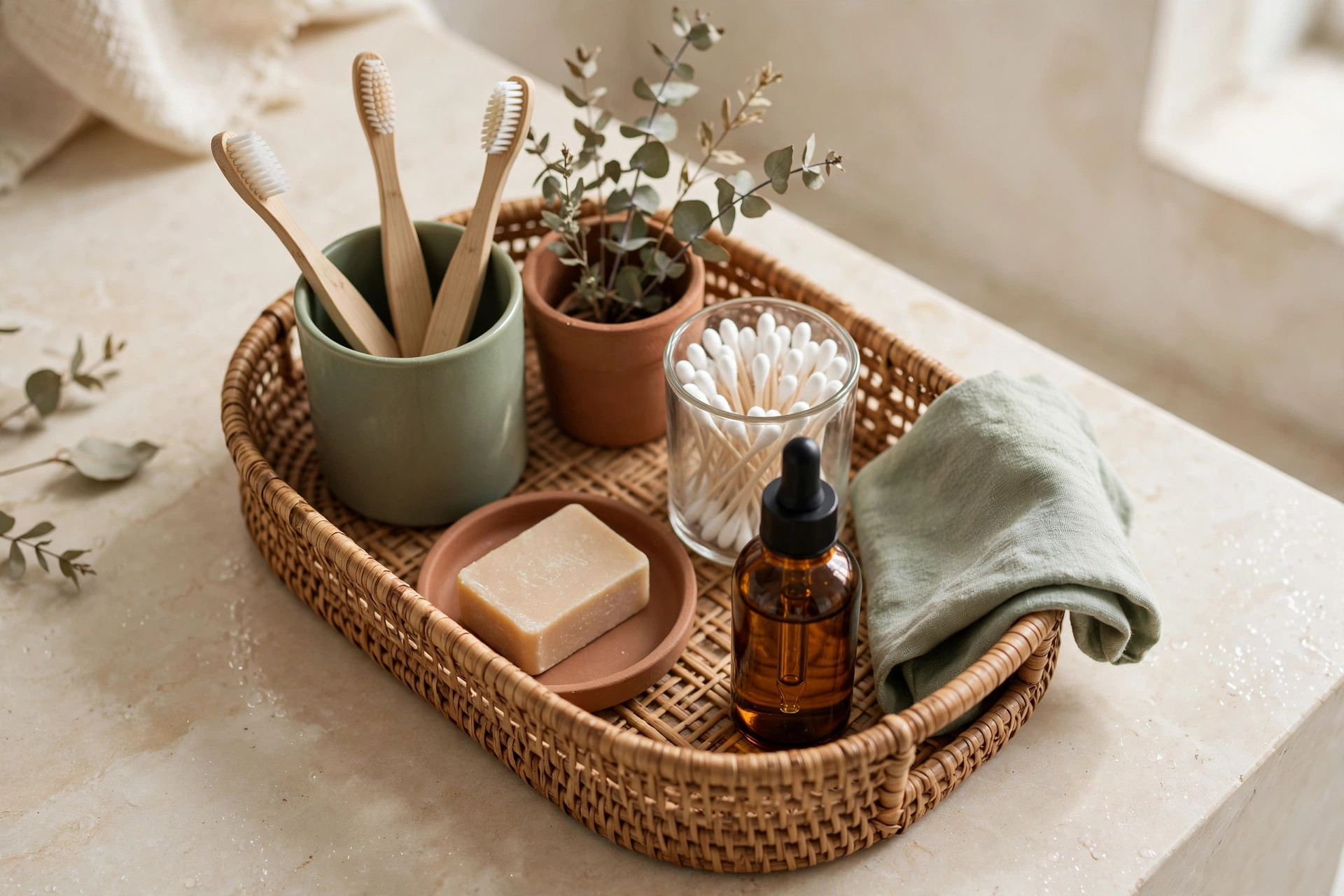
Dresser tops become landing pads for mail, receipts, jewelry, and random objects. Clear it entirely, wipe it down, and put back only what’s decorative or daily-use: a small tray for keys and jewelry, one piece of decor. Everything else goes to its real home or the donation bag.
Bathroom and entry
These are the smallest rooms in the house, which makes them perfect 15-minute targets — you can finish a whole zone before the timer runs out.
11. Purge the medicine cabinet
Check every bottle: expired medications, half-used samples you’ll never finish, and mystery prescriptions from years ago all go. Use a pharmacy take-back drop box for expired meds when one is available rather than tossing them in the trash. Wipe the shelves and keep only what you use regularly.
12. Fix the bathroom under-sink
Pull everything out and toss near-empty bottles, dried-up products, and the hotel shampoo collection. Keep one backup of each daily product, not five. A small two-tier shelf or a single bin keeps the survivors visible, so you stop rebuying what you already own.
13. Create an entry landing strip
Clear the clutter magnet: the shoe pile, the mail stack, the keys situation. Set up a simple system — a 12×9-inch tray for keys and wallets, a small basket or hooks for daily shoes, and a wall file or tray for incoming mail. Future mail never hits a flat surface again.
14. Sort the linen shelf
Pull down one shelf of towels and sheets. Frayed, thin, or stained towels become cleaning rags — cut them down and move them to the cleaning caddy. Keep roughly two full sets of sheets per bed, and enough towels for your household plus two guests. Beyond that, empty space is more useful than extra linens.
15. Audit the skincare and makeup
Makeup expires faster than you think — mascara lasts about three months once opened, liquid foundation around a year. Toss dried-out products, anything that smells off, and shades you bought for a version of you that never happened. What remains fits in one tray, and you’ll actually use it.
Paper and digital
Paper clutter is invisible until it’s overwhelming. Fifteen minutes of paper triage can lift real weight off your home and your head.
16. Sort the mail pile
Grab the whole pile and sort three stacks: recycle (junk mail, envelopes, inserts — straight to recycling now), file (bills, insurance, must-keeps), and action (invitations, forms, replies needed). Set up one small “inbox” tray where all future mail lands first, so it never becomes a pile again.
17. Ditch the manuals and old receipts
Toss product manuals — nearly every one exists as a free PDF on the manufacturer’s website. For receipts, keep only those tied to taxes, warranties, or returns in progress; the rest can go after about 30 days. Photograph the keepers and store the photos in one labeled folder.
18. Purge the filing drawer
Pull the oldest files and apply the keep-rules: tax returns and supporting documents generally need to be kept for 3 years from the date you file — the IRS explains the recordkeeping periods in detail. Toss old pay stubs, bank statements you can view online, and expired insurance policies. Label the remaining folders clearly so filing takes seconds.
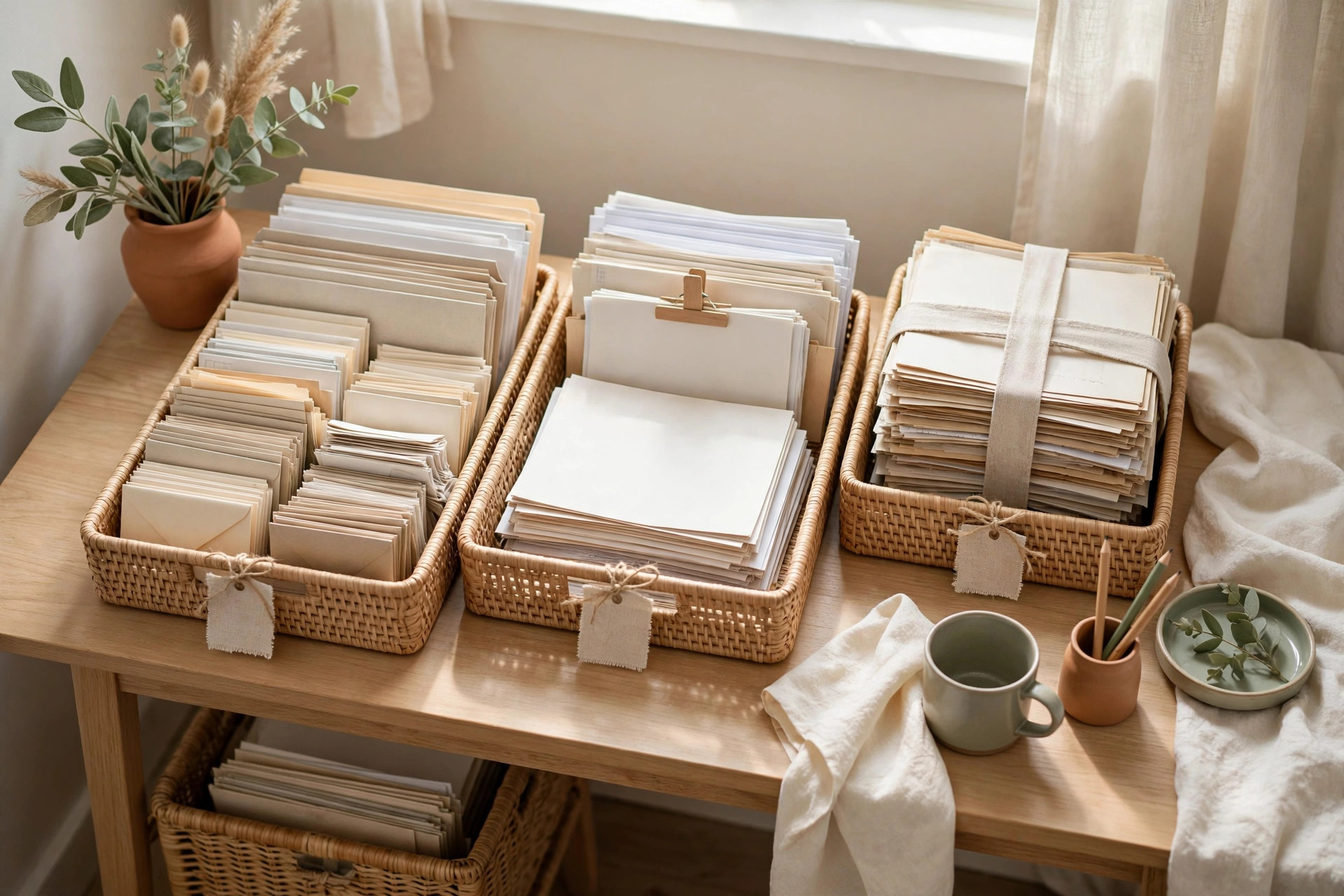
19. Clean the downloads folder
Fifteen minutes of digital decluttering: open your downloads folder and delete installers, duplicate photos, and screenshots you no longer need. Empty the trash. Then do the same quick pass on your desktop — every file gets filed, deleted, or moved to one “sort later” folder you actually revisit weekly.
20. Delete unused apps and phone photos
Scroll your phone’s app list and delete anything you haven’t opened in a month — you can always reinstall. Then delete screenshots, blurry photos, and duplicates; most phones have a built-in duplicates album that finds them for you. It won’t make your phone faster, but it will feel calmer to use.
Building the daily habit
One session is a nice win; thirty of them is a different house. Keep it tiny and boring: same time, same timer, same bag-and-box setup. Don’t pick the zone in the moment — decide tonight what tomorrow’s task is, so you start working instead of deciding.
Track it somewhere visible. A simple paper checklist on the fridge beats an app you’ll forget to open. Miss a day? That’s allowed — just never miss twice. If daily prompts are what keep you going, The 30-Day Declutter Challenge for Beginners gives you a full month of small tasks in exactly this spirit.
When 15 minutes isn’t enough
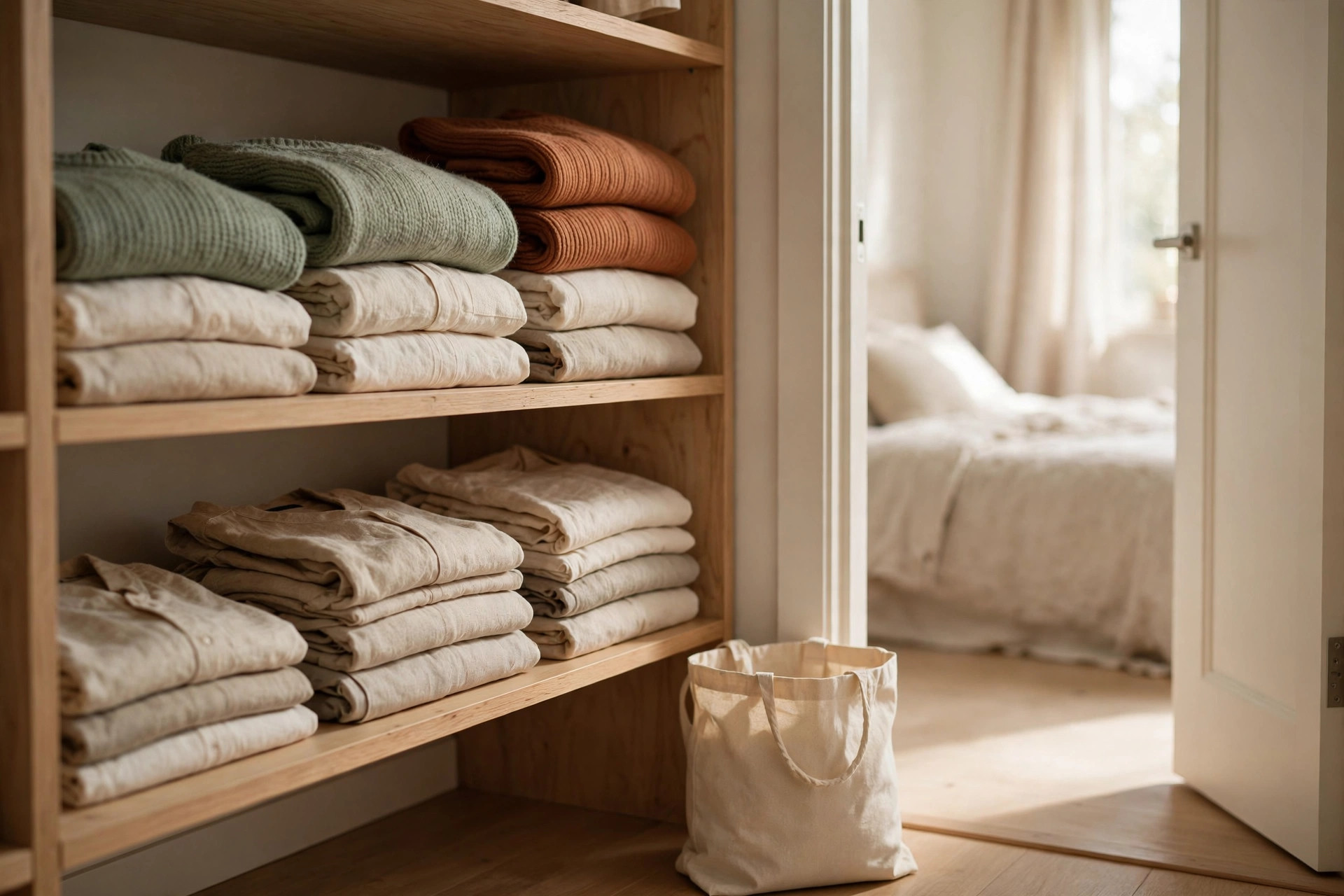
Some zones are past what a timer can fix: a garage that’s been a storage unit for five years, a room where every surface is covered, an attic you’ve avoided since moving in. That’s not failure — that’s a project, and projects need project time. Break it back down into 15-minute tasks and batch a few into one longer block: “garage, Saturday morning, four timers.”
For the full-house version, work in momentum order — quick wins first, heavy zones last — with a concrete checklist per room. The Room-by-Room Declutter Checklist for the New Year lays out the whole house in that order, so you always know where to start and when to stop.
Mistakes to avoid
- Buying organizers first. Storage products are step two, and only for what survives the purge. Measure before buying — a bin that doesn’t fit the shelf is clutter you paid for.
- Waiting for a free day. The free day never comes. Fifteen minutes today beats three hours someday.
- “Organizing” instead of removing. Decanting junk into pretty bins is not decluttering. If you wouldn’t keep it in a shoebox, you don’t need a labeled container for it.
- No exit plan. Donation bags that sit by the door for a month get unpacked back into the house. Schedule the drop-off the day you bag them.
- Tackling someone else’s stuff. You can’t declutter your partner’s desk or your kid’s toys for them — start with your own zones and let the calm spread. Nagging creates resistance, not momentum.
Frequently asked questions
How can I make 15 minutes actually enough time?
Pick a zone, not a room — one drawer, one shelf, one corner. The timer forces you to stop before decision fatigue hits, and you come back tomorrow fresh. Most people finish with minutes to spare once the zone is small enough.
Can I do more than one task a day?
Yes, but don’t stack them into a marathon. Two sessions with a break between them are fine; five back-to-back usually ends in burnout and a bigger mess than you started with. Consistency beats intensity every time.
How many sessions until my house is “done”?
For a typical small home, the 20 tasks here plus a few repeats cover most high-impact zones — roughly three to four weeks of daily sessions. After that, one session a week keeps clutter from creeping back.
Can I declutter if my family keeps adding to the mess?
Control your own zones first — your drawer, your closet, your nightstand. When family members see the result, many start asking for help with theirs. Give everyone their own 15-minute task at the same time; kids as young as five can do a toy pass with a timer.
Conclusion
You don’t need a free weekend, a new storage system, or a burst of motivation — you need fifteen minutes, a timer, and one small zone. These 20 quick declutter tasks each finish before the timer rings, and together they cover every high-impact corner of your home. Pick one for tonight and start small. Save this pin for later, and browse more ideas in the storage ideas category.