January is the easiest month to start decluttering and the easiest to burn out on. You open one stuffed closet, the job explodes to six rooms, and by February the bags are still sitting by the front door. A room by room declutter checklist shrinks the whole house down to one zone at a time, so you always know where to start, what to touch, and when to stop. This declutter checklist new year plan walks you through every room in momentum order — quick wins first, heavy zones last — with concrete rules for what stays, what leaves, and how to keep it from creeping back.
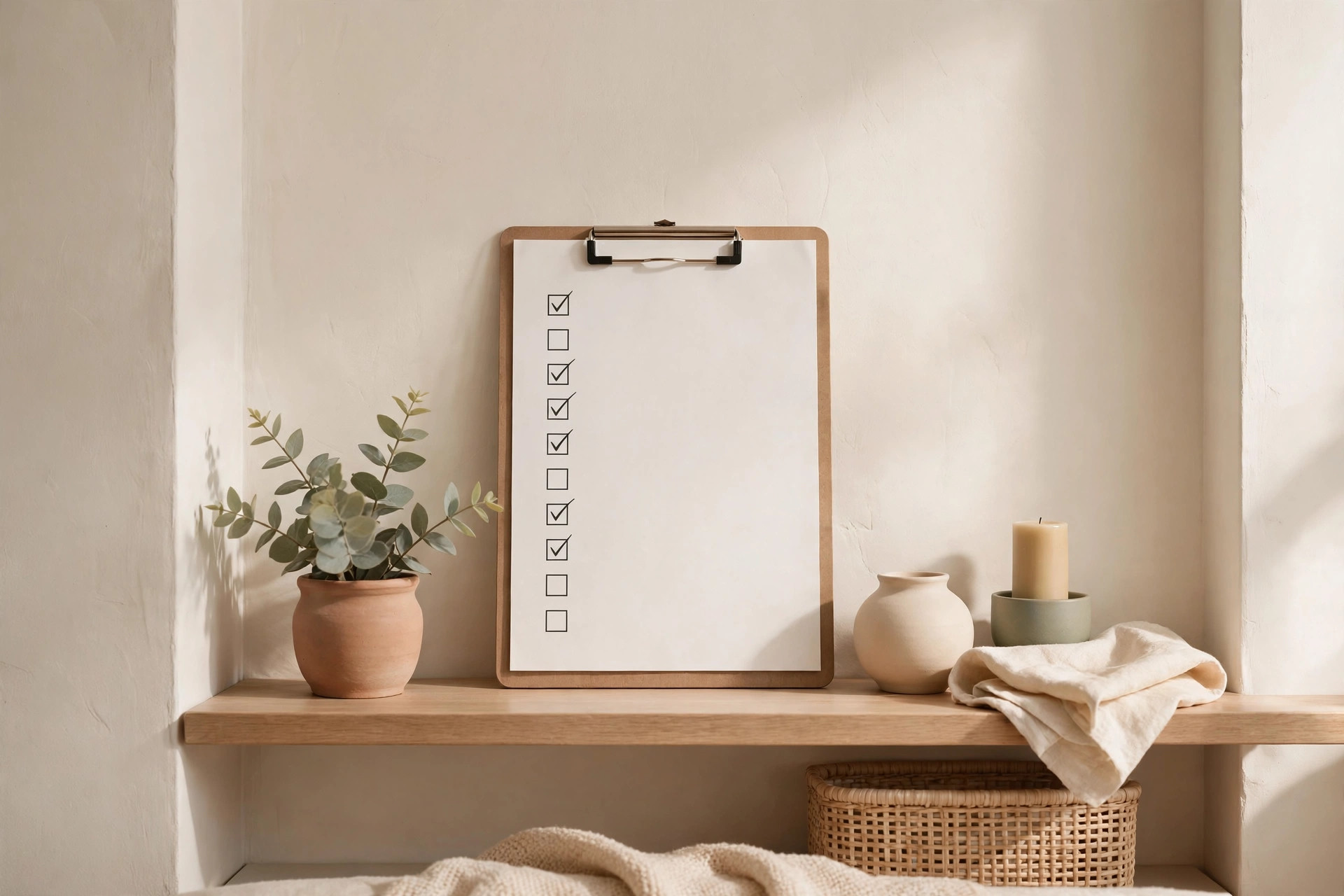
How to use this checklist
Work the list in order, one room at a time, and finish a room before moving on. Half-sorted rooms are how clutter wins — you spread it everywhere and then lose steam. For each zone, use four containers: keep here, relocate (belongs in another room), donate, and trash. Everything you touch goes into one of the four. If an item survives more than about 20 seconds of debate, ask one question: “Would I buy this again today?” A no is a release.
Set a session length before you start — 60 to 90 minutes for most rooms, half that for bathrooms — and stop when the timer ends. Keep one small “decision pending” box (10 items max) for sentimental things; anything undecided after two weeks leaves. Donate bags must leave the house the same day you finish a room — a scheduled drop-off or a charity pickup beats “someday.” And if you prefer a smaller daily rhythm, this whole list pairs well with The 30-Day Declutter Challenge for Beginners, which turns these zones into one manageable task a day.
Entryway and living room
Start here because these are the rooms you see first, and visible progress keeps you going. Sort every flat surface — consoles, coffee tables, side tables — into three buckets: daily use, décor you love, and everything else. Mail, keys, and sunglasses each get exactly one home: a wall hook rail, a slim tray by the door, a small lidded box in one drawer. Loose chargers are a classic entryway weed — keep one per daily-charged device, wrap them with a cable tie, and bin the rest.
- Shoe zone: one pair per person in the entryway, the rest in bedroom closets. A two-tier rack handles daily shoes in about 30 inches of width.
- Outerwear: one heavy coat and one light layer per person on the hooks; everything else migrates to bedroom closets. Unworn in two winters means it leaves.
- Living room textiles: two throw blankets, four cushions, and one basket max. Throws with pilling or holes become rags or leave.
- Remote controls and manuals: one remote per device, one basket for the rest. Manuals for anything you no longer own get recycled; the rest go to the home-office file (see below).

No foyer? The same zone logic works at mini scale — one hook, one tray, one small shoe rack — as shown in 15 Small Entryway Organization Ideas (Even With No Foyer).
Kitchen and pantry
Kitchens collect duplicates faster than any room in the house, so this section is ruthless on purpose. Pull everything out of one cabinet or drawer at a time (never the whole kitchen at once), wipe the shelf, and only return what earns the space. Gadgets you have never used leave. Knives that have not been sharpened in years get sharpened or donated; dull is dangerous.
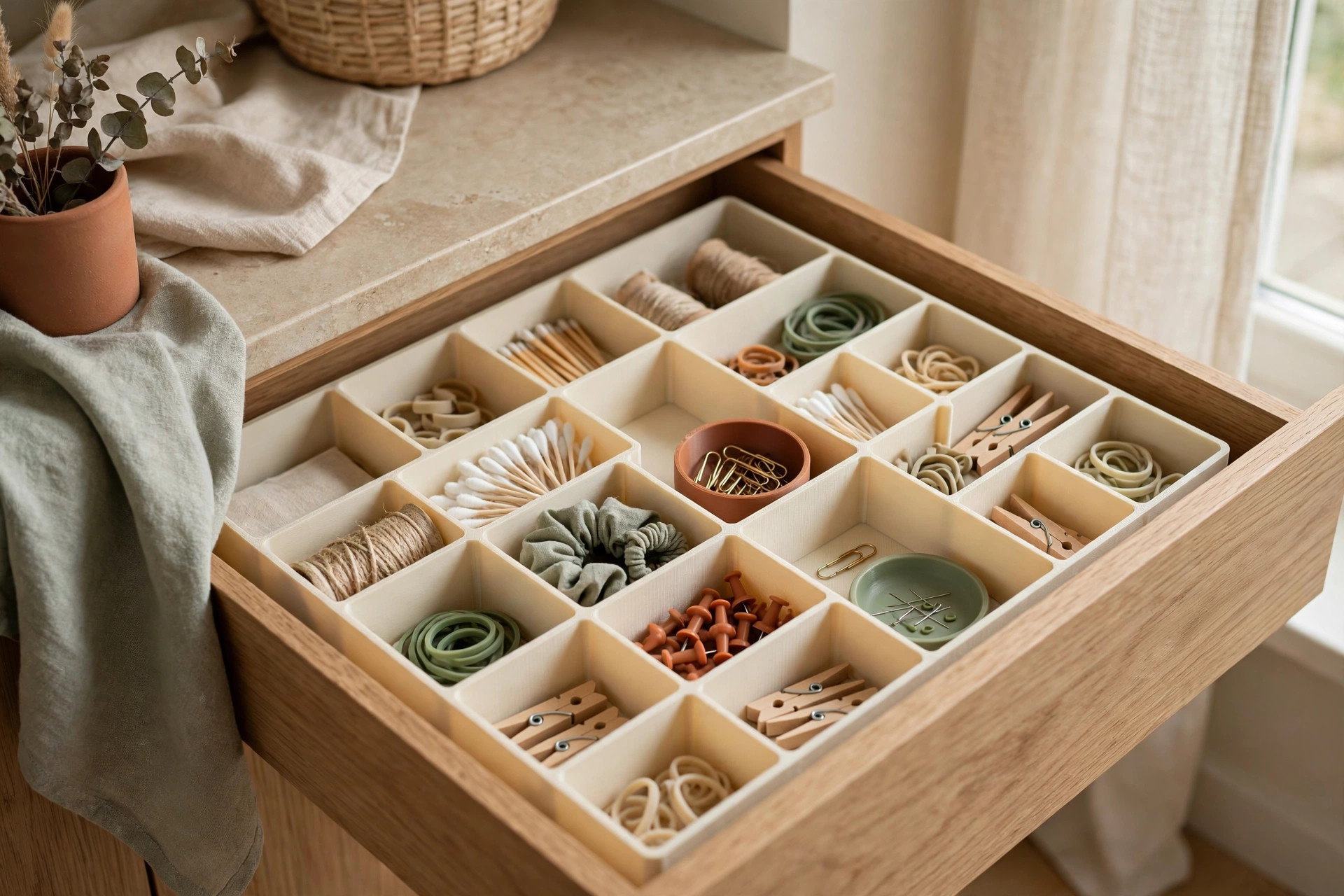
- Drawers: keep one drawer per task — daily cutlery in a narrow tray; cooking tools in another. Kitchen drawer organization ideas for tiny drawers covers the diagonal-lane and divider math when the space is tight.
- Cabinets: lids without containers and containers without lids get matched up once; strays leave. Stackable 10×6×6-inch bins work as pull-out drawers in deep cabinets.
- Pantry: check every expiry date and pull anything within one month of expiring into a “use this week” bin at eye level. Decant half-empty bags into matching jars only if it genuinely saves space — buying canisters for chaos is how you spend money to store nothing.
- Counters: what stays out earns its spot by being used daily — the kettle, the knife block. Everything else lives in a cabinet.
Bedrooms and closets
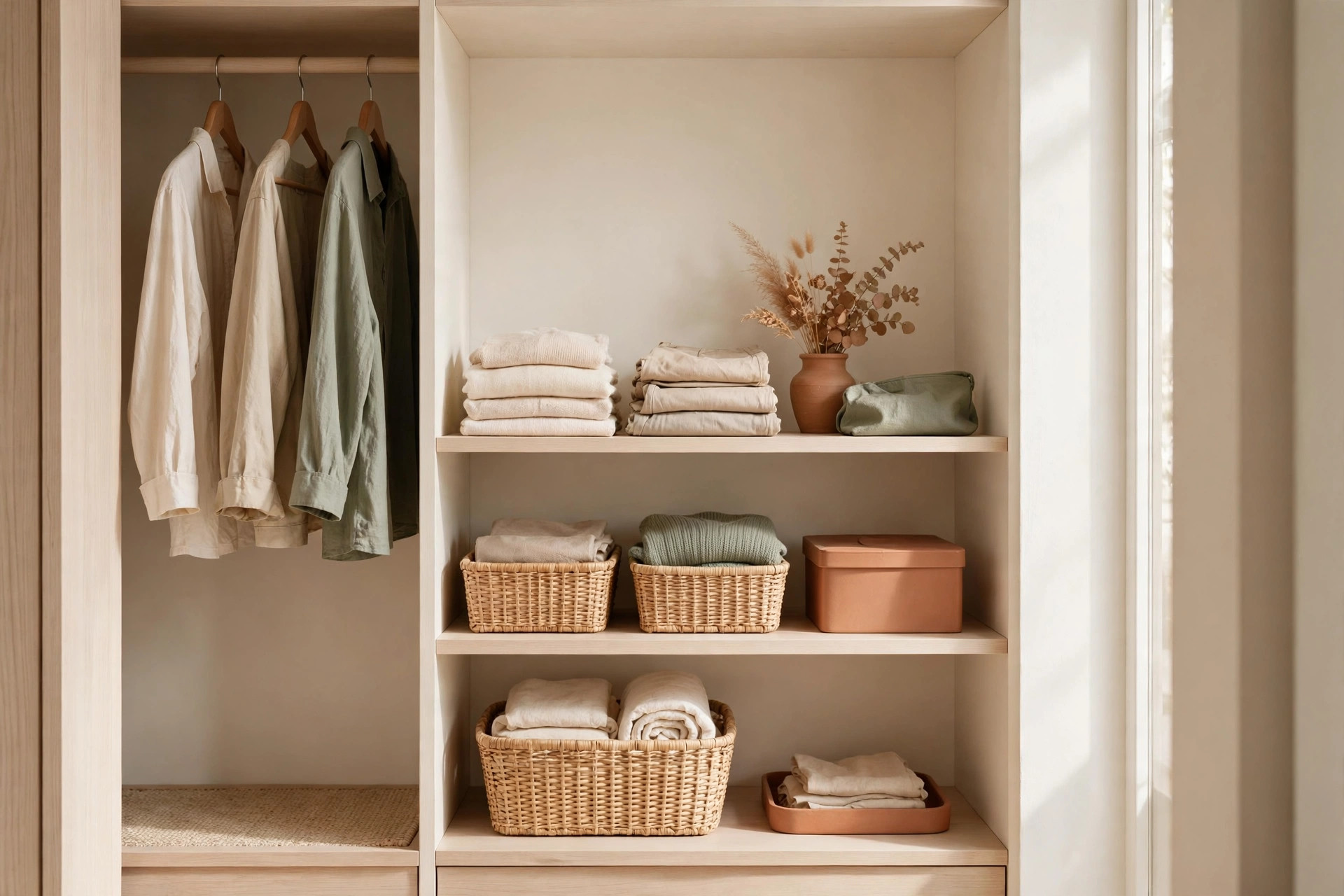
Do the surfaces first for a fast win, then the closet in sections — rods, shelves, floor, top shelf — never all at once. The clothing rule: if it does not fit today, it lives somewhere else. “Goal” sizes are pressure, not storage.
- Nightstands: one drawer each. Reading, sleep, and one personal item on top; chargers consolidated to a single cable.
- Dressers: one type of clothing per drawer (socks, underwear, tees, sleepwear). Rolling instead of folding adds roughly 30% capacity to the same drawer and stops the digging.
- Closet rods: flip all hangers backward; after three months, anything still backward leaves. Keep one donation bag on the closet floor at all times so decisions happen when you feel them.
- Under the bed and top shelf: these are for seasonal and occasional items only. If you forgot something was up there, that is information, not nostalgia.
Bathrooms
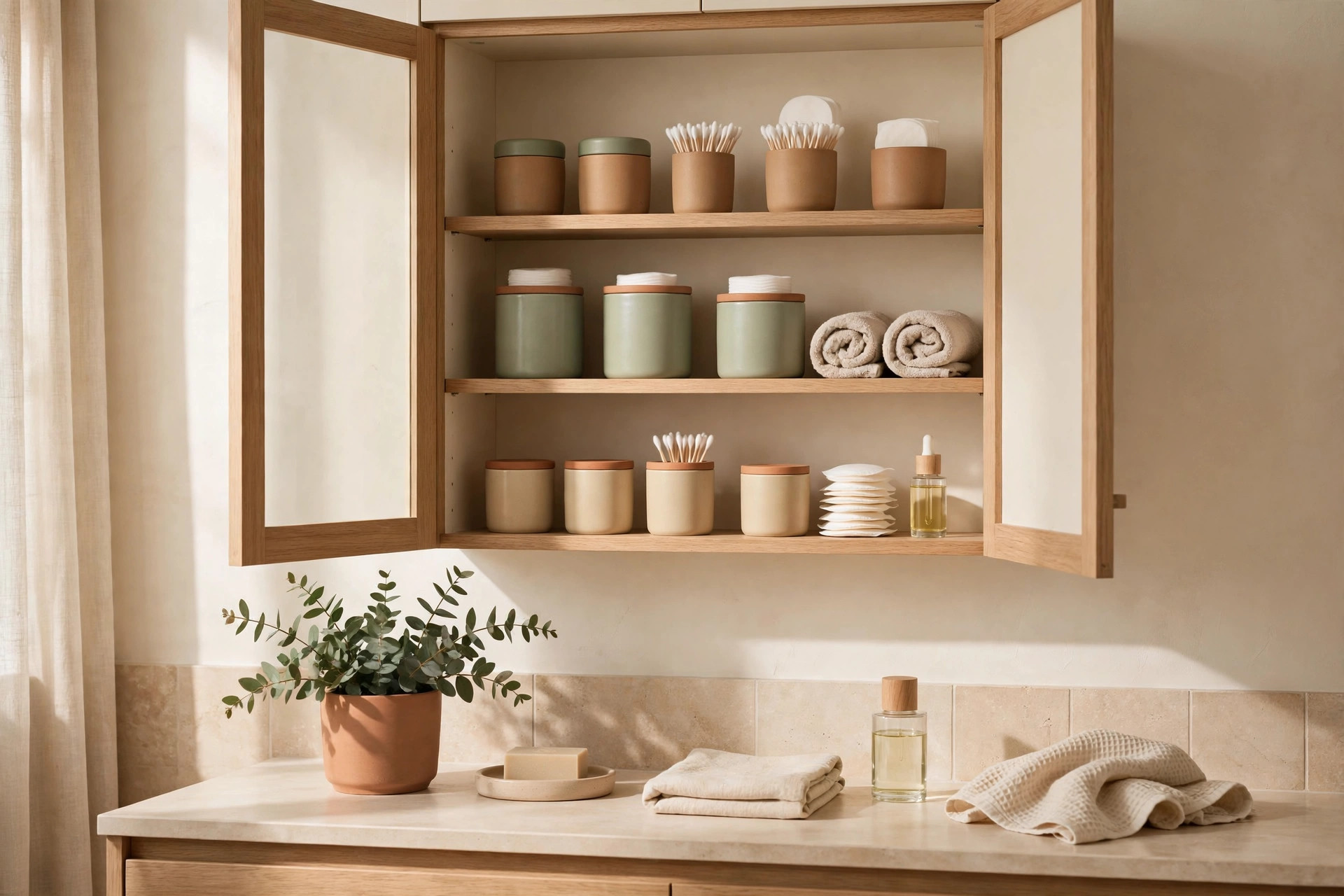
Bathrooms declutter fast — most sessions take 30 to 45 minutes — because nearly everything here has an expiry or a hygiene clock. Pull out every product, wipe the shelves, and toss: anything past its expiry, anything you tried once and disliked, makeup older than about 12 months (mascara is three months), and duplicate tools.
- Counter: one soap, one toothbrush cup per person, daily skincare only. Backup stock lives under the sink, not beside it.
- Under the sink: one cleaning product per job in a single pull-out caddy. Half-empty bottles of the same product get combined once, then the empties recycled.
- Linen closet: two towel sets per person plus one guest set. Towels that no longer absorb become cleaning rags; the rest get donated.
Home office and papers
Paper clutter is invisible until it is overwhelming, so give it a simple system: a “process” tray for action items, one slim file box for keep-forever documents, and a shred bag for everything else. First pass: recycle junk mail and envelopes. Second pass: shred old bills and statements you can access online (most incoming paper has a digital copy). Third pass: file what remains into no more than 10 plainly named folders, like “Tax 2025” or “Medical.”
Keep-forever documents are a short list: birth certificates, passports, property deeds, vehicle titles, wills, and tax returns for the last 7 years (the IRS generally has three years to audit, so seven is a safe margin). Scan them and keep paper copies in one fire-safe box. Desk drawers get the same treatment: one drawer for supplies, one for active projects, and one “everything” drawer — emptied and re-sorted monthly, not yearly.
Storage areas: garage, attic, under-bed
Do these last: the easy rooms build your decision muscles, and by now you know your real storage needs. These zones hold the most “just in case” clutter, so apply the 12-month rule hard: untouched for a year, no planned use in the next six months, it leaves. Exceptions only for genuine safety items and one small box of true keepsakes.
- Garage: group by zone — tools, sports, garden, car. Halve your cleaning chemicals (one all-purpose cleaner replaces three single-purpose ones), toss dried paint and dead batteries. Heavy items live below waist height; nothing heavier than about 25 pounds up high.
- Attic: check for moisture damage first — stained cardboard gets replaced with lidded plastic totes, then sorted. Holiday décor gets one labeled container per holiday. If it has not been hung in two years, it is décor for someone else’s house.
- Under-bed: measure your clearance before buying anything, then choose long flat bins that fill the depth — 17 Under Bed Storage Ideas for Small Bedrooms has the clearance-first system. Vacuum-seal bulky off-season bedding.
Mistakes to avoid
Buying organizers before decluttering. Bins do not fix clutter; they decorate it. Declutter first, measure what stays, then buy — one trip, exact sizes.
Starting with the sentimental room. Keepsakes need your full decision energy. Start with the bathroom or entryway, where decisions take seconds, and save keepsakes for last.
The “maybe” box with no deadline. A maybe box is a declutter graveyard. Cap it at 10 items, write a review date two weeks out on the lid, and whatever is still undecided leaves.
Donating with no pickup plan. Bags by the door become furniture. Schedule the drop-off before you start the room, and load donations into the car at session’s end.
Decluttering alone when you live with people. Sort only your own stuff; nobody’s relationship survives a surprise purge of their things. Set the shared rule together: common-area items are fair game, personal zones are each person’s call.
Frequently asked questions
How long does a whole-house declutter take?
For a one-to-two-bedroom home, expect 6 to 10 sessions of 60–90 minutes — about a month at one or two sessions a week. Larger homes with garages and attics run 12–15 sessions. The bottleneck is never speed; it is decision fatigue, which is why this checklist works room by room instead of in marathon purges.
What should I declutter first if I only have one weekend?
Hit the entryway, one bathroom, and your bedroom surfaces. Those three zones take about four hours total and change how your home feels every day, since they are the first spaces you see in the morning and the last at night.
Can I still declutter if I can’t easily donate large items?
Yes — sort first, logistics second. Most charities run free pickup services for furniture and large donations; check your local charity’s site for scheduling. In the meantime, use freecycle-style neighborhood groups for anything you want gone this week. Never let a donation pile sit while you research options.
How do I handle a partner’s or roommate’s belongings?
You don’t — not without them. Each person declutters their own zones; shared spaces get decided together in one 20-minute session. A communal “question” box in the hallway holds anything contested until the owner decides. Respecting the boundary keeps the house — and the relationship — calm.
What can I do with donations to make them tax-deductible?
In the US, donations of household goods to qualified charities may be deductible if you itemize. Keep the charity’s receipt and a list of what you donated with approximate values; the IRS publishes guidance on noncash charitable contributions. (This is general information, not tax advice.)
That is the whole house: entryway to garage, every zone in the order that keeps you moving, at a pace you can finish. Start with one room this weekend — not the whole list, just one room — and let the momentum do the rest. You can find this checklist and our other organization guides anytime in our storage ideas collection.