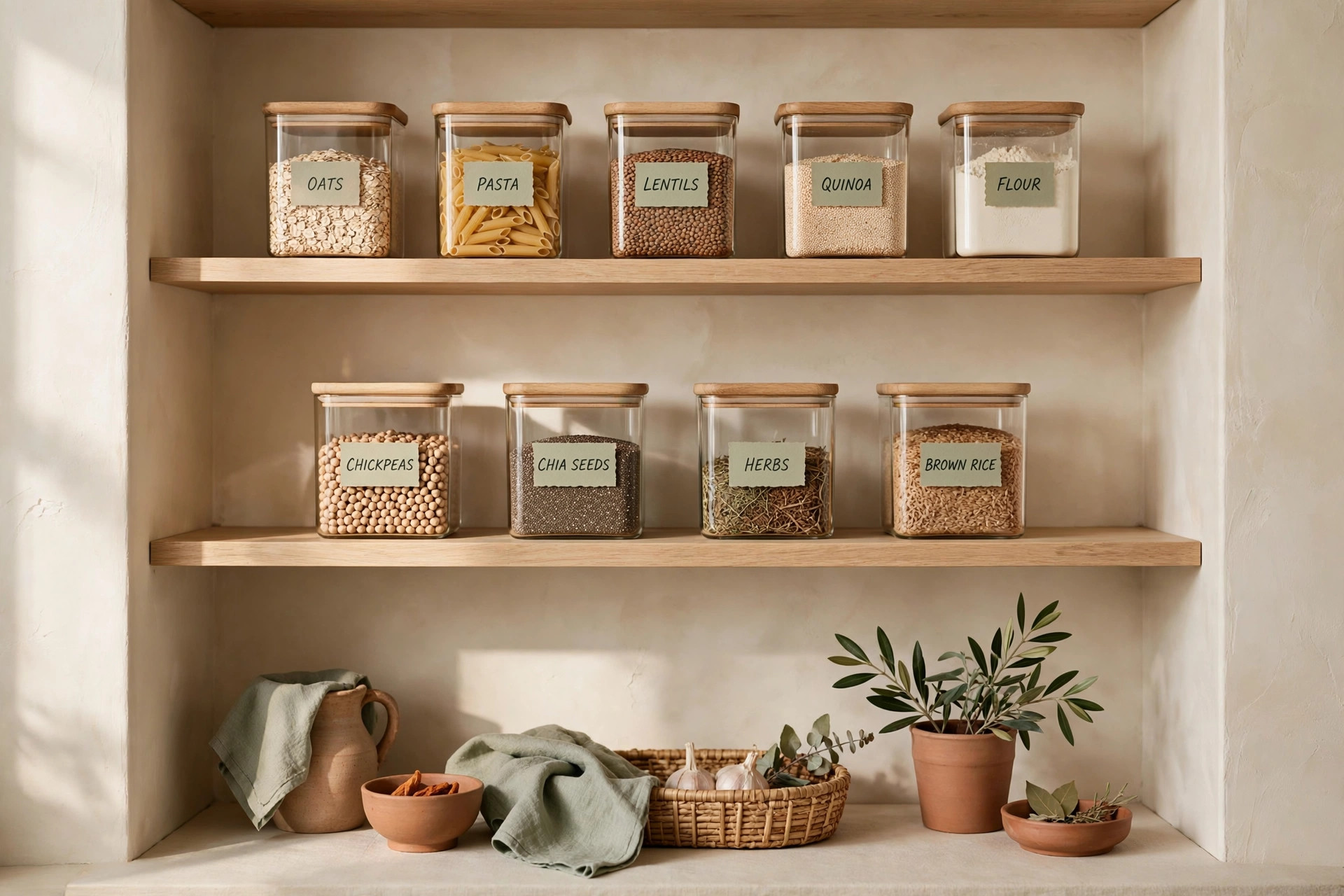
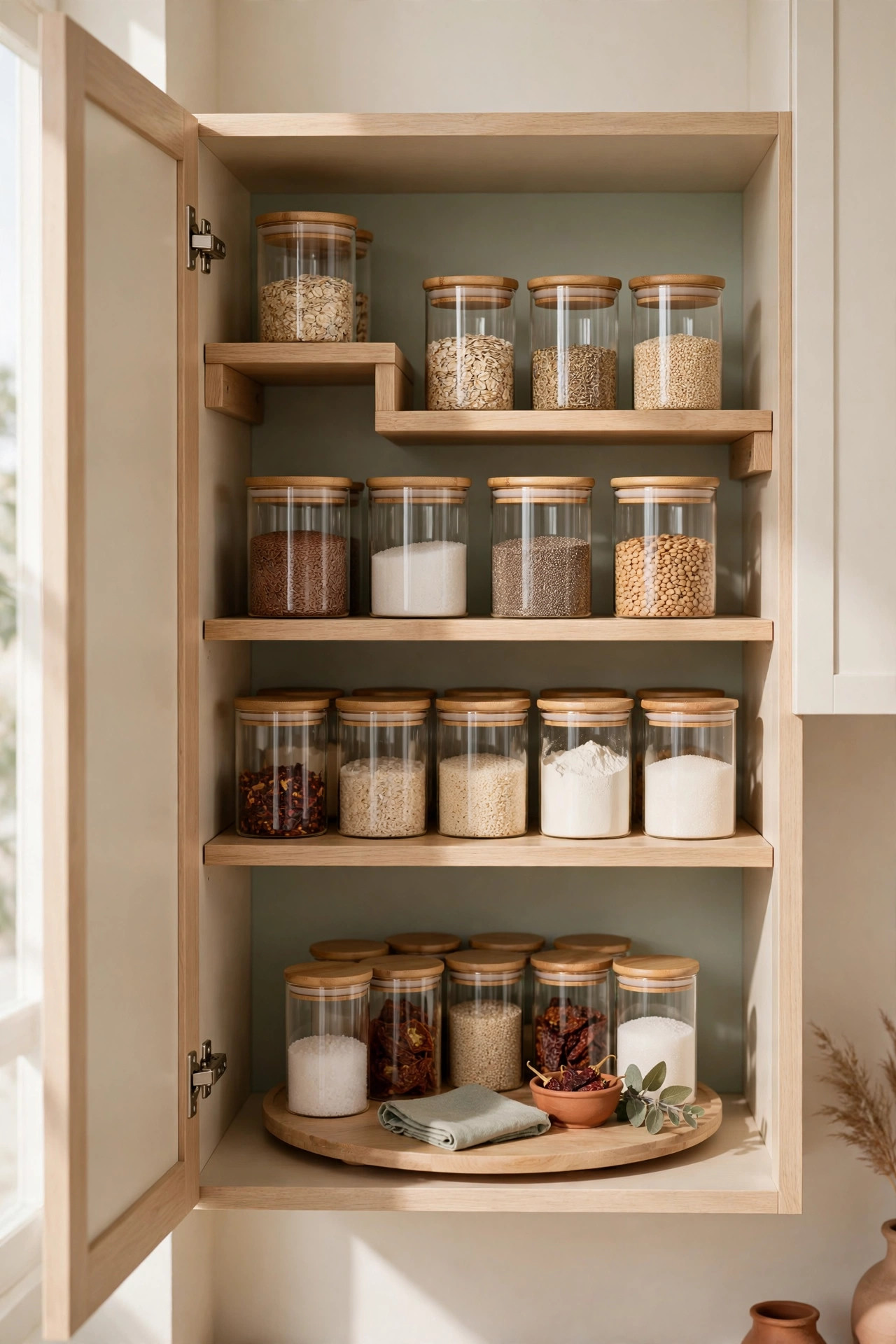
Kitchen drawer organization is the silent hero of a small kitchen — nobody sees your drawers in the photos, but they decide whether cooking feels calm or chaotic. If your drawers are narrow, shallow, and stuffed with a tangle of whisks, batteries, and mystery lids, you know the frustration: every drawer is a jumbled grab-and-hope situation, and finding the vegetable peeler takes longer than peeling the vegetables. The good news is that tiny drawers respond fast to the right system. With adjustable dividers, one job per drawer, and a few no-drill fixes, even the smallest drawers can work like custom storage. Here is the complete playbook for turning every drawer into a space that actually serves you.
The tiny-drawer mindset: every inch assigned
In a small kitchen you have fewer drawers than you need, so each one has to earn its place: one job per drawer, every inch assigned. A drawer holding utensils, junk, batteries, and three spare spatulas holds nothing well. A drawer holding only cooking tools stays organized almost by itself.
Give every drawer a single task
List what lives in each drawer right now, then reassign: one drawer for daily utensils, one for the “junk drawer” (rebuilt below), one for spices or food-storage lids, one deep drawer for pots and lids. With only two or three drawers total, combine tasks from the same station — cooking tools with potholders near the stove — but never mix stations in one drawer.
Measure before you buy anything
Measure the inside — width, depth, and height, to the nearest quarter inch — and keep the numbers in your phone. Organizers are sized for standard 22-inch-deep drawers, and a tray half an inch too long is useless. Measuring first means one purchase instead of two returns.
Adjustable dividers: the non-negotiable
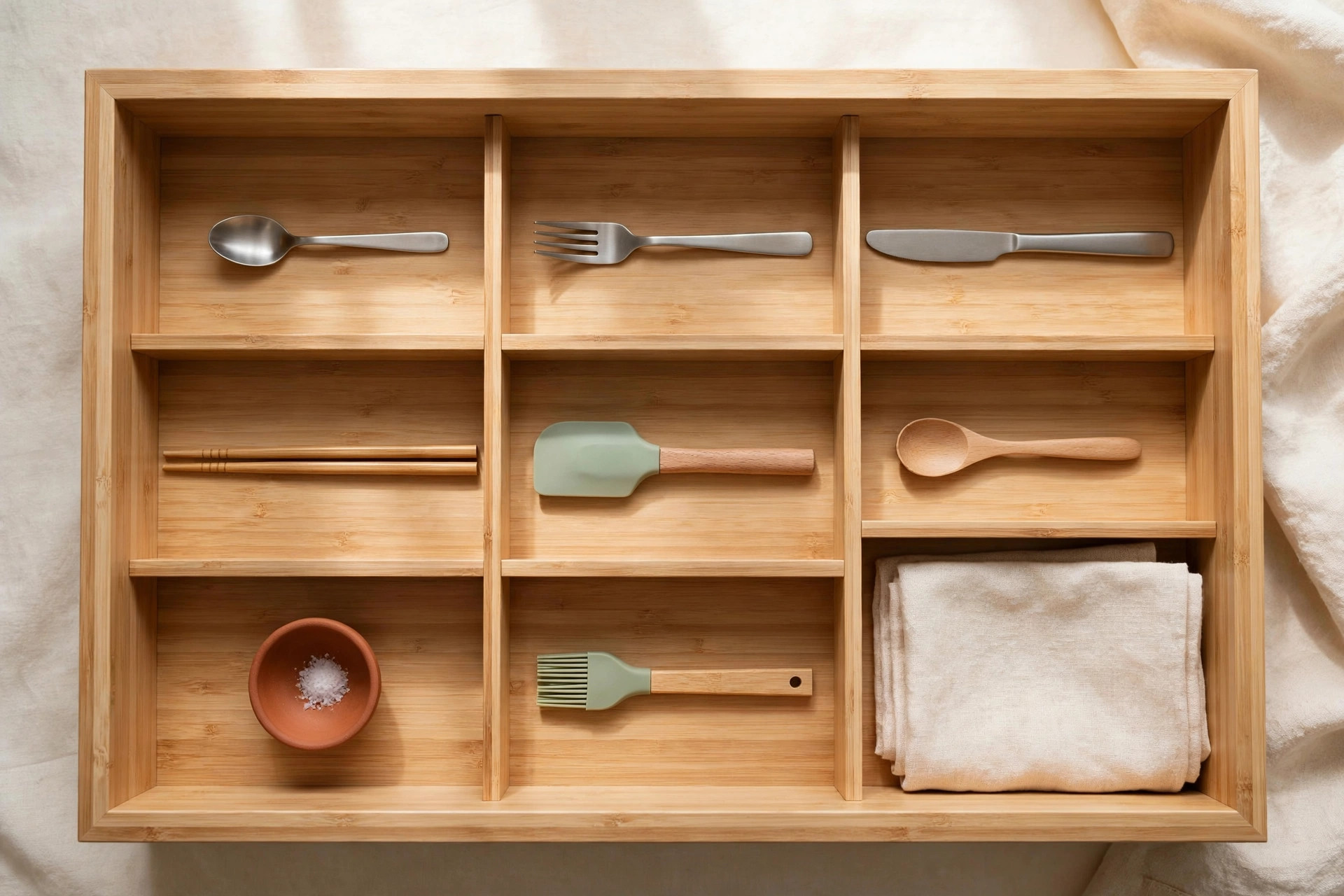
If you buy one thing for your drawers, make it adjustable dividers. Fixed cutlery trays are molded for drawers you don’t have — they leave dead gaps along the sides and compartments sized for items you don’t own. Adjustable dividers bend to your drawer instead of the other way around.
Why spring-loaded dividers win in small drawers
Spring-loaded bamboo dividers expand to fit your drawer’s exact inside width — typically 13 to 22 inches — and the spring tension holds them firmly with no screws, adhesive, or damage. Most stand about 2 to 2.5 inches tall, clearing the drawer face on standard drawers. Slide them in, push to expand, and you get custom-width lanes for spatulas, tongs, and whisks in about thirty seconds per drawer.
The two-divider rule for tiny drawers
You rarely need a full divider set in a small drawer. Two dividers create three lanes — daily cooking tools, baking and specialty tools, and odds and ends like peelers and thermometers. Enough structure to stop the tangle without carving the drawer into compartments nothing fits.
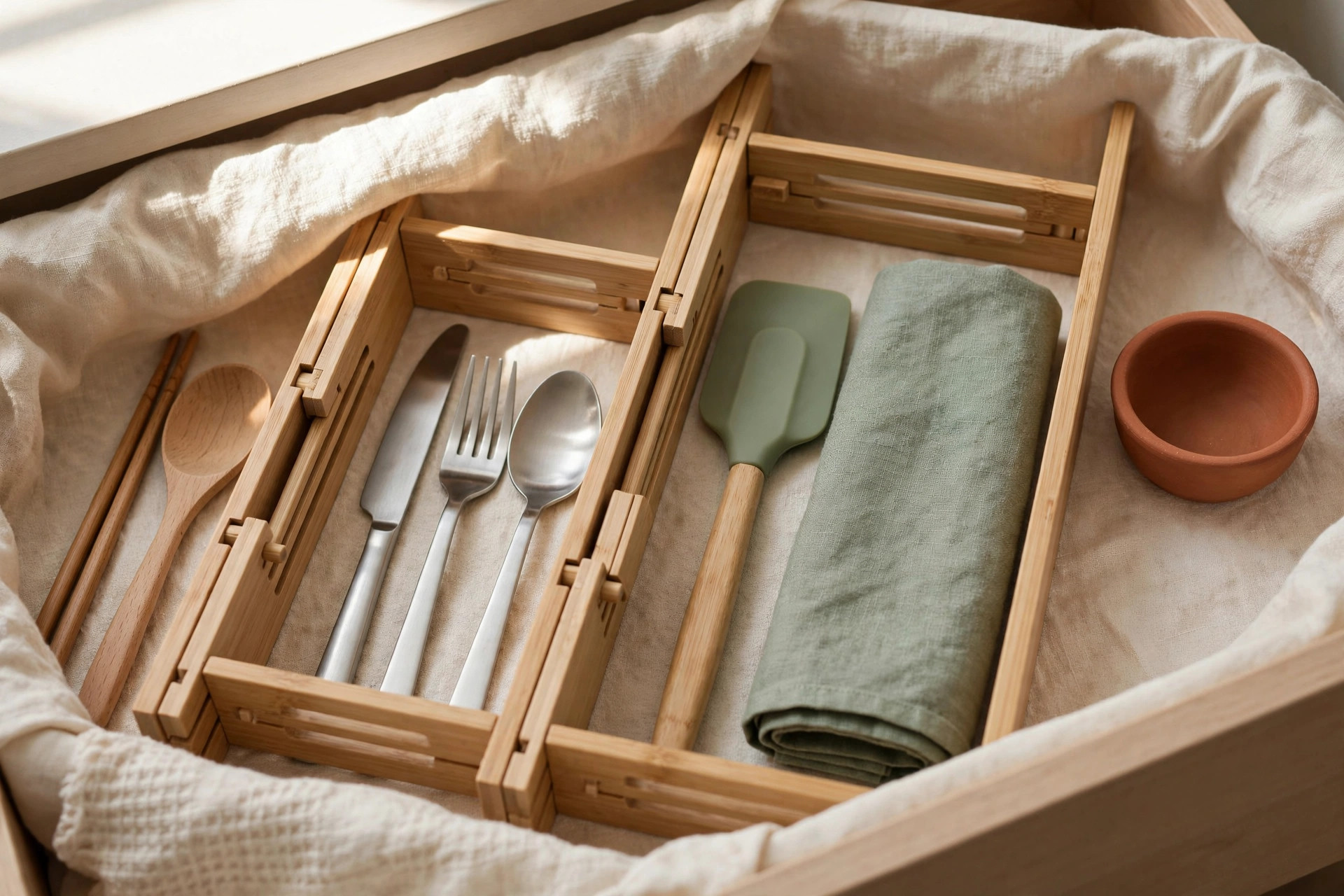
Utensil drawer: vertical vs horizontal
Most people default to laying utensils flat in rows, but in a tiny drawer the diagonal or vertical arrangement often wins real space back.
The case for horizontal: daily tools you grab constantly
When the drawer is at least 15 inches wide inside, laying spatulas, wooden spoons, and tongs flat in divided lanes keeps the most-used tools visible and one-handed to grab. Keep it to one layer — a second layer is where utensils go to disappear.
The case for vertical or diagonal: when width is the enemy
If the drawer is narrower than 14 inches, lay tools diagonally instead of straight across — a 12-inch spatula fits on the diagonal in a 10-inch-wide drawer, and diagonal lanes use the corners instead of wasting them. For deep, narrow drawers, a small upright caddy lets spatulas and ladles stand handle-down: visible, grabbable, impossible to tangle. It keeps tools off the counter, where every inch has to justify itself.
The junk drawer fix: zones in 10 minutes
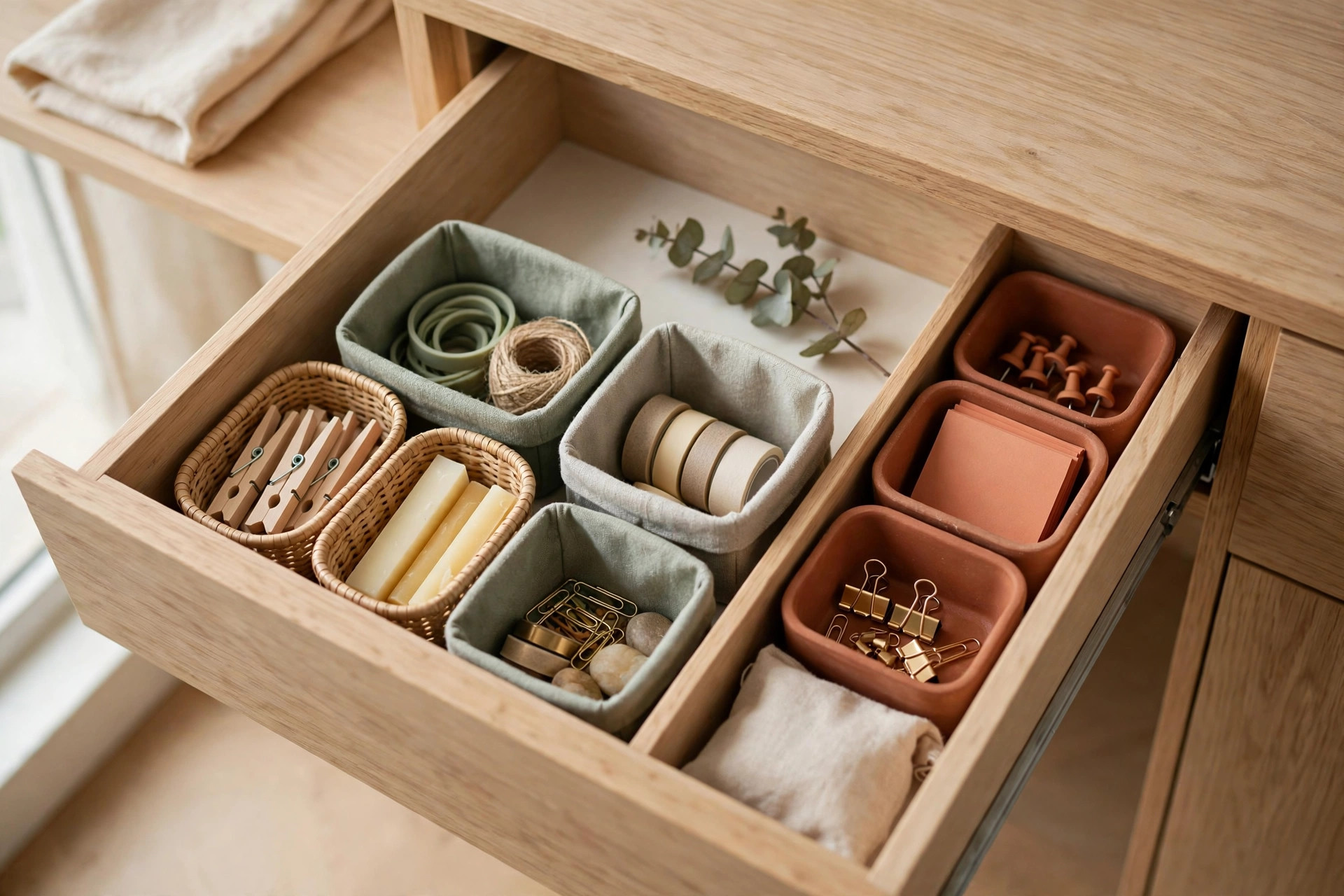
Every small kitchen has a junk drawer — the problem is never the drawer, it’s the lack of zones. Without structure it becomes a black hole within weeks; give it ten minutes and it becomes the most functional drawer in the kitchen.
The 10-minute zone reset
Dump everything onto a towel and throw away the dead pens, dried-out rubber bands, and mystery keys — this alone usually removes a third of the contents. Sort the rest into four zones: tools and repairs (tape, screwdriver, scissors), tech (batteries, chargers, flashlight), paper (notepad, stamps, takeout menus), and one small “everything else” zone. Give each zone one compartment with a slim tray or small boxes — even dollar-store organizers work here. Anything that doesn’t fit its zone doesn’t go back in.
The biggest zone-busters are items that belong elsewhere: cleaning supplies under the sink, spare bulbs with the laundry, meds in the medicine cabinet. If your under-sink area is also tight, pair this fix with a plan for organizing the cabinet under the sink so overflow never migrates back.
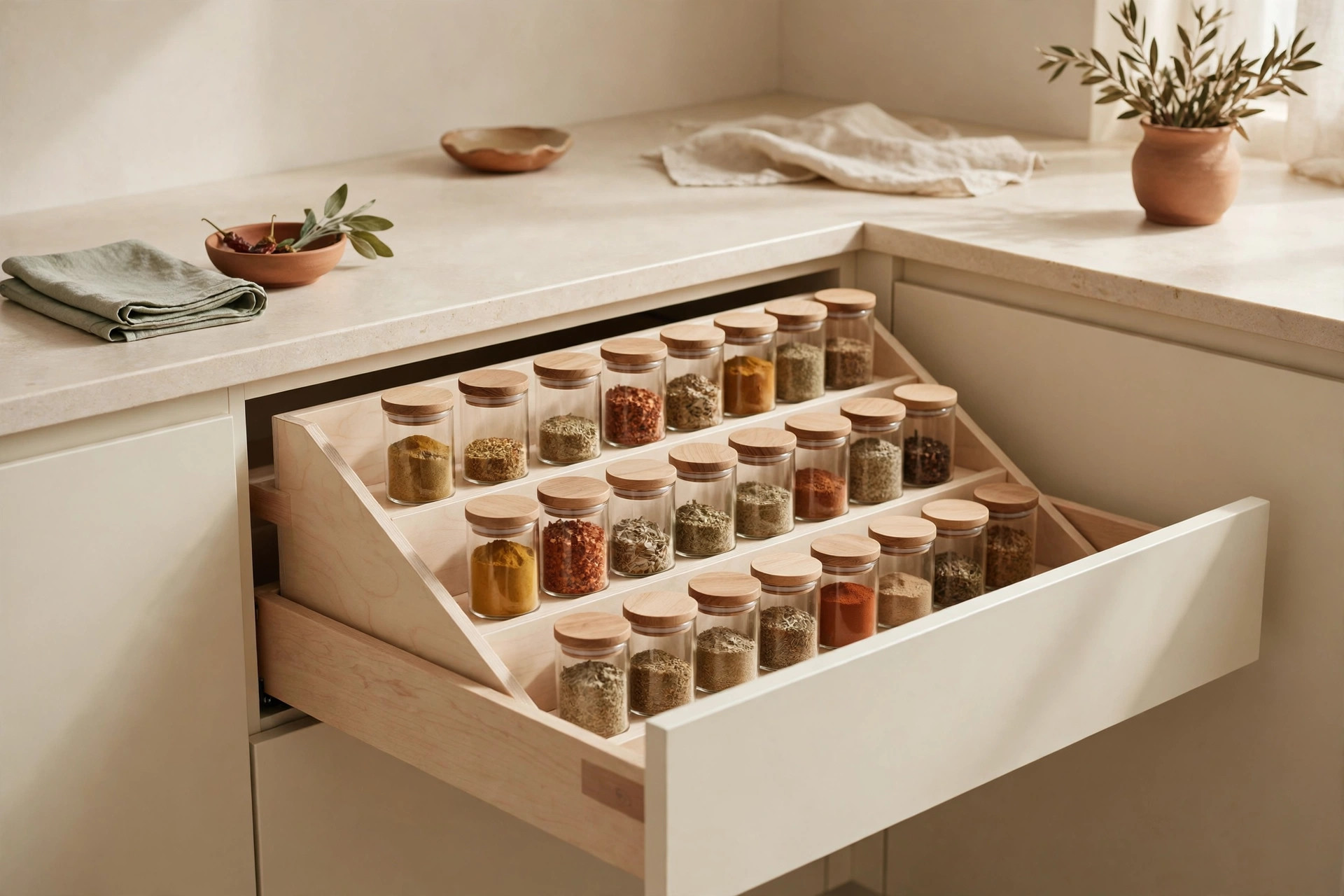
Spice drawer conversion
If your spices are crammed in a cabinet where you can’t read a single label, the drawer is the better home: jars lie flat at a slight angle near the stove, labels facing up.
The angled-tier trick
Stand a small tiered rack inside a drawer at least 4 inches deep inside — most drawers qualify. Lay spice jars on their sides with labels facing up so you read the whole collection at a glance. Standard 4-ounce jars are about 4 inches tall and 2 inches wide, so a 15-inch-wide drawer holds roughly two rows of 7 with a tier between. Line the drawer bottom with non-slip liner so jars never slide when it closes.
Match the jar, not the rack
Measure inside height before buying a tier — bulk-bin jars and oversized bottles often won’t clear the drawer face. Decanting into uniform 4-ounce jars doubles what fits and makes the whole drawer look intentional.
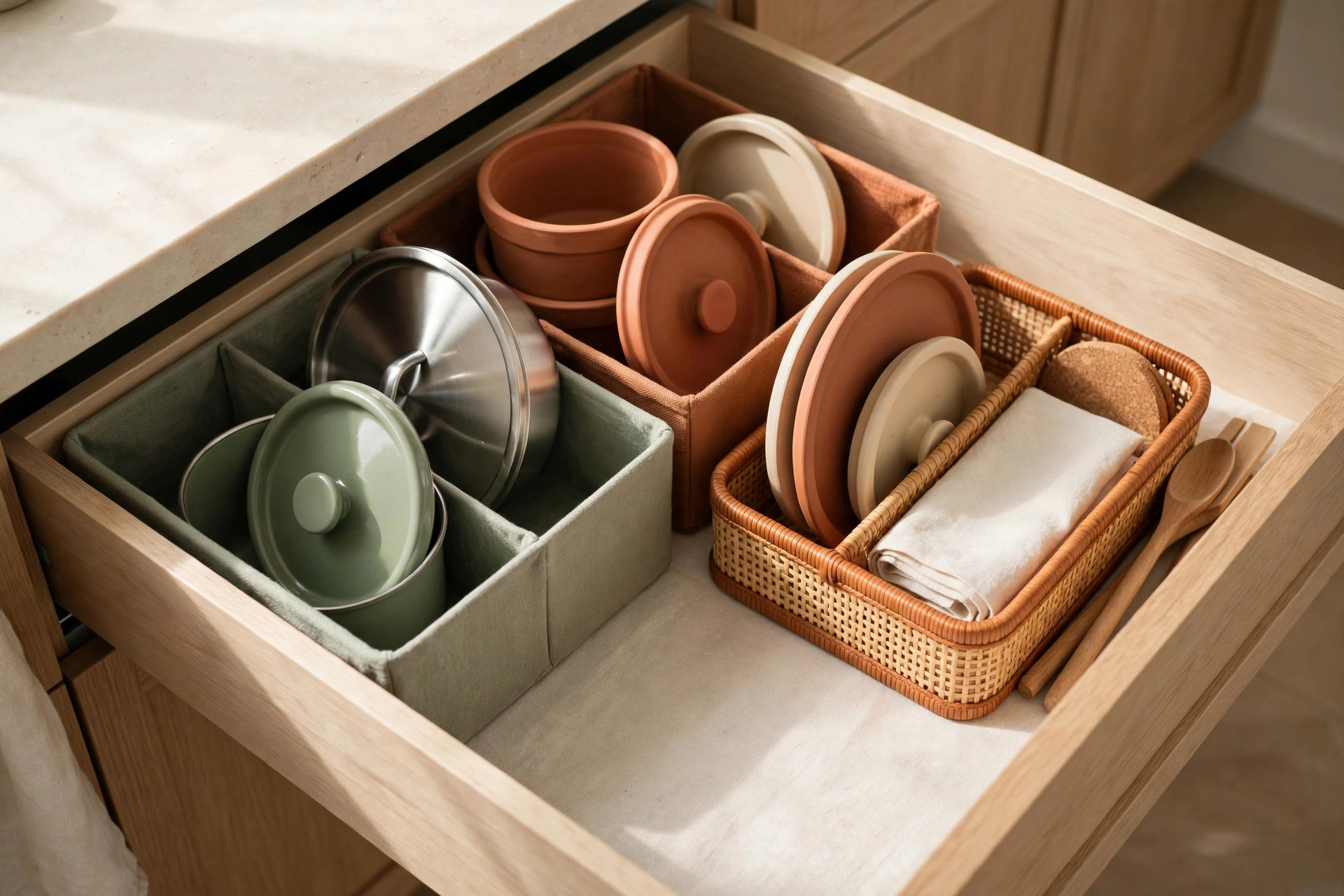
Deep drawers: bins within drawers
Deep drawers — 8 inches or taller — swallow things whole: pots stack with lids buried at the bottom, containers slide everywhere. The fix is treating the drawer like a small cabinet and putting organizers inside it.
Pots, pans, and the lid problem
File pots vertically with a pan organizer or tension rod across the drawer, and store lids upright in a lid rack. A standard 10-inch skillet with handle needs about 18 inches of front-to-back depth — measure yours, because skillets are the most common reason a deep drawer fails. If the drawer is too shallow for handles, park skillets in the cabinet and give it to saucepans and mixing bowls.
Bin the small stuff
Use bins as drawers-within-drawers: one for food storage lids, one for small gadgets, one for wraps and bags. Stackable 10×6×6-inch bins fit most deep drawers and lift out as a group when you need the full space for a stockpot — the same zone logic that makes small kitchen cabinets hold twice as much.
Maintenance: the monthly drawer audit
Drawer organization decays on a predictable schedule: about four weeks after a perfect setup, random items start migrating in. A monthly audit stops the slide.
The two-minute drawer scan
Once a month — tie it to the first of the month so you remember — open each drawer and pull out anything that doesn’t belong to its assigned task. Return items to their real homes, toss the broken and expired, and push drifting dividers back into place. Two minutes per drawer, ten for the kitchen. If a drawer is consistently messy at audit time, its assigned task doesn’t match how you cook — reassign the task rather than fighting your habits.
Mistakes to avoid: what NOT to buy
Tiny drawers punish the wrong purchases fast, because every wasted inch matters more. These are the mistakes that undo good drawer systems.
Buying organizers before measuring
Shopping first and measuring second is the number one drawer mistake. Standard trays assume 22-inch-deep drawers; tiny drawers in older apartments are often 15 to 18 inches deep with only 2 inches of clearance under the face. Measure inside dimensions first, then buy.
Oversized cutlery trays
A full-size cutlery tray eats an entire tiny drawer for five compartments. Cutlery needs at most a narrow tray for the daily set — park rarely used serving pieces elsewhere. And don’t let a bulky tray force overflow onto the counter; the rule for what stays out versus what gets hidden applies to drawers too.
Single-purpose unitaskers
Banana hangers, avocado slicer holsters, single-can dispensers — a unitasker earns space only if you use it weekly. In a tiny drawer, one avocado tool costs you a whole utensil lane. Buy versatile dividers and bins that adapt to whatever you own now and next year.
Stacking organizers on top of each other
Double-stacked trays look clever in product photos but fail in real drawers: the bottom layer becomes invisible storage you stop using. One layer only. If everything doesn’t fit, you own too much for the drawer — edit the contents, not the organizer height.
Frequently asked questions
How can I organize a kitchen drawer that is too narrow for a standard tray?
Skip trays and use two or three spring-loaded bamboo dividers — they expand to fit widths from about 13 inches up. For ultra-narrow drawers under 10 inches, lay items diagonally or use a single slim bin that fills the footprint, stopping contents from shifting without a tray’s rigid, space-wasting walls.
How do I keep dividers from sliding around when I open and close the drawer?
Spring-loaded dividers hold with tension and rarely slide — if yours do, line the drawer bottom with non-slip shelf liner first; the grip stops drift completely. Avoid adhesive-backed organizers in rentals: they damage finishes and fail when heat loosens the glue.
Can I organize kitchen drawers without buying anything?
Yes — the biggest wins are free. Pull everything out, assign one task per drawer, discard duplicates and broken items, and zone what you keep with boxes you already own: cut-down cereal boxes, small gift boxes, or repurposed food containers. Purchased dividers make it prettier and sturdier, but the task-per-drawer rule and the purge do most of the work.
How can I make a deep drawer actually work for pots and pans?
Treat it like a mini cabinet: file pots vertically with a pan organizer or tension rod so you pull one without unstacking, and store lids upright instead of nesting them under pots. Use bins for small items so they lift out as groups. Measure inside depth against your longest skillet handle first — handles are the most common fit problem.
Conclusion
Tiny drawers don’t need more space — they need a system: one task per drawer, adjustable dividers instead of fixed trays, and a monthly two-minute audit to keep everything in its lane. Start with the utensil drawer, since you open it every day, and the calm spreads from there. For more small-kitchen systems, browse the full kitchen organization collection — and save this pin for later so the zone map is there when you’re ready to reset a drawer.