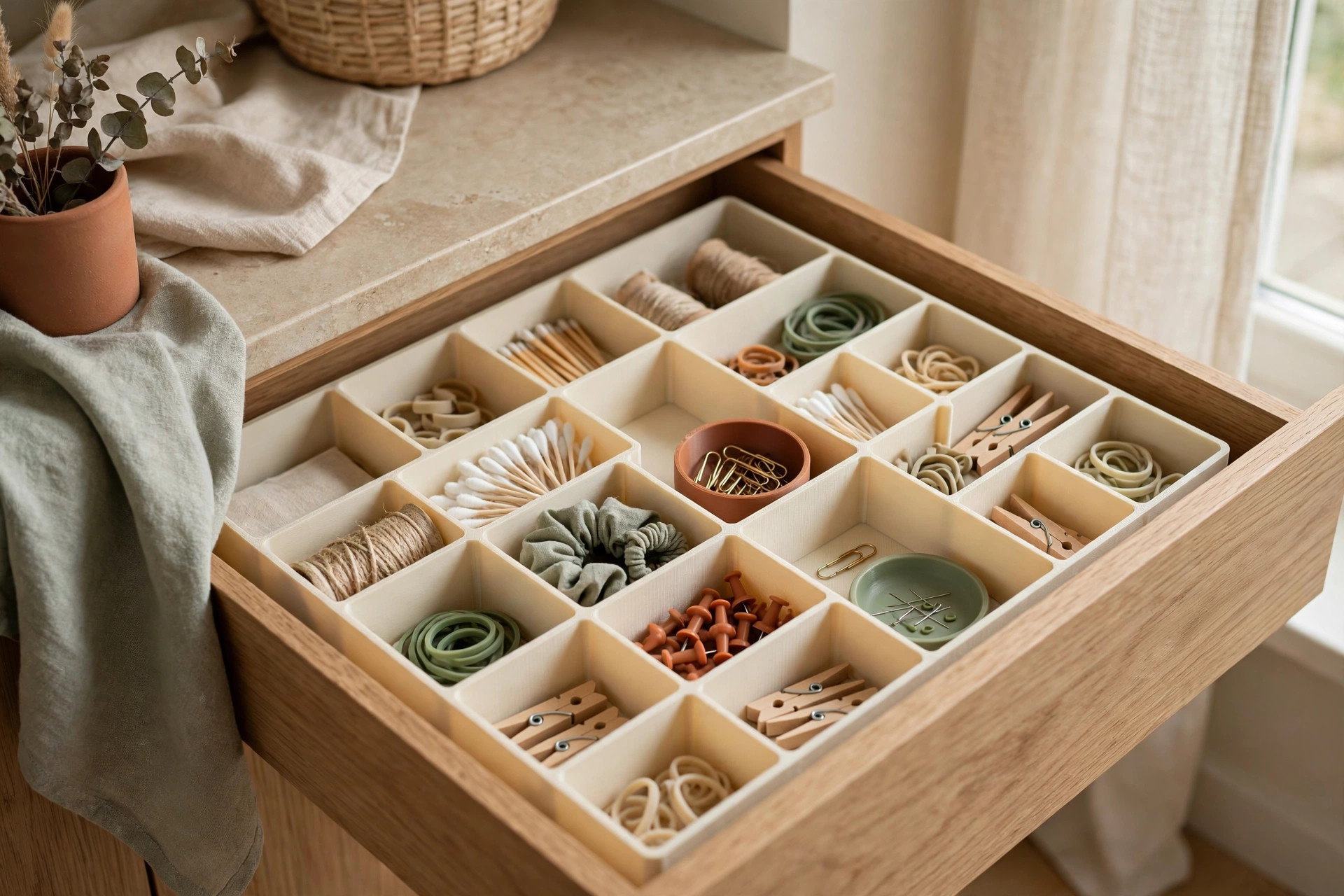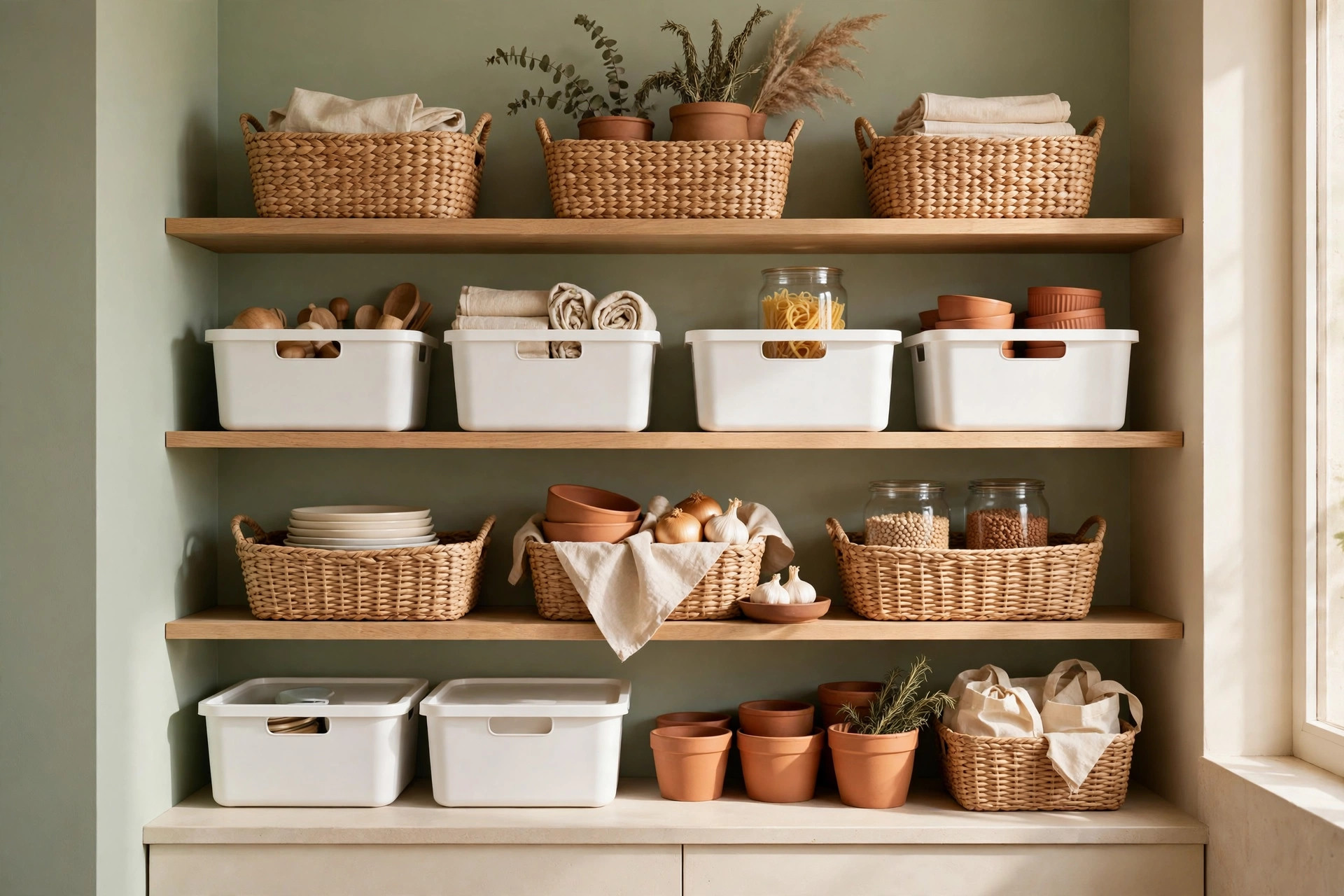
Dollar store bins have a reputation problem: they crack, look plasticky, and within a month half of them sit empty in a corner while the clutter moved back in. But the problem is almost never the price tag. Dollar tree organization hacks fail when people grab whatever looks handy and skip the planning — then blame the store when a random basket doesn’t fit the shelf. This guide takes the opposite approach: a strict shopping strategy (what to buy, what to walk past), room-by-room hacks using real Dollar Tree product types, and the one styling trick that makes $1.25 bins look like they came from a home store. Budget $15–$30 per room — items run about $1.25 each, and prices vary by store.
The Dollar Tree shopping strategy: what to buy, what to skip
Dollar store organization ideas start with a strategy, not a shopping cart: impulse grabs are the enemy, so successful trips start at home.
Measure first, shop second
Measure the shelves, drawers, and cabinet interiors you want to organize — width, depth, and height — and keep the numbers in your phone. A bin half an inch too wide for your cabinet is worthless.
Buy the boring workhorses
The best organizers are the least exciting: clear stackable bins, handled baskets, adhesive hooks, tension rods, small turntables, shelf risers, and drawer dividers. Clear bins are the single best purchase — they work in every room, and seeing the contents ends the “buy it again because I couldn’t find it” cycle.
Skip the pretty traps
Walk past fake wood grain, thin wired shelving, flimsy fabric cubes, and trays that wobble empty on the shelf. Skip miniature baskets sized for decoration: decoration-sized storage is clutter in disguise.
Bins and baskets: the foundation
Everything in this guide sits on two product types: stackable bins and handled baskets.
Stackable bins for hidden zones
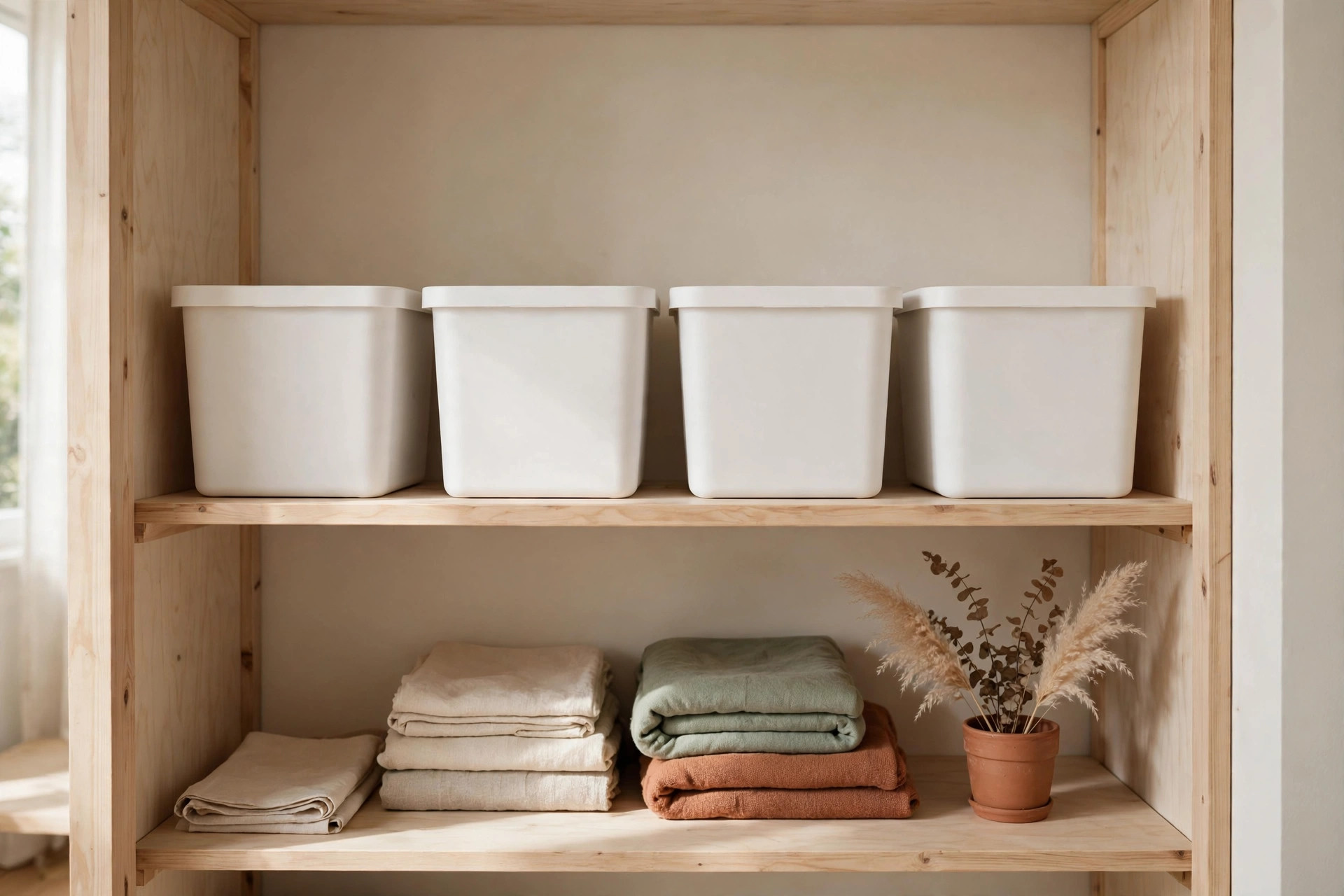
Clear stackable bins (shoebox-size, 6–8 inches deep) belong inside cabinets, closets, and pantry shelves. Two bins deep on a shelf doubles your usable footprint without adding a shelf. Label fronts with painter’s tape and a marker — it survives humidity and pulls off clean when categories change.
Handled baskets for open shelving
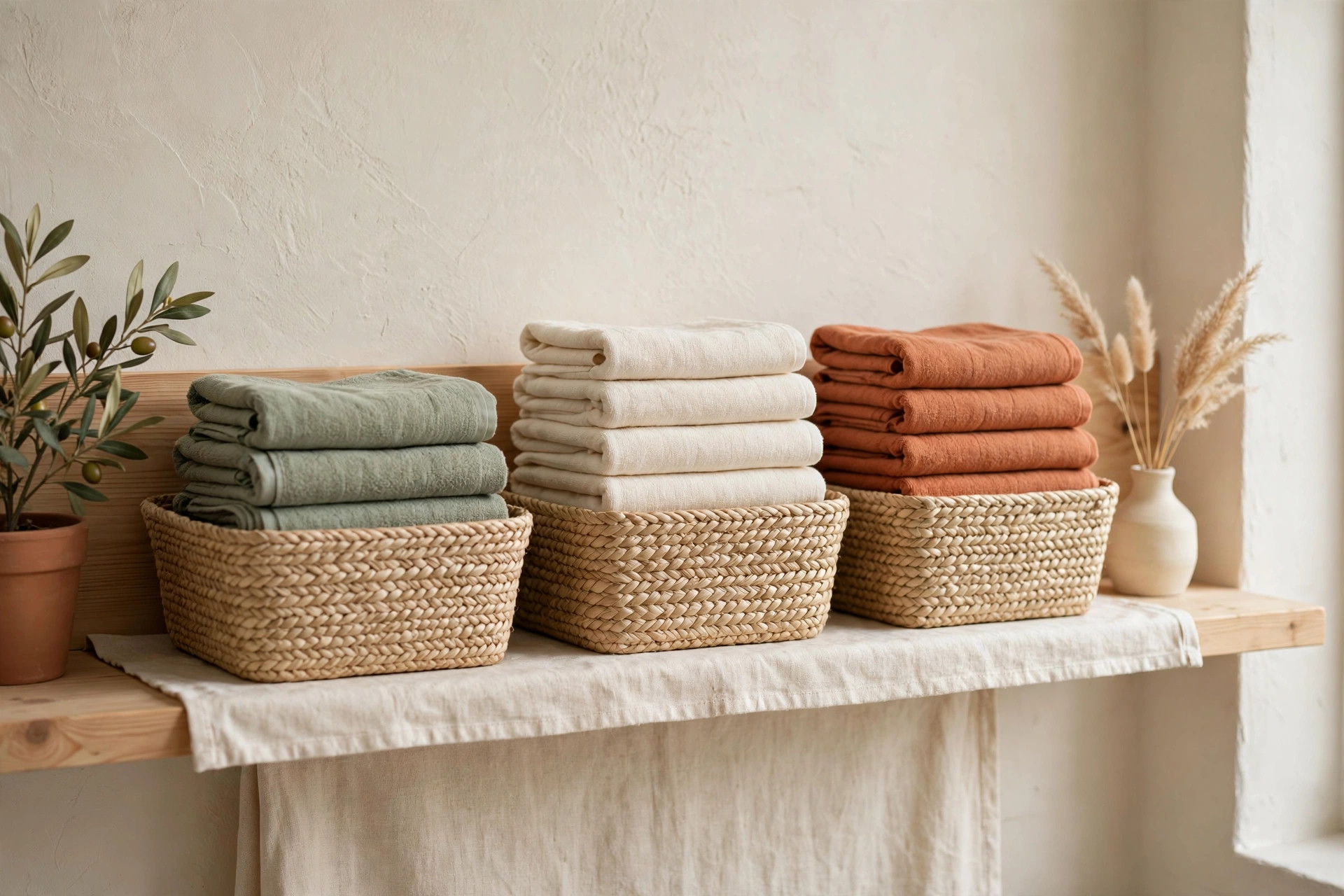
On open shelves and in entryways, handled baskets beat bins because they look intentional. Use one style per room: same size, same color family. Three mismatched baskets look chaotic; three matching ones read as organized. The rectangular cutout-handle baskets (around 12 x 9 inches) are the most versatile size.
One bin, one category
One container equals one specific category — not “bathroom stuff,” but “cotton balls and pads.” Categories specific enough to say in three words stay organized; vague ones turn the bin into a junk drawer.
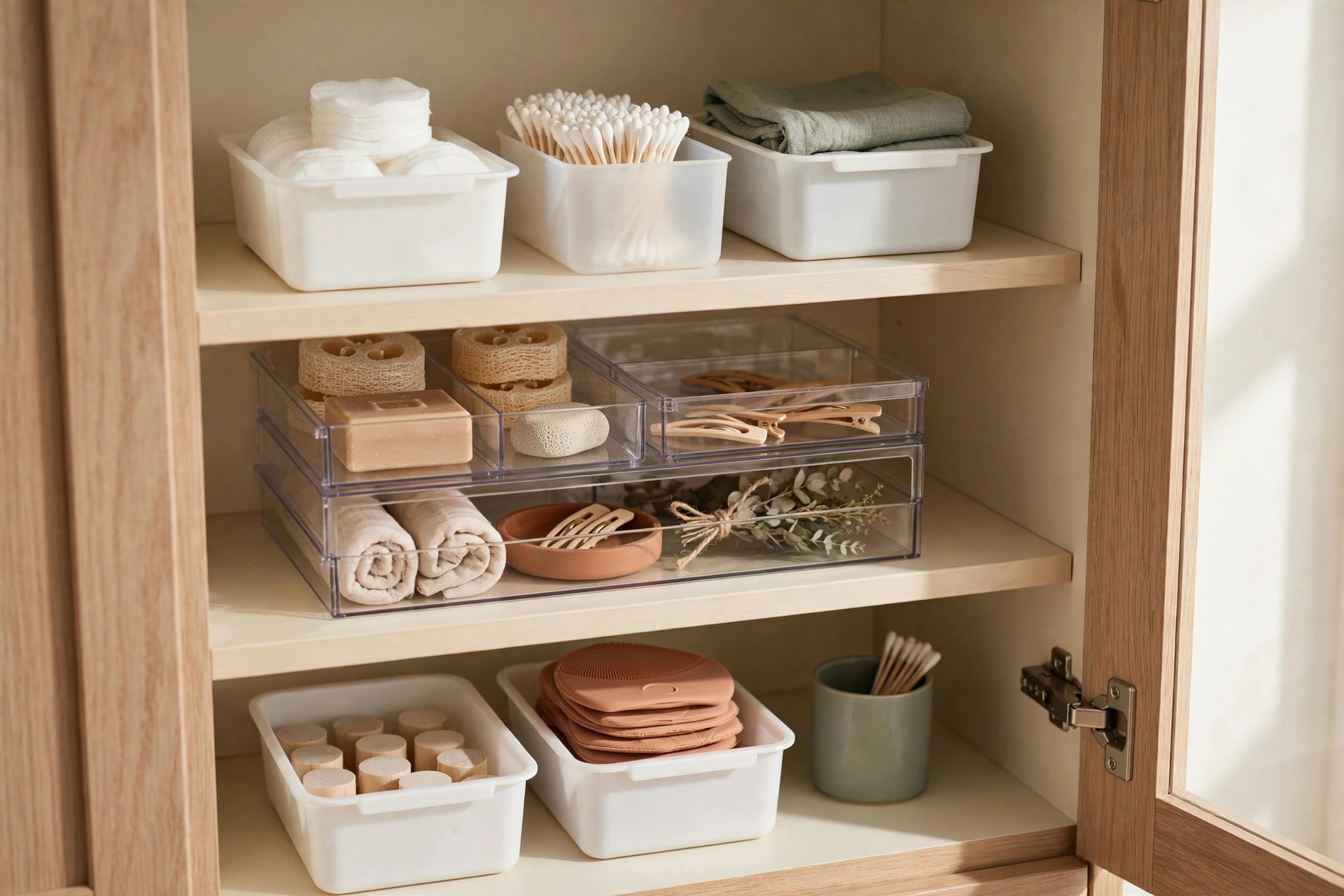
Bathroom upgrades for $10
Small bathrooms are where dollar store organizing pays off fastest — the zones are tiny and the product sizes match.
Turntable under the sink
A small turntable (about 9 inches across) ends the lost-behind-the-pipes problem: load daily items and spin instead of digging. Add one stackable bin beside the pipes for backups. For more under-sink layouts, see these 19 Tiny Bathroom Organization Ideas to Maximize Every Inch.
Adhesive hooks on the back of the door
Four to six hooks on the bathroom door hold hair tools, a robe, and a hanging basket for daily toiletries. Prep with rubbing alcohol, press each hook 30 seconds, and wait the full hour before hanging anything. Skipping the wait is the number-one reason adhesive hooks fail.
Kitchen and pantry wins
The kitchen is where dollar store organizers get the most abuse — heat, moisture, heavy cans — so placement matters as much as product choice.
Shelf risers for cabinets
Shelf risers (sold singly, about 10 x 8 inches) are the highest-impact kitchen purchase: one riser turns a shelf into two levels — mugs or bowls on top, plates or cans below. Don’t stack risers two high with heavy items; the lightweight legs wobble under stacked weight.
Clear pantry bins with zones
Clear pantry bins (roughly 10 x 6 inches) turn a chaotic pantry into visible zones. Group by use, not food type: “breakfast,” “snacks,” “baking,” “dinners.” Pull the bin out like a drawer instead of reaching past three bags of flour. For a full zone-by-zone pantry plan, these 21 Small Apartment Pantry Organization Ideas That Actually Work build on exactly this bin system.
Tension rods for under-sink and cleaning supplies
A short tension rod (12–20 inches) under the kitchen sink holds spray bottles by their triggers, freeing the floor for a stackable bin and trash bags. One rod across a deep junk drawer splits it into two lanes. Measure the interior width first; rods forced to compress fully lose their grip over time.
Closet and bedroom fixes
Dollar store bedroom organizing works best in the zones nobody sees: inside drawers, under the bed, and the closet floor.
Shoebox bins for drawer organization
Small stackable bins turn a dresser drawer into a grid — socks, underwear, and accessories each get their own. Roll socks and file them vertically so you can see every pair at once.
Lidded bins under the bed
Flat, lidded bins swallow off-season clothes, extra bedding, and gift wrap. Lids matter — open bins collect dust and get shoved out of sight. Most bed frames give 6–8 inches of clearance, exactly what these bins are designed for. Label the short end facing out.
Over-the-door organizers beyond shoes
A clear-pocket over-the-door organizer is one of the most versatile dollar store products, and shoes are the least interesting use. Hang one inside a closet door for scarves, belts, and accessories; with no closet door, it goes on the bedroom door for chargers and everyday carry items.
Making it look good: the uniformity trick
Cheap storage looks cheap for one reason: visual noise. Every mismatched color, size, and material screams “bought on separate trips.” The fix is uniformity, and it costs nothing extra.
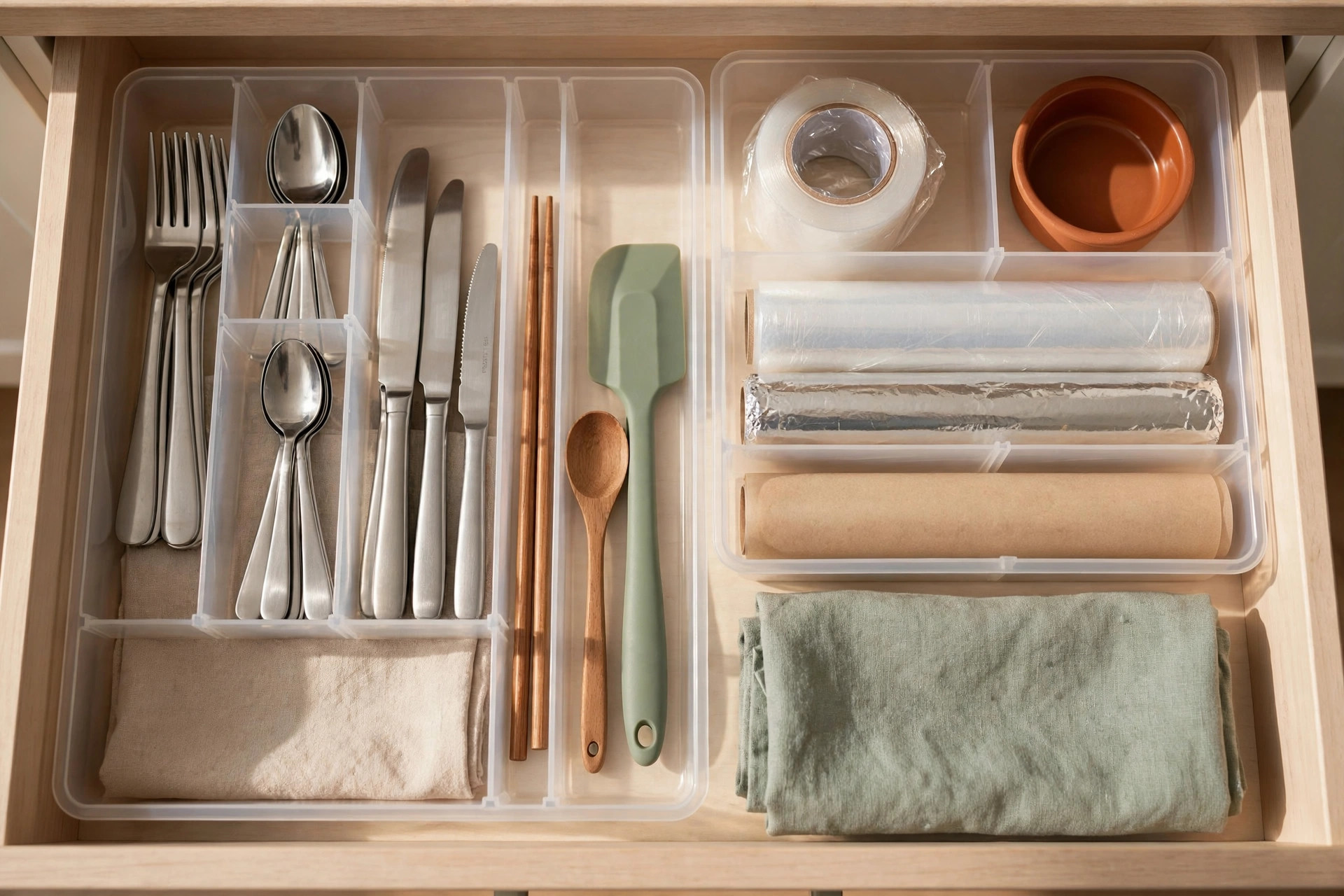
One material per room
Pick one dominant material per room and repeat it: clear plastic in the kitchen, woven-look baskets in the living room, white bins in the bathroom. Start with the most visible shelf. Repeated shapes read as intentional — that’s the difference between “organized” and “stylish.”
Remove the packaging noise
Peel off loud printed labels and stickers; wipe residue with rubbing alcohol or cooking oil. Then use one labeling system everywhere: chalkboard stickers, a label maker, or consistent painter’s-tape tags. Mixed labeling creates more visual noise than the bins themselves.
Decant and group
Transfer bulk items out of store packaging into your uniform bins: cotton balls into a canister, snacks out of the box into a basket, cleaning pods into a labeled bin. Store packaging is designed to sell, not to look good on your shelf — decanting is the fastest way to make dollar store storage look like a home-goods haul.
When to spend more instead
Spend more when the failure mode is expensive or annoying.
Buy the cheap version: bins, baskets, turntables, shelf risers, drawer dividers, adhesive hooks, tension rods, canisters, labels. Simple objects with no moving parts — the dollar store versions perform nearly identically to expensive ones.
Spend more on: anything load-bearing or moisture-adjacent. Hooks holding a heavy coat, shower caddies in constant humidity, anything supporting real weight. A $1.25 hook holds lightweight items fine, but your winter coat will be on the floor by February. Cheap turntables warp faster in a steamy bathroom — a mid-range one there is worth it.
The renter exception: if you can’t drill, the cheap adhesive version works as a stopgap. Optimize for reversibility over durability — you’ll take it all with you anyway. For renter-safe cabinet upgrades that pair well with these bins, see these 18 Small Kitchen Cabinet Organization Ideas That Maximize Every Shelf.
Mistakes to avoid with dollar store organizing
Most cheap organization hacks fail in predictable ways. Here’s what goes wrong and how to dodge it.
Buying before measuring
The mistake behind every other mistake: bins that don’t fit the shelf, turntables too wide for the cabinet, tension rods that won’t compress. Every item should have a measured destination before it goes in the cart.
Organizing without decluttering
Bins don’t fix too much stuff — they hide it in nicer boxes. Before buying anything, pull everything out and remove what’s broken, expired, duplicated, or unused. A half-empty drawer needs one divider; an overflowing one needs five bins and still looks cluttered. Declutter first, containerize second.
One giant bin per category
“Throw it all in the big bin” is a junk drawer with handles. Oversized bins become black holes where things go in and never come out. Two smaller bins beat one large one: smaller containers force honest categories.
Matching aesthetics to the wrong room
Uniformity has to be functional. Clear bins everywhere look sterile in a living room; woven baskets everywhere in a pantry hide what you need. Match the material to the room’s job: see-through where you grab fast (kitchen, bathroom), opaque and pretty where guests look. Browse more room-by-room ideas in the storage ideas collection.
Frequently asked questions
Is Dollar Tree actually cheaper than buying organizers at Target or Amazon?
For simple organizers, yes. A $1.25 stackable bin runs $4–$8 at big-box stores. The gap shrinks for complex items: a quality over-the-door rack or shower caddy is worth the higher price because the cheap version fails faster. Dollar store for bins, baskets, hooks, and dividers; spend more on load-bearing items.
How do I make dollar store bins not look cheap?
Uniformity: one material and color family per room, packaging labels removed, one consistent labeling system. Decant bulk items out of store packaging into the bins. Matching bins with neat labels read as intentional at any price — mismatched colors and loud packaging are what look cheap.
What should I never buy at Dollar Tree for organizing?
Anything load-bearing with real weight (heavy-duty hooks, wired shelving), anything that wobbles empty on the shelf, thin fabric cubes with flimsy inserts, and miniature baskets sized for decoration. If it can’t hold its own weight without contents, it won’t hold your stuff.
Can dollar store organizers work in a rental?
They’re ideal for rentals — almost everything is reversible: adhesive hooks, tension rods, over-the-door organizers, and freestanding bins all come with you when you move. Prep surfaces with rubbing alcohol first, respect the weight limits, and avoid anything requiring drilling.
How many bins should I buy for one room?
Three to five per room is enough for most spaces. Organize one zone completely, then see what’s left before buying more. Over-buying is the fastest path to a closet full of empty bins — clutter with better intentions.
A dollar store run done right is one of the cheapest home upgrades: $15–$30 per room, one afternoon, and storage that stays organized because every container has a measured home. Pick one room, measure one zone, and start there. Browse the full storage ideas collection for your next room, or save this pin for later.