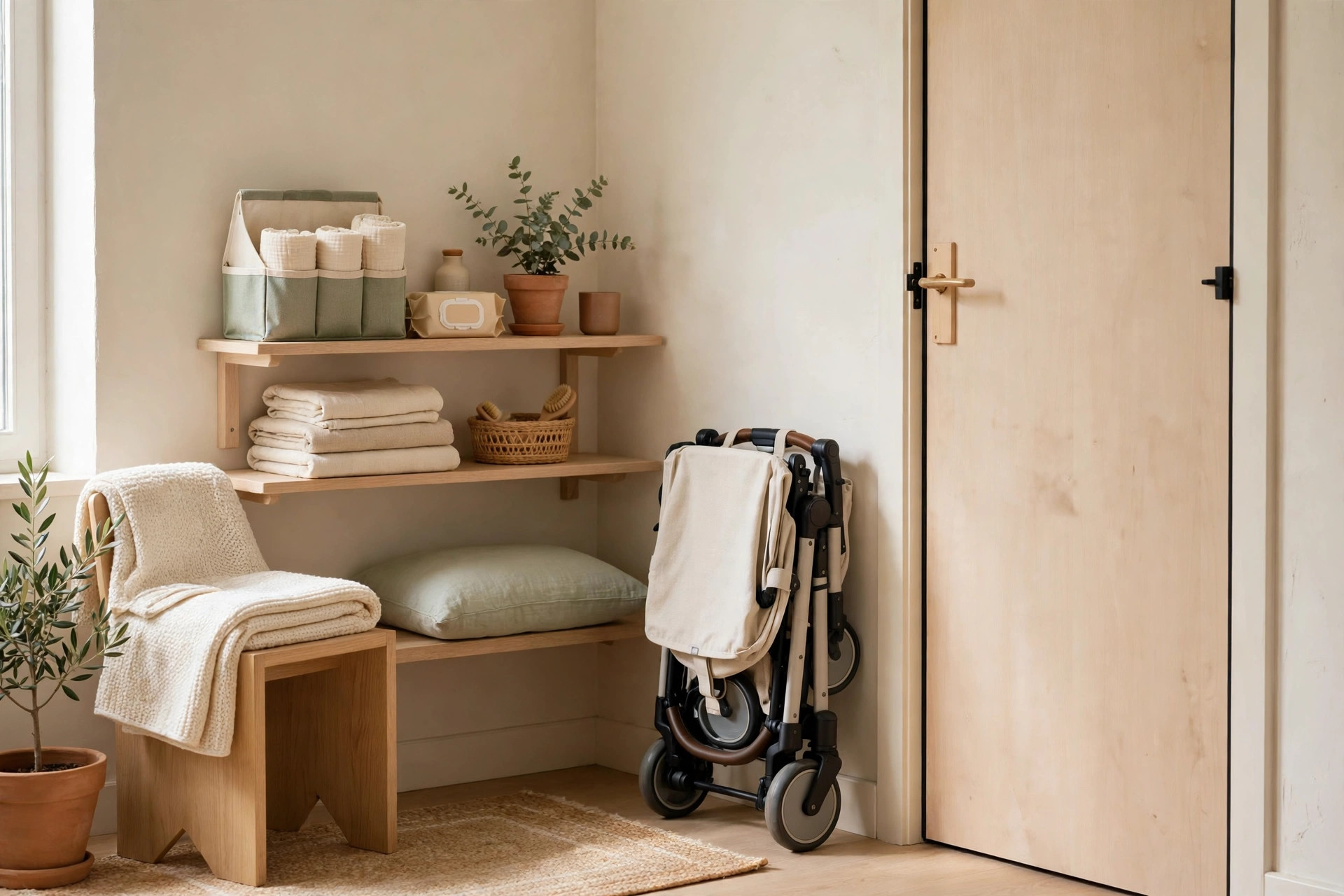
A pedestal sink looks lovely in a small bathroom — clean lines, open floor, nothing bulky. Then you move in, and the truth hits: nowhere to put anything. No drawer, no shelf, no cabinet. These small bathroom pedestal sink storage ideas solve that exact problem: storage moves onto the walls, beside the sink, and over the toilet, so the room stays airy and everything has a home. Here are 15 ideas in the order to tackle them.
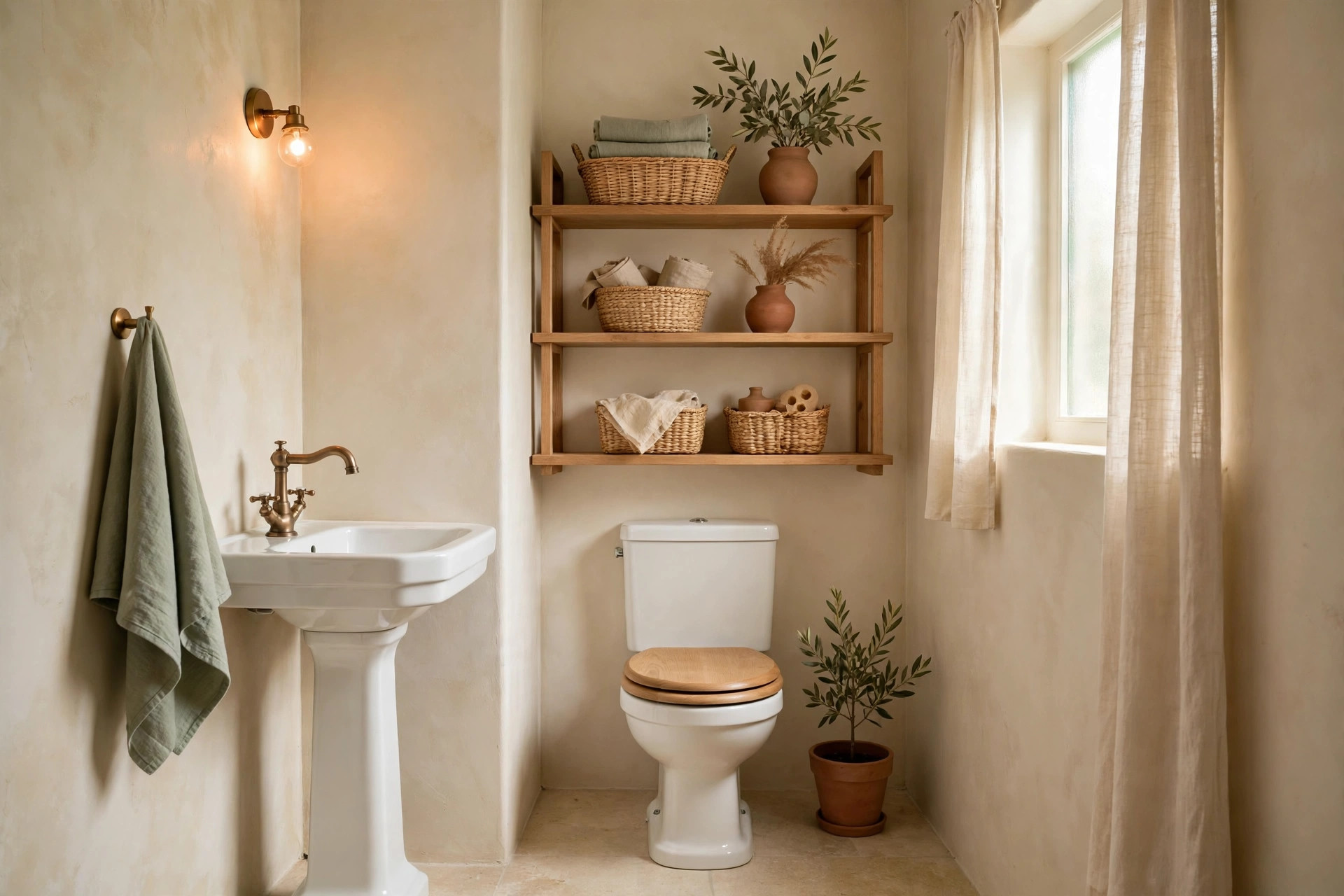
The pedestal problem: beautiful sink, zero storage
A pedestal sink quietly removes about 10 to 15 cubic feet of storage — everything a vanity cabinet would have held. A standard basin is about 20 to 24 inches wide, and its back ledge holds a soap dish and one bottle before anything else falls into the bowl. The sink is for washing, not storing — everything daily needs a home within one step of it.
Over-toilet shelving: the storage wall every pedestal bathroom needs
1. Two-shelf over-toilet etagere
A freestanding over-toilet etagere — a frame straddling the tank, about 24 inches wide and 10 inches deep — gives you two or three shelves with no drilling. Measure the tank first (most are 26 to 28 inches tall), leave 2 inches of clearance above the lid, and anchor it with its anti-tip strap.
2. Wall-mounted cabinet above the toilet
If you own the place, a shallow wall cabinet — 24 inches wide, 6 to 8 inches deep — hides the clutter open shelves show off. Mount the bottom edge about 36 inches above the floor so it clears the tank lid, and use one small bin per person inside.
3. Basket rail for rolled towels
Mount two small wire or woven baskets on a short rail above or beside the toilet, one above the other. Roll hand towels and washcloths instead of folding them — a rolled towel takes about half the space of a folded stack. Lower basket for spares like toilet paper rolls, upper one for display. For more towel storage, see 16 Small Bathroom Towel Storage Ideas That Keep Towels Dry and Handy.
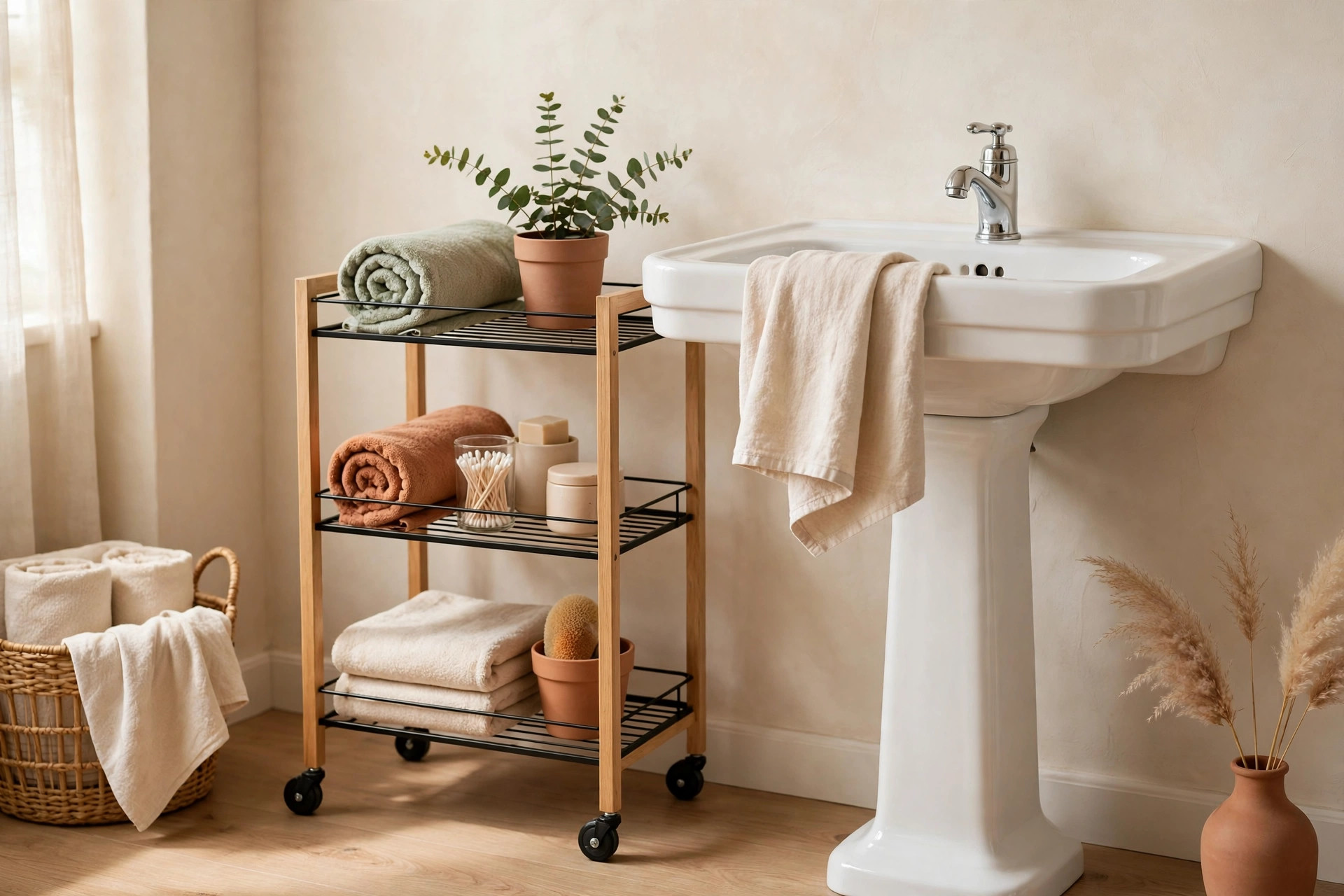
Slim rolling carts that park beside the sink
4. 3-tier slim rolling cart
A 3-tier rolling cart about 7 inches wide, 15 inches long, and 30 inches tall slides into the gap beside the sink. Morning items on top (cleanser, moisturizer, deodorant), weekly items in the middle (nail kit, hair mask), bulky spares below (extra shampoo, cleaning wipes). Roll it out to mop, and pick one with a locking caster.
5. Narrow cart as a household station
In a shared bathroom, make the cart the household station. Top tier: shared items (hand soap refill, cotton swabs, a small first-aid tin). Middle tier: cleaning supplies in a caddy that lifts out. Bottom tier: spare toilet paper and a spare hand towel. Personal items live in each person’s own basket, so the cart never becomes anyone’s overflow pile.
Wall-mounted baskets and shelves at arm’s reach
6. Floating shelf at elbow height
A single floating shelf, 18 to 24 inches long and 6 inches deep, mounted just above sink height and within 12 inches of the basin, holds the five or six items you use every day. Keep it to one row of bottles — a second row turns into a graveyard of half-empty products — and choose a shelf with a raised lip so bottles do not slide off. In a rental, a heavy-duty adhesive shelf rated for 5 pounds does the same job.
7. Wire basket for hair tools
Hair dryers, straighteners, and brushes are the bulkiest daily items here, and the first things to end up on the floor. A wall-mounted wire basket about 12 inches wide, at hip height beside the sink, holds a dryer and two brushes — and the open wire lets a warm dryer cool down safely. Coil the cord around a small hook below the basket so it never dangles into the sink.
8. Magnetic strip for the little things
The smallest items cause the most mess: bobby pins, tweezers, nail clippers, the toothbrush that falls behind the sink. Mount a 12-inch magnetic strip (the kind sold for kitchen knives) beside the mirror at eye level, and metal items snap onto it instead of scattering. Hang a small zip pouch from an S-hook below for the non-magnetic bits.
Under-sink baskets and skirt tricks that hide clutter
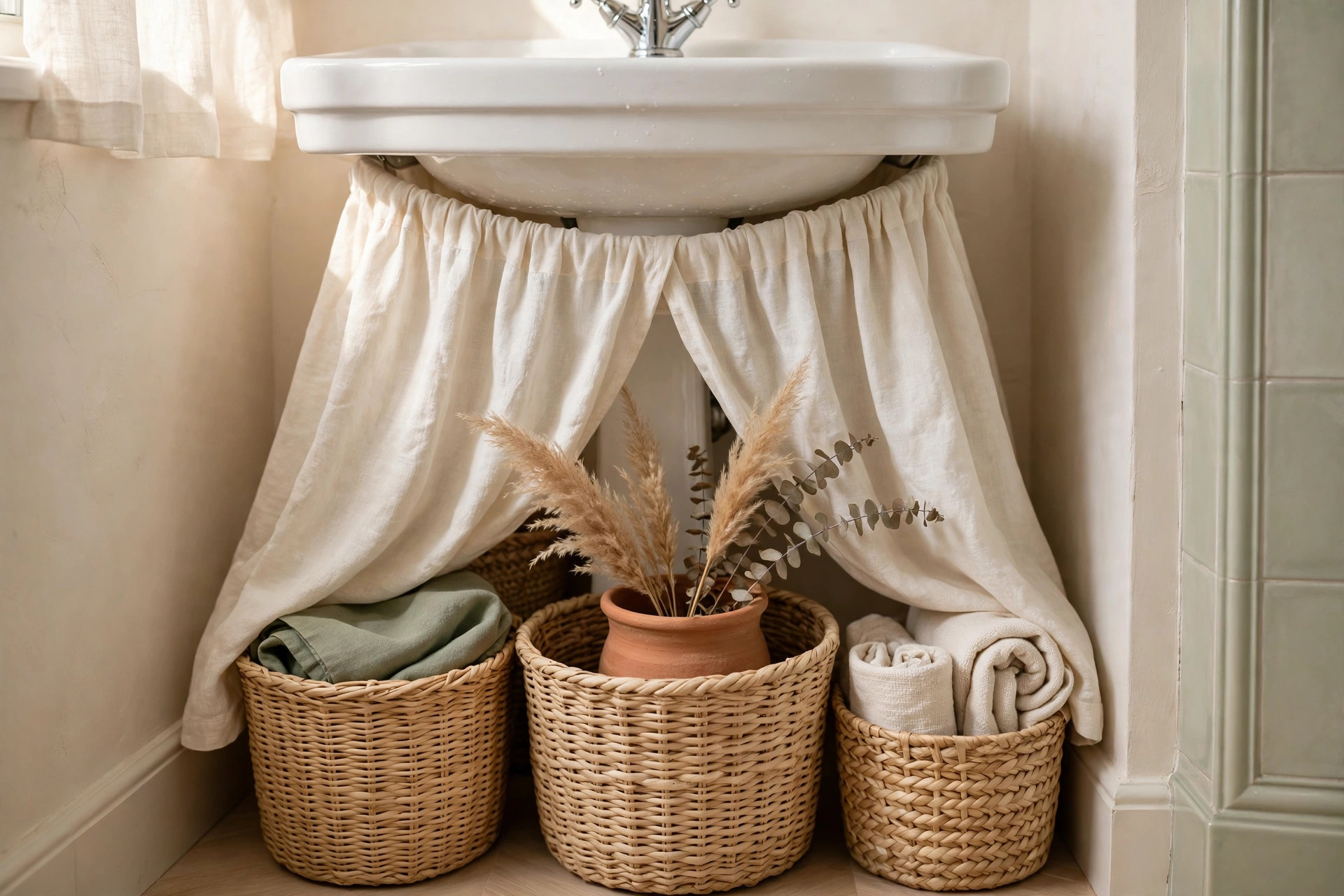
9. Low basket under the pedestal
A low, wide basket — roughly 14 inches wide, 10 inches deep, and 6 inches tall — slides under the sink between the pedestal base and the wall and holds weekly items: spare hand soap, tub scrubber, drain cleaner. Keep it to one layer of items you do not mind seeing. For more pipe-aware setups, see 17 Under-Sink Bathroom Storage Ideas for Tiny Vanities.
10. Pedestal sink skirt
A sink skirt is a fabric panel, usually cotton or linen, hung from the underside of the basin to the floor to hide everything behind it. Buy a ready-made one with an elastic or hook-and-loop top edge, or make one from hemmed fabric and adhesive hook-and-loop tape — no sewing machine required. Behind the skirt, a small tension rod holds spray bottles by their triggers and a low bin holds the rest; wash the skirt monthly.
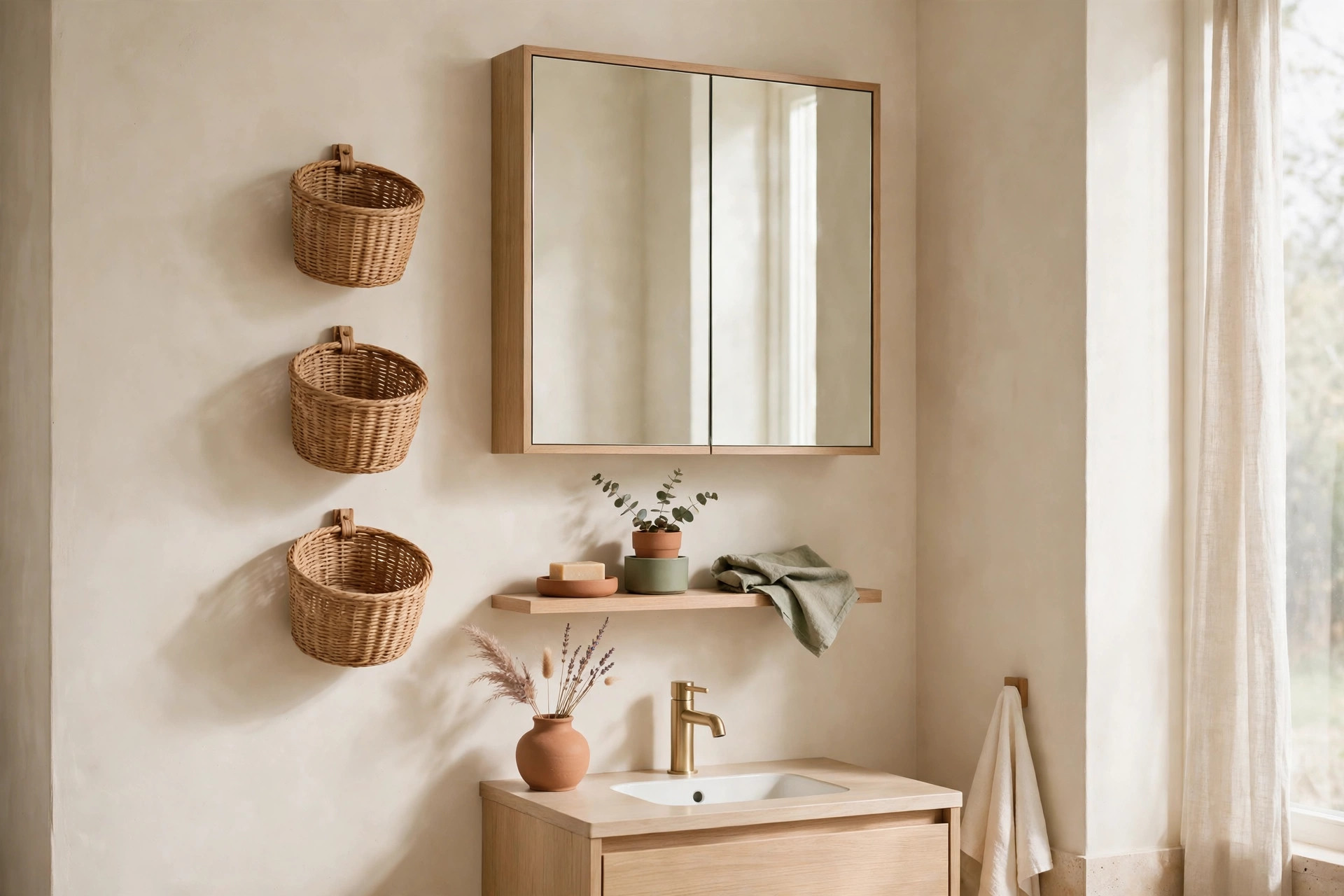
Mirror cabinet swap: storage behind the mirror
11. Recessed medicine cabinet
A recessed medicine cabinet sits inside the wall cavity, adding storage without stealing a single inch of floor space. A standard 16-by-24-inch cabinet with two adjustable glass shelves holds toothbrushes, medicines, and contact lens supplies — everything you want out of sight but within reach. Check the wall first with a stud finder: the cavity must be free of studs, pipes, and wiring, and the gap between studs (usually 14.5 inches) must match the cabinet width. Unsure what is inside the wall? Family Handyman’s guide to installing a recessed medicine cabinet shows how to check for pipes and wiring first.
12. Surface-mount mirrored cabinet
If recessing is not an option, a surface-mount mirrored cabinet about 4 to 5 inches deep still holds a full row of daily items, and many models include open side shelves or a small bottom shelf for grab-without-opening items. Mount the bottom edge about 48 inches above the floor — above the faucet splash zone, low enough for the shortest person in the house to reach the top shelf. Keep one layer per shelf, with the least-used items (spare blades, the travel kit) up top.
The daily-use caddy: what lives by the sink and what doesn’t
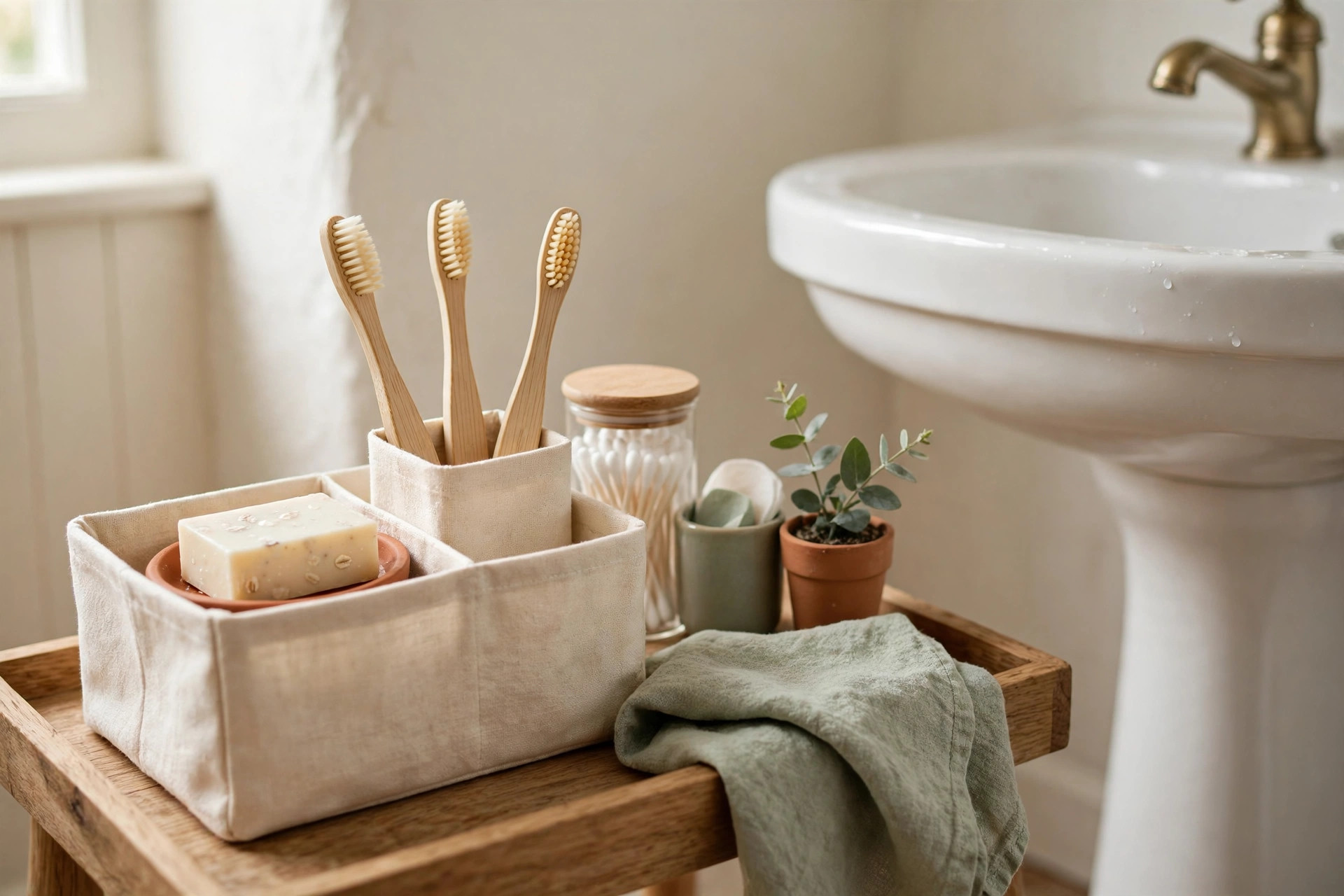
13. 5-item daily caddy on a tray
Everything you touch before 8 a.m. fits on a 10-by-6-inch tray: hand soap, toothbrush holder, one moisturizer, one deodorant, and a small cup for the toothbrushes. The tray keeps everything together so you can lift it with one hand to wipe the sink, and its edges stop anything migrating across the basin rim. If an item is not used at least five days a week, it lives in the rolling cart or the cabinet, not on the tray.
14. One lidded basket per person
In a shared bathroom, personal items are what turn shared storage into a mess. Give each person one lidded basket — about 8 by 6 by 4 inches — on the over-toilet shelf. A lid keeps tubes and hair ties from spilling when someone grabs their basket in a hurry, and makes four people’s clutter read as four neat boxes. Each person stocks their basket from the household supplies, so the shared zones stay clear. More zone-by-zone ideas for shared bathrooms: 18 Small Bathroom Storage Ideas That Make a Tiny Bathroom Work Harder.
15. Grab-and-go bag by the door
Gym kit, travel toiletries, the swim bag — the items that leave the house should never live in the bathroom at all. Hang a small hook on the back of the door and keep one grab-and-go bag there, packed with travel-size duplicates and a spare toothbrush. When you come home, the bag goes back on the hook instead of being emptied onto the sink — no more half-unpacked bag living on the floor for three days.
Keeping a pedestal bathroom tidy with a 2-minute routine
Storage only works if the room gets reset. A pedestal bathroom has so little surface that a two-minute routine, done once a day, keeps it looking finished. Do it after your evening routine: return the tray items, drop the used hand towel in the laundry basket, wipe the basin rim, and push the rolling cart back into its gap. Once a week, add two minutes: check the shelves for empties, wipe them, and swap the hand towel for a fresh one.
Mistakes to avoid
Buying a vanity-style organizer for a pedestal sink. Drawer dividers, under-sink pull-outs, and cabinet door racks are designed for a vanity box that does not exist here. Buy for the zones you have: wall, over-toilet, beside-sink, behind-mirror.
Blocking the door swing. A cart or basket in the door’s arc gets kicked or knocked over daily. Before placing anything on the floor, open the door fully and mark the swing with painter’s tape — nothing taller than 4 inches lives inside it.
Overfilling the open shelves. Open shelving looks calm when each shelf is about two-thirds full and every item is something you use weekly. Fill it to the edge and the room reads as a stockroom. If a shelf is full, add a second shelf higher up or move spares elsewhere.
Ignoring humidity. Bathrooms are damp, and woven baskets, untreated wood, and cardboard boxes go soft, spotty, or musty within months. Choose sealed wood, powder-coated metal, plastic, or washable fabric below shoulder height. If you love a natural basket, keep it on the top shelf, where the air is driest, and wash it monthly.
Frequently asked questions
Can you add storage to a pedestal sink without drilling?
Yes. A freestanding over-toilet etagere, a slim rolling cart, adhesive wall shelves, an over-door hook rack, and a sink skirt all add real storage with no holes in the wall. Only the wall cabinet and the recessed medicine cabinet need drilling.
What is the best storage for a very small bathroom with a pedestal sink?
Start with the wall above the toilet: a two- or three-shelf etagere or a shallow wall cabinet holds the most in the least space. Then add a slim rolling cart beside the sink and swap the flat mirror for a mirrored cabinet — those three moves replace a full vanity without taking any floor space.
How do you hide clutter under a pedestal sink?
A sink skirt is the simplest answer — a fabric panel hung from the basin hides a low bin and a tension rod of spray bottles, and it comes off for washing. A low open basket also works for tidy items. Avoid loose bottles under the pedestal: they slide, tip, and collect dust.
The bottom line
A pedestal sink does not mean living without storage — it means the storage lives on the walls, beside the sink, and behind the mirror. Start with the over-toilet wall, add one slim cart and one mirrored cabinet. Save this pin, and browse our small-spaces collection.