A bedroom with no closet feels like a dealbreaker — until you realize a closet is just a box with four jobs: hanging, folding, hiding, and protecting clothes from dust and light. This bedroom storage no closet guide covers all four with freestanding pieces chosen for your exact wardrobe — often better than a cramped built-in ever could, because you pick every inch. Below is the full replacement plan: which wardrobes and racks actually fit small rooms, how to make open storage look deliberate instead of chaotic, and the small systems that keep everything dust-free and easy to grab.
The closet replacement plan: what a closet actually does
Before you buy a single organizer, split your wardrobe into the four jobs a closet performs: hanging (dresses, jackets, button-downs, anything that wrinkles), folding (sweaters, jeans, tees, pajamas), hiding (underwear, socks, seasonal items), and protecting (dust and sunlight degrade open-rack clothes). Assign each category a physical home, and a closet-less room becomes a layout puzzle with a clear answer.
Start with a 15-minute audit: pull out everything you own, divide it into those four groups, and count the hanging pieces — a winter coat needs about 48 inches of rod space, a shirt roughly 40. Write down your actual numbers (18 button-downs, 6 sweaters, 20 tees), because that count determines whether you need a full wardrobe, a slim rack, or just a peg rail plus the under-bed.
Freestanding wardrobes: what fits small rooms
A freestanding wardrobe is the closest thing to a real closet, but depth is the make-or-break dimension. Standard wardrobes run 20–24 inches deep; in a room under 110 square feet, hunt for slim models at 14–18 inches deep. A 31×14×67-inch wardrobe (approximately $90–$140 from most big-box brands) swallows 25–30 hangers plus a shelf row while taking up less floor than an open rack plus bins.
Place the wardrobe on the least-visible wall, not facing the bed — it reads as furniture instead of “exposed storage” from where you wake up. In rooms where even a slim wardrobe eats the walkway, go tall instead of wide: a 24-inch-wide × 78-inch-tall wardrobe uses the vertical volume a closet would have wasted.
Leave 2 inches of breathing room behind the wardrobe — pressed flat against the wall, cheap laminate units trap humidity and turn musty. Mount a full-length mirror on the door and one piece does two jobs while the reflected room looks twice as big.
Open clothing racks: making them look intentional
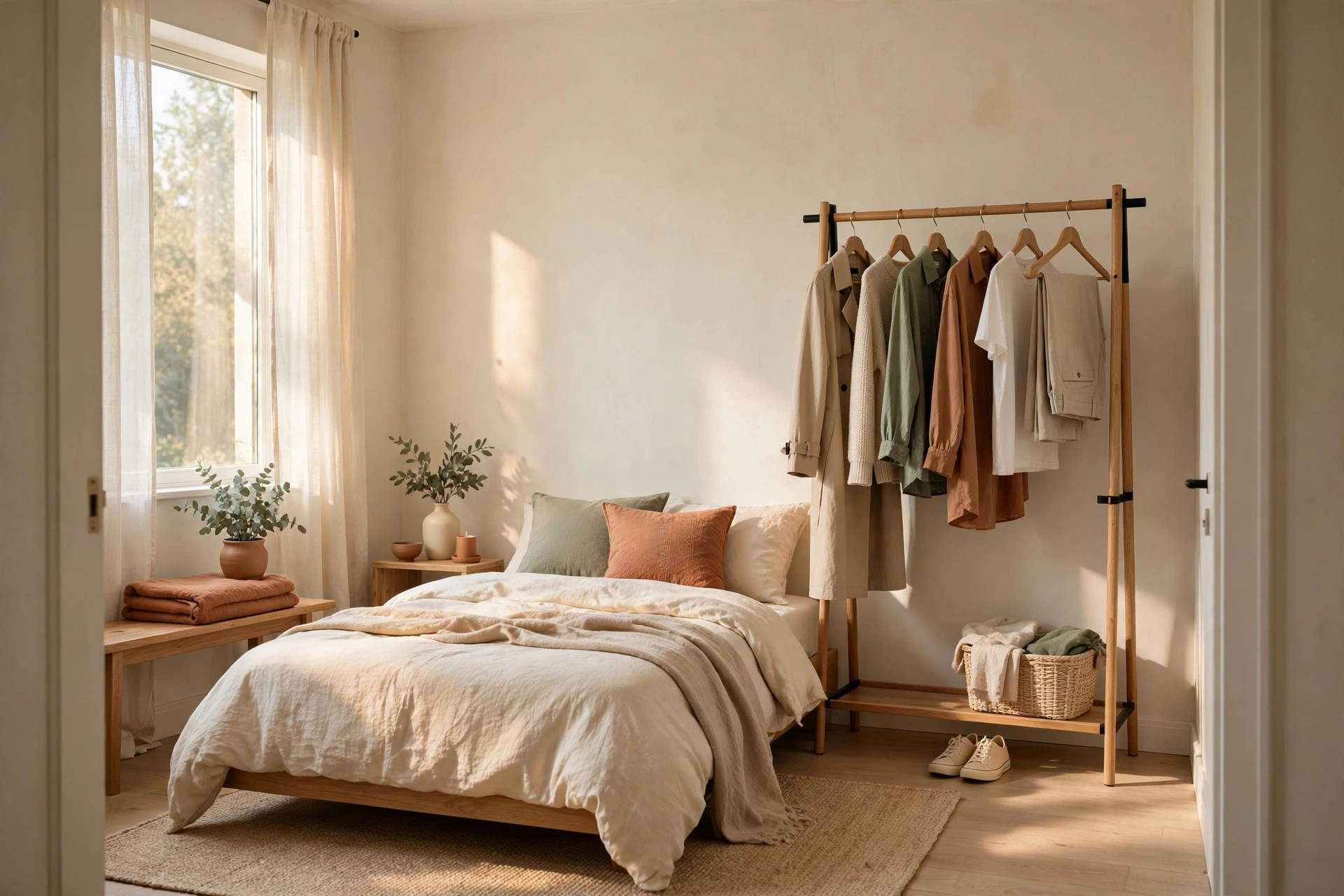
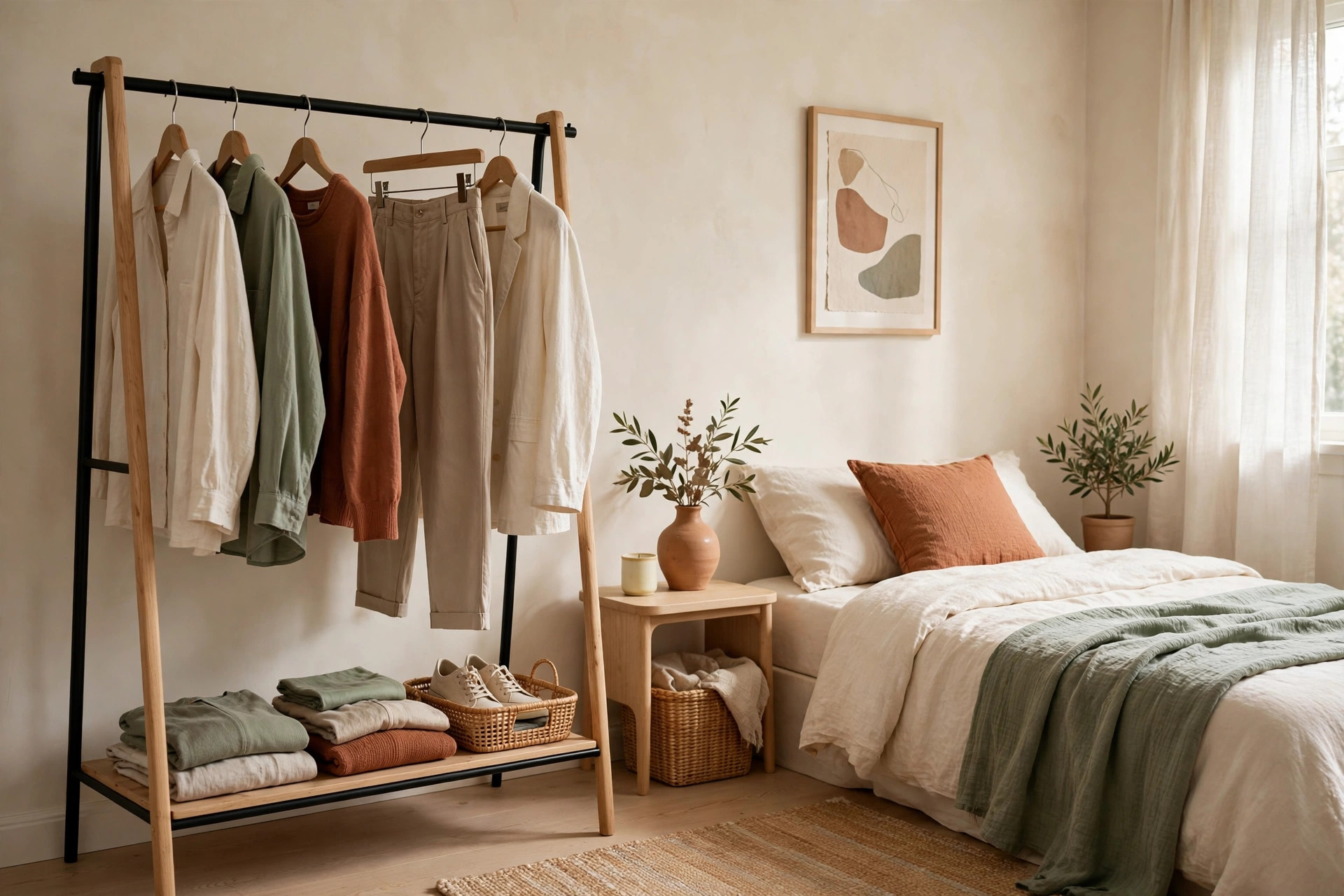
Clothes storage with no closet often starts with an open rack, and the difference between “boutique” and “laundry explosion” comes down to four rules. First, match your hangers — 50 slim velvet hangers in one color cost about $15 and instantly unify everything. Second, sort by color, dark to light, left to right; the eye reads the gradient as design, not clutter. Third, cap the rack at 80% full — overloading bends rods and looks frantic; keep overflow in the wardrobe or under the bed. Fourth, choose the right rack: a single-bar heavy-duty rack rated for at least 100 pounds ($40–$70) beats the $15 chrome versions that wobble and eventually collapse under winter coats.
Dedicate the rack to your current week’s rotation — 7 to 10 outfits — not your entire wardrobe. Everything else lives behind doors or in bins. This rotation method also forces a useful habit: at the end of the week, unworn pieces reveal themselves instantly, which is the laziest possible wardrobe edit. Position the rack perpendicular to the wall rather than flat against it in narrow rooms; you can slide it into a 24-inch-deep alcove and pull it out when choosing outfits, like a pocket closet.
For double duty, use the rack’s lower bar (usually about 12 inches off the floor) for 6–8 pairs of shoes or 3 folded 12×12-inch fabric bins — a 48-inch rack becomes hanging plus shoe storage for roughly $60 total. If the bedroom doubles as a living space, a curtain panel on a tension rod in front of the rack gives you a “door” you can draw for video calls — the same trick our studio apartment organization zones guide uses for open layouts.
Under-bed as your dresser drawer
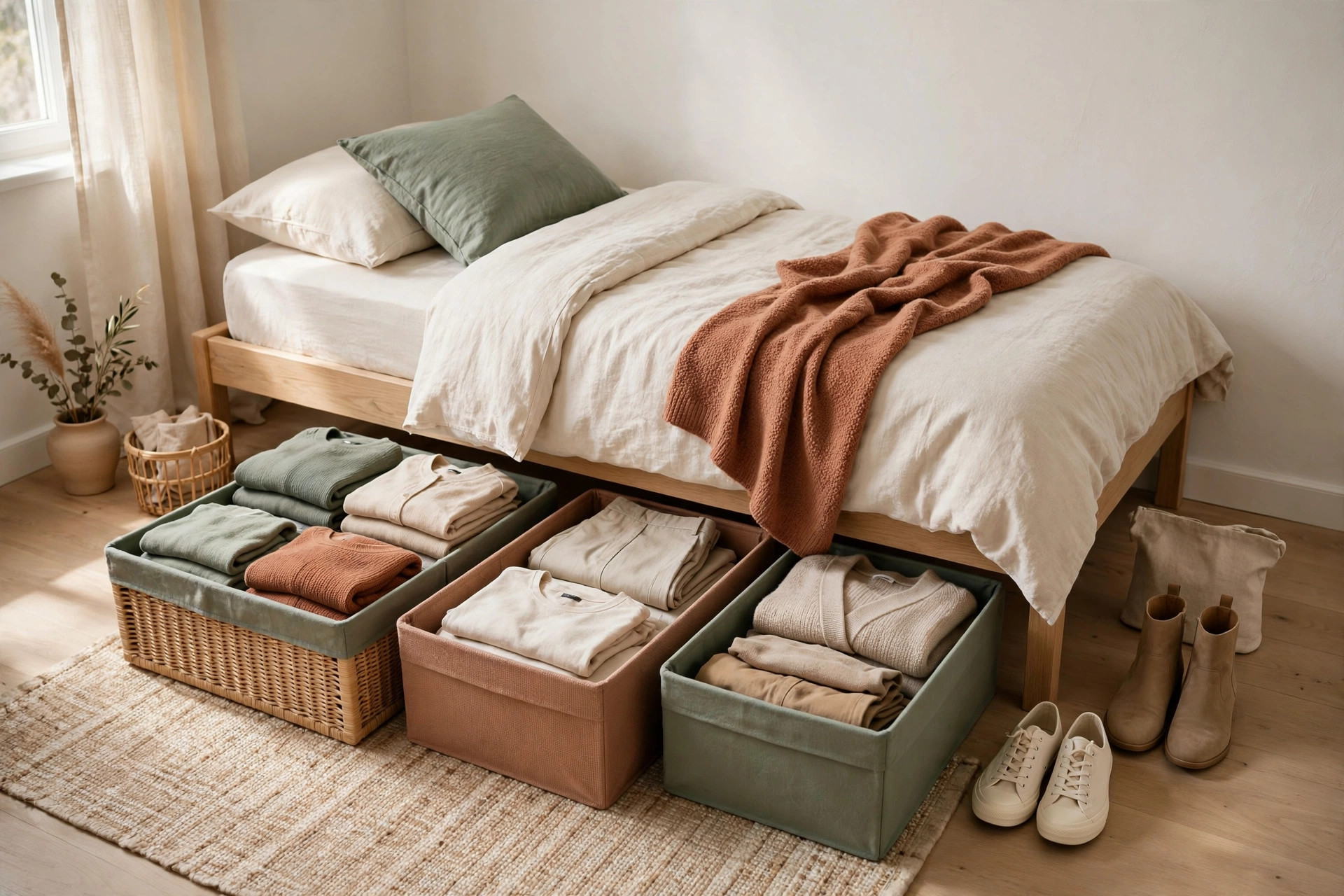
The space under the bed is your hidden dresser — it just needs drawers. Measure the clearance first: standard frames give 6–8 inches, platform beds 10–14. Buy storage bins 1 inch shorter than your clearance so they slide without scratching the floor. Flat rolling drawers with lids (typically 24×16×5 inches, about $25 each for a set) beat open bins because the lid keeps dust out and the lid itself becomes the stacking surface.
Assign this zone the “hiding” category from your closet replacement plan: underwear and socks in 6×6-inch fabric organizers, off-season clothes in vacuum bags (a queen-size bag compresses four sweaters to roughly 4 inches thick), and handbags on their sides in divided bins. For a full system that covers bins versus drawers versus vacuum bags, see our 17 Under Bed Storage Ideas for Small Bedrooms — it walks through the exact clearance-to-product matching.
If your bed has zero clearance, bed risers add 5–8 inches for roughly $12 a set, or park a rolling drawer unit beside the nightstand as a side table. Either way, under-bed storage replaces the dresser in most small bedrooms, freeing its old footprint for the wardrobe.
Wall hooks and peg rails for daily wear
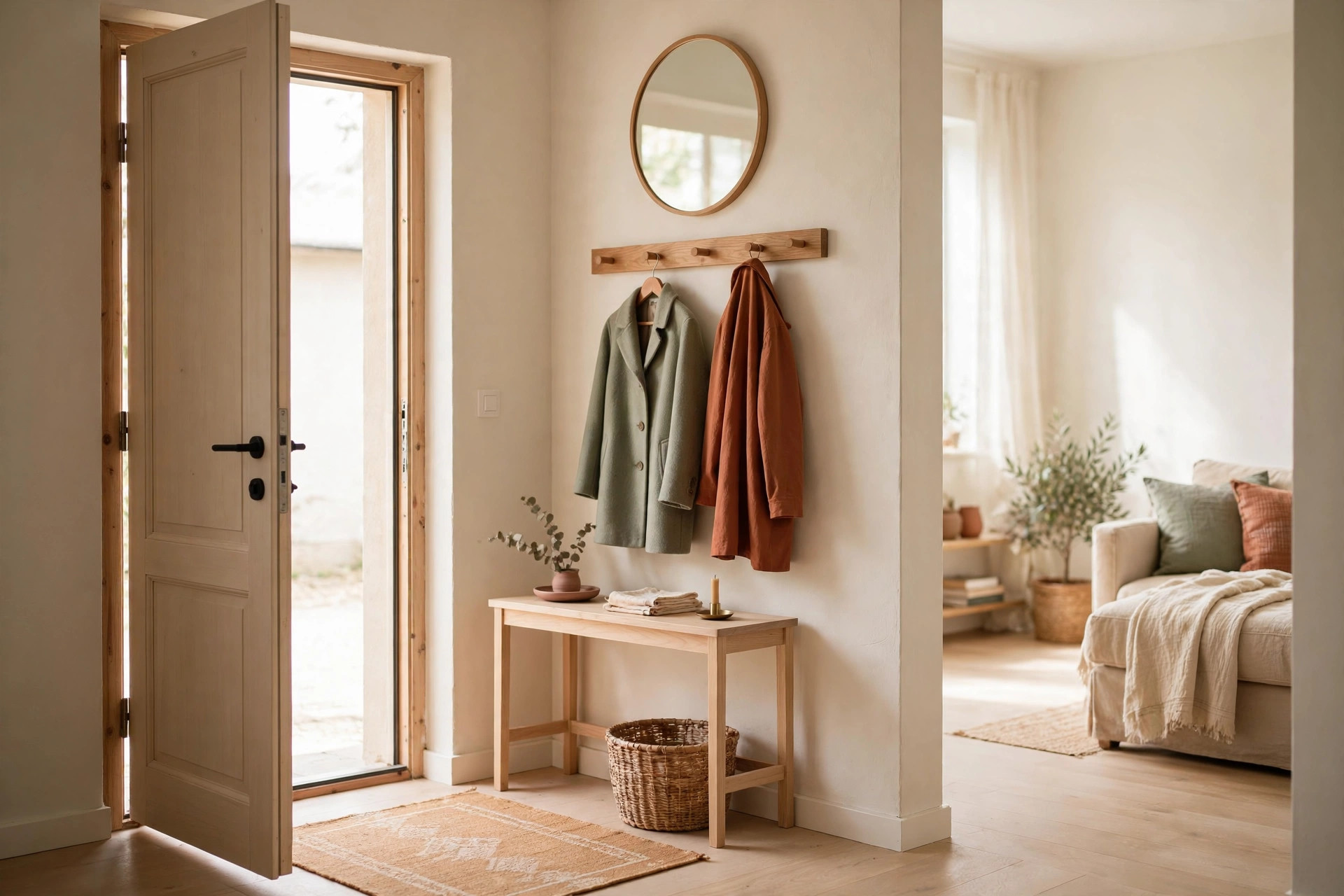
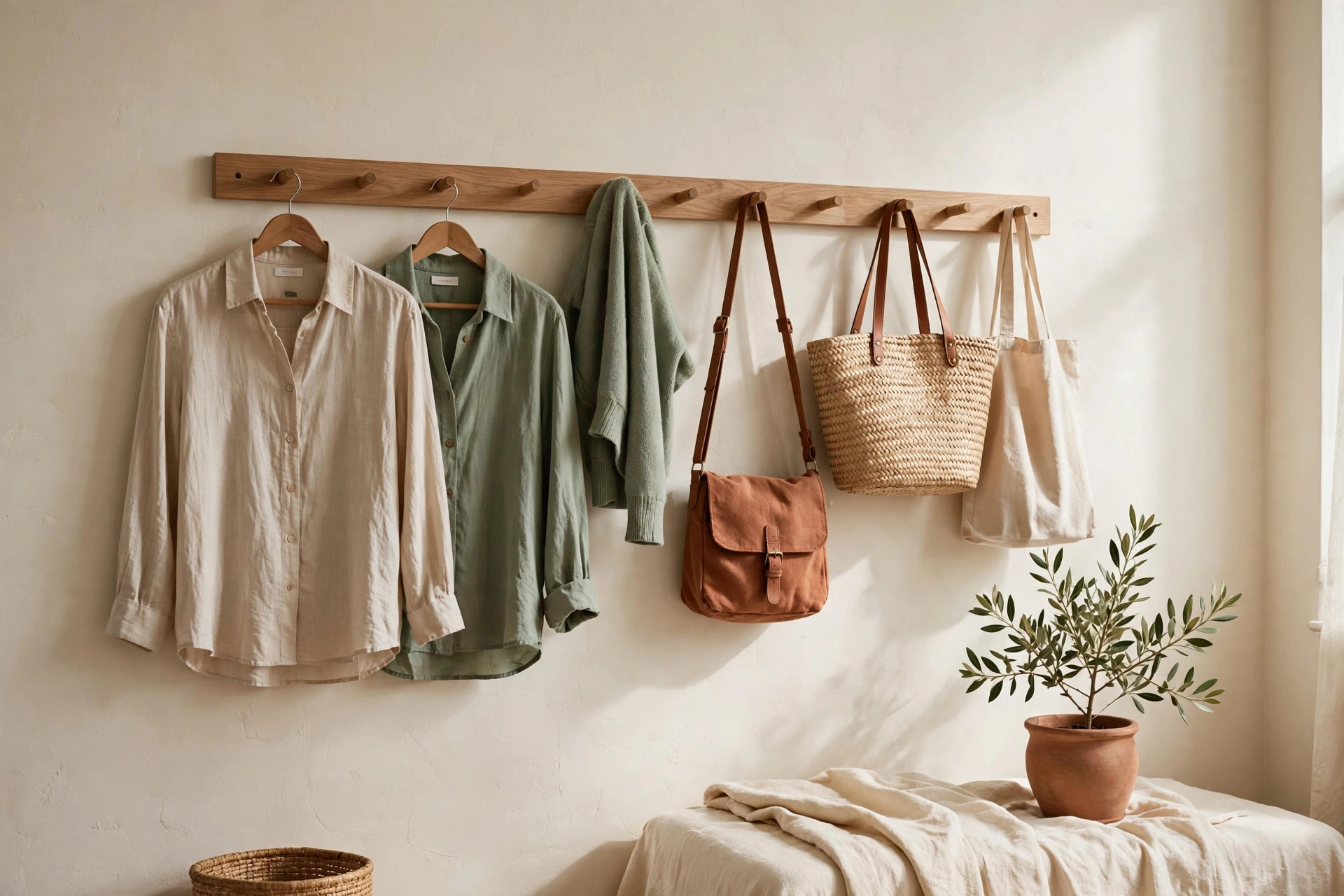
The clothes you wear most need the fastest access, and that’s the job wall hooks do better than any closet. A 40-inch oak peg rail ($20–$35) holds 8–10 items: tomorrow’s outfit, the jacket you grab daily, gym bag, work tote. Mount it at 60 inches high so long coats clear the floor, and space hooks 5–6 inches apart so hangers and bags don’t tangle.
Hooks fail for one reason: weight overload. Removable adhesive hooks typically rate 3–5 pounds each — fine for a robe or tomorrow’s jeans, not for a wet wool coat. For heavy daily items, use a peg rail screwed into studs (find them with a $10 magnetic stud finder — they run 16 inches on-center), or a freestanding hook tree that leans in a corner and moves with you at the next lease. Renters who can’t drill at all can combine adhesive hooks for light items with the over-door solutions below — our renter-friendly closet organization ideas lay out the full no-drill playbook.
Place the peg rail where your eye lands last, not first. Hooks by the door catch jackets on the way out; hooks behind the bedroom door keep them invisible. And dedicate one hook as the “re-wear hook” — the single most powerful trick for small bedrooms with no closet. The re-wear hook holds jeans and sweaters that aren’t dirty enough to wash, so they never end up draped on the chair and your open racks stay curated.
Over-door and behind-door storage
The back of the bedroom door is 12–20 square feet of unused storage surface, and over-door hardware costs under $25 with zero installation damage. A 5- or 6-hook over-door rack holds robes, pajamas, and tomorrow’s clothes; an over-door organizer with 24 clear pockets ($12–$18) swallows socks, underwear, accessories, and rolled tees — basically an entire dresser drawer hanging on a door.
Check the clearance before buying: most over-door brackets are 1.5–1.75 inches wide, designed for standard interior doors. Measure the gap between your door and the frame at the top — if it’s under 1.5 inches, the door won’t close and you’ll need slim-profile brackets or a wall-mounted hook board on the door itself (removable strips rated for the door’s weight, usually 3–4 pounds per strip). For double doors or sliders, skip over-door entirely and use the wall strip beside the frame — a 6-inch-wide vertical hook board uses the forgotten gap between door frame and corner.
Behind-door space also fits a narrow shoe rack: over-door organizers hold 12–18 pairs on fabric pockets that take zero floor space. Keep the bottom row 6 inches off the floor so vacuuming stays easy, and bag formal shoes in dust bags — fabric pockets don’t protect leather from dust the way a closed rack does.
Keeping it dust-free without doors
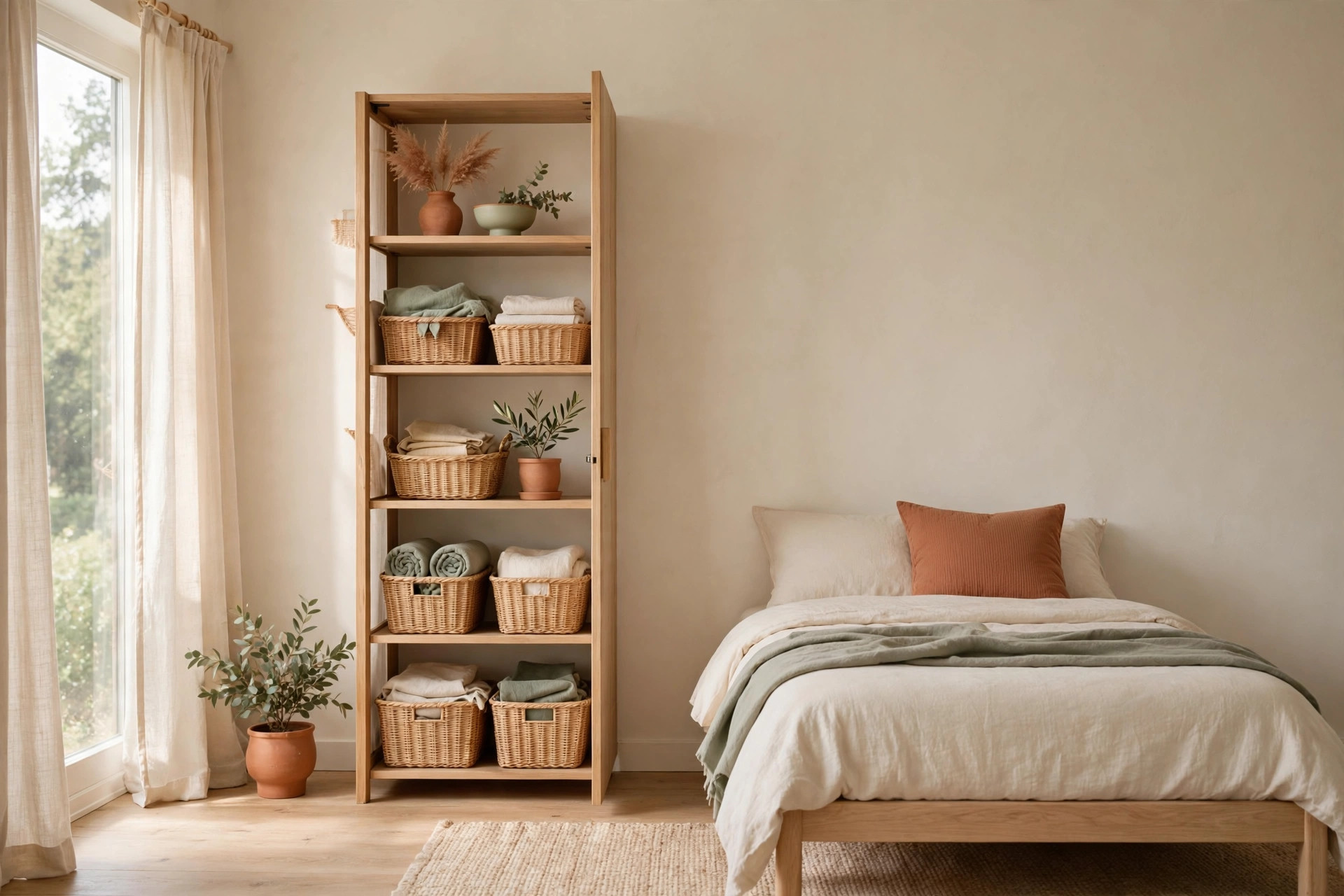
Open storage collects dust roughly twice as fast as closed storage — expect a visible layer on open racks within 7–10 days in most rooms. The fix isn’t constant cleaning; it’s coverage. Rotate the room on a simple rhythm: lidded bins for folded clothes, garment bags for rarely-worn pieces (a 10-pack of breathable 24×40-inch garment bags costs about $15), and a lightweight curtain panel on the rack for daily pieces.
Fabric choice matters more than people expect: heavy wool and linen generate more lint than smooth cottons and synthetics. Run a quick weekly pass — a microfiber mitt over the top of the rack and the peg rail takes three minutes and prevents the dust-to-must cycle. Keep air moving near the storage zone; open racks against dead-corner walls dust up fastest in still air.
For seasonal rotation, vacuum storage bags aren’t just space savers; they’re dust armor. Off-season coats in sealed bags stay pristine from March to October, and the compression means a full winter wardrobe fits in one under-bed bin. Just don’t compress down jackets or wool suits for longer than a season — the fibers recover poorly after months of vacuum pressure, so those live in garment bags instead.
Wash bedding and dust-covers on the same schedule — monthly at minimum. Open storage means your pillowcases catch what your clothes shed, so the “no closet” bedroom needs bedding washed on the 1st of each month like clockwork. It’s the single cheapest dust control in the whole system.
Mistakes to Avoid
Buying the rack before measuring the door swing. The classic failure: a 48-inch garment rack arrives, and the bedroom door swings into it. Measure the door’s arc on the floor with masking tape before ordering anything wider than 24 inches.
Using your rack as a wardrobe, not a rotation. When every item you own hangs on one open rack, it looks chaotic and the rod bows within months. The rack holds this week’s 7–10 outfits; the rest lives in closed storage.
Mismatched hangers. Twenty plastic tubes, a dozen wire dry-cleaner hangers, and six wooden ones read as clutter even on a tidy rack. One hanger type, one color — the cheapest upgrade on this list.
Skipping dust protection. Open racks without garment bags or a curtain panel turn light-colored clothes gray within a month. Coverage is non-negotiable, not optional.
Ignoring the vertical. Floor space runs out at 40 square feet of bedroom; walls go to the ceiling. Every no-closet plan should use at least 60 inches of wall height for peg rails, shelves, or a tall narrow wardrobe.
Overloading adhesive hooks. A 5-pound-rated strip holding a 9-pound winter coat peels off at 2 a.m. Heavy items get stud-mounted rails or freestanding units, always.
Frequently Asked Questions
How do you store clothes without a closet in a small bedroom?
Split your wardrobe into four categories — hanging, folding, hiding, and daily wear — and give each a dedicated piece: a slim wardrobe or garment rack for hanging, lidded under-bed drawers for folding, a peg rail by the door for daily wear, and over-door organizers for small items. Dust protection (garment bags or a rack curtain) completes the system — a full setup that replaces a standard 48-inch closet for under $200.
What is the best wardrobe alternative for a room with no closet?
A 14–18-inch-deep freestanding wardrobe is the most closet-like option and fits rooms where a 24-inch-deep standard unit blocks the walkway. If budget is tight, a heavy-duty 48-inch garment rack (rated 100+ pounds) plus lidded under-bed drawers covers hanging and folding for around $85 combined. Choose the wardrobe if you want doors and a finished look; choose the rack if you want flexibility for a future move.
Can I use a clothing rack instead of a closet permanently?
Yes, as long as you treat it as a curated display rather than bulk storage. Keep it at 80% capacity with matching hangers and color-sorted clothes, rotate a weekly outfit selection, and protect everything with garment bags or a curtain panel. Permanent racks work best when the rest of the wardrobe lives in closed storage — the rack is the boutique window, not the warehouse.
How do you keep clothes from getting dusty on open racks?
Cover what you don’t wear weekly in breathable garment bags, run a curtain panel across the rack for daily pieces, and wipe the rack top and peg rail with a microfiber mitt once a week. Store off-season clothes in sealed vacuum bags under the bed — they’re dust-proof by design. Rooms with open storage need bedding washed monthly, since open fabrics shed lint onto everything nearby.
Where do shoes go in a bedroom with no closet?
The three best spots: an over-door shoe organizer on the bedroom door (12–18 pairs, zero floor space), the lower bar of a heavy-duty garment rack (6–8 pairs), or fabric bins under the bed. Daily pairs can live on a slim 10-inch-deep rack beside the wardrobe. Keep formal shoes in dust bags regardless of location — open fabric pockets don’t protect leather.
Conclusion
A bedroom without a closet isn’t missing storage — it’s missing a plan. Start with the four-category audit, pick one piece per category sized to your measurements, and protect open storage from dust from day one. Work the sections in order and the room stops feeling like a compromise within a weekend. Save this pin for your next apartment reset, and explore our small spaces guides for the same room-by-room systems in kitchens, entries, and studios.