Working from the couch sounds romantic until week three, when your laptop overheats on the cushions and your neck starts keeping score. The fix doesn’t require a spare room. A single underused corner — 4 to 6 square feet of dead space near a window, a hallway turn, or the end of your bedroom — is all you need for small home office organization that actually works. This guide shows you how to turn any corner into a tidy, focused workspace: what belongs on the desk versus nearby, how to use your walls for storage, a 20-minute cable fix, and a paper system simple enough to maintain.
The corner advantage: two walls, zero footprint waste
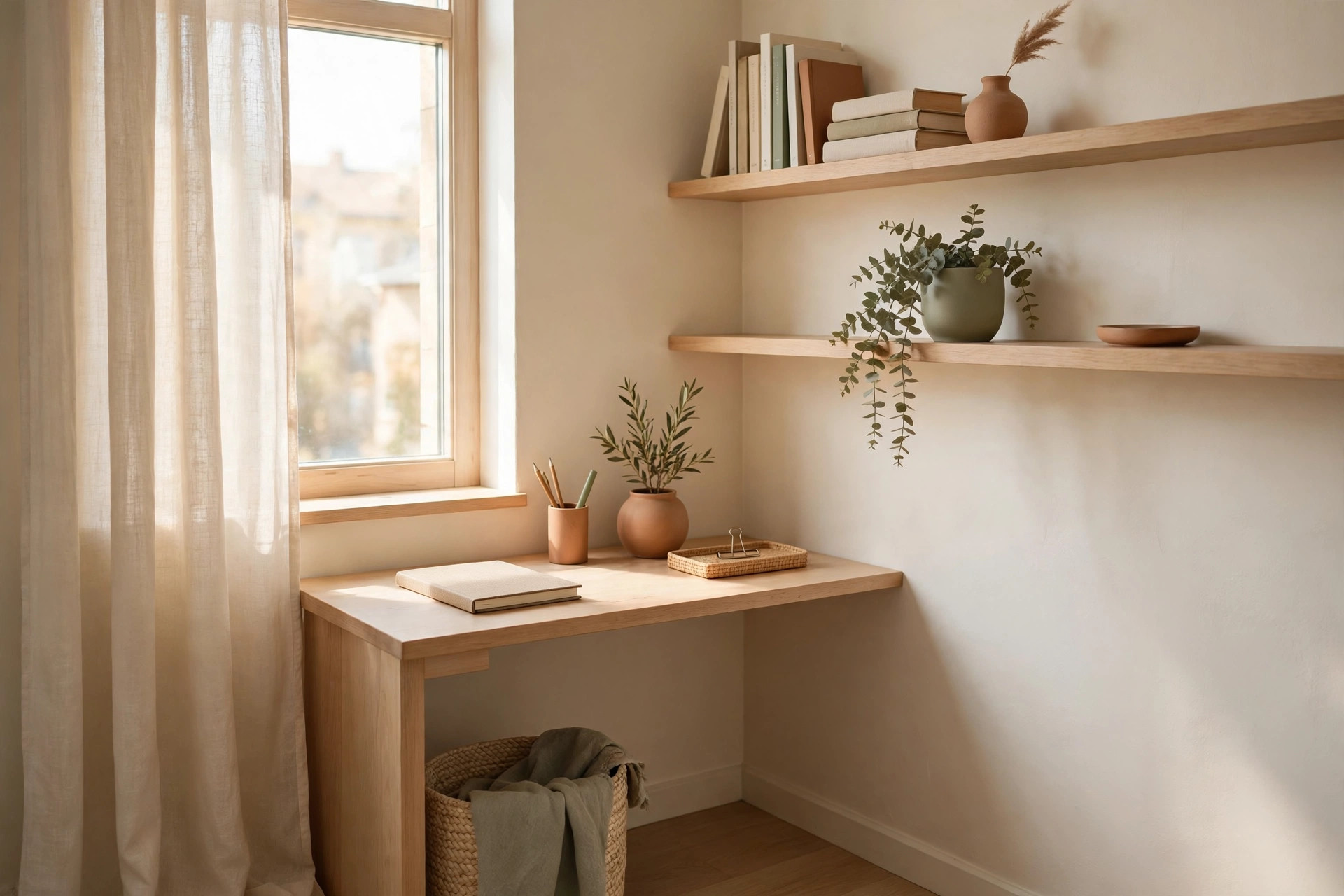
A corner is the most efficient shape for a tiny office. Two walls give you storage, mounting surfaces, and visual boundaries without eating a single extra square foot of floor. A 42×24-inch desk tucked into a corner uses roughly 7 square feet of floor space — less than a standard armchair — yet gives you 90 degrees of wraparound work surface and up to 12 linear feet of wall above it for shelves.
Measure your candidate corner before you buy anything. You need a minimum of 36 inches wide for a laptop setup or 48 inches for a monitor plus keyboard. Desk depth: 20 inches is the practical minimum, 24 inches noticeably more comfortable. Check for an outlet within 6 feet, and note the daylight direction — a window directly behind the screen will fight you with glare all afternoon.
Renter-friendly setup keeps your deposit safe. Tension-mounted corner shelves, adhesive cable clips, and freestanding pegboards that lean against the wall need zero holes.
Desk zone: what lives on it vs near it
The desk itself is sacred ground. On a corner desk, only three categories earn permanent residence: your computer (laptop or monitor plus keyboard), your current project (one folder, one notebook, one document tray — not all three), and one comfort item like a water glass or a small plant. Everything else moves to a near zone within arm’s reach but off the surface.
Your near zone is the 18-inch perimeter around the desk: a rolling drawer unit (roughly 15×12×20 inches) slides under most desks, a document tray stack sits on the shelf above, and chargers live in a bin beside the desk leg. Desk for doing, near zone for storing — that two-tier system keeps a 42-inch desk from turning into a junk drawer.
If the corner office sits inside a studio, treat the desk as its own mini-zone rather than letting work spill across the room. The same logic in our Studio Apartment Organization: How to Create Zones in One Room guide works at desk scale: a rug, a shelf as a boundary, and a consistent cue (desk lamp on = work hours) teach your brain where the office starts and ends.
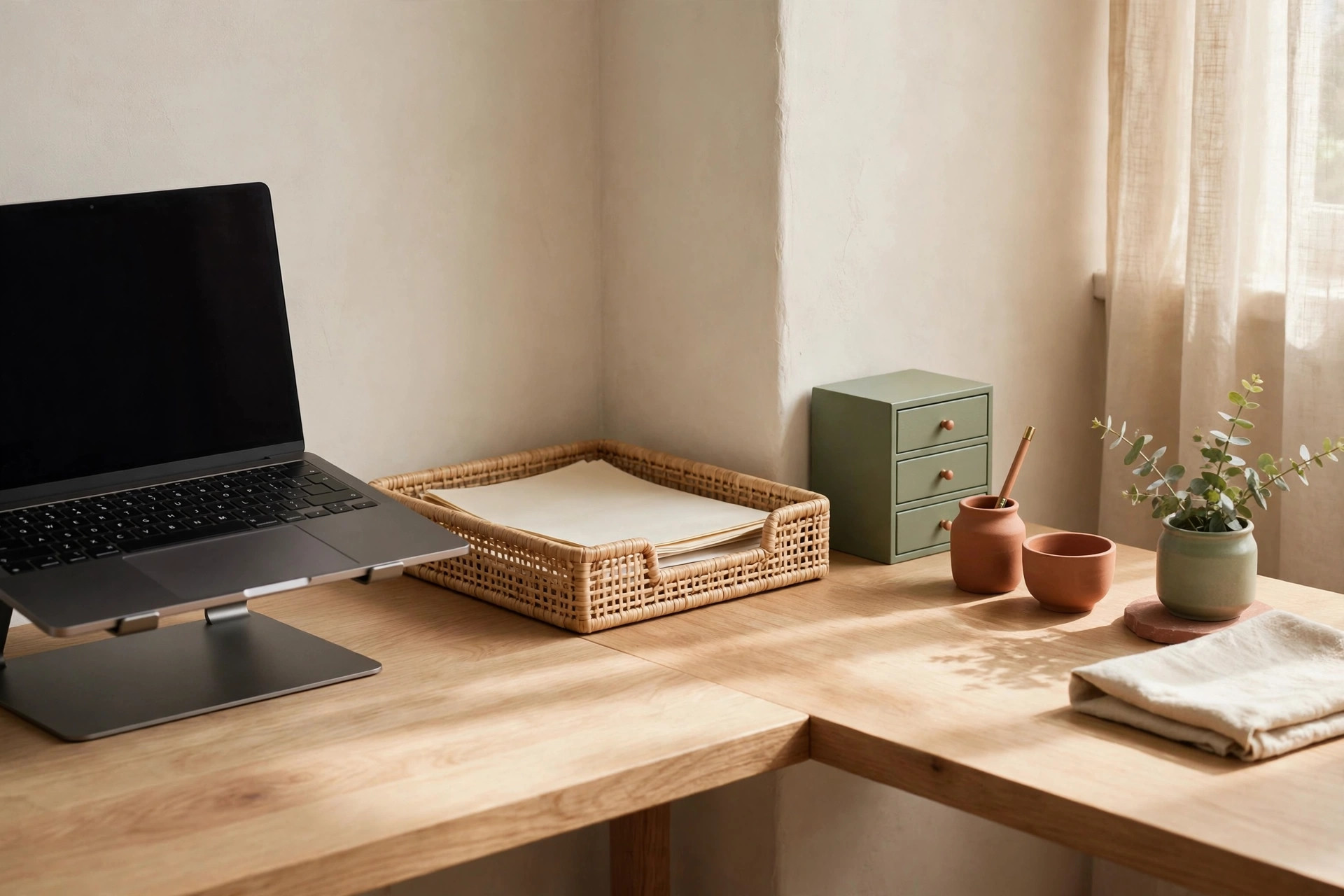
Weekly lift test: lift each desk item and ask whether you used it in the last three days. Anything that fails goes to the near zone — this habit does more than any container purchase ever will.
Vertical storage: shelves and pegboards
Walls are the corner office’s superpower. Above a 42-inch desk you have room for two 36-inch shelves at 18 and 36 inches above the desk surface, plus a 24×36-inch pegboard section — roughly the capacity of a two-drawer filing cabinet with zero floor space used.
Pegboards carry the daily-use supplies: scissors, tape, pens, headphones on hooks, sticky notes in a clip-on cup, and a small whiteboard tile for the week’s top three tasks. Use metal or hardboard pegboards with locking hooks so pieces don’t pop off mid-call. Keep it curated — 12 to 15 items you actually touch weekly, not 40 pieces of wall clutter.
The lower shelf (within arm’s reach while seated) gets the document tray, a small stackable organizer, and a box of printer paper. The higher shelf gets backup supplies and labeled bins for monthly-access items.
Our Bedroom Storage Ideas for Small Rooms With No Closet guide applies the same shelf-and-pegboard strategy to wardrobe walls — one hardware store trip can outfit both.
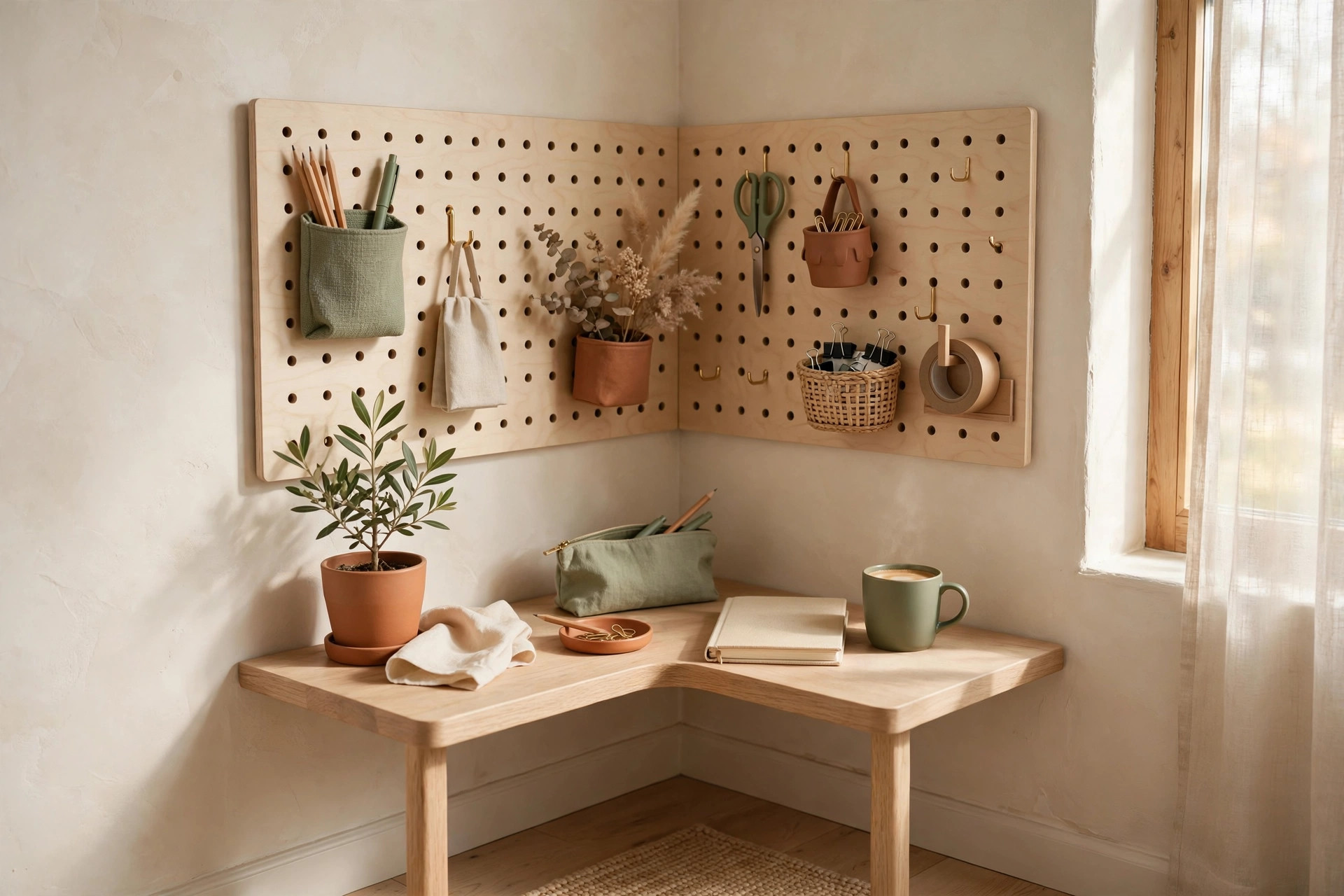
Label everything on the shelves, even bins that feel obvious. A strip of masking tape and a marker costs pennies and ends the “where did I put the sticky notes” dig forever.

Cable control in 20 minutes
A corner desk hides cables naturally on the two wall sides, so a 20-minute blitz is all it takes. Unplug everything, lay the devices out, and work in three passes.
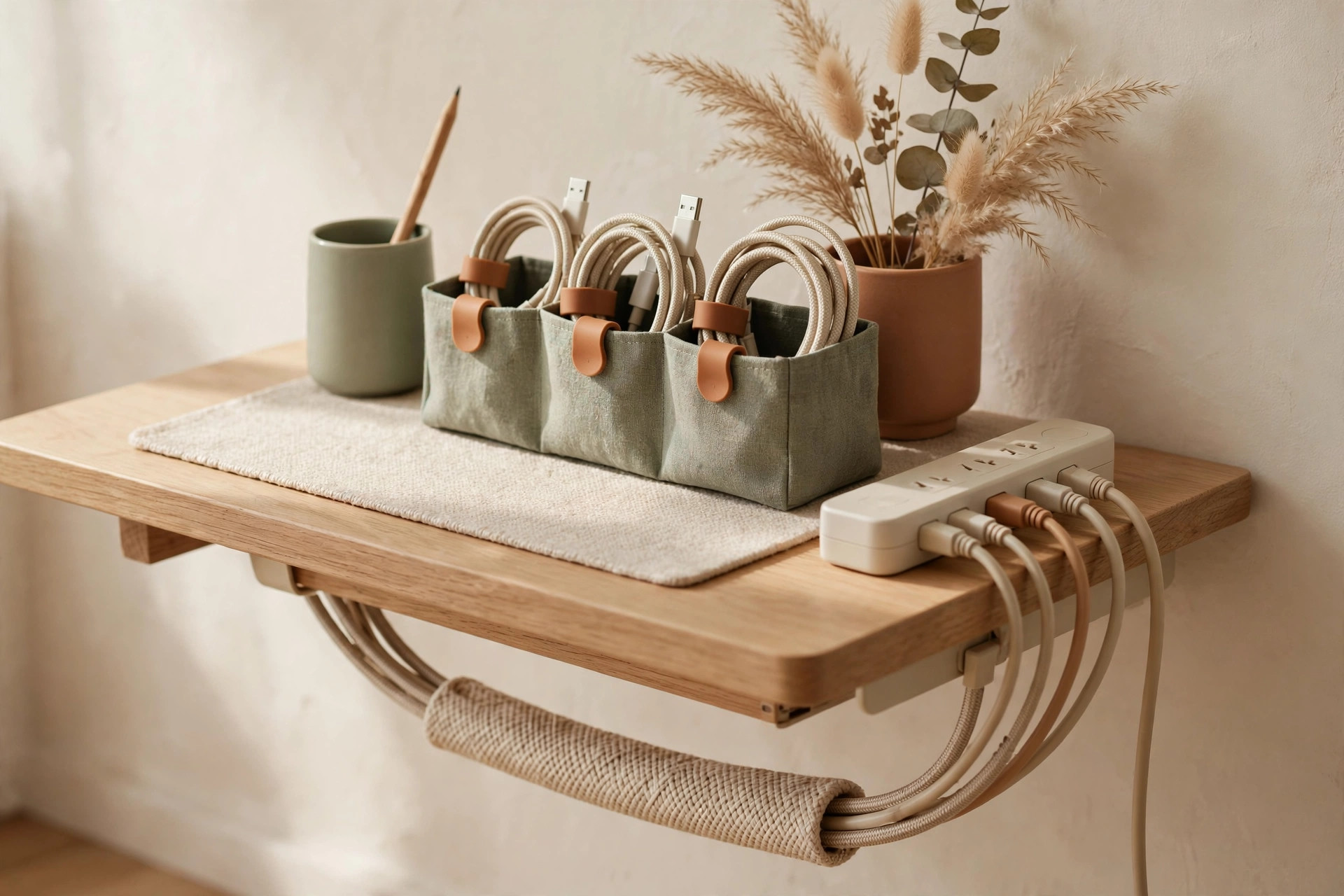
Pass one: shorten. If your monitor power cable is 6 feet and the power strip is 2 feet away, swap it for a 3-foot cable (about $8–10) or coil the excess with a velcro tie in a flat figure-eight, never a tight loop. Pass two: group. Run one 2-inch adhesive cable raceway (roughly $12 for 6 feet) up the back wall corner, feeding the monitor, charger, and lamp cords through it. Pass three: corral the floor. A single 6–8 outlet power strip sits in a ventilated cable box (approximately 16×6×6 inches) under the desk — the box hides the strip, and the back holes feed only the cables you need.
Keep one short charging cable visible for your phone and stash the rest. Wireless peripherals eliminate two of the worst tangle sources, and a single USB-C hub can replace four dongle cables on a laptop setup. Total honest budget for a full cable cleanup: $25–35 and twenty minutes of actual work.
Paper system: inbox, action, archive
Digital workers still drown in paper — contracts to sign, medical forms, the school letter you keep meaning to read. A three-tray system handles all of it, and each tray fits on a single shelf slot about 12 inches wide.
Inbox tray: every paper enters here, no sorting at the door. Once a day, spend five minutes moving each piece onward. Action tray: papers that need you to do something — sign, pay, file, reply. Review it twice a week; anything older than 30 days gets actioned or archived. Archive: a slim vertical file box (about 5 inches wide, fits on a shelf) for tax documents, warranties, and medical records. Once a year, empty anything expired.
Digitize aggressively. Snap a phone photo of receipts, business cards, and appointment slips, then recycle the original. The less paper enters, the less the system has to manage.
This tray logic also works at your front door for incoming mail — our guide to 15 Small Entryway Organization Ideas (Even With No Foyer) covers mail-drop stations that pair perfectly with the desk version.
The shutdown ritual that protects your evenings
The biggest complaint about working in a corner of your living space is that work never leaves. A shutdown ritual fixes it in five minutes and protects your evenings better than any door ever could.
Follow this exact sequence: close every application except one browser tab, write tomorrow’s top three tasks on a sticky note and stick it to the monitor, put loose items in the desk drawer, wipe the desk with a microfiber cloth, turn off the desk lamp, and walk away. The cues — dark screen, dark lamp, clear surface — tell your brain the office is closed.
Then leave the corner alone until morning. If your desk doubles as a dining table, the ritual matters twice as much — stack work to one side and the corner belongs to the rest of your life again.
Small-space ergonomics without big furniture
Your monitor’s top bezel should sit at or just below eye level; on a 29–30 inch desk, that means raising most monitors 3–4 inches with a stand (a stand with a drawer adds storage at the same time). Your laptop screen will always be too low, so an external keyboard plus a stand that raises the screen 6–8 inches solves the neck-craning problem for about $25.
Your chair just needs to let your feet rest flat and your elbows bend near 90 degrees. If your chair sits tall, a 6-inch step stool closes the gap; a $15 lumbar roll turns a dining chair into 80 percent of an ergonomic setup for a fraction of the cost.
Light matters more than furniture. Position the corner so daylight comes from the side, not directly in front of or behind the screen, and add a warm desk lamp (2700–3000K) across the work surface. OSHA’s computer workstation ergonomics guidance backs the basics: screen at arm’s length, top of screen at eye level, wrists straight. No gadgets required.
Mistakes to avoid
Buying storage before sorting. Sort everything into keep, relocate, and toss first, then buy storage for what’s left. Most corner offices need fewer than five containers total.
The floating desk. Pushing the desk away from the walls to “access the back” wastes the corner’s biggest advantage — the desk goes in the corner, flush on both sides.
Oversized furniture. A 30-inch-deep executive desk eats the walking path and kills the setup. For corners, 20–24 inches deep is the sweet spot; your chair needs 30–36 inches of pullback space behind it.
Treating the desk as a landing strip. Keys, mail, chargers, shopping bags — the desk collects everything the moment it sits empty. The shutdown ritual plus a small landing zone elsewhere in the apartment stops the pileup at the source.
Ignoring lighting. A corner that’s dark at 3pm becomes a corner you avoid. One $20 desk lamp is the difference between a workspace you use and a storage corner.
Frequently asked questions
How much space do I need for a small home office in a corner?
You need a minimum of 36 inches of wall width for a laptop setup or 48 inches for a monitor and keyboard tray, with 20–24 inches of desk depth. Leave 30–36 inches behind the chair for pullback. Most qualifying corners total 7–9 square feet of floor space.
Can I set up a corner office without drilling into walls?
Yes. Tension-mounted shelves, adhesive cable clips and raceways, freestanding lean-against-the-wall pegboards, and Command-style hanging strips handle everything a drilled setup does, with zero holes. The one trade-off: adhesive mounts hold less weight, so keep heavy items on the desk or a drawer unit.
What is the best desk depth for a tiny corner office?
Twenty to twenty-four inches. Twenty inches fits a laptop, notebook, and mug comfortably; twenty-four adds room for a monitor plus external keyboard. Deeper than 24 inches wastes the limited space and pushes you too far from the walls that hold your storage.
How do I keep work from taking over my home when the office is in my living space?
Use a five-minute shutdown ritual that closes the office visually (dark screen, dark lamp, clear desk, tomorrow’s tasks written down), and keep work supplies in the corner’s near zone, not scattered around the room. The ritual’s physical cues signal your brain that the workday ended, even without a door.
A spare corner is a complete home office waiting to happen: measure it, zone the desk surface, build upward with shelves and a pegboard, tame the cables, run the three-tray paper system, and close every evening with the shutdown ritual. No spare room and no renovation required. Save this pin for later, and browse more ideas in our small spaces collection.