A baby arrives with a surprising amount of stuff. One week you have a clear living room; the next, a stroller blocks the door. Baby gear storage small apartment success is about systems, not square footage: fold-flat gear, one spot per item, and a steady outgrown pipeline.
The baby gear triage: what you actually use daily
Before you buy a single bin, sort your gear by how often it is used: about a third does daily work, a third weekly, and the rest sits untouched for months.
1. Sort everything into daily, weekly, and rarely used
Empty every baby item onto the bed and sort it into three piles: daily (stroller, diaper caddy, feeding chair, two or three favorite toys), weekly (bath tub, carrier, play mat), and rarely used (jumper, second bouncer, gadgets you never reached for). Daily items get prime real estate; weekly items go on a closet shelf; rarely used items go into one bin or leave the apartment.
2. Apply the one-in, one-out rule from day one
Baby gear multiplies because gifts and hand-me-downs arrive faster than your baby outgrows things. Of all small apartment baby storage ideas, the one-in, one-out rule stops the creep: every new item that enters means one item leaves. Keep a donation bag on a closet hook; when it is full, it goes out the door that week.
Stroller parking: the entryway solution that saves your sanity
The stroller is the biggest single item in most small apartments, and the one you use every day — so it needs a parking spot by the front door.
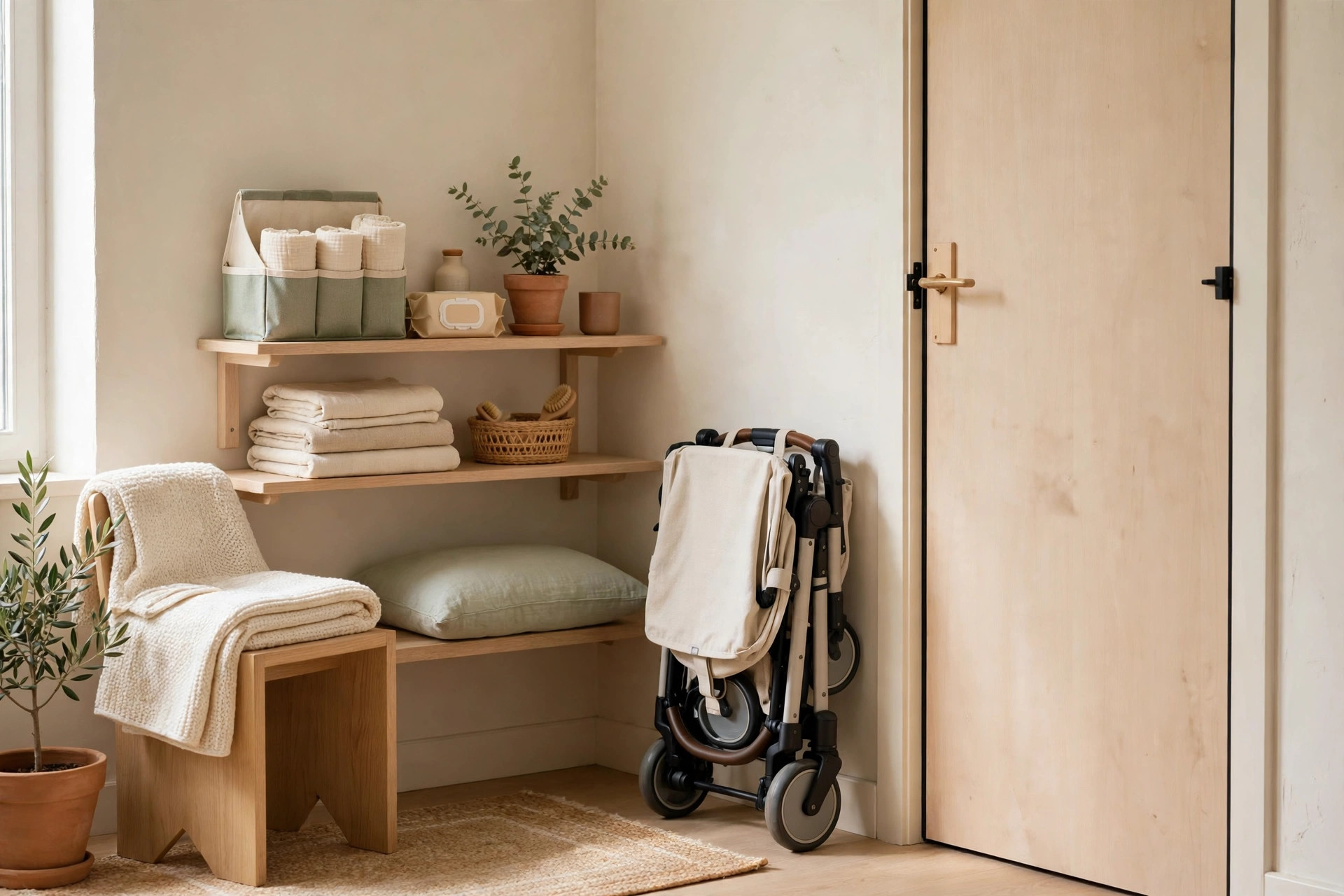
3. Claim one stroller parking spot by the door
Measure your folded stroller’s footprint — most compact strollers fold to roughly 20 by 24 inches — and mark that rectangle beside the entryway wall with a small washable rug or a low boot tray. The stroller lives there and nowhere else, with a hook above it for the rain cover. This is the core of storing stroller in small apartment life: one spot, always the same. See also our 15 Small Entryway Organization Ideas (Even With No Foyer).
4. Use a wall-mounted hook for the carrier and the diaper bag
The baby carrier and the diaper bag are daily gear, but they do not need floor space. Two sturdy adhesive or over-the-door hooks beside the stroller spot hold both, packed and ready to grab.
5. Park the second stroller outside your living space
If you own both a full-size stroller and a lightweight travel stroller, only one of them lives in the apartment. The second one goes in the car trunk, a building storage cage, or a family member’s garage, and you swap them when the season or the trip demands it.
Fold-flat everything: high chairs, play yards, and bouncers
Fold-flat gear is the single best investment for a small apartment: a high chair that folds to 6 inches deep can hang behind a door, and a play yard that folds into a carry bag can slide under the bed.
6. Choose a high chair that folds flat and hangs behind a door
A fold-flat high chair collapses to about 6 inches deep and weighs 10 to 12 pounds, light enough to carry with one hand. When mealtime is over, fold it, wipe it, and hang it on two adhesive hooks on the back of the kitchen or pantry door, freeing the roughly 4 square feet a fixed high chair occupies permanently.
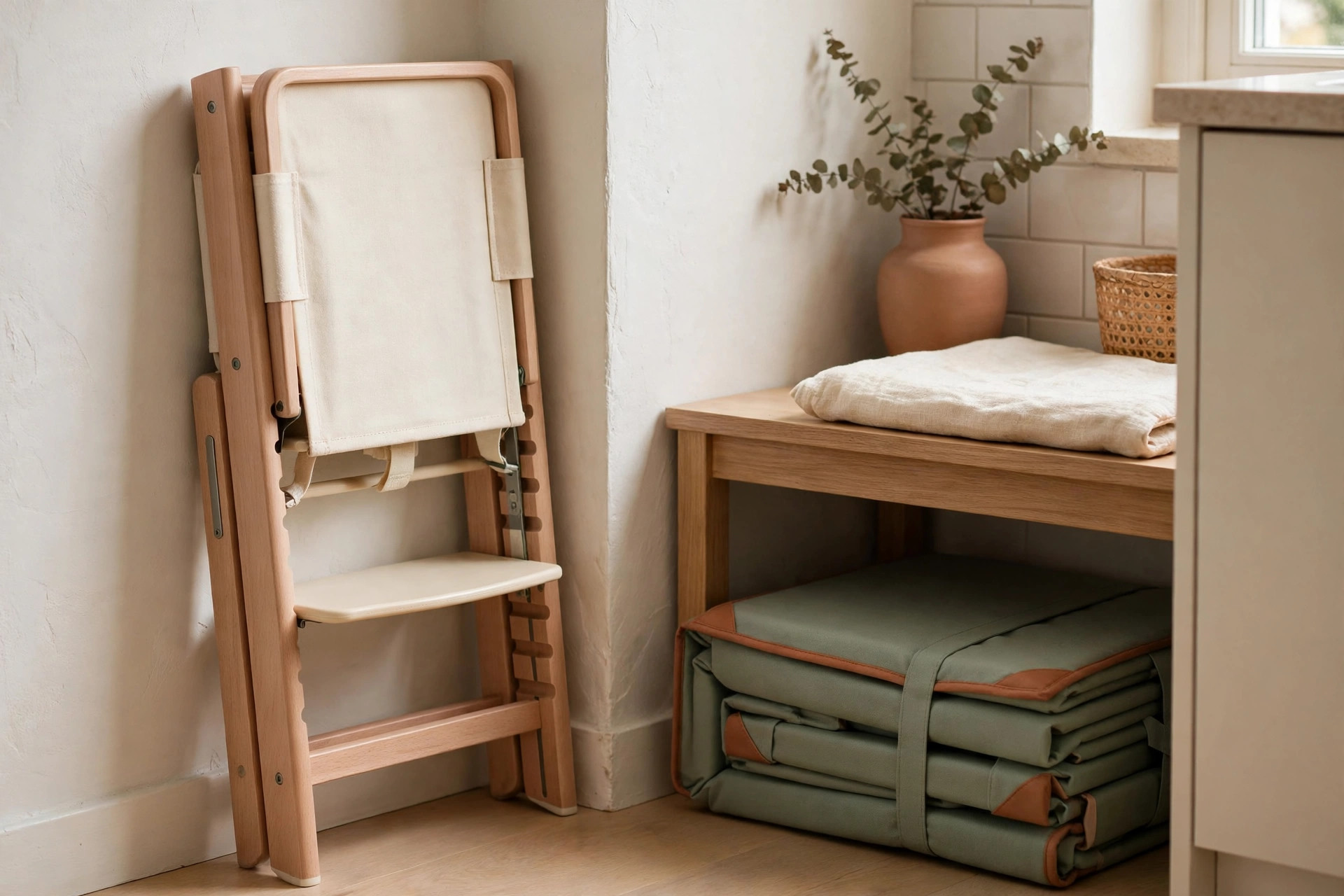
7. Store the play yard under the bed, not in the corner
A folding play yard packs into a carry bag about 30 inches long and 10 inches square, which slides neatly under most beds or behind the sofa. Do not leave it set up in the corner of the living room “just in case” — a set-up play yard eats 9 square feet around the clock, while a folded one eats zero.
8. Keep one bouncer, fold it, and hang it in the closet
Babies love bouncers, and relatives love giving them, which is how families end up with three. Keep the one your baby actually uses and pass the rest on. A folding bouncer collapses to a few inches thick and hangs on a closet hook or slides between the dresser and the wall.
The diaper station: one caddy, one spot, always stocked
Diaper changes happen six to ten times a day, and every one is easier when everything is in one place.
9. Build one portable diaper caddy that goes where you go
A handled caddy about 14 by 10 by 8 inches holds roughly 10 diapers, a full pack of wipes, diaper cream, a changing pad, and a spare outfit. That is the whole station. Keep it on the changing surface at night and carry it to the living room during the day, so the station follows you.
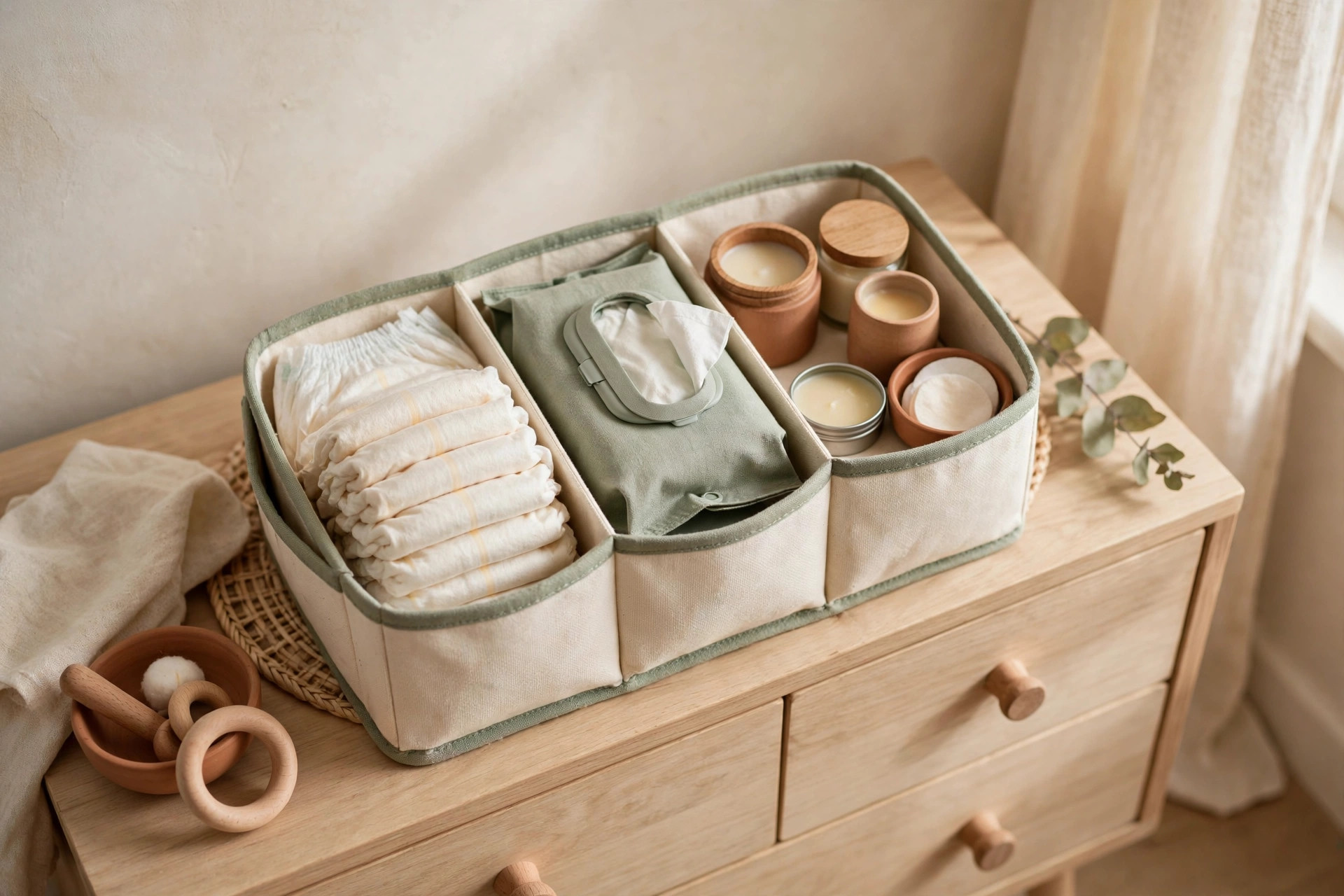
10. Put the changing spot where the light and the laundry already are
The best changing spot in a small apartment is usually the top of a dresser near a window, or a wall-mounted fold-down changing table in the bathroom. A contoured changing pad with a safety strap on top of a dresser at least 36 inches wide works well, and the drawers below hold the diapers and clothes, so the whole operation fits in one vertical column.
Toy rotation: the 10-toy rule for small living rooms
Toys are the category that grows fastest and clutters hardest, because every toy is small but the total is enormous. Our 18 Kids Toy Storage Ideas for Small Living Rooms (Toys Without the Chaos) covers the furniture side; the rotation below is the habit that makes it work.
11. Keep 10 toys out and store the rest in one bin
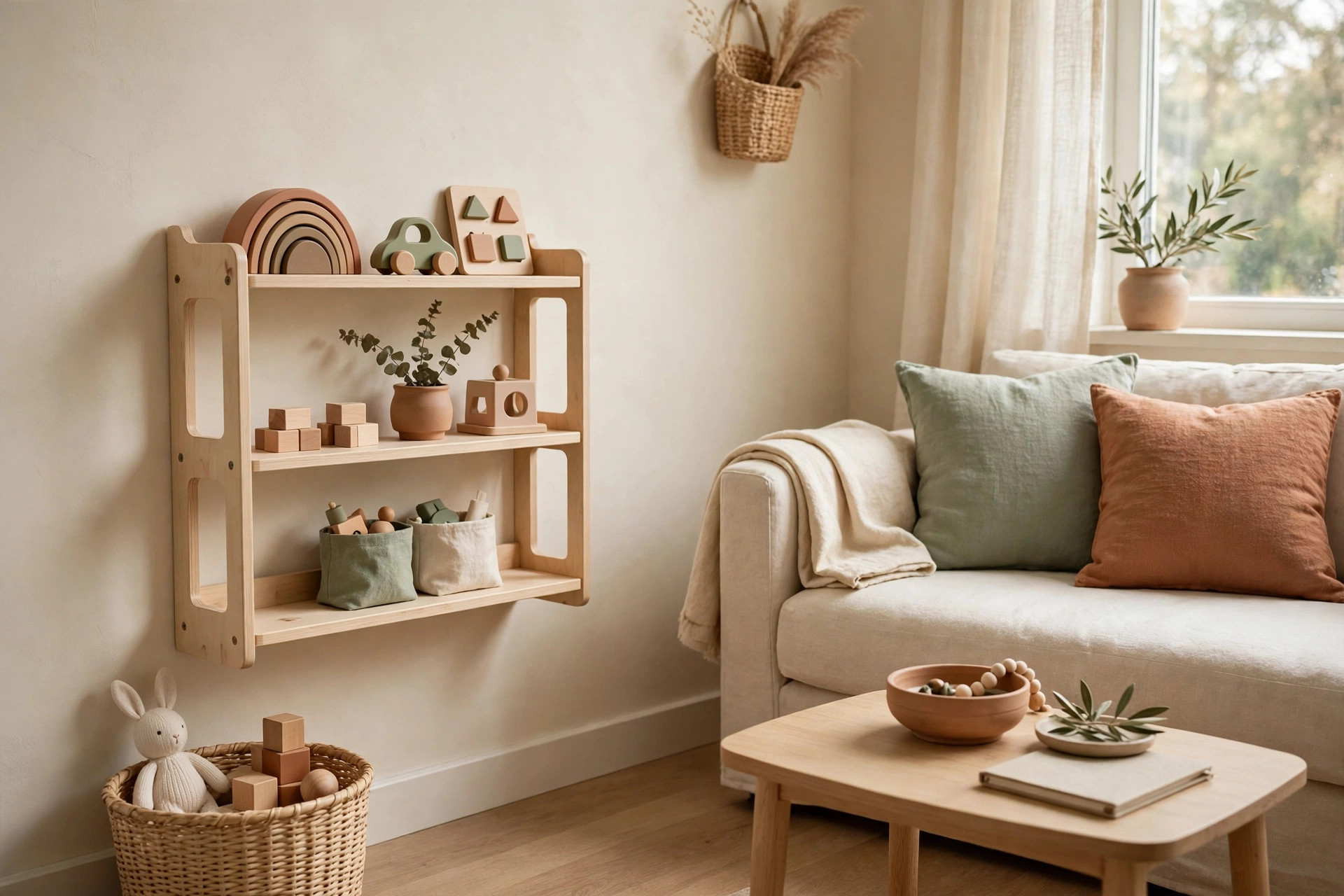
Count out ten toys — a building toy, a book, a soft toy, a puzzle, and a few favorites — and put the rest in a single lidded bin on a closet shelf. Ten toys is enough variety for a baby or toddler without covering the floor, and the limit forces you to choose instead of displaying everything at once.
12. Use one low basket as the nightly toy reset
A single low, wide basket — roughly 18 by 12 by 10 inches — sits beside the sofa and holds every toy that is out. The nightly reset takes three minutes: everything on the floor goes into the basket, and the living room is a living room again.
Clothes that grow: size bins and the outgrown pipeline
Babies outgrow clothes every two to three months, which means a small apartment can fill with three sizes at once.
13. Give each clothing size its own labeled bin
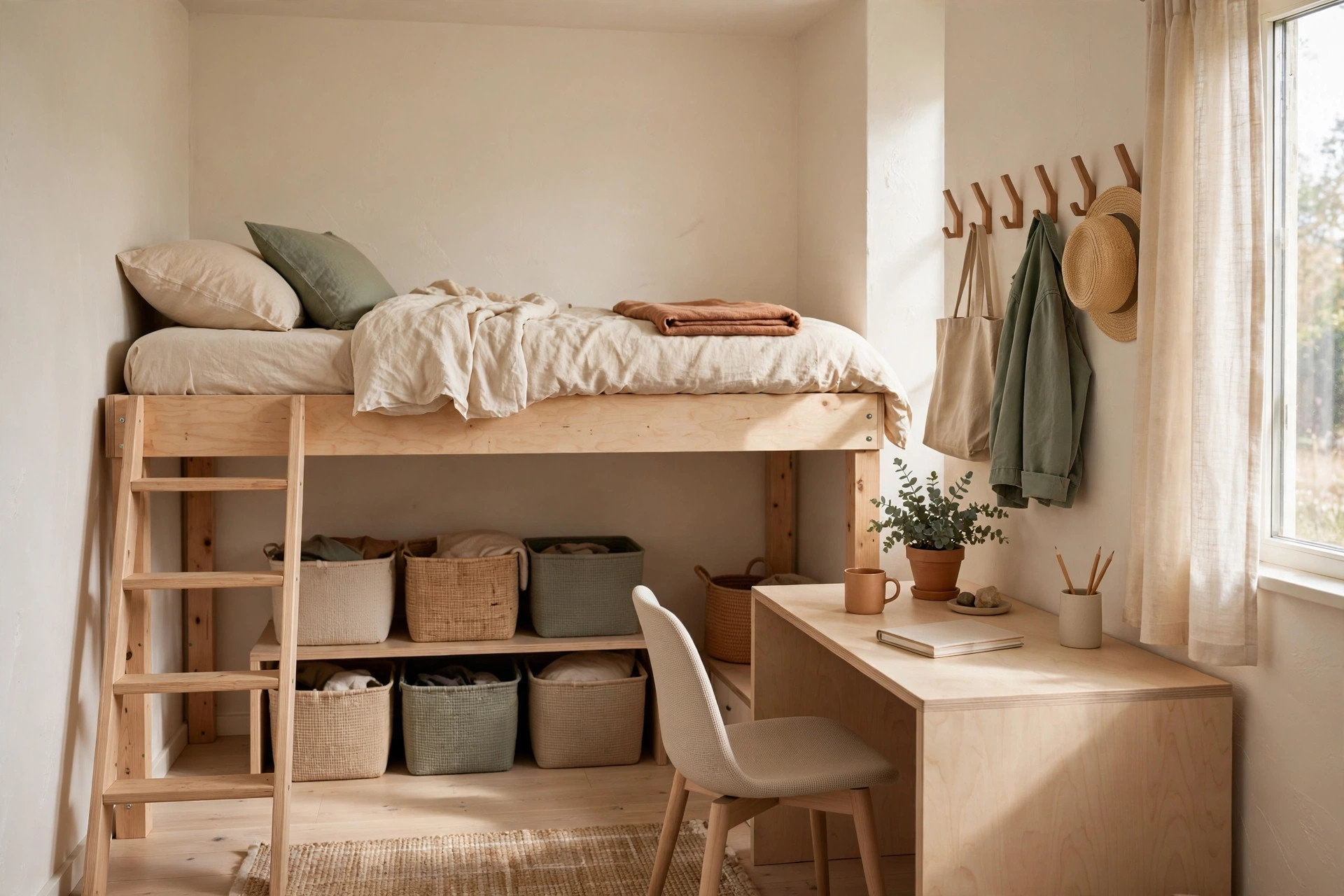
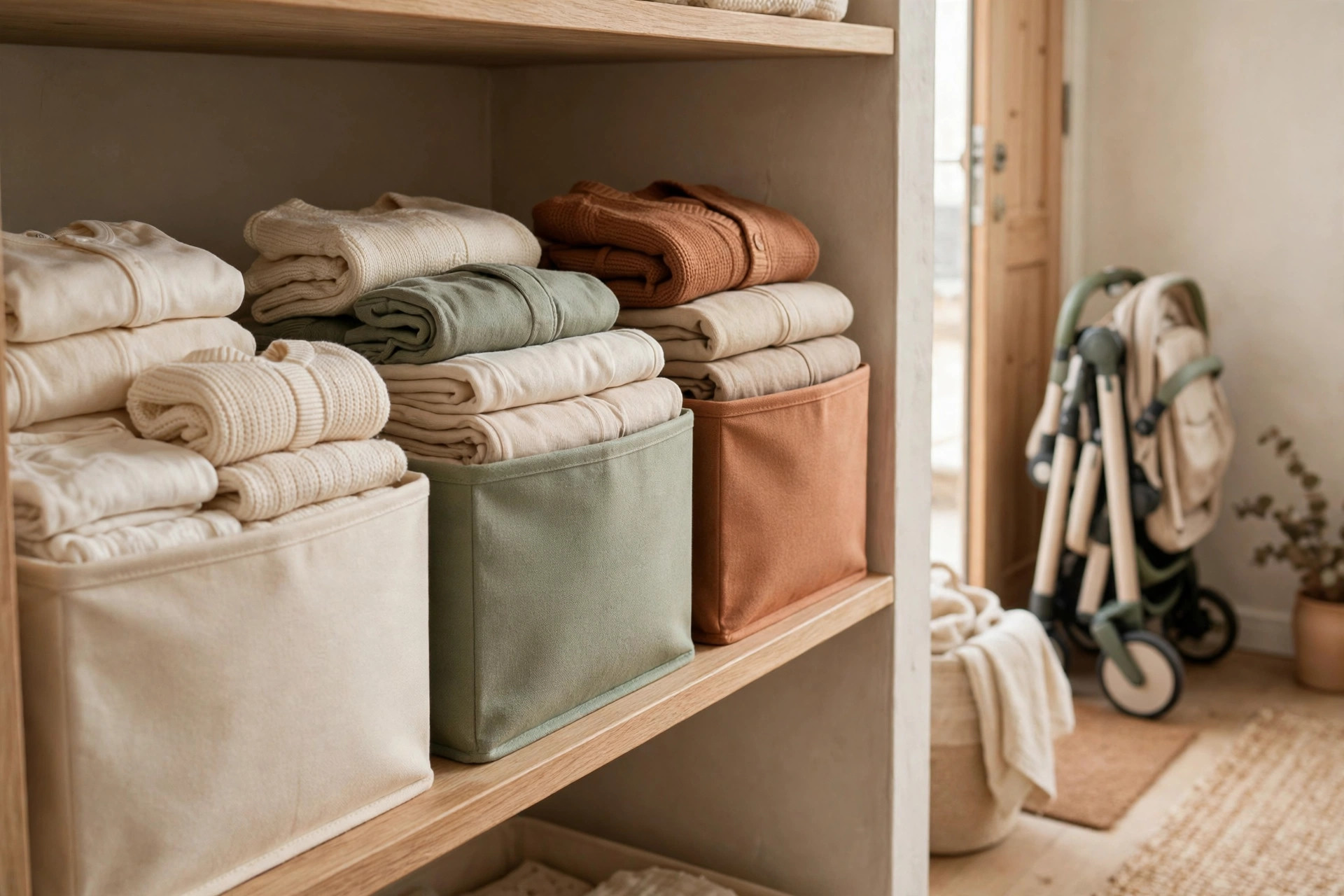
Use one clear bin per size — newborn, 0–3 months, 3–6 months, and so on — each about 12 by 16 by 10 inches, labeled on the front with the size in large print. The current size lives in the dresser or closet; the next size up sits on the closet shelf, ready to open the day the current clothes get tight.
14. Run the outgrown pipeline on a fixed schedule
When clothes get too small, they go straight into the outgrown bin, not back into the drawer. Once a month, sort that bin into three bags: keep for a younger sibling, pass to a friend or family member, and donate or sell. For more on keeping a small kids’ closet working, see our 14 Kids Closet Organization Ideas for Small Bedrooms.
Keeping it safe: anchoring, gating, and the no-clutter floor rule
The U.S. Consumer Product Safety Commission’s Anchor It! guidance explains how to secure dressers, bookshelves, and televisions with inexpensive anti-tip straps.
15. Anchor every dresser and bookshelf before your baby pulls up
Install anti-tip straps on every dresser, bookshelf, and changing table, starting with the furniture in the nursery and the living room. The straps cost a few dollars each, install with two screws, and hold furniture that a climbing toddler can otherwise pull down in seconds.
16. Enforce the no-clutter floor rule with a pressure-mounted gate
Once your baby crawls, the floor is their whole world, so the floor must be clear of small objects, cords, and anything that can be pulled down. A pressure-mounted baby gate at the nursery or kitchen doorway creates a safe play zone without drilling holes in a rental wall, and it comes down cleanly when you move out. Outside the zone, cords go into cord covers and cleaning supplies go into a high cabinet with a child lock.
Mistakes to avoid
The most common mistake is buying storage before triaging the gear: bins and baskets feel productive, but they just organize clutter you should have removed. The second is choosing cute over foldable — a beautiful wooden high chair that never folds will own your kitchen for a year. And the third is the “just in case” box: if you have not used it in three months and your baby has outgrown that stage, let it go.
Frequently asked questions
Where should I store a stroller in a small apartment?
Park it folded by the front door on a small rug or boot tray, with the diaper bag on a hook above it.
How do I store baby clothes my baby has outgrown?
Put outgrown clothes straight into a labeled bin for that size, then sort the bin once a month into keep, pass on, and donate or sell.
Can I use a dresser as a changing table in a small apartment?
Yes, and it is usually the best option. A dresser at least 36 inches wide with a contoured changing pad and a safety strap on top gives you a changing surface plus storage in one piece of furniture.
How many toys should a baby have out at once?
About ten is the sweet spot for a small living room: enough variety to keep a baby or toddler engaged, few enough to fit in one low basket for the nightly reset.
What baby gear should I avoid buying for a small apartment?
Avoid anything large that does not fold flat — fixed high chairs, non-folding swings, and bulky activity gyms — and avoid buying two of anything, especially strollers and bouncers.
Conclusion
Baby gear storage in a small apartment comes down to three habits: fold-flat gear that disappears after use, one assigned spot for every daily item, and a steady outgrown pipeline so nothing accumulates. Browse more ideas in our small-spaces category and save this pin for later.