Most kids’ closets fail for one simple reason: they were designed for adults. The rod hangs at five feet, the top shelf holds everything your child actually uses, and you play fetch every morning while the floor piles up. These kids closet organization ideas flip that layout, putting every system at your child’s level so they can dress themselves, put things back, and keep the closet tidy without rescue missions from you.
The ideas below work for small bedrooms and tight reach-ins, for toddlers who can’t read labels yet and grade-schoolers drowning in costumes and sneakers. The goal: a closet little hands can maintain themselves.
Kid-height first: why adult closet layouts fail children
A standard rod sits 60–66 inches high — out of reach for anyone under four feet tall. When children can’t reach their clothes, they stop trying and you become their permanent closet valet. One rule governs every system below: if a five-year-old standing flat-footed can’t reach it and put it back, it doesn’t belong there.
1. Design around the 40-inch rule
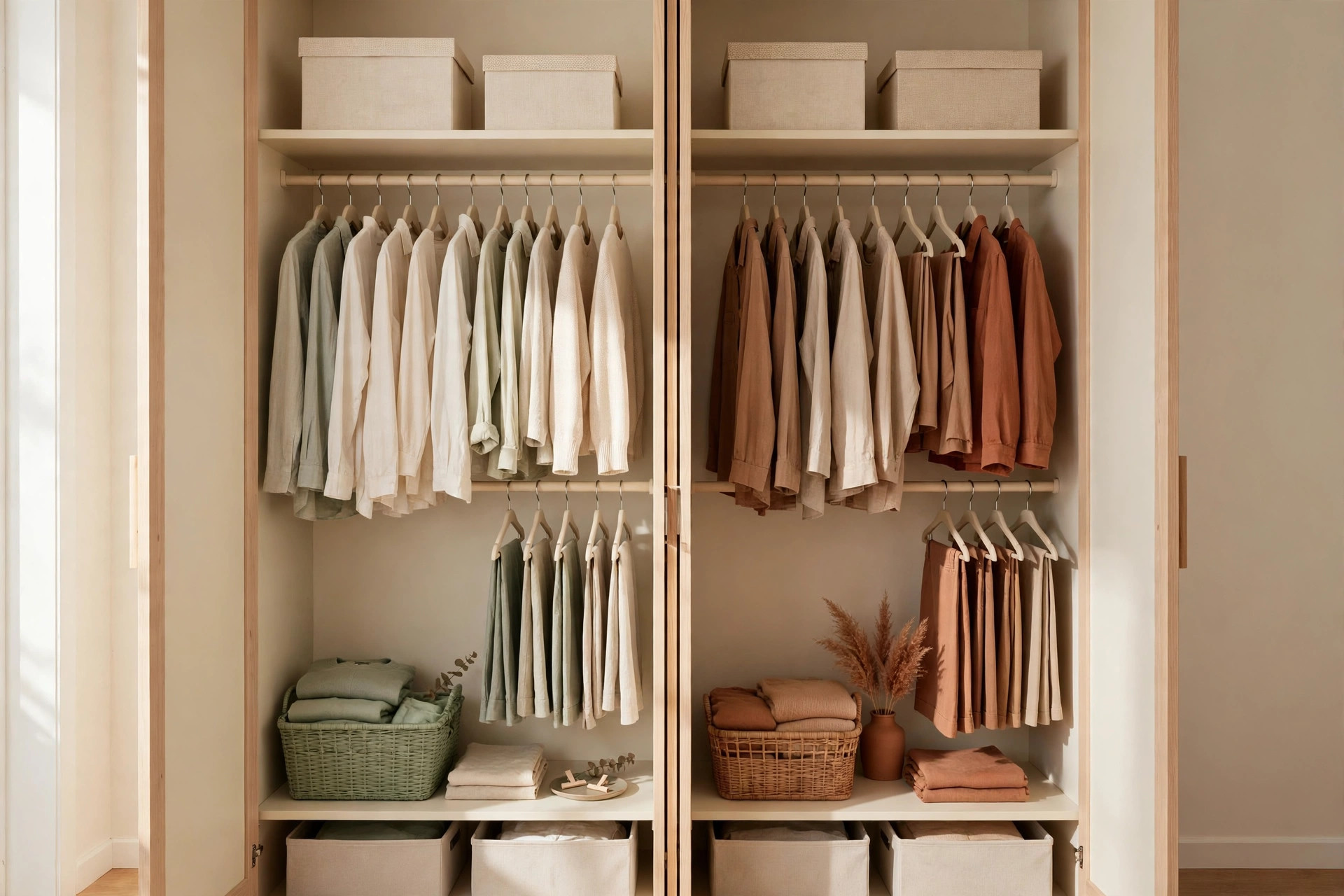
Daily items — school clothes, pajamas, underwear — belong at or below 40 inches, roughly chest-height for a four- to seven-year-old. Hanging clothes come off easily at this height, and bins pull out without tipping. Move out-of-season and sentimental items up high; the top shelf becomes your storage zone, not theirs.
2. Keep only one week’s worth of clothes accessible
Thirty shirts means twenty-nine get buried under the one they want. Stock the reachable zone with five to seven everyday outfits — that’s it. Box the rest in a labeled bin on the top shelf and rotate seasonally. Fewer choices mean faster mornings and five-minute cleanup. For tight footprints, 18 Small Reach-In Closet Organization Ideas That Double Your Space covers measuring and layout tricks.
Lowering the rod: double-hang at kid level
Hanging space is the most wasted asset in a kids’ closet: adult-height single rods hold shirts with three feet of dead air below. Kids’ clothes are short — a toddler dress is about 18 inches — so stack two hanging levels where an adult closet fits one.
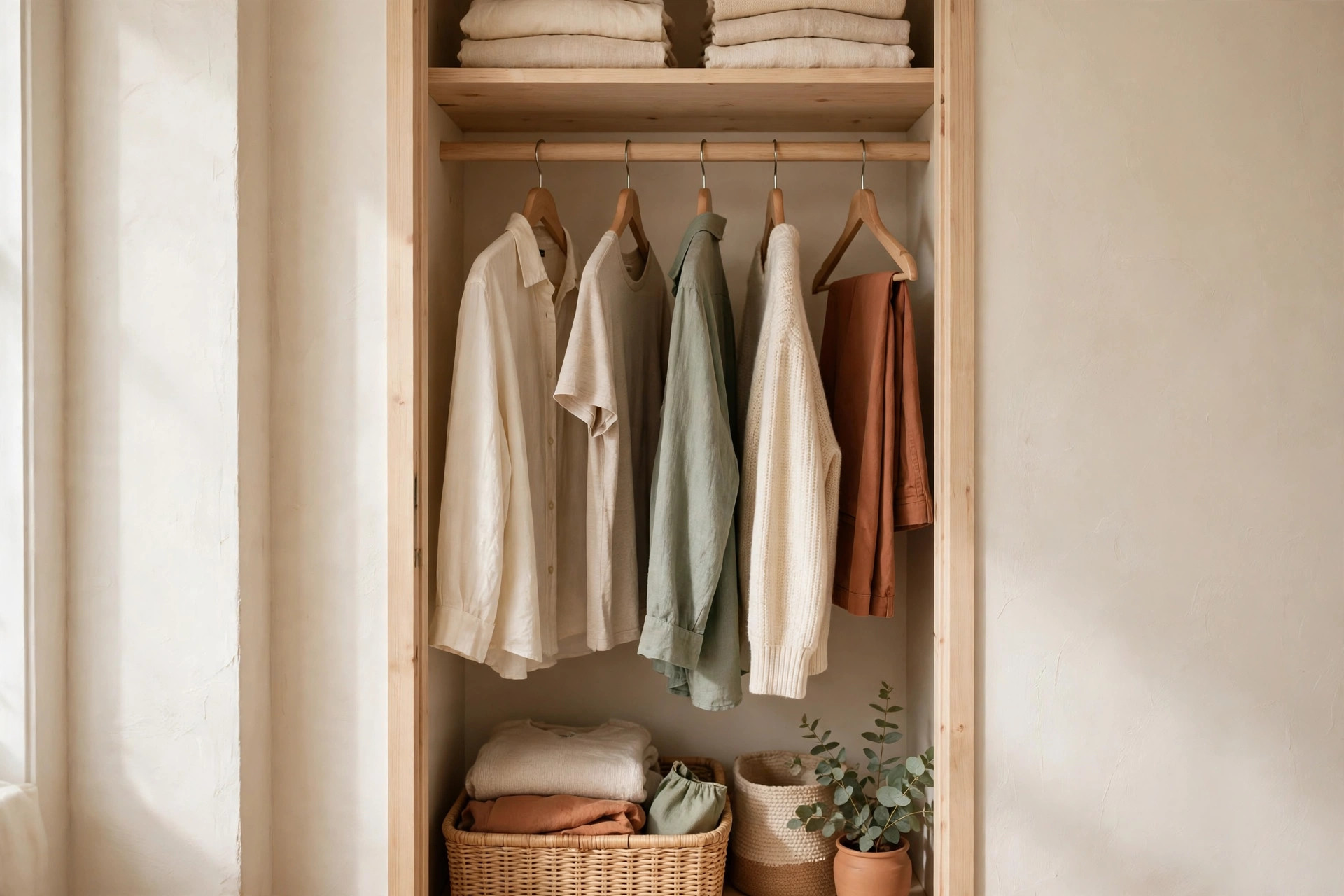
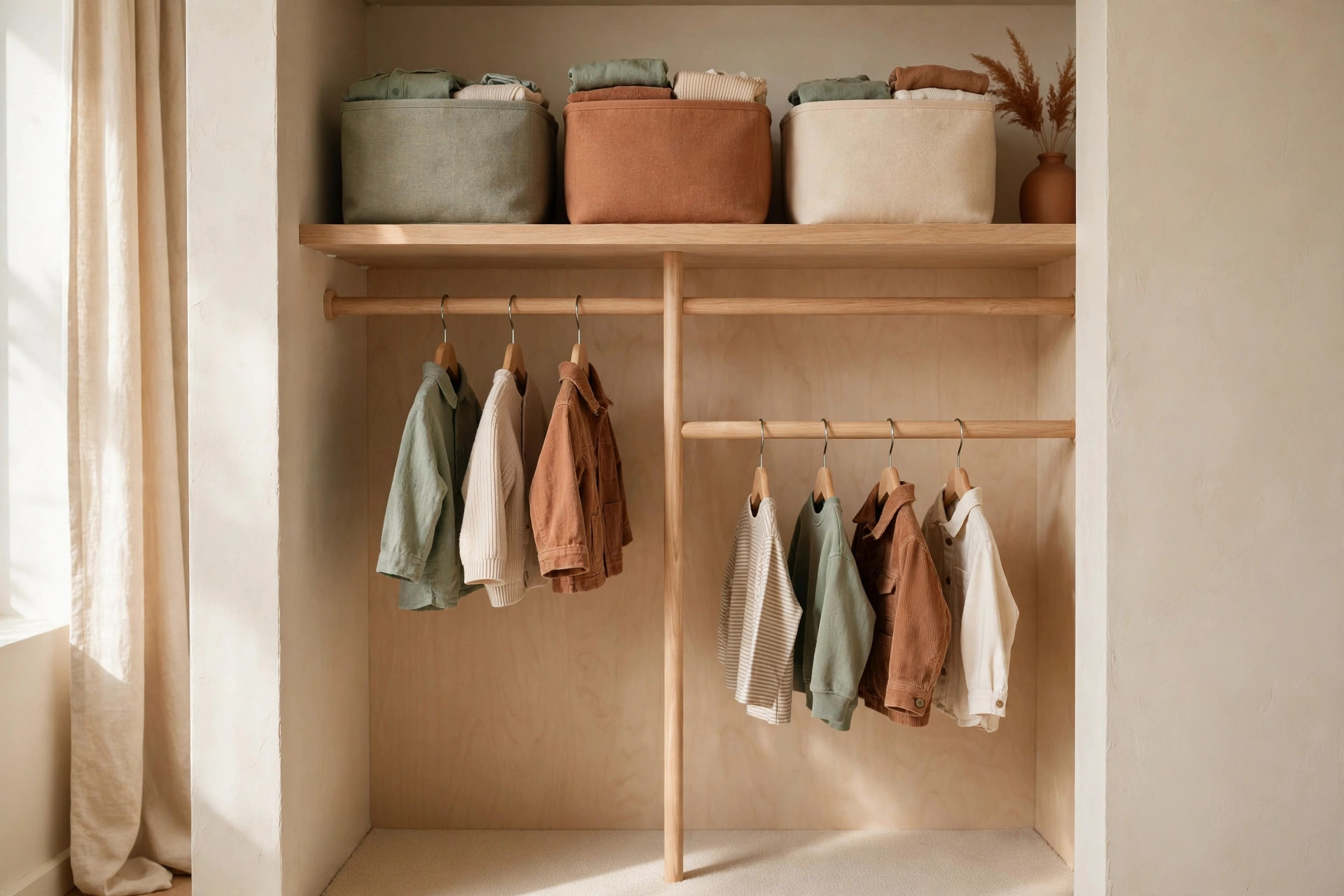
3. Install an adjustable double-hang rod at 32 and 44 inches
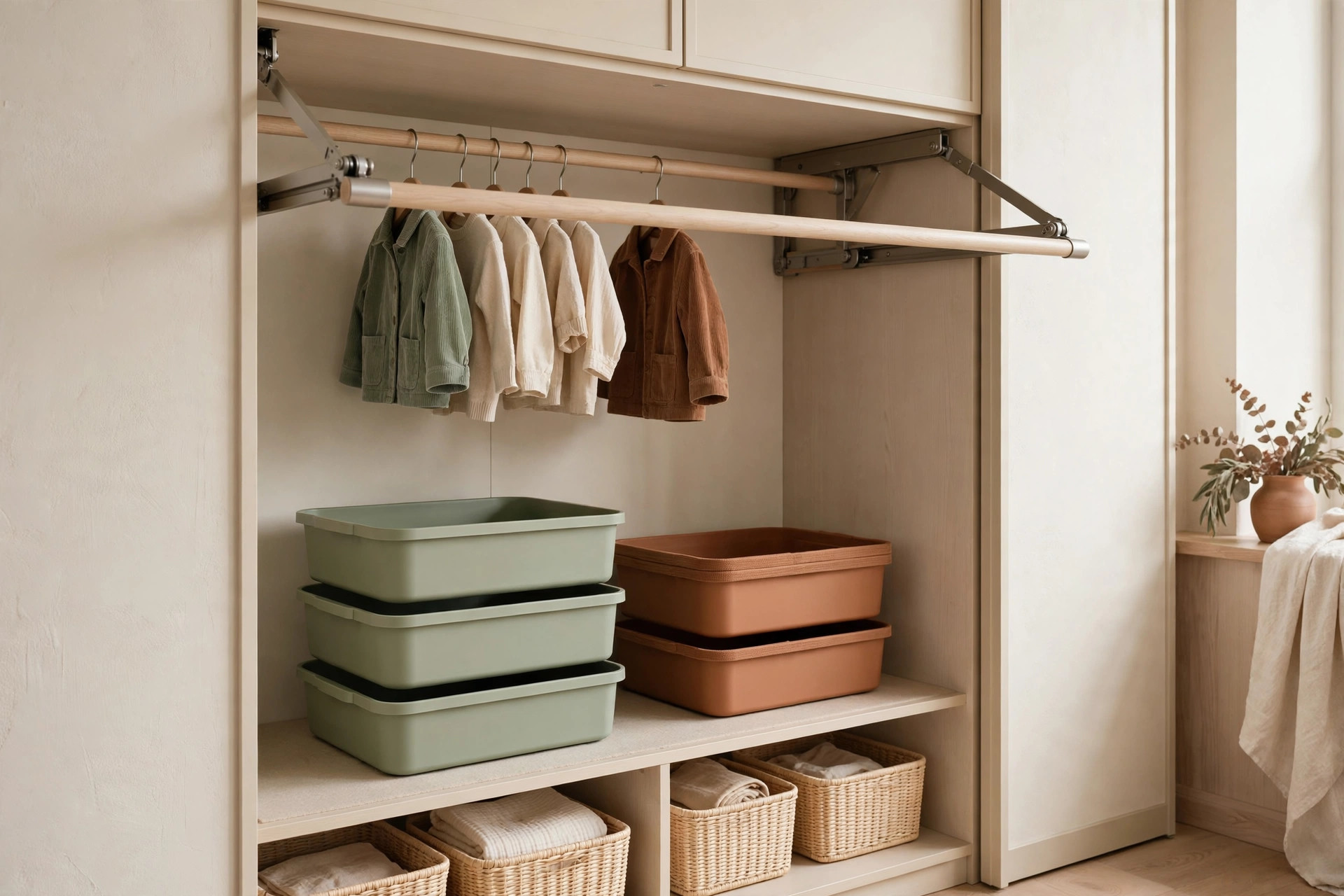
Mount the lower rod at 32 inches and the upper at 44 inches for ages four to seven. Use an adjustable or tension rod rated for at least 20 pounds per level, mounted into studs or toggle anchors — kids lean on rods, so mount for impact, not just weight. Put tops above and pants below, and use thin velvet hangers: they grip small clothes and save roughly 30% of rod width over bulky plastic hangers.
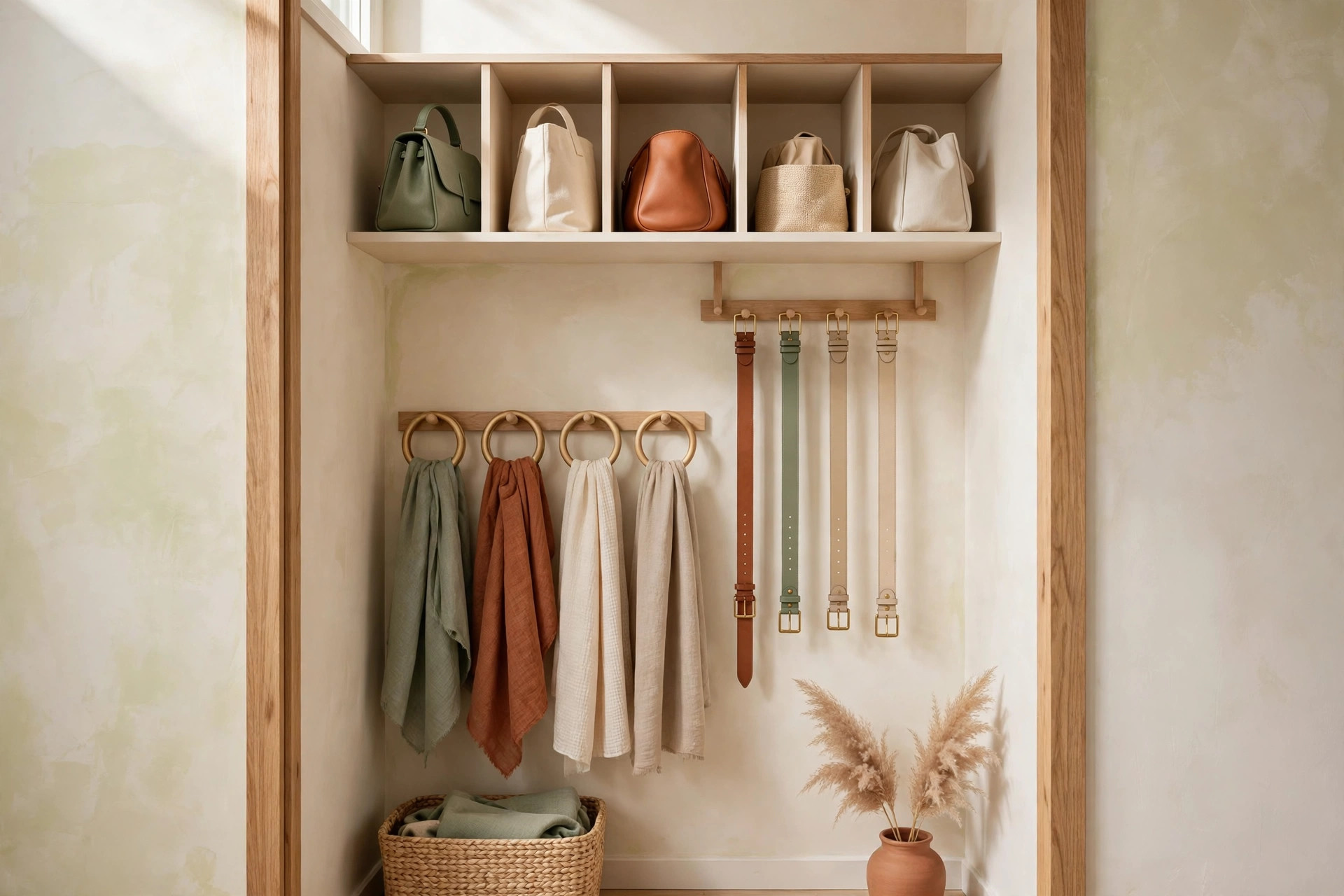
4. Swap one rod section for a pull-down hook strip
Dedicate 18–24 inches of wall beside the rods to a sturdy hook strip at about 36 inches. Tomorrow’s outfit, the daily jacket, and the backpack all live here — nothing to hang, nothing to unhang. Hooks absorb the most-touched items, which keeps the rods from becoming a tangled mess by Wednesday.
Labeled bins and picture labels for pre-readers
If your child can’t read yet, written labels are decoration. Picture labels — a photo or simple icon on every bin — let pre-readers sort correctly and return things to the right spot. It’s the highest-leverage system in a kids’ closet: cleanup becomes a matching game, not a memory test.
5. Put picture labels on every reachable bin
Photograph each bin’s contents, print wallet-sized copies, and tape them to the front — or draw simple icons (shirt, sock, block) on adhesive labels. Underwear, socks, pajamas, play clothes, and dress-up clothes each get their own bin with its own picture. Kids as young as three can match a photo to a bin and return items alone.
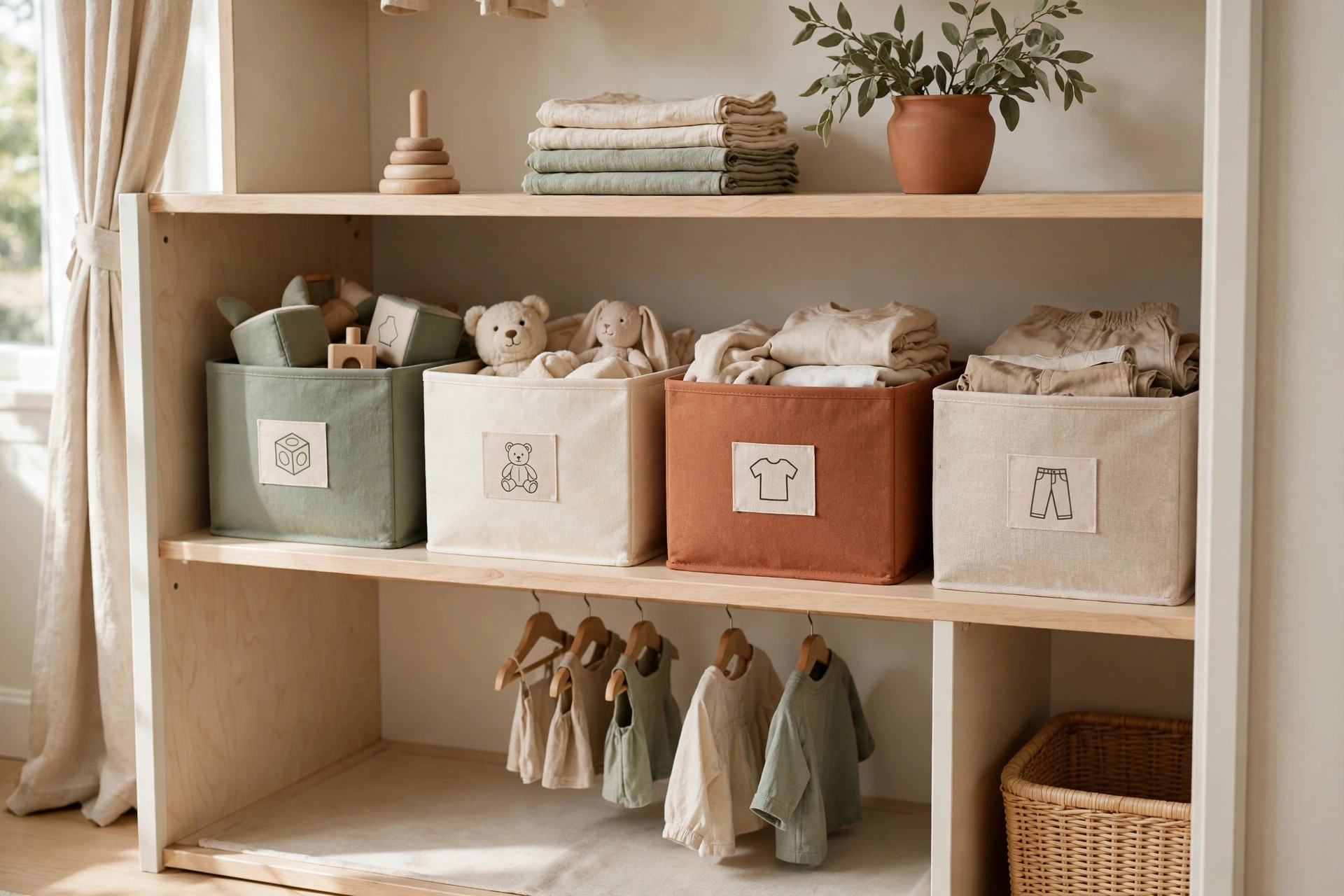
6. Use stackable open-front bins around 10×6×6 inches
Open-front bins beat lidded ones: no lid to lose, contents stay visible. Stackable bins around 10×6×6 inches sit two-to-three deep on a standard shelf and hold roughly a week’s worth of socks or folded tees. Cap the low zone at four or five bins — more than that overwhelms younger kids. More bin systems live in the closet organization collection.
Toy and costume zones inside the closet
In a small bedroom the closet often doubles as toy storage, and that’s fine — as long as playthings have a defined zone instead of swallowing the clothing system. Give toys a visible boundary your child can respect.
7. Fence off a toy zone with a low cube shelf
A two-cube organizer (roughly 12×24 inches) at the bottom of the closet creates a hard border: cubes on one side are toys, everything else is clothes. One cube for building toys, one for stuffed animals — done. When the cubes overflow, that’s the signal to rotate toys out before chaos creeps in.
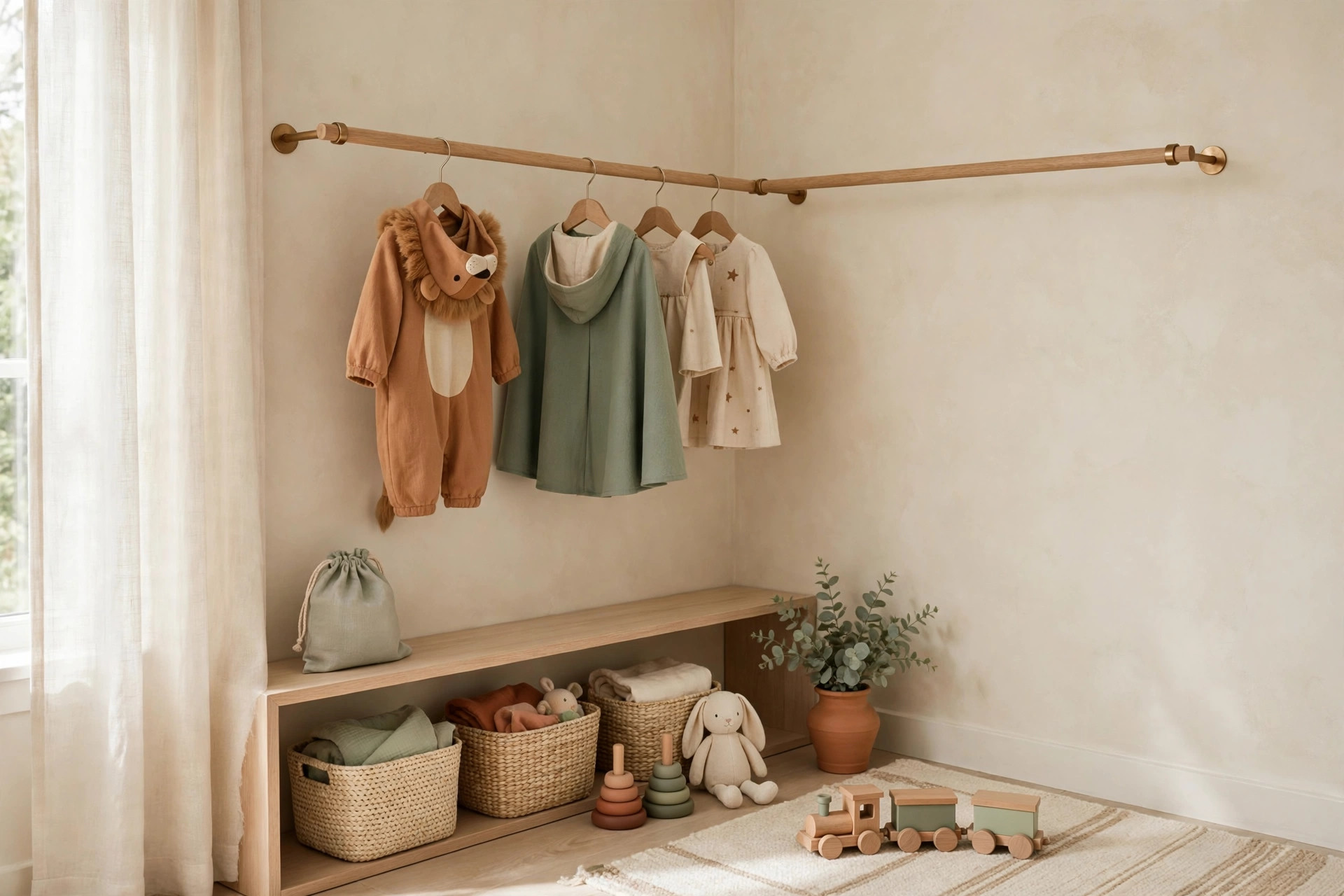
8. Hang costumes on clip rings, not in a mixed bin
Dress-up clothes destroy every closet kids rifle through daily. Dedicate the last 12 inches of the lower rod to costumes on clip rings or carabiner clips — one outfit per clip. A new costume means an old one rotates to a top-shelf bin: the one-in-one-out rule starts here. When the toy zone overflows, 18 Under-Bed Storage Ideas That Turn Dead Space Into a Dresser is your escape valve.
Shoe storage little feet can reach
Kids trip over shoe piles, lose one shoe of every pair, and give up on stacking systems. Their shoe storage needs two things: everything visible at a glance, every pair retrievable with one hand.
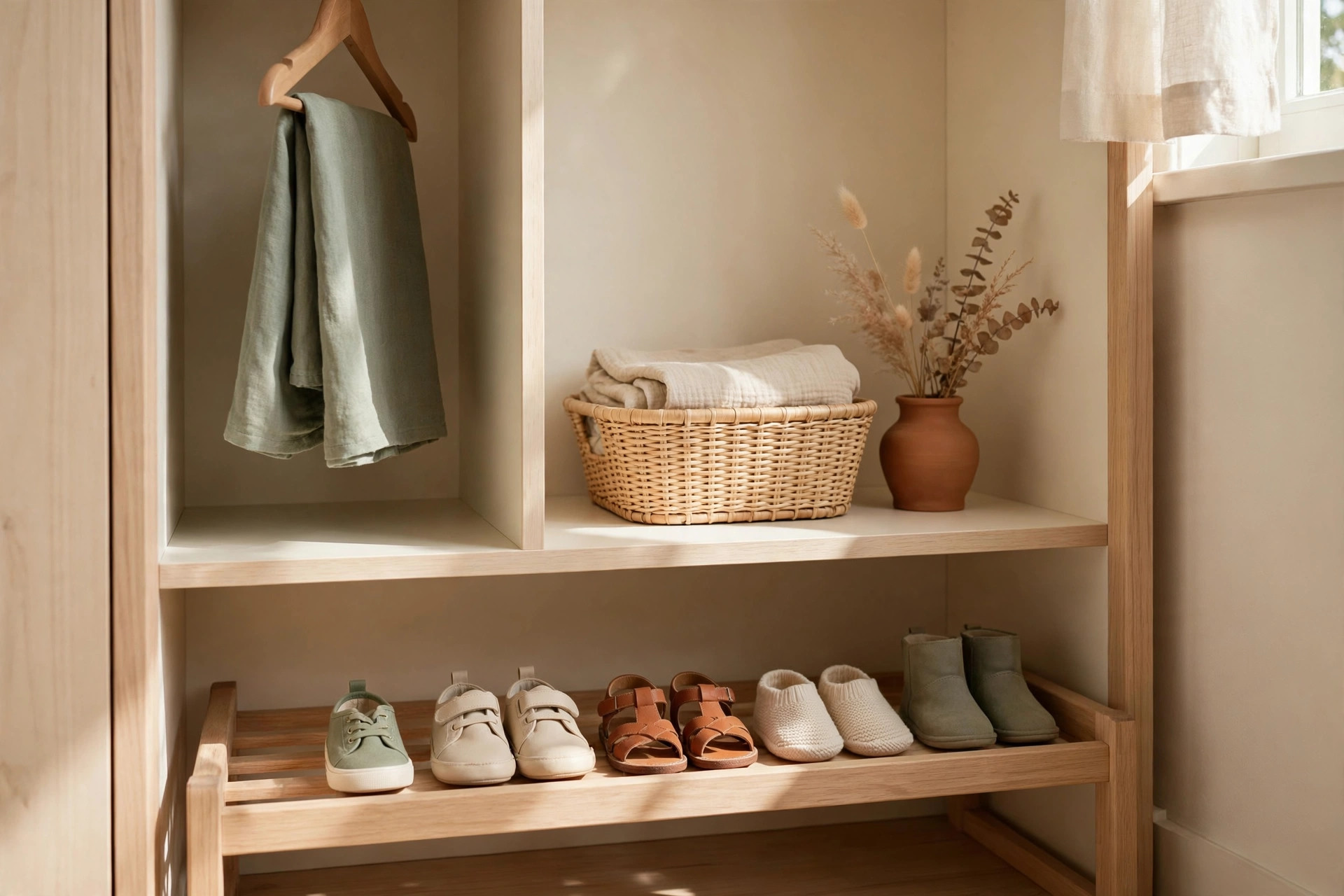
9. Use a 3-tier over-the-door rack cut to kid height
An over-the-door rack works, but full-height versions put most shoes above your child’s reach. Choose a 3-tier version sitting entirely below 36 inches, one pocket per pair, left and right shoe together. Daily shoes go in the front-facing middle row; backups and outgrown-but-kept pairs live on the top shelf. More styles for tiny footprints: 18 Shoe Storage Ideas for Small Apartments (No Pile by the Door).
10. Keep a tray, not a shelf, for boots and muddy shoes
Boots won’t fit shoe pockets and muddy sneakers shouldn’t live on clean fabric. A washable boot tray (about 18×14 inches) at the very bottom of the closet catches wet, dirty footwear. One tray, one boundary: if it doesn’t fit the tray, it’s a top-shelf spare. Rinse it weekly — kids’ shoes are dirtier than you think.
The one-in-one-out rule, kid edition
Kids outgrow clothes constantly while closet volume stays fixed — so something must leave every time something arrives. The adult version relies on discipline; the kid edition makes the leaving step effortless.
11. Park a donation bag on a hook inside the door
Hang a small tote on an inside-door hook labeled “too small.” When something stops fitting, it goes in the bag immediately — not on the floor, not in a “deal with later” pile. When the bag fills, it leaves in the next donation run. It must live in the closet, not a hallway: distance kills follow-through.
12. Run a 10-minute closet sweep with your child monthly
Set a timer, turn on music, and sort together: fits, doesn’t fit, keep for a sibling. A monthly rhythm stops the creep where half the closet is outgrown but still “in rotation.” Older kids sort their own pile; younger ones hold up each piece while you call yes or no. Ten minutes a month — the entire maintenance cost of this rule.
Growing with them: systems that adjust as kids grow
Children grow roughly two to three inches per year between ages three and ten, so a static kid-height closet is wrong within two years. Plan for adjustability now and you won’t rebuild the closet every birthday.
13. Mount rods and shelves on adjustable track standards
Screw slotted metal track standards into the closet sides instead of fixed brackets, with adjustable brackets for rods and shelves. When your child grows, lift each bracket to the next slot — a two-minute job, no new holes. Raise the double-hang rods two to four inches per year and move the picture-label bins up at the same time.
14. Graduate labels from pictures to words around age six
When your child reads confidently, swap photo labels for word labels in their own handwriting. Let them write “socks,” “pajamas,” “school shirts” on fresh labels — ownership makes them follow the system longer. That’s when the closet becomes truly theirs, which is the point of everything above.
Mistakes to avoid
Don’t buy the full matching kids’ closet kit. Those boxed systems are sized for one age and one closet width; within a year something won’t fit. Build from adjustable parts — track standards, tension rods, open-front bins — that work at every height.
Don’t put drawers at the bottom. Kids treat low drawers as junk bins and the slides pinch small fingers. Open bins you can see into beat drawers you can’t, for anyone under eight.
Don’t label with words for pre-readers. A beautifully labeled closet the child can’t read is the most common failure point. Match the label to the reader: pictures now, words at six.
Don’t store daily items up high. If your child has to ask you for something every day, that item is stored too high.
Frequently asked questions
How can I organize a small kids closet so my child can use it alone?
Follow the 40-inch rule: rods at 32 and 44 inches, picture-labeled bins on low shelves, daily items on a hook strip at 36 inches. When every system is reachable and readable, your child can dress themselves and put things back alone.
Can I fit toy storage inside my child’s closet without losing clothing space?
Yes. Fence off one low cube shelf (about 12×24 inches) as the hard toy boundary and hang costumes on the last 12 inches of the lower rod with clip rings. Toys stay visible and contained; overflow rotates out or moves under the bed.
How do I keep a kid’s closet organized as they grow taller?
Mount rods and shelves on adjustable slotted track standards — raise them two to four inches per year, no new holes. Graduate picture labels to handwritten word labels around age six, and revisit the 40-inch rule annually as the reachable zone moves up.
How can I get my child to actually put clothes back in the closet?
Make the return step easier than the floor: open-front bins with picture labels, one outfit hook strip at their height, and only a week’s worth of clothes in reach. Then run a monthly 10-minute sweep together so the system never feels unfixable.
Conclusion
A kid-maintained closet isn’t about more organizers — it’s about lowering every system to your child’s level and labeling it in a language they can read. One weekend of rod-lowering and bin-labeling, and mornings get calmer.
Browse the closet organization collection for more systems built the same way, and save this pin for later — the monthly sweep alone is worth keeping.