A tiny closet does not have to feel like a storage crisis. It just needs a system built around what you actually wear. Capsule wardrobe organization is exactly that: a small, intentional set of clothes you love, arranged so every piece is visible in a closet maybe three feet wide. Fewer decisions, zero morning digging, and a closet that looks calm instead of chaotic.
In this guide, you’ll get the full method — the closet edit, the 37-piece formula, fold zones, shoe and accessory systems, seasonal rotation, and the maintenance rule that keeps the whole system honest. Seventeen ideas, each one sized for a small closet, a reach-in, or half of a shared closet — no renovation, no new furniture, just smarter use of the space you have.
What a Capsule Wardrobe Actually Is (and Isn’t)
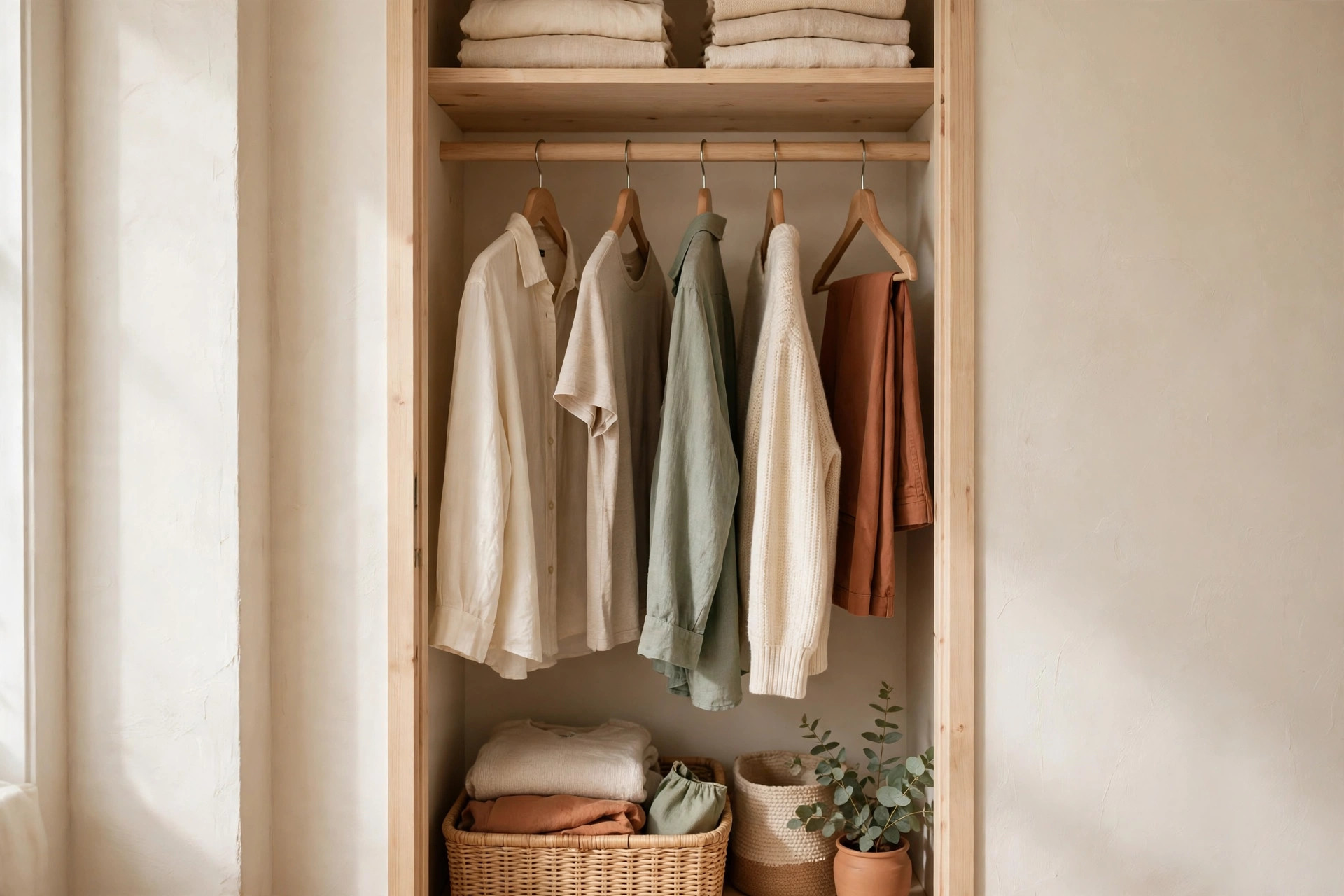
A capsule wardrobe is a limited collection of clothing — usually 33 to 40 pieces — chosen to mix and match for one season. Underwear, workout gear, and sleepwear sit outside the count. The point is not minimalism as a performance; it is a smaller inventory that fits a small space and removes the noise of clothes you never wear.
It is not throwing everything out and buying a new wardrobe in beige. It is not a rigid uniform, and it doesn’t ban color. Each piece just has to earn its hanger by working with at least three others in the set.
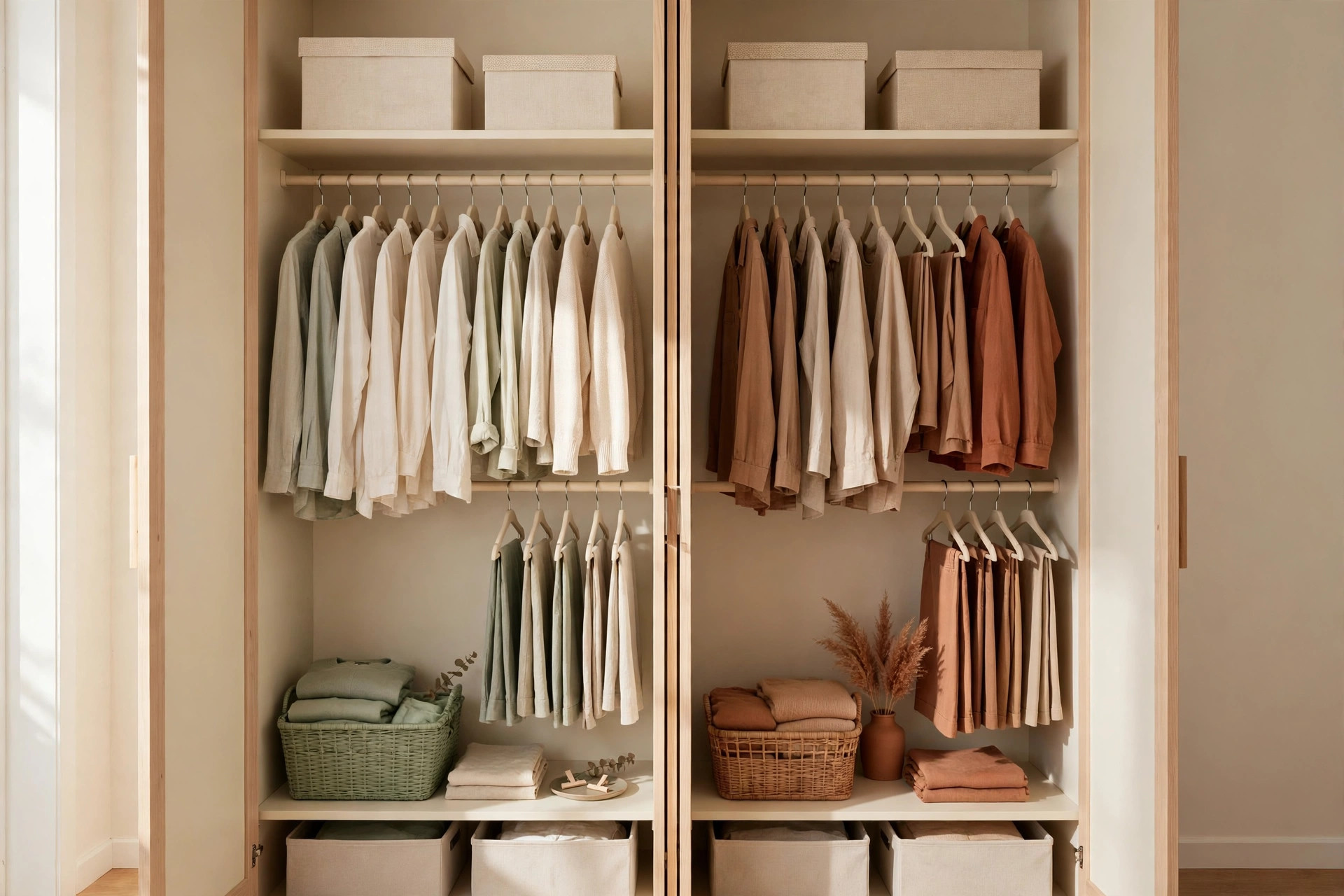
The payoff is physical: 37 pieces on slim hangers take roughly 24 to 30 inches of rod — about one reach-in closet. Everything else (off-season, occasion wear, backups) goes into labeled storage, and that is where the real transformation happens.
The Closet Edit: Keep, Box, Donate
Every capsule starts with an edit, and in a tiny closet this step matters most.
1. Pull everything out and sort into three literal piles
Empty the closet completely. Sort every garment into Keep (worn monthly, fits now), Box (off-season, occasion, sentimental), and Donate/Sell (stained, stretched, wrong size, untouched a year). Decide fast, standing up; no trying on until the piles are done — 60 to 90 minutes for one small closet.
If you need help with the purge mindset, How to Declutter Your Closet Before January walks through the same three-pile method with a seasonal angle.
2. Apply the “three outfits” test to every keeper
Pick up each keeper and name three complete outfits you can build with other keepers. Can’t name three? It moves to Box or Donate. This stops the one striking top that matches nothing — the piece that dies on a hanger and eats rod space.
3. Box the “maybe” pieces instead of deciding under pressure
Items you can’t decide on go in a labeled “maybe” box with today’s date. Haven’t reached for anything in it after 60 days? Donate the whole box unopened.
The 37-Piece Formula: How Many of What
The classic 37-piece starting point: 9 tops, 9 bottoms, 8 layers, 8 pairs of shoes, 3 dresses or jumpsuits. Adjust to your climate; count only what hangs or folds in your daily closet.
4. Spend your pieces on tops and bottoms first
Give tops and bottoms roughly half your count — about 9 each — in a tight palette: two neutrals plus one accent color repeated in three or more pieces. That’s what makes 37 pieces feel like hundreds of outfits — the engine of any small closet capsule wardrobe.
5. Cap layers and shoes, where the count always inflates
Hold layers and shoes at about 8 and 8 — that’s where closets overflow. Work from home? Move blazer slots to casual layers you actually wear. Walk everywhere? Give shoes a ninth slot and take one from dresses.
6. Write your 37 on paper before you shop or unbox
Score your Keep pile on one page — “Tops: 7 of 9, Bottoms: 10 of 9…” The gaps are your shopping list; the overages tell you what to box. This one page is what separates minimalist wardrobe organization that lasts from a capsule that quietly grows back to chaos.
Uniform Hangers and the One-Direction Rule
When every garment hangs at the same level on the same hanger, the closet looks intentional and you can see everything at a glance.
7. Switch to one type of slim velvet or wooden hanger
Bulky plastic and wire hangers steal 1 to 2 inches of rod per garment. Slim velvet hangers are about 0.2 inches thick and grip fabric; slim wooden hangers work just as well and look warmer. Replace in one go and donate the mismatched ones the same day.
8. Hang everything facing one direction, grouped by category
Left-to-right: sleeveless tops, short sleeves, long sleeves, sweaters, bottoms, layers, dresses. Every hook faces the same way. This one-direction rule means you scan by category instead of rifling — and you can see when the capsule is creeping past 37. Renters can do all of this without touching a wall; the no-drill options in 17 Renter-Friendly Closet Organization Ideas (No Drilling Required) cover tension rods, over-door hooks, and freestanding racks.
Fold Zones for Knits and Casual Pieces
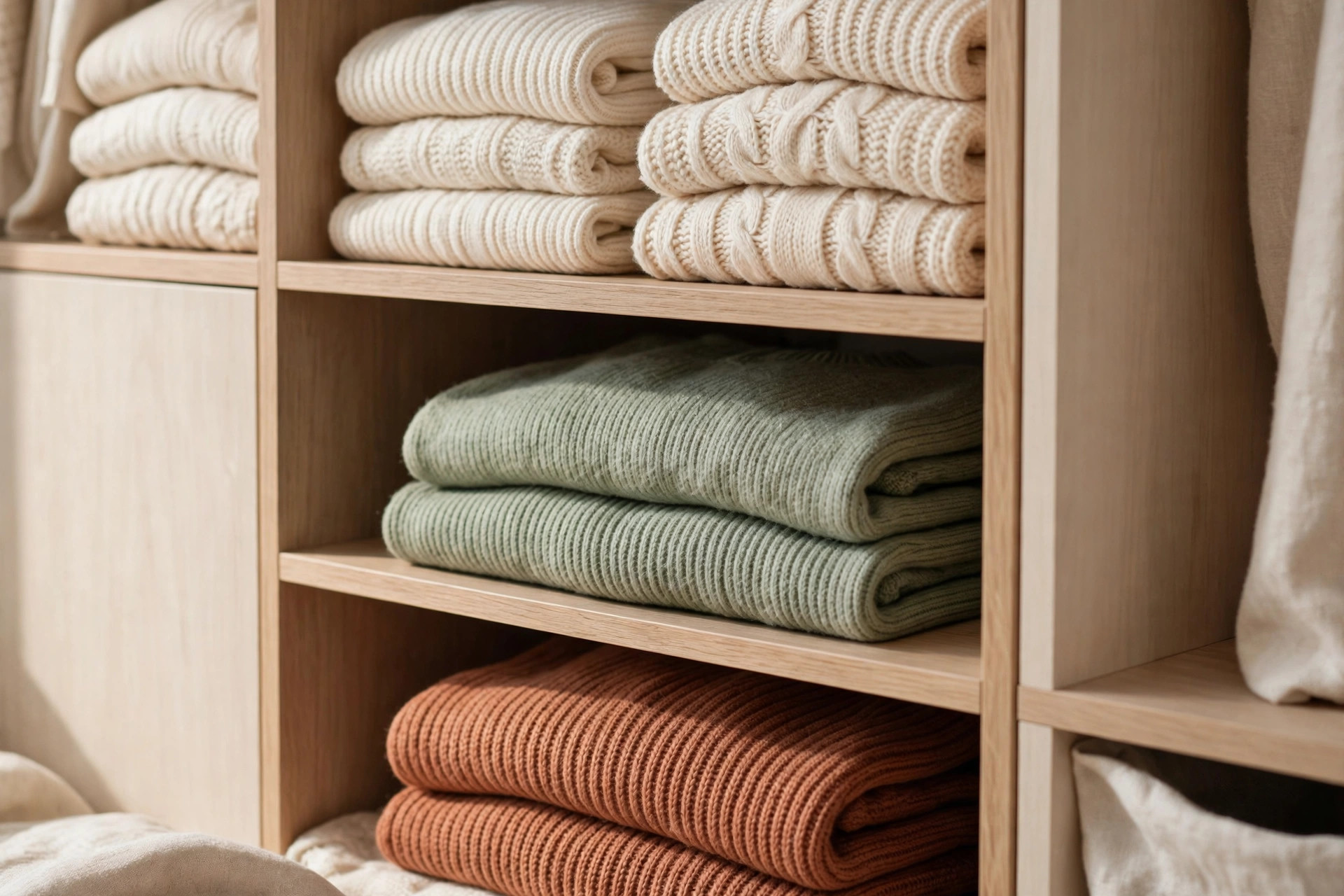
Not everything should hang. Knits stretch on hangers, and in a tiny closet the shelf is prime real estate. Fold zones turn shelves into drawers you can see into.
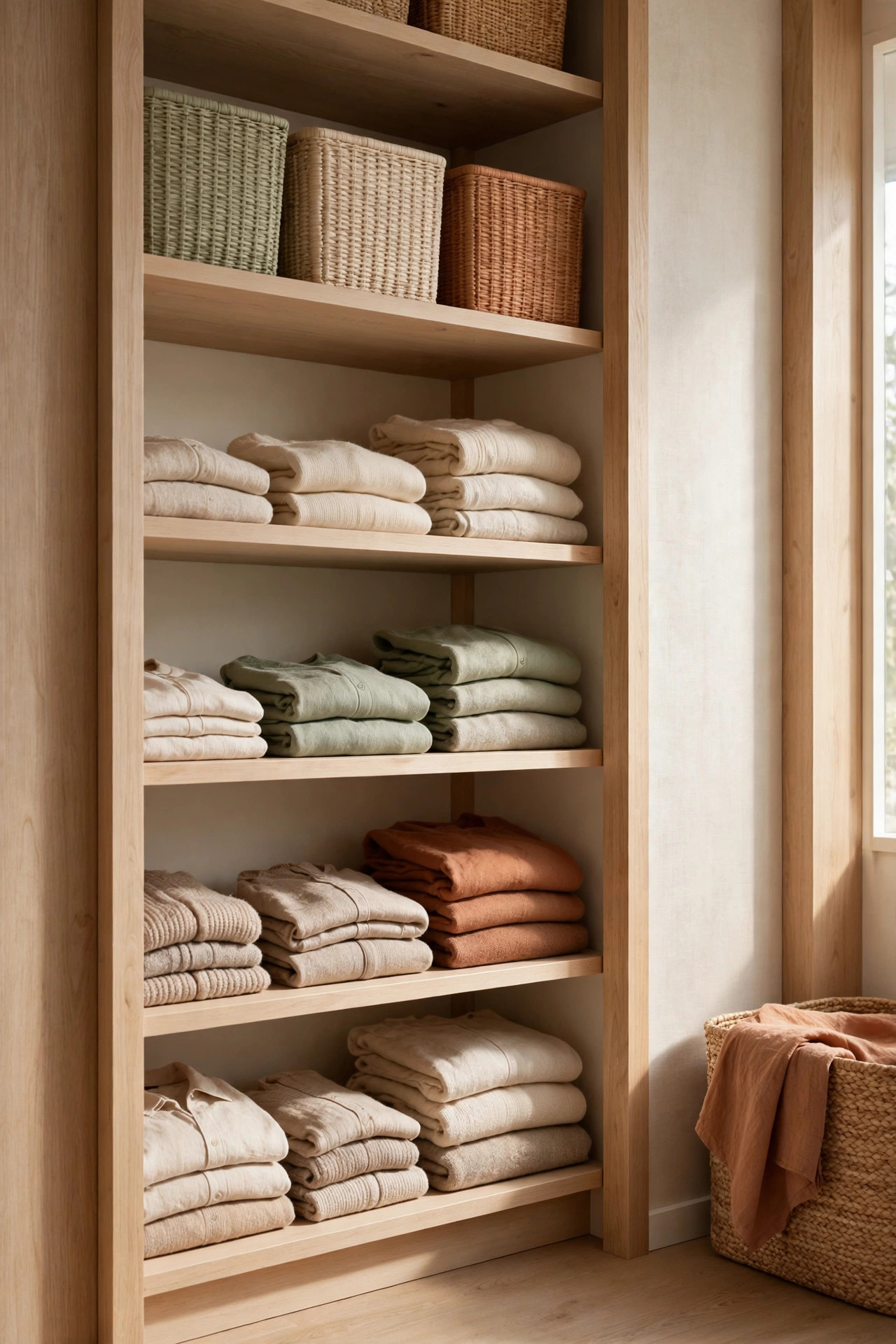
9. File-fold knits and tees so every piece shows its edge
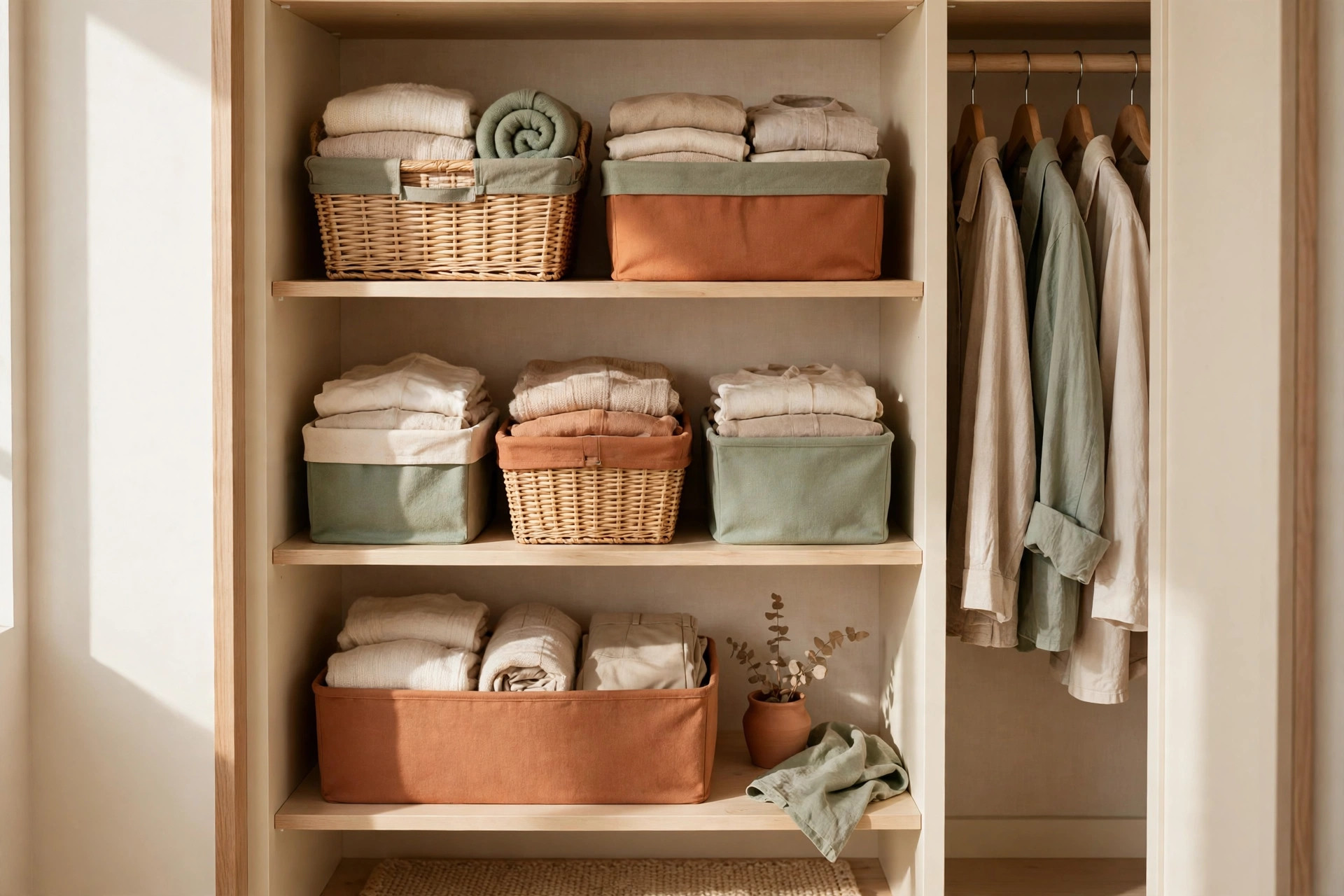
Fold tees, sweaters, and casual tops into rectangles and stand them upright — file folding — so you see every edge. A 10-by-6-by-6-inch bin holds 8 to 12 pieces per “file”; run one file per category.
10. Give each shelf a single job and label the zone
Top shelf: off-season or the “maybe” box. Middle: folded daily pieces in bins. Floor: shoes and bags. Label each zone — masking tape works — and borrow the layout tactics in 18 Small Reach-In Closet Organization Ideas That Double Your Space if your closet is shallow.
11. Roll, don’t fold, the casual bottoms and workout sets
Leggings, joggers, and workout sets compress well when rolled — about half the footprint of folded stacks. Keep activewear to one small bin (two to three sets) so it doesn’t colonize your capsule’s shelf space.
Shoes and Accessories in a Capsule Closet
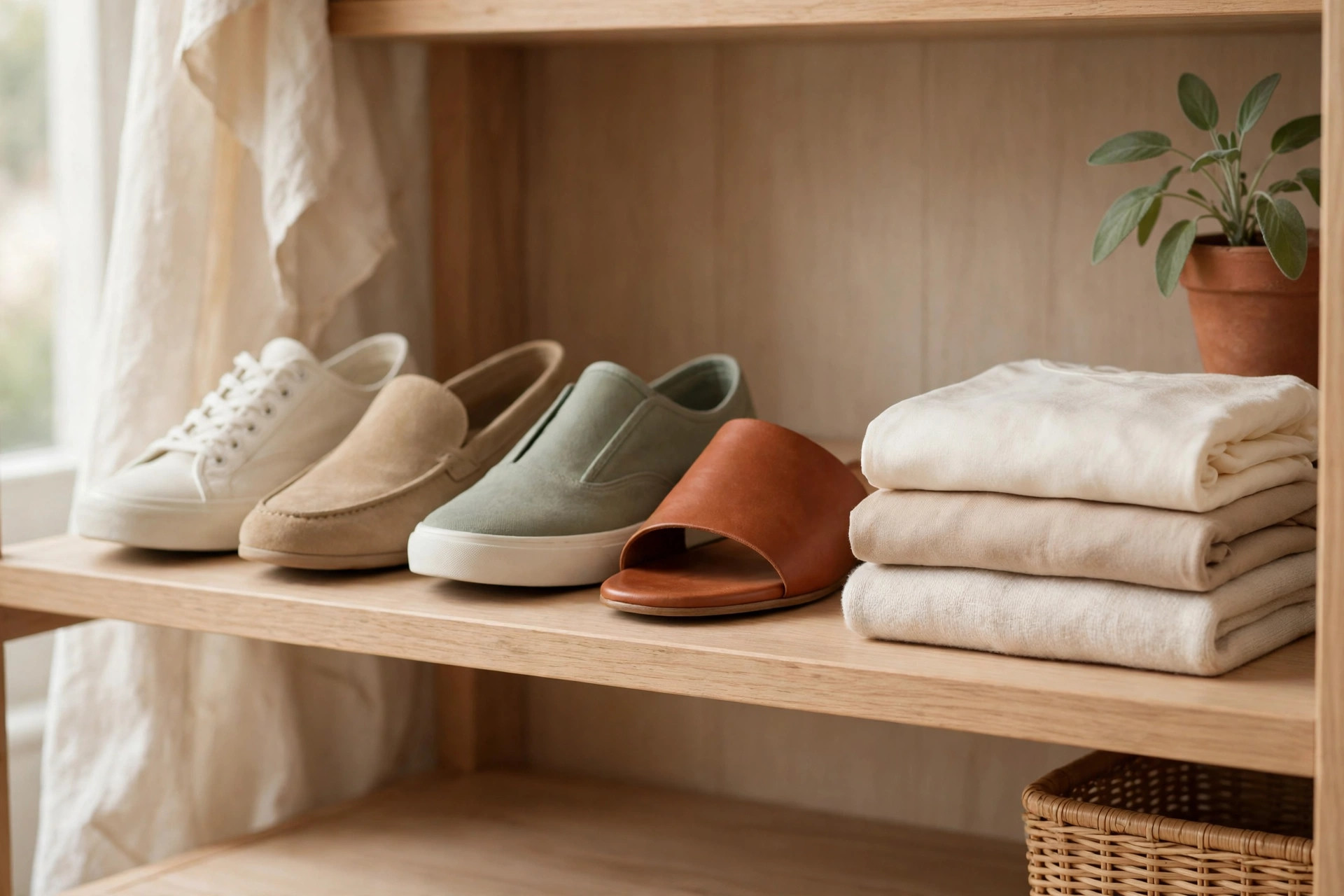
Eight pairs of shoes and a small accessories kit have to fit the floor and door of a tiny closet. Go vertical and keep pairs visible — out of sight is where single shoes go to be forgotten.
12. Line the floor with only daily shoes; float the rest upward
Keep two to four daily pairs on the closet floor, toes-out. The rest go on an over-the-door rack or a two-tier under-shelf rack, never stacked loose. If a pair can’t earn one of the eight slots in the 37-piece count, it goes in the off-season box.
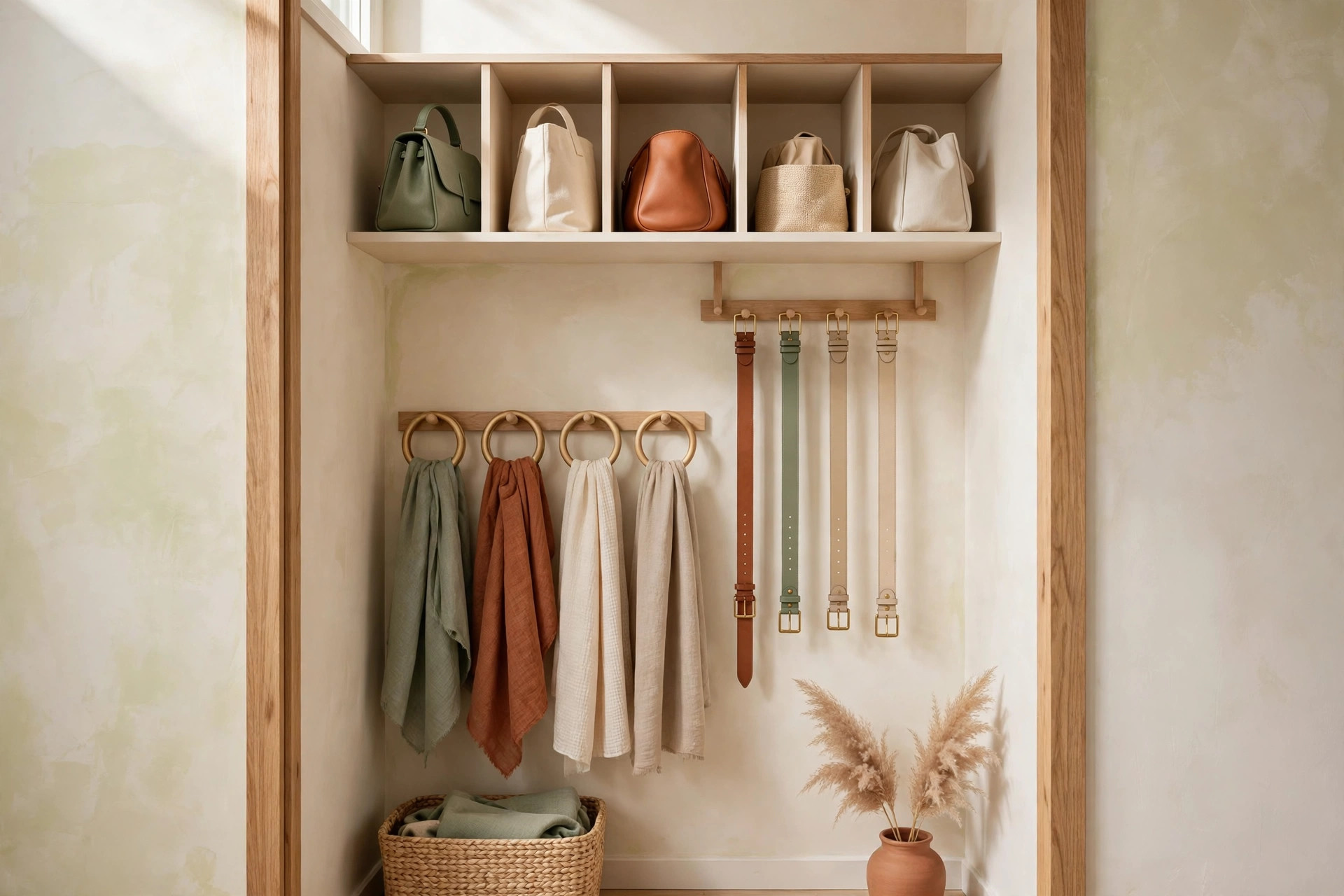
13. Contain accessories to one shelf zone and one tray
One tray for jewelry, one belt hanger for belts, and bags on two to three hooks or upright on the shelf. Tiny closet wardrobe ideas fail on accessories first because scarves, belts, and bags have no home — one defined zone stops the migration. For dedicated shoe setups, 18 Shoe Storage Ideas for Small Apartments (No Pile by the Door) has more configurations for tight footprints.
Seasonal Rotation: Storing the Off-Season
A capsule wardrobe organization system only works because out-of-season clothes live somewhere else. Rotation is the engine: twice a year, the off-season box trades places with part of your capsule.
14. Pack the off-season in vacuum bags or one labeled bin
Pack the outgoing season into vacuum-seal bags (roughly half the bulk) or one 66-quart labeled bin. One bin per off-season — if it doesn’t fit, you own more than your closet can rotate.
15. Keep a running “next season” list inside the bin lid
Tape an index card inside the bin lid listing what you wish you had owned this season — the missing layer, the shoes that wore out. That card becomes next season’s shopping list, written at the exact moment the need was real.
The One-In-One-Out Maintenance Rule
Every system decays without a maintenance rule. For capsules, it is one sentence long.
16. One piece in means one piece out — decided before checkout
When a new item enters, an old one leaves the same day: donate bag, resale pile, or the “maybe” box. Decide which piece is leaving before you buy — standing in the store, name its replacement.
17. Do a 15-minute weekly reset, not a seasonal purge
Once a week, put away the floordrobe, return stray hangers to their categories, and check the bins for creep. Fifteen minutes is enough — a 37-piece closet has few hiding places, and catching drift weekly means you never need another painful full edit.
Project 333, Courtney Carver’s original minimalism challenge, popularized the seasonal small-wardrobe format — a useful reference for a stricter 33-piece season.
Mistakes to Avoid

- Buying the capsule before editing the closet. Edit, count, then fill only the gaps.
- Keeping “aspirational” sizes. Clothes that don’t fit now are storage, not wardrobe. Box them out.
- Counting basics in the 37. If underwear, gym clothes, and pajamas eat your slots, your daily outfits feel thin. Keep them separate.
- Hanging heavy knits. Sweaters stretch on hangers and eat rod space. They belong in the fold zones.
- Skipping the weekly reset. A capsule fails slowly, one stray pile at a time.
- Making every piece beige. A capsule with no personality gets abandoned. Keep the pieces you love wearing.
Frequently Asked Questions
How many pieces should a capsule wardrobe have?
The classic 37-piece formula — 9 tops, 9 bottoms, 8 layers, 8 pairs of shoes, 3 dresses — is a solid starting point; adjust to your climate but keep the total in the mid-30s.
Can you do a capsule wardrobe in a shared or very small closet?
Yes — the system was made for small closets. Thirty-seven pieces on slim hangers need roughly 24 to 30 inches of rod: one reach-in or your half of a shared closet. Use the fold zones and the one-in-one-out rule to protect your half.
What do you do with clothes that don’t fit the capsule?
Box them by category in labeled bins: off-season, occasion wear, sentimental, and “maybe.” Store the bins on a top shelf or under the bed. Revisit the “maybe” box after 60 days and donate what you never reached for.
How often should you rotate a capsule wardrobe?
Twice a year — spring and fall. During rotation day, wash the incoming season, re-run the three-outfits test, and update the wish list inside the bin lid.
Does a capsule wardrobe actually save money?
It usually reduces spending because every purchase must fill a named gap in your one-page inventory — which ends most impulse buying. The bigger savings are time and mental energy: getting dressed from 37 coordinated pieces takes minutes.
Conclusion
A tiny closet stops feeling tiny when everything in it earns its place. The edit clears the noise, the 37-piece formula sets the budget, and the hangers, fold zones, and one-in-one-out rule keep it effortless week after week. Start with the three piles this weekend — the calm is closer than it looks. And if you want more small-space systems like this one, save this pin for later and browse the rest of the closet organization ideas.