Open almost any closet and you’ll find the same dead zone: the top shelf, buried under a jumbled pile of rarely touched items, with loose sweaters leaning against a stack of bags that topples every single time you pull one out. These closet shelf organization ideas fix exactly that — turning wasted shelf space into storage that stays tidy because every item has a system built around how you actually reach it. No new furniture required, and no drilling needed for most of it. Below are 17 numbered ideas, ordered so you can work through them one shelf at a time.
The Shelf Audit: What’s Up There and Why It Drifts
Shelves drift because they have no rules. Hanging space has a rod and hangers; drawers have dividers. A bare shelf accepts anything and keeps nothing, so everything migrates upward and gets forgotten. Audit before you buy a single bin.
1. Empty every shelf before you plan anything. Pull everything off, wipe the shelves, and sort into three piles on the bed: keep, donate, relocate. You cannot organize around items you haven’t touched in a year. Bag the donate pile the same day so it doesn’t migrate back.
2. Measure shelf depth, width, and height before buying containers. Standard reach-in closets usually have 12-inch-deep shelves; walk-ins often go 16 inches. A bin that’s 2 inches too deep snags doors; one that’s 2 inches too short wastes shelf space. Write the three numbers on your phone and take them shopping. The same measure-first principle applies when planning a small reach-in closet.
Bins With Handles: The Top-Shelf Retrieval System
Top shelves are the dead zone because you can’t see what’s up there, and anything without a handle means a step stool plus two hands. Bins with handles solve both.
3. Use handled bins for everything stored above eye level. Look for rigid fabric or plastic bins sized to your measured depth, with a cutout handle on the front. One bin per category — swim gear, holiday extras, gift wrap, off-season accessories. Leave a one-inch gap on each side so bins slide without catching.
4. Switch middle shelves to open-front bins for daily items. For shelves you reach daily, skip the lids: open-front stacking bins let you see and grab without removing the whole bin. Use them for workout clothes, pajamas, and the weekly-wear stack. Lids live only on top-shelf bins, where dust is the bigger enemy.
Shelf Dividers and Stackers: Stopping the Avalanche
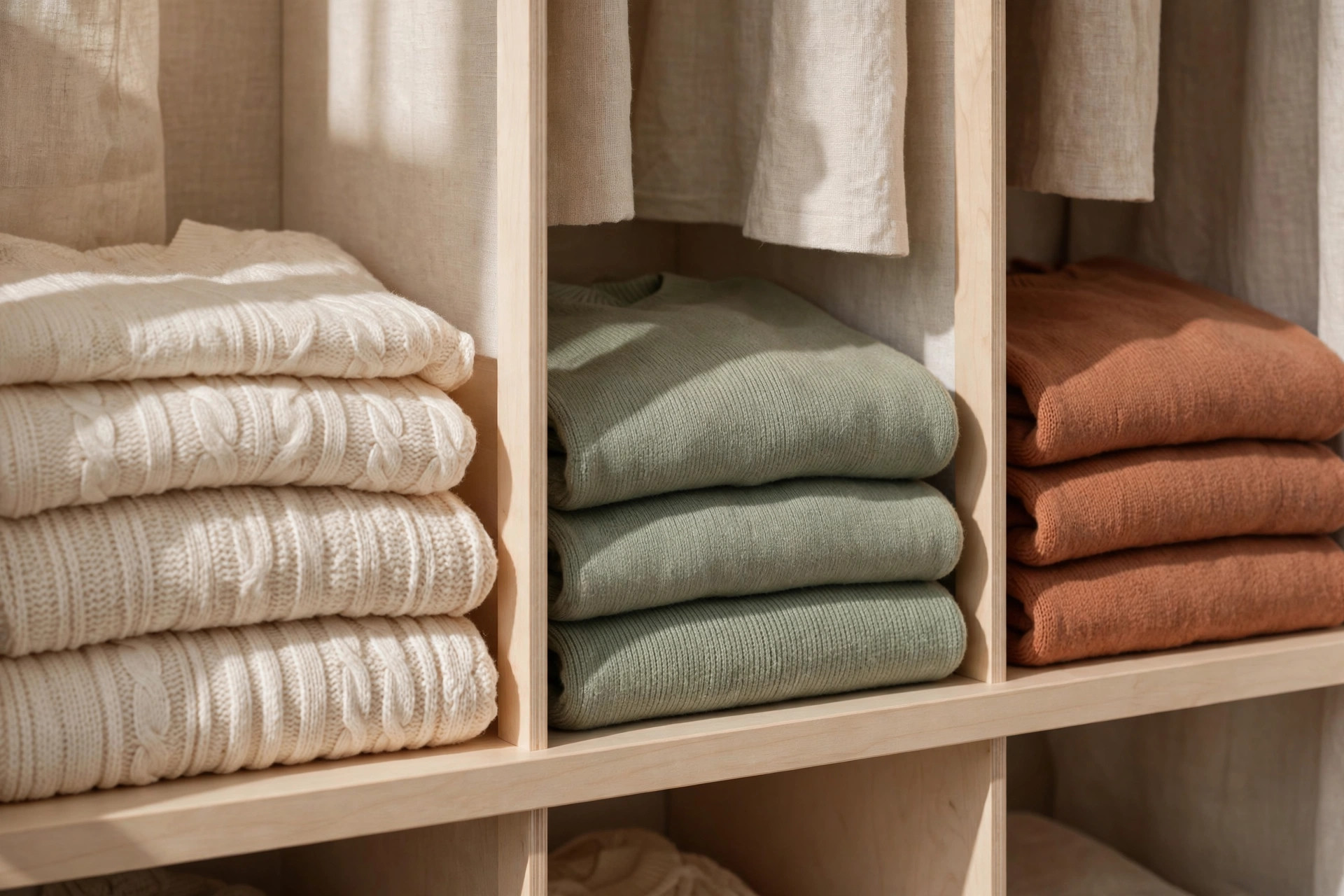
Flat stacks of sweaters and jeans are the classic closet-shelf avalanche: a 14-inch stack has no side walls, so pulling one item from the middle collapses the tower. Dividers and stackers create the walls your shelf lacks.
5. Add clip-on shelf dividers to stabilize folded stacks. Acrylic or wire dividers that grip the shelf edge (no screws, renter-safe) create vertical lanes about 8–10 inches wide. One lane per clothing type: sweaters, jeans, t-shirts, sweatshirts — when a stack leans, the divider catches it.
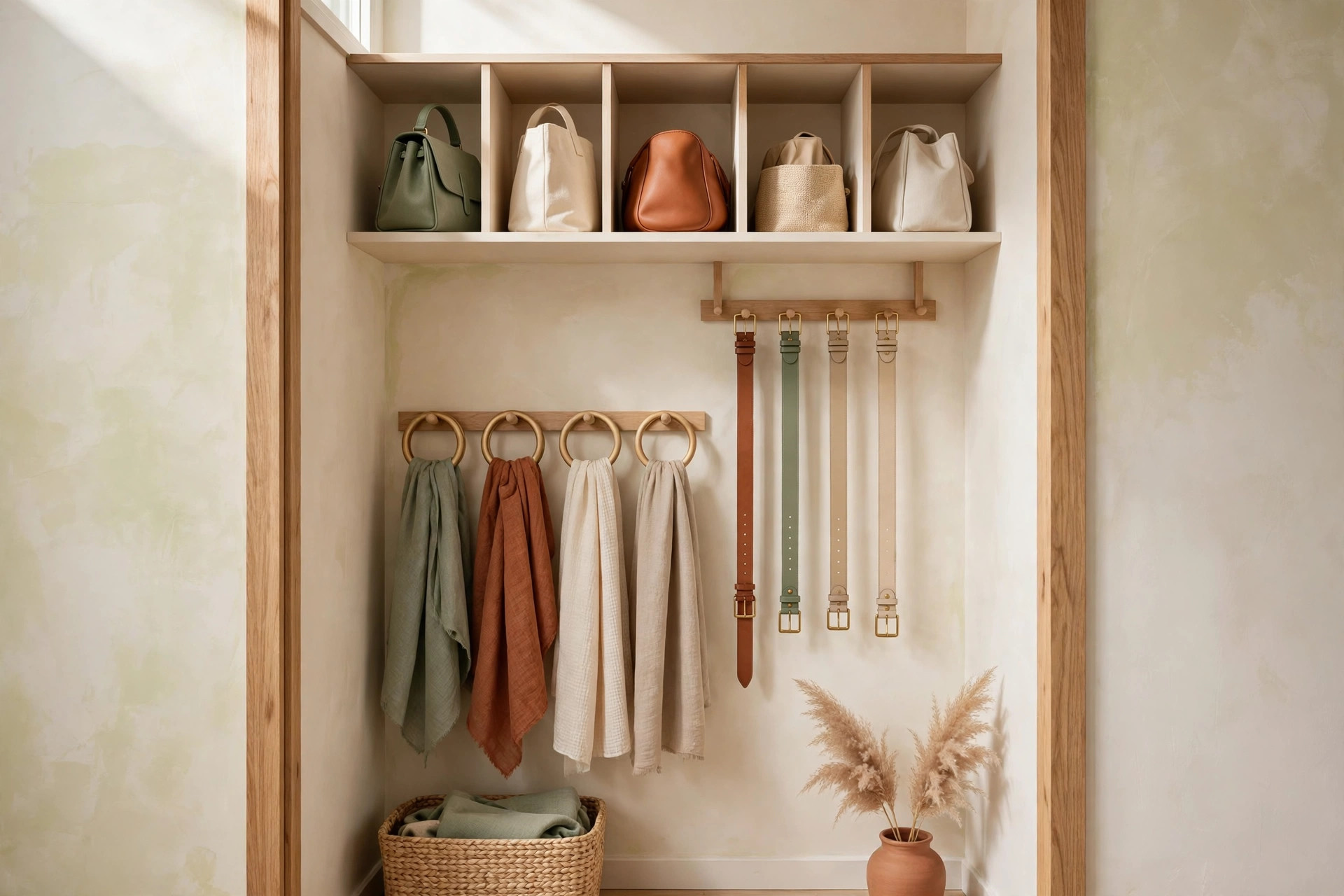
6. Install undershelf baskets and stackable shelf risers. Undershelf wire baskets hook onto the shelf above to create a pull-out drawer in the dead air underneath — perfect for scarves, belts, and socks. Stackable risers double a tall shelf into two half-height layers. Both are drill-free. If you rent, this pairs well with other renter-friendly closet organization ideas that keep your deposit safe.
File-Folding on Shelves: Seeing Everything at a Glance
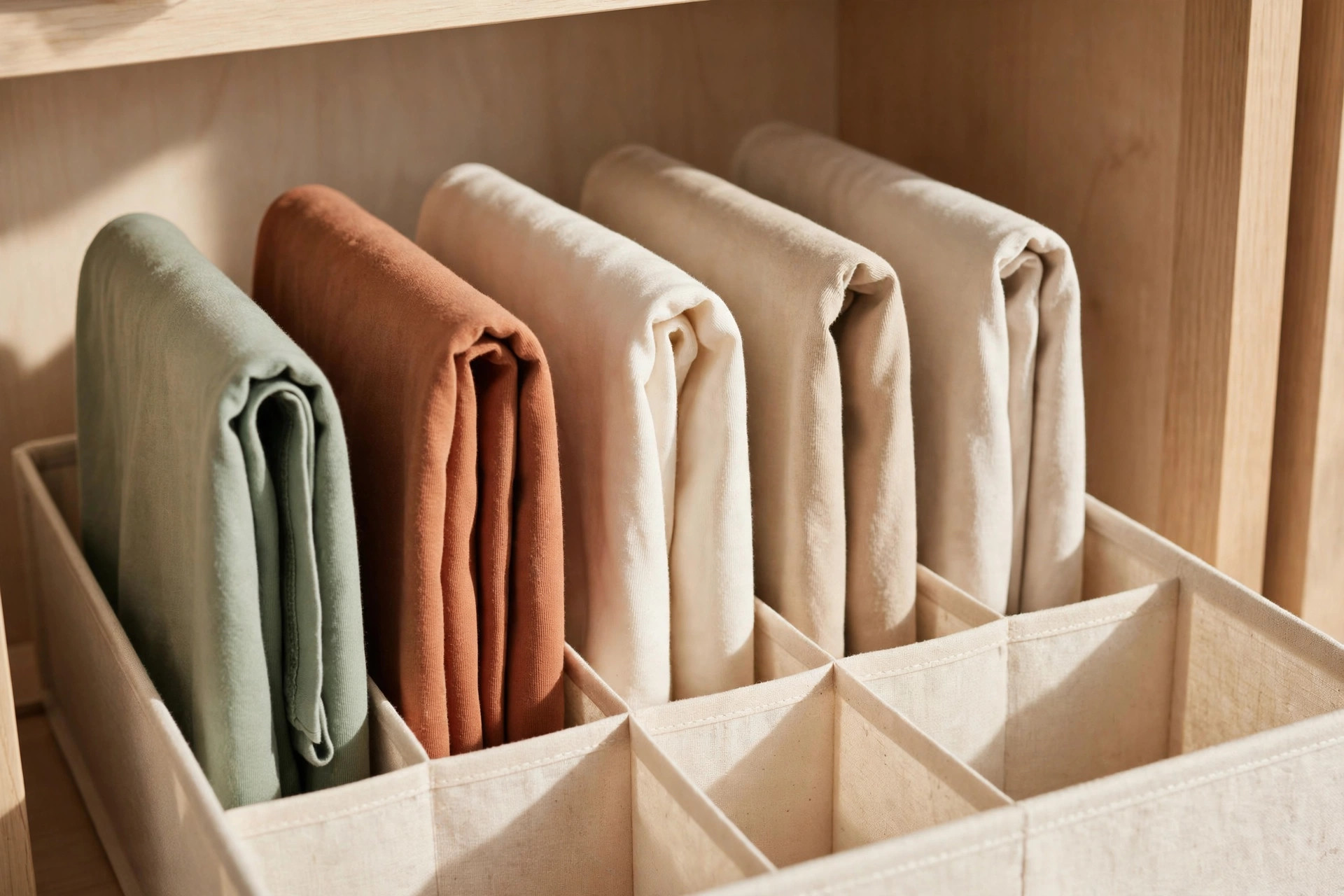
Traditional flat folding hides everything except the top item, so you wear the same three shirts. File folding — folding items into upright rectangles that stand like files — turns each stack into a visible lineup.
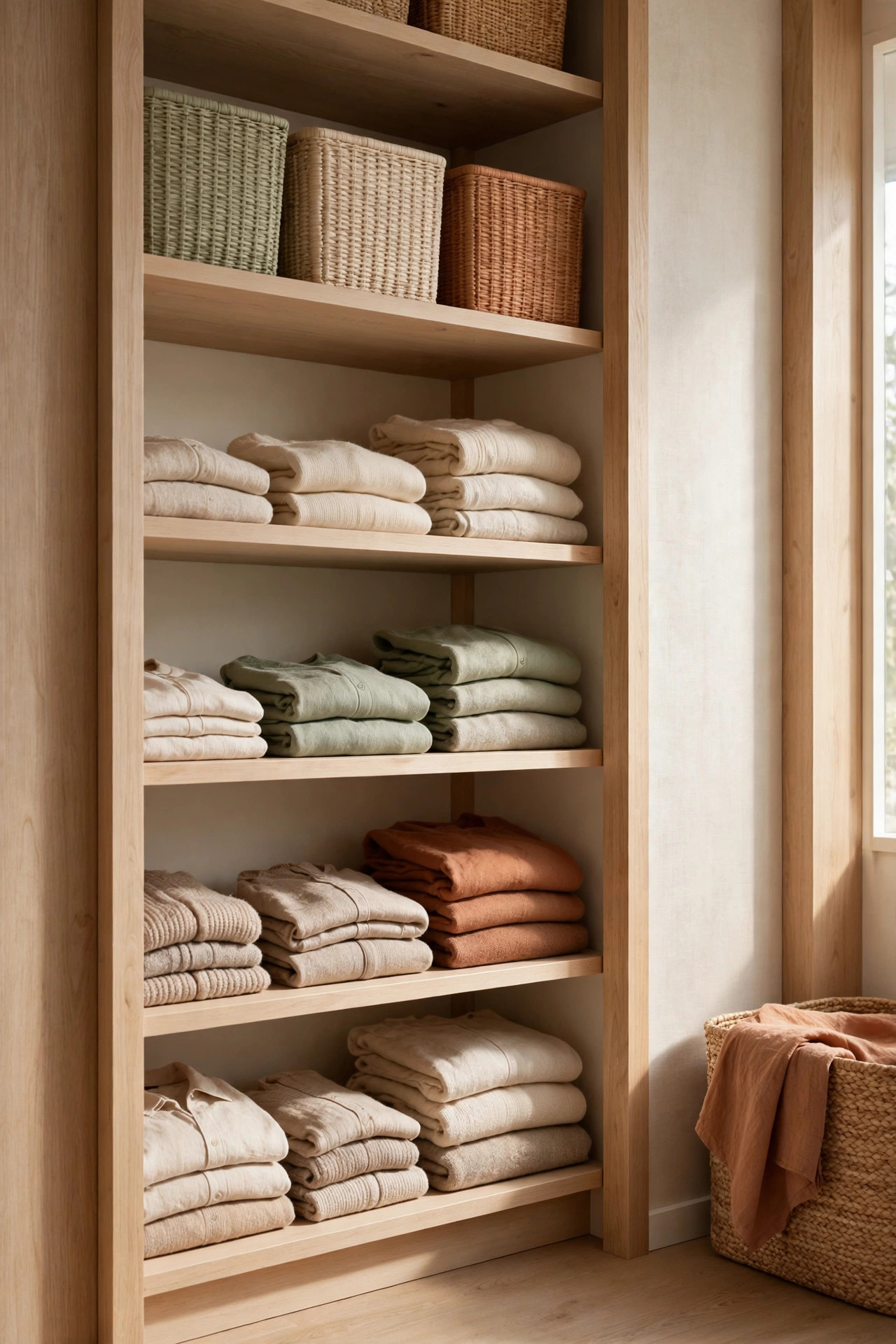
7. File-fold sweaters, hoodies, and tees so every layer is visible. Fold each item into a rectangle roughly 5–6 inches wide, then stand them upright in rows inside an open bin or between dividers — so you see all ten sweaters at once instead of guessing what’s underneath.
8. File-fold jeans and leggings by rise and wash. Stand jeans upright in a dedicated bin, sorted dark to light. Roll leggings into tubes about 3 inches in diameter and stand them upright — they take roughly half the space of folded leggings and never unroll themselves.
Zone by Height: Daily, Weekly, Seasonal
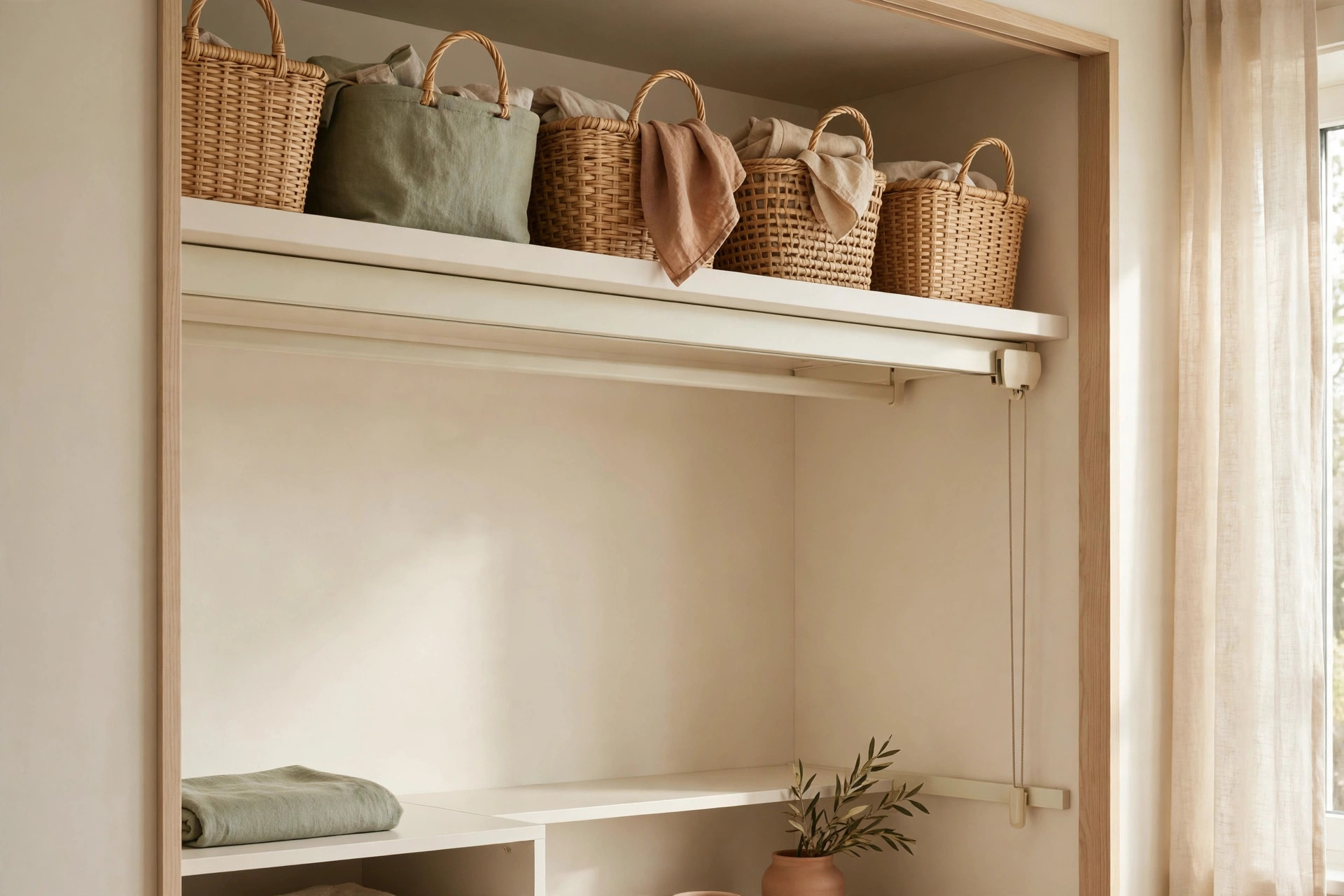
Your shelves work like prime real estate: eye-level shelves are the penthouse, the floor is the basement, and the top shelf is the attic. Assigning zones by how often you reach them means the right items are always at the right height.
9. Reserve the eye-level shelf (roughly 48–60 inches high) for daily wear. This is your command shelf: the 7–10 outfits in active rotation, workout gear, and tomorrow’s clothes — grab-and-go, no step stool, no digging.
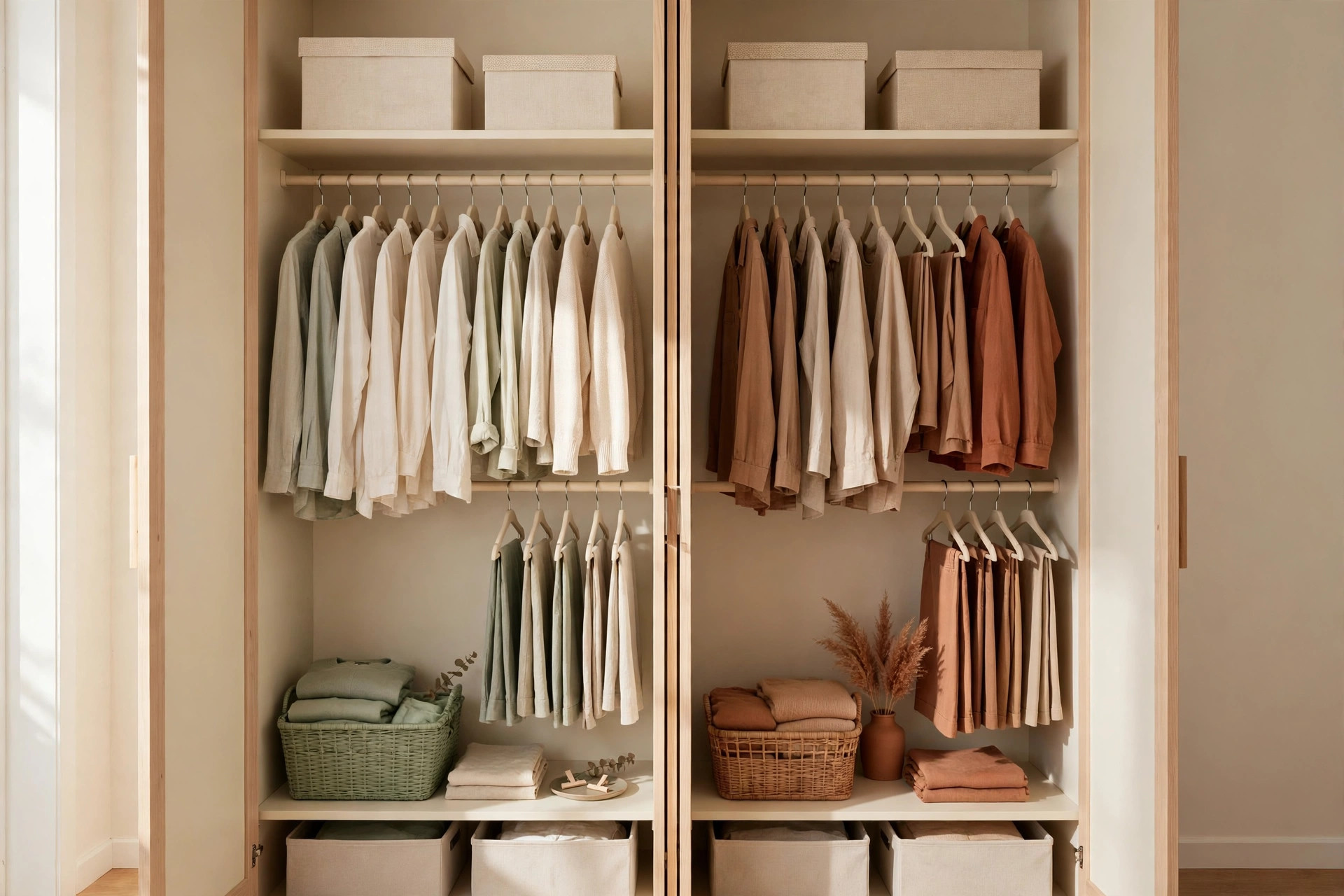
10. Send seasonal and rarely used items to the top zone (above 66 inches). Holiday pieces, occasion wear, and sentimental keepsakes live up high in lidded, labeled bins — one category per bin, never “miscellaneous.” Keep the step stool in the closet, or the retrieval friction will break the system. This kind of deliberate zoning is how a small reach-in closet doubles its usable space.
Adding Shelves: Tension, No-Drill, and Freestanding Options
Most closets have one lonely top shelf and a big empty void above the hanging rod. That vertical gap — often 18–24 inches — is free storage if you add a shelf level. All three of these options avoid drilling, so landlords stay happy.
11. Add a no-drill shelf with heavy-duty tension rods and a board. Two tension rods rated for 20+ pounds each, spanning the closet width, can support a cut-to-fit melamine board — a second shelf above the existing one. Best for light-to-medium loads; keep total load under roughly 30 pounds for a 24-inch span to avoid bowing.
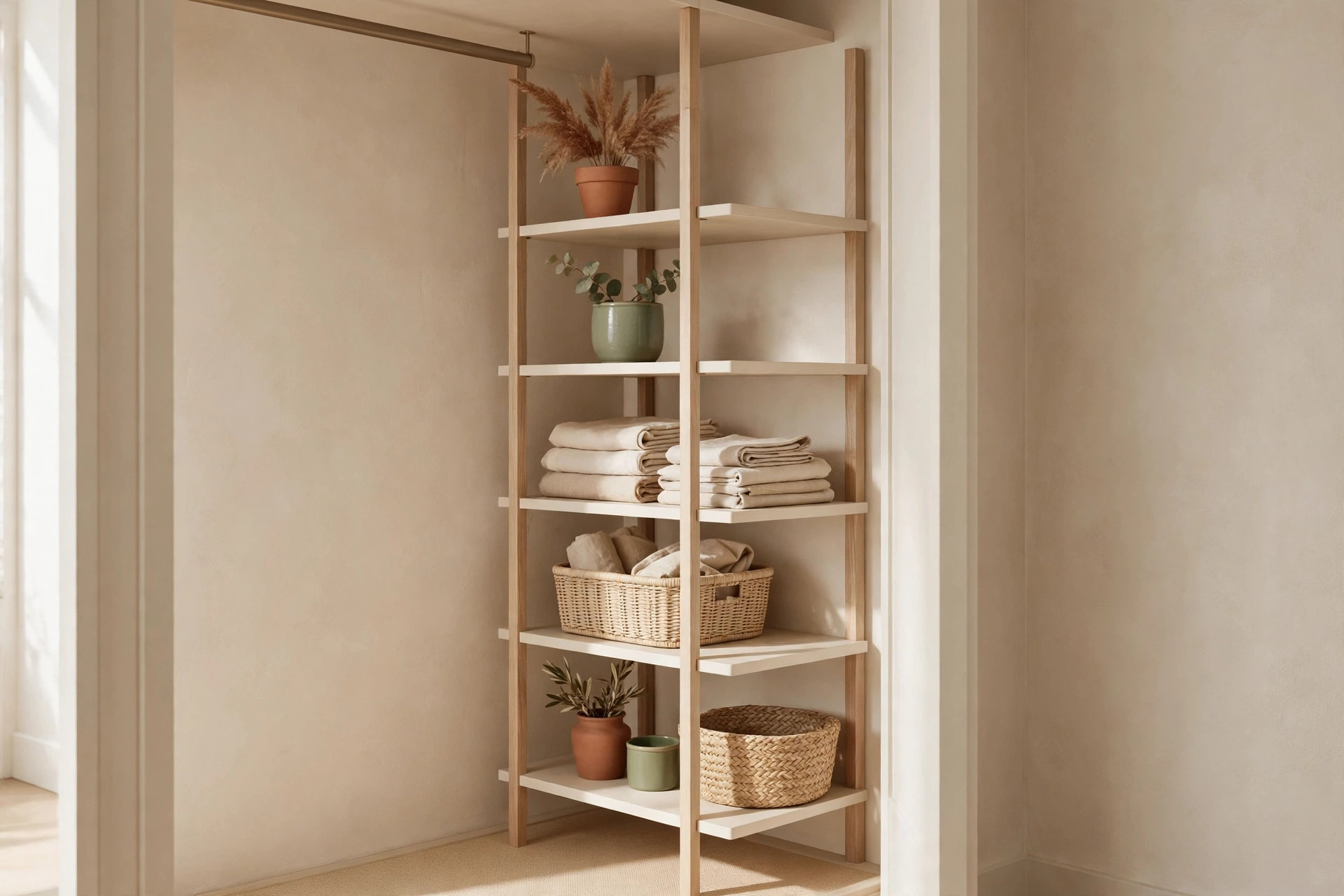
12. Slide in a freestanding stacking shelf unit for deep shelves. Wire or bamboo stackers (about 10–12 inches wide) sit on an existing deep shelf and turn one shelf into two or three tiers. They’re ideal for shoes, handbags, and folded items on deep top shelves where reaching the back is awkward.
13. Hang a fabric shelf organizer in the gap beside hanging clothes. The hanging kind with 5–6 compartments uses vertical space the rod isn’t using. Choose canvas over non-woven fabric; the flimsy versions sag within a month. For more no-drill vertical ideas, over-the-door organizers work on the closet door itself.
Labels That Survive: What to Mark and Where
An unlabeled bin is a mystery box; a poorly labeled bin is a lie waiting to happen. Labels are what turn your shelf system from “organized for a week” into “organized for a year” — because they tell everyone in the household where things go back.
14. Label the bin, not the shelf — and say what’s inside, not the category. “Winter scarves + gloves” beats “Accessories.” Put the label on the front face of the bin, centered at that shelf’s eye level. Chalkboard or dry-erase labels survive category changes; printed labels survive longer but commit you.
15. Use picture labels for shared closets and kids’ shelves. If anyone under ten uses the closet, add a photo or icon of the contents next to the word. A printed photo of swim goggles taped to the bin works better than any text label for keeping a shared kids’ closet shelf intact.
The 15-Minute Shelf Reset
Even the best shelf system drifts. The difference between a system that lasts and one that dies in a month is a maintenance rhythm short enough that you’ll actually do it.
16. Run a one-shelf-at-a-time reset every Sunday. Set a 15-minute timer and tackle exactly one shelf: refold what’s slumped, return strays to their bins. Rotating weekly means each shelf gets attention roughly once a month.
17. Do the two-minute “bin toss” reset after laundry day. When clean laundry comes in, sweep loose items into their correct bins before the new laundry lands. This one habit — putting strays home before adding new items — prevents 90% of shelf drift. If your closet needs a bigger fresh start first, work through a proper closet declutter session so the reset maintains an already-clean system.
Mistakes to Avoid
Buying bins before measuring. The number-one cause of abandoned shelf systems is containers that don’t fit. A bin that overhangs the shelf edge by an inch will get shoved, tilted, and eventually ignored. Measure depth, width, and clearance height first — always.
Overstuffing bins so nothing slides. A bin should be about 80% full. Crammed bins have to be yanked, which means the bin comes off the shelf and the system dies. If it doesn’t slide with one finger, it’s too full — move the overflow to a second bin or donate it.
Putting daily items on the top shelf. If you need a step stool for something you wear twice a week, the zones are wrong. Daily and weekly items belong at eye level and below; the top shelf is for monthly-or-rarer.
Using “miscellaneous” bins. A bin labeled miscellaneous is a junk drawer with a lid. It fills in weeks and never empties. If a category isn’t clear enough for a specific label, the items inside probably don’t belong in the closet at all.
Skipping lids on top-shelf bins. Open bins above 60 inches collect a visible layer of dust within a month. Lidded bins up top, open bins below — that’s the rule for anything fabric.
Frequently Asked Questions
How do I organize closet shelves that are too deep?
Divide the depth into front and back zones. Keep daily items in the front 12 inches and push rarely used items to the back — but contain both in bins, never loose. Undershelf baskets and pull-out drawers also work well because they bring the back of the shelf to you.
Can I organize closet shelves without buying anything?
Yes — start with the free moves: empty and audit every shelf, zone by height, and file-fold what you own using existing tote bags or boxes as dividers. A cardboard box cut to shelf height works as a divider while you decide what’s worth buying.
What’s the best way to store sweaters on closet shelves?
File-fold them upright in an open bin or between shelf dividers so every sweater is visible. Keep flat stacks to 4–6 inches of folded height per layer, and never store heavy knits above eye level — the weight makes stacks slump and collapse when you pull from the middle.
How often should I reorganize my closet shelves?
Do the full audit once or twice a year (seasonal wardrobe swaps are a natural trigger), run the 15-minute one-shelf reset weekly, and do the two-minute bin toss after every laundry day. If a shelf needs attention more often, the system for that shelf is wrong — resize the bins or rezone the height.
Conclusion
Closet shelves stay tidy when every item has a container, a label, and a height zone that matches how often you reach for it. Start with the audit, add handled bins up top, dividers where stacks avalanche, and a weekly 15-minute reset. Browse more ideas in the closet organization category — and save this pin for later so your next shelf reset is already planned.