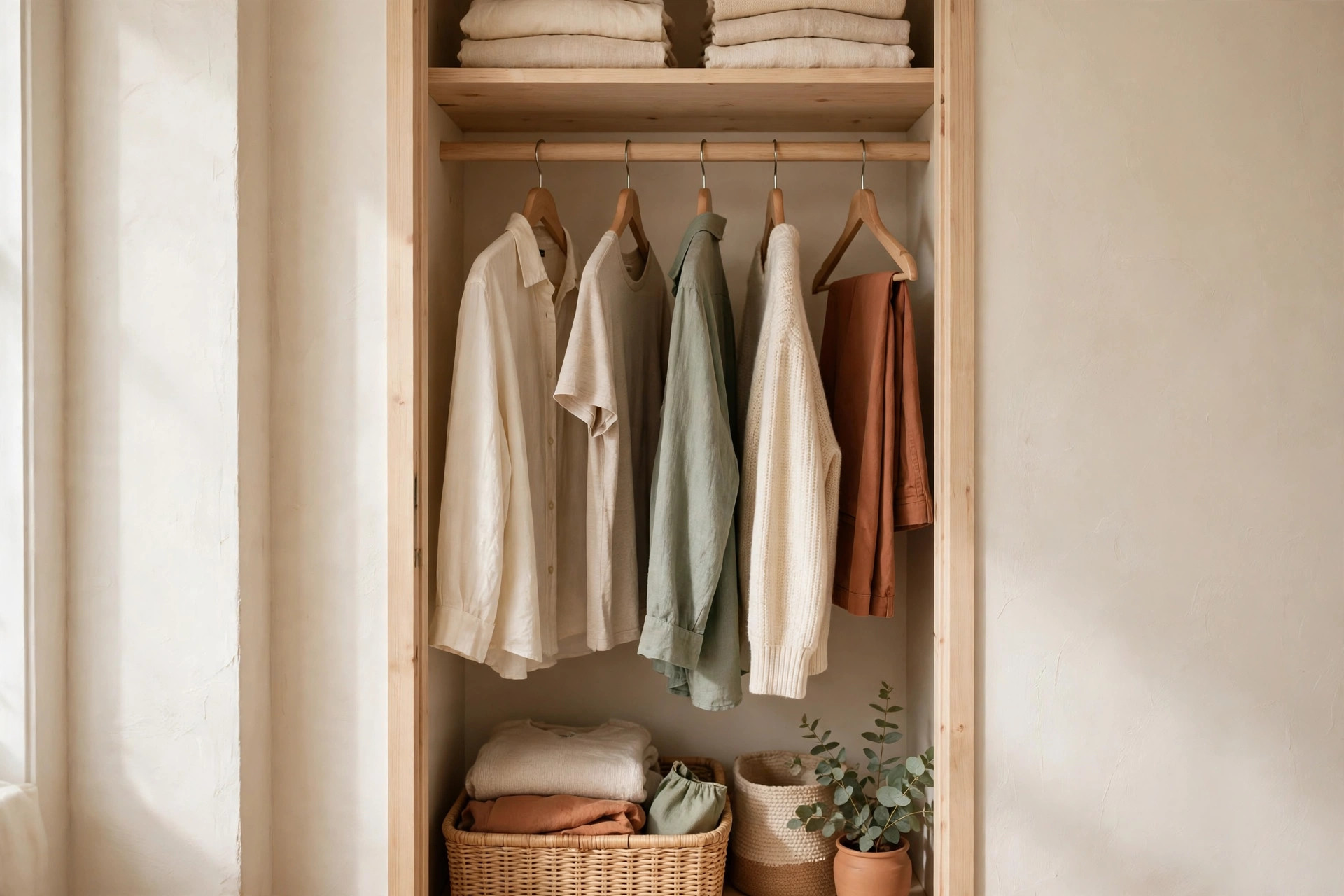
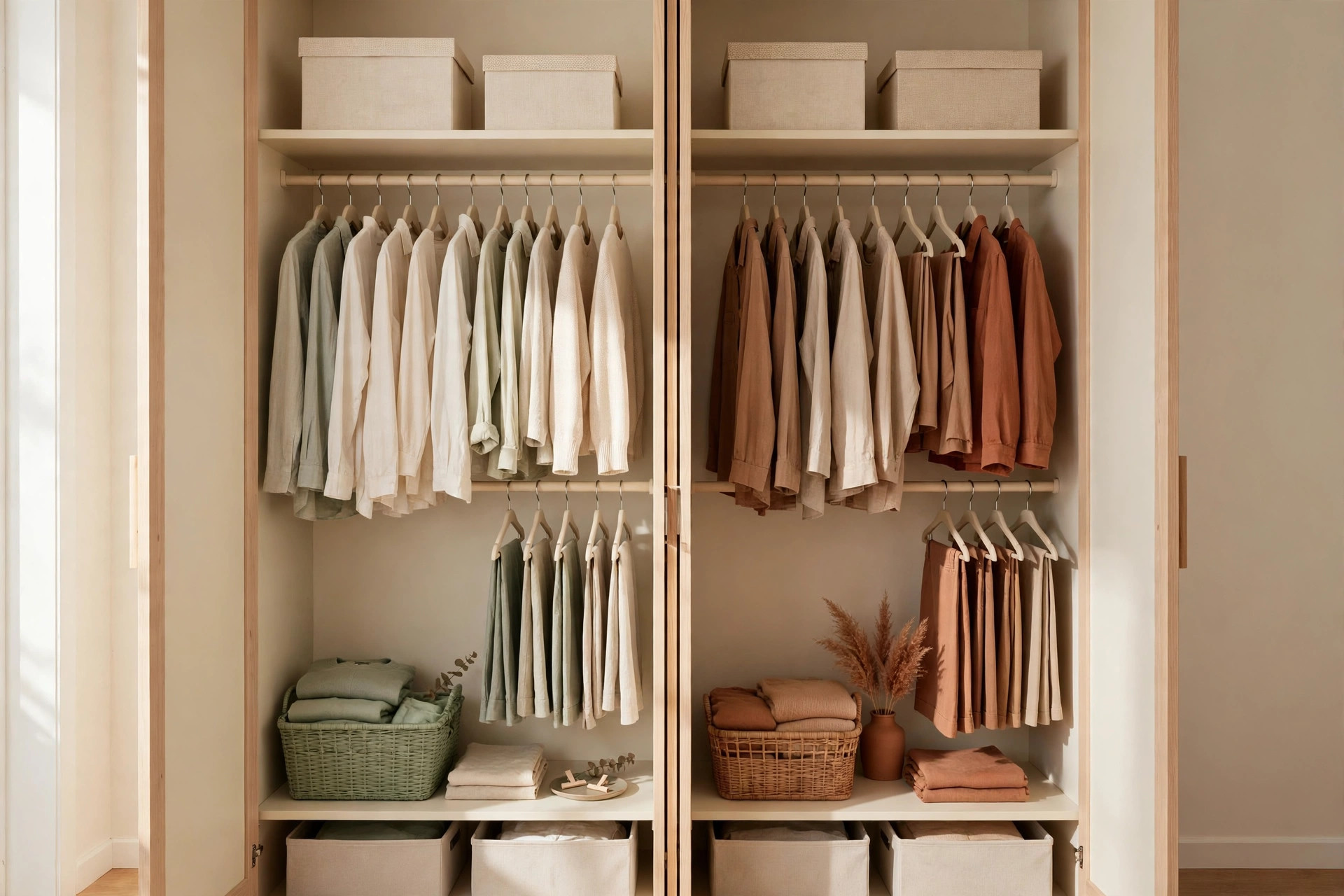
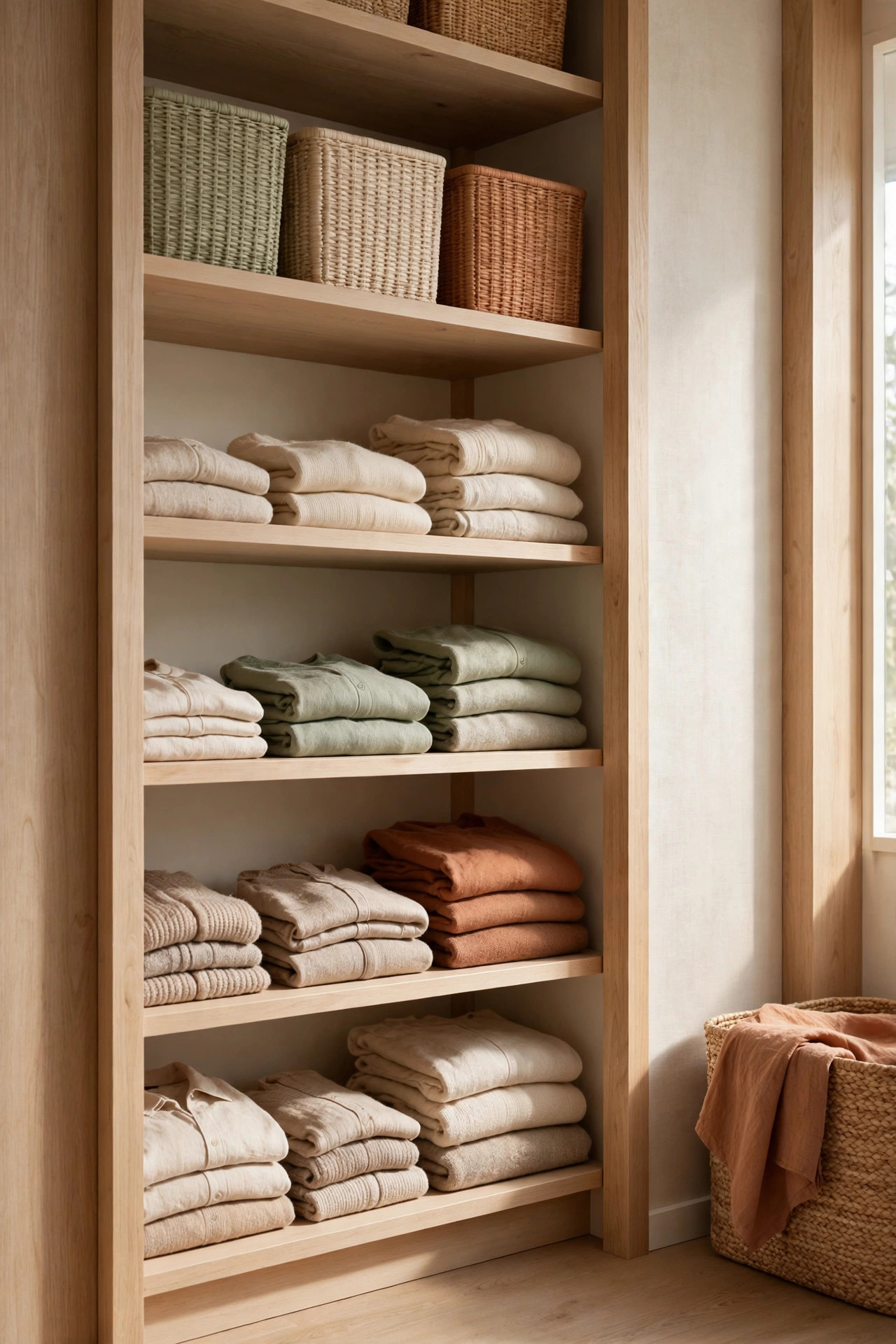
Scarves knotted into one tangled ball, handbags squashed flat under a pile of clothes, and a belt you only find after emptying half the closet — if this sounds familiar, your closet does not have a space problem, it has an accessory problem. Accessories are small and oddly shaped, which is why they eat more closet space than your coats do. These accessory organization ideas are built for small closets: every piece visible at a glance, reachable with one hand, and stored in a way that keeps its shape. The 17 ideas below turn that daily hunt into a one-glance system.
The accessory audit: what you actually wear vs what you store
Before you buy a single hook, empty every accessory out and sort it into three piles: worn weekly, worn monthly or seasonally, and not worn in the past year. Most people find 20 to 30 percent falls into that last pile — broken clasps, stretched belts, scarves kept out of guilt. Donate or discard that pile first: no organizer fixes a closet holding things you never use.
1. Count before you containerize
Write down how many scarves, bags, belts, and small pieces you kept. A system sized for 12 scarves fails when you own 30, and a 6-hook belt rack is useless for 15 belts. Your count decides what you buy — not the other way around.
2. Give every accessory a home zone
Assign one zone per accessory type and keep it fixed: scarves on one section of rod, bags on one shelf, belts on one rack. When everything has a named spot, putting things away takes seconds instead of decisions, and an empty spot instantly tells you something is out of place. If you are also trimming clothes, these 17 Capsule Wardrobe Organization Ideas for Tiny Closets pair well with this audit, because fewer clothes mean more rod and shelf room.
Scarf storage: hang, roll, or fold without wrinkles
Scarves wrinkle for one reason: they are compressed. A scarf folded under a stack of sweaters, or knotted through a hanger hook with five others, comes out creased every time. The fix is giving each scarf its own slot of air, whether it hangs, rolls, or folds.
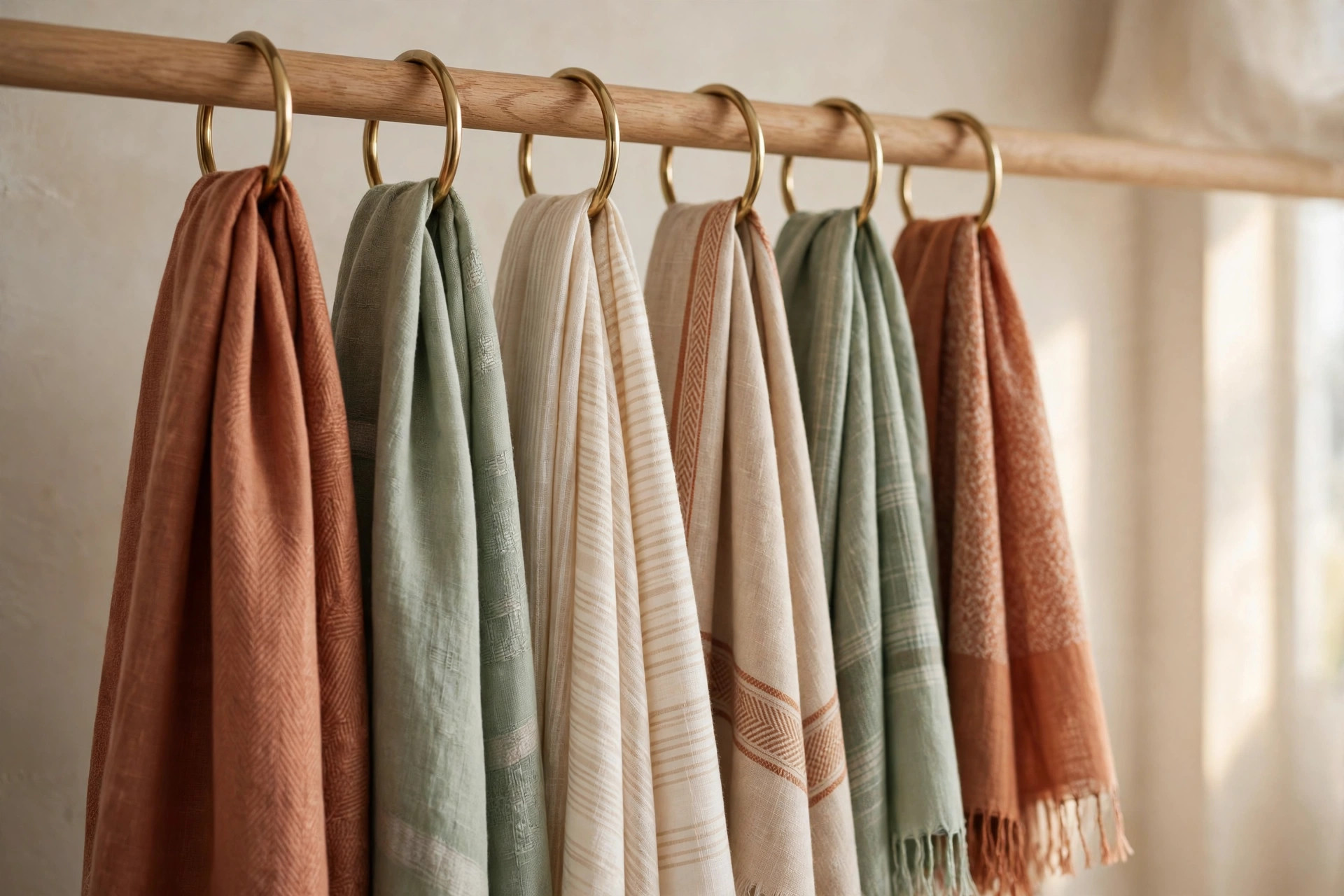
3. Use a multi-ring scarf hanger for everyday scarves
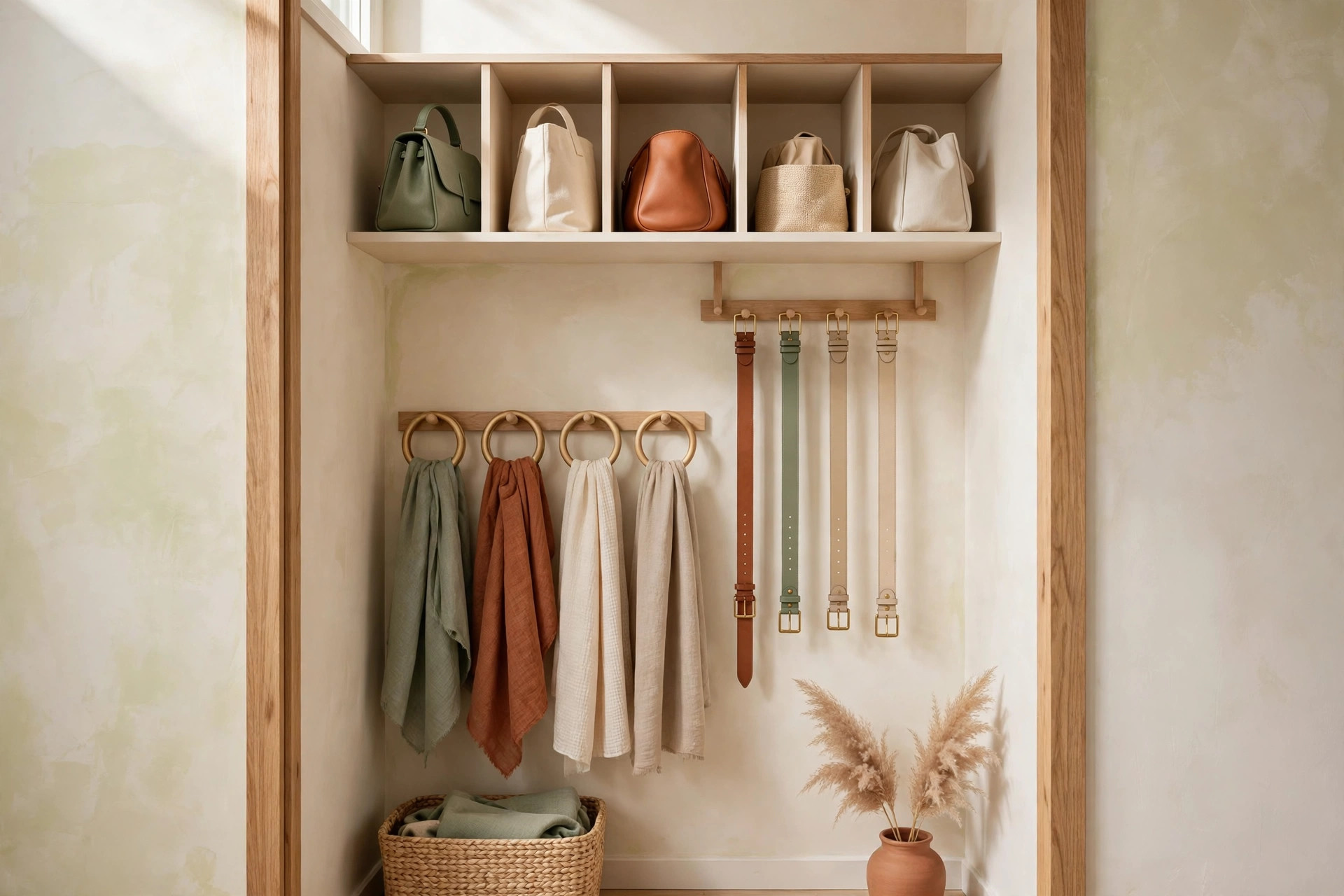
A single hanger with 8 to 12 rings holds a full rotation of lightweight scarves on about 2 inches of rod space. Thread one scarf per ring, loosely, and keep your three most-worn scarves on the outermost rings.
4. Roll knit and chunky scarves instead of hanging them
Heavy knits stretch out of shape on hangers. Roll each one loosely and stand the rolls upright in a fabric bin or drawer divider about 10 inches deep, so you can see every color at a glance with no hanger crease.
5. Fold silk and delicate scarves in tissue
Silk snags on rings and rough wood. Fold each scarf with tissue paper between the folds and lay them flat in a shallow drawer or lidded box no more than 4 inches deep — and never stack more than six, or compression wrinkles return.
Bag storage: keeping shapes intact in small closets
A handbag loses its shape the moment something heavy sits on it or it slumps sideways. Structured bags need to stand upright, supported on both sides and stuffed lightly.
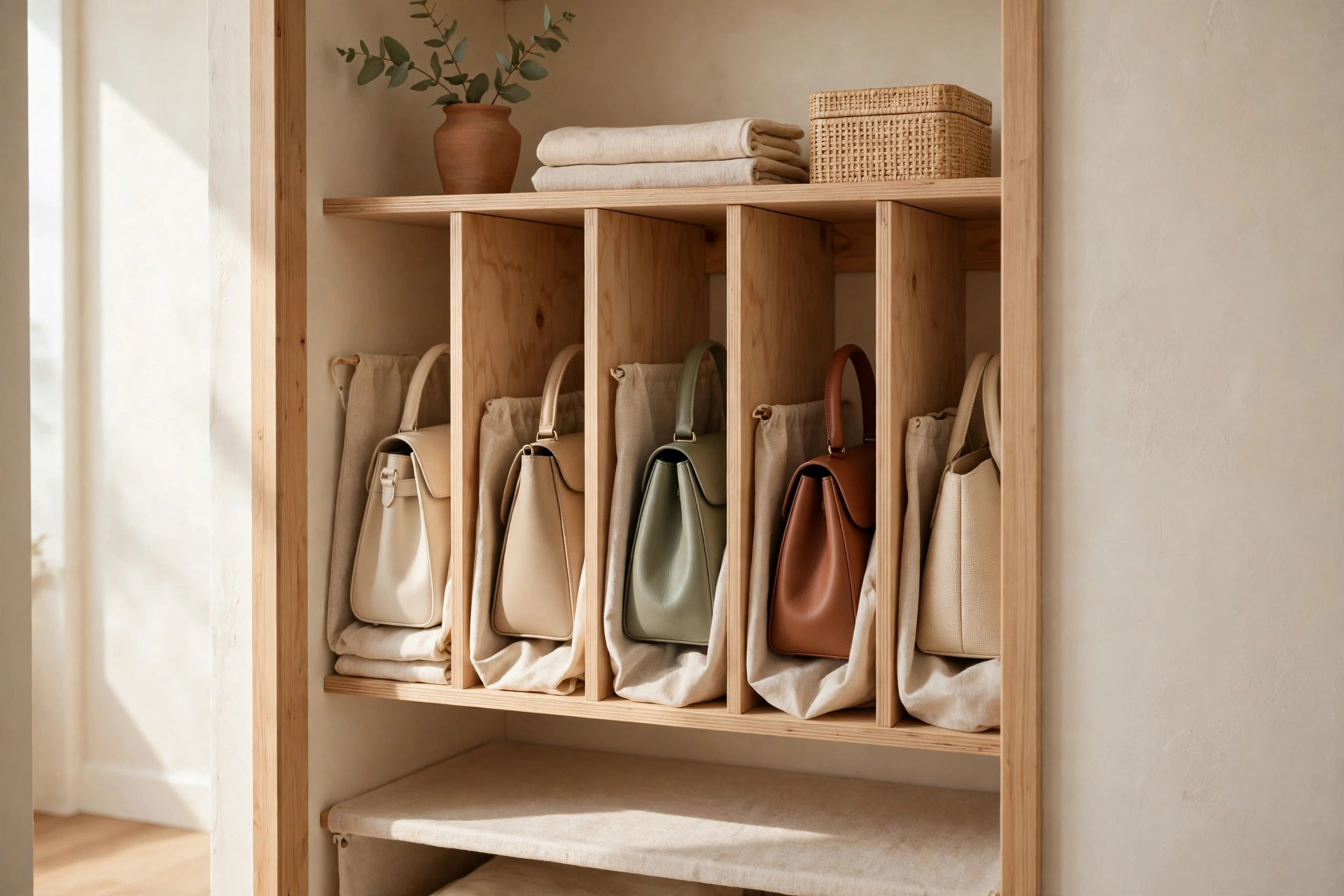
6. Stand bags upright with shelf dividers
Place shelf dividers 4 to 6 inches apart so each bag stands upright like a book — one bag per slot, handles tucked inside, nothing stacked on top. A standard 24-inch-deep shelf holds three to four medium bags.
7. Stuff bags lightly to hold their shape
Fill each bag with tissue paper, an old cotton T-shirt, or a bag shaper until it holds its silhouette without bulging. Never use newspaper (the ink transfers) and never overstuff, which strains seams. Keep the dust bag on rarely used bags to prevent scuffs.
8. Hang one bag per hook, never stacked
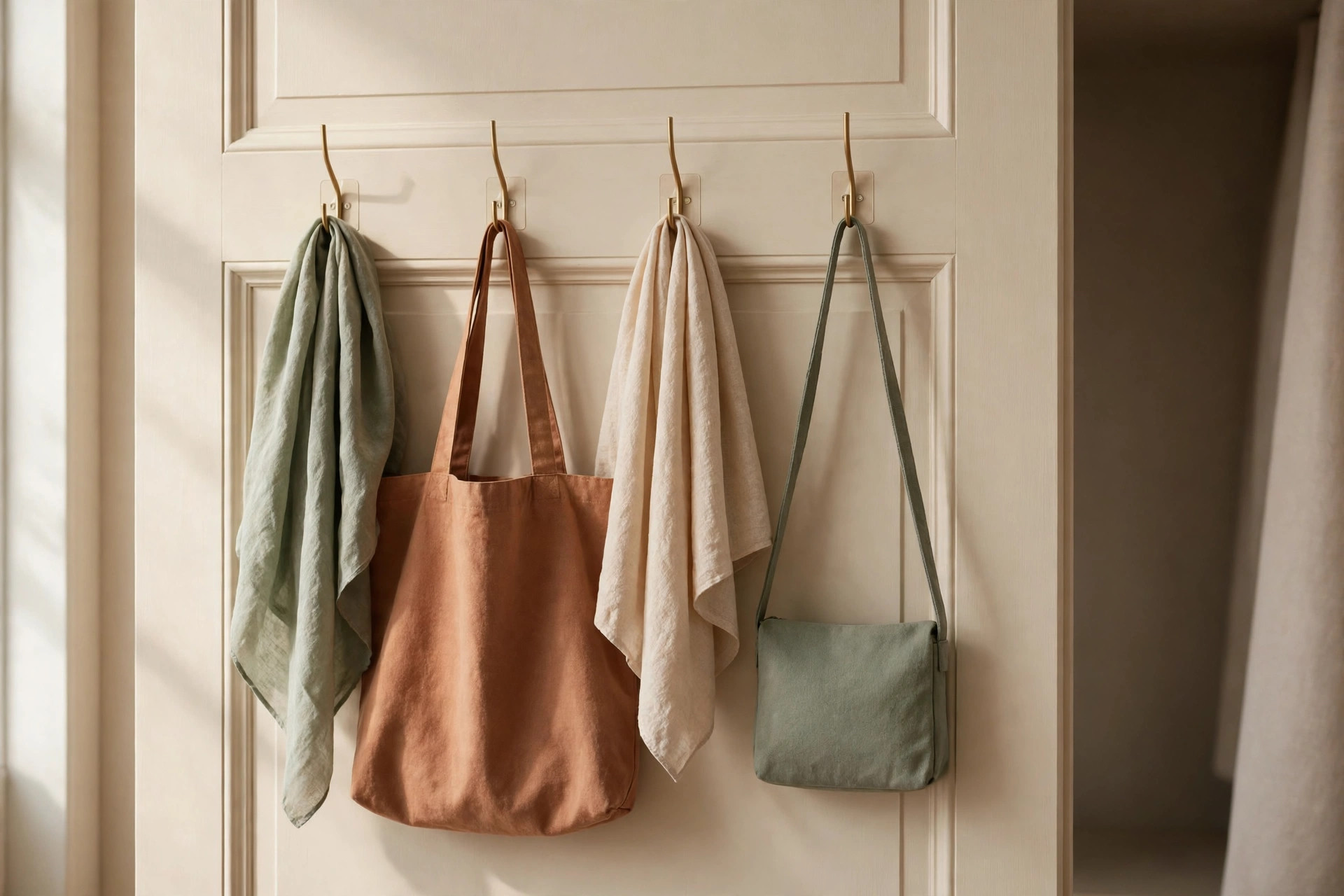
If shelf space is gone, use sturdy S-hooks or a multi-hook bag hanger on the rod, one bag per hook. Stacking bags on one hook stretches straps and hides the bag underneath. Small crossbody bags and clutches are the exception: a row of them on door hooks works beautifully, as shown in these Over-the-Door Organization Ideas for Every Room.
Belts, ties, and small accessories: rings, racks, and boxes
Belts are the classic closet casualty: coiled in a drawer they tangle, hung over a hook they slide off. The answer is a dedicated rack where each belt hangs by its buckle, plus divided boxes for everything too small to hang.
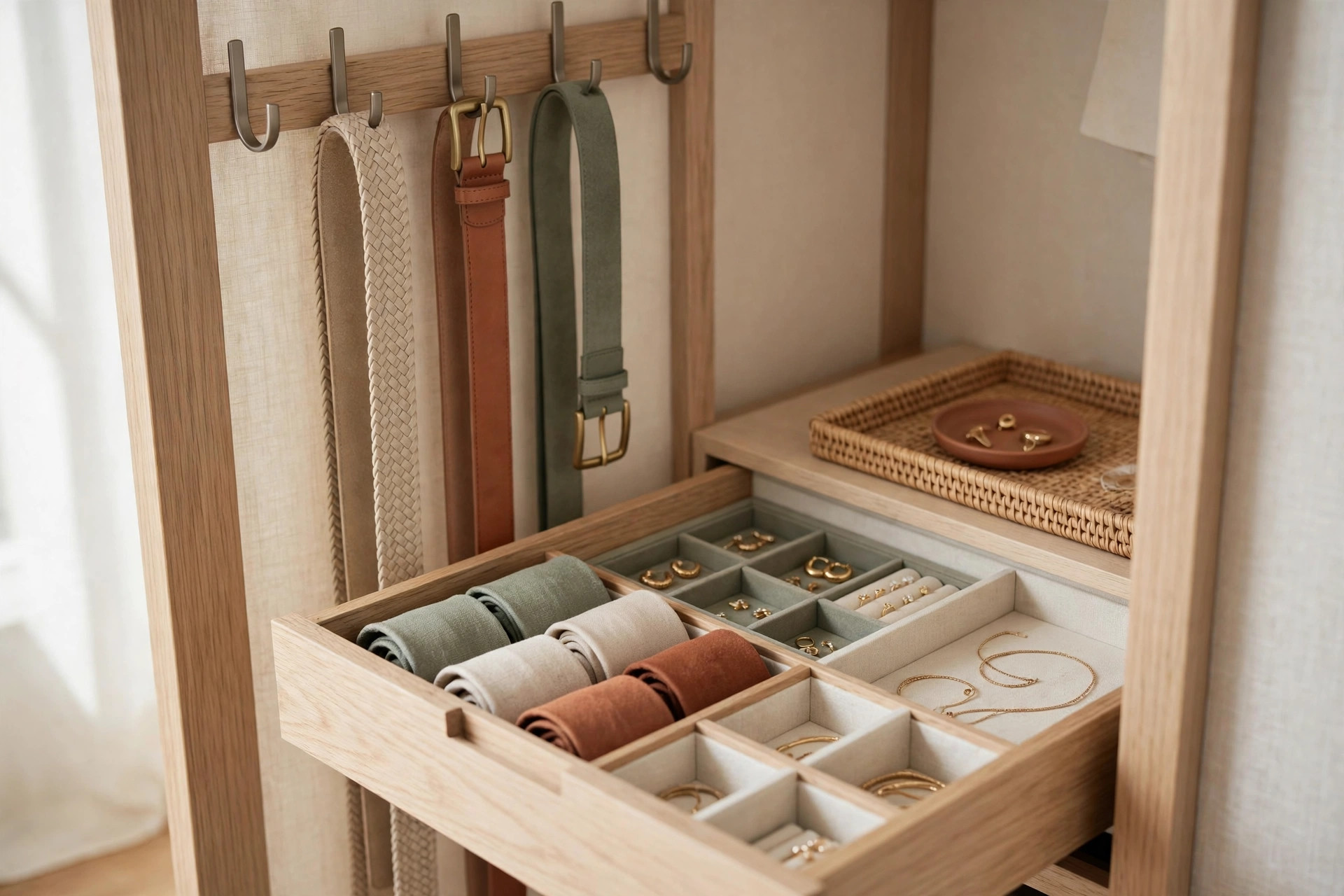
9. Hang belts by the buckle on a pull-out rack
A pull-out rack mounted under a shelf holds 10 to 15 belts on individual hooks and slides out for choosing. Hanging by the buckle keeps leather straight and prevents coiling curl. If you cannot mount anything, a belt ring hanger on the rod does the same job for fewer belts.
10. Coil ties and thin belts in a drawer divider
Ties and thin fabric belts do not need to hang. Coil each one loosely (about a 4-inch loop) and stand the coils upright in a drawer divider, one coil per slot, so nothing knots together and you can see every option without unrolling.
11. Corral sunglasses, watches, and pins in divided trays
Small accessories vanish into drawers. Use a shallow tray with 3-by-3-inch compartments for sunglasses, watches, brooches, and hair accessories — one item per compartment, kept in the top drawer or at eye level, never at the bottom of a deep drawer.
Using the closet door and walls for accessories
The inside of the closet door and the side walls are the most underused space in a small closet. They hold accessories without taking rod or shelf space, and most solutions are renter-friendly.
12. Mount an over-the-door organizer for flat accessories
An over-the-door rack with clear pockets or hooks holds clutches, small crossbody bags, hats, and rolled scarves on the door itself. Choose a screw-free one so it comes down cleanly at move-out, and check the door still latches — a rack too thick for the frame stops it closing. These 18 Small Reach-In Closet Organization Ideas That Double Your Space show how door storage fits a full small-closet plan.
13. Add adhesive hooks to the side walls for daily pieces
Two or three adhesive hooks on the side wall at shoulder height hold tomorrow’s bag, today’s belt, and your most-reached-for scarf. Use hooks rated for 3 to 5 pounds — lighter ones peel off within weeks under a loaded handbag. Reserve them for daily pieces only; a wall of rarely worn items is just clutter moved sideways.
Drawer and shelf zones for jewelry and small pieces
Jewelry and small accessories need a different system: they tangle, scratch each other, and disappear into corners. The rule is shallow, divided, and visible — never a deep, mixed pile.
14. Use a velvet-lined tray for daily jewelry
A velvet-lined tray with separate slots for rings, earrings, and bracelets stops metal scratching metal and keeps pairs together. Keep only weekly-worn pieces here; the rest go in a second lidded box on a higher shelf. Size the tray to your collection — a 20-piece tray for 60 pieces just moves the overflow.
15. Label shelf bins by accessory type, not by person or season
Label bins “Scarves — Winter,” “Bags — Evening,” and “Belts — Work” rather than vague “Stuff” or “Misc.” Specific labels mean anyone putting laundry away files things correctly, and you can find a category without opening three bins. Use removable labels so the system survives the next seasonal swap.
The seasonal swap and the 10-minute accessory reset
Even a perfect system drifts: scarves migrate to the wrong shelf, bags get tossed on top of each other after a busy week. Two small routines prevent the slide back to chaos.
16. Swap accessories with the seasons, twice a year
Twice a year, when you switch your wardrobe for warm or cold weather, pull out off-season accessories into one labeled bin on the top shelf or under the bed, and move the incoming season’s pieces into the prime zones: eye-level shelf, front rod section, top drawer. The 20-minute swap is the single biggest reason small closets stay workable year-round.
17. Run a 10-minute accessory reset every Sunday
Set a timer for 10 minutes once a week: re-hang fallen scarves, re-stuff slumped bags, return stray belts to the rack, and toss anything broken into a “fix or donate” bag by the door. Ten minutes a week beats a three-hour overhaul every six months.
Mistakes to avoid
The most common accessory-storage mistakes cost money and damage the pieces you protect. First, never buy organizers before the audit — a 12-ring scarf hanger does nothing for 40 scarves. Second, never stack handbags: the bottom bag loses its shape and the top bag hides, so you stop using both. Third, never store leather in sealed containers without airflow — trapped moisture causes mildew and sticky finishes. Fourth, never use wire hangers for heavy bags or chunky knits; thin wire cuts straps and leaves permanent creases. Finally, never keep broken accessories “just in case” — unless you set a real repair date, a cracked buckle or pulled thread is clutter in disguise.
Frequently asked questions
Can I organize accessories in a closet with no shelves?
Yes. An over-the-door organizer, a multi-ring scarf hanger, and a rod-hung belt rack cover scarves, bags, belts, and small pieces with no shelf at all. Add a hanging shelf organizer only if you want a flat surface for bags.
How do I store scarves so they do not wrinkle?
Give each scarf its own slot of air: hang lightweights individually on rings, roll chunky knits loosely and stand them upright, and fold silk flat in tissue in a shallow box. Wrinkles come from compression, so any separate, unstacked method works.
What is the best way to store handbags in a small closet?
Stand them upright in shelf dividers, one bag per slot, lightly stuffed, with nothing stacked on top. With no shelf space, hang one bag per sturdy hook on the rod or door. Both keep the shape intact and every bag visible.
How often should I declutter accessories?
Audit twice a year during the seasonal swap, and use the 10-minute weekly reset to catch broken or unused pieces early. Anything unworn for a full year that is not a genuine keepsake is a donation candidate.
Conclusion
Small closets do not need more space for accessories — they need one visible, protected home for each piece, from scarf rings and bag dividers to belt racks and labeled bins. Start with the audit, build zones matching what you actually own, and let the weekly reset keep the system working. Browse more ideas in the closet organization category, and save this pin for later so your next tidy-up starts with a plan, not a pile.