If your balcony has quietly become the place where things go to die — dead plants, a broken chair, boxes you stopped unpacking — you are not lazy. You are missing a system. Balcony storage fails when it is not weatherproof, because anything stored outside gets rained on, sun-bleached, and blown around until it looks like junk. These apartment balcony storage ideas fix that with one simple principle: everything outside must survive outside. Sixteen ideas, grouped by how they solve the real problems — weather, weight, renters’ rules, and a footprint the size of a door. These are small balcony storage ideas built for real rentals: every container is sealed against rain, everything is freestanding so your lease stays intact, and the whole system fits the tightest balconies.
The balcony audit: what actually needs to live outside
Before you buy a single box, stand on your balcony for two minutes and sort everything there into three piles: belongs outside, belongs inside, belongs nowhere (trash or donate). Most balconies are full of inside-things that escaped, and no storage system fixes that.
Idea 1 — List it before you store it. Write down every item that genuinely needs to live outside: chair cushions, plant supplies, the bike, the folding chairs, the toolbox, seasonal gear. If you cannot name it, you cannot choose the right container for it — and “everything” is how people end up buying boxes that fit nothing.
Idea 2 — Measure the footprint, then shop. Measure your balcony’s usable width and depth, the railing height, and the door swing (storage cannot block the door). A balcony that is 4 by 8 feet holds one deck box, one vertical rack, and a bike — not more. Buying storage before measuring is why most balcony systems feel cramped instead of clever.
Deck boxes: the weatherproof workhorse
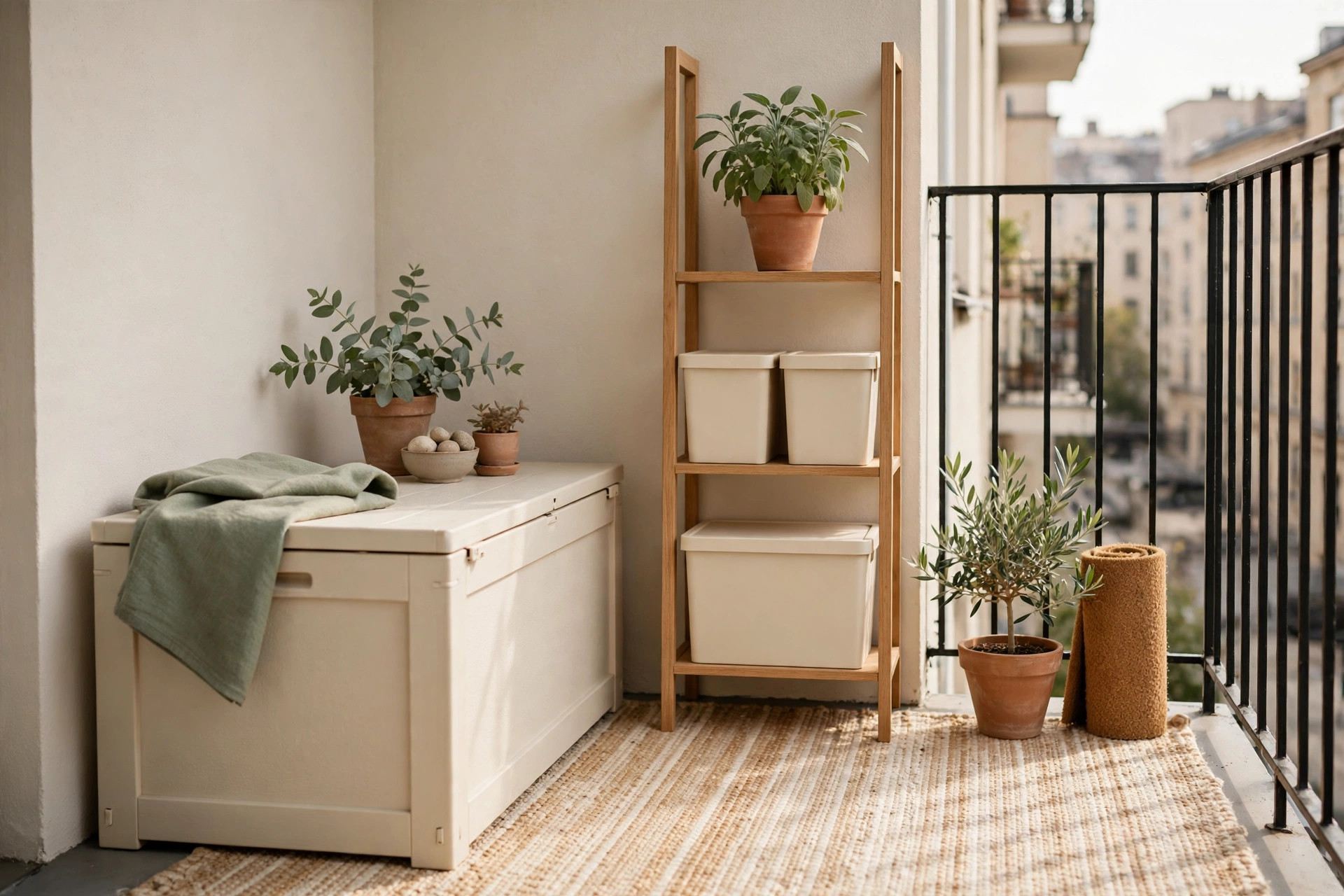
A deck box is the balcony’s dresser drawer: big, sealed, and built for rain. One good box does more than four open shelves.
Idea 3 — One large deck box beats three small ones. A single 60-to-120-gallon box holds all your cushions plus the folding chairs, while multiple small boxes waste space in the gaps. Look for a hinged lid, UV-stabilized resin (so it does not go chalky in the sun), and a lid that overhangs the rim so rain drips off instead of in.
Idea 4 — Elevate the box off the floor. Slide two strips of plastic decking tiles under the box, raising it an inch or two. This keeps the bottom out of post-storm puddles — the most common cause of moldy cushions in supposedly waterproof boxes.
Vertical storage: wall racks and tall narrow shelves
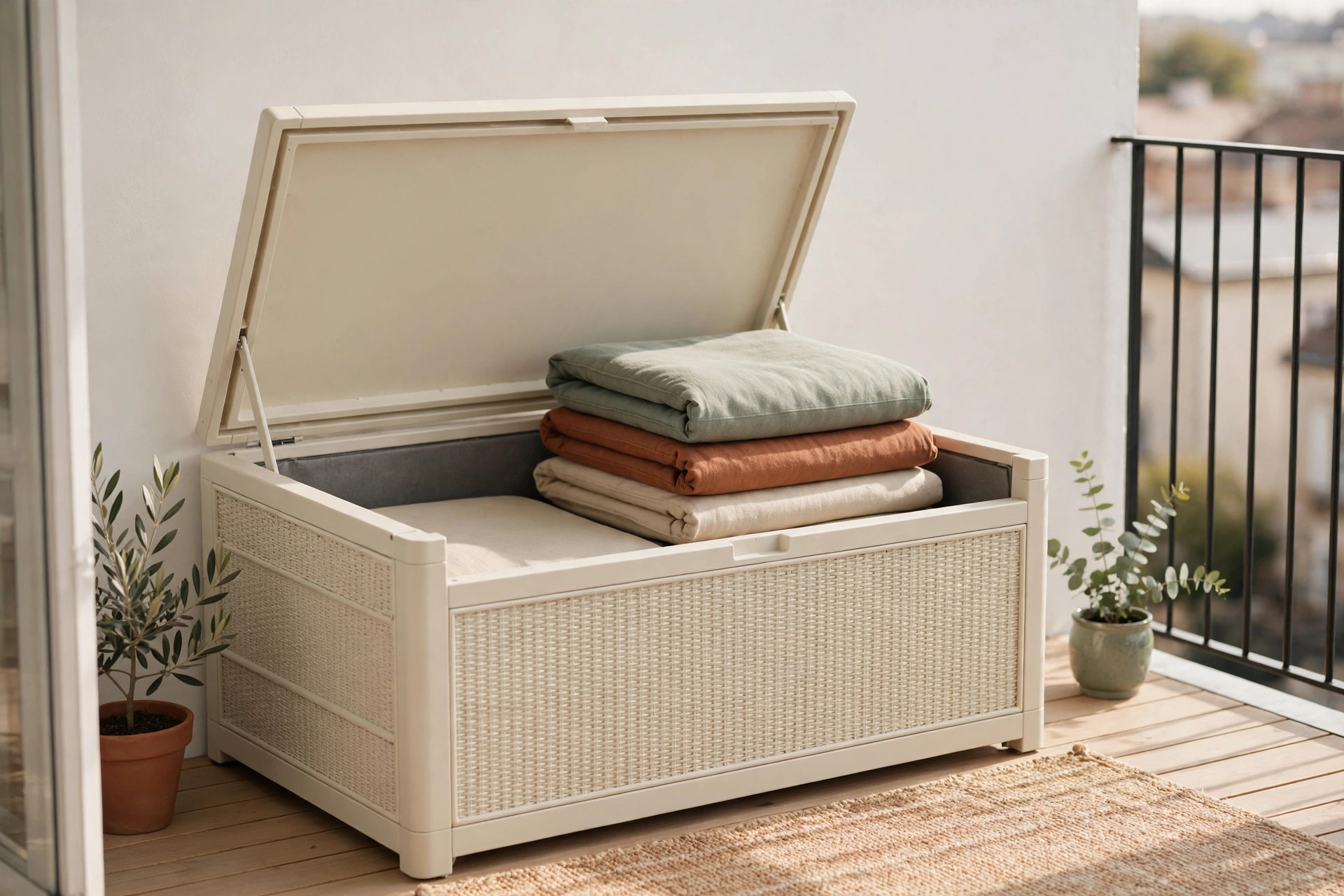
When floor space is eight square feet, the only direction left is up — and balconies are perfect for vertical storage because walls and railings already exist.
Idea 5 — A tall narrow shelf as the gardening station. A 24-inch-wide, 5-tier wire shelf tucked into the balcony’s most sheltered corner holds pots, soil bags, and tools in a column that uses almost no floor. Wire sheds rain instead of pooling it, and rubber-coated feet will not scratch decking. Pair this section with the logic from 19 Vertical Storage Ideas for Small Apartments (Think Up, Not Out) — the same think-up-not-out rules apply, just outdoors.
Idea 6 — Over-the-railing saddlebags for small tools. Hanging pockets that hook over the railing (weighted on the outside, pocketed on the inside) store pruners, gloves, plant food, and zip ties within reach of your plants. They come off in seconds for storms or move-out, making them one of the most renter-friendly moves on this list — the same no-damage mindset in 17 Renter-Friendly Closet Organization Ideas (No Drilling Required).
Sealed bins and bags for cushions and seasonal gear
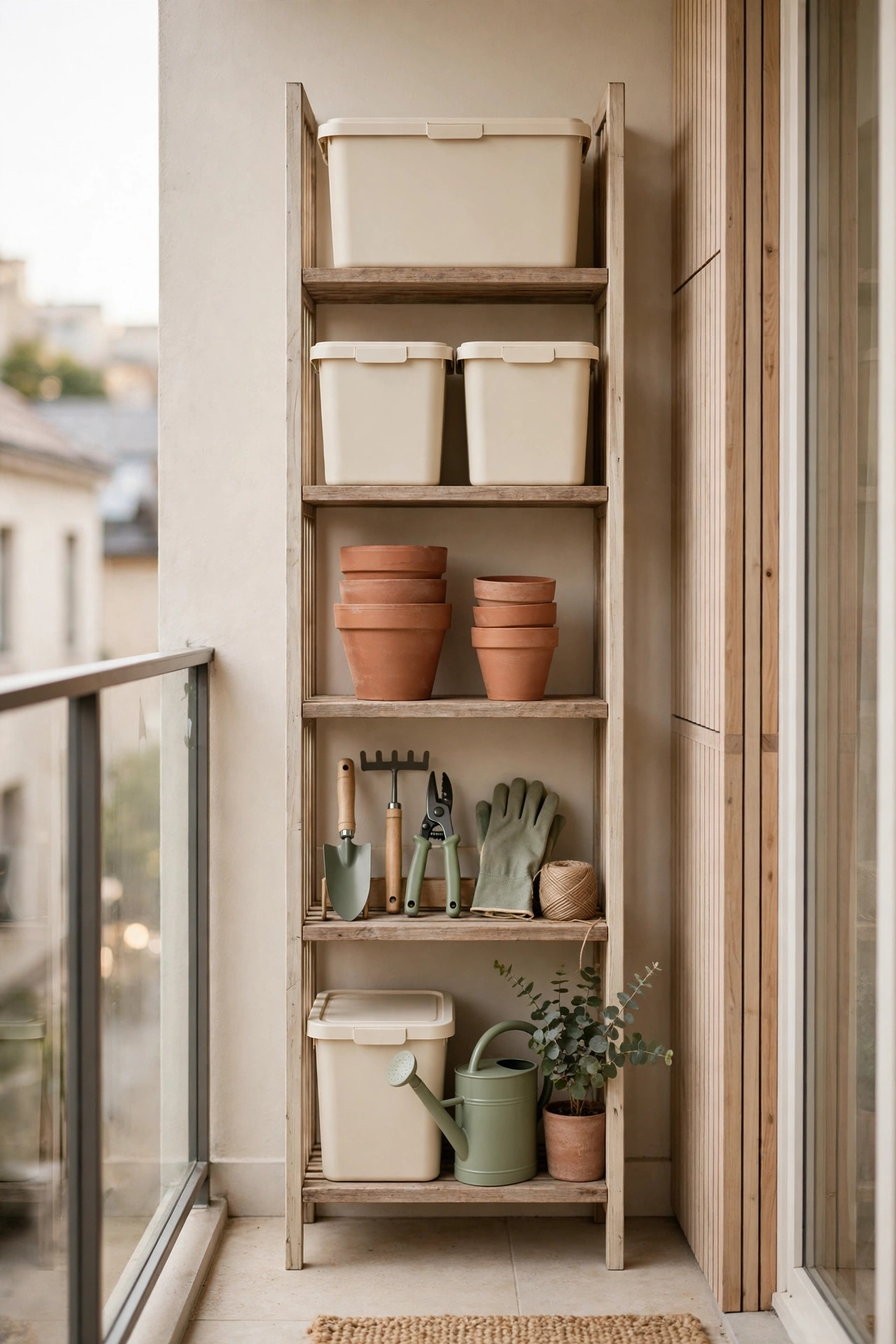
Anything soft left outside — cushions, blankets, seat pads — absorbs moisture, breeds mildew, and smells like a basement. Sealed beats covered every time.
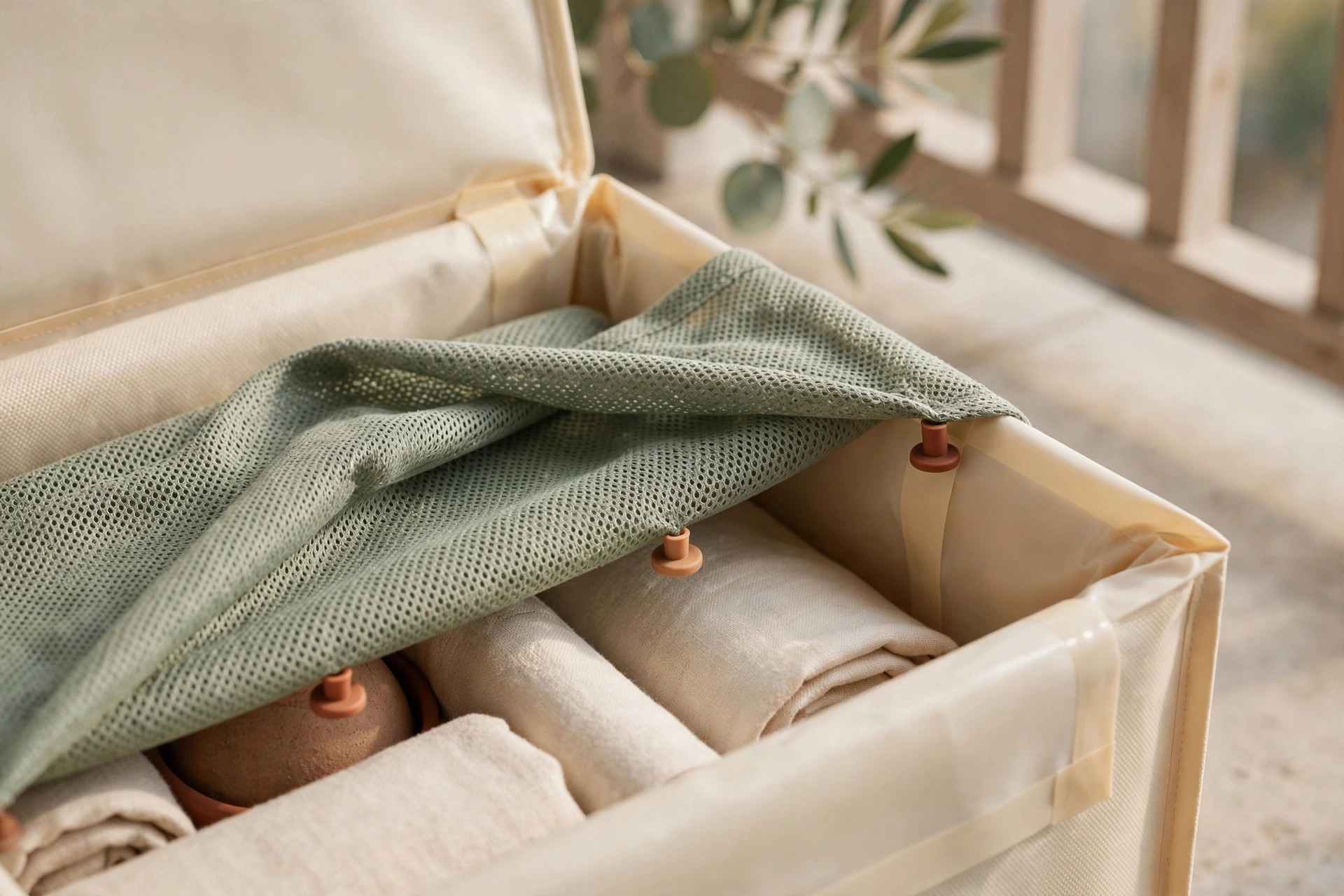
Idea 7 — Cushions go in vacuum bags, then in the box. Vacuum-storage bags compress a stack of four chair cushions to about half their volume, and the airtight seal blocks humidity even when the box lid is opened on damp mornings. One box plus one set of bags can swallow the entire seating kit of a small balcony.
Idea 8 — Clear lidded bins for seasonal gear, labeled by season. Use 18-to-30-gallon clear bins with gasket lids for holiday lights, citronella candles, and spare plant pots. Clear walls mean you see contents without opening lids in the rain, and labeling by season (not contents) tells you which bin to grab in October.
Bike, scooter, and sports gear on a small balcony
Big gear needs a parking plan, not a pile. One bike leaning against the railing takes up the same floor space as a deck box — and looks like clutter instead of a system.
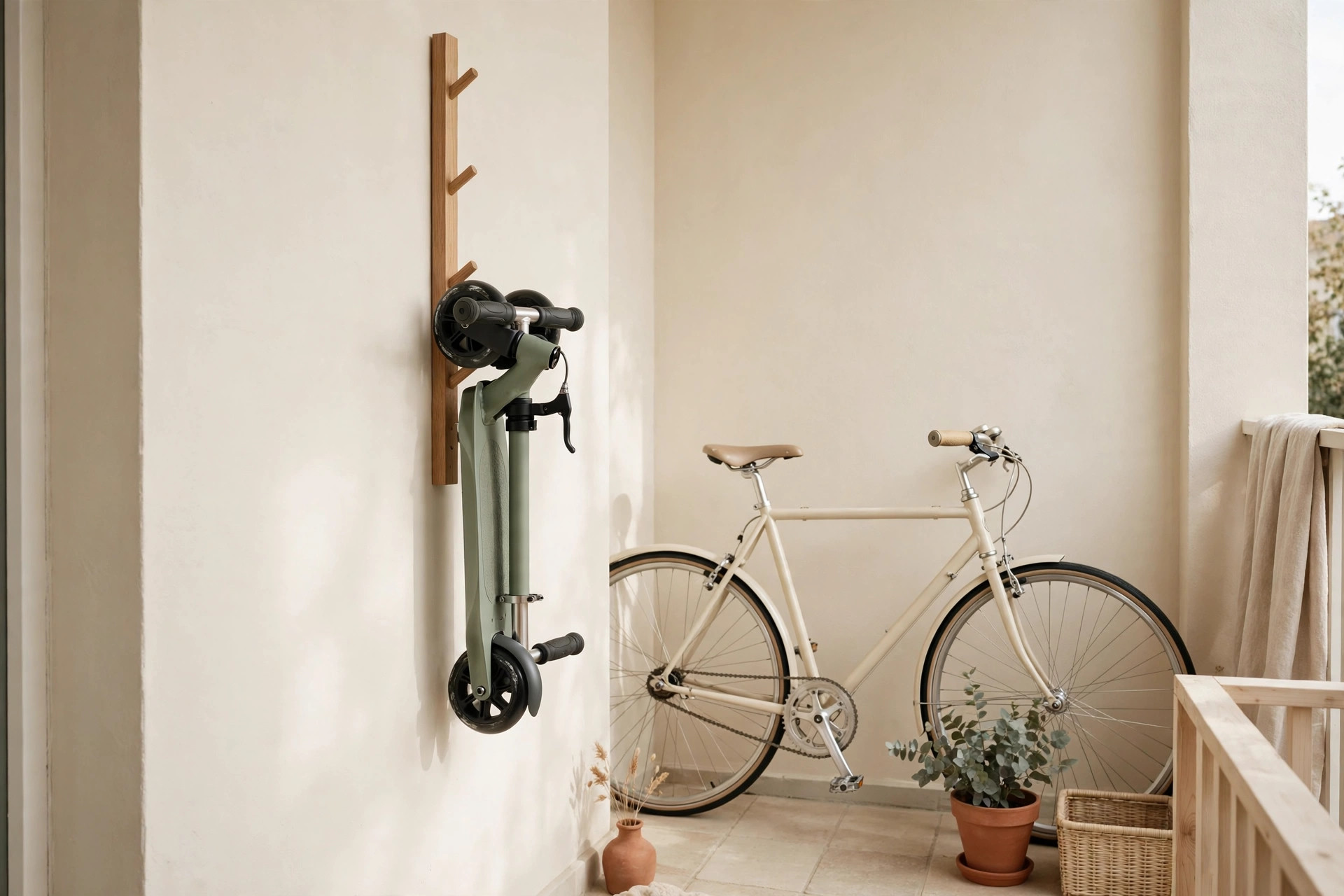
Idea 9 — A freestanding vertical bike stand. A floor-standing rack holds the bike upright by the rear wheel, shrinking its footprint from about 6 feet of lean to roughly 2 square feet. Freestanding means no drilling, and most designs also cradle a scooter or skateboard alongside.
Idea 10 — One sports-gear crate, on casters. A lidded plastic crate on a rolling dolly corrals helmets, knee pads, the ball pump, and swim goggles in one grab-and-roll unit. When you head out, roll the whole crate to the door; when you are back, roll it to its parking spot. One container, one habit, zero scatter.
Renter rules: weight, drainage, and lease-friendly placement
Most leases cap balcony loads — often around 100 pounds per square foot for residential balconies — and many forbid anything hung over the railing. Check your lease before you stack.
Idea 11 — Keep storage inside the railing line. Everything — boxes, shelves, bike stands — should sit fully behind the railing, not hooked over it or cantilevered out. Items outside the railing line are fall hazards and the single most common lease violation.
Idea 12 — Use interlocking deck tiles under everything. Plastic or wood-composite deck tiles create a raised, self-draining floor that protects both your gear and the landlord’s decking from trapped moisture and scratches. They lift off at move-out with zero damage.
Keeping it dry: covers, liners, and airflow
Waterproof and breathable is the golden combination. Seal things against rain, but give trapped moisture a way out.
Idea 13 — A fitted cover for anything that cannot go in a box. Grills, folding chairs that live upright, and the bike stand all deserve fitted polyester covers with elastic hems (not generic tarps, which flap, pool water, and look temporary). Measure the item’s height, width, and depth before buying; a cover that fits snugly lasts three times longer than a baggy one.
Idea 14 — Bin liners plus lid vents beat “airtight” outdoors. Line open-top crates with heavy-duty contractor bags (twisted shut, not tied) so splash water cannot soak through the plastic lattice, and drill three or four 1/4-inch holes in sealed-bin lids so condensation escapes. Controlling humidity and airflow is what actually prevents mold growth — and unvented sealed boxes grow mold beautifully.
The seasonal balcony reset
Storage systems rot without a reset. Twice a year, the balcony needs twenty minutes of triage.
Idea 15 — The spring flip: uncover, inspect, refresh. In spring, remove covers, check bins for winter moisture, toss the worn silica pouches in the microwave to recharge, and wash cushion covers before the sitting season. Twenty minutes now prevents buying replacements in July.
Idea 16 — The fall pack-down: everything sealed before first frost. In fall, vacuum-bag the cushions, drain self-watering planters, coil hoses into their bin, and confirm every lid still closes over full boxes. Anything that overflows a box goes into one overflow crate — with a rule that the crate must be empty by spring, so it never becomes permanent. When seasonal gear starts competing with everyday gear, our guide to 18 Under-Bed Storage Ideas That Turn Dead Space Into a Dresser shows how to move off-season bulk indoors.
Mistakes to avoid
- Buying fabric storage boxes for outdoor use. Fabric cubes and canvas bins are indoor organizers; outside they soak, sag, and mildew within a season.
- Ignoring the weight math. Soil, full planters, and loaded deck boxes can each weigh 80 to 150 pounds. Spread heavy items out and keep them against the building wall.
- Storing chemicals next to heat. Deck boxes bake in summer sun. Sunscreen, spray cleaners, and lighter fluid belong inside, not in a 120-degree box.
- One giant system instead of zones. A balcony needs three zones — sealed storage, vertical/active storage, and gear parking — or big items colonize the box space.
- Skipping the drain check. Balcony drains clog with leaves and soil. Clear the drain monthly in fall; a flooded balcony ruins even “weatherproof” storage.
Frequently asked questions
Can I store things on a small balcony without damaging the rental?
Yes — as long as everything is freestanding. Resin deck boxes, tall wire shelves, deck tiles, and vertical bike stands all sit on the floor with no drilling, screws, or adhesive. Photograph the balcony at move-in and keep heavy items off thin flooring.
How do I keep balcony storage dry in heavy rain?
Use layers: a gasket-lid bin or lidded deck box as the outer shell, vacuum bags or contractor-bag liners inside for anything soft, and vent holes or a small gap so condensation escapes. Elevate every container an inch or two so it never sits in puddles.
What is the best balcony storage box for cushions?
A weatherproof resin deck box in the 60-to-120-gallon range, with a hinged, overhanging lid and UV stabilization. Pair it with vacuum bags for the cushions — the box keeps rain off and the bags keep humidity out.
Can I store a bike on a small apartment balcony?
Yes. A freestanding vertical bike stand holds the bike upright in about 2 square feet, which fits even a 4-by-6-foot balcony alongside a deck box. Add a fitted cover if the bike sits in the weather year-round, and keep the stand fully inside the railing line.
How much weight can my balcony hold?
Residential limits are often cited around 100 pounds per square foot, but your lease or building management is the only answer that counts for your unit. Keep heavy items against the building wall and confirm the limit with your landlord before stacking.
Conclusion
A weatherproof balcony system is really just three moves: one sealed box for the soft stuff, one vertical rack for the active stuff, and one parking plan for the big gear — all of it freestanding and renter-safe. Start with the audit, add the pieces in that order, and the balcony stops being a dumping ground. Save this pin for later, or browse more ideas in our storage ideas collection.