Your apartment feels cramped, so you assume you need more square footage. But a 500-square-foot apartment with 9-foot ceilings holds 4,500 cubic feet of room — and almost everything above knee level is sitting empty. These vertical storage ideas claim that wasted height: tall shelves, high zones, and wall systems that multiply your storage without ever losing a single square foot of floor space.
When you learn to use vertical space in a small apartment, the floor stays clear for living, the room feels calmer, and things you thought would never fit suddenly do. Below are 19 concrete ideas grouped by zone — start with whichever wall, door, or cabinet bothers you most.
The vertical rule: square footage is fixed, height isn’t
Standard ceilings run 8 to 10 feet tall, while most furniture stops at 3 or 4 feet. That leaves 5 or 6 feet of usable air above nearly every wall. Small apartment vertical storage is simply the discipline of claiming that air first. A few ground rules apply to everything below:
- Anchor anything tall. Bookcases over 4 feet get an anti-tip kit into a wall stud.
- Keep daily items between knee and shoulder height. High zones are for the rarely touched: seasonal gear, archives, spare bedding.
- Mind the load. Wall shelves need studs or toggle bolts past about 15 pounds. Drywall anchors alone will not hold a shelf of books.
- Tape the outline before you buy. A 72-inch shelf dies against a door casing by half an inch. Measure the wall first.
Tall bookcases and shelving units that earn their footprint
A standard bookcase takes about 2 square feet of floor and returns 5 or 6 shelves of storage. Here is how to make tall units work hardest.
1. Double-stacked tall bookcases
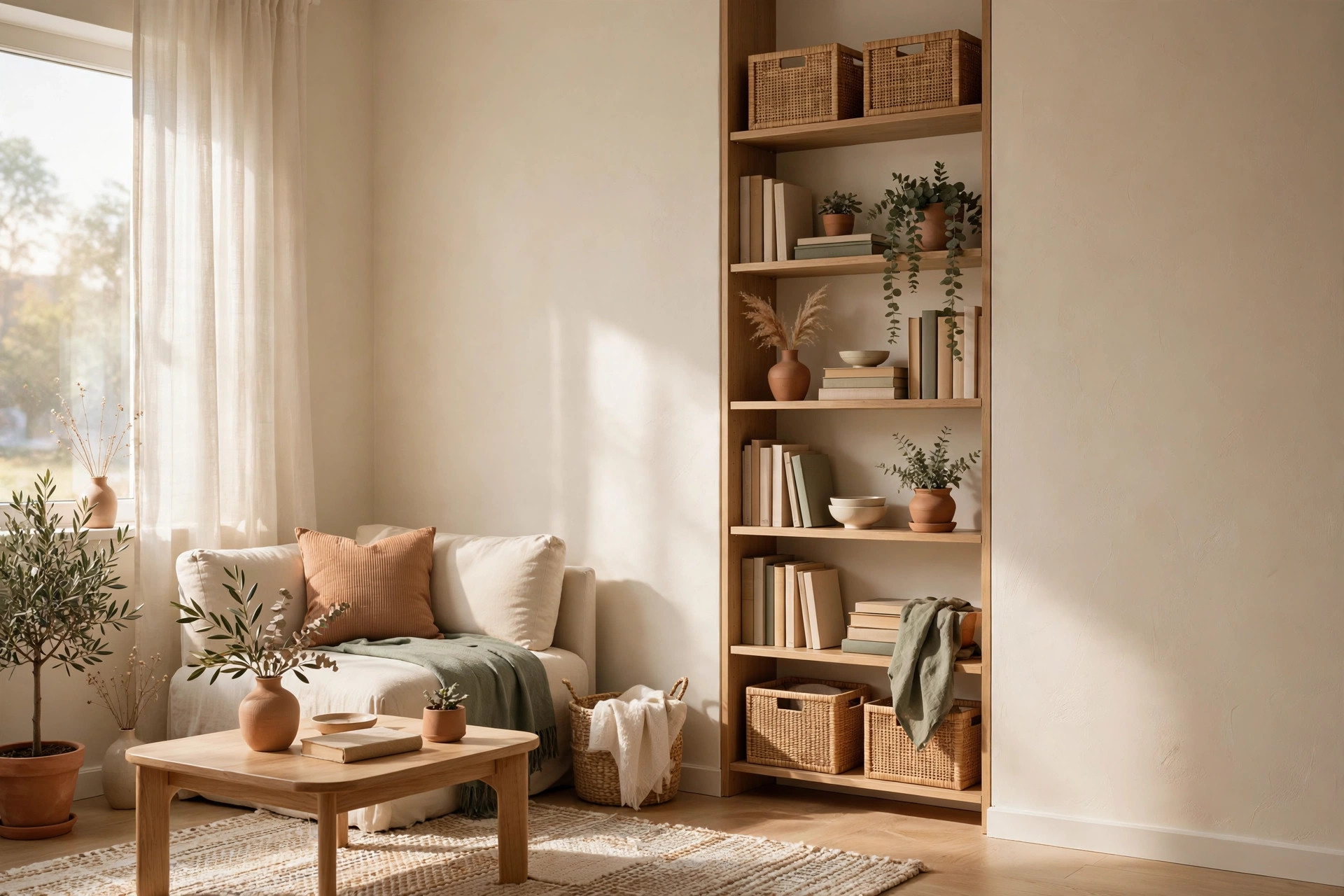
One 6-foot bookcase is good; two side by side turns one wall into a library, linen cupboard, or pantry extension. Daily items go low, look-alike bins (11×11-inch cubes fit most units) go high and labeled. In studios, a back-to-back pair doubles as a divider that stores — see studio apartment organization zones.
2. Corner ladder shelving
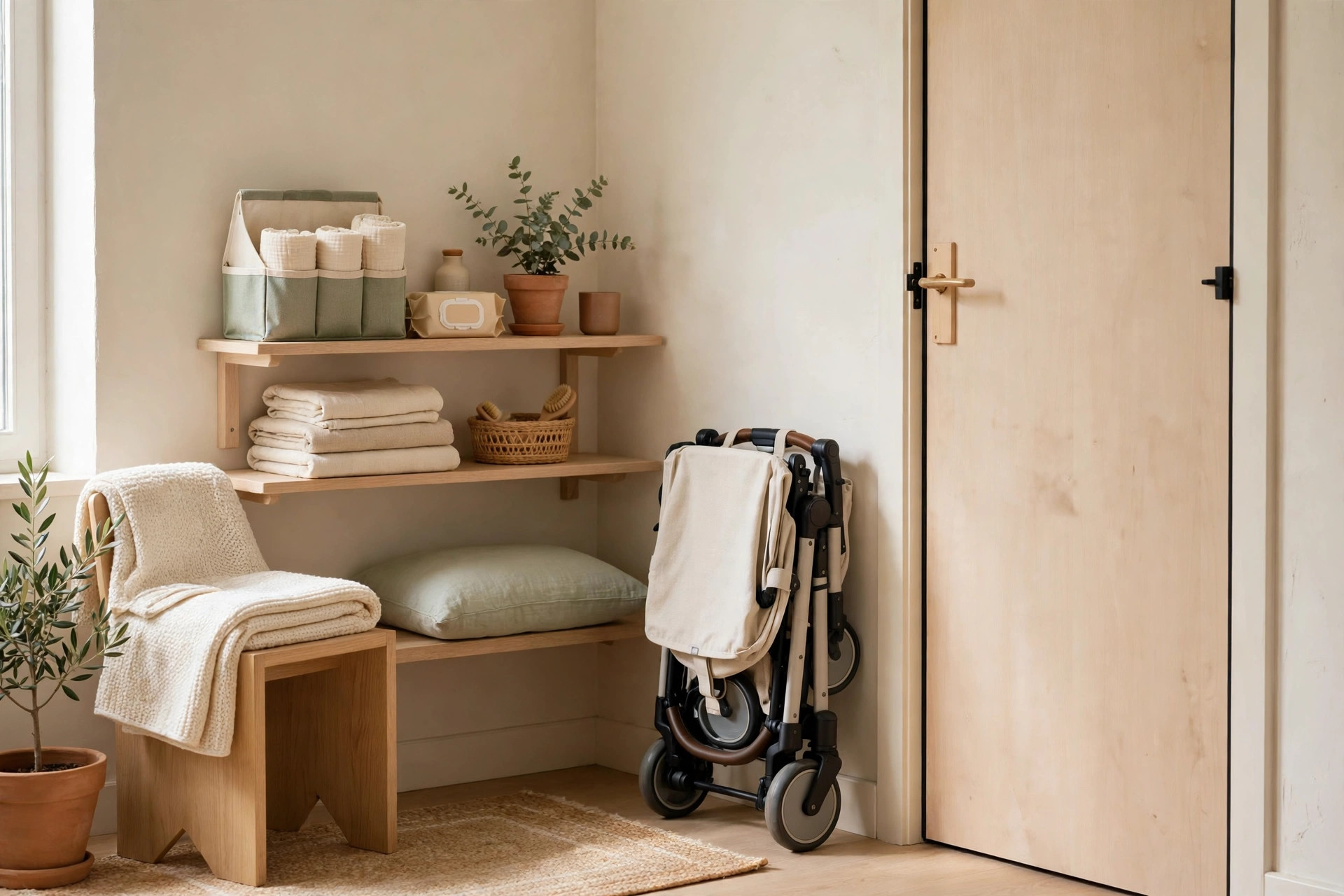
A leaning ladder shelf (about 18 inches wide, 5 to 6 feet tall) slides into the deadest corner and holds books, plants, and baskets on five graduated shelves; wedge a felt pad behind the top rail to protect rental paint.
3. Floor-to-ceiling adjustable wall track systems
Wall-mounted standards-and-brackets shelving (metal rails screwed into studs) holds 30+ pounds per shelf and repositions without tools. Run rails from near the floor to a foot below the ceiling, spacing shelves to their contents — cookbooks get 12 inches, paperbacks 8.
Over-door and above-door storage zones
Every door creates two free storage zones: the back of the door and the wall above the frame.
4. Over-the-door organizers
Over-the-door racks hook onto any standard interior door (needs about 1 inch of clearance) and come as pocket organizers, wire baskets, or hook panels — pantry doors for spices, bedroom doors for accessories, bathroom doors for toiletries. Match the type to each door in Over-the-Door Organization Ideas for Every Room.
5. Above-door shelf ledges
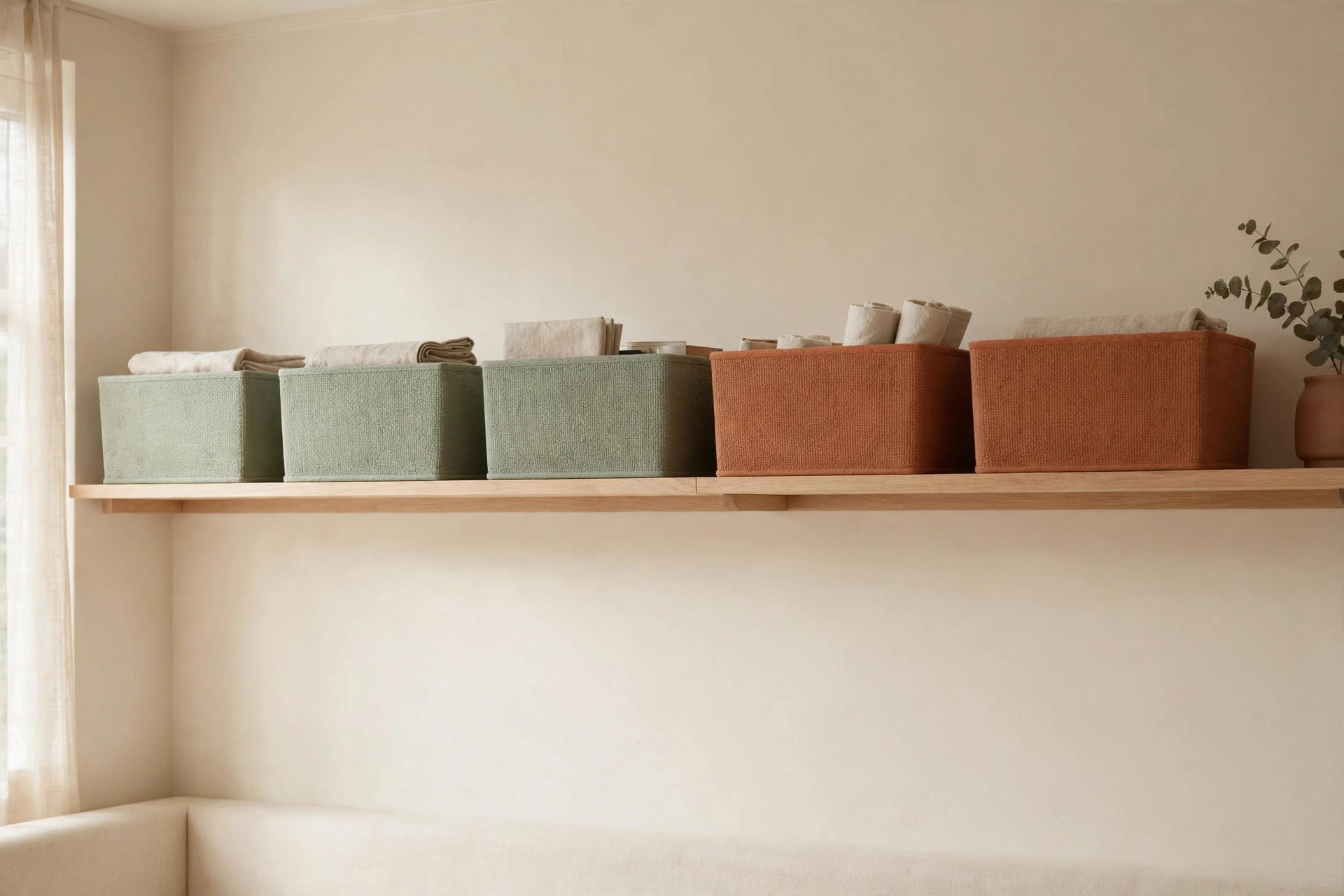
The strip above a door frame (roughly 10 to 14 inches deep, 3 feet wide) fits a single deep shelf for quarterly-touched items: luggage, gift wrap, board games. Mount a 12-inch-deep shelf 6 to 8 inches above the trim, anchored into the solid header framing above every door, and keep contents in closed bins.
6. Over-door hook rails for kitchens and bathrooms
A 5- or 6-hook rail on the back of a cabinet or bathroom door hangs towels, robes, and the hand vacuum with no drilling, and everything hides behind the closed door.
Walls as storage: hooks, rails, and pegboards
Move even one category — utensils, coats, tools — off the counter and onto the wall, and the surface underneath gets its real job back.
7. Rail systems for the kitchen
A stainless wall rail with S-hooks (into studs, 24 to 36 inches) takes your most-used utensils, pots, and mugs off the counter — in a galley kitchen this alone can clear a whole countertop. For the rest of the playbook, see kitchen wall storage ideas.
8. Pegboards beyond the garage
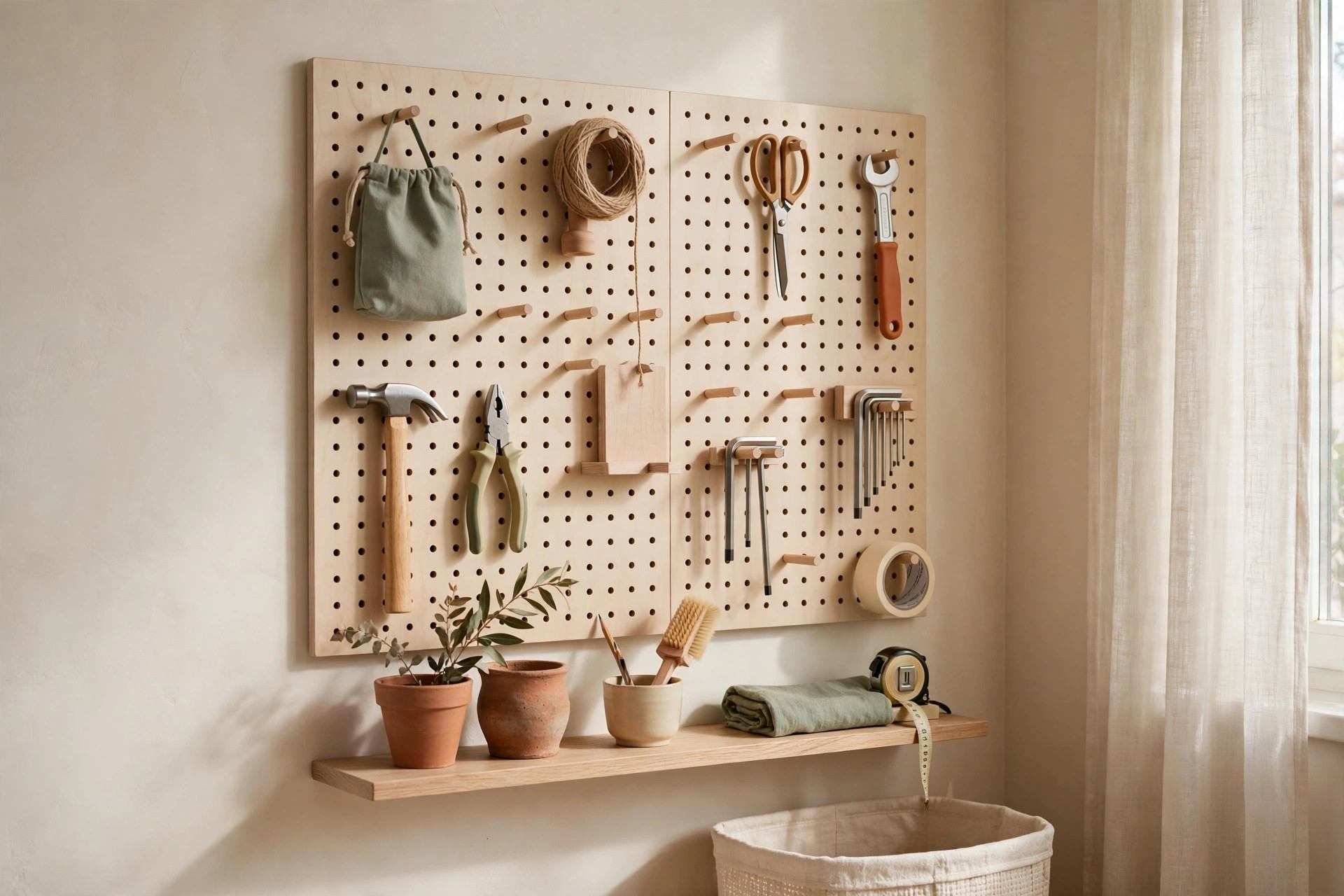
A 2×4-foot pegboard panel, framed to stand 1 inch off the wall, accepts hooks, baskets, and shelves in any arrangement — rearrange without new holes. Use it for office supplies at eye level, or keys and mail in the entryway; paint it the wall color for a built-in look.
9. Wall-mounted folding drop-leaf tables
A drop-leaf table (about 30×20 inches open) gives you a work or dining surface that folds flat to 3 inches deep. Mount at 28 to 30 inches into studs with brackets rated for 50+ pounds.
The top 12 inches: high shelves for the rarely used
The band of wall within a foot of the ceiling is your deep archive. It is annoying to reach, which is the point: it should hold only things you touch a few times a year.
10. One high shelf per room
A single 8-inch-deep shelf mounted about 12 inches below the ceiling adds 6 to 8 linear feet of storage per room. Fill it with closed, labeled bins (“tax 2024,” “spare linens”) so it reads as intentional, and stash a flat-folding step stool behind a door for access day.
11. Seasonal rotation bins up high
Seasonal items are classic high-zone residents: holiday decorations, winter coats, beach gear, the soup-season slow cooker. Pack them in clear stackable bins, label the short end facing the room, and rotate them down twice a year in a 20-minute swap. This one habit keeps closets from drowning in off-season bulk.
12. High book and media ledges
Picture ledges (the 3-inch-deep kind for frames) mounted in one row near the ceiling display books or collectibles cover-out — a 6-foot ledge holds 15 to 20 paperbacks, storage disguised as style. Ideal for hallways and above desks.
Stacking upward inside cabinets and closets
Vertical storage does not stop at walls. Inside cabinets and closets, half the height above every stack of dishes or folded shirts sits empty. Claiming it doubles space you already have.
13. Shelf risers and under-shelf baskets
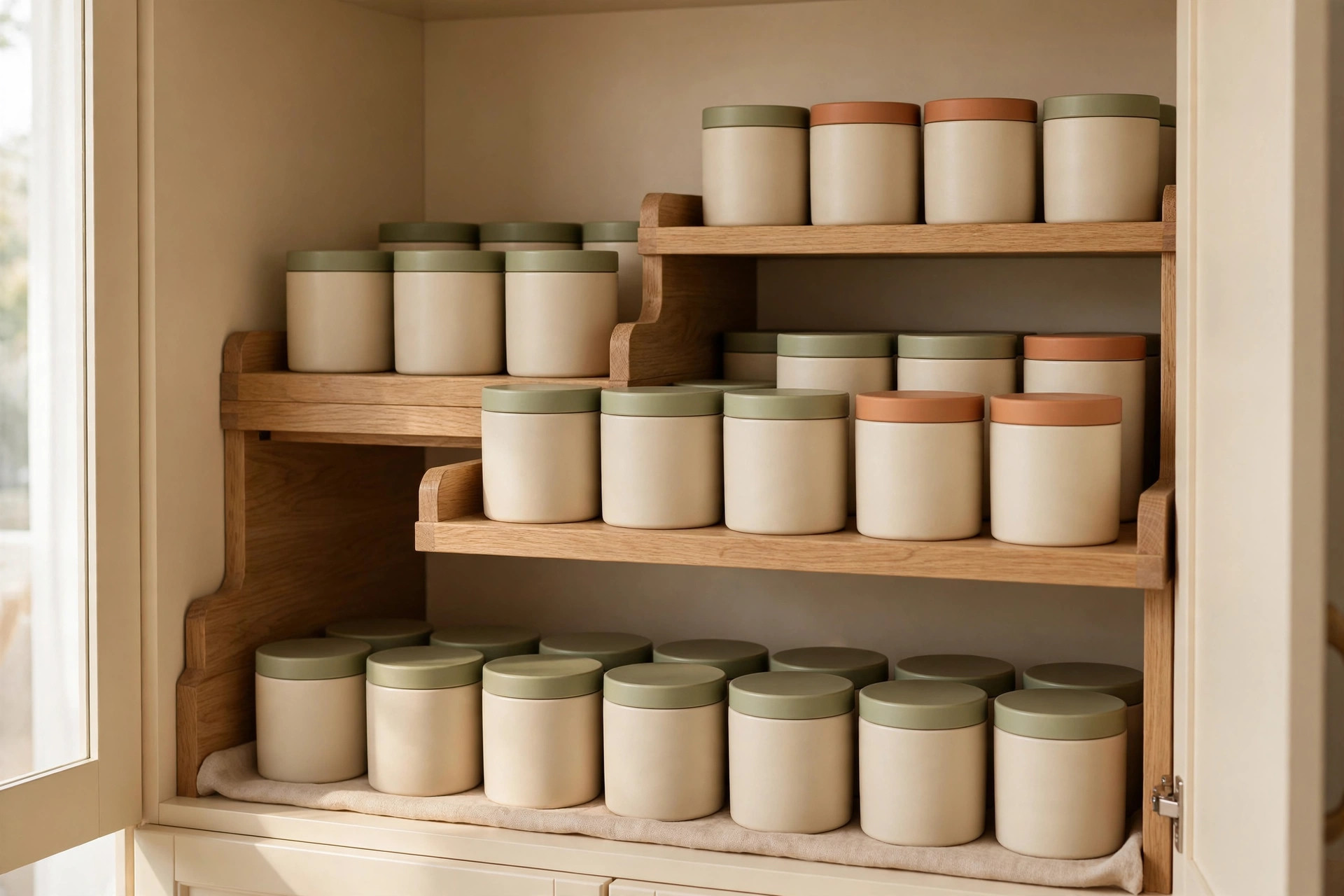
A wire shelf riser (about 10×12 inches) creates a second level inside cabinets for mugs, bowls, or spice jars; clip-on under-shelf baskets grab the last 4 inches for packets and lids. Together they add up to 50% more usable space to one cabinet.
14. Stackable clear drawers inside closets
Under the hanging rod there are usually 3 to 4 feet of empty air. Stack 3 or 4 clear 16-quart drawers (about 12×17×7 inches each) into a dresser for socks, tees, and accessories — no floor dresser needed. See small reach-in closet ideas for full layouts.
15. Vertical file sorters for lids, trays, and boards
Baking sheets, cutting boards, and pan lids stored flat eat whole cabinets. A vertical file sorter (about 7 inches wide) stands them upright like books, so a 12-inch slot holds 8 to 10 pieces instead of 3 — the same trick files wrapping paper in a closet and notebooks in an office cabinet.
Renter-safe vertical: tension rods and freestanding towers
The zero-damage shortlist: nothing that drills, glues, or marks. If your lease forbids holes, start here.
16. Tension rods between walls
A spring tension rod wedged between two facing walls (closets, laundry nooks, beside the fridge) creates an instant no-screw hanging bar — for a privacy curtain, spray bottles by their triggers, or a second closet level. Best under 48-inch spans.
17. Freestanding tower shelves
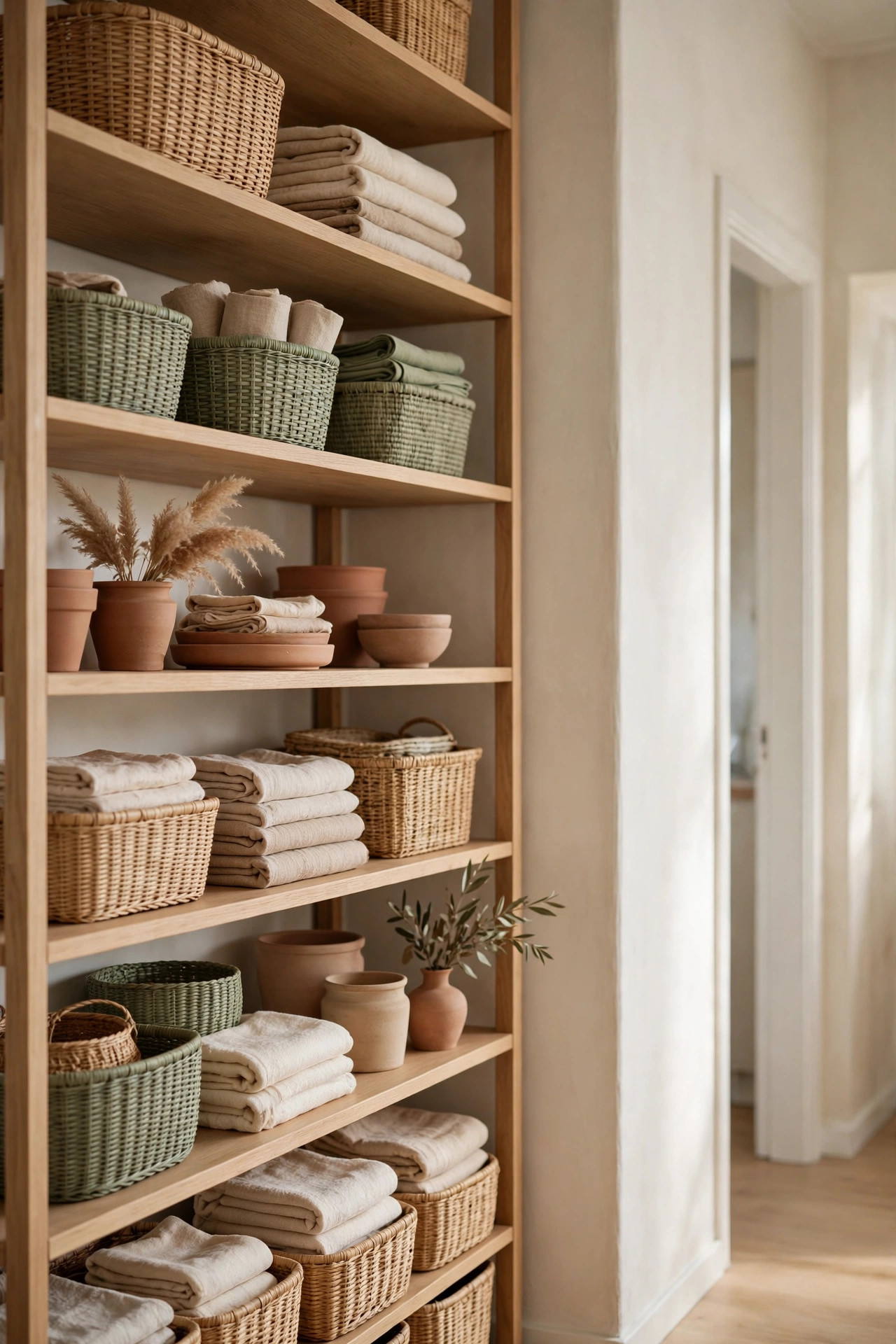
Narrow towers (12 to 15 inches wide, 5 to 6 feet tall) stand alone with no wall contact — perfect beside a fridge, in a hallway dead end, or a bathroom corner. One holds a pantry’s worth of cans or a bathroom’s worth of towels in about 1.5 square feet of floor.
18. Leaning ladder shelves and etageres
Full-size leaning etageres give 4 or 5 open shelves on barely 2 square feet, resting against the wall with no mounting — entryways (bags low, keys at eye level), bathrooms, kitchens. Choose one with a crossbar or X-brace so it never wobbles.
19. Tension pole floor-to-ceiling caddies
Spring-loaded poles wedged between floor and ceiling (adjustable for 7- to 10-foot ceilings) turn a 12-inch circle of floor into 4 or 5 stacked baskets — toiletries and towels in bathrooms, produce and spices in kitchens. Look for rubber end caps and baskets that clip on at any height.
Mistakes to avoid
- Going vertical with daily items. If you climb for coffee mugs every morning, the system collapses in a week. High zones are for the rarely used only.
- Skipping the anchor. Tall units in homes with kids, pets, or quake risk must be anchored. A tip-over takes seconds and is entirely preventable.
- Overloading wall shelves. Books weigh about 20 to 25 pounds per linear foot. Size brackets and confirm studs for the real load, not the hopeful one.
- Buying before measuring. Door clearances, baseboards, and vents kill more shelving plans than anything else. Tape the outline on the wall first.
- Unlabeled high bins. An unlabeled bin up there becomes a mystery box you never open. Label the short end facing the room in big letters.
Frequently asked questions
How do I use vertical space in a small apartment without drilling?
Tension rods, over-the-door organizers, freestanding towers, leaning shelves, and floor-to-ceiling tension pole caddies all add vertical storage with zero holes. Most renters can reclaim 20 to 30 cubic feet of storage without touching a drill.
What is the best vertical storage for a studio apartment?
Tall bookcases used as room dividers — they add storage and define zones at the same time. Pair one with a wall track system on the longest wall and one high shelf per zone. Keep pieces open-backed and light-colored so they do not visually chop up the room.
How high can I safely stack storage?
Keep freestanding units at or under about 72 inches unless anchored to studs. Anchored and wall-mounted systems can run to the ceiling. Anything you cannot reach with a step stool should hold items you touch only a few times a year.
Can vertical storage make a small room look smaller?
Only if the shelves are dark, deep, and cluttered. Tall open shelving in light colors with breathing room between items makes ceilings feel higher. Keep high shelves in matching closed bins so they read as one clean band.
Conclusion
Your apartment’s height is free square footage you already paid for. Start with one wall, one door, or one cabinet; claim the air above it; keep daily items at arm’s reach and send the rarely used high. The floor you get back is the payoff.
Save this pin for later, and browse more ideas in our small spaces collection when you are ready for your next zone.