In a small home, the wall under a window is usually the most wasted wall you own. It cannot hold a tall bookcase without blocking the light, and a sofa pushed against it turns the space beneath the sill into a dust trap. Yet that strip often runs 4 to 8 feet wide and 18 to 24 inches deep — roughly the footprint of a small dresser, sitting empty. These window seat storage ideas turn that dead zone into seating, a reading spot, and genuinely useful storage, without taking a single extra square foot of floor. Whether you rent or own, there is an option below that fits your window, your budget, and your storage needs.
Why window walls are wasted storage in small homes
Windows set the rules for the wall around them. You cannot block the glass, you should not block the radiator that often sits below it, and anything tall kills the daylight.
1. Measure sill height before you buy or build anything
Measure from the floor to the underside of the sill, and subtract at least 2 inches for a cushion and clearance. Most sills sit 24 to 36 inches above the floor, leaving a comfortable seat height of 18 to 20 inches once a 3- to 4-inch cushion goes on top. If your sill is low, use a 2-inch pad instead, or the cushion will press against the frame.
2. Audit what you actually need stored near the window
A living-room window seat should hold books, throws, and board games; a bedroom one should hold spare bedding and out-of-season clothes. List the items first, then choose the storage type. Bulky, rarely used items suit a lift-up bench; things you grab daily suit drawers.
Bench seats with lift-up lids: the highest-capacity option
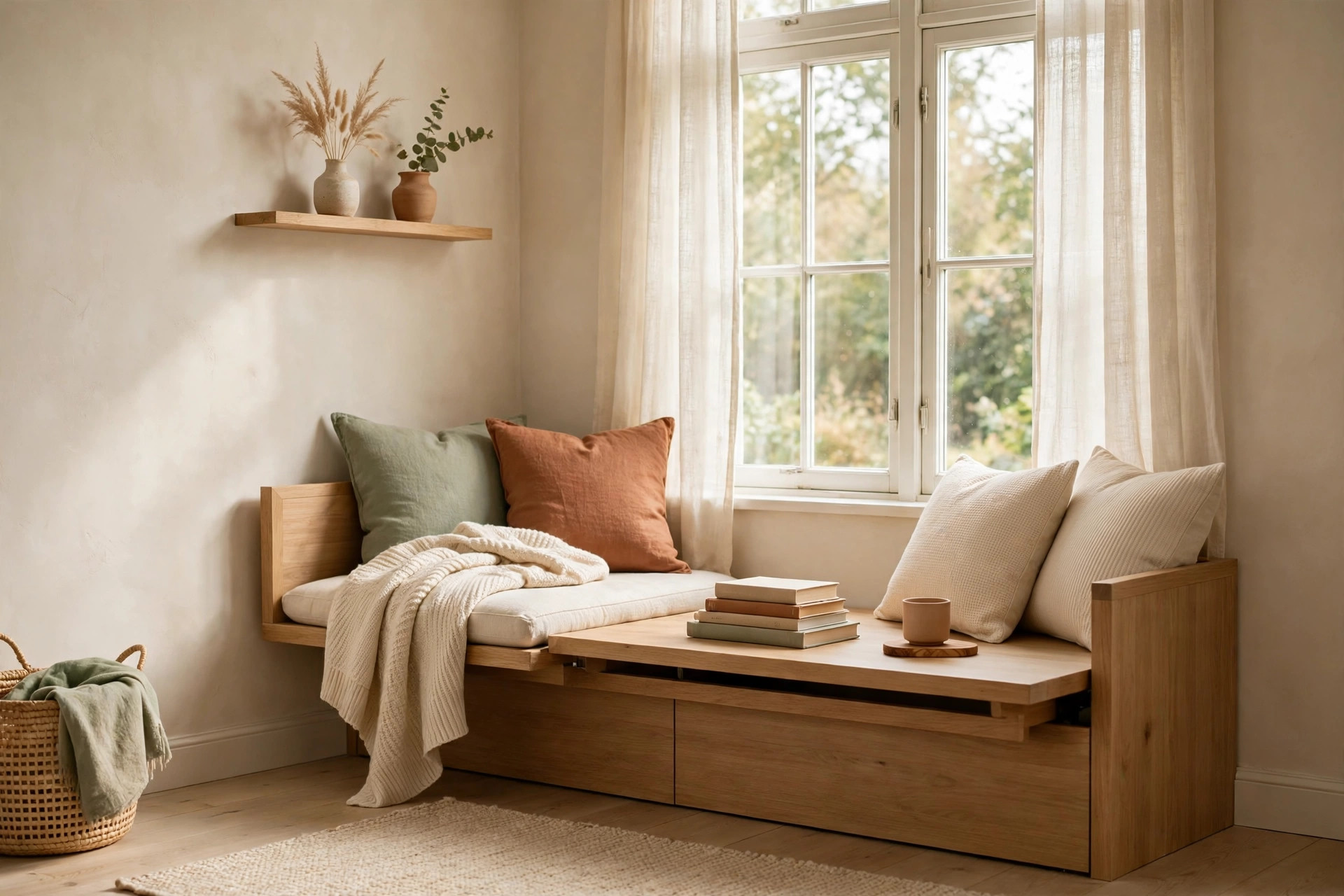
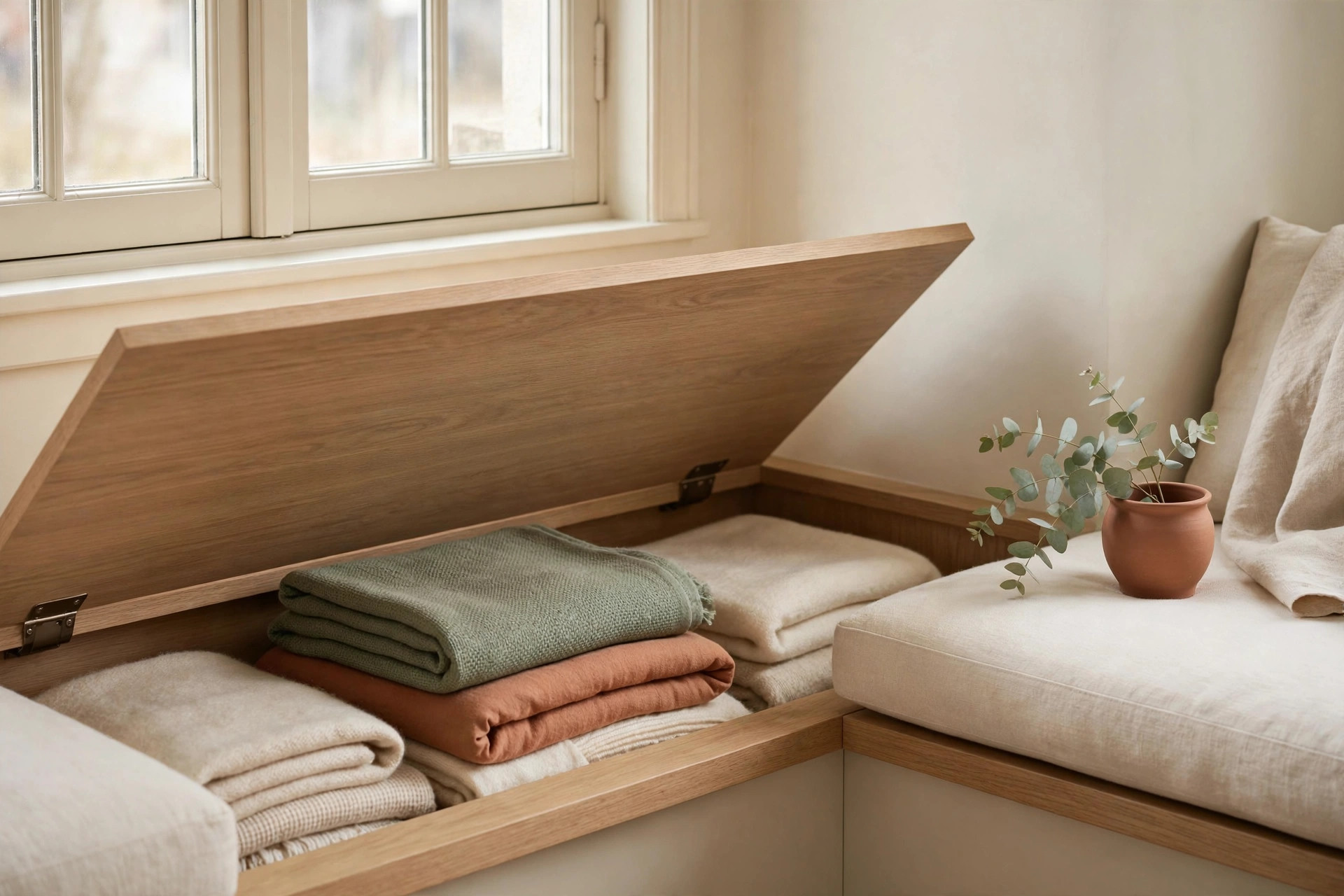
A lift-up bench is a long, shallow trunk with a cushion on top, and it holds more than any other under-window option because no drawer slides or dividers eat into the space.
3. Build or buy a full-width lift-up bench
A bench spanning the full window width, typically 48 to 72 inches long and 18 to 20 inches deep, gives you one deep compartment running the whole length. Hinged lids should open with gas stays or soft-close hinges so the lid stays up while you reach inside.
4. Divide the bench interior with removable bins
One big compartment becomes a jumble fast. Drop in two or three open-top fabric bins, each roughly 14 by 14 by 12 inches, to separate categories: one for throws, one for toys, one for spare bedding. This is the same bin logic that works for under-bed storage ideas for small bedrooms, where the container, not the compartment, does the organizing.
5. Add a split lid so one person can sit while another opens storage
A single long lid means nobody can sit on the bench while you open it. Split the lid into two or three sections, each with its own hinges, and each section becomes independently usable.
Low cabinets and drawer bases under windows
If a lift-up bench feels too much like a trunk, low cabinets and drawers give you the same footprint with tidier, more frequent access.
6. Use a low drawer base for daily-use items
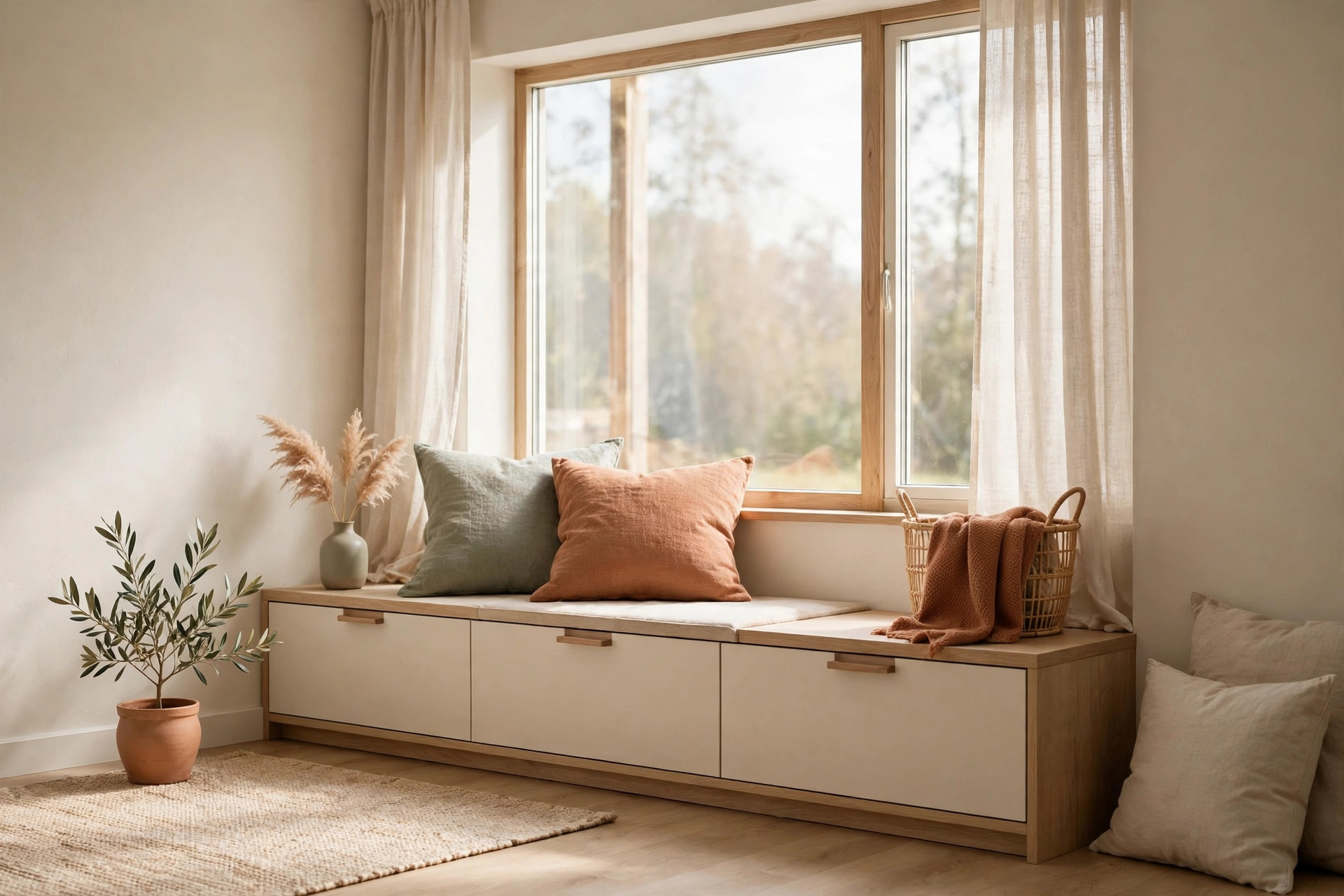
Three shallow drawers, each about 6 inches high, suit things you reach for every day: chargers, notebooks, remote controls, and art supplies. Shallow drawers beat one deep drawer here, because deep drawers under a seat become a pile where small items sink to the bottom.
7. Fit cabinet doors with adjustable shelves for flexible storage
Cabinet doors with one adjustable shelf inside suit items that change size through the year: board games in winter, craft supplies in summer, extra cushions when guests visit. Set the shelf 10 to 12 inches from the base for books and games, or remove it entirely for a tall basket of blankets.
8. Turn the window base into a shoe and bag station
In an entryway or mudroom window, a low cabinet with open cubbies at the bottom works as a shoe station: each cubby about 12 inches wide and 8 inches high fits one pair of adult shoes. For more entryway ideas, see these small entryway organization ideas for homes without a foyer.
Reading nook zones: cushions, lighting, and book storage
9. Choose a firm cushion with a non-slip base
A cushion 3 to 4 inches thick in high-density foam holds its shape; a soft, feather-filled pad flattens within weeks and leaves you sitting on wood.
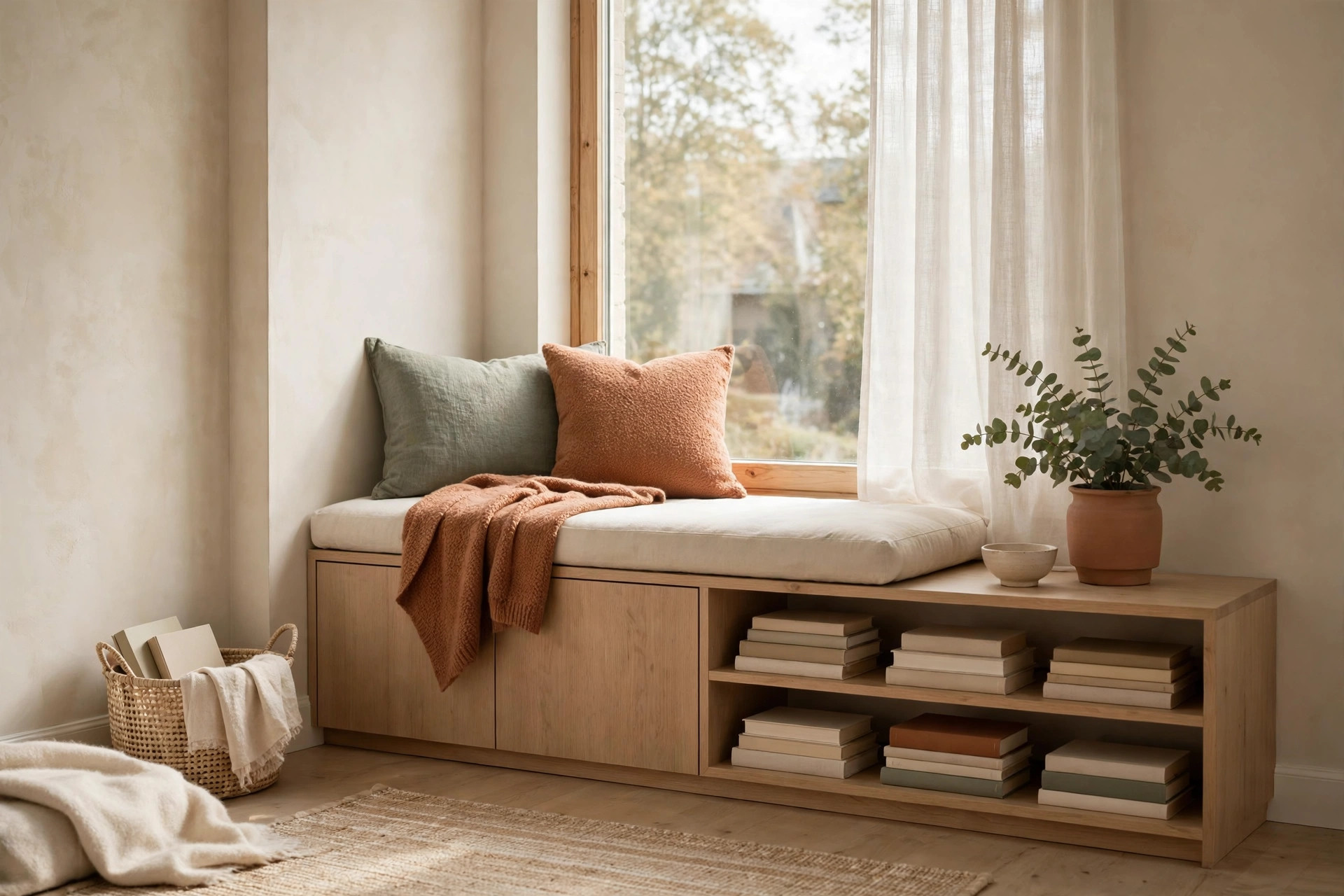
10. Add side book storage instead of a bookshelf
Books belong beside the seat, not behind it. A narrow open shelf or a row of magazine holders at one end of the bench keeps 8 to 12 books upright and reachable without standing up.
11. Light the nook from the side, not from above
Overhead light creates glare on pages and screens, while daylight fades by late afternoon. A small clip-on or wall-mounted reading light at shoulder height on one side of the window gives even light across a book without shining into your eyes.
Radiator and heater rules: what can and cannot go under windows
Many windows sit above radiators, baseboard heaters, or heating vents, and this is the one place where getting storage wrong is not just inconvenient — it is a safety issue.
12. Keep a clear air gap above any radiator
Never build a solid bench directly over a working radiator. Leave at least 4 to 6 inches of open space above the radiator’s top, and use a slatted or vented front panel rather than a solid one so warm air can circulate into the room.
13. Store only heat-safe items near heaters
Fabric, paper, and books stored directly above or beside a heater dry out, fade, and in extreme cases scorch. Keep books, throws, and paper at least 6 inches from a radiator’s surface, and never store candles, aerosols, or cleaning products in a window bench over a heater.
Renter-friendly window storage without building anything
Freestanding pieces that match the window width give you nearly the same storage with zero damage to the property.
14. Use a freestanding storage bench or low trunk
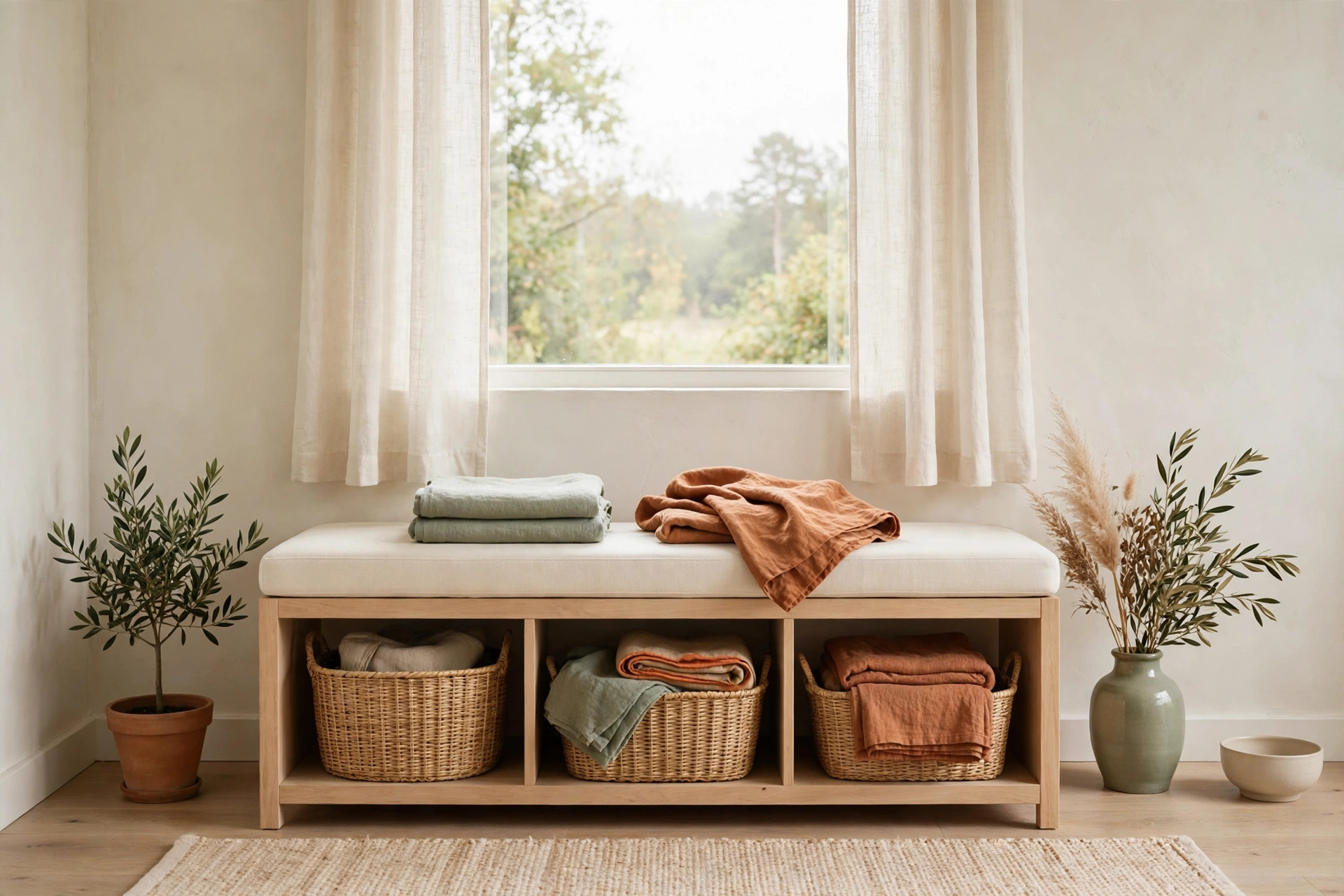
A ready-made storage bench, typically 40 to 60 inches long, slides under most windows and moves with you when you leave. Choose one rated for sitting weight (at least 250 pounds for two adults) rather than a decorative trunk, and check that its height plus a cushion stays below the sill.
15. Stack low cubbies and lidded baskets under the sill
Two cube storage units side by side, each about 12 to 14 inches high, fit under most sills and cost far less than a bench. This low, renter-friendly approach also works in a living room — see these small living room storage ideas for apartments for more options.
Keeping window storage dust-free and dry
Windows are the dustiest, dampest storage spot in a home: condensation, sunlight, and outside dust all arrive through the glass.
16. Line the bench with lids, liners, and a seasonal check
Use lidded bins inside an open bench, wipe the inside of the bench every month, and check for condensation on cold winter mornings — a damp patch under a cushion is an early warning of a window seal problem, not just a cleaning issue.
Mistakes to avoid
The most common mistake is building storage that blocks the window’s function: a bench so tall it covers the lower glass, or a solid unit that traps radiator heat. Measure twice, and keep the seat below sill height. The third is overfilling: a bench crammed so full the lid will not close becomes a dumping ground, not storage. Leave about 10 percent of the space empty.
Frequently asked questions
How deep should a window seat be?
A comfortable window seat is 18 to 22 inches deep, which fits an adult sitting with knees bent or legs tucked up.
Can you put storage under any window?
Almost any window works if the sill is at least 24 inches above the floor and no heater blocks the space.
Is a window seat worth it in a very small home?
Yes, because it adds seating and storage without using extra floor space — the footprint already exists under the window.
What should you not store in a window seat?
Avoid anything damaged by damp, heat, or sunlight: photographs, important papers, candles, and electronics.
Conclusion
Window walls stop being wasted space the moment you treat them as low, long storage with a seat on top. Start with your sill height and your heater rules, pick a bench or drawer base that matches what you actually store, and keep it dust-free with lidded bins and a seasonal check. For more ideas in this series, browse the full storage ideas collection, and save this pin for later so you have the measurements handy when you plan your own window seat.