Winter gear is the bulkiest, wettest stuff you own, and a small apartment gives it nowhere to hide. One parka takes the space of four summer jackets, snow boots track slush across the floor, and scarves and gloves seem to multiply on every chair back. These winter gear storage ideas for small apartments solve that with a simple system: an entry station that catches everything at the door, plus a rotation that moves off-season bulk out of your daily path. You do not need a mudroom, a garage, or a bigger apartment. You need a defined zone, the right containers, and a habit of putting gear back where it belongs.
Count the winter gear: coats, boots, scarves, and extras
Before you buy anything, know what you are storing. Winter gear hides in closets, on hooks, under beds, and in the trunk of the car, so a system sized for half of it will overflow by December.
1. Do a full winter gear audit in one pile
Gather every coat, pair of boots, scarf, hat, glove set, and snow accessory in the household onto the bed. Count each category and sort into daily wearers, current-season regulars, and occasional pieces like ski gear. Most small apartments only need daily space for two to four coats and two pairs of boots per person.
2. Set a one-in, one-out rule for coats
A small entry can hold about one heavy coat per person plus one guest hook. When a new parka arrives, an old one leaves, either donated or moved to off-season storage. This single rule prevents the slow creep that turns a hook rail into a coat avalanche by February.
3. Give every person a labelled winter bin
Assign each household member one bin, roughly 12 by 9 inches, for their hats, gloves, and scarves. Label it with a name or a color. A personal bin means nobody digs through someone else’s gloves on a freezing morning.
The entryway winter station: tray, hooks, and drip zone
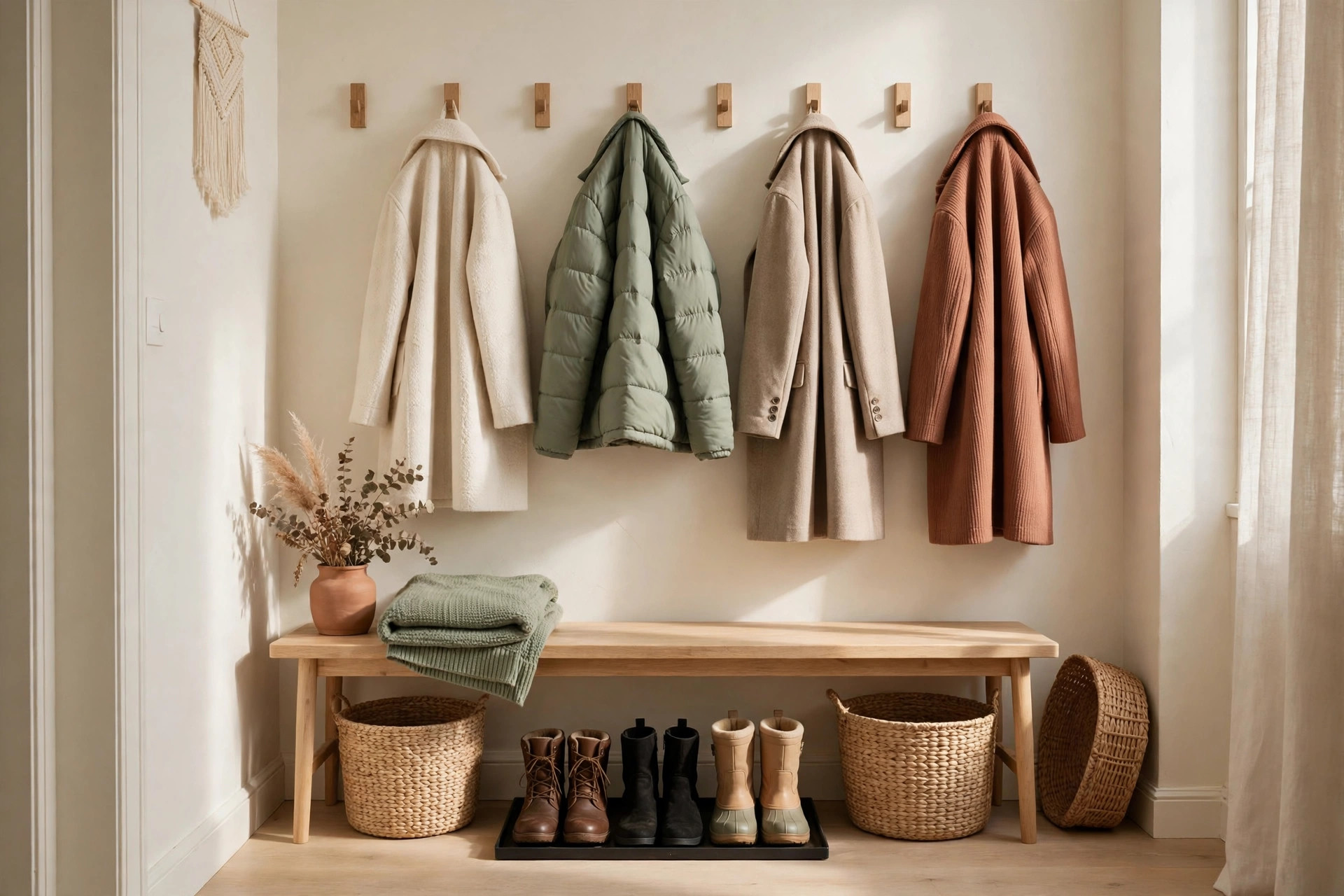
Your entry station is the heart of the system. Everything wet, heavy, or worn daily lands here, within arm’s reach of the door, so nothing migrates into the living room.
4. Build the station in a 12 to 18 inch strip
Claim a strip 12 to 18 inches deep along one entryway wall for the whole station: a boot tray on the floor, hooks above, and a small basket for accessories. A disciplined footprint keeps the zone from swallowing the hallway. If you have no foyer at all, these small entryway organization ideas for apartments without a foyer show how to carve the same zone out of a blank wall.
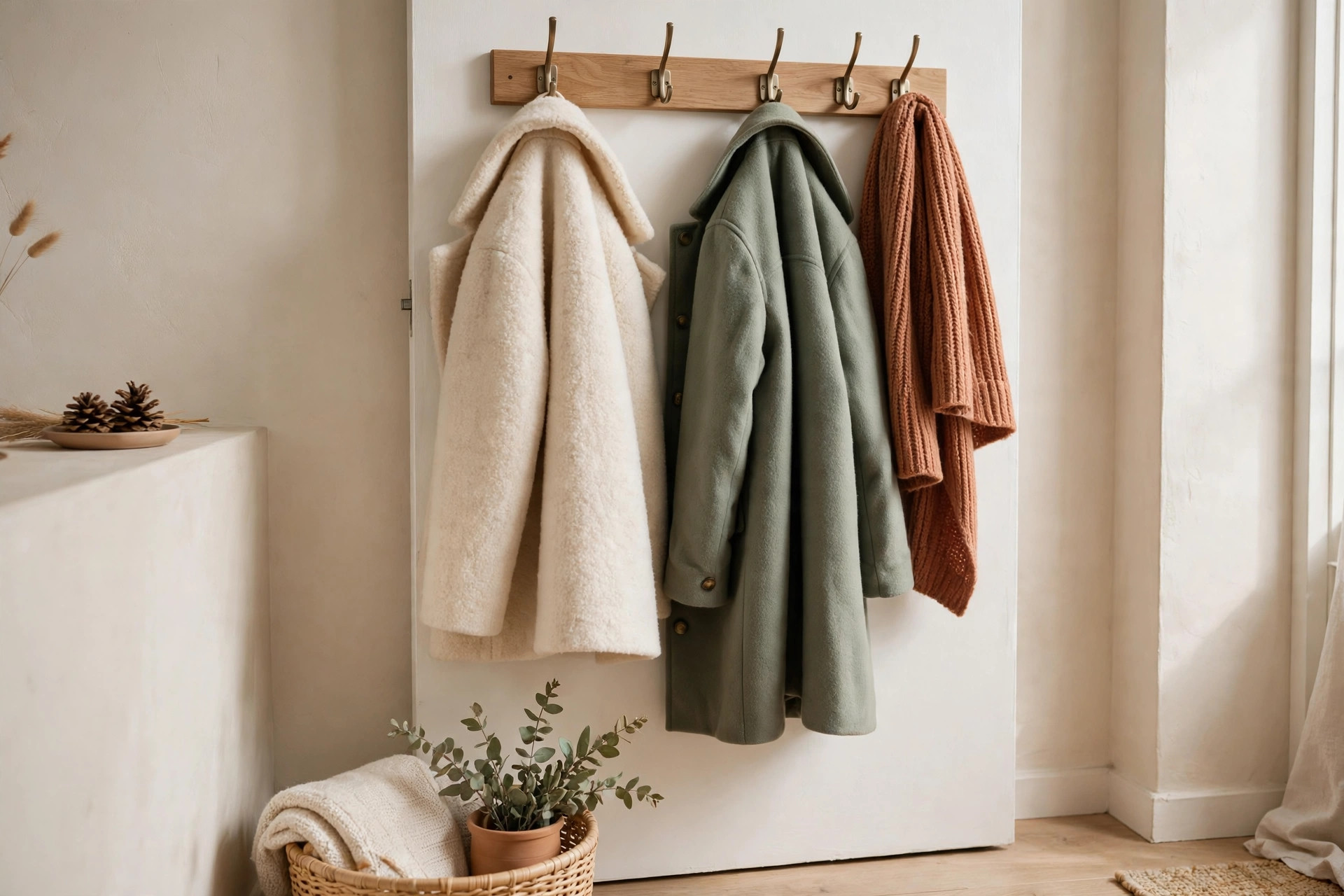
5. Hang coats on staggered double hooks
Single hooks waste vertical space and invite pile-ups. Install a rail with double hooks staggered at two heights, about 66 inches and 58 inches from the floor, so a long parka and a shorter jacket share one wall section. Adhesive hooks rated for at least 5 pounds each work for most coats; use screws only where your lease allows.
6. Add a bench or stool that doubles as storage
A narrow bench, about 36 inches wide and 14 inches deep, lets you sit while pulling on boots, and a lidded bench hides shoe bags or a spare scarf bin underneath. A single sturdy stool works if a bench will not fit.
Boot storage that handles snow and slush
Boots are the messiest part of winter gear storage ideas, because snow boots bring water, salt, and grit indoors with every step. Contain the melt before it reaches your floors.
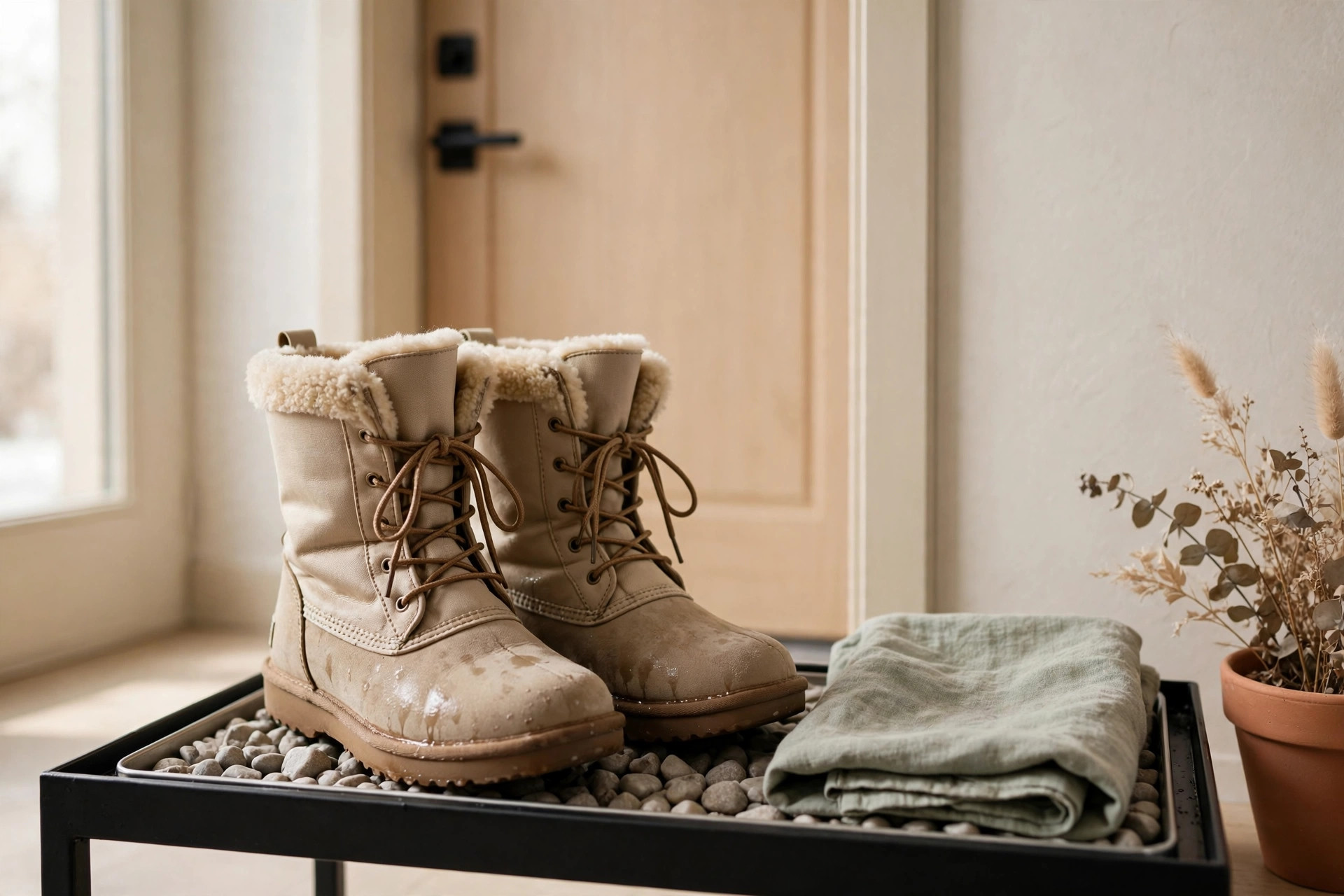
7. Use a rimmed boot tray with a raised grid
Choose a tray at least 30 inches wide with a raised lip of about 1 inch and a grid or ridged base that lifts boots above pooled meltwater. Place it directly inside the door, on top of a washable rug if your floor is wood. Empty the tray every few days in heavy snow weeks so standing water never reaches boot soles or seams.
8. Give each person one pair of daily boots at the door
Only the boots worn most days live in the tray. Second pairs and rare-storm snow boots go to a closet shelf or an under-bed bin. Daily gear at the door, everything else stored away. For the rest of your footwear, these shoe storage ideas for small apartments pair well with a winter tray system.
9. Stuff tall boots to hold their shape
Tall boots flop, crease, and eat shelf space when they collapse. Slide a rolled magazine, a pool noodle cut to height, or a purpose-made boot shaper into each shaft before storing. Upright boots take less room and last longer without creases cracking at the ankle.
Scarf, hat, and glove systems that don’t tangle
Small accessories cause outsized chaos because they have no obvious home. Give each type its own container and its own rule.
10. Hang scarves on shower rings on one hanger
Thread scarves through shower curtain rings clipped onto a single sturdy hanger in the closet. Each scarf hangs separately instead of knotting together in a drawer. One hanger holds six to eight scarves and costs almost nothing.
11. Clip glove pairs together before they go in the bin
The lost-glove problem is really a pairing problem. Clip each pair together with a small carabiner or a clothespin the moment you come inside, then drop the pair into the personal bin. Clip kids’ mittens to the coat cuff and they survive the whole season.
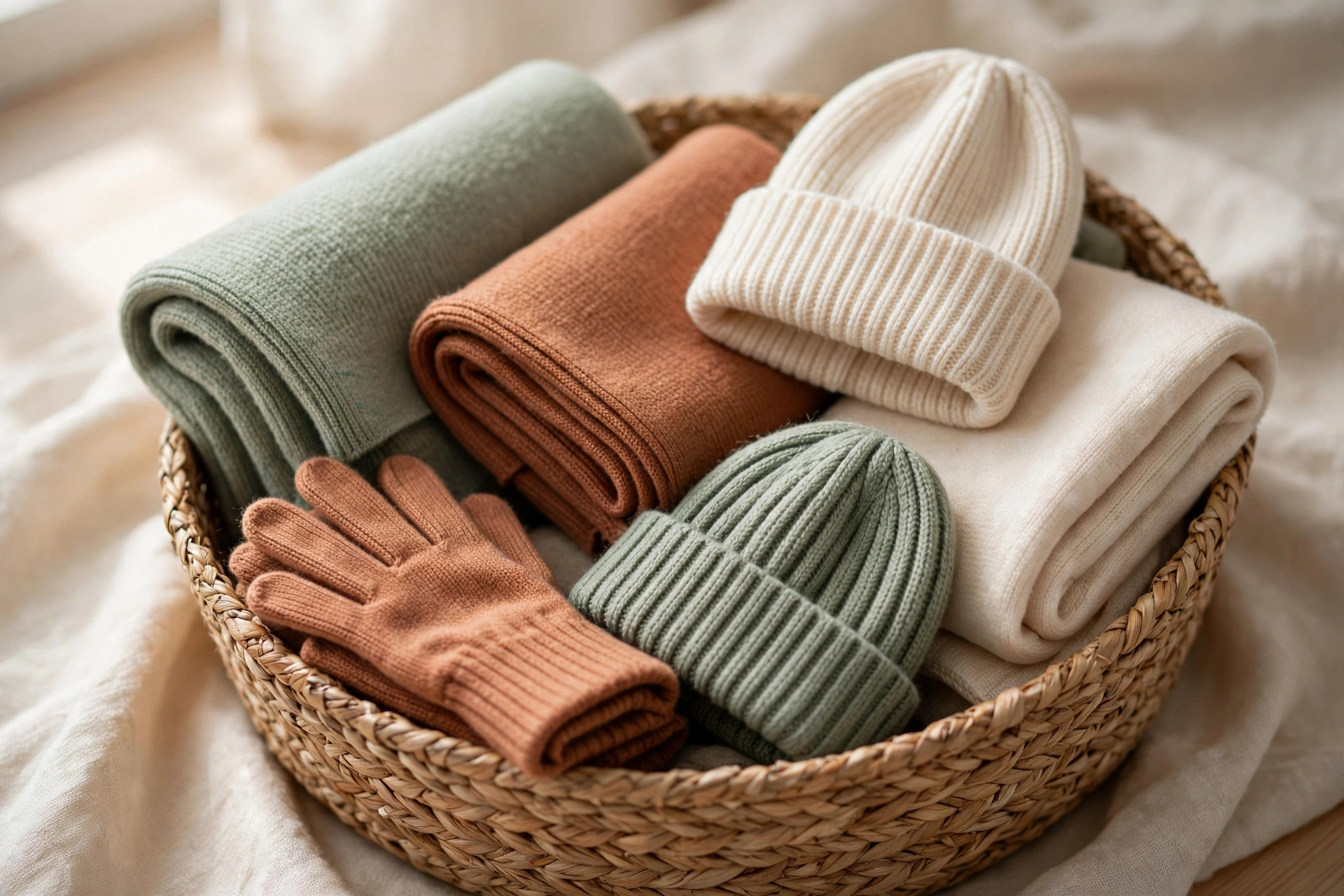
12. Store hats upright in a lidded basket, not stacked flat
Stacked beanies compress and disappear under each other. Stand them upright, folded once, in a small lidded basket on the entry shelf. Structured winter hats and earmuffs go on top, never under a pile, so brims and bands keep their shape.
Off-season rotation: what leaves the entry in spring
Rotation is what makes winter coat boot storage ideas work year-round. The entry only ever holds the current season, so it never has to hold everything at once.
13. Pack off-season gear in labelled, lidded bins
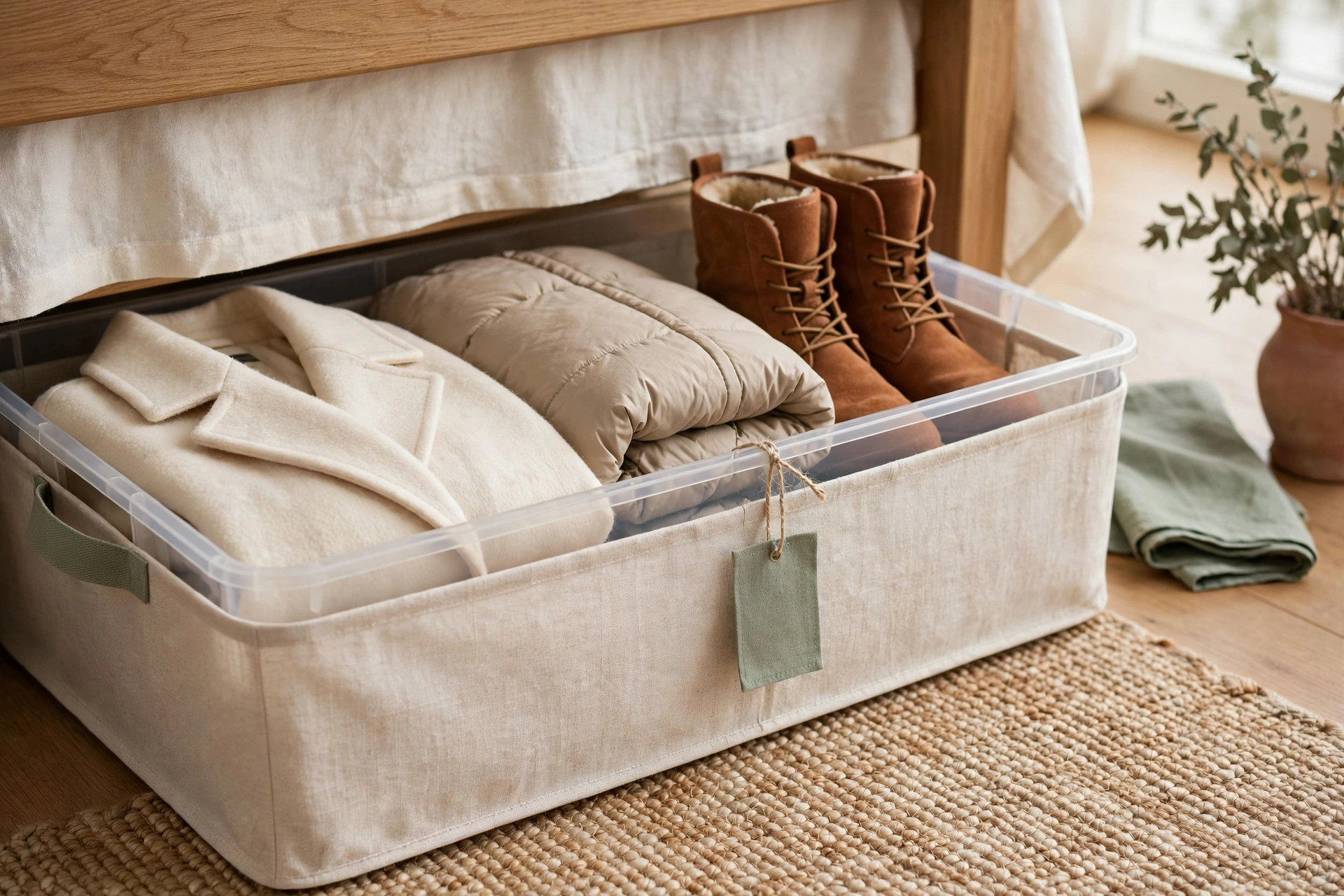
When temperatures stay above freezing, wash or air out winter gear, then pack it in clear lidded bins labelled by category and person. A 20-gallon bin typically holds two adults’ scarves, hats, and gloves plus a folded parka. Store bins on a closet top shelf or under the bed; these under-bed storage ideas for small bedrooms show how to use that dead space well.
14. Vacuum-seal only soft, bulky items
Vacuum bags work well for puffers, scarves, and fleece, cutting their volume by roughly half. Never vacuum-seal leather boots, structured hats, or anything with down that needs loft to insulate: compression damages those over months. For down coats, a large breathable cotton bag beats a vacuum bag.
15. Swap the entry in one 30-minute session each season
Set a calendar reminder for the seasonal swap and do it in one sitting: out go the off-season bins, in comes the current season’s gear, and anything damaged or unworn gets donated on the spot. One focused session beats a month of gradual drifting.
Drying wet gear without damaging floors
Wet gear dried on radiators, on bare wood, or in a heap by the door damages both the gear and the apartment. Dry it in the drip zone, with airflow.
16. Create a drying corner inside the drip zone
Place a small folding drying rack or a wall-mounted folding rack within the entry zone, over the boot tray or a washable mat. Hang wet scarves, gloves, and damp coat liners there, never directly on a radiator or heater, where heat cracks leather and melts synthetic fabrics. Most items dry overnight with normal room airflow.
17. Rotate boots off the tray to dry fully
Boots worn in slush need a full day out of the tray to dry inside, or they develop odour and mildew. Keep a second, dry pair in rotation if you can, and stuff damp boots loosely with newspaper, replacing the paper after a few hours.
Small-apartment winter gear on a budget
A good system does not require expensive furniture. Start with the zone, then upgrade piece by piece as the budget allows.
18. Start with a tray, hooks, and bins for under fifty dollars
A rimmed boot tray, a six-hook adhesive rail, and two labelled bins cover the core system for most one-bedroom apartments, usually for under fifty dollars total. Buy the tray first: it protects the floor from day one.
19. Repurpose what you already own before buying storage
A baking sheet with a raised edge works as a boot tray, a tension rod inside a closet holds scarf rings, and a canvas tote becomes a glove bin. For coat overflow, the renter-friendly hooks and slim racks in these entryway coat storage ideas for apartments without a closet use the same no-damage approach. Spend only where a repurposed item genuinely fails, such as a tray that is too small for two pairs of boots.
Mistakes to avoid
Do not store wet gear in a closed bin: trapped moisture breeds mildew within days, and the smell rarely washes out fully. Do not buy a giant coat rack for a narrow entry: it blocks the door swing and becomes a dumping ground. Do not skip the seasonal swap. Do not hang heavy wet parkas on light-rated adhesive hooks: check the weight rating first.
Frequently asked questions
How many coats should a small apartment entry hold?
One heavy coat per person plus one spare hook for a guest is the practical limit. Everything else belongs in closet or off-season storage.
Can I store winter boots under the bed?
Yes, if they are clean and fully dry first. Use a lidded bin to keep dust out, and stuff tall boots so they hold their shape.
What is the best way to dry snow boots indoors?
Remove insoles, stuff the boots loosely with newspaper, and leave them in a ventilated spot over a tray or mat, away from direct heat. Replace the newspaper after a few hours and give them a full day to dry.
How do I keep salt stains off apartment floors?
A rimmed boot tray inside the door catches most salt and meltwater. Wipe the tray weekly and wipe boots before bringing them past the entry zone.
Conclusion
Count the gear, build a small entry station, and rotate with the seasons, and winter gear stops taking over your apartment. Start with the boot tray and the hook rail this week, add the bins as you go, and keep the system to one season at a time. Save this pin for later, or browse more ideas in the storage ideas category when you are ready for the next zone.