No coat closet means every coat you own is competing for a hook, a chair back, or the floor — and in a small apartment, coats don’t stay neatly hung. They slide off door knobs, pile on the dining chair, and turn the three feet beside your front door into a textile landslide. These entryway coat storage ideas are built for apartments with zero closet space: a quick coat audit, renter-safe hooks and slim racks, over-door organizers, a bench that doubles as storage, and a seasonal rotation that keeps off-season bulk out of your daily path. The rule is simple: hooks plus rotation beat piles, every time.
Count the coats: the audit that sizes the system
Idea 1: Do the 10-minute coat audit before buying anything
Pile every coat, jacket, blazer, and heavy hoodie in the household on the bed — including the parka in a bedroom closet and the rain shell on the treadmill. Count them, then sort into three groups: daily wearers (grabbed 5+ days a week), current-season regulars (worn weekly), and off-season or occasional (the ski jacket in October, the never-worn puffer).
This sizes your system, because the biggest mistake in apartment coat storage is designing for all 14 coats when only 4 need to live by the door. Write the daily-wearer number on a sticky note and carry it shopping.
Wall-mounted peg rails and hook rows (renter-safe)
The wall beside your front door is the highest-value real estate for entryway coat storage ideas: coats hang flat and hooks cost almost nothing. Renter-safe means two rules — adhesive strips rated for the real weight (7–8 lb per hook for heavy winter coats), pressed onto clean, smooth paint. For plaster walls, a small peg rail into two studs leaves only two screw holes, a dime-size spackle fix at move-out.
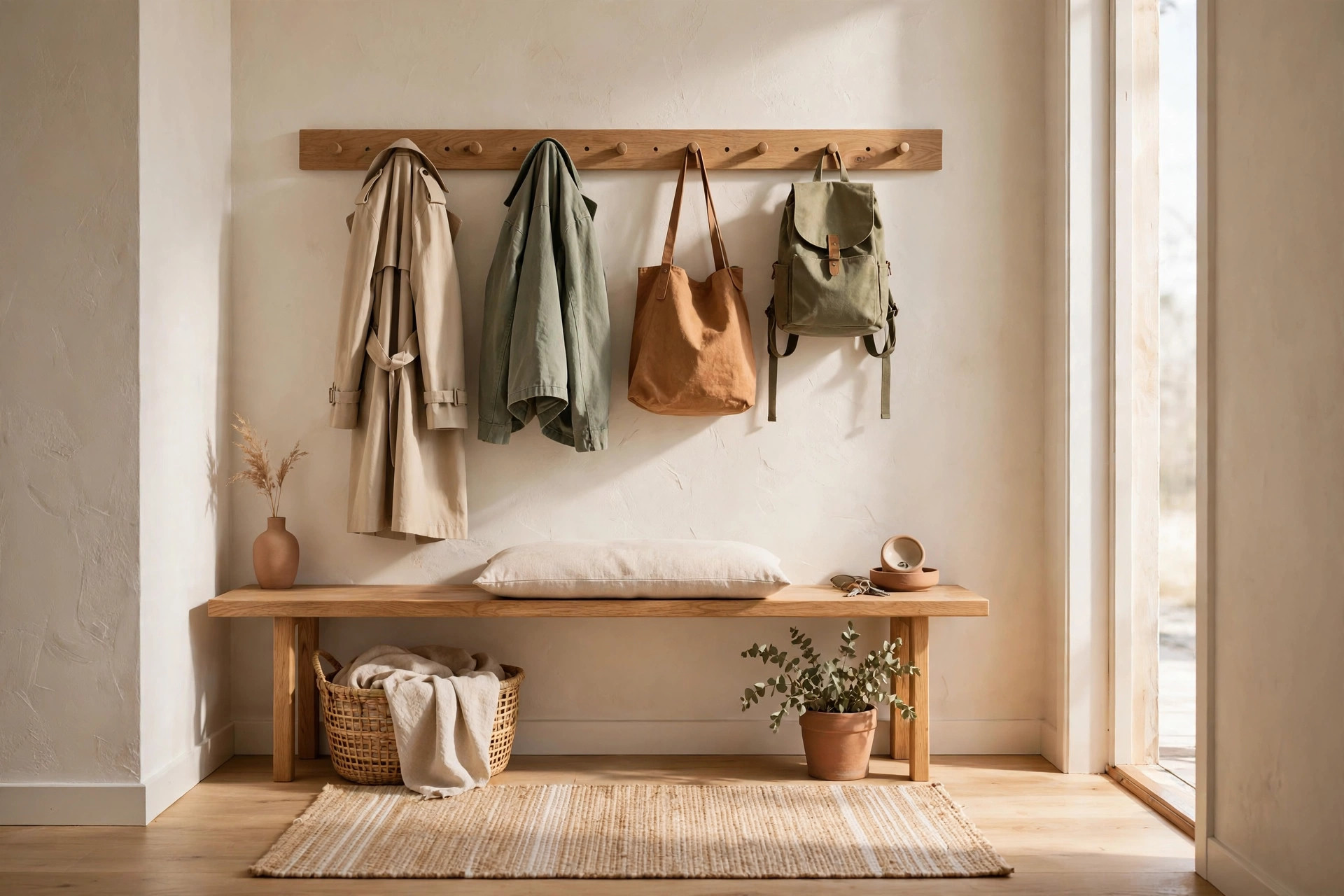
Idea 2: Install a single 24-inch hook row at door height
One rail, five to six hooks, mounted 60–65 inches from the floor so long hems clear the ground, spaced 4–5 inches apart. Mount it between the door and the first doorway, or on the 18–30 inches of wall flanking the frame — space most people never use. One row handles the daily wearers for most couples.
Idea 3: Stagger hooks at two heights to double capacity
Add a second shorter rail 12 inches below: short jackets and kids’ coats down low, long coats up high. The stagger lets coats overlap without bulging, taking a 24-inch wall segment from five coats to nine or ten.
Idea 4: Use a folding peg rail that disappears when empty
A wooden folding rail with 6–8 pegs swivels flat against the wall — full capacity when guests arrive, a clean wall when it’s just you. About 2 inches deep folded, so it never snags bags. Mount into studs (or heavy-duty adhesive for versions under 20 lb total load).
If your entryway is the first two feet of your living room, these hooks still work — just define the zone around them, the way 15 Small Entryway Organization Ideas (Even With No Foyer) carves a drop zone from open space.
Slim freestanding coat racks that fit a hallway
When the walls are a no-go — concrete, a picky landlord, or no free wall — a freestanding rack earns its footprint by staying narrow. The key measurement is depth: anything over 20 inches dominates a 36-inch hallway. Aim for 14–18 inches deep, and check weight capacity (a good rack holds 40+ lb; four winter coats can weigh 20 lb).
Idea 5: Choose a lean-to rack for the narrowest hallways
A lean-to or ladder-style rack rests its top against the wall and needs no screws. At 14–16 inches deep it fits behind a door swing or in the dead space between two doors; 6–8 pegs up top and a bottom rung for a shoe tray do the rest. Loaded coats pull it tighter against the wall, so the physics work in your favor.
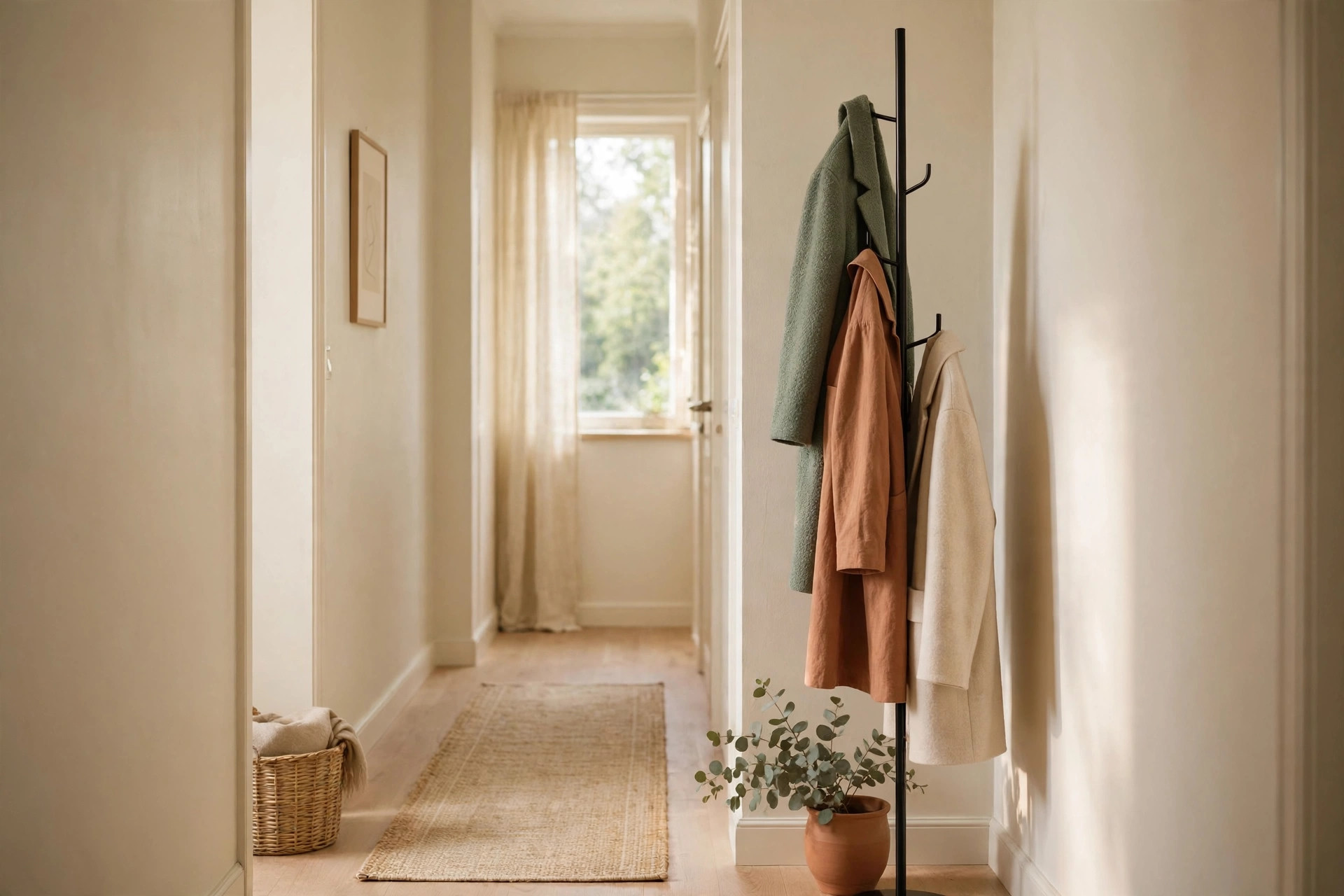
Idea 6: Use a single-post hall tree with a tripod base
A vertical post with 8–12 staggered hooks takes up about one square foot of floor — a wastebasket’s footprint — while holding a full family’s daily coats. Get a tripod or weighted base: cheap four-legged versions tip when loaded unevenly.
Idea 7: Add a rolling garment rack as a temporary coat station
For the two-week shoulder seasons when winter coats and spring jackets overlap, a slim single-bar garment rack (about 36 inches wide) in a bedroom corner absorbs the overflow. It holds 6–8 coats on slim hangers, costs roughly $25–$35, and rolls away when the season settles.
Over-the-door coat and bag organizers
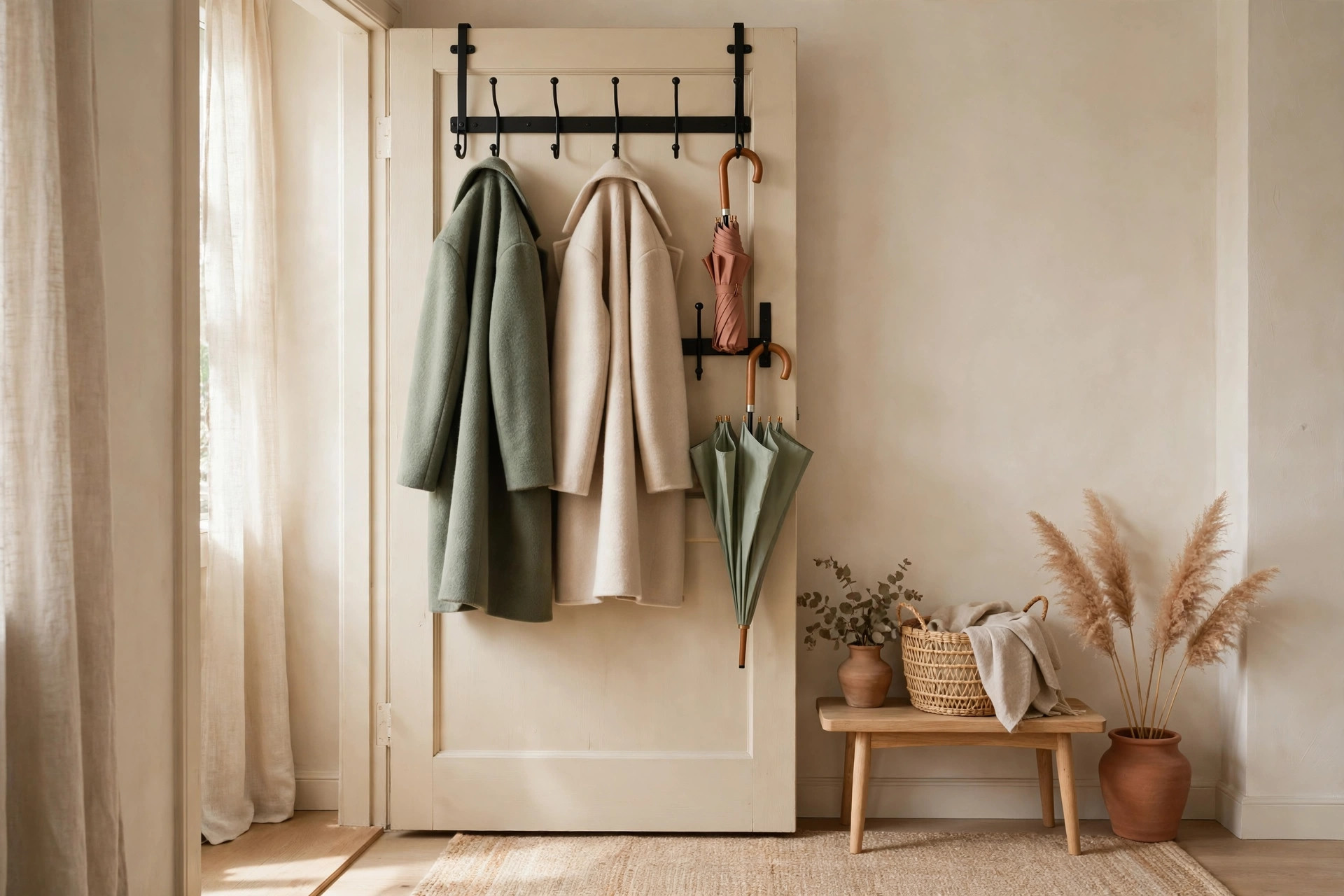
The back of the front door is free, renter-approved square footage — roughly 14 square feet on a standard 36-inch door. Measure the gap above the door (most brackets need 1/8–3/16 inch clearance) and keep the load under 15–20 lb so the door still latches cleanly.
Idea 8: Hang an over-the-door 5-hook panel for bags and light jackets
A flat steel panel with five hooks hangs over the door in seconds — no tools, no adhesive. Give it the medium-weight layer: rain shells, fleece zip-ups, tote bags, the dog leash. That reserves your wall rail for heavy coats and puts grab-and-go gear in your hand as you leave.
Idea 9: Use an over-door pocket organizer for gloves, hats, and scarves
A fabric or clear-pocket organizer on a bedroom or closet door (not the front door, which swings too much for small items) corrals the accessories that turn coat storage into chaos. One pocket per person for gloves and a hat, one for scarves — labeled so everyone reaches for their own row.
For more on matching brackets to your door type, the breakdown in Over-the-Door Organization Ideas for Every Room covers measuring and renter-safe hanging rules.
Bench + hooks combo: seating plus storage
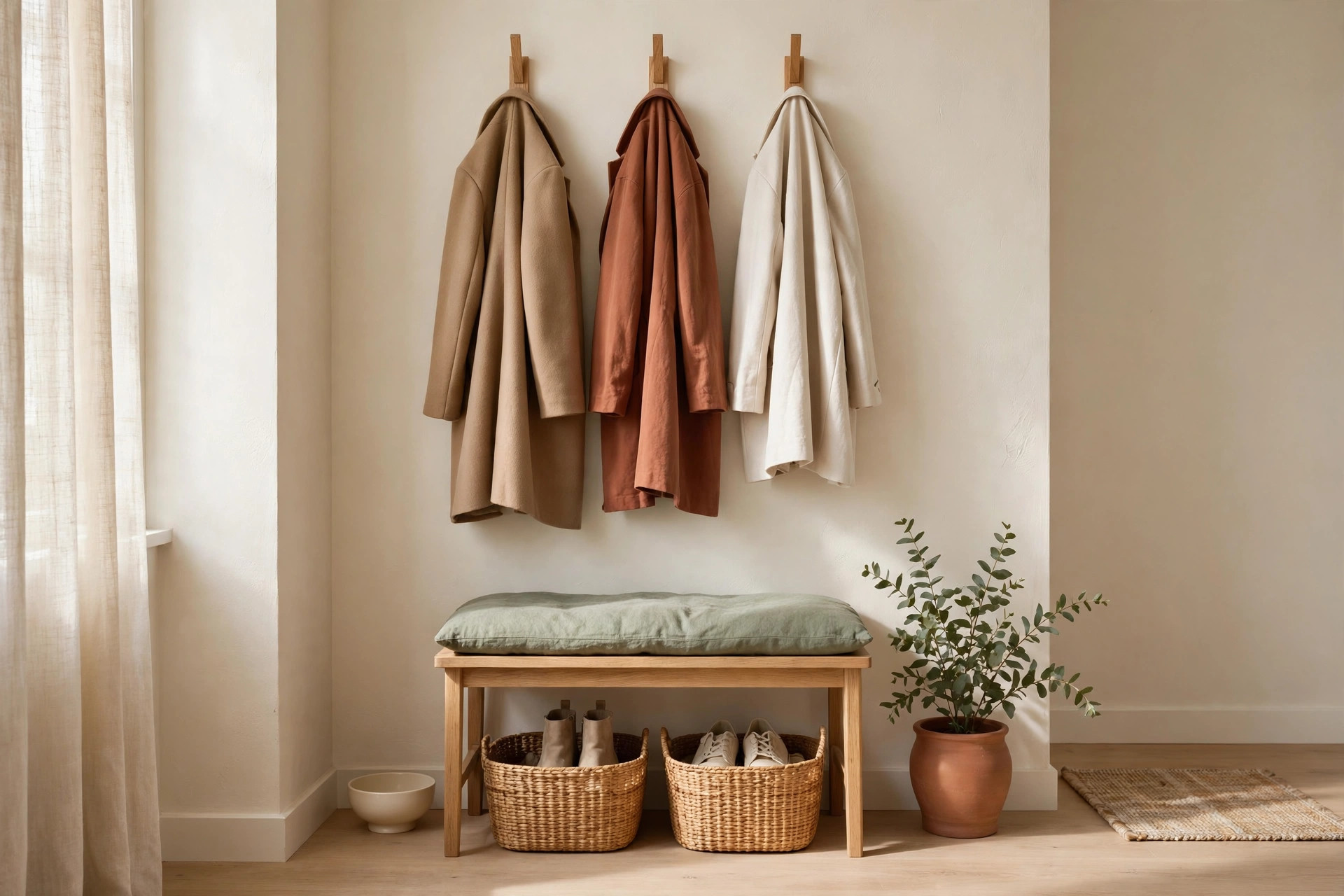
If your entryway has 3–4 feet of spare wall, a bench turns a coat zone into a complete station: sit to pull on boots, stash shoes underneath, hang coats above — all in under 10 square feet.
Idea 10: Pair a 36-inch storage bench with a hook rail above
A 36-inch-wide bench (about 14 inches deep) holds shoes underneath and gives you a seat; mount the hook row from Idea 2 at 60 inches above it. The top becomes the landing strip for bags and mail, and long coat hems clear the bench.
Idea 11: Slide two lidded baskets under the bench for accessories
Two 12×12×12-inch lidded baskets hide gloves, hats, scarves, umbrellas, and reusable bags — one per person, or one for winter accessories and one for everyday carry. Lids matter: open cubes collect visual noise, and the bench’s job is a calm first impression.
Seasonal rotation: off-season coats don’t live by the door
This section makes everything else work. Coat storage fails when it tries to hold every coat at once; it succeeds when the entryway holds only the current season. Rotation is the difference between a 6-hook rail that works and one buried under parkas in May.
Idea 12: Store off-season coats in vacuum bags under the bed
Vacuum bags compress three to four bulky winter coats into a flat 6-inch package that slides under most beds. Add a cedar block or lavender sachet per bag, seal in April, and the coats emerge in October smelling fine. Label each bag — “Winter coats, 4” — so you find the puffer on the first try.
Idea 13: Keep one “current season” capsule by the door, no more
Each person gets a daily coat, one backup layer, and one weather-specific piece (rain shell or heavy parka, depending on the month). Three per person, maximum. When the capsule overflows, something goes to under-bed storage — one in, one out, and it applies to coats like everything else.
Idea 14: Do a 20-minute swap at each season change
Twice a year — when you switch the thermostat mode is a good trigger — pull the under-bed bags, wipe the hooks, swap the capsule, and donate anything unworn for two full seasons. Pair it with the shoe swap on the same rotation logic as 18 Shoe Storage Ideas for Small Apartments (No Pile by the Door).
Wet-weather gear: trays, drip zones, and quick dry
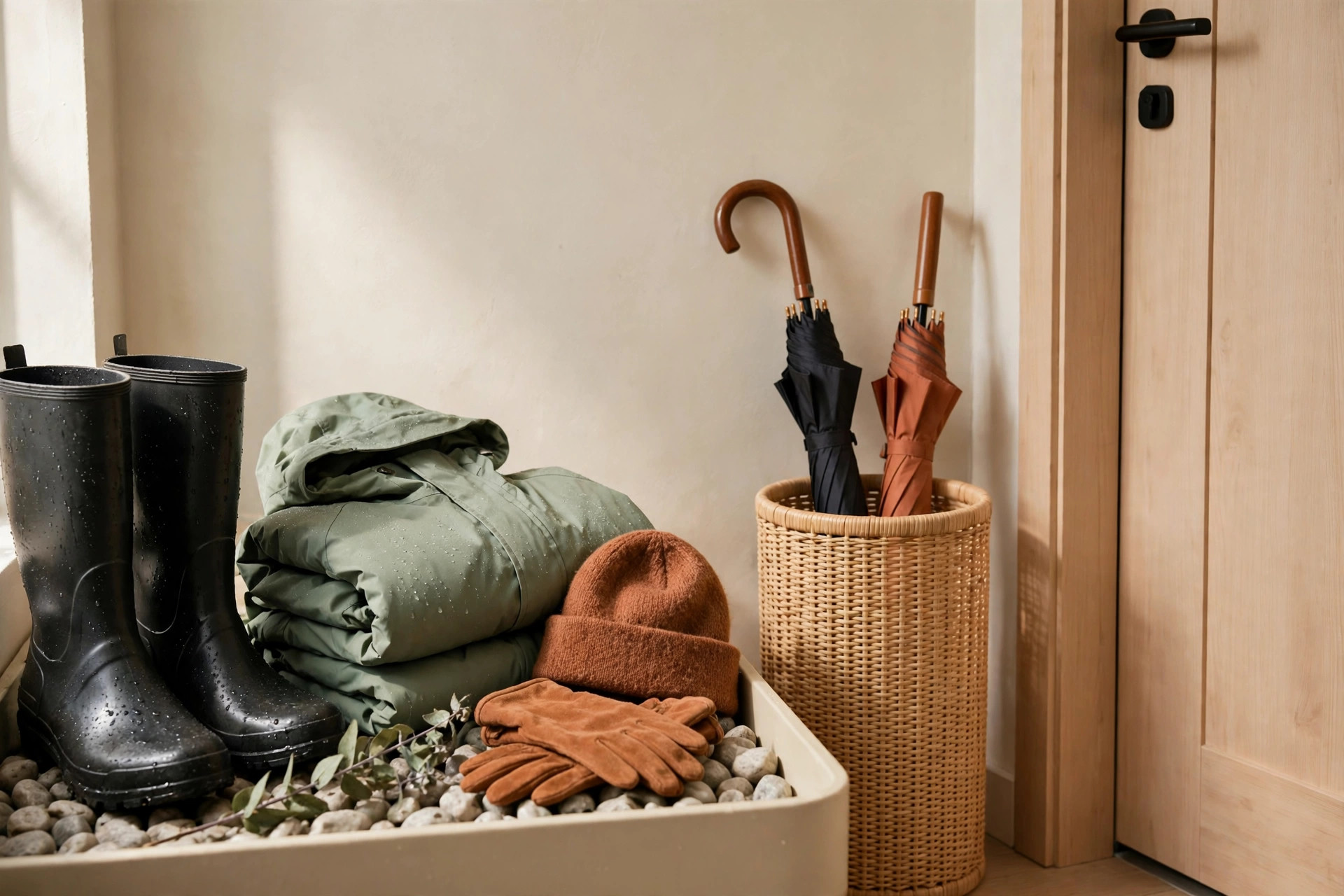
Wet coats are the silent killer of entryway coat storage — a soaked rain shell against dry wool ruins both, and drips on hardwood become a landlord conversation. A drip zone needs something waterproof under the coats, airflow around them, and a rule: wet gear never touches dry gear.
Idea 15: Place a 30×18-inch boot tray under your hook row
A rigid plastic or rubber boot tray (roughly 30×18 inches, about $15–$25) catches every drip from wet coats, umbrellas, and snowy boots. Pick one with a raised edge at least 1.5 inches high, and empty it after storms — standing water breeds mildew in a week.
Idea 16: Designate one “wet hook” farthest from the door swing
Make the end hook nearest the tray the permanent wet-gear hook: damp rain shells and dog-walking jackets hang here, away from dry coats so air circulates. A small microfiber cloth on the same hook wipes the tray. One dedicated hook keeps a single wet coat from dampening your whole system.
Mistakes to avoid
Buying storage before the audit. Every rack bought before counting coats is a guess — and guesses become the wrong-sized rack in the wrong spot. Audit first, buy once.
Hanging coats on door knobs and chair backs. It’s a pile with extra steps: knobs hold one coat badly and damage the finish; chair backs become the permanent coat mountain. Every coat needs a real hook or it has no home.
Ignoring weight ratings. A 3-lb adhesive hook holds a windbreaker and will not hold a wool overcoat — it fails at 6 a.m., taking paint with it. Match the rating to your heaviest coat, then add margin.
Storing all seasons by the door. If your October system must hold January’s parkas, it holds nothing well. Rotation isn’t optional in a no-closet apartment — it’s the system.
Skipping the drip zone. One winter of wet coats dripping onto hardwood costs more than every hook and tray on this list. The tray is the cheapest insurance in the entryway.
Frequently asked questions
How do I store coats in an apartment with no coat closet at all?
Audit your coats to find the daily-wearer count, then mount one renter-safe hook row near the door for those. Move off-season coats to vacuum bags under the bed, add a boot tray for drips, and use an over-the-door organizer for bags and accessories. Most households need only 4–6 hooks by the door once rotation handles the rest.
Can I hang heavy winter coats with adhesive hooks?
Yes, with hooks rated 7–8 lb each on clean, smooth painted walls — one hook per coat. For plaster, textured, or freshly painted walls, use a small peg rail into two studs instead; two dime-size holes spackle out at move-out.
What’s the best coat storage for a very narrow hallway?
A lean-to rack at 14–16 inches deep, or a single-post hall tree with a tripod base taking up about one square foot. Both hold a full family’s daily coats without blocking a 36-inch hallway, and neither needs wall mounting.
How many coats should live by the front door?
Three per person maximum: a daily coat, one backup layer, and one weather-specific piece. Everything else belongs in under-bed vacuum storage or another closet. When the capsule overflows, apply one in, one out.
A no-closet entryway doesn’t need more space — it needs a smaller, smarter system. Count your coats, hang the daily wearers on renter-safe hooks, rotate the seasons from under the bed, and give wet gear its own drip zone. That’s the whole game, in the three feet beside your door. For more small-entry ideas, browse the small-spaces collection — and save this pin for later before your next season swap.