Mail comes in every day, but in a small home it has nowhere to go. It lands on the nearest flat surface by the door — the console, the shoe bench, the top of a radiator — and within a week that surface is buried under envelopes, flyers, catalogs, and school forms. These entryway mail organization ideas are built for exactly that problem: a small home with no spare room and no mudroom, where the front door opens straight into the living space. You will set up one landing spot for paper, sort it in under a minute when it arrives, and clear it out once a week so the pile never comes back.
The mail pile problem: why paper lands at the door
Paper piles up at the door for a simple reason: mail is the one thing that enters your home daily without a designated home. Shoes have a rack, coats have hooks, but envelopes get dropped wherever your hands are free. Add junk mail, and a small entry gains paper fast — until a bill goes missing.
1. Give every piece of mail a single landing spot
Pick one spot — a tray, a wall pocket, or a basket — and make it the only place mail is allowed to land. The rule only works if it is absolute: mail elsewhere gets moved to the spot the same day.
2. Put the station where your hands already stop
Watch where you actually set things down when you walk in. That spot — usually within arm’s reach of the door — is where the station belongs. A sorter mounted in a hallway you never walk through will stay empty while the pile grows on the console.
The one-inbox rule: a single tray or wall sorter
The one-inbox rule is the backbone of the whole system: everything incoming goes into one container, and nothing leaves it until it has been sorted. One inbox means you never check three places to find a letter, and it keeps the rest of the house paper-free.
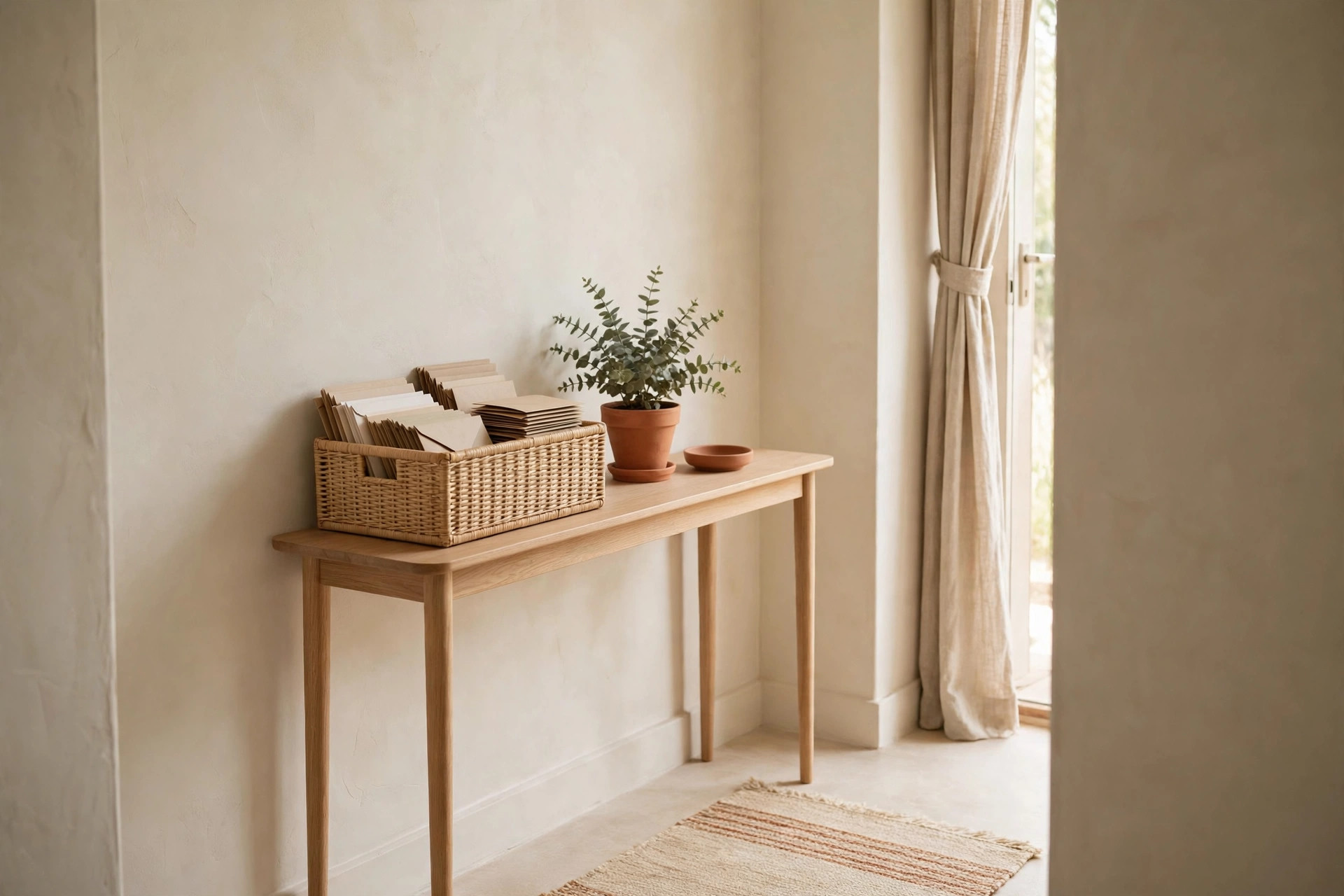
3. Choose one tray sized to a week’s mail
A tray or basket about 12 inches wide and 9 inches deep holds roughly a week’s worth of household mail without overflowing. Smaller, and it fills in two days; larger, and paper sits so long it becomes furniture.
4. Label the tray so the whole household uses it
A simple label — “Mail In” — sounds obvious, but it matters the moment anyone else brings post inside. Without a label, others will keep dropping envelopes on the nearest surface. The label turns a personal habit into a household system.
Sort on arrival: action, file, recycle in 60 seconds
Sorting takes about a minute a day if you do it at the door instead of saving it up. The trick is deciding immediately, while each piece is in your hand, instead of setting it down “to look at later.”
5. Sort into three piles the moment mail arrives
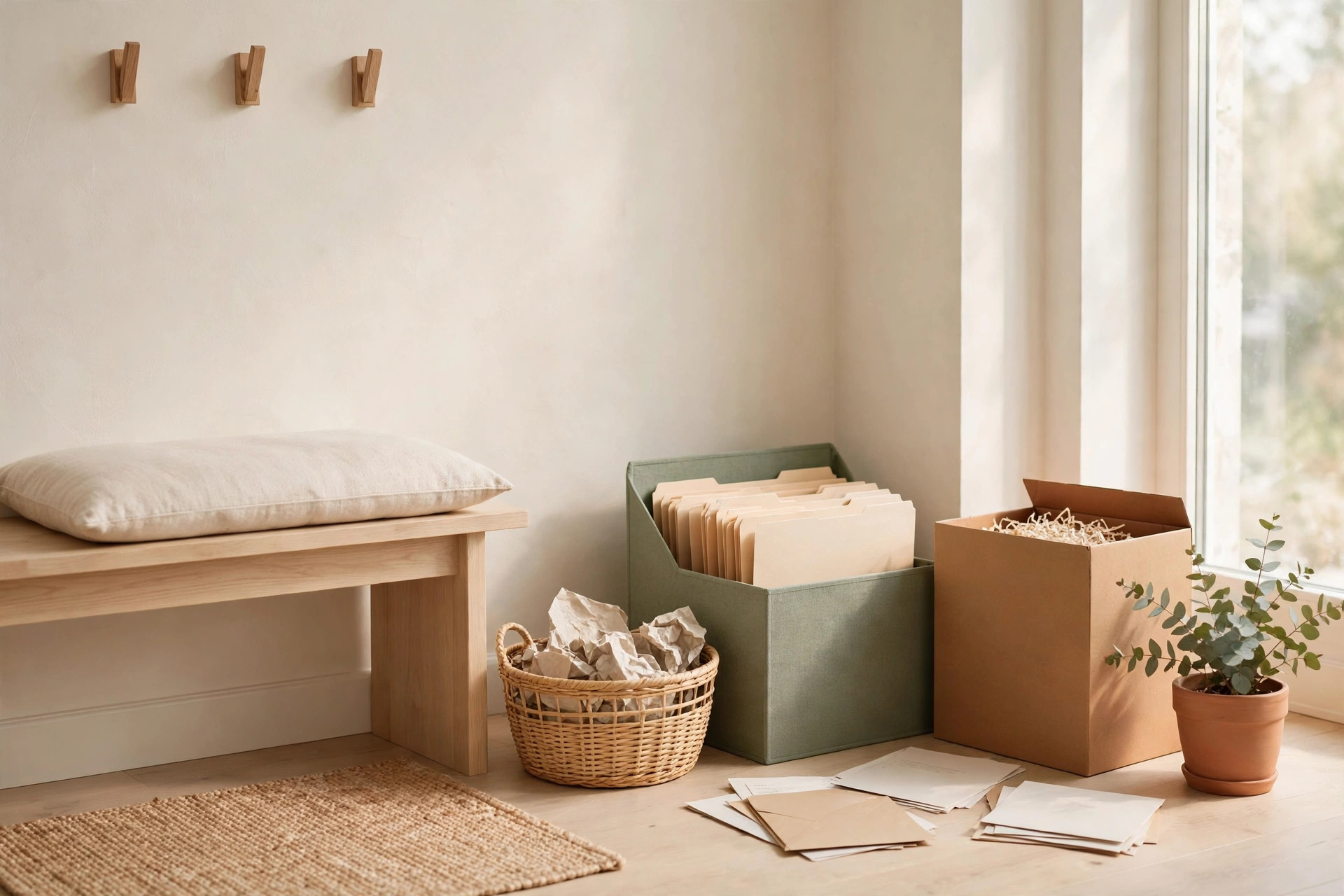
Hold each piece for two seconds and choose: action (needs a reply, payment, or signature), file (keep for reference, like insurance or tax documents), or recycle (junk, catalogs you will not read, envelopes). Keep a small recycling bin or paper bag right beside the station so the recycle pile never travels further than an arm’s length.
6. Open mail standing up, not sitting down
Open envelopes at the station, not at the sofa or kitchen table. Standing up keeps the task short and the paper contained: junk goes in the bin, action items go in the tray, file items go to their folder. Carry unopened mail to another room and it gains a second home — and a second pile.
Wall-mounted mail stations for tiny entries
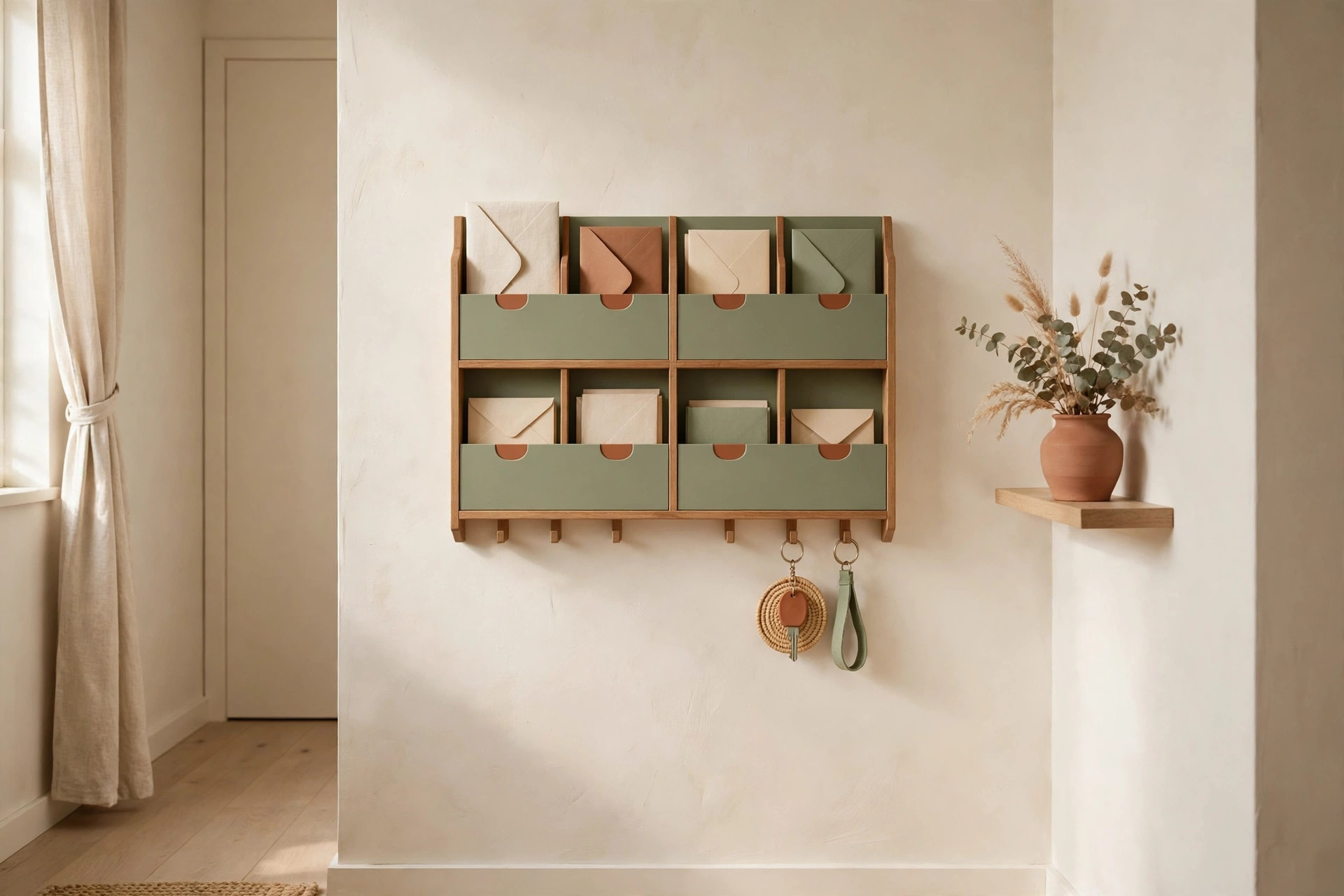
When you have no table space to spare, the wall is your best friend. A wall-mounted station uses zero floor space and works even in a hallway barely wider than the door itself.
7. Mount a three-pocket wall sorter for the whole household
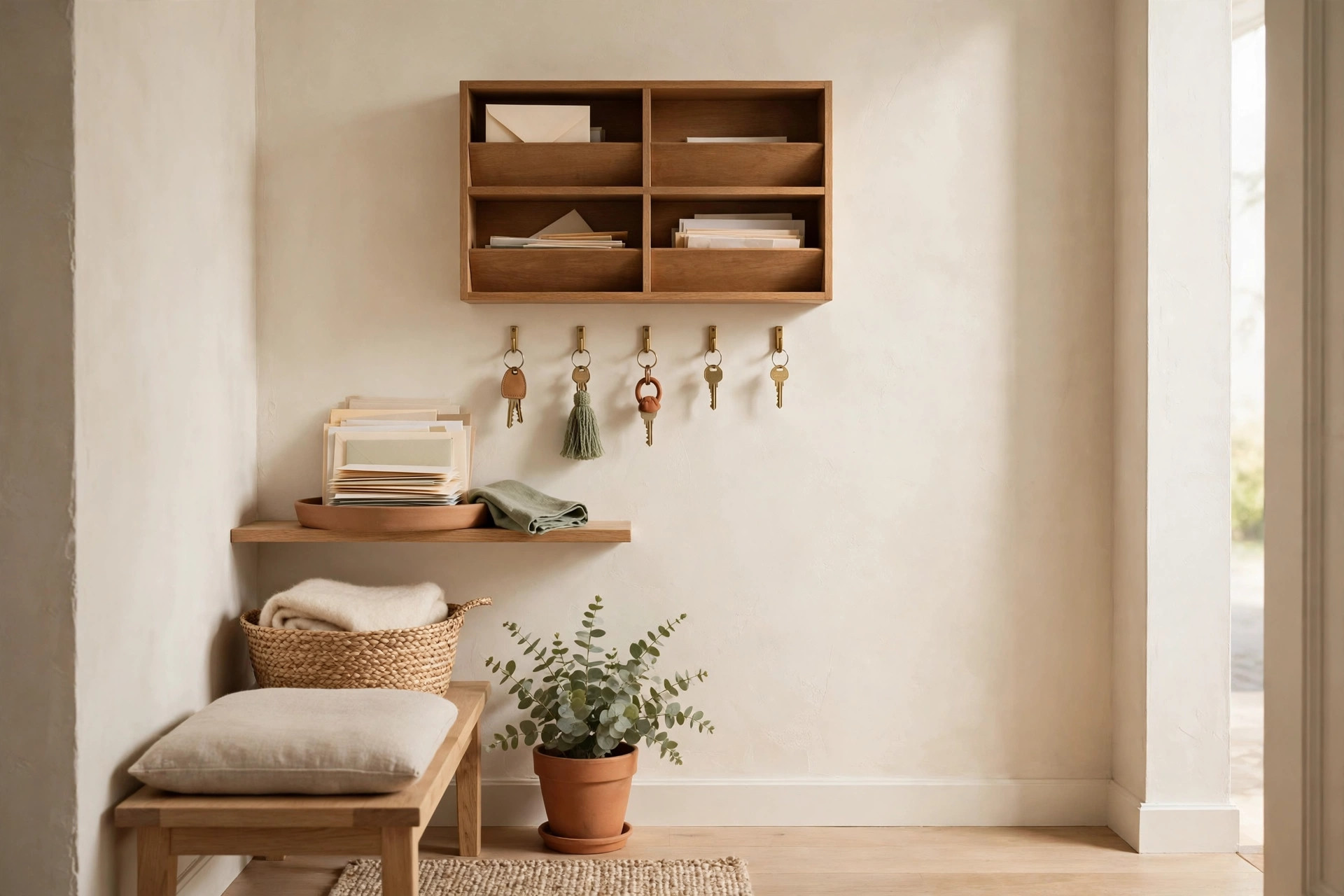
A wall sorter with three pockets — one per person, or one each for action, file, and outgoing — turns a blank stretch of wall into a full mail center. Mount it at eye level, about 55 to 60 inches from the floor, so pockets are easy to reach and see into. Adhesive-mount versions work well for renters; if small screws are allowed, two wall anchors hold a loaded wooden sorter securely.
8. Use a magnetic board for the urgent few
Some mail cannot wait for the weekly clear-out: a permission slip due tomorrow, a bill due this week, an appointment letter. A small magnetic board or a single clip beside the sorter holds just those urgent pieces where you will see them every time you leave. The rule is strict — no more than three items on the board at once.
9. Hang a slim pocket organizer on the door itself
If wall space is truly zero, an over-the-door pocket organizer on the inside of the front door or a nearby closet door gives you instant sorting space with no drilling at all. Clear pockets let you see what is inside. Our over-the-door organization ideas show how the same trick works for shoes, cleaning supplies, and accessories too.
Keys, mail, and bags in one landing zone
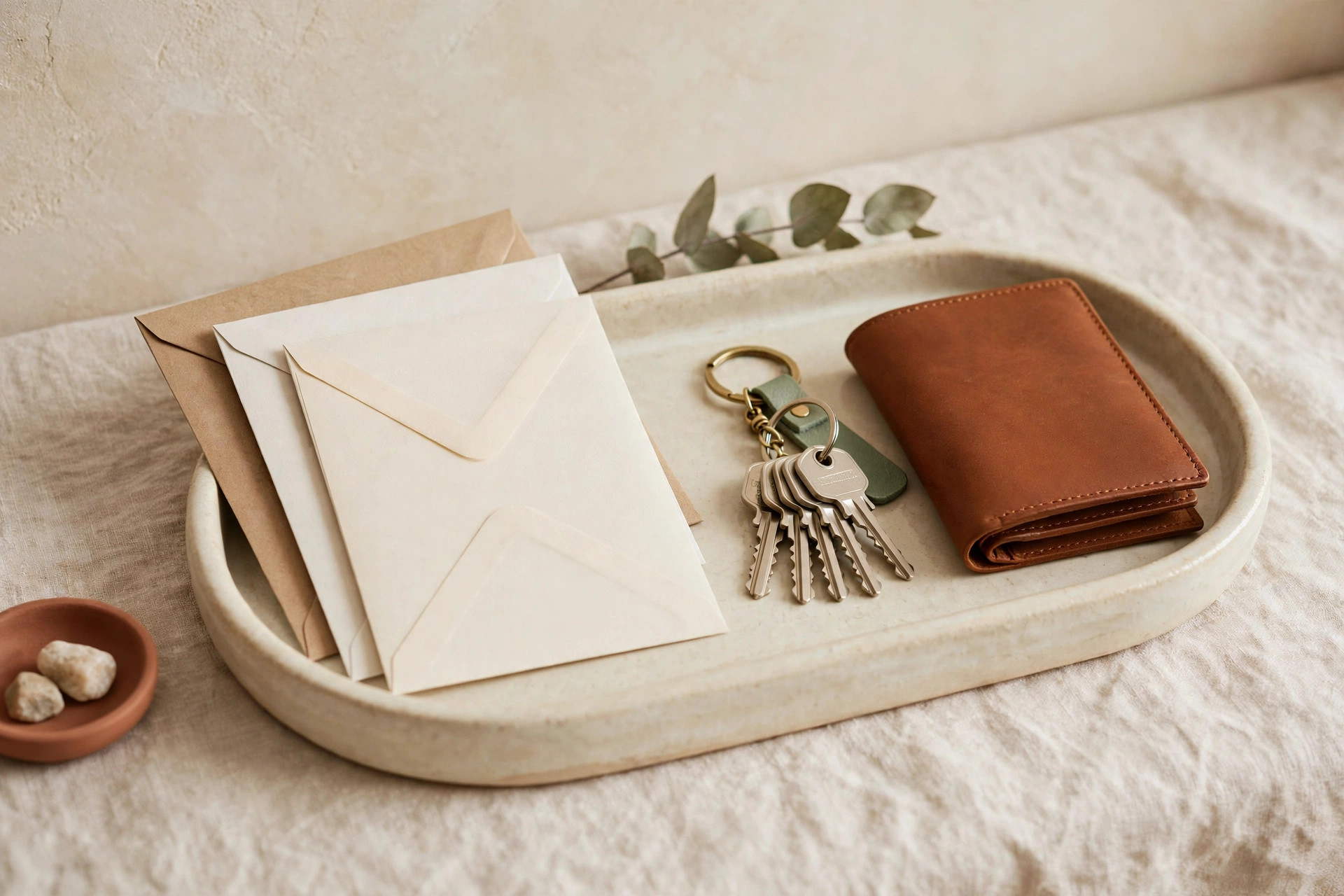
Mail is only part of the door pile. Keys, wallets, and bags compete for the same square foot, and when they mix with paper, everything becomes harder to find. A landing zone that handles all of them together is worth more than a mail sorter alone.
10. Pair the mail tray with a key rail and a single hook
Mount a small key rail with three to five hooks directly above or beside the mail tray, and add one sturdy hook for the bag you carry daily. Keys go on the rail the second you walk in; the bag hangs instead of landing on the mail. This wall-only setup fits on about two feet of wall. For homes with even less wall space, our small entryway ideas for homes with no foyer cover renter-safe hooks and slim consoles.
11. Give each person one slot, not one pile
In a shared home, one communal tray becomes everyone’s mess and nobody’s responsibility. Instead, give each adult or older child their own labeled slot, pocket, or clip within the station. Everyone checks only their slot.
12. Keep a small outgoing-mail spot by the door
Outgoing mail needs a home too, or stamped letters sit on the mail tray and get re-sorted every day. A single labeled clip, a small basket, or the top pocket of the wall sorter marked “Out” does the job. Check it before you leave in the morning, and outgoing mail leaves with you.
Going paperless where it actually helps
Going paperless sounds like the perfect fix, but switching everything at once usually fails. Cut paper only where the digital version is genuinely easier to find later.
13. Switch bills and statements to digital first
Bills, bank statements, and utility notices are the easiest paper to eliminate, because the digital versions are searchable and arrive in the same place every month. Switch one account a week rather than all at once, and save each statement to a single folder the day it arrives. Keep paper originals only for documents a digital copy cannot replace.
14. Photograph paper you need to keep but not store
School forms, warranty receipts, and reference letters can be photographed or scanned and then recycled. A phone photo, saved to a folder named by year and topic, is easier to search than a filing cabinet. Make sure the photo is readable before the original goes in the recycling bin, and back the folder up.
The weekly 10-minute paper clear-out
Even a good system accumulates paper. The weekly clear-out is the safety net: ten minutes, once a week, that keeps a working system from turning back into a pile.
15. Run a same-day, same-time weekly reset
Pick a fixed time — Sunday evening works for most households — and spend ten minutes on three jobs: empty the action tray (pay, reply, or file everything in it), move file items to their permanent folder, and recycle anything that survived the week unopened. Set a phone reminder for the first month until the habit sticks. If a hall closet is nearby, that is the natural home for the file box — our hall closet organization ideas for small homes show how to carve out a filing spot in even a shallow closet.
Mistakes to avoid
The most common mistake is buying a bigger sorter instead of fixing the habit — a larger container just holds a larger pile for longer. Another is creating two or three mail spots “for convenience,” which guarantees you check none of them properly. Do not store unopened mail in a drawer “to sort later”; out of sight means out of mind. Finally, do not keep every catalog “just in case.” If you have not opened it in a week, you will not open it in a month — recycle it.
Frequently asked questions
How do I organize mail in a very small entryway?
Use the wall, not a table. A three-pocket wall sorter or an over-the-door organizer gives you full sorting space with zero floor space, and a key rail above it handles the rest of the landing zone.
Can I organize mail without drilling holes?
Yes. Adhesive-mount wall sorters, Command-style hooks, and over-the-door pocket organizers all work without drilling, which makes them renter-friendly. Just check the weight rating — a loaded paper sorter can weigh several pounds.
How often should I sort mail?
Sort on arrival, every day, in about 60 seconds: action, file, or recycle. Then run a ten-minute clear-out once a week to empty the action tray and file what remains.
What mail should I keep on paper?
Keep signed originals and legal documents, and anything you may need to present in person. Bills, statements, and reference letters can usually go digital — photograph or download them, file them in one folder, and recycle the paper.
Conclusion
A mail pile is not a storage problem — it is a system problem, and the system is simple: one landing spot by the door, a 60-second sort on arrival, and a ten-minute clear-out every week. Start with the single tray or wall sorter today. Save this pin for later, and browse our storage ideas for more small-home organization guides.