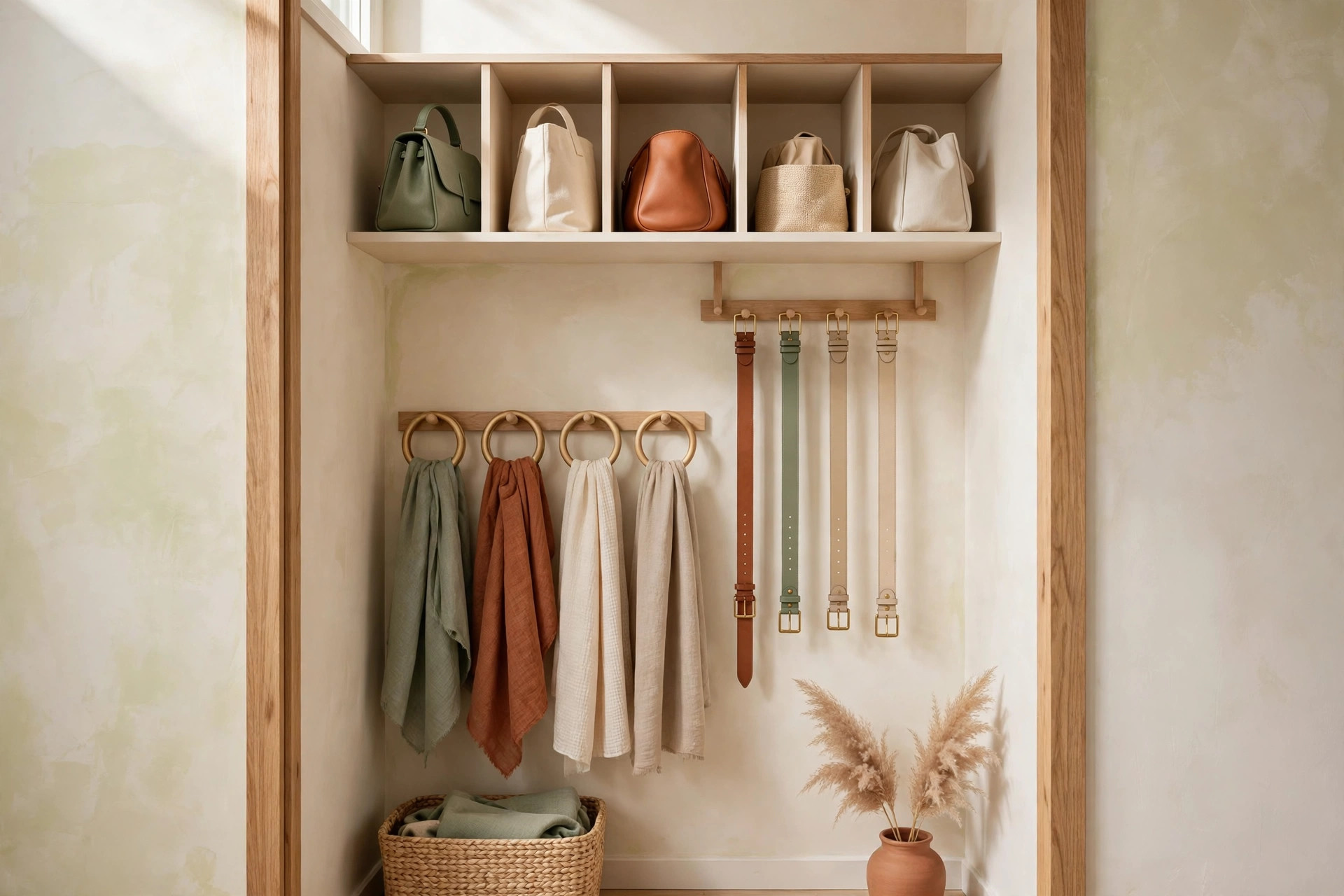
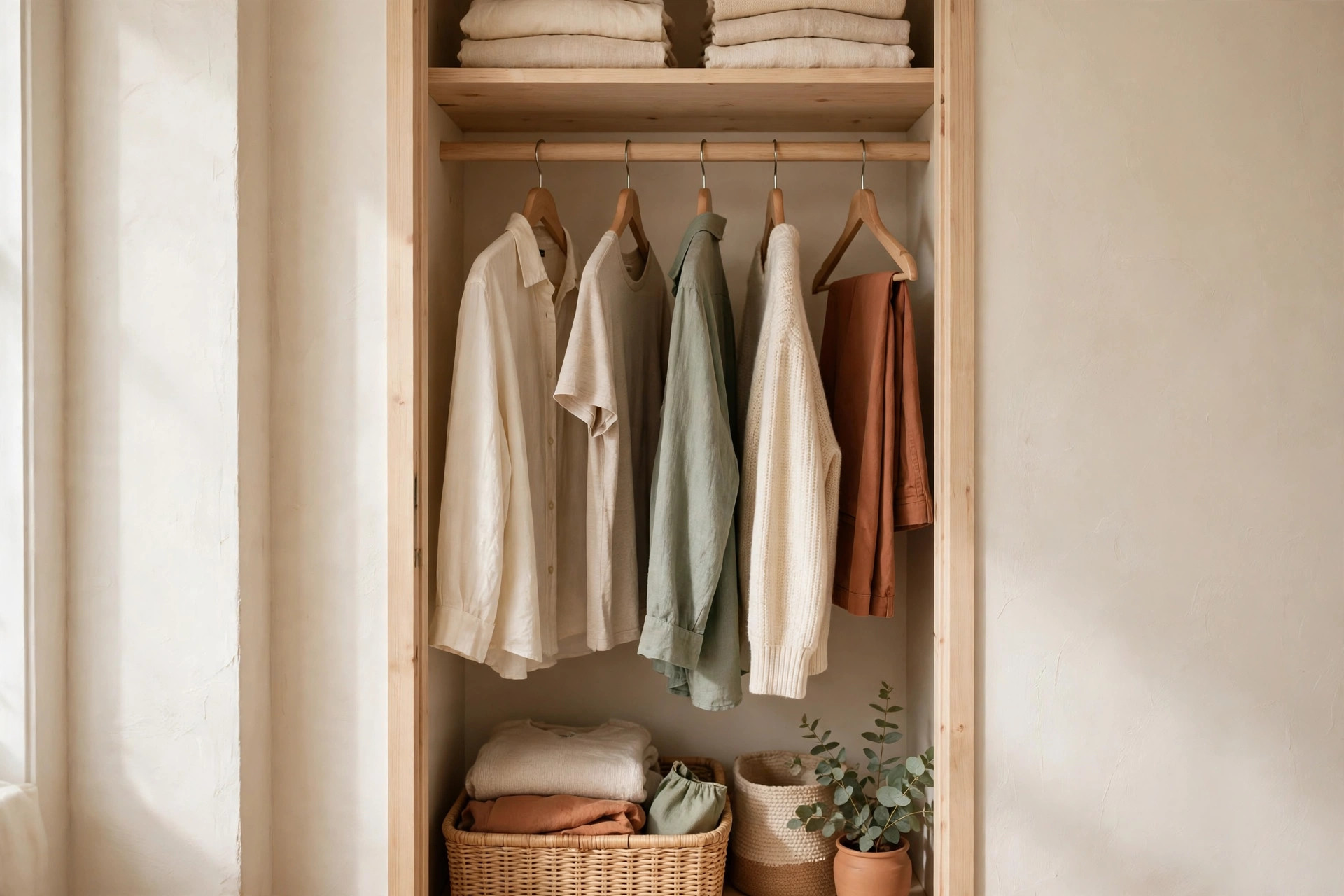
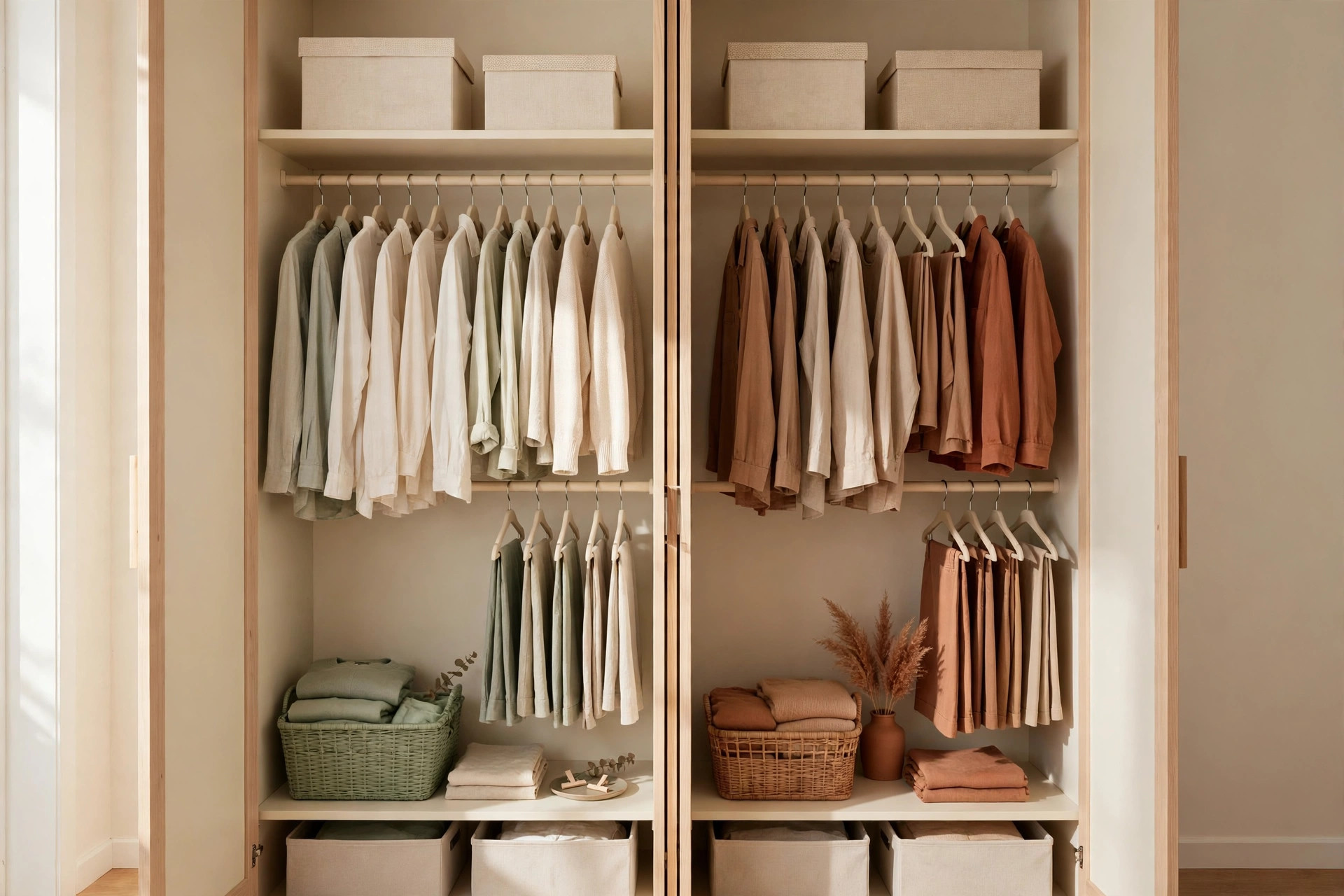
The hall closet is usually the smallest closet in the house — three or four square feet of floor, one rod, one shelf — and somehow it’s expected to hold the whole household’s coats, shoes, bags, umbrellas, and seasonal gear. If yours has become a dark cave of shoved-in jackets and mystery shoes, you’re not alone. These hall closet organization ideas are built specifically for tiny entry closets: no walk-in luxuries, no renovations, just practical systems that turn that cramped rectangle into the hardest-working space in your home. By the end, you’ll know exactly what belongs in there and how to keep it that way all year.
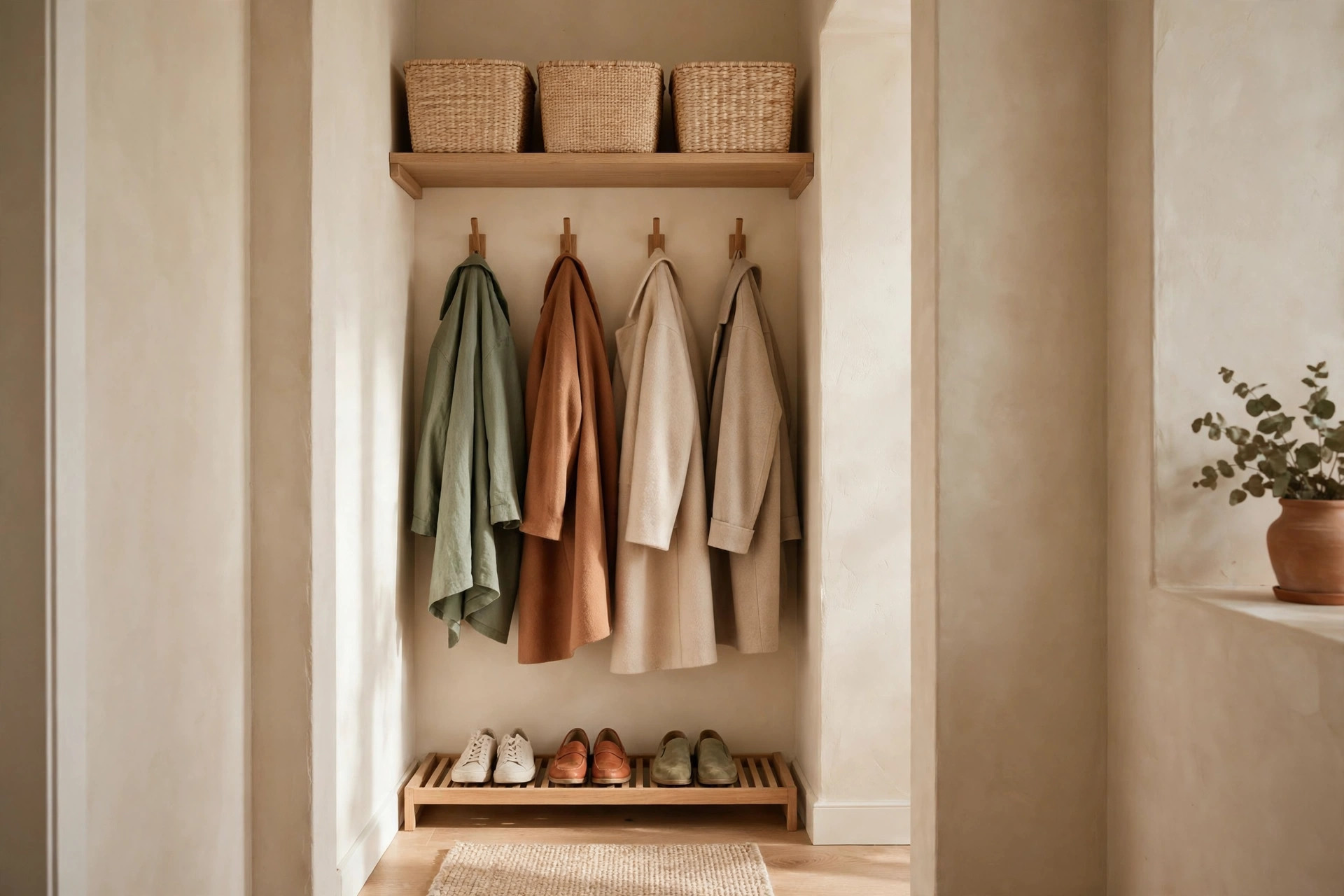
The hall closet’s real job: coats, shoes, and grab-and-go gear
Before you buy a single bin, decide what this closet is actually for. A tiny hall closet has one job: making it fast to leave the house and easy to come home. Everything inside should earn its spot by being used weekly. For broader entryway strategy beyond the closet itself, see 15 Small Entryway Organization Ideas (Even With No Foyer).
1. Zone the closet into thirds: hang, floor, and shelf
Think of the closet as three stacked zones with three jobs. The hanging zone holds coats and jackets on the rod. The floor zone holds shoes, boots, and bags. The top shelf holds seasonal and rarely used items. When every item has a zone, nothing drifts — a stray pair of boots can’t migrate into the coat area because there’s no empty space for it. Draw an imaginary line at rod height and at the top shelf; these are your boundaries.
2. Limit the closet to this season’s gear only
The single highest-impact rule for a tiny hall closet: only current-season items live here. In summer, heavy winter parkas and snow boots get boxed and moved to a bedroom closet or under-bed storage. In winter, the reverse. A 3-foot-wide closet holds roughly 8–12 coats and 4–6 pairs of shoes comfortably — that’s plenty if off-season items are stored elsewhere.
The purge: what doesn’t belong in 3 square feet
Every organization project starts with removal, and in a closet this small, the purge is the whole battle. Expect to pull out at least a third of what’s in there. Set a timer for 30 minutes and don’t let it drag — this is a small space, and the job is smaller than you think.
3. Empty everything and sort into four piles
Take every single item out and sort it into four piles on the hallway floor: (1) stays in this closet (worn weekly), (2) belongs elsewhere in the house, (3) donate, (4) toss. Be ruthless with pile 1 — the lonely glove, the coat with the broken zipper, the umbrella that won’t open. If you haven’t worn it in the past month and the season is right, it fails the test.
4. Evict the bulky non-closet items
Hall closets are magnets for things that fit nowhere else: the vacuum, the ironing board, the wrapping-paper roll, a box of “miscellaneous.” These are the first eviction notices. A vacuum cleaner eats roughly a quarter of a tiny closet’s floor space; an ironing board leaning against the coats makes every jacket hard to reach. Relocate these to a laundry nook, behind a door, or a bedroom closet. The floor zone is for shoes and bags — nothing wider than 12 inches should live there.
Double-hang and second rods for short coats and kids
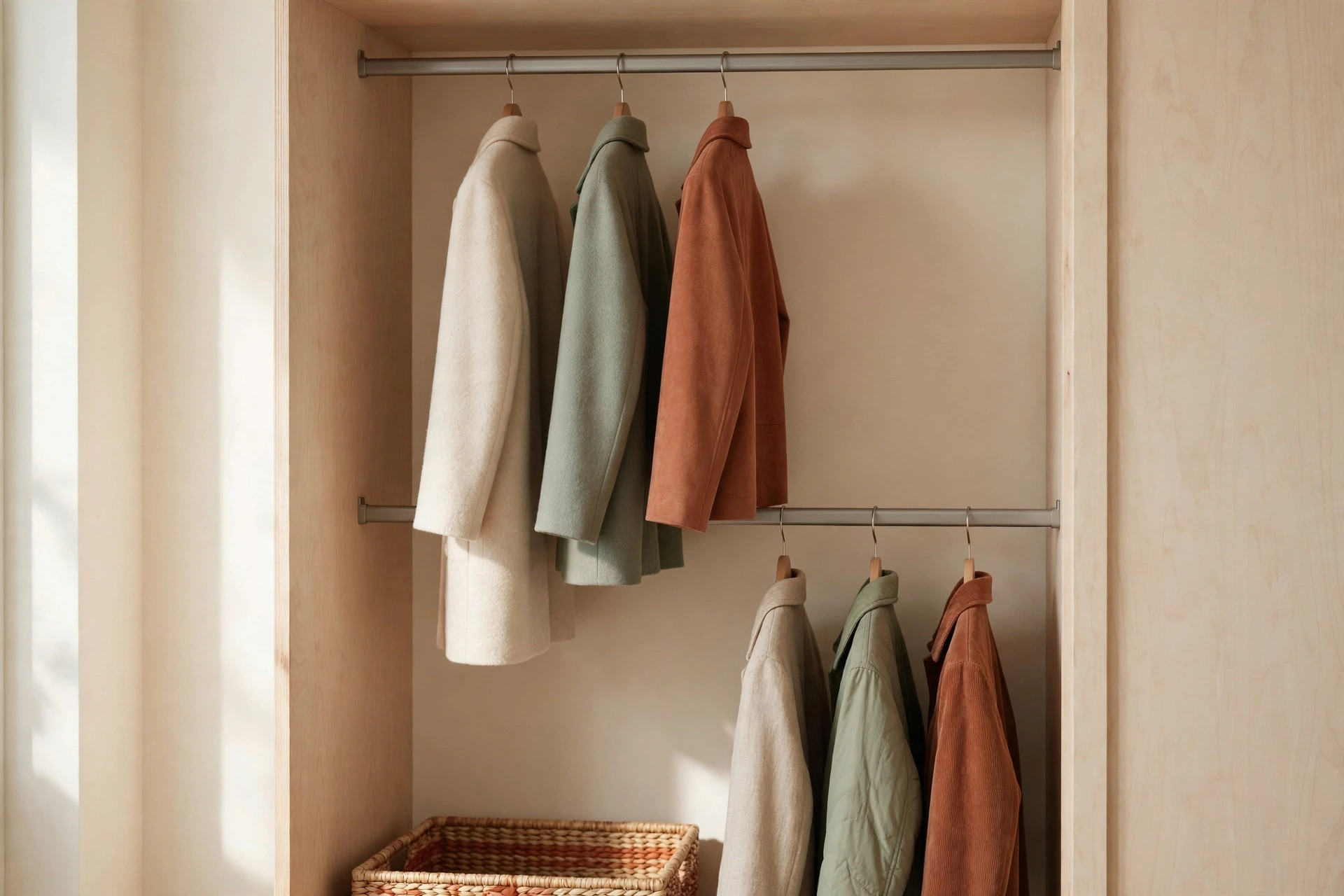
A single rod at chest height wastes the bottom half of the closet for anything shorter than a long coat. Short jackets, kids’ coats, and vests leave 2–3 feet of dead air beneath them. The fix costs less than a pizza and needs zero tools.
5. Add a tension rod below the main rod for a second tier
A heavy-duty tension rod (rated for 20+ pounds) mounted 12–16 inches above the closet floor creates a second hanging tier for short coats, kids’ jackets, and hoodies. Hang adult long coats on the main rod and shorter items on the lower rod. This roughly doubles your hanging capacity in the same footprint. Test the rod’s grip before loading it — press down hard; if it slips, reposition it against the side walls where the grip is strongest.
6. Switch to slim velvet hangers to reclaim inches
Bulky plastic and wooden hangers eat an inch or more each — multiply by 15 hangers and you’ve lost over a foot of rod space. Slim velvet or flocked hangers are about a quarter-inch thick and grip shoulders so coats don’t slide off. One afternoon of re-hanging typically frees 6–8 inches of rod, which is room for two or three more coats. Keep one style of hanger for a uniform look and even spacing.
Door storage: hooks, racks, and slim organizers
The inside of the closet door is free real estate — roughly 6 square feet of vertical surface most people never use. In a 3-foot-wide closet, that door surface can hold as much as an entire shelf of stuff. All of these options are renter-friendly and come off without a trace.
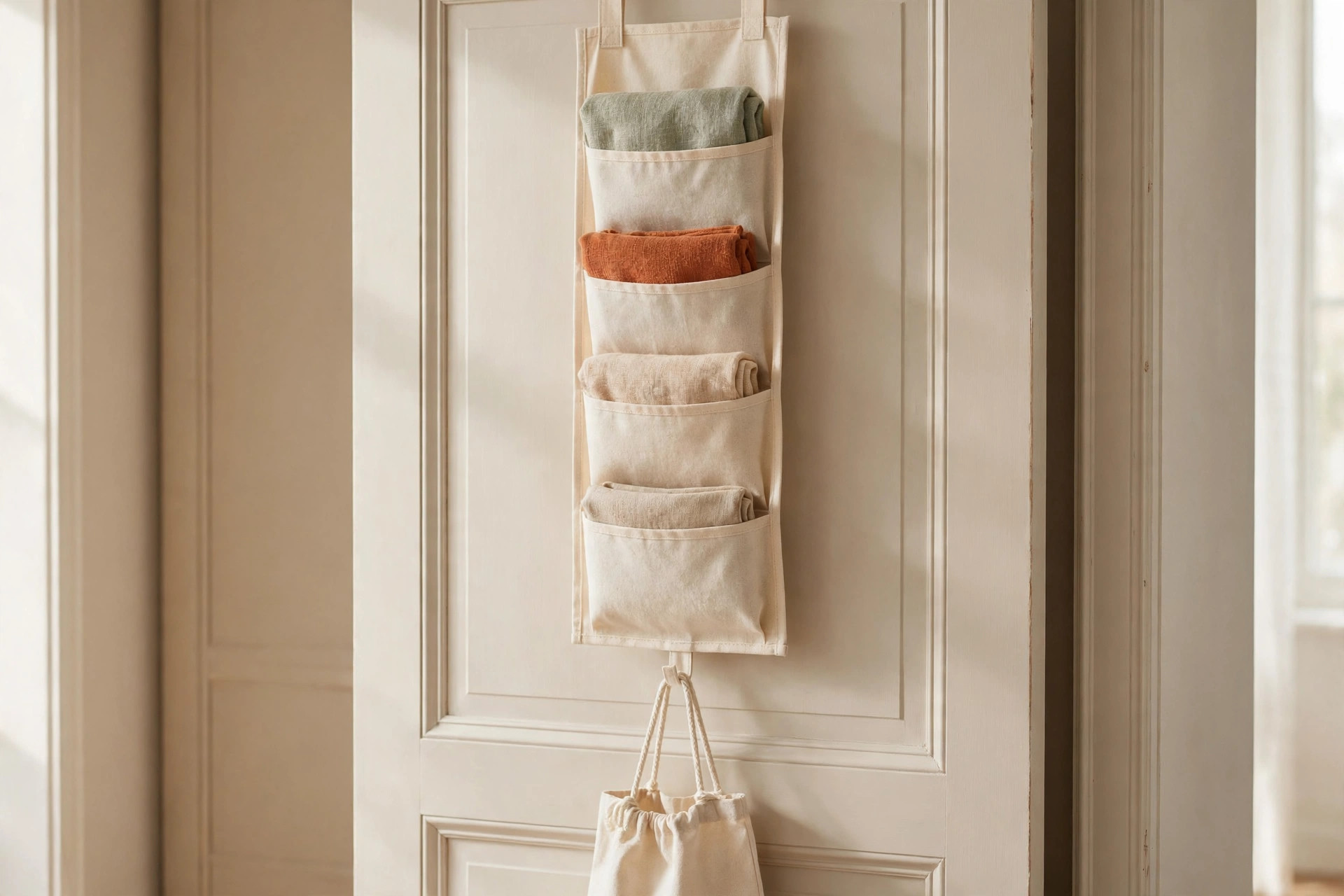
7. Hang a slim over-the-door organizer for accessories
A narrow over-the-door rack with hooks or pockets (no more than 4–5 inches deep) turns the door into a home for scarves, hats, tote bags, reusable shopping bags, and the dog’s leash. Hang the heaviest items at the top so the rack sits flat against the door, and check that the door still closes fully before you call it done. For door-based solutions in every room, see 17 Renter-Friendly Closet Organization Ideas (No Drilling Required).
8. Stick adhesive hooks inside the door for grab-and-go items
Three to five adhesive hooks on the door’s interior hold the small things that otherwise vanish: keys, sunglasses, the umbrella, a reusable mask, your transit card. Put the most-used item at hand height — no reaching, no digging. Wipe the door surface with rubbing alcohol before sticking hooks on; adhesion roughly doubles on a clean surface. Replace hooks once a year or when they start to sag.
Floor zone: boots, bags, and the shoe tray
The floor of a tiny hall closet is where chaos concentrates — shoes pile up, bags slide in sideways, boots topple. A defined floor zone with a hard boundary keeps it a system instead of a heap.
9. Set a boot tray as the floor’s boundary line
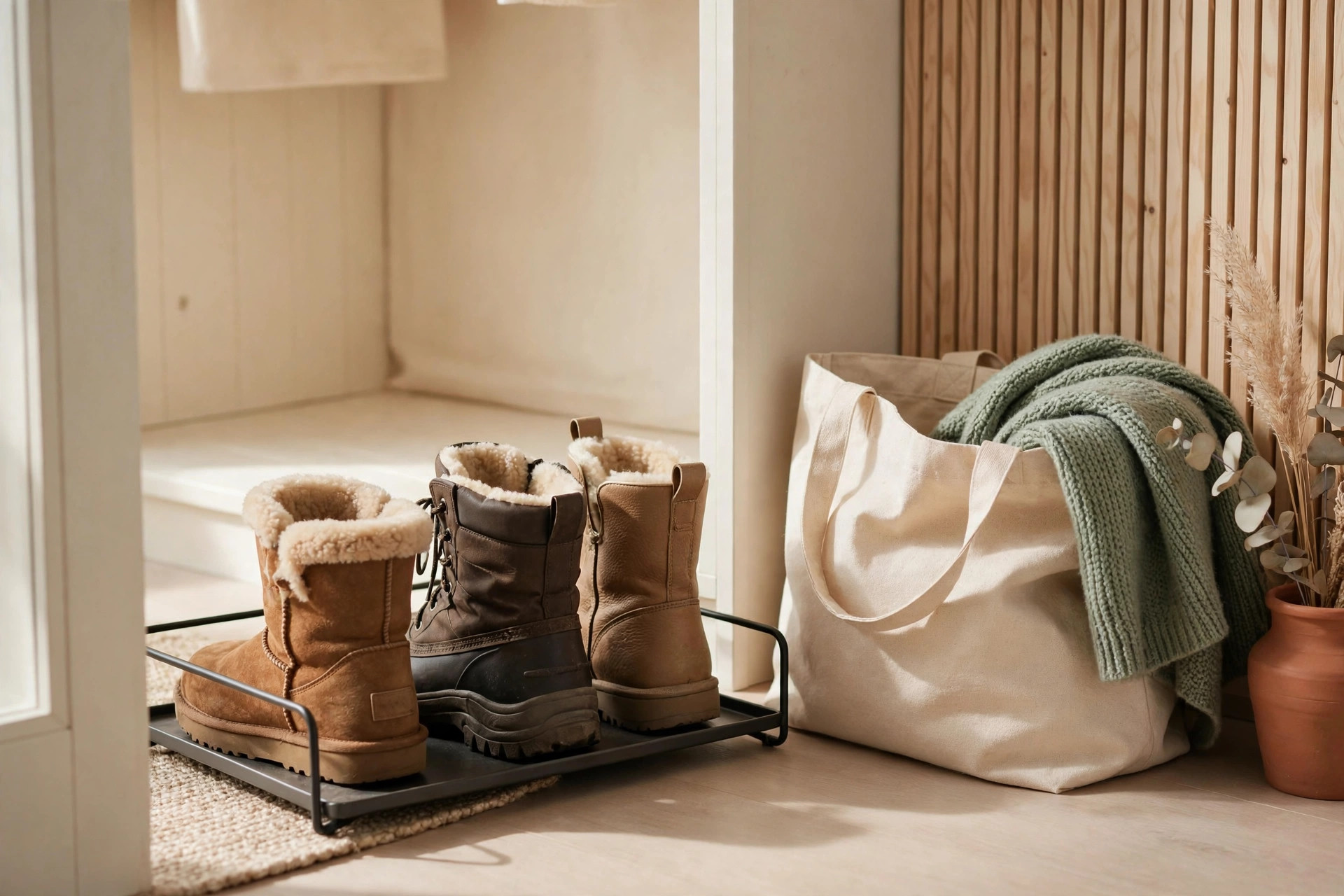
A rectangular boot tray (roughly 30×15 inches, with a raised lip) does two jobs: it catches winter slush and mud, and it marks the territory where shoes are allowed. The rule is simple — if it doesn’t fit on the tray, it doesn’t live in the closet. That physical limit prevents the slow creep of extra pairs. For wet climates, choose a tray with a deep groove pattern that keeps soles off standing water.
10. Add a two-tier shoe rack for daily pairs
Inside the closet, a two-tier wire or bamboo shoe rack holds 4–6 pairs of daily shoes above the tray, keeping them off the floor and visible. Skip tall shoe towers — a tiny closet needs low, wide storage, not vertical ambition. Measure first: the rack should be no taller than 24 inches so it clears the hanging coats above. If you need more shoe inspiration for the rest of the house, browse 18 Shoe Storage Ideas for Small Apartments (No Pile by the Door).
11. Corral bags and sports gear in one slim bin
Gym bags, tote bags, and kids’ sports gear get one container — a slim fabric bin or a tall, narrow laundry basket (roughly 12×12 inches) tucked at the side of the floor zone. One bin forces prioritization: when it’s full, something has to go before anything new comes in. Label it if you share the closet with kids, so the “gear bin” isn’t a mystery to anyone but you.
Top shelf: seasonal and rarely used, labeled
The top shelf is the attic of the hall closet — hard to reach, easy to forget. That’s exactly why it should hold only the things you touch a few times a year, organized so you can find them without climbing.
12. Move off-season gear to labeled top-shelf bins
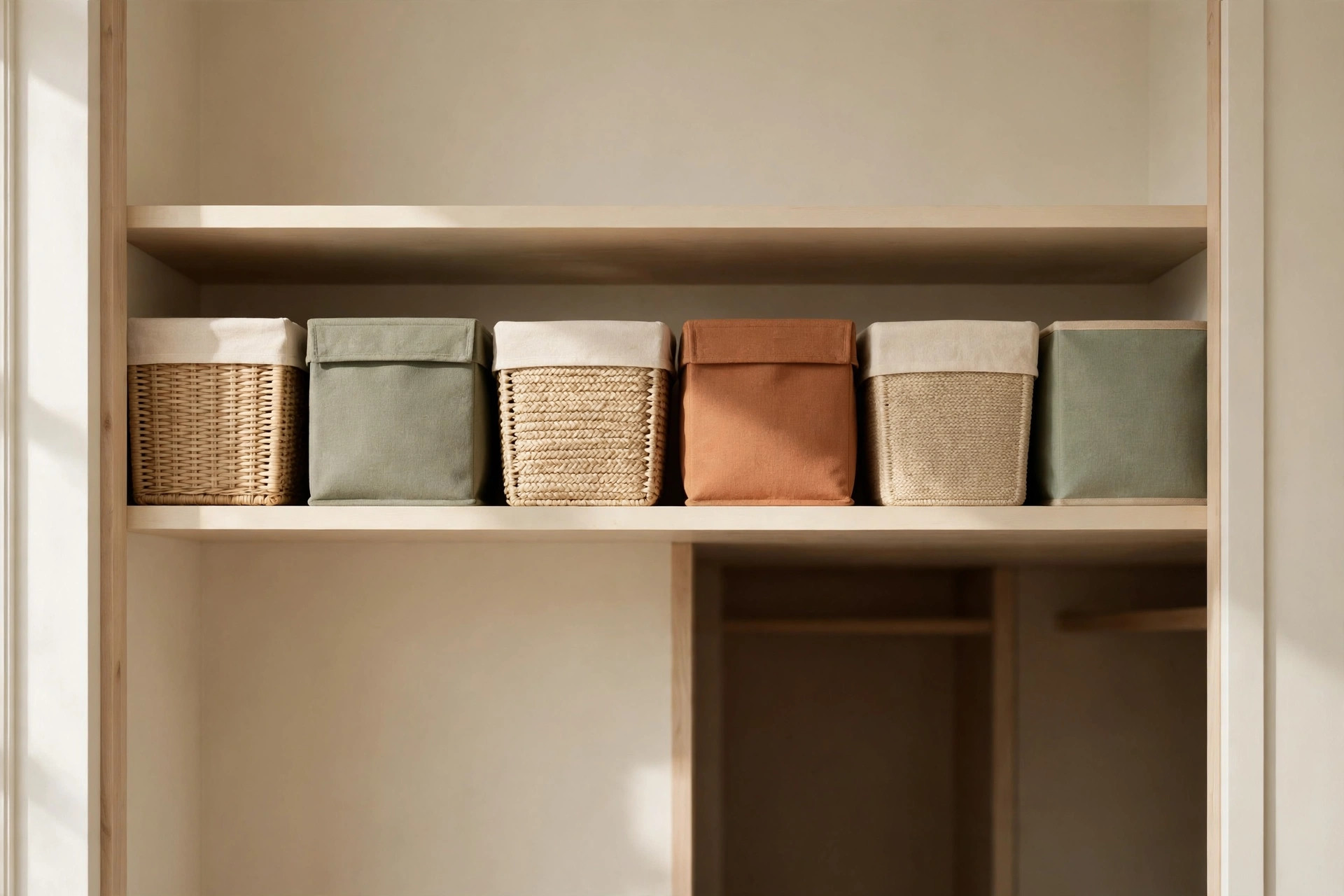
Winter hats, gloves, and scarves in summer; beach totes and sun hats in winter — the top shelf is their waiting room. Use two to three stackable bins (roughly 12×10×8 inches each) that fit the shelf depth exactly, so there’s no dead space behind them. When the season changes, swap the bins’ contents in one 15-minute session rather than hunting item by item.
13. Label every bin facing outward
An unlabeled bin on a high shelf is just a box of surprises. Label each bin on its front face with large, readable text — “WINTER ACCESSORIES,” “GUEST SUPPLIES,” “RAIN GEAR” — using a label maker or masking tape and a marker. If you can’t read the label while standing on the floor, it’s too small. Labels are what turn a high shelf from dead storage into usable storage, because you’ll actually retrieve things instead of buying duplicates.
Keeping it a closet, not a junk drawer with a door
A freshly organized hall closet stays organized for about two weeks — then entropy arrives in the form of a jacket draped “just for now” and a box left “temporarily.” These last three ideas are the maintenance system that makes the other thirteen stick.
14. Run a five-minute reset every Sunday
Once a week, spend five minutes: rehang anything draped, return stray items to their zones, and pull out anything that doesn’t belong. Set a phone reminder until it’s habit. Five minutes weekly beats a two-hour reorganization every three months, and it’s the difference between a system and a one-time project.
15. Enforce one-in, one-out for coats and shoes
Every new coat or pair of shoes that enters the closet must replace one that leaves. This is the only rule that truly caps a small closet’s inventory, because the closet’s size is fixed and your wardrobe isn’t. When the new winter boots arrive, the oldest pair gets donated the same day — not “later,” the same day.
16. Label the zones so the whole household follows the system
A system only you understand isn’t a system — it’s a personal project everyone else will accidentally sabotage. Put small labels on the rod (“ADULT COATS”), the lower tier (“KIDS / SHORT”), the door hooks (“KEYS · LEASH”), and the floor bin (“SPORTS GEAR”). When a guest or a kid can put something away correctly on the first try, the closet maintains itself.
Mistakes to avoid
- Buying organizers before purging. Storage products organize what exists; if half of it shouldn’t be there, you’ve just bought expensive clutter containers. Purge first, measure second, buy last.
- Using the top shelf for daily items. Anything you need more than once a week should never live overhead. Reaching up for your daily bag trains you to stop putting it away.
- One giant bin for “miscellaneous.” A catch-all bin is a junk drawer with a lid. If an item doesn’t have a zone, find it a home elsewhere — don’t give ambiguity a container.
- Ignoring the door. Skipping door storage wastes the closet’s easiest square footage. Even three adhesive hooks change how the whole space works.
- Deep, unlit corners. If you can’t see the back of the closet, stuff disappears there. A battery-powered motion-sensor puck light (under $10) ends the dark-cave problem in minutes.
Frequently asked questions
How do I organize a hall closet with no shelves at all?
Start with the three freestanding pieces that need no installation: a tension rod for a second hanging tier, a two-tier shoe rack for the floor, and adhesive hooks for the door. These three additions create the hang / floor / door zones without drilling a single hole, which is why they’re the standard renter playbook for a bare closet.
Can a tiny hall closet really hold a family’s coats and shoes?
Yes, with seasonal rotation and strict limits. A 3-foot-wide closet comfortably holds about 8–12 coats and 4–6 pairs of shoes — enough for a family of four if only the current season is in there and everyone follows a one-in, one-out rule. Off-season gear belongs in bedroom closets, under-bed storage, or labeled bins elsewhere.
How deep should hall closet organizers be?
Match the closet’s depth, usually 22–24 inches for a standard reach-in closet. Choose bins, trays, and racks at least 2 inches shallower than the closet depth so nothing blocks the door from closing and you can reach the back without moving everything. For the door itself, keep organizers under 5 inches deep.
What’s the best way to store boots in a small hall closet?
Stand tall boots upright in a boot tray with a raised lip, or use inexpensive boot shapers so they don’t flop over and eat twice the space. Keep only the boots you’re wearing this week in the hall closet — the rest live with your off-season gear. A 30×15-inch tray fits three to four pairs of adult boots.
Conclusion
A tiny hall closet works when it has a clear job, clear zones, and a maintenance rhythm — coats on the rod, shoes on the tray, seasonal gear labeled on the top shelf, and a five-minute weekly reset keeping it all honest. Start with the purge, add the zones, and let the one-in, one-out rule do the long-term heavy lifting. Save this pin for later, and explore more small-space systems in our closet organization guides.