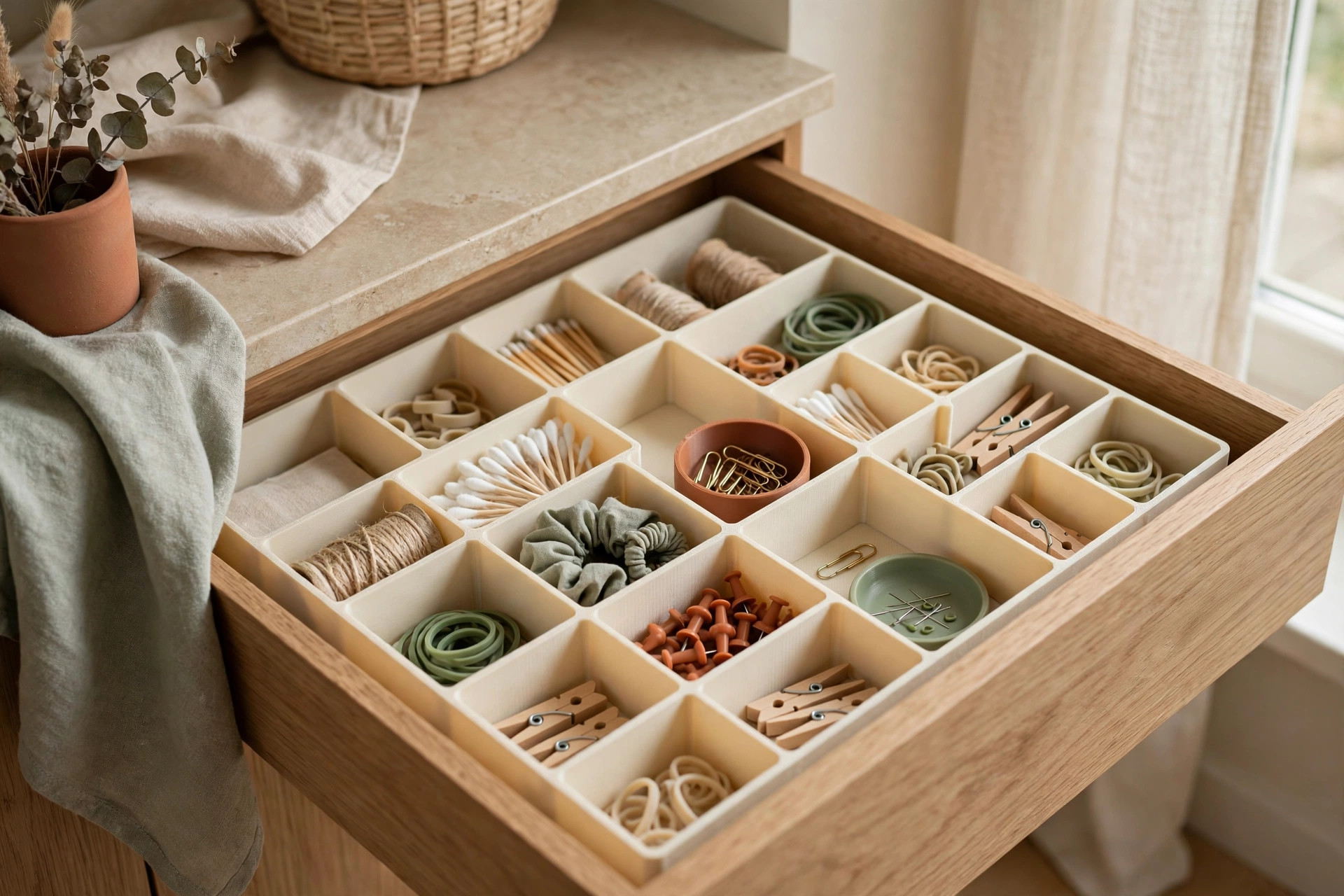
If every birthday or holiday sends you digging through a crushed pile of wrapping paper, you are not alone. In a small home, rolls get bent, bags get torn, and tape disappears exactly when you need it. These gift wrap storage ideas solve that mess without taking over a closet or a whole room. Whether you live in a studio or a small house with one crowded closet, the system below keeps rolls upright and protected, bags flat and visible, and small supplies together in one place — so wrapping a gift takes ten minutes, not forty.
The gift wrap audit: what you actually use
Before you buy a single bin, spread everything out on a bed or table. Most small-space households discover they own far more paper than they use, and the supplies they actually reach for fit in a surprisingly small footprint. Sorting first means your storage fits your real habits, not your imaginary ones.
1. Sort by occasion, then cut the pile in half
Group your wrap into everyday (birthday, thank-you, all-occasion), holiday, and specialty (wedding, baby, sympathy). Then be honest: keep two or three rolls per group at most. Rolls untouched in two holiday seasons, duplicate patterns, and anything creased or faded can go. A smaller collection is the single fastest way to end the tangled-roll problem.
2. Count rolls, bags, and tools before you shop
Count your full rolls, gift bags, and tools, and buy storage sized to those counts. This stops the classic mistake of buying a bin sized for a collection you do not own.
Vertical roll storage: tall bins and upright holders
Rolls are the hardest part of gift wrap organization because they are long, round, and easy to crush. The fix is simple: store them upright, never lying flat under other things. Upright rolls stay visible and straight, and slide out one at a time without unravelling the rest.
3. Use a tall upright bin with dividers
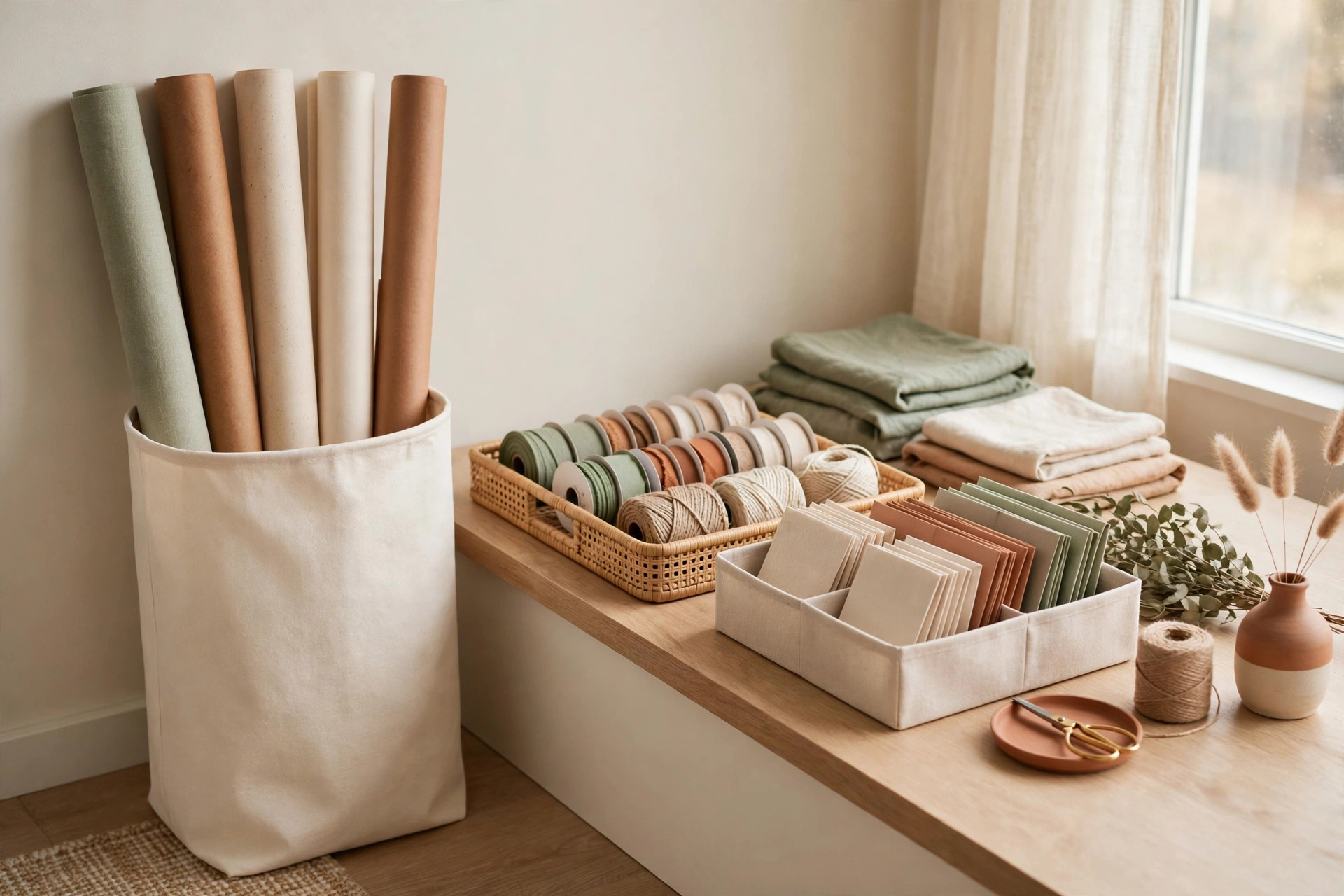
A tall, narrow bin — roughly 15 inches wide and 35 to 40 inches tall — holds standard 30-inch rolls upright with room to spare. Choose one with a divider or fabric compartments so rolls cannot lean into each other and crease, and place it in a closet corner or beside a wardrobe.

4. Hang a vertical roll holder on a closet wall or door
If floor space is truly zero, a hanging holder with vertical pockets or elastic loops mounts on the inside of a closet door. Each roll gets its own pocket, so nothing rolls around or gets buried, and it is renter-friendly when it hangs over the door rather than screwing into the wall.
5. Stand rolls in a tall wastebasket or umbrella stand you already own
A sturdy, tall wastebasket or an umbrella stand holds rolls upright just as well, and it costs nothing if you already have one. Line the bottom with a small towel so roll ends do not scuff, and wedge it inside a closet or between furniture so it cannot tip.
Under-bed and closet-door wrap stations
When closets are full, look at the two surfaces small homes underuse most: the space under the bed and the back of a door. Both keep wrap out of sight until you need it.
6. Slide a long, flat under-bed bin for rolls and flat wrap
A rolling under-bed bin about 40 inches long and 6 inches high fits standard rolls lying flat, protected from dust by a lid or zip cover. For more under-bed know-how, see our 18 Under-Bed Storage Ideas That Turn Dead Space Into a Dresser.
7. Turn a closet door into a wrap station with over-the-door hooks and pockets
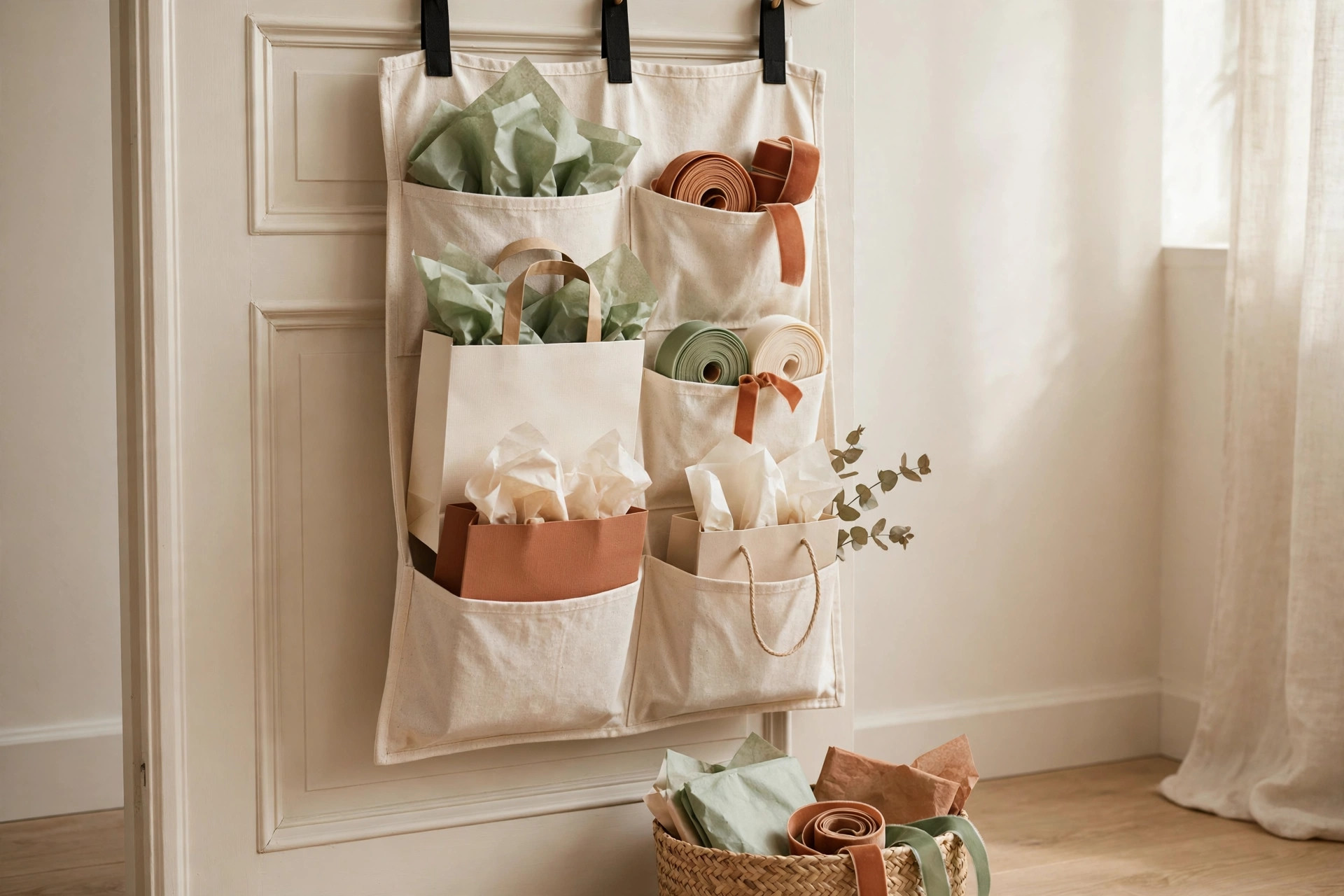
An over-the-door organizer with clear pockets holds bags, tissue, and small rolls on the door itself, while sturdy hooks carry a tall roll bag or a tote of ribbon. Because the door swings, keep the load light and balanced — heavy bins belong on the floor, not hanging.
8. Claim one closet shelf as the dedicated wrap shelf
If you have even one free shelf, make it the wrap shelf and defend it. Stand rolls upright in a small bin on one side, stack flat bags on the other, and keep a small caddy of tape and scissors at the front.
Flat storage for bags, tissue, and bows
Bags and tissue cause a different kind of mess: they are light, they crush, and they end up stuffed into a shopping bag that tears. Flat storage keeps them visible, so you stop buying bags you already own.
9. File gift bags upright in a magazine holder or file box
Stand gift bags upright, like files, in a sturdy magazine holder or a small file box, sorted by size — small bags at the front, large at the back. You can flip through them in seconds, and handles stay untangled because bags are not stacked in a pile. One holder fits on a closet shelf or inside a larger bin.
10. Store tissue flat in a zip bag or shallow tray, sorted by color
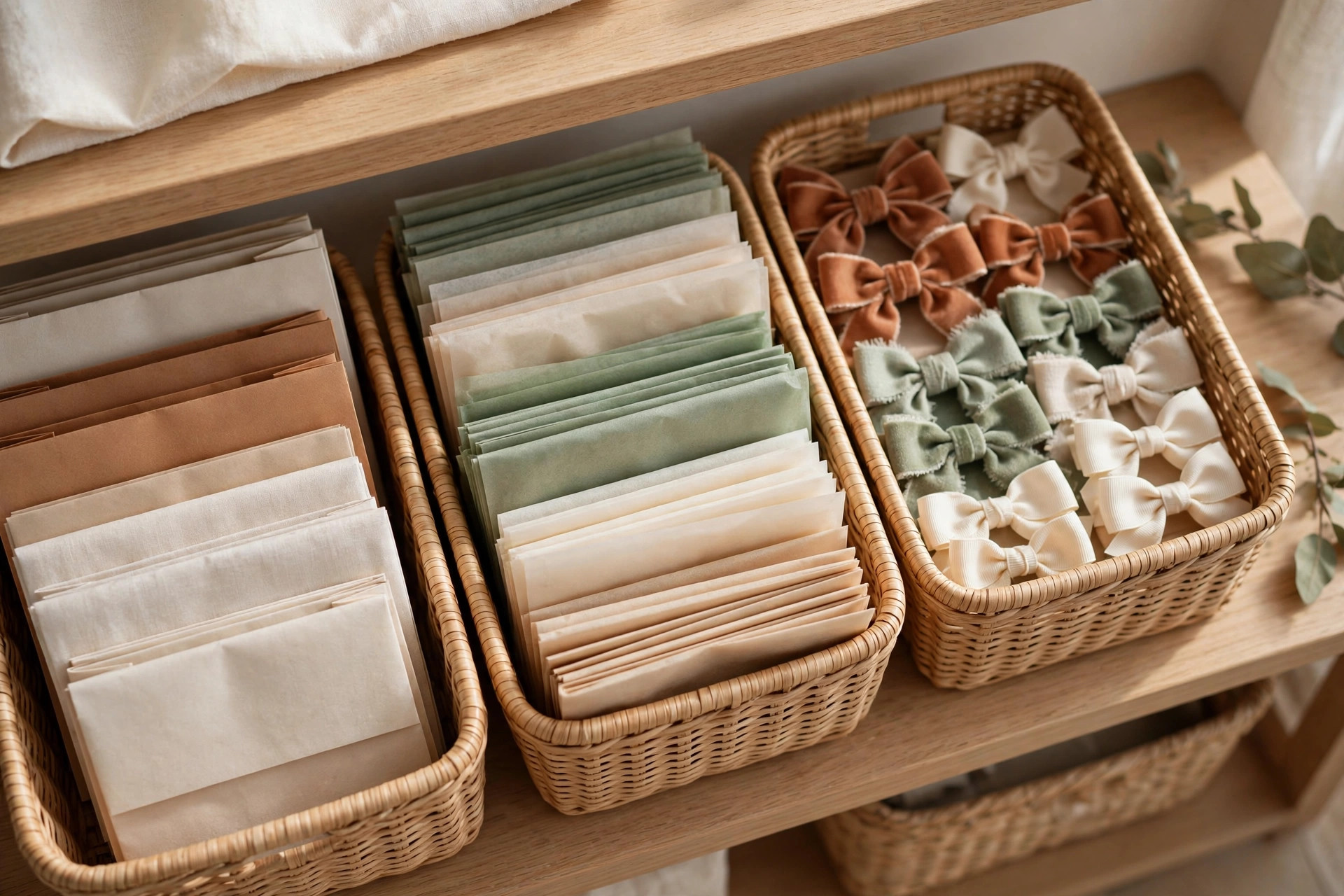
Fold tissue paper flat, sort it by color family, and keep each group in its own large zip bag or a shallow tray. Flat tissue does not wrinkle, and colors stay easy to find. Tuck bows and gift tags into a small zip pouch in the same tray.
The all-in-one gift station box
If you prefer one grab-and-go container over several small systems, build a single gift station: a box you can pull out, wrap from, and put back in under a minute, with no hunting through three rooms for scissors.
11. Build a portable gift station in a lidded tote
Choose a lidded tote roughly 24 by 16 inches: large enough for a few rolls laid diagonally, a stack of flat bags, and a small inner caddy for tape, scissors, ribbon, and pens. Keep it on a closet floor or under the bed, clearly labeled, so you carry one box to the table instead of gathering supplies from five places.
12. Add a fold-out wrapping surface inside the lid
Keep a folded piece of cardboard in the tote as a portable wrapping surface. This matters in small homes, where the dining table or bed doubles as the wrapping station and needs protection from scissors and tape.
Ribbon and tape: small supplies, big mess
Small supplies cause outsized frustration because they vanish into drawers and bags. Give them a small, closed home of their own, as part of the wrap system.
13. Corral ribbon, tape, and scissors in one divided caddy
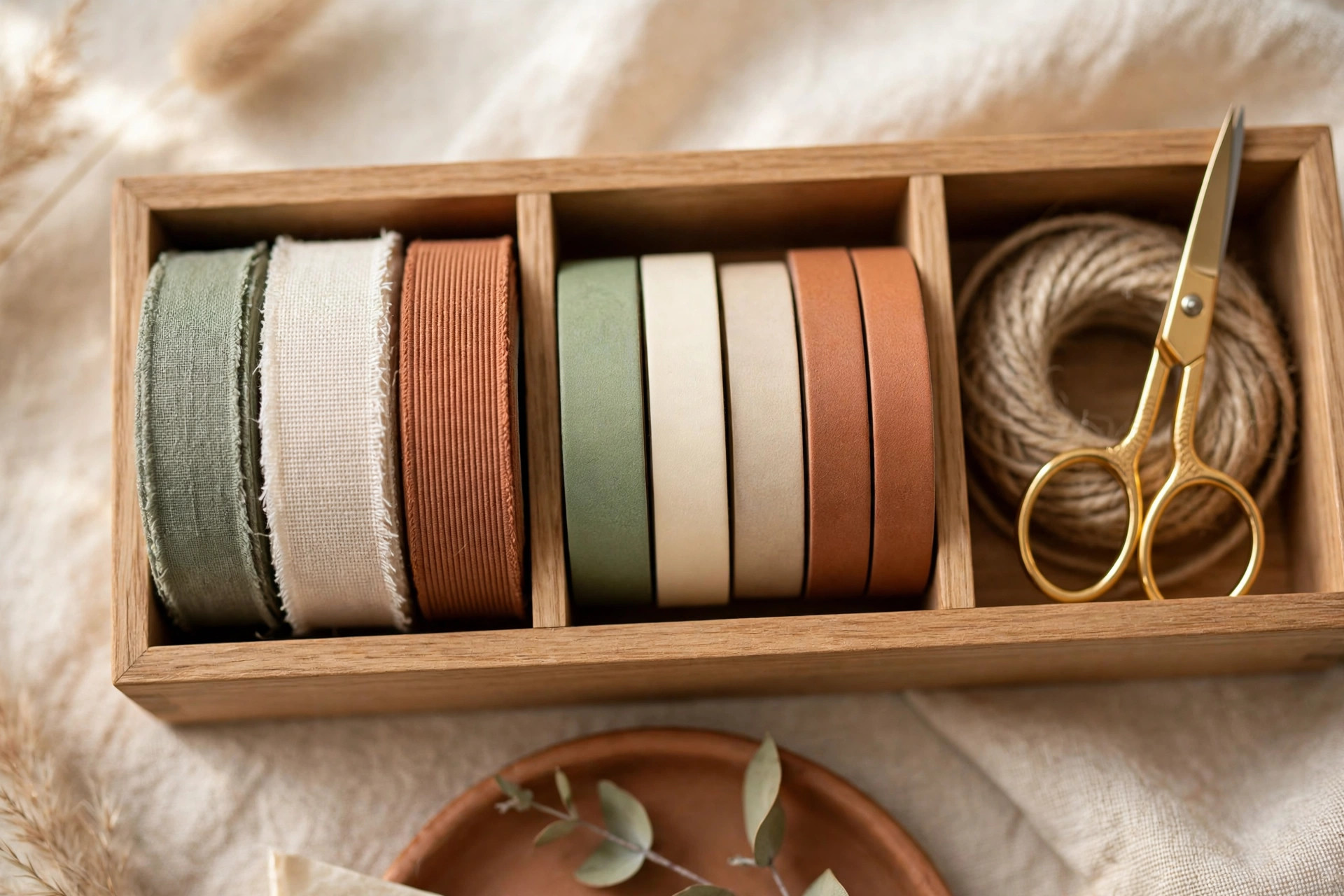
Use a small divided caddy — a desk organizer, a tackle-style box, or a zip pouch with compartments — for ribbon spools, tape, scissors, pens, and gift tags. Stand ribbon spools on a short dowel so they unwind without tangling, and keep the caddy inside your main wrap bin or tote. If you also craft, the same habit works for other small supplies — see our 18 Craft Supply Organization Ideas for Small Spaces.
Seasonal rotation: holiday vs everyday wrap
Holiday paper is bulky and used for only a few weeks a year, so it should not crowd the everyday wrap you reach for all year. A simple rotation keeps both accessible without doubling your storage.
14. Keep everyday wrap handy and holiday wrap stored higher or deeper
Store everyday birthday and all-occasion wrap in your most accessible spot — the closet shelf or door organizer you use weekly. Move holiday rolls and bags to a higher shelf, a deeper under-bed bin, or the top of a wardrobe, clearly labeled by holiday, and swap them in early December and back out in January. For the rest of your seasonal stash, our 16 Holiday Decoration Storage Ideas for Small Apartments covers the same rotation principle for decorations.
The post-holiday wrap reset
The system only works if it gets reset once a year. After the holidays, wrap supplies are at their messiest — half-used rolls, torn bags, and stray ribbon everywhere. A short reset restores order before the next birthday season starts.
15. Do a 20-minute post-holiday reset every January
Set a timer for twenty minutes: toss torn bags and crushed tissue, re-roll loose paper and band each roll, return stray supplies to the caddy, and relabel anything whose label fell off. Then move holiday wrap back to deep storage and pull everyday wrap forward.
Mistakes to avoid
Buying storage before auditing. A bin sized for a collection you do not own wastes money and space. Audit first, then buy once.
Storing rolls flat under heavy things. Rolls at the bottom of a pile get crushed, and the paper tears when you pull it out. Keep rolls upright or in a dedicated long bin.
Keeping every scrap. Half-sheets, single bows, and bags with torn handles feel thrifty but create clutter. Keep only pieces large enough to wrap a real gift.
Hiding supplies in too many places. Wrap in one closet, bags in the bedroom, tape in a kitchen drawer — this is how wrapping takes forty minutes. One system, one home, even if that home is a single tote.
Overbuying holiday paper every year. A household rarely needs more than two or three holiday rolls. Buy only after counting what you already have.
Frequently asked questions
How do I store wrapping paper in a small apartment without a closet?
Use the back of a door or the space under your bed. An over-the-door roll holder or a long, flat rolling bin holds standard rolls without taking closet or floor space, and a small caddy inside keeps tape and ribbon with them.
Can I store wrapping paper rolls upright?
Yes — upright is the best way to store rolls. Standing rolls in a tall bin, umbrella stand, or hanging holder keeps them straight, visible, and easy to pull out one at a time, while flat storage under heavy items causes creases and tears.
What is the best way to organize gift bags in a small space?
File gift bags upright in a magazine holder or small file box, sorted by size. Upright filing keeps handles untangled, lets you flip through bags quickly, and fits on a single closet shelf — unlike a stuffed shopping bag, which tears and hides what you own.
How many rolls of wrapping paper should I keep?
For most households, two or three rolls per occasion group is plenty: a few everyday rolls plus two or three holiday rolls. If you have not used a roll in two holiday seasons, pass it on — a smaller collection is far easier to store and use.
Conclusion
Gift wrap storage in a small space comes down to three habits: audit what you own, store rolls upright, and give bags and small supplies one defined home. Pick the ideas that fit your home — a tall bin, a door organizer, or a single gift station tote — and your next wrapped gift will be quick and tidy. For more ideas, browse our storage ideas category, and save this pin for later.