Your apartment is not too small — your furniture is too permanent. A fixed dining table, a desk that never moves, and four chairs that sit empty six days a week can eat 40 to 60 square feet. The fix is folding furniture storage small apartment living actually rewards: pieces that appear for the hour you need them and disappear for the other twenty-three. These 15 foldable furniture ideas for small spaces cover drop-leaf tables, wall-mounted desks, fold-away chairs, Murphy-style beds, and flat gear nobody thinks to fold — each with real measurements. Every idea below names the size and the spot it lives when folded.
The fold-away mindset: furniture that earns floor space only when used
Run every piece through one test: does it pay rent for the floor it occupies? A fixed table that hosts dinner twice a week pays rent two evenings out of seven; a fold-down version pays rent every day, because folded flat it costs about 6 inches of wall depth and zero floor. Floor space is about how many hours each piece is actually in use.
List the pieces you use less than an hour a day: the dining table, the desk, the guest chairs, the drying rack, the ironing board — those are your folding candidates. Two rules govern every idea below: the folded piece needs a parking spot, decided before you buy, and it must unfold in seconds, not minutes.
Drop-leaf and fold-down dining tables
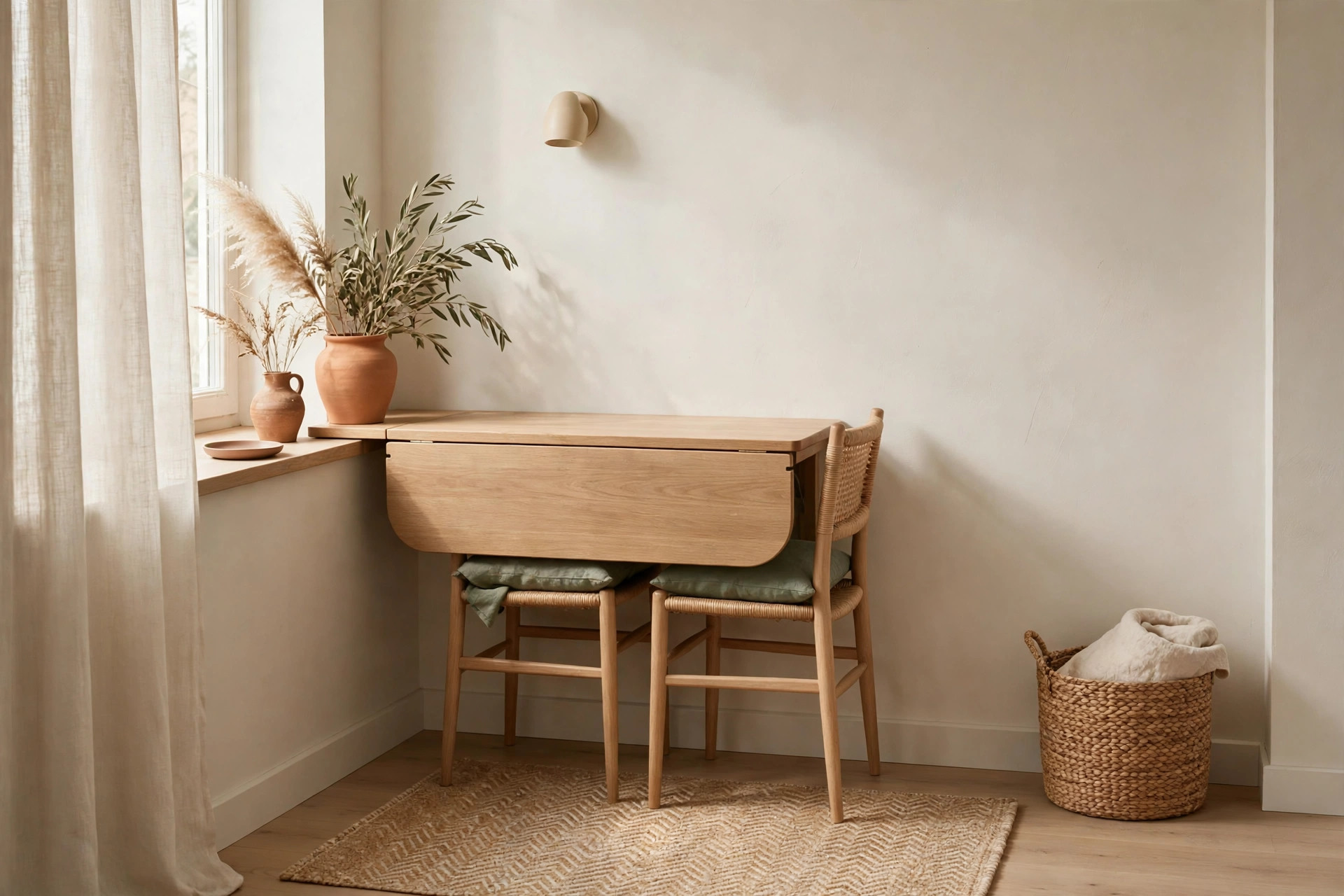
The dining table is the highest-value fold: one place setting needs roughly 24 by 30 inches, plus 30 inches behind the chair, so a fixed four-seater quietly claims 25 square feet. These three ideas give it back.
1. The wall-mounted drop-leaf table. A 30-to-36-inch-wide top, 24 to 30 inches deep when open, on folding brackets rated for 50 to 75 pounds. Folded, it hangs flat at about 6 inches deep. Mount it at standard table height, 28 to 30 inches, so chairs you already own work with it, and park it beside the fridge or in the dead wall by the kitchen counter. Our guide to 15 Fold-Down Table Ideas for Tiny Kitchens (Eat-In Space That Disappears) covers gateleg and window-nook versions too.
2. The gateleg table that grows with the guest list. A fixed center panel about 12 inches wide with leaves on both sides: leaves down, a slim console; one leaf up seats one or two; both up, four. Buy one with a drawer in the center panel for placemats and cutlery, plus locking hinges — cheap gatelegs sag under a full plate.
3. The fold-down breakfast bar under the wall cabinet. A narrow 12-to-14-inch-deep shelf hinged to drop to 36-inch counter height. Folded, the cabinet hides it almost entirely — a coffee spot, laptop perch, or extra prep space. Measure first: the folded panel must clear under-cabinet lights by an inch.
Wall-mounted desks and fold-down workstations
Working from home usually means the dining table doubles as a desk. A fold-down workstation gives your job a room that vanishes at 6 p.m.
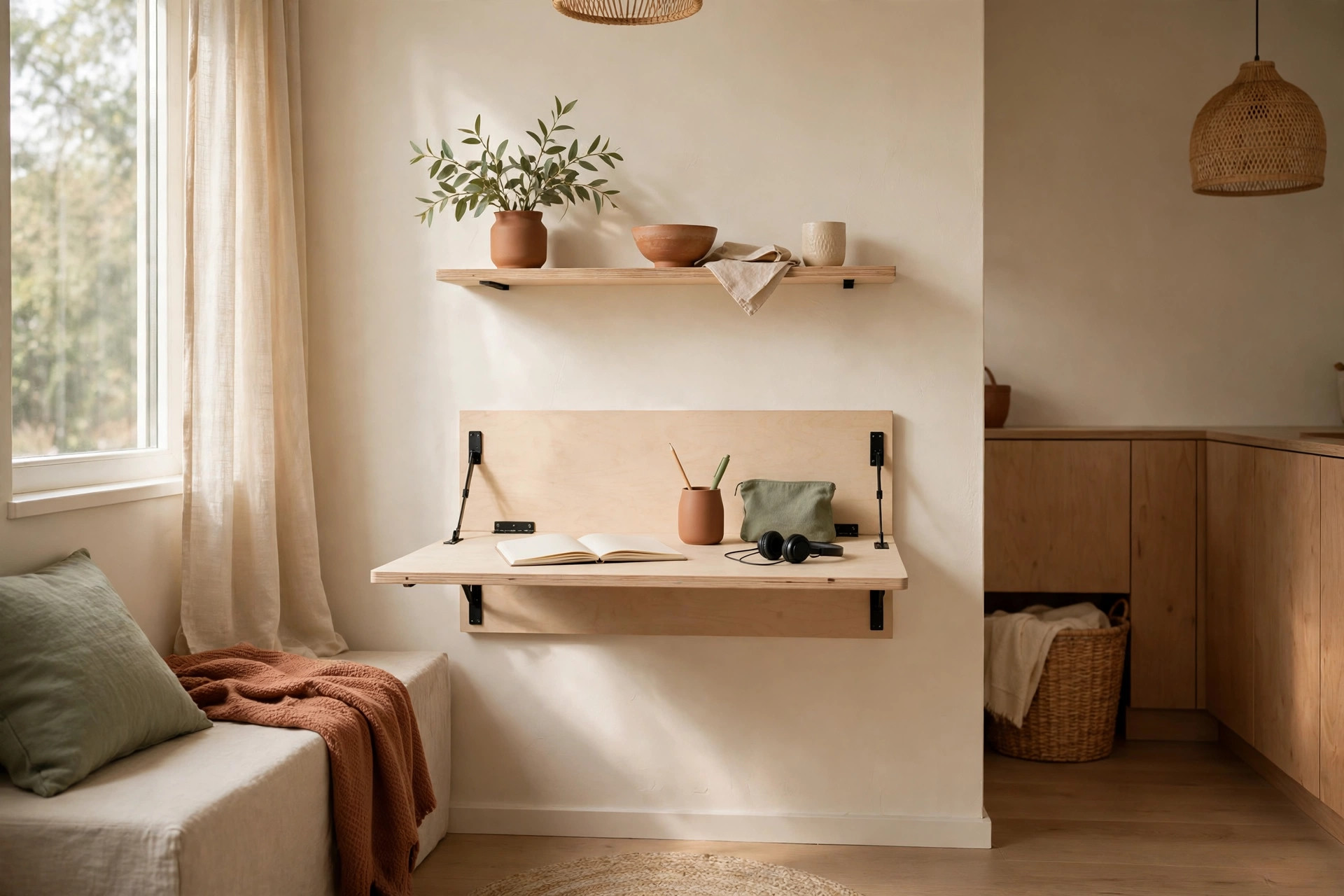
4. The fold-down wall desk with built-in shelves. A 36-to-42-inch-wide surface that folds up to reveal two or three shallow shelves. Folded, it looks like a wall cabinet about 8 inches deep; open, a full desk at 29 to 30 inches high. Keep a tray on the surface so supplies fold up with it — if you must clear the desk nightly, you will stop using it.
5. The secretary desk that hides the mess. A shallow cabinet, 10 to 12 inches deep, with a drop-front panel that becomes the work surface. Inside, cubbies hold chargers, notebooks, and the router. Close the front and the workday disappears — ideal if your desk faces the sofa. For desk zones and cable control in a single corner, see Small Home Office Organization in a Corner.
6. The floating laptop shelf for one-person households. A 24-by-16-inch fold-down shelf at elbow height — about 28 inches sitting, 42 inches standing — holds a laptop and a coffee mug. Add a folding stool on a hook beside it for a complete workstation in under 3 square feet of wall. Choose a bracket rated for at least 30 pounds; a laptop, a notebook, and leaning elbows add up fast.
Folding chairs and stools: where to stash them
Folding chairs fail for one reason: no parking spot. Each idea below names the stash first and the chair second.
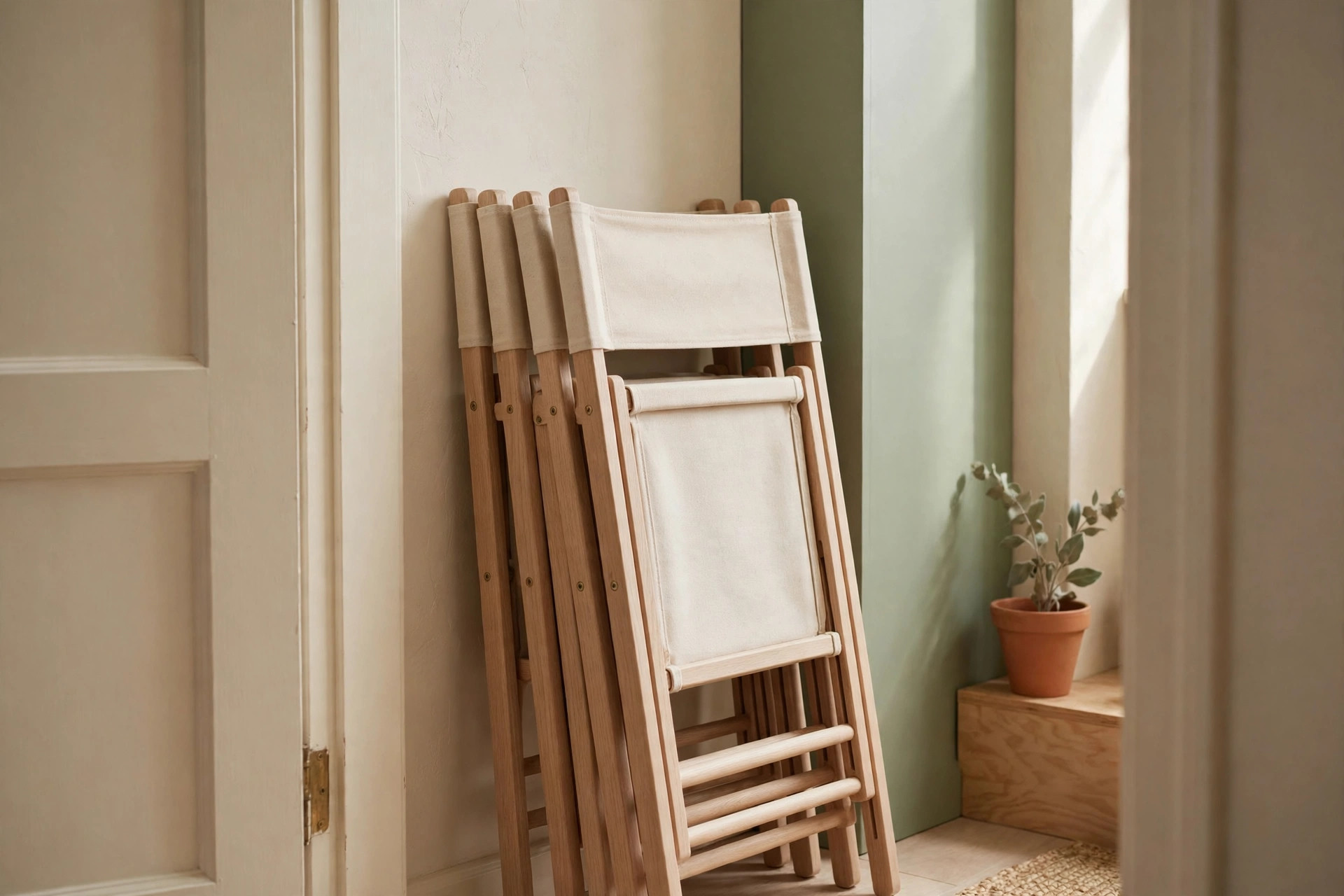
7. The wall-hook chair row. Slim wooden or metal folding chairs, about 2 inches thick when folded, hung on heavy-duty hooks behind the bedroom door or along a hallway wall. Four chairs take roughly 8 inches of depth and a 5-foot strip of wall. Keep the most-used hook at the easiest height so the first chair comes off in one motion.
8. The under-bed guest stool stash. Low folding stools, 12 to 14 inches tall when folded flat, slide under the bed in a shallow bin. A frame with 7 inches of clearance holds four to six stools in a 36-by-18-inch bin. Pull the bin out like a drawer and the stools are out in seconds — best for renters who cannot drill hooks.
9. The chair-that-is-a-side-table. Folding chairs with a flat, wide seat that doubles as a side table or plant stand when folded and stood on end. Two flank the sofa as end tables daily and become dinner seating in under a minute. Buy a matching pair so they look intentional — mismatched chairs read as clutter.
Murphy-style beds and sofa beds that actually work
The bed is the biggest piece of furniture in a small apartment, so folding it away is the biggest space win — but a bad Murphy bed is a daily wrestling match, so the mechanism matters more than the mattress.
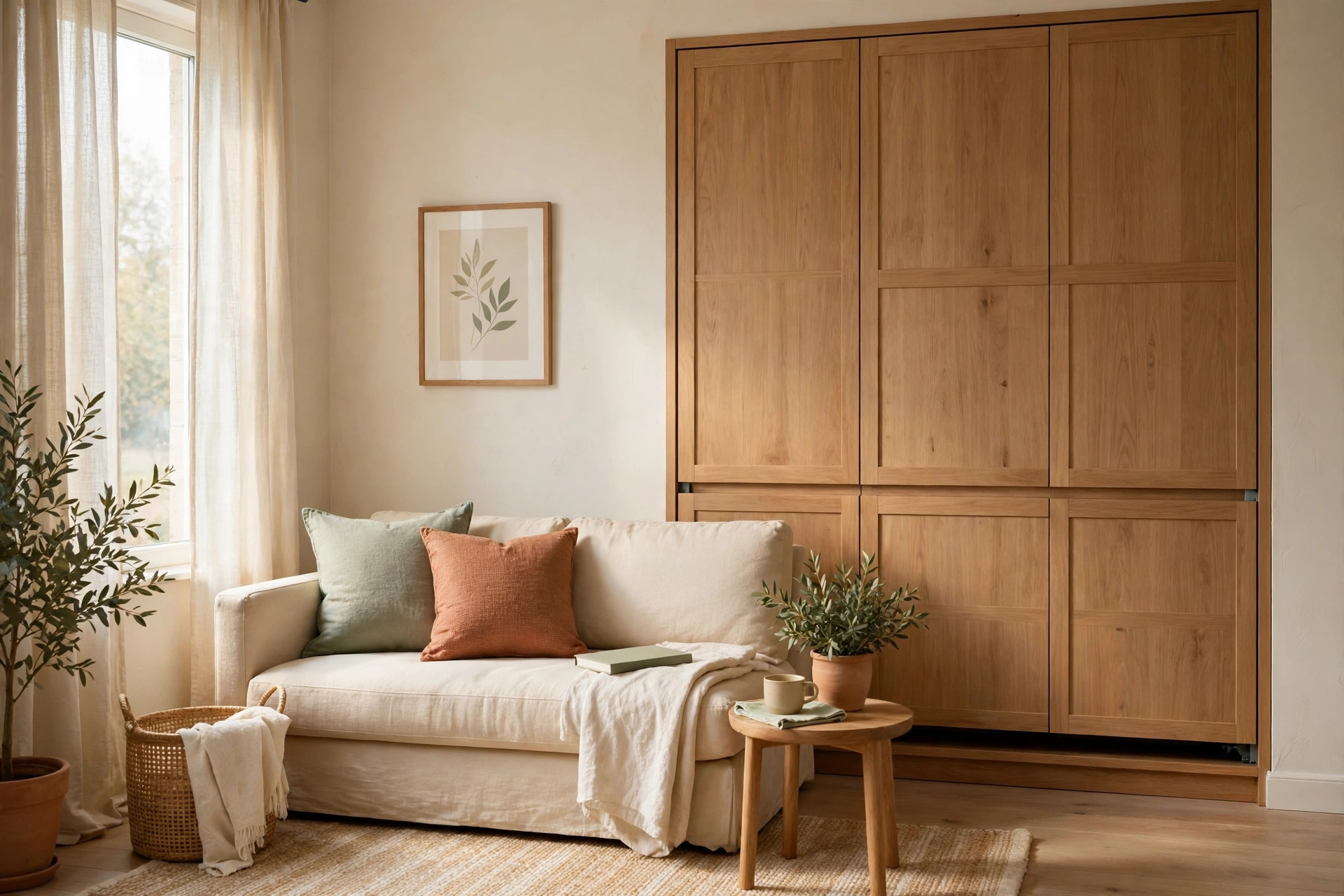
10. The vertical Murphy bed with a real mattress. A queen Murphy bed folds into a cabinet about 16 to 18 inches deep and frees roughly 35 square feet of floor. Buy the piston or spring mechanism, not the cheapest strap-and-hinge kit — a good one lets one person fold the bed in about 10 seconds. Use a mattress no thicker than 10 to 12 inches, and strap the bedding on; remaking the bed nightly is why most owners stop folding it.
11. The sofa bed you would actually sleep on. Skip the old pull-out bar-and-spring models: a modern click-clack or tri-fold memory foam sleeper unfolds in under 30 seconds and sleeps two adults with no center bar. Test it in person: sit, lie down, and fold it yourself — if the showroom model takes two staff members to fold, it will take you even longer at home. Daily sleepers should choose a Murphy bed instead; a sofa bed is a guest solution, not a primary bed.
Folding drying racks, ironing boards, and other flat gear
Flat gear is the quiet space thief: none of it is big, but it all lives unfolded in the middle of the room because it has nowhere to fold away to.
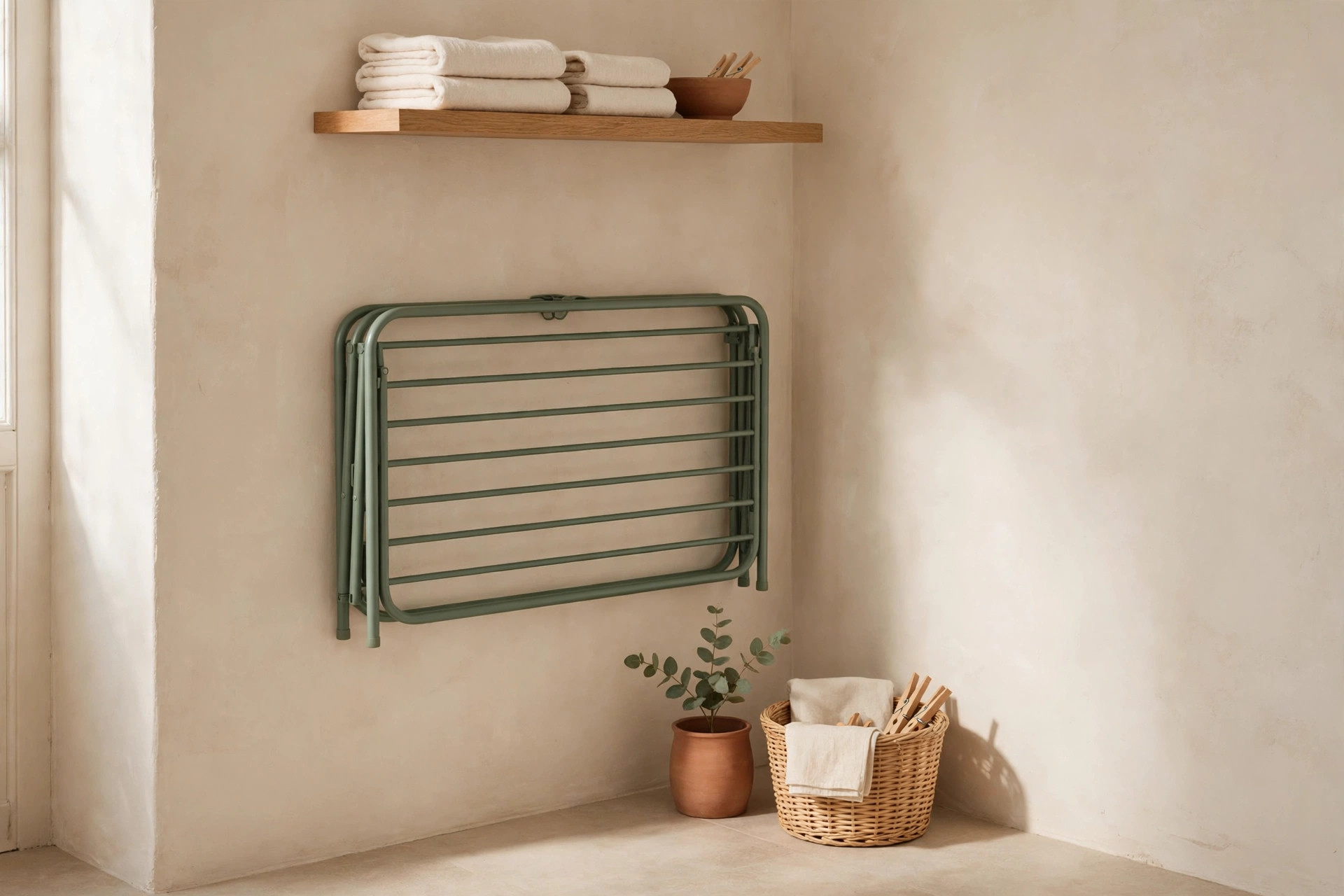
12. The wall-mounted accordion drying rack. A wooden accordion rack mounts on the laundry or bathroom wall and folds flat to about 3 inches deep. Open, it holds a full load across 15 to 20 feet of drying line. Mount it above the washer or over the tub so drips land where they belong. Our 17 Small Laundry Drying Solutions for Apartments (No Dryer, No Yard) covers racks, lines, and heated airers that respect rental rules.
13. The over-the-door ironing board. A full-size ironing board that hangs flat on the back of a closet or bedroom door, about 2 inches deep when stored. Open it on the door or pull it down onto its own legs — it never needs floor space of its own. Keep the iron in a heat-proof pouch on the same hook so the whole station is one grab.
14. The fold-flat step stool and cleaning caddy. A folding step stool that collapses to under 2 inches thick hangs on a hook inside the pantry or cleaning closet. Pair it with a flat folding bucket and collapsible dustpan so the whole kit lives on one narrow shelf. If your tallest shelf is out of reach, this kit decides whether that storage gets used.
The 30-second rule: if it takes longer to unfold, you won’t use it
Here is the rule: if a folding piece takes more than 30 seconds to set up, it will stay folded forever. A table that opens in 5 seconds gets used daily; a Murphy bed that takes 90 seconds and a second pair of hands gets used once, then becomes an expensive wardrobe.
15. The fold-flat guest kit, timed and staged. One kit, one parking spot: two folding chairs, one folding side table, and extra placemats on a single closet shelf or in one under-bed bin. Time the full setup once — chairs out, table open, placemats down. Under 30 seconds, the kit works. Over, move it closer to guests and cut anything that needs assembly. Pass this test and every other fold in this guide will hold.
Mistakes to avoid
Buying the fold before the parking spot. Decide the exact hook, shelf, or gap first, measure it, then buy a piece that fits — otherwise it ends up leaning in the hallway.
Choosing the cheapest mechanism. A folding table lives or dies by its hinges and brackets. Budget hardware sags, squeaks, and eventually drops a dinner plate — spend $20 to $40 more on rated brackets and locking hinges.
Folding furniture that folds wrong. A drop-leaf table hinged on the wrong side blocks the walkway, and a Murphy bed that folds down over the rug cannot lie flat. Sketch the open footprint with painter’s tape before you drill.
Frequently asked questions
Can folding furniture really save space in a studio apartment?
Yes — a fold-down table and a wall desk together free roughly 25 to 35 square feet in a studio, often 10 percent of the whole apartment. The saving only holds if each piece has a parking spot and unfolds in under 30 seconds.
How much weight can a wall-mounted folding table hold?
Most wall-mounted drop-leaf tables with rated brackets hold 50 to 75 pounds — dinner for two plus elbows. Anchor into a stud or use toggle bolts; the wall fixing, not the tabletop, is the weak point.
Are Murphy beds safe in a rental apartment?
A freestanding Murphy bed cabinet with an anti-tip strap is the renter-friendly option, and many landlords allow it. Wall-mounted versions need lag bolts into studs, so ask your landlord in writing first. If drilling is out, a tri-fold sofa bed is the no-drill alternative.
Conclusion
Space saving folding furniture works when two things are true: every piece has a parking spot and opens in under 30 seconds. Pick one idea — the drop-leaf table is the best first move — set it up this week and time it. If it passes, add the next one. Save this pin for later and browse more in our storage ideas collection.