Drying laundry in an apartment without a dryer or a yard feels like a math problem with no good answer — but the right small laundry drying solutions change that. Where does a full load of wet clothes go when you have 600 square feet, a balcony you cannot use, and a lease that bans drilling? Below are 17 apartment laundry drying ideas — racks, lines, heated airers, and emergency setups — that dry clothes fast without eating your living room or growing mold. You will also learn the airflow and ventilation rules that make indoor drying safe in any rental, even in the dampest months of the year.
The apartment drying problem: space, airflow, and lease rules
Clothes dry when water evaporates from fabric, which needs surface area, moving air, and unsaturated air. Apartments fight you on all three: you cannot spread clothes out, still indoor air barely moves, and one wet load dumps roughly 2 liters of moisture into a room with nowhere to send it.
Then there is the lease. Many agreements ban balcony lines, forbid wall anchors in tile or plaster, and hold you responsible for mold damage. None of that matters with freestanding, tension-mounted, or adhesive-free solutions. Every idea below assumes you cannot drill, cannot nail, and cannot take over the one room you live in.
Folding winged racks: the workhorse of small-space drying
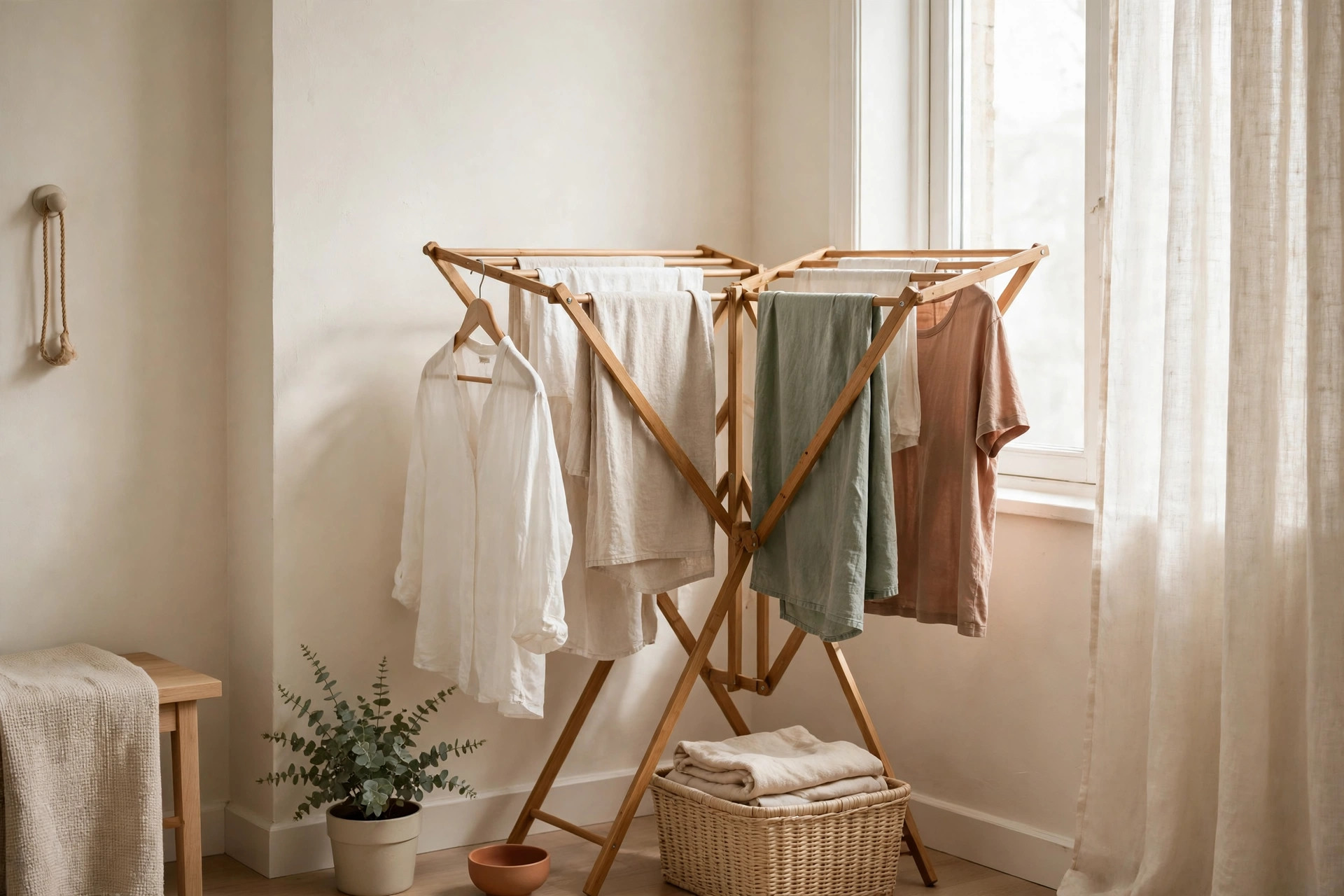
If you buy exactly one drying product, make it a winged rack — a freestanding A-frame with fold-down side wings. Opened, a medium rack gives 50–60 feet of line space in about 2 square feet of floor. Folded flat, most slide behind a door at under 3 inches thick.
1. The classic A-frame winged rack. Get one roughly 40 inches wide with two adjustable wings and mesh panels on top for delicates. It holds a full load and folds flat in seconds.
2. A tower rack for tall loads. A tower goes up instead of wide — typically 4 tiers in a 22×28-inch footprint, so dresses and towels hang fully extended and dry faster.
3. A winged rack with a drip tray underneath. A shallow boot tray (about 36×20 inches) under the rack catches first-hour drips and protects your floors.
4. Two half-load racks instead of one big one. Shoulder-to-shoulder clothes trap moisture and can double drying time. Two slim racks let you split the load between rooms. For the storage side of laundry, see these 16 small laundry closet organization ideas that actually fit.
Wall-mounted and retractable lines that vanish
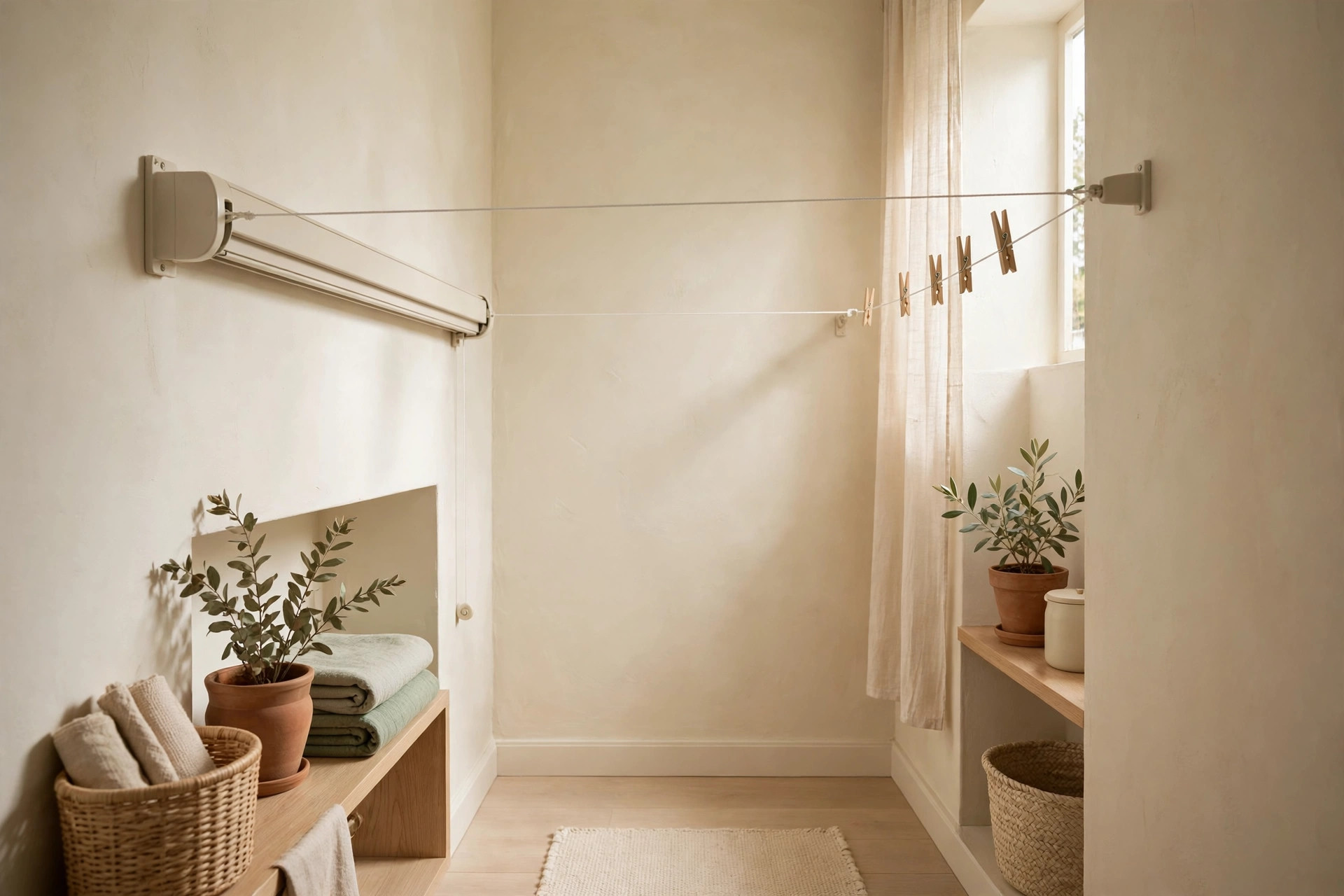
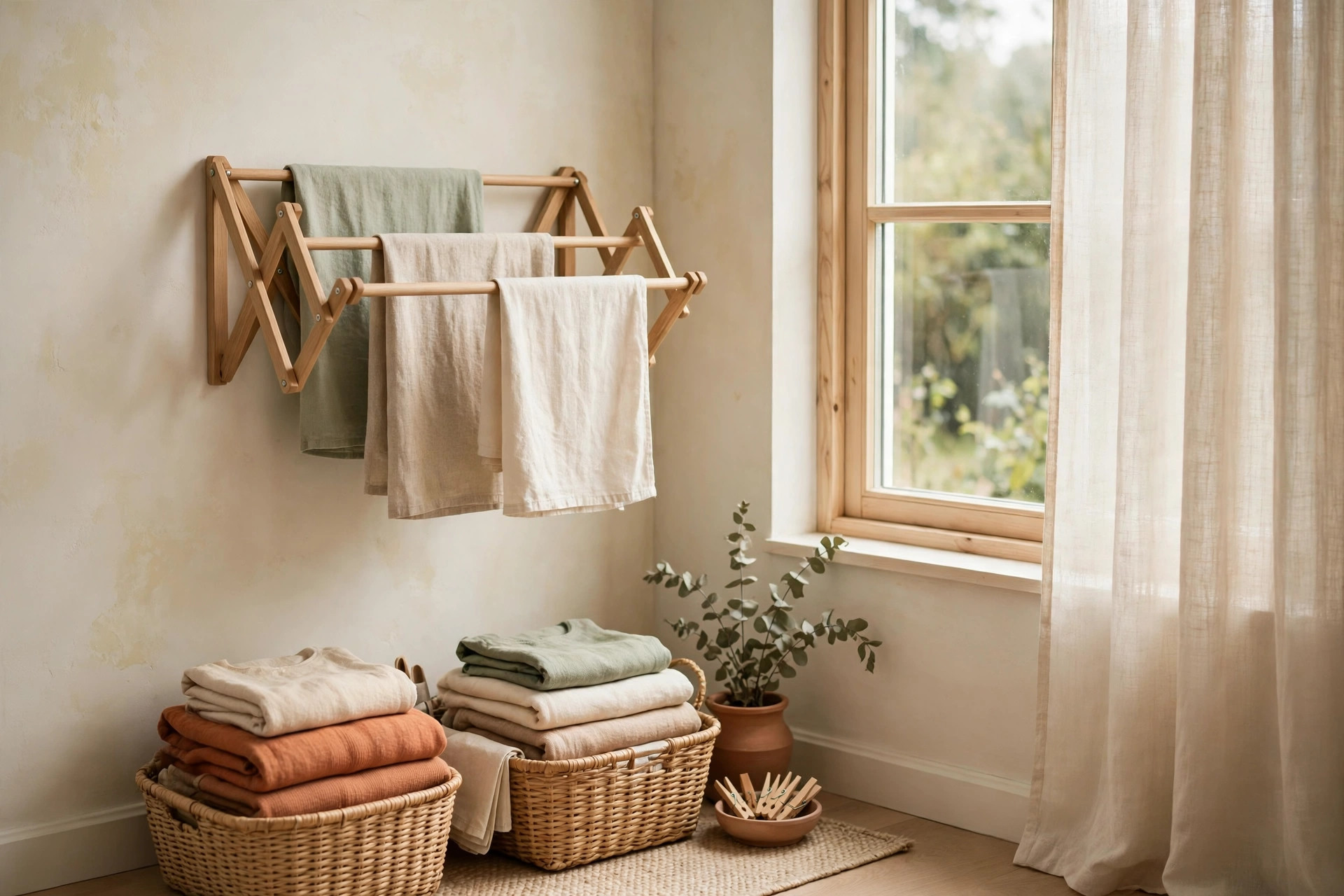
Wall-mounted drying sounds like it needs drilling, but renter-safe options exist: tension poles, over-door brackets, and load-rated adhesive hooks. The principle is the same — lift drying into vertical space you were not using.
5. A retractable clothesline across the bathroom. One retractable line stretches 10–15 feet across the shower stall, then rewinds into a small housing. Tile handles drips; the shower fan gives free ventilation.
6. A tension-mounted pole in the laundry nook. Floor-to-ceiling tension rods (shower-curtain kind, rated to about 30 pounds) fit a 24-inch gap beside the washer. Hang items on hangers from the rod — zero floor space used.
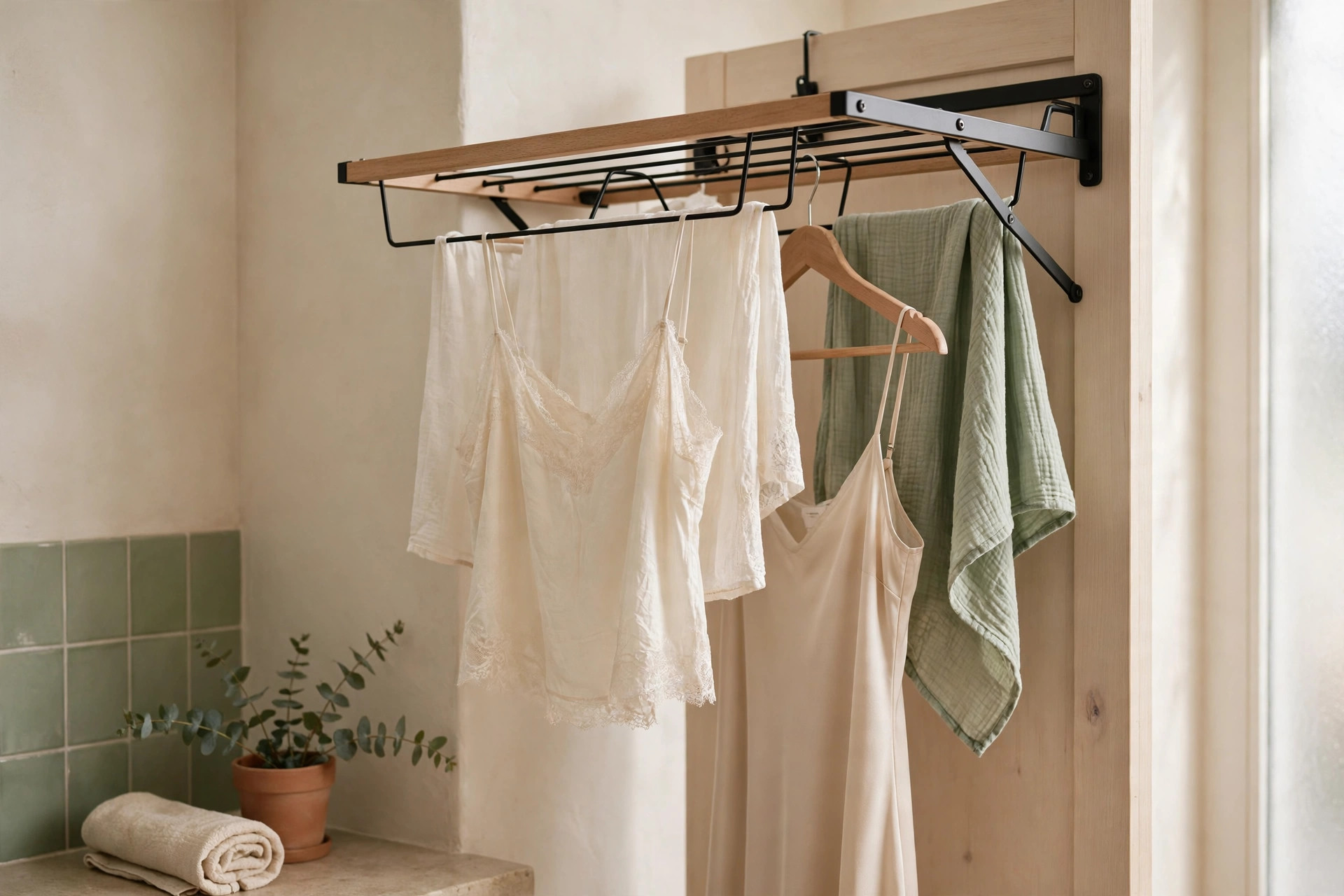
7. An over-the-door folding rack. These hook over a standard interior door and unfold into 3–4 bars of line space — ideal for delicates. For more uses for that door, see these over-the-door organization ideas.
8. Adhesive-mounted folding arms in the bathroom. A pair of folding wall arms rated 10–15 pounds each holds shirts on hangers above the tub. Use only name-brand removable adhesive rated for humid bathrooms — a soaking pair of jeans can weigh 6–8 pounds alone.
Heated airers: when electricity beats patience
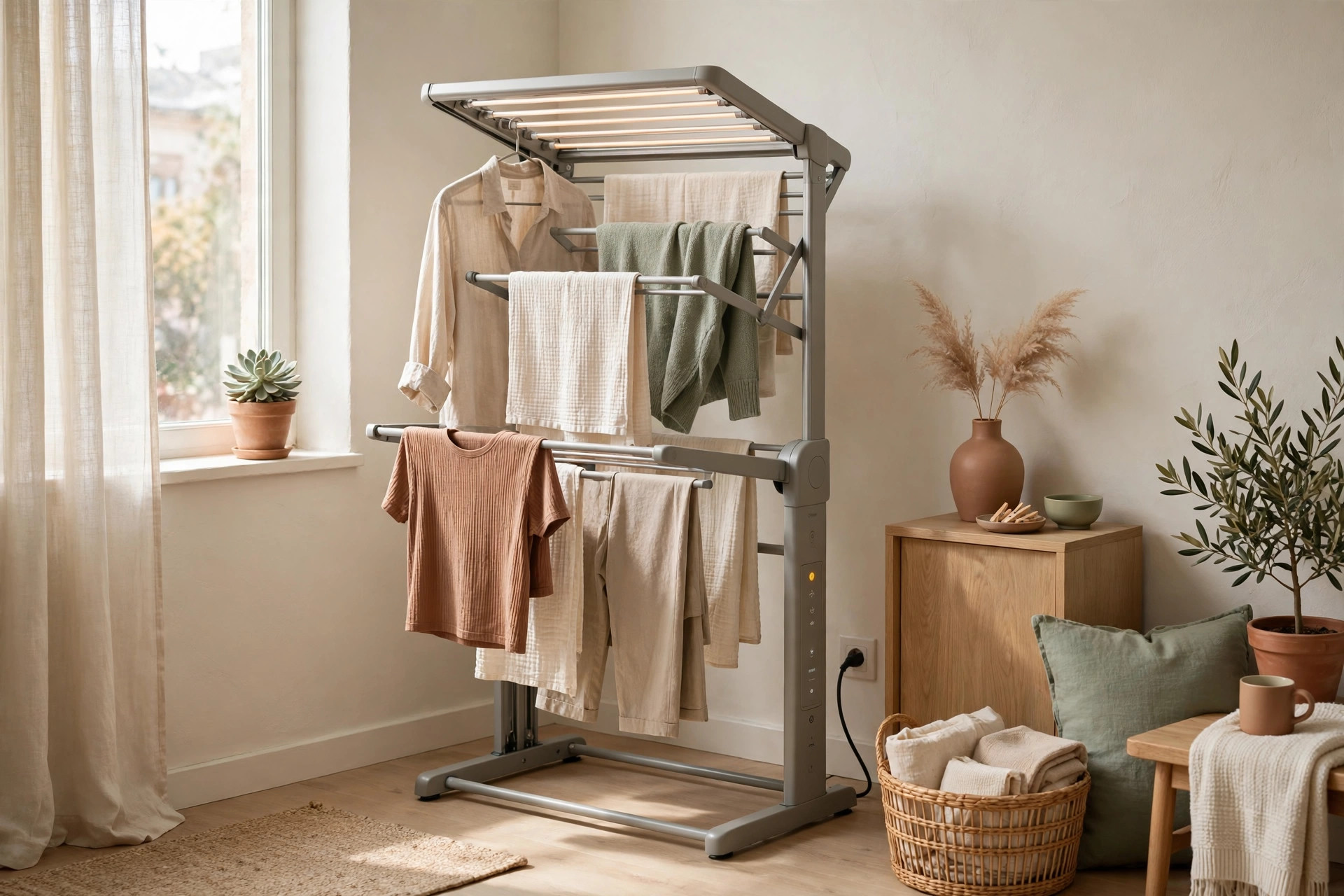
A heated airer is a winged-style rack with low-wattage heated bars (100–230 watts) that warm the rails so nearby air holds more moisture. A load that takes 18 hours passively can finish in 4–6 hours.
9. A standard heated winged airer for damp climates. For humid winters or sunless flats, this changes laundry day. Always run it with a cover.
10. A heated airer with an insulated cover. The fitted cover traps rising warm air around the clothes like a dryer drum. Expect roughly a third faster drying than uncovered.
11. A heated pod for single items. Heated pods use a warm-air column to dry 5–8 items at once and fold to shopping-bag size. The answer to “I need this blazer dry by morning,” not to family loads.
12. A heated airer on a timer plug. Set 4 hours so you never heat an empty rack overnight. At ~150 watts for 4 hours a load costs about 0.6 kWh — a fraction of a tumble dryer’s 2–4 kWh per cycle (U.S. Department of Energy).
Door-hung and shower-rod emergency drying
Sometimes the rack is full or guests are coming in an hour. These no-dryer drying clothes tricks need nothing the apartment does not already have.
13. Hangers on the shower rod. A standard rod holds 6–10 shirts on hangers with air gaps. Run the exhaust fan, close the door — a tiny drying chamber.
14. The chair-and-fan combo. Drape trousers over dining chair backs in a row, point a box fan at them on medium, and leave 2–3 feet between chairs. Moving air does more work than heat at this scale.
15. Towel-rolling delicates before hanging. Roll a damp sweater in a dry bath towel and press firmly (never wring). The towel pulls out a surprising amount of water in two minutes, cutting hanging time by hours.
16. A folding rack in front of a sunny window. Sunlight through glass is a free low-grade dryer. Keep the rack 6–12 inches from the glass for circulation, and rotate dark garments halfway to avoid uneven fading. If your lease bans balcony lines, these 16 small apartment balcony storage ideas show what renters can still do with that space.
17. The overnight radiator method. In heated apartments, pull a rack near (not touching) a radiator and a half load dries by morning. Keep 6 inches of clearance; never drape fabric on a heat source.
Airflow math: how clothes actually dry indoors
Evaporation depends on the gap between moisture in the fabric and what the air can still absorb. A still, closed bedroom saturates fast — then clothes just sit damp and smell musty within 24 hours.
The fix is circulation, not heat. One oscillating fan on low, aimed across the rack, replaces the humid boundary layer around each garment with drier room air — shortening drying time more than turning up the thermostat. Crack a window 1–2 inches on the opposite side of the room and the cross-draft carries moist air out entirely.
Moisture control: ventilation that prevents mold
A full load releases roughly 2 liters of water into your air. In a small, well-sealed apartment that can push humidity above 70 percent, where mold colonizes cold corners within days. Drying indoors is safe as long as moisture has an exit.
Ventilate the drying room deliberately. Open a window a crack or run the bathroom exhaust fan. With no window, a small dehumidifier (20-pint models handle a one-bedroom) pulls moisture from the air and speeds drying.
Check humidity with a cheap hygrometer. A $10–15 digital hygrometer shows whether the room sits at a safe 40–50 percent or creeps past 60. If it climbs, add ventilation before heat.
Never dry against an exterior wall. Cold outside walls condense moisture first. Keep the rack 6–12 inches from exterior walls and glass, and never shut a loaded rack inside a closet. The EPA’s mold guidance frames indoor moisture as a ventilation problem first.
Mistakes to avoid
Cramming a full load onto one rack. Middle garments can stay damp 48 hours and develop a sour mildew smell needing a rewash. Split the load or wash smaller loads.
Hanging clothes on radiators. Draping wet fabric on a hot radiator can scorch garments and is a fire-adjacent habit. Heated airers exist because low, even warmth is safer.
Ignoring the bathroom fan. It is the strongest exhaust in most apartments and costs pennies to run. Drying in the bathroom with it off causes peeling paint and ceiling mold.
Buying a dryer you cannot vent. Compact “portable” dryers needing a window vent kit often violate leases like balcony lines do. If your lease says no, believe it.
Skipping the dehumidifier math. Drying 3+ loads a week indoors in a humid climate makes a dehumidifier the appliance that makes everything else work — budget for it like you budget for the rack.
Frequently asked questions
How can I dry clothes fast in an apartment without a dryer?
Use a heated airer with its cover — most loads finish in 4–6 hours. Without electricity, combine a winged rack with an oscillating fan and a cracked window; spacing plus moving air beats still warmth every time.
Can I dry clothes indoors without getting mold?
Yes, if the moisture has somewhere to go. Ventilate with a window or exhaust fan, keep humidity under 60 percent, and keep the rack off cold exterior walls. Mold comes from trapped moisture, not from drying.
How long does it take to dry clothes on a rack indoors?
A normally spun load takes 8–18 hours on a passive rack depending on fabric and airflow. Jeans and towels sit at the long end; synthetics at the short. A fan cuts the time by a third or more.
What is the best drying rack for a very small apartment?
A winged A-frame: about 50–60 feet of line space in 2 square feet of floor, folding flat under 3 inches. If floor space is truly zero, a retractable line across the shower or a tension pole beside the washer wins.
Can I hang a clothesline in a rental without drilling?
Yes. Retractable lines mount with removable adhesive or tension, tension poles wedge floor-to-ceiling, and over-the-door racks need no mounting. Check your lease for balcony-line rules specifically — indoor setups rarely conflict.
Wrapping up
You do not need a dryer or a yard to keep up with laundry in a small apartment — you need the right rack, real airflow, and a ventilation habit that keeps moisture moving out. Pick one idea from each section and your next load dries faster. Save this pin for later, and browse the small spaces collection.