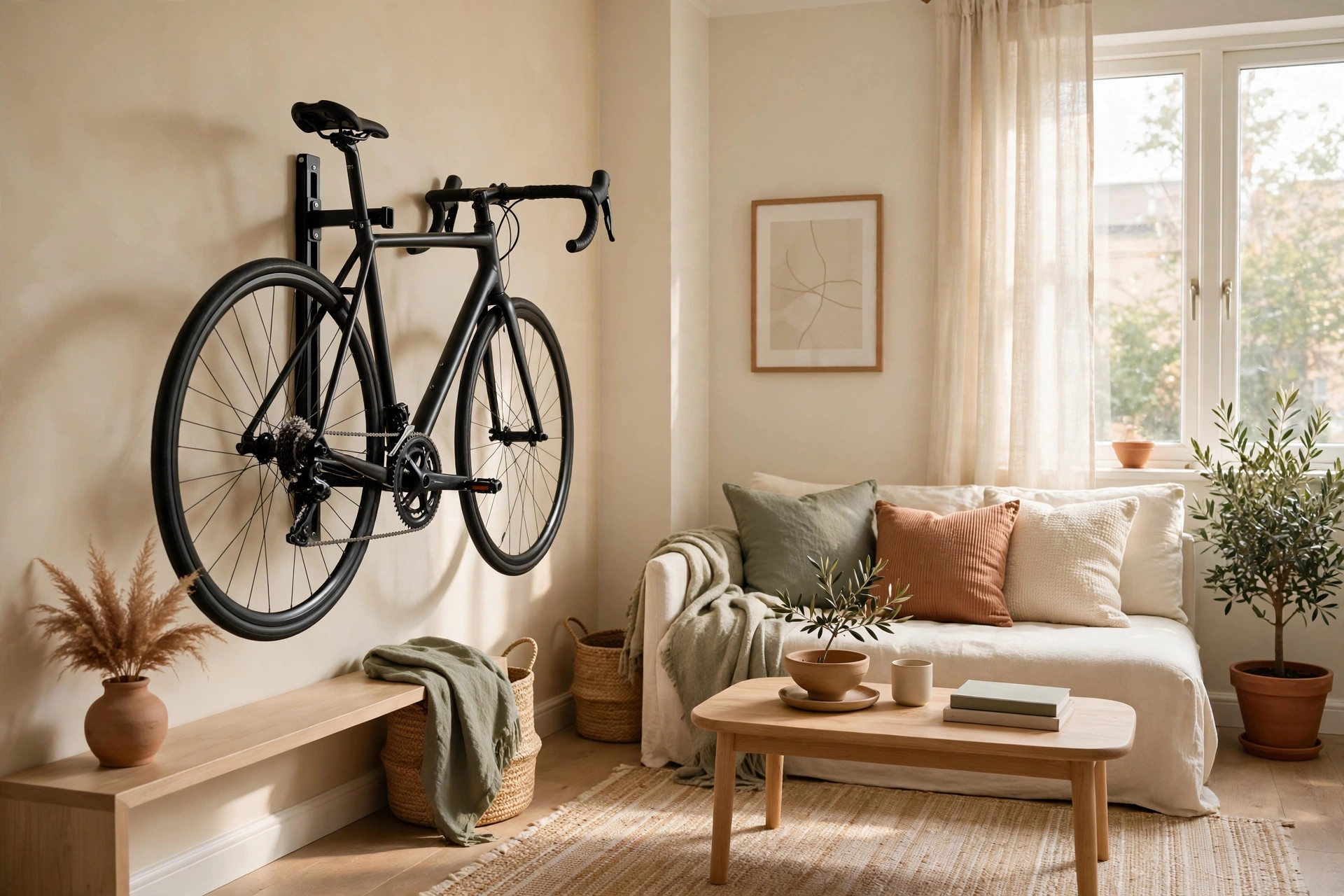
A small living room has to do a lot: host movie nights, hold your books and remotes, absorb the mail, and still look like a place you can relax in. When every surface fills up, the room feels smaller than it is. These small living room storage ideas for apartments are built for renters — no built-ins, no renovation. Below are 17 practical ideas, from media wall setups to seating that hides clutter, all chosen to work in a typical apartment living room. The good news: you do not need built-in cabinetry or a bigger apartment to fix it. Freestanding furniture, wall height, and a few lidded containers can hold everything the room needs while keeping it calm and easy to live in.
The living room audit: what actually lives here vs what drifted in
Before you buy a single basket, figure out what your living room stores: daily items (remotes, chargers, a throw), weekly items (books you are reading, a game or two), and drifters — things that belong in another room but landed here.
1. Sort everything into stay, move, or go
Work one surface at a time — coffee table, then shelf, then sofa cushions — and sort each item into three groups: stays, moves to its real home, or leaves the apartment. Drifters are usually the biggest group, and removing them first often frees more space than any new furniture will.
2. Measure your storage gaps before you shop
Note three numbers: the width of your media wall, the clear space under your sofa (usually 3 to 5 inches), and the depth of any shelf you plan to use. Storage fails when guessed: a basket half an inch too wide for a cubby is useless.
Media wall storage without built-ins: consoles, shelves, and cord control
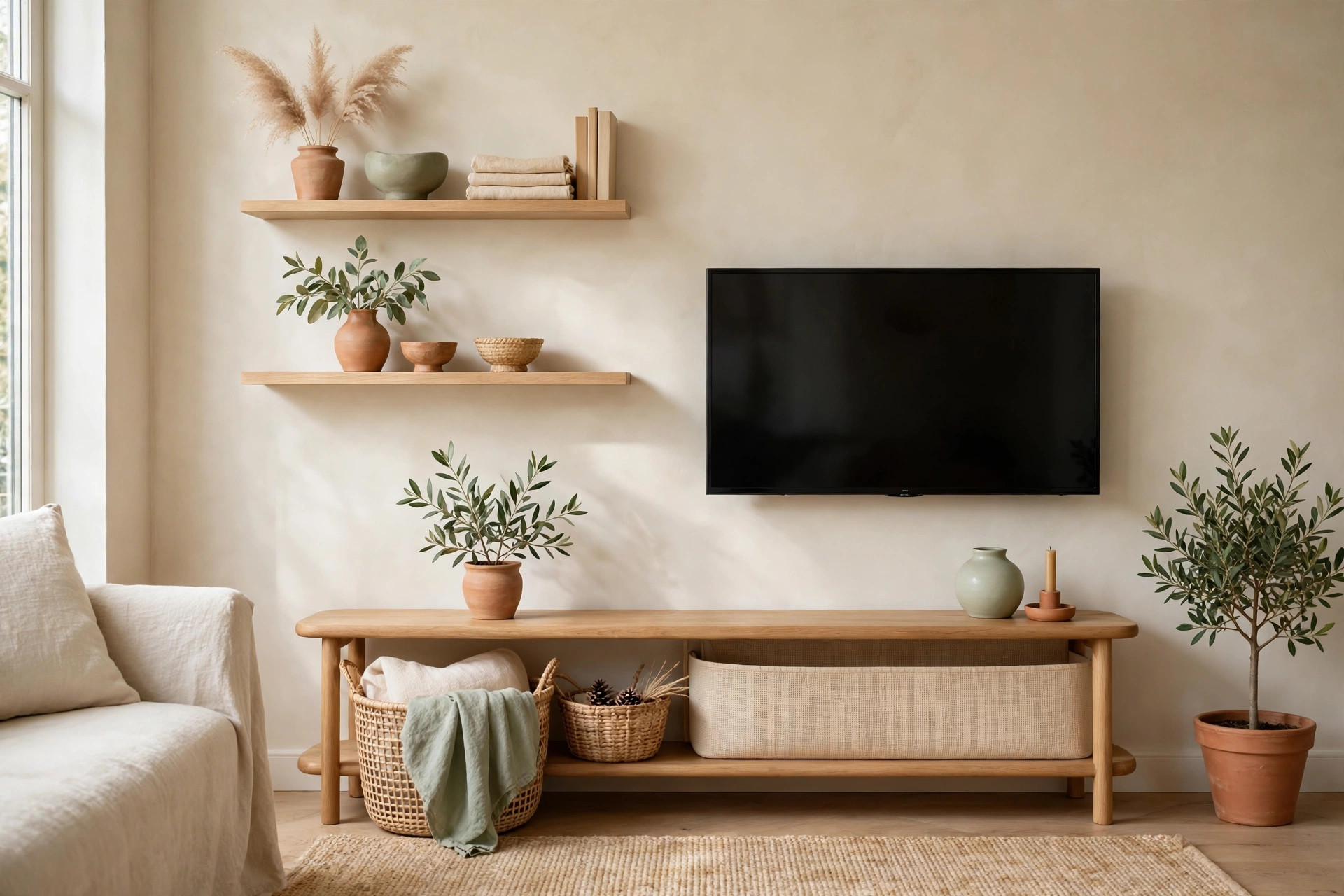
The TV wall is the biggest storage opportunity in most apartments. A freestanding setup can hold as much as a built-in — it just needs a plan for cables and clutter.
3. Choose a console with closed doors, not open shelves
An open media shelf displays every cable, console, and game case. A console with closed doors — ideally 48 to 60 inches wide for a typical apartment TV — hides all of it behind one calm surface. Inside, use small bins for controllers and remotes so nothing slides to the back. Leave one open cubby only for a device that needs ventilation, like a game console, with 2 inches of airflow around it.
4. Add one row of floating shelves above the TV, not a full wall
A single shelf mounted 10 to 12 inches above the TV holds books, a plant, and a small basket without turning the wall into a warehouse. Use stud-mounted brackets rated for the load, and patch small holes at move-out with spackle. Keep the shelf about two-thirds full — a packed shelf reads as clutter, not storage.
5. Tame cords with a channel and a power strip box
Loose cords are half the visual mess of a media wall. Run cables through an adhesive cord channel painted to match the wall, and put the power strip inside a ventilated cord box. Label outlets with masking tape so you can unplug one device without unplugging everything.
Seating that stores: ottomans, storage benches, and sofa consoles
In a small living room, every seat is also a storage opportunity — choose pieces that store without looking like storage.
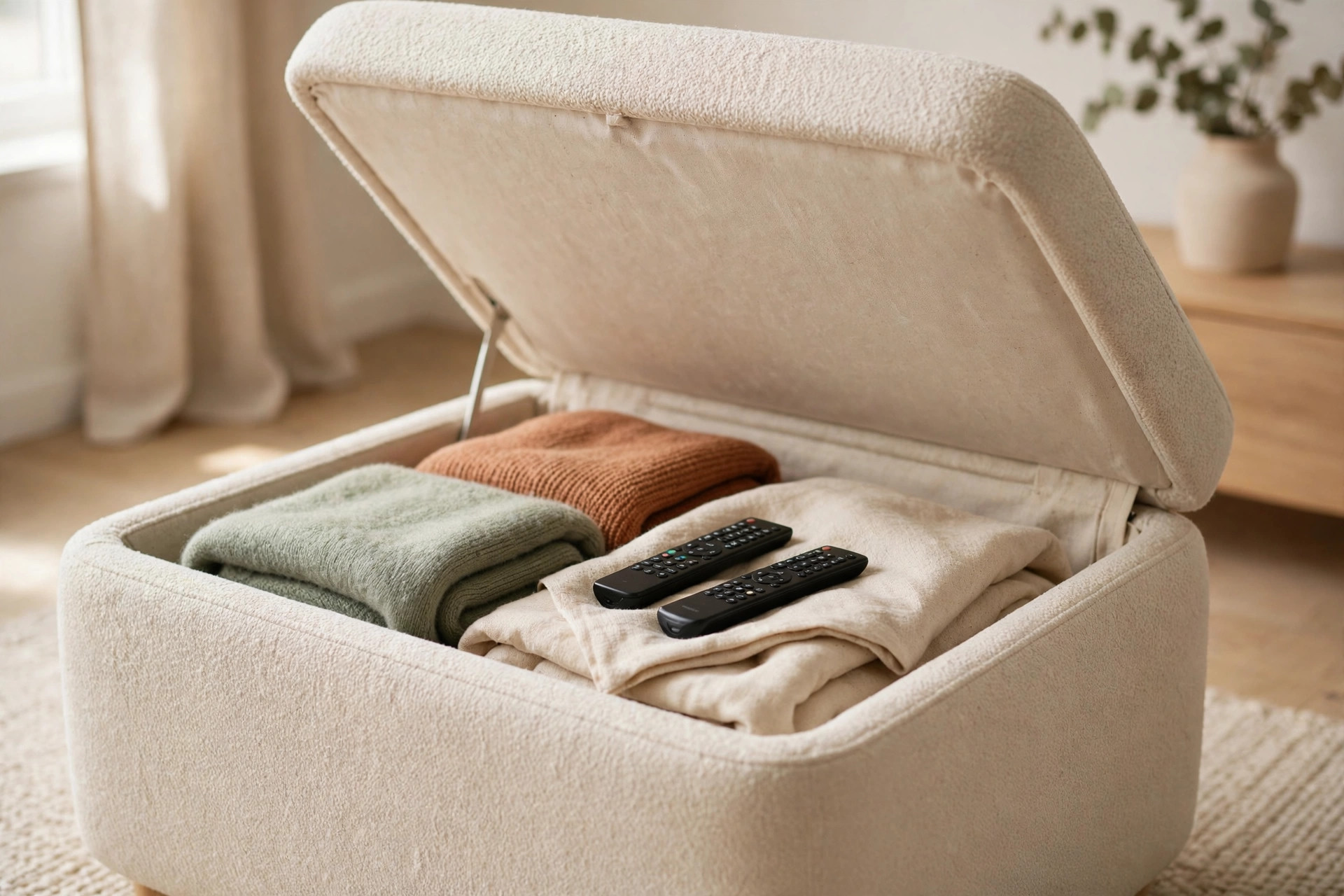
6. Swap the coffee table for a storage ottoman
A lidded ottoman roughly 30 by 18 inches holds throws, board games, and charging cables, and doubles as guest seating. Choose a flat, firm lid so it can still hold a tray for drinks.
7. Put a slim storage bench under the window
A bench 14 to 16 inches deep fits under most windows without blocking light, and it swallows items that otherwise pile on the sofa: extra cushions, a folded blanket, kids’ activity kits. Measure the sill height first — the bench should sit at least 2 inches below it so curtains hang freely. For more on choosing pieces that earn their floor space, see 19 Vertical Storage Ideas for Small Apartments (Think Up, Not Out).
8. Add a sofa console behind a floating sofa
If your sofa floats mid-room, the 6 to 10 inches behind it are wasted space. A narrow console table — about 10 inches deep — holds a lamp, a charging station, and a lidded box for remotes. Keep it lower than the sofa back so it does not block sightlines.
Vertical walls: floating shelves, picture ledges, and tall narrow units
Floor space is fixed. Wall height is not. Most apartments have 5 or 6 feet of unused air above their furniture — claim it for storage without losing floor space.
9. Use picture ledges for books and small items
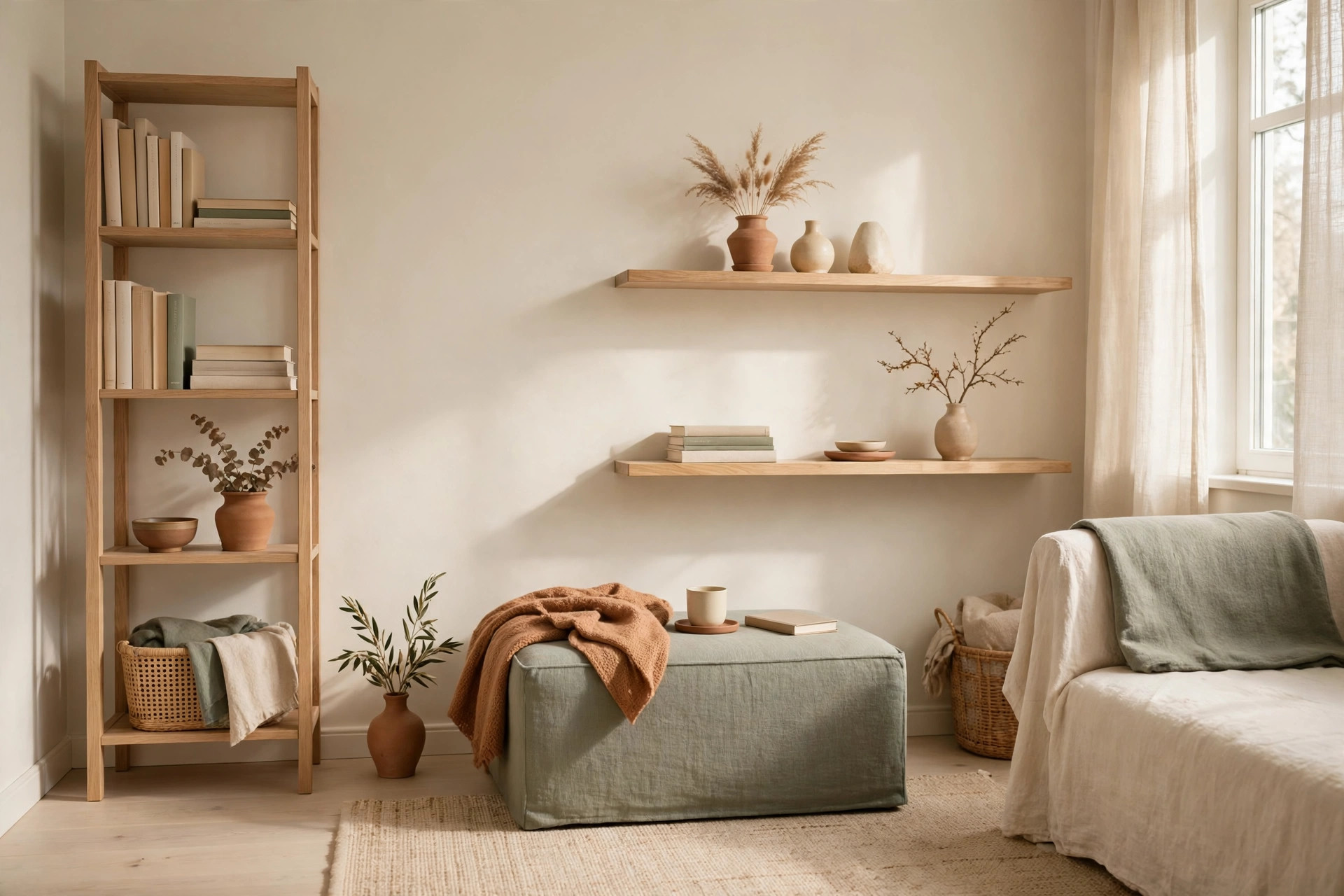
Picture ledges — shallow shelves 3 to 4 inches deep — hold books spine-out, framed photos, and small plants without the bulk of a bookcase. Mount two staggered ledges for books you are actually reading; the rest live elsewhere. One ledge holding 10 to 12 paperbacks frees an entire shelf.
10. Anchor one tall, narrow bookcase in a dead corner
A bookcase 24 inches wide and 72 inches tall fits corners nothing else uses, and holds as much as a wider unit. Anchor it to a stud with an anti-tip kit — essential if children or pets climb, and recommended by the U.S. Consumer Product Safety Commission for furniture that can tip. Put heavy items low and lighter decor high so it stays stable. For styling rules that keep a packed bookcase calm, read 16 Bookshelf Organization Ideas for Small Apartments.
11. Hang a high shelf above the doorway
The 12-inch band above a doorway is dead space in almost every apartment. One shelf there, mounted into studs, holds items needed a few times a year: board games, photo albums, seasonal decor in a matching bin. Keep it to one bin or a row of books, and use a step stool — never a chair — to reach it.
Hidden storage in plain sight: baskets, trunks, and lidded boxes
The calmest small living rooms are not emptier — they just hide more behind lids.
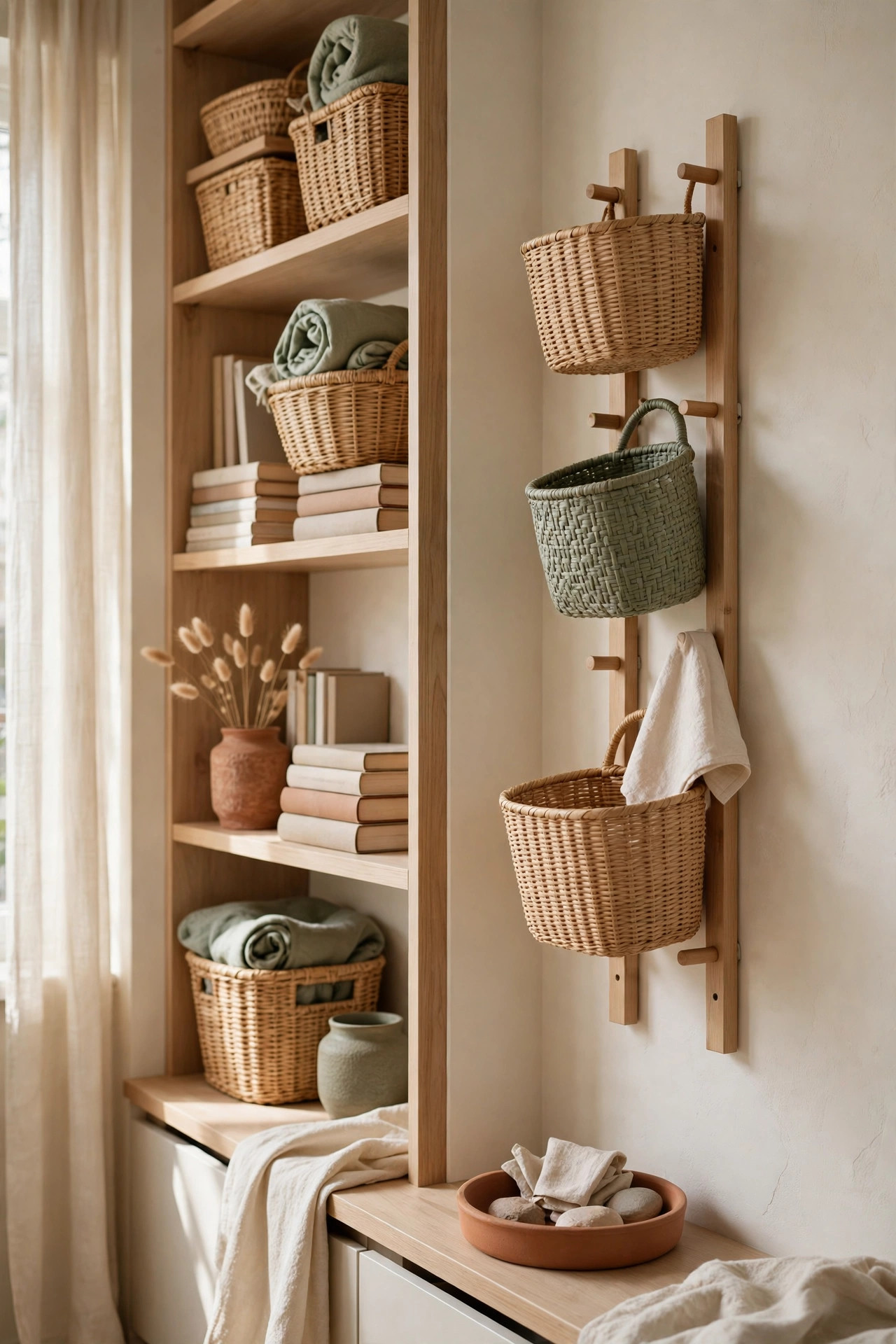
12. Give every category one lidded basket, and label the bottom
One basket for remotes and chargers, one for kids’ small toys, one for pet supplies. Lids matter: an open basket fills until it overflows, while a lidded one has a natural limit. Label the bottom, not the front, so the room stays calm. Baskets about 12 by 10 inches fit most shelf cubbies and sofa consoles.
13. Use a trunk as a side table
A lidded trunk roughly 30 by 16 inches works as an end table and holds the bulkiest living room items: spare blankets, wrapping supplies, board games. Choose a flat top so a lamp or drink sits steadily, and add felt pads to protect the floor. With kids around, soft-close hinges avoid pinched fingers — and for toy-specific systems, see 18 Kids Toy Storage Ideas for Small Living Rooms (Toys Without the Chaos).
Zones for a multi-use living room: work, play, and relax corners
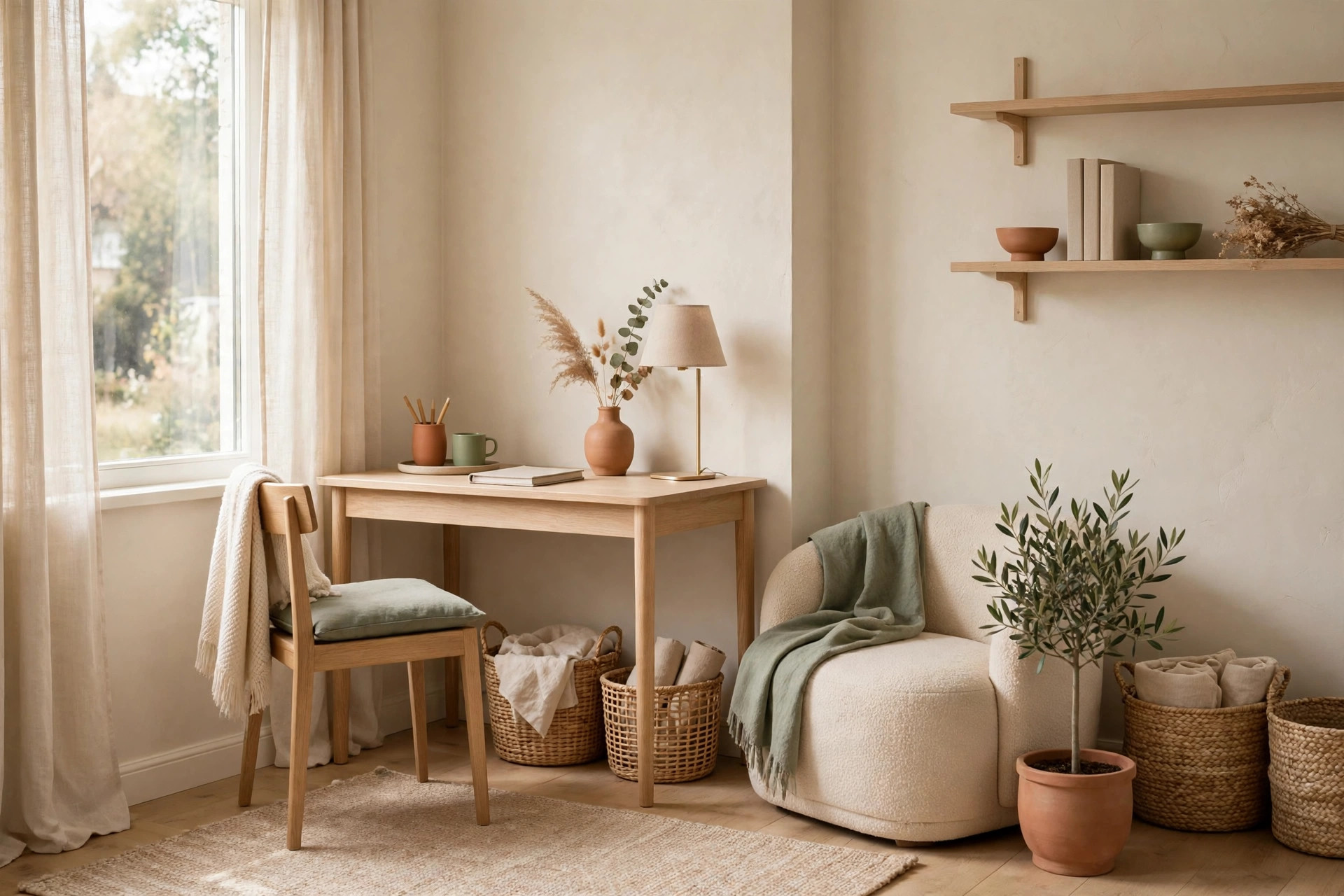
Storage fails when one room serves three purposes with no boundaries. Zones fix that: each activity gets a place, and its clutter stays inside it.
14. Define zones with a rug and a light, not a wall
Put a small rug under the reading chair and another under the main seating area, and give each zone its own light — a floor lamp for reading, the ceiling light for the main area. Each rug reads as a separate room, so work clutter does not visually invade the relax zone. Keep each zone’s storage inside its boundary.
15. Park the work corner in a rolling cart
If you work from the living room, a three-tier rolling cart about 15 by 12 inches holds a laptop stand, notebooks, and chargers, and rolls into a closet or behind the sofa at day’s end. When work ends, the cart leaves the main seating area — a cart that stays out permanently is clutter with wheels.
The daily reset: keeping a small living room from re-cluttering
Storage systems fail not because they are wrong, but because nobody maintains them. A five-minute daily reset keeps a small living room calm between deep cleans.
16. Run a five-minute nightly reset with a carry basket
Keep one empty basket by the sofa. Each evening, walk the room once, drop every out-of-place item in, then return things home. Set a five-minute timer so it never becomes a chore.
17. Do a monthly one-in, one-out check
Once a month, pick the fullest basket or shelf: anything new that entered the room means something old leaves it. A new throw means an old one goes to donation. This one habit stops the slow creep that fills every system.
Mistakes to avoid
Buying storage before auditing is the most expensive mistake — you end up organizing things you should have removed. Buying open shelving for messy categories is the second: open shelves display clutter, so reserve them for items that already look good. Third is over-filling: a basket stuffed past its lid reads as clutter. Finally, never skip anchoring tall furniture — a tipping bookcase is a safety hazard, so anchor anything taller than 4 feet.
Frequently asked questions
Can you add storage to a small living room without drilling?
Yes. Freestanding consoles, storage ottomans, trunks, baskets, and rolling carts all add storage with no holes in the wall. Adhesive strips work for very light items, but anything heavy needs screws into a stud — and small holes patch easily at move-out.
How do I store things in a living room with no closet?
Use furniture that stores: a console with doors, a lidded ottoman, a storage bench, and a trunk side table. Together they replace a small closet’s worth of volume without construction, and lidded baskets handle smaller categories like remotes and chargers.
What is the best storage furniture for a tiny living room?
Pieces that do two jobs at once: a storage ottoman that is also a coffee table and extra seat, a bench that is also window seating, a sofa console that is also a charging station. Single-purpose storage eats floor space fast in a tiny room, so every piece should earn its footprint twice.
How do I keep a small living room tidy every day?
Run the five-minute nightly reset from idea 16 above: one carry basket, one walk around the room, everything returned home. Pair it with the monthly one-in, one-out check (idea 17) so new items never outpace your storage.
Conclusion
A calm small living room is not about owning less furniture — it is about choosing furniture that stores, using wall height, and keeping a short daily reset. Start with the audit and pick one idea from each section. Save this pin for later, and browse more ideas in small-spaces.