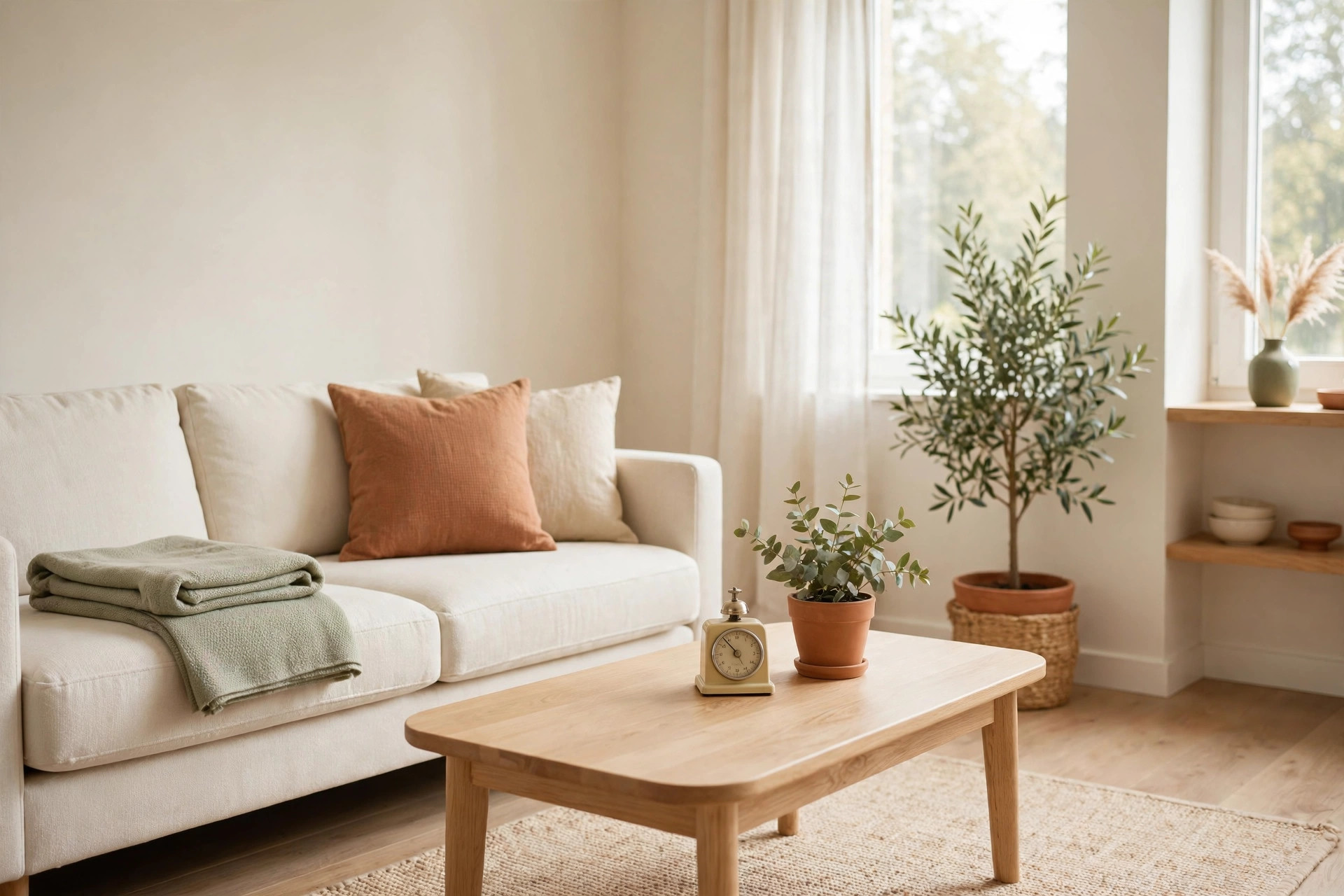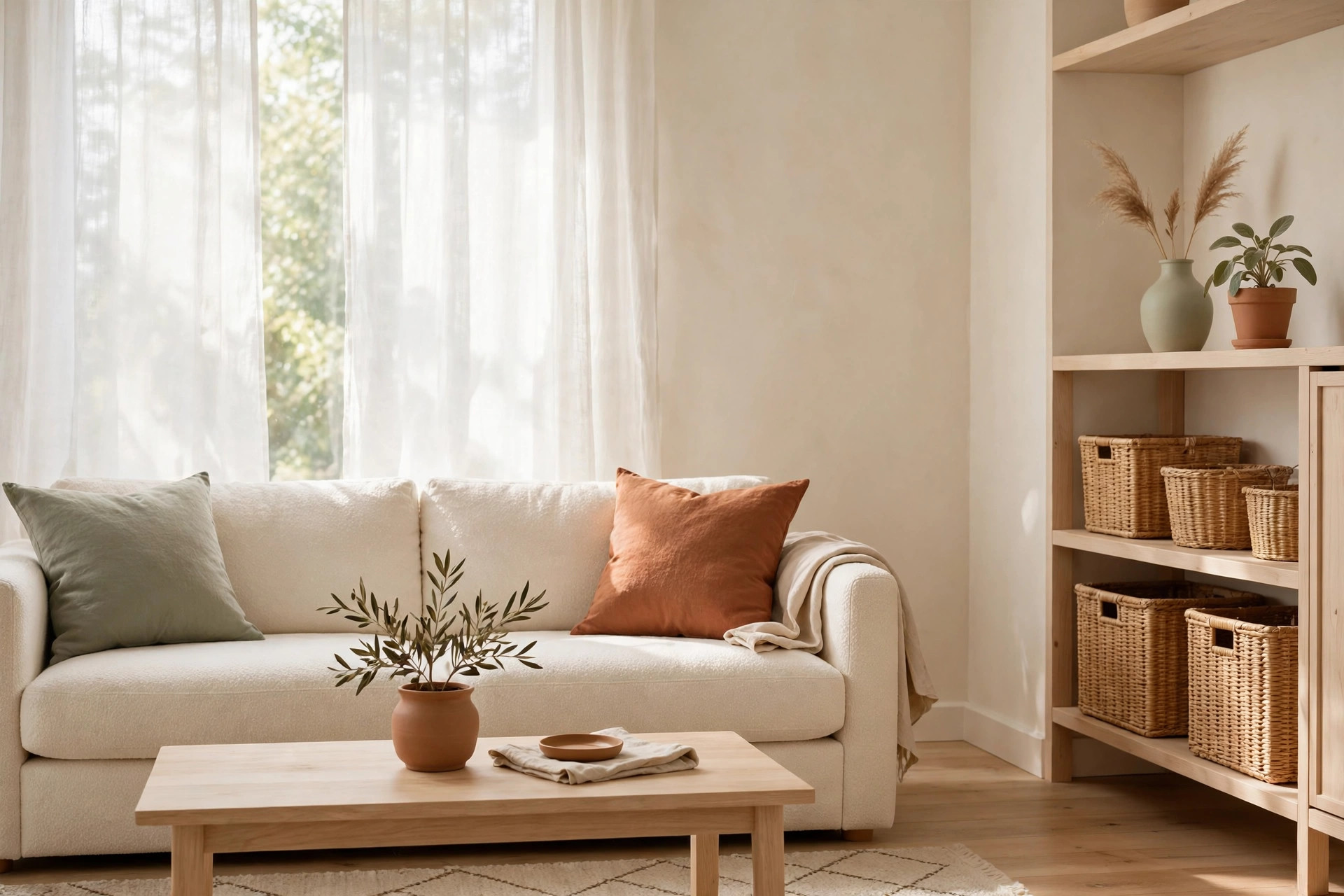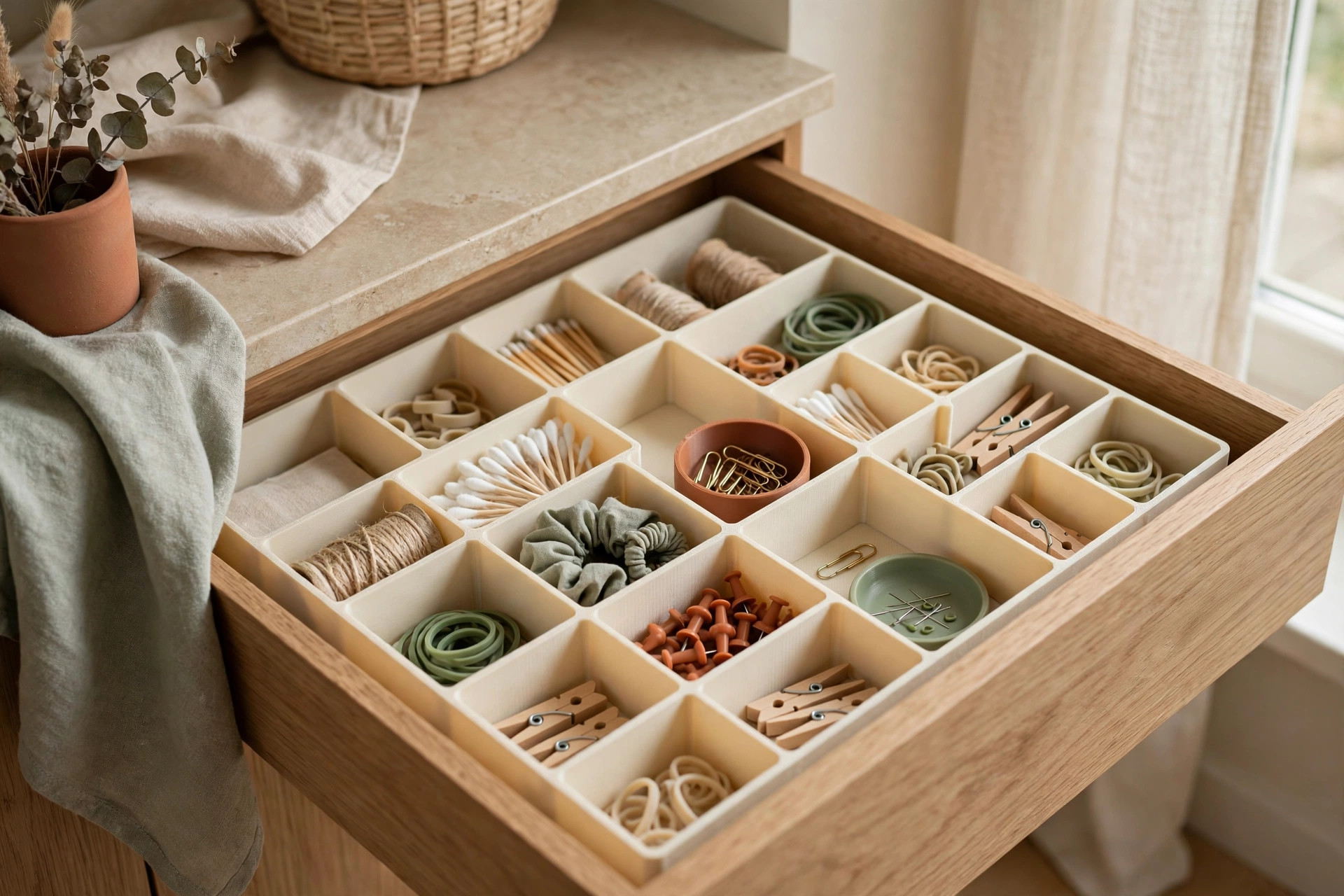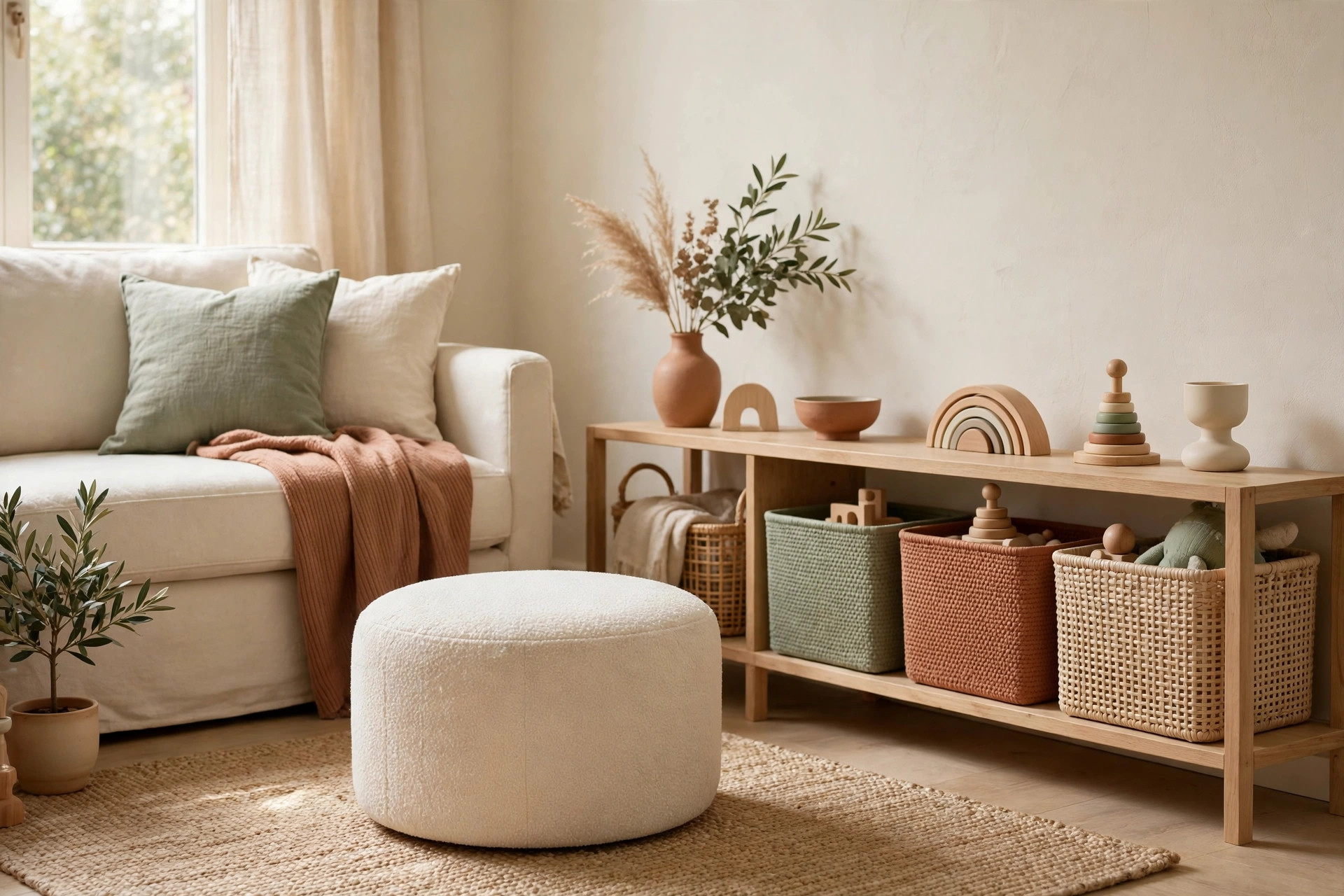
Toys multiply. One day your small living room looks calm; the next, it’s a floor-is-lava landscape of blocks, dolls, and puzzle pieces with no safe path to the couch. If you’re short on square footage, you’ve probably searched for kids toy storage ideas small living room parents swear by and found solutions that assume you have a spare playroom. You don’t — and that’s fine. These 18 ideas of small space toy storage are built around one goal: toys stay accessible for your kids and invisible for your evenings. The formula is hidden furniture storage plus a simple rotation system, and none of it requires a bigger apartment.
The toy equation: volume vs living room you still want
Here’s the math most parents do wrong: they count toys, not toy volume. A 12-by-14-foot living room gives you roughly 170 square feet, and after the couch and coffee table, your real toy footprint might be 20 square feet. Every new toy either replaces something or becomes floor clutter — there’s no third option.
That means your storage system has exactly two jobs. First, it must shrink the visible toy volume so the room reads as a living room. Second, it must be simple enough that your kids actually put things back, because you won’t do it for them every night.
One-bin-one-category: the system that kids can actually use
Fancy labeled systems with 40 categories fail because kids don’t sort. What works is coarse sorting: a small number of big bins, each holding one broad toy type.
Idea 1: Cap it at six labeled bins, no more
Choose six categories max: blocks, dolls/stuffed animals, vehicles, art supplies, puzzles, and one “wild card” bin for whatever’s new this month. Use stackable bins roughly 10 × 14 × 8 inches so they fit inside cube shelves and slide under furniture. Label each with a picture, not words — print a 3 × 3-inch photo of an actual car for the cars bin and tape it on.
Idea 2: Make the bin opening wider than a toddler’s arm reach
Open-front bins about 12 inches wide at the mouth are the difference between “toys get put back” and “toys get shoved near the bin.” Cleanup is one motion: drop and go.
Idea 3: Put one “landing bin” at the door or hallway entrance
When toys drift room to room, you toss strays into the landing bin instead of running each one back. Once a week, you redistribute. This stops the slow leak of toys into the kitchen, bathroom, and your bed.
Furniture that hides toys: ottomans, benches, coffee tables
The furniture itself is the best toy storage in a small living room: every piece you sit on, lean on, or put coffee on can swallow toys whole.
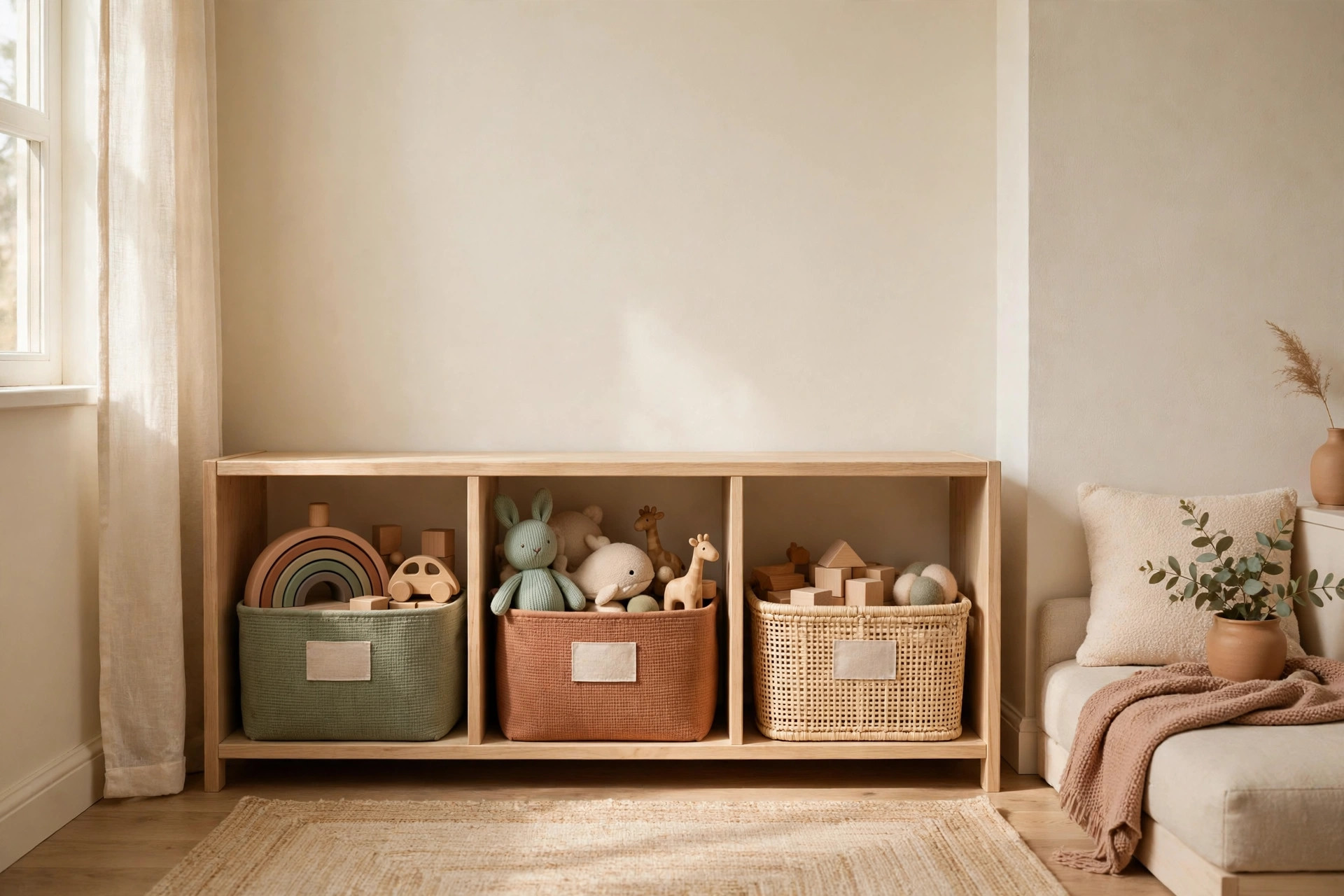
Idea 4: Swap your coffee table for a storage ottoman with a lift top
A 36 × 20-inch storage ottoman with a hinged lid holds the entire contents of a play kitchen corner — about 4 cubic feet of toys. Choose one with a safety hinge (no slamming on little fingers) and a tray top you can flip over for your coffee cup.
Idea 5: Put a storage bench against the longest bare wall
A 48-inch storage bench doubles as extra seating for visitors and eats roughly 6 cubic feet of bulky toys — ride-ons, big trucks, dollhouses. Add two seat cushions and it stops looking like a toy box.
Idea 6: Use a lift-top or hollow storage coffee table
The inside of a typical 40 × 22-inch storage coffee table fits board games, coloring books, and art supplies stacked vertically. It’s the one spot kids will actually return small items to, because it’s right where they play.
Idea 7: Claim the space under your couch and armchair
Two flat bins under the couch hold puzzles and game boxes; they’re invisible and out of toddler sightlines, which also cuts down on “forgotten toy” requests.
Vertical toy walls: shelving kids reach and rules follow
Walls are free real estate — and the right shelves teach kids the “one toy out at a time” habit.
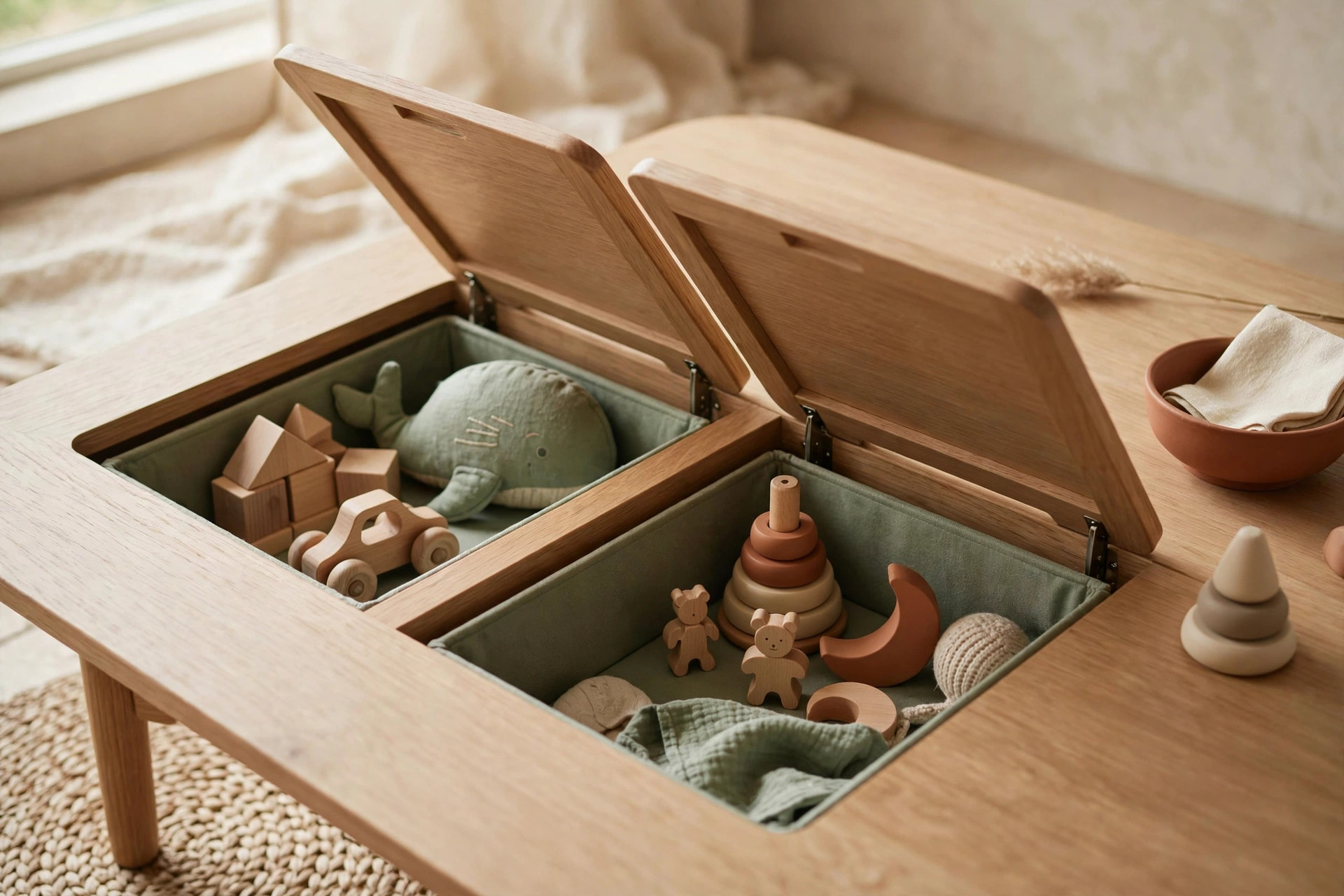
Idea 8: Install one low cube shelf — top of shelf at your child’s shoulder height
A 4-cube or 6-cube shelf with the top surface no higher than 30 inches keeps everything reachable and visible. Open cubes beat drawers because kids see what’s available. Leave one cube empty on purpose — empty space is what makes cleanup possible.
Idea 9: Add two picture ledges above the shelf for display-only toys
Picture ledges about 36 inches long, mounted at 48–54 inches high, create a gallery for display-only toys: LEGO builds, action figure collections. Wall-mounted options create the same gallery — and turn clutter into decor. More wall-first thinking: 19 Vertical Storage Ideas for Small Apartments (Think Up, Not Out).
Idea 10: Hang an over-the-door clear shoe organizer on any door
The classic clear-pocket shoe organizer gives you 24 pockets at kid height for small dolls, action figures, and art supplies. Use over-door hooks instead of screws to keep it renter-friendly.
The toy rotation system: half the toys, twice the play
Child development researchers and exhausted parents agree on one thing: kids play longer with fewer toys. Rotation keeps half the collection in storage while the other half gets full attention, then you swap.
Idea 11: Split toys into two equal boxes, rotate every two weeks
Grab two 66-quart latch bins. Sort the full collection roughly in half — mix of building, pretend, and quiet toys in each. Store the off-duty box in the kids’ closet, under your bed, or on top of a wardrobe. Set a phone reminder every two weeks. When box B comes down, box A goes up.
Idea 12: Give each rotation a small “grand opening”
When you swap boxes, lay the new toys out on a blanket like a little shop. Five minutes of ceremony turns the same old toys into an event — kids engage immediately instead of asking for new ones.
Small-part solutions: LEGO, art supplies, puzzles
Small parts are what make toy chaos feel hopeless. One LEGO tub spilled is a two-hour problem; contained, it’s a five-minute one.
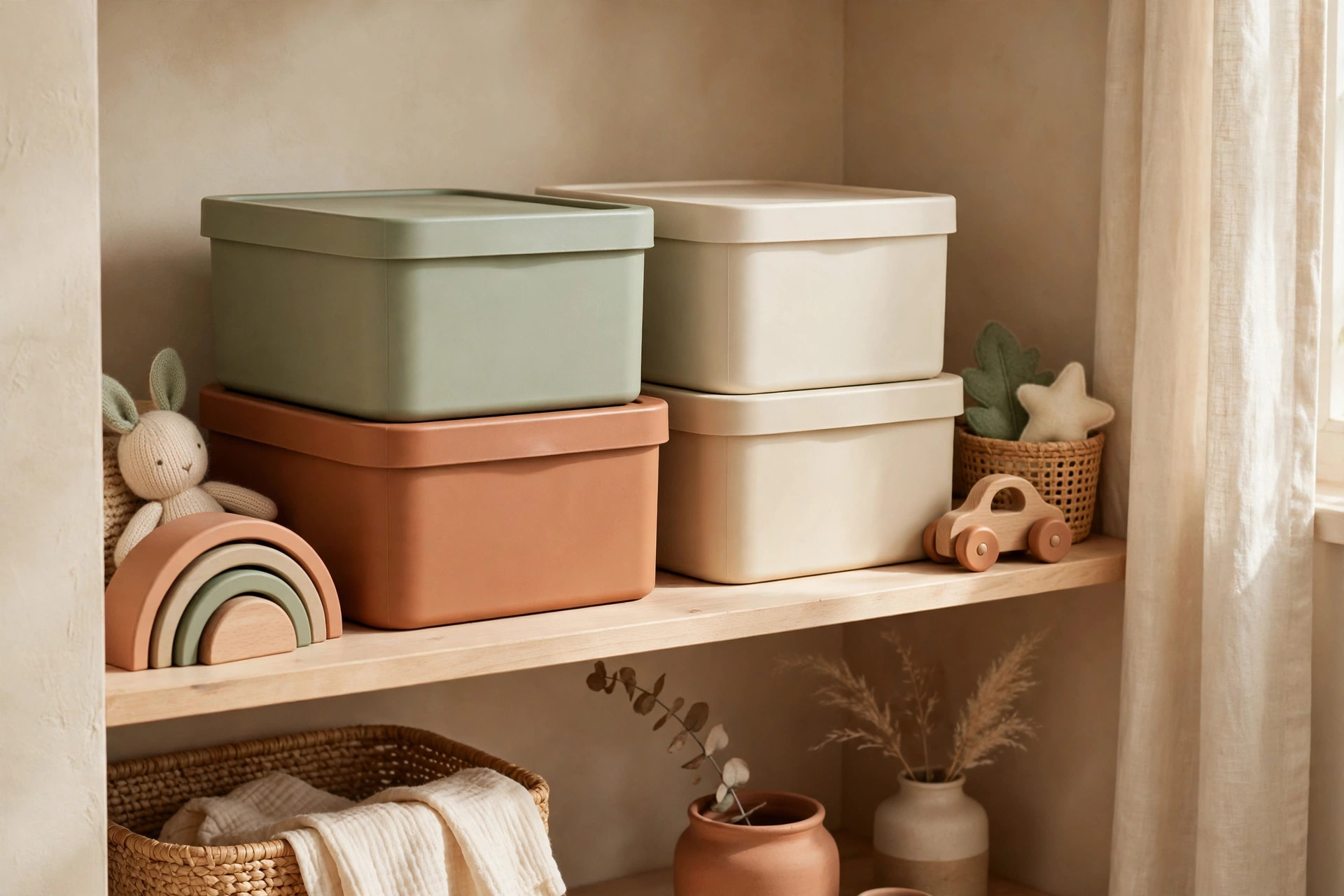
Idea 13: Sort LEGO by color into stacking 10 × 6 × 6-inch bins, one bin per kid at play
Forget sorting by piece type — kids sort by color and grab what they need. Each child gets one color-sorted bin plus a building tray (a baking sheet with a lip), which doubles as a spill-proof building surface.
Idea 14: Build one portable art caddy, not a craft station
A 12 × 9 × 6-inch handled caddy holds crayons, glue sticks, kid scissors, stickers, and a sketch pad. One caddy, one rule: when it’s out, it’s used; when it’s away, art time is over. This ends the “art supplies in every room” problem.
Idea 15: Store puzzles upright like files, in one magazine holder per puzzle
Puzzles stored flat stack into an unmanageable tower; stored upright in magazine files, each stays intact in its own slot and kids can flip through them like records. Toss puzzles with missing pieces.
The nightly 5-minute toy reset the whole family can do
Even the best system fails without a daily reset. The good news: five minutes with the whole family beats thirty minutes alone, and kids as young as three can help.
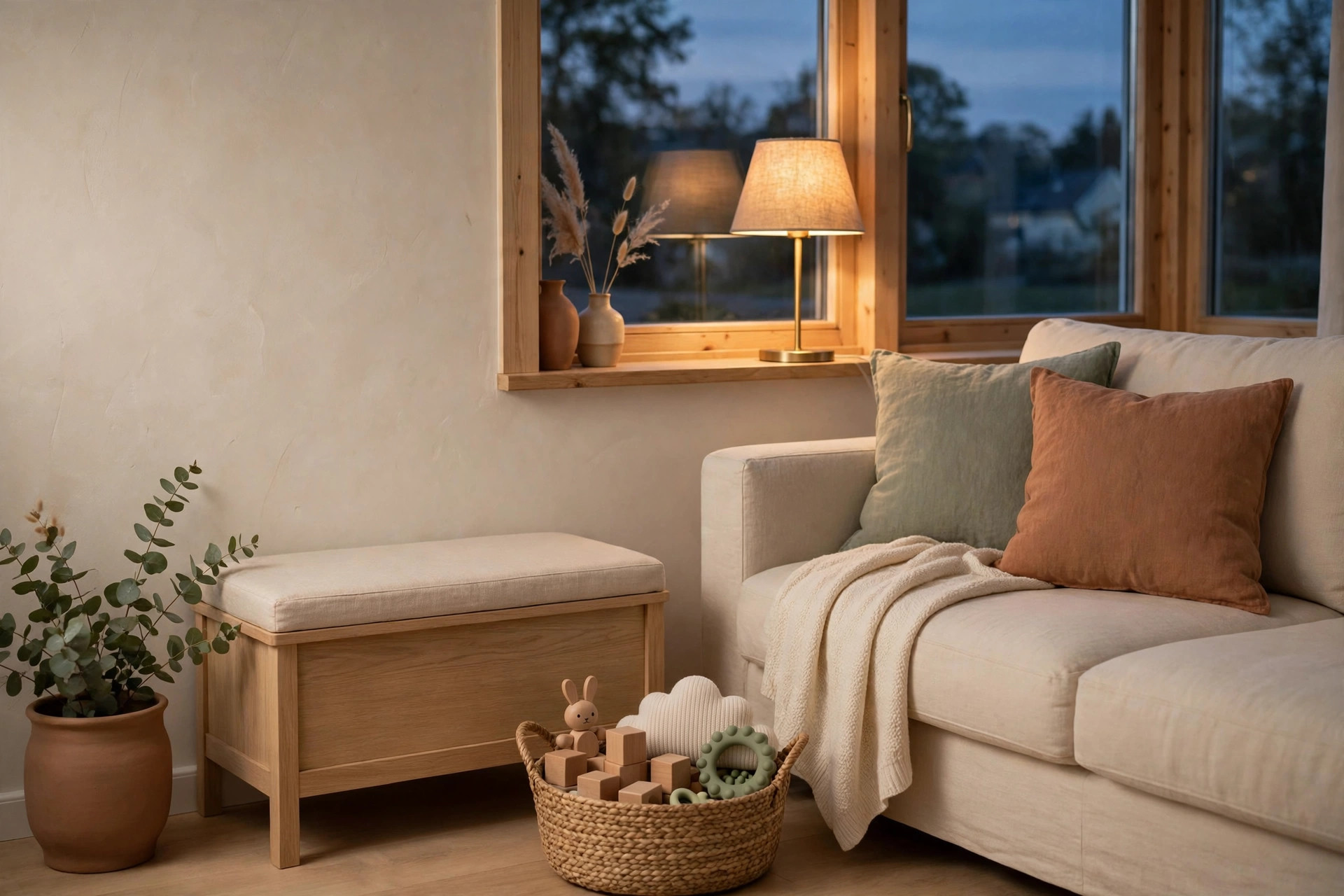
Idea 16: Run the reset to a timer — music on, race mode
Set a 5-minute timer and play one song. Everyone races to return toys to bins; when the song ends, reset ends. The timer makes it a game, and because bins are one-category, even small kids know where everything goes.
Idea 17: Assign each person one zone, not one toy type
Zones beat categories for speed: one person owns the couch zone, one owns the floor, one owns shelves. Nobody walks in circles looking for “all the blue blocks.”
Idea 18: End with the landing-bin sweep and a closed lid
Finish by emptying the landing bin (idea 3) back into the room’s real bins and closing every lid. Closed lids are the psychological finish line: the room looks done, and morning-you gets to walk into a living room instead of a toy store explosion.
Mistakes to avoid (and what NOT to buy)
- The giant toy chest. One big box teaches kids to throw everything in and dig through it. Replace it with the six small bins from idea 1.
- Toy hammocks and netting. They sag under real weight within weeks. Nobody has ever happily untangled toys from a stretched net.
- Over-labeling with words. Printed word labels are for you, not your kids. Photo labels only, or no labels at all.
- Buying more bins before purging. Bins don’t reduce toy volume; they just hide it. Purge first: anything broken, outgrown, or unplayed-with for a month leaves the house.
- Clear containers for everything. Some toys are visually noisy — bright plastic in clear boxes reads as clutter. Use opaque bins for the loud stuff, clear only for building pieces and art supplies.
Frequently asked questions
Can kids really keep a toy system running in a small living room?
Yes — with six or fewer categories, open-front bins, and photo labels. Complexity is what kills kid-run systems; the nightly reset below turns the rest into a daily habit.
How do I store toys in a small apartment with no playroom?
Steal the dual-purpose strategy: storage furniture plus one vertical shelf. The living room stays a living room, and the toys disappear inside furniture you already own. For toddler toy storage apartment setups, pair this plan with our guide to 18 Under-Bed Storage Ideas That Turn Dead Space Into a Dresser — under-bed space in the kids’ room absorbs the overflow.
How often should I rotate toys?
Every two weeks is the sweet spot. Two rotation boxes of equal size is all the infrastructure you need.
What about sentimental toys and hand-me-downs I can’t purge?
Keep a single “memory box” — one medium bin, roughly 18-gallon, stored in a closet or under a bed — for toys that matter to you, not the kids. If it overflows the box, something leaves. The limit is the point.
Is a toy rotation box okay to store in a rental with no storage space?
Absolutely. The top shelf of the kids’ closet, under an adult bed, or a sealed bin on a balcony corner all work. The box just needs to be out of sight between swaps.
That’s all 18 — no playroom required. Start with the six bins and the nightly timer tonight; add the storage furniture when you can. Your living room can be a place where kids play hard all day and adults actually relax after bedtime. If toy clutter is one of several small-space headaches, browse the full storage ideas collection for the rest of the room-by-room plan. Save this pin for later so you have the rotation schedule handy when you start.