School supplies have a way of taking over a small home. Pencils multiply on the kitchen table, backpacks land in the hallway, and the permission slip you need is always at the bottom of a pile somewhere. The secret to kids school supply organization is not more bins — it is giving every item one obvious home and making the system simple enough that a child can keep it going on their own, day after day. These 18 ideas are a school supplies organization system for a small home — one small zone instead of a whole room, built from things you mostly already own.
The homework station: one small zone that does the heavy lifting
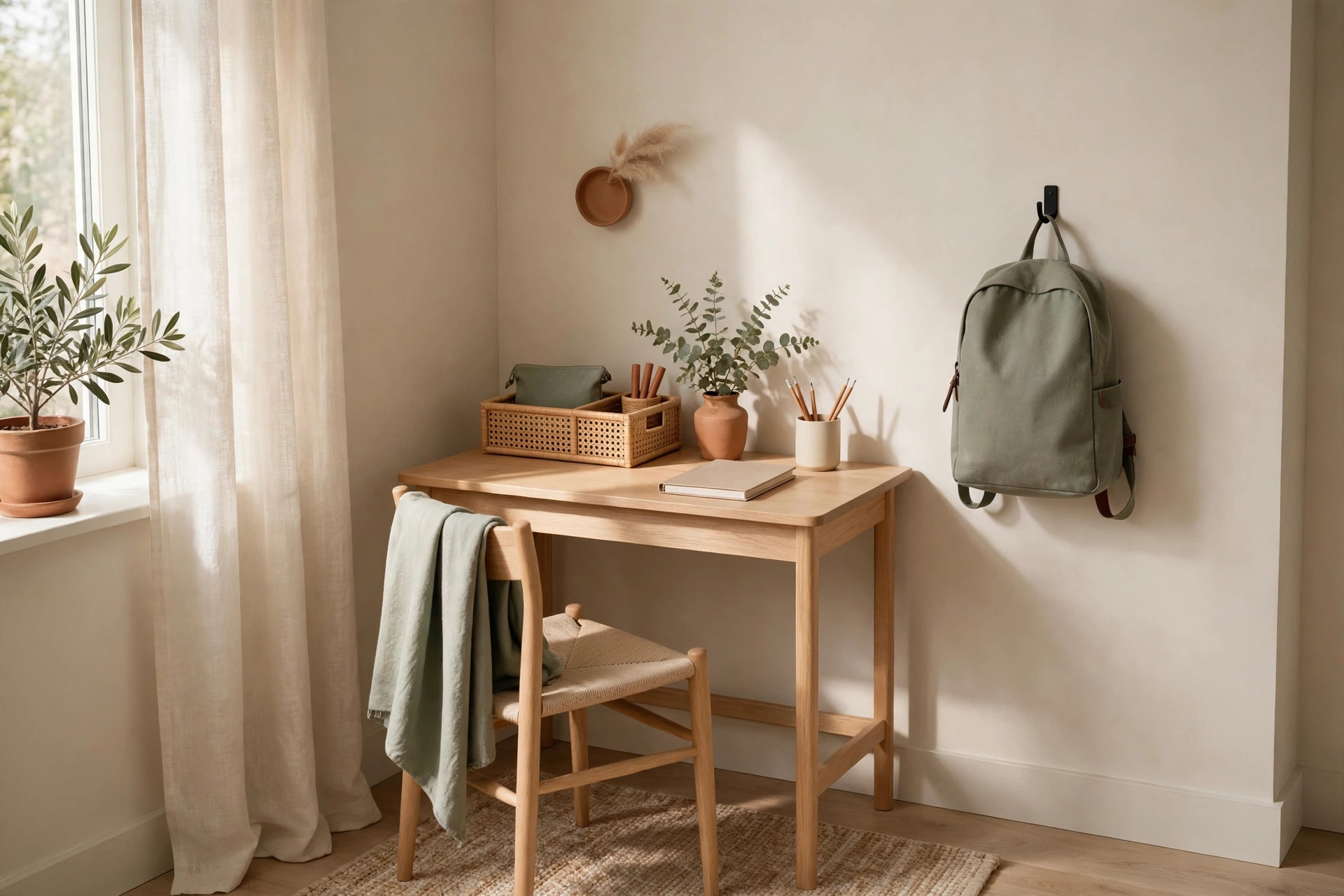
You do not need a study room. A homework station for a small space is one surface, one chair, and one set of supplies in the same place every day — the end of the kitchen counter, a fold-down desk, or a corner of the dining table. Everything else here hangs off this one decision.
1. Claim a 24-inch homework zone and defend it. Mark a 24-inch stretch of counter or table with a placemat or small tray. One child, one zone, one set of supplies. Kids stop wandering the house hunting for a pencil and sit down on their own.
2. Keep a homework caddy stocked with the daily five. A handled caddy about 10×7×6 inches holds the five things homework needs: pencils, eraser, ruler, scissors, glue. Stock it weekly from a backup box on a high shelf. If a supply is not in the caddy, it does not exist during homework time.
3. Mount a small shelf or rail above the zone for reference supplies. A 24-inch floating shelf or wall rail holds the weekly-use items: dictionary, calculator, spare notebooks, small clock. The desk stays clear, and kids can still reach everything without asking you.
Backpack landing zone: hooks, cubbies, and the nightly reset
The backpack is the single biggest source of school clutter in a small home, because it gets dropped wherever the child stops walking. A landing zone gives it — and everything that comes out of it — one parking spot by the door.
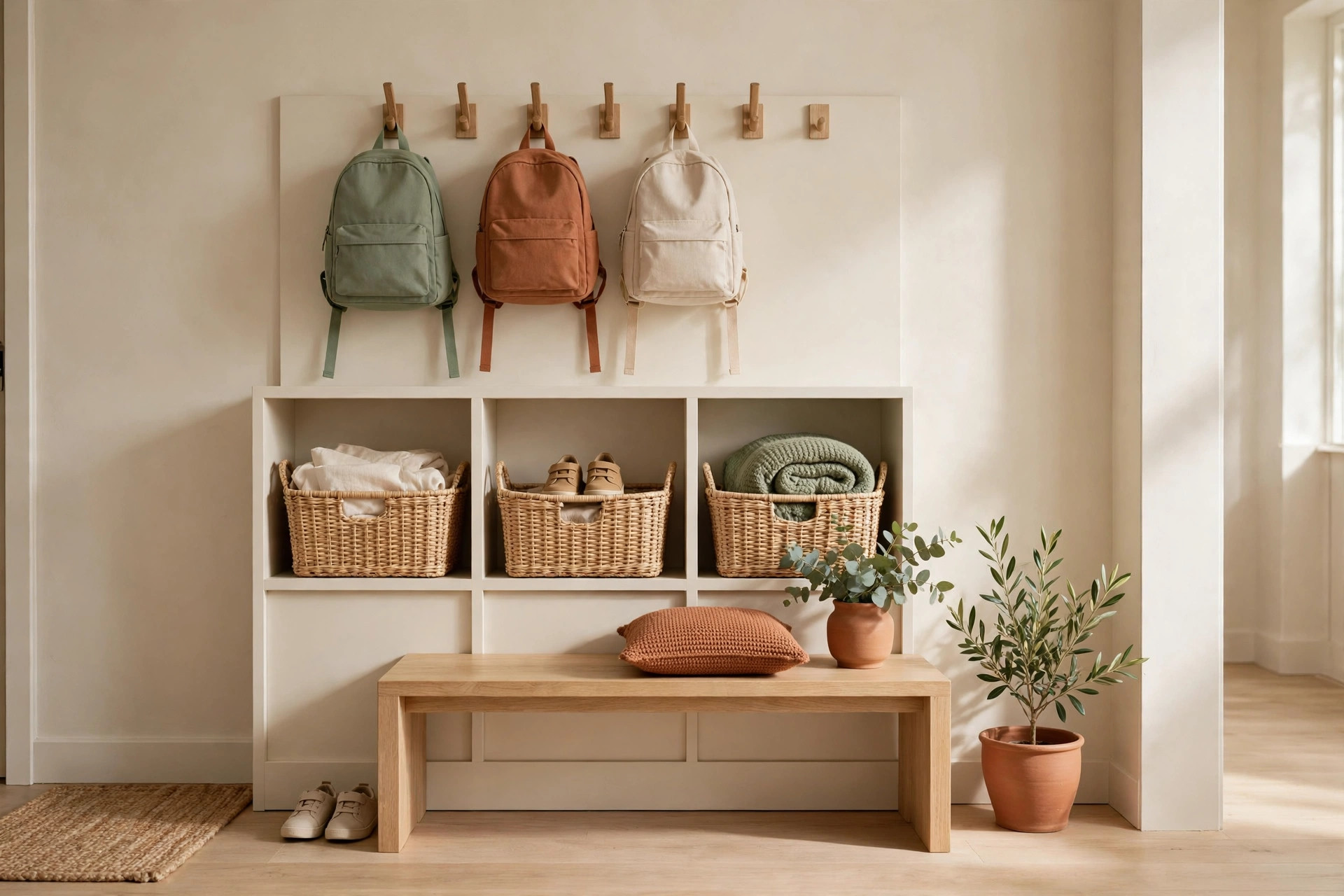
4. Give every backpack one hook at kid height. Install one sturdy hook per child at about 48 inches high, inside the front door or hallway. A hook takes zero floor space and a child can hang a bag in two seconds. Label each hook with a name or color dot.
5. Add a shoe tray and a small cubby under the hooks. An 18×12-inch boot tray catches shoes, and one open cubby per child holds the lunchbox, water bottle, and jacket. The whole zone fits on about 36 inches of wall, and the nightly reset takes three minutes.
6. Run the nightly reset: empty, check, repack. Every evening, the backpack comes off its hook and gets emptied — papers to the inbox, lunchbox to the kitchen, water bottle washed. Then it is repacked: homework folder, reading book, gym kit if needed. Five minutes at night saves fifteen frantic minutes in the morning. Short on entry space? The same logic works in a hallway — see our 16 Small Mudroom Ideas for Apartments (Your Entry, Upgraded) for ways to build one without a dedicated room.
Pencil and supply caddies kids can carry
Loose pencils get everywhere. The fix is containment plus portability — a caddy that lives in one place and travels to the table.
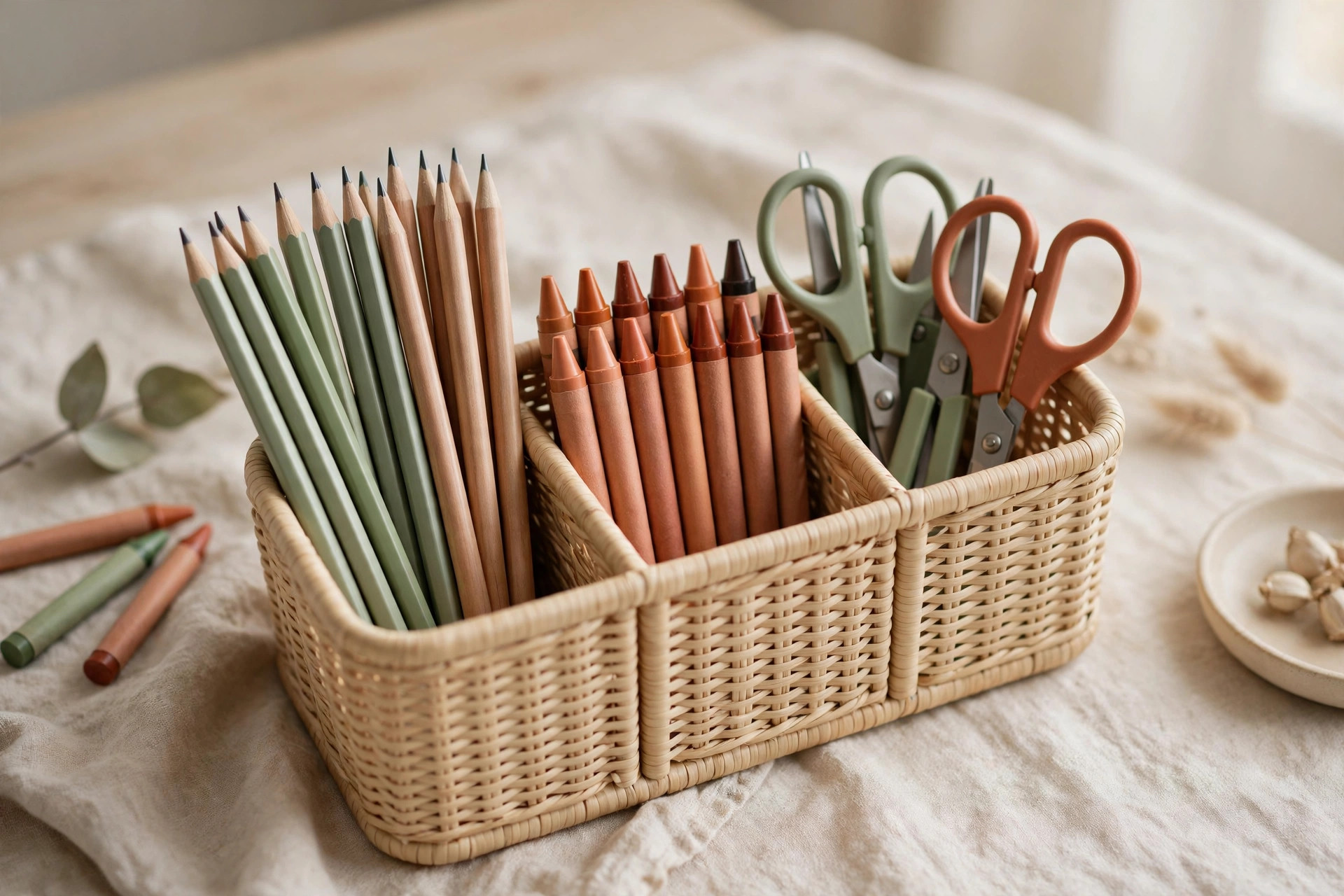
7. Use one carry caddy per child, not one big shared bin. A handled caddy per child, roughly 9×6×5 inches, holds their own pencils, crayons, and erasers. Sharing one big bin means one child dumps the whole thing to find a blue crayon. Individual caddies end the dumping.
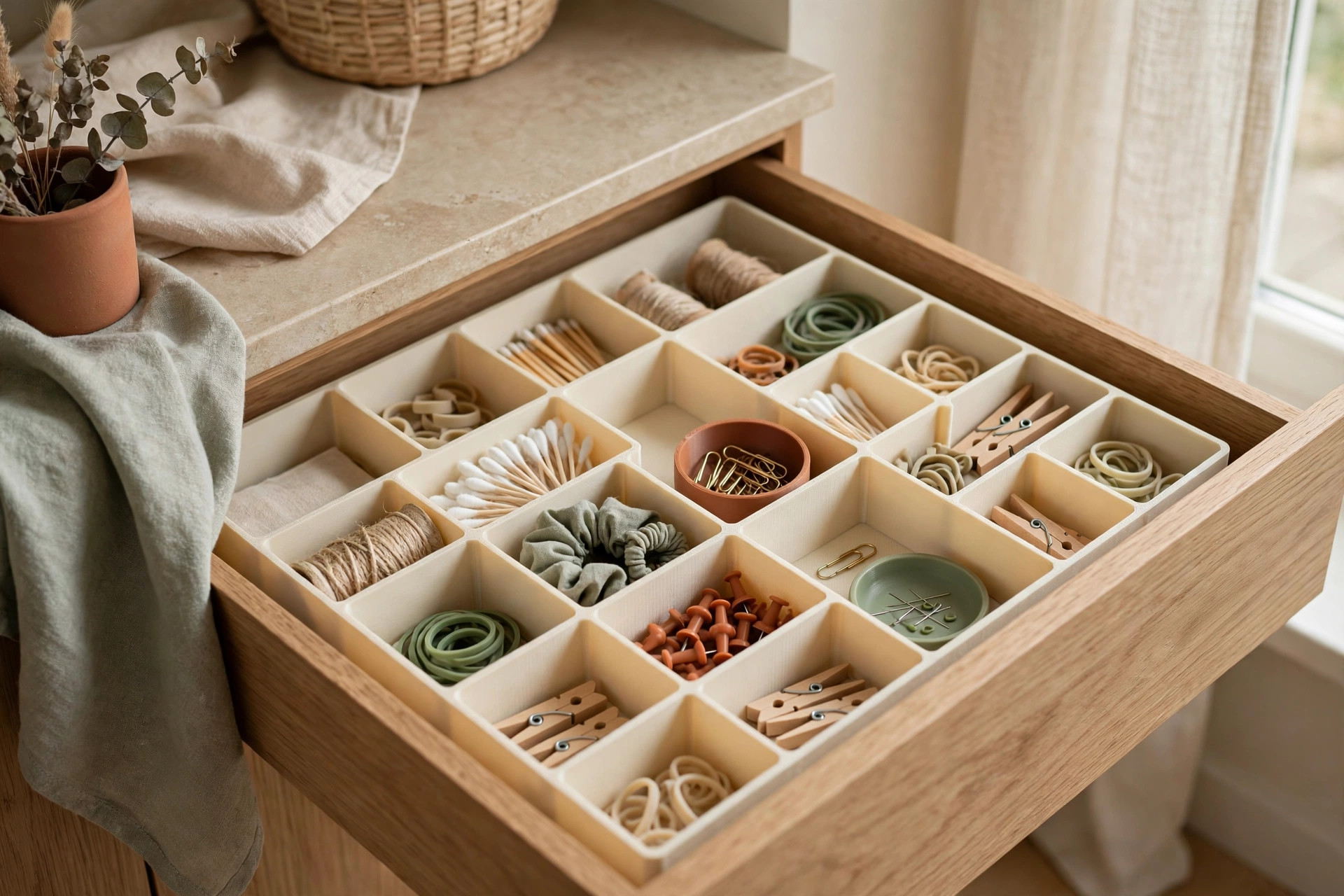
8. Sort with cups, not compartments you have to buy. Three small cups or jam jars inside the caddy — pencils, pens and markers, erasers and sharpeners — beat a fancy divided organizer. Kids can see everything at a glance, and an empty cup tells them what to ask for. Label each cup with a picture for younger kids who cannot read yet.
Paper flow: inbox, homework, art — and the weekly purge
Paper is the real clutter problem. Worksheets, notices, drawings, and permission slips arrive daily, and without a flow they become a pile on the counter. You need three destinations and a weekly habit.
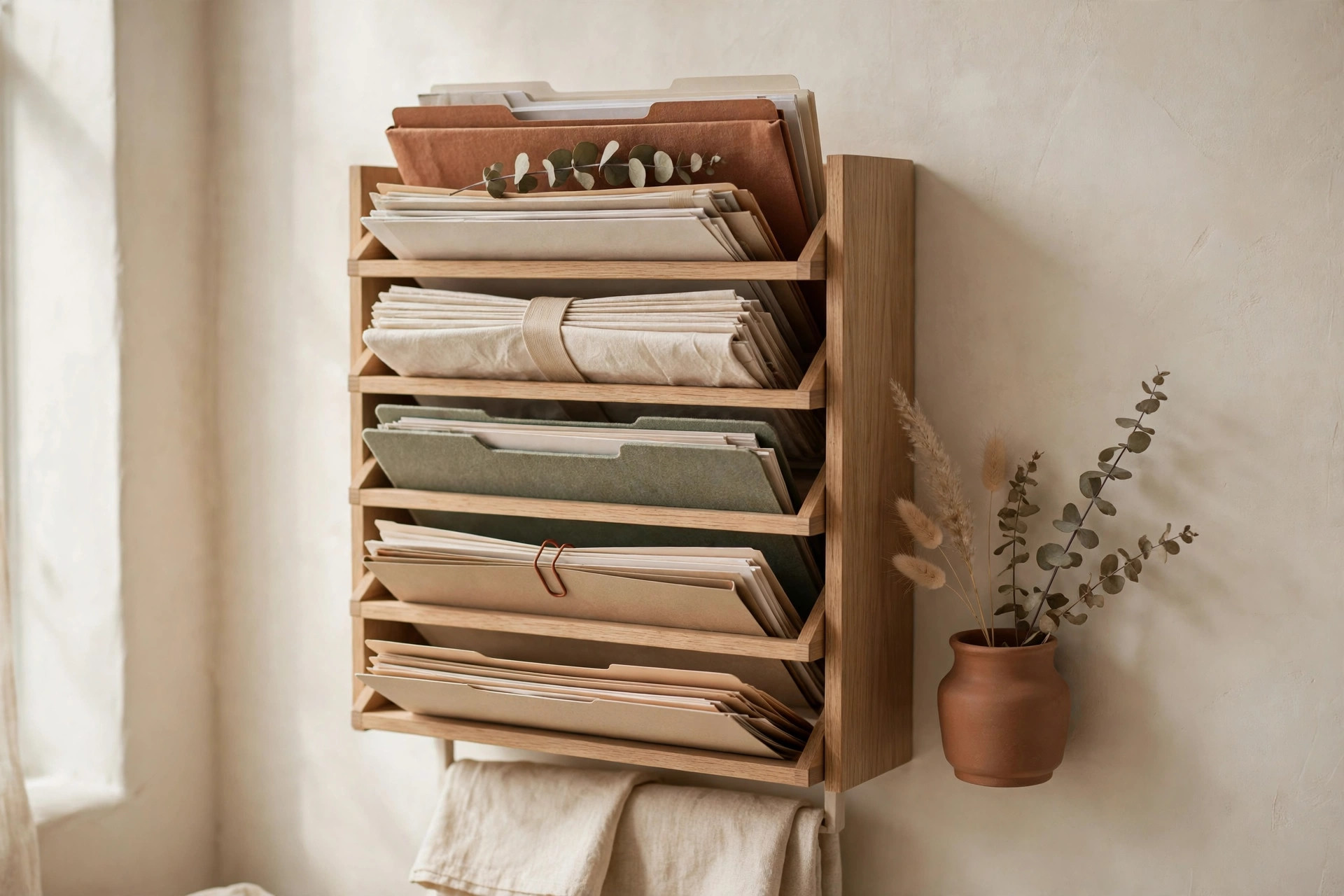
9. Set up one inbox tray per child by the door. One letter tray per child, about 12×10 inches, catches everything that comes out of the backpack each night. Nothing goes to a pile on the counter. Sort it while dinner cooks: sign, file, or recycle.
10. Keep a homework folder and an art folder — and nothing else. Two folders per child, clearly labeled: homework holds tonight’s work and anything due this week; art holds the drawings worth keeping. Everything else is displayed or recycled. If a paper does not fit in one of these two folders, it does not stay.
11. Run a Friday purge with a keep-or-recycle box. Once a week, empty both folders with your child — each paper gets ten seconds of decision. Artwork that makes the cut goes into a slim portfolio or gets photographed and recycled — a photo takes no shelf space. For papers that need long-term keeping, the inbox-and-file logic in our 16 Home Paperwork Organization Ideas for Small Spaces (Bills, Files, No Piles) scales down neatly to school paperwork.
Art and craft supplies in a small footprint
Art supplies are the messiest category: bulky, varied, used in bursts. Store them in a rolling unit or a single contained zone — never spread across three drawers.
12. Use a three-tier rolling cart as the art station. An 18×13-inch rolling cart with three tiers holds paints on top, paper and coloring books in the middle, and glue, tape, and scissors below. It rolls to the table for art time and tucks into a corner when done — one cart replaces a whole craft cupboard.
13. Store markers and crayons upright in jars, sorted by color family. Upright storage in small jars means kids can see the color they want without dumping a box. Sort loosely — warm, cool, neutral — because a system kids can maintain beats a perfect one they will not. Our 15 Kids’ Art Supply Organization Ideas for Small Homes (Contain the Creativity) goes deeper on carts, bins, and displays if art supplies are your biggest pain point.
Lunchbox and water bottle systems that end the morning hunt
Hunting for a clean lunchbox and matching water bottle is a daily tax on small homes — these items live in three different places. One shelf and one routine end the hunt.
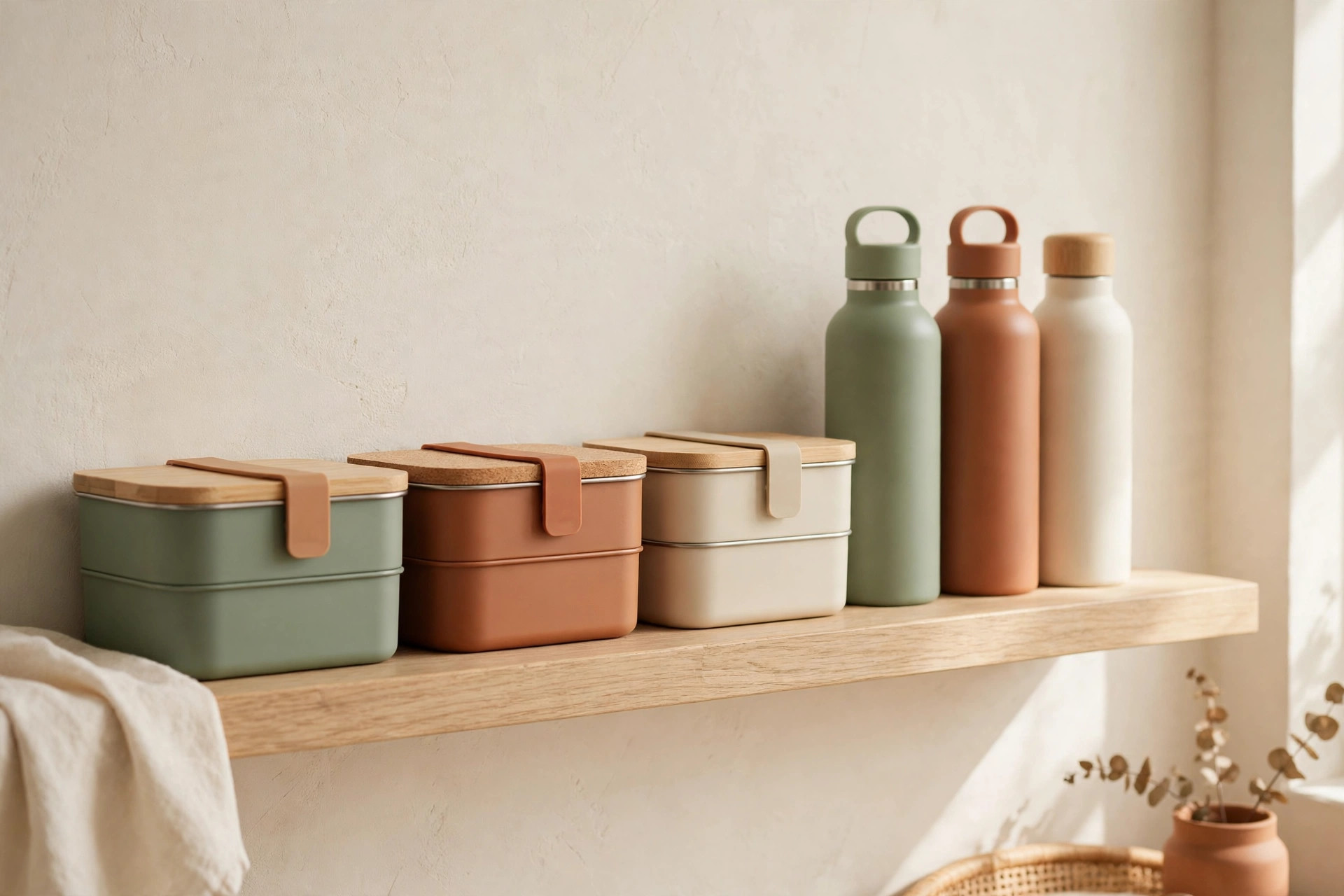
14. Dedicate one shelf to lunch gear, stacked by child. One kitchen shelf or cabinet section holds everything: lunchboxes stacked, water bottles lined up, snack containers nested. Each child’s gear sits in its own bin or labeled section. When the lunchbox has a home, it gets washed and returned there after school instead of left in the backpack.
15. Pack lunch the night before with a grab-and-go snack bin. A small bin in the pantry or fridge holds pre-portioned snacks — crackers, fruit pouches, cheese sticks — so packing lunch means grabbing three items, not opening six cupboards. Add a lunch checklist on the fridge for older kids — five minutes the night before, zero hunting in the morning.
Systems kids maintain: labels, pictures, and the 5-minute tidy
The best system fails if only you can run it. Kids maintain systems that are visual, physical, and short: picture labels, reachable containers, a five-minute tidy.
16. Label everything with pictures, not just words. A photo or drawing on each bin, hook, and shelf tells a four-year-old exactly where the scissors live. Use a label maker or printed photos taped to the front — and you never answer “where does this go?” twice.
17. Keep every supply within kid reach — nothing above 48 inches. If a child cannot reach it, they cannot put it away, and you become the system. Move daily supplies to low shelves, hooks, and caddies; high shelves are for backup stock only.
18. End every day with a 5-minute tidy, timed out loud. Set a timer for five minutes after dinner. Everyone puts away their own supplies, backpacks go on hooks, caddies go back to the homework zone. Make it a race or play a song. A system that resets daily never needs a weekend overhaul. If the kids’ rooms are part of the chaos, the low bins and under-bed zones in our 17 Kids Bedroom Storage Ideas for Small Rooms (Room to Play, Room to Tidy) pair well with it.
Mistakes to avoid
The most common mistake is buying storage before you have a system. Matching bins with no assigned homes just become a prettier pile. Decide where each category lives first, then buy the container that fits — measure before you shop, not after.
Second, do not buy a system sized for the supplies you wish your child had. Three worksheets a week does not need a ten-folder filing system — oversized systems collapse because they feel like too much work.
Third, avoid open-top bins for small loose items. Pencils, erasers, and crayons in open bins get dumped, spilled, and mixed. Lids, cups, or jars make cleanup a one-minute job, not a ten-minute sort.
Finally, do not reorganize in secret. A system your child did not help build is one they will not use. Let them choose the caddy color, draw the labels, and pick their hook — ten minutes of involvement buys months of cooperation. And skip the giant craft tower, bulk “whole year” packs, and character backpacks with no side pockets: a water bottle with nowhere to go ends up loose in the bag, leaking on homework.
Frequently asked questions
How do I organize school supplies in a very small apartment?
Start with one homework zone and one backpack hook. A 24-inch stretch of table plus a wall hook covers the two biggest clutter sources; a caddy, one inbox tray, and one lunch shelf stack onto those anchors.
Can a young child really maintain their own school supply system?
Yes, if the system is visual and within reach. Picture labels, one caddy per child, and supplies below 48 inches mean a four- or five-year-old can put things away without reading or asking for help. Keep the reset to five minutes and it becomes a habit.
Where should backpacks go in a home with no entryway?
Hang them on the back of the bedroom door, a hook inside a closet, or a wall rail in the hallway. The location matters less than the rule: one hook per child, same hook every day.
Conclusion
Kids’ school supply organization comes down to three anchors: one homework zone, one backpack landing spot, and systems simple enough for kids to run themselves. Start with the hook by the door, add the caddy and the inbox tray, and let the daily five-minute tidy do the rest. Browse our storage ideas collection and save this pin.