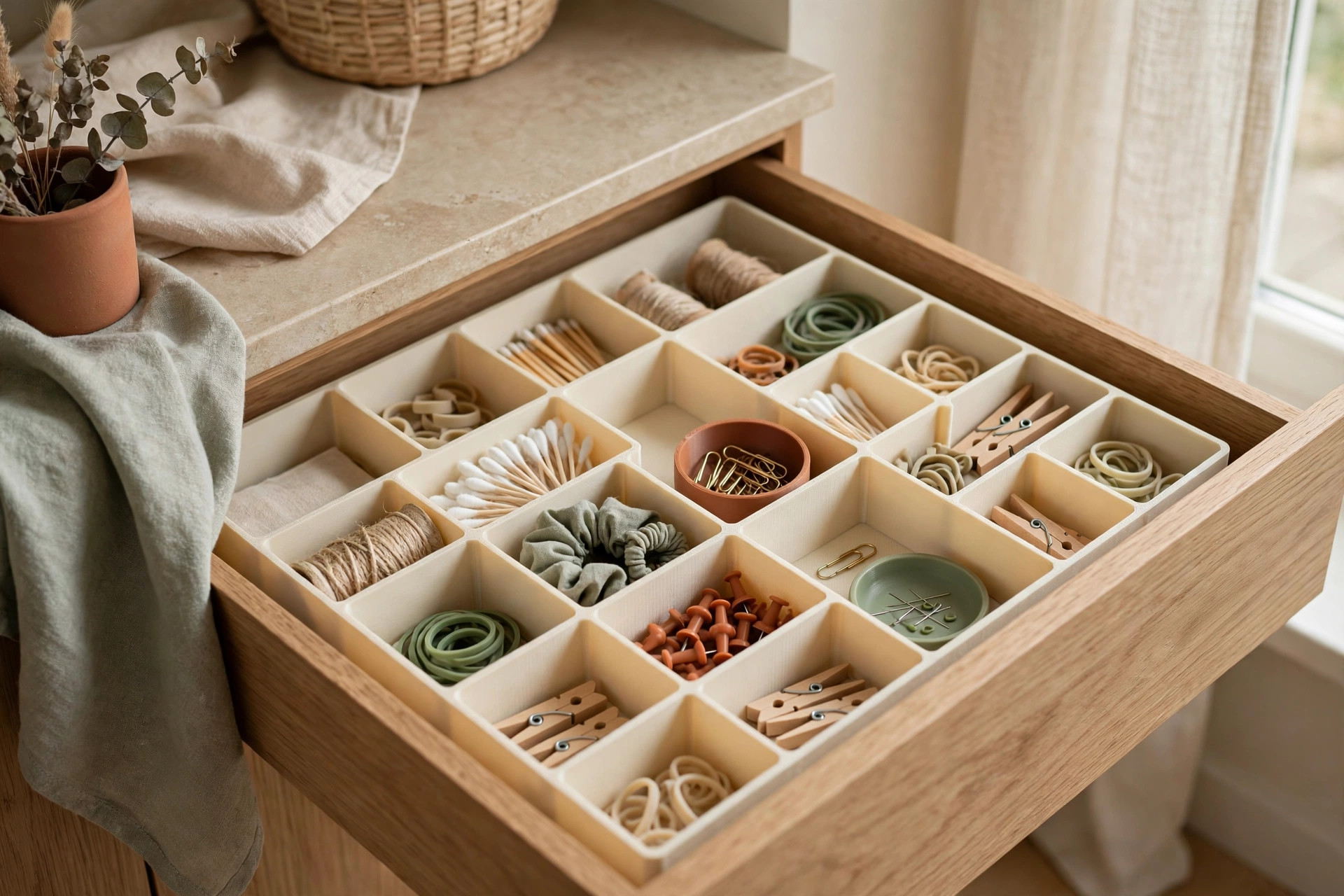
Paper takes over a small home quietly. A bill on the counter, a school form on the radiator, bank statements on the bookshelf — none of it looks like much alone, but together it becomes a pile you avoid, then a drawer you never open. These home paperwork organization ideas are built for homes with no spare room, no filing cabinet, and no home office: one inbox, a slim filing system that fits on a single shelf, and a weekly routine short enough to keep. Follow the 16 ideas below. No filing cabinet required, just a system sized for your space.
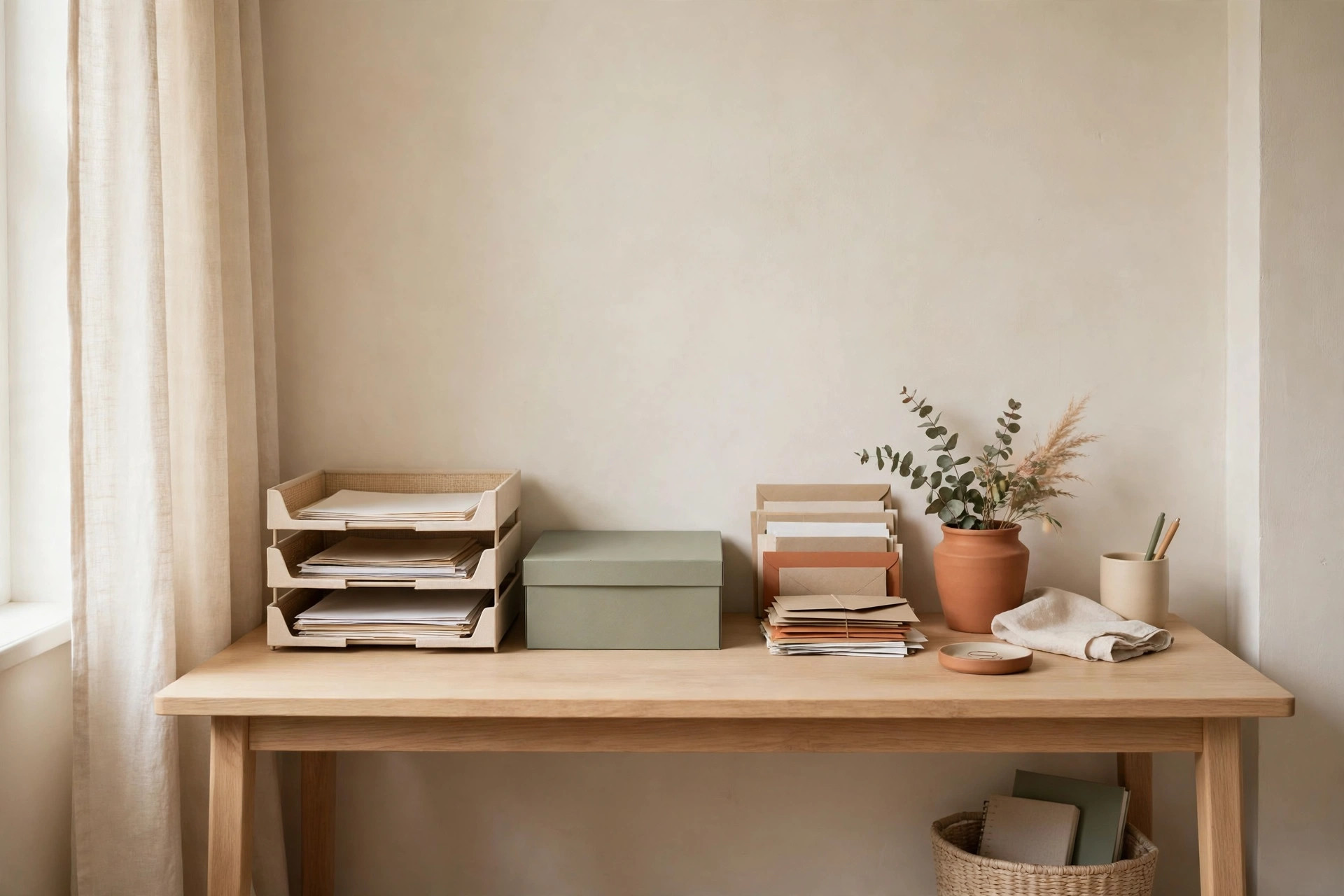
The paper triage: keep, scan, shred, act
Before you buy a folder, deal with the paper you already have. Triage is the step most people skip, and it is why new systems fail: you file the backlog into a pretty box and it fills up in a month. Set a timer for 45 minutes and sort every loose paper into four piles.
1. Sort every loose paper into keep, scan, shred, or act. Keep means you need the original: leases, birth certificates, car titles, signed contracts. Scan means you need the information, not the paper: old bills, receipts, reference letters — scan them with your phone and recycle the original. Shred means it carries personal details you no longer need. Act means it needs action this week.
2. Give the “act” pile a deadline, not a drawer. An act pile without a date is just a prettier pile. Write the due date on each item in pencil, earliest deadline on top. If something has no deadline, give it one: seven days, or it moves to scan or shred.
One inbox: where every paper lands first
Paper spreads across a small home because it has no front door. Every envelope, flyer, and form needs one landing spot everyone knows.
3. Set up one inbox tray by the front door or kitchen counter. A single letter-sized tray, about 14 by 10 inches, is enough for a household of two to four people. Everything entering the house goes in it — mail, school papers, receipts, appointment cards — no exceptions. Our guide to 15 Entryway Mail and Paper Organization Ideas for Small Homes covers building that landing spot when your front door opens straight into the living space.
4. Empty the inbox every evening in under two minutes. Sort each item into keep, scan, shred, or act, and put it where it belongs. Junk mail goes straight into recycling.
Slim filing that fits a shelf, not a cabinet
A filing cabinet is the wrong tool for a small home: it eats a square foot of floor and invites you to keep everything forever. What you need fits on one shelf.
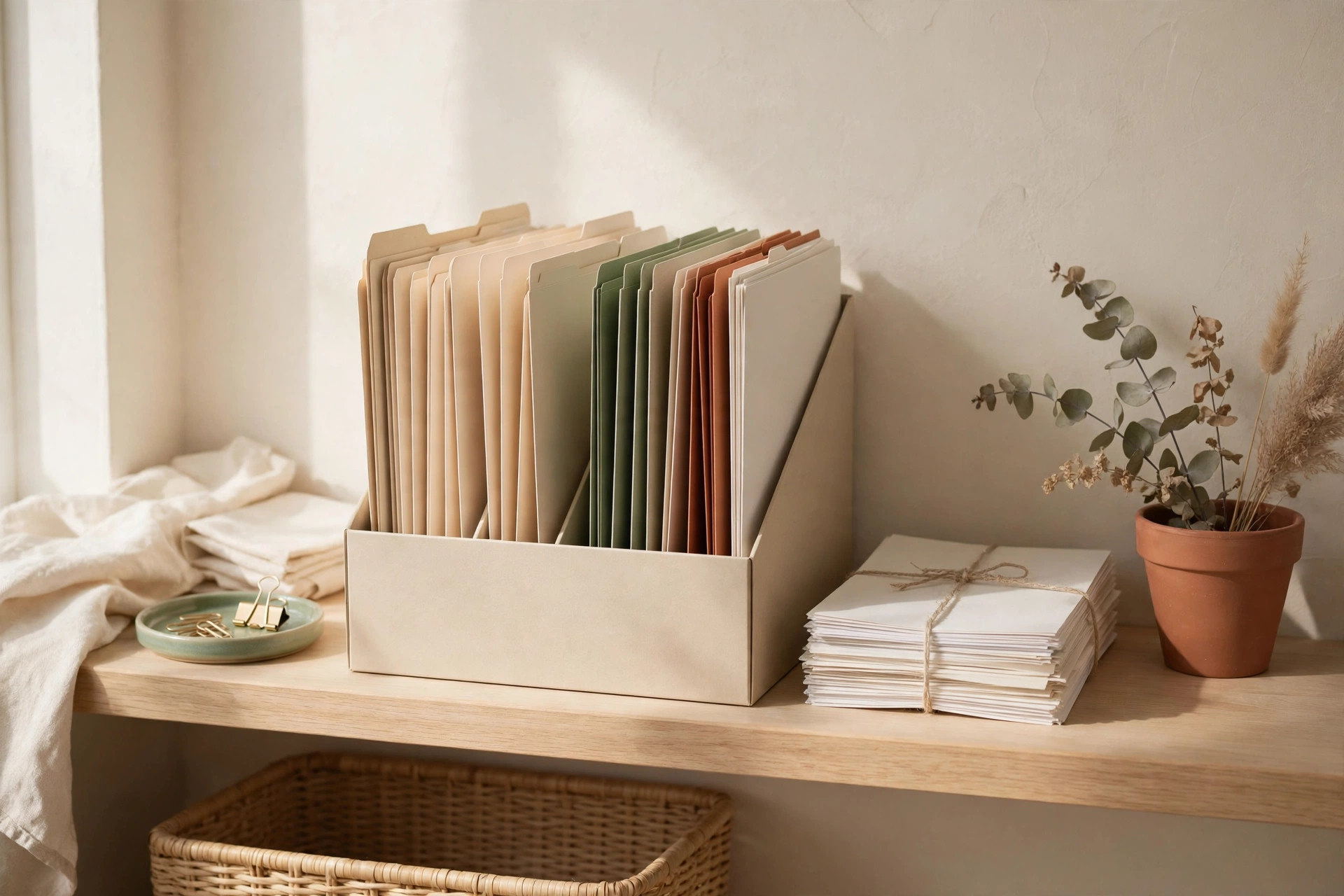
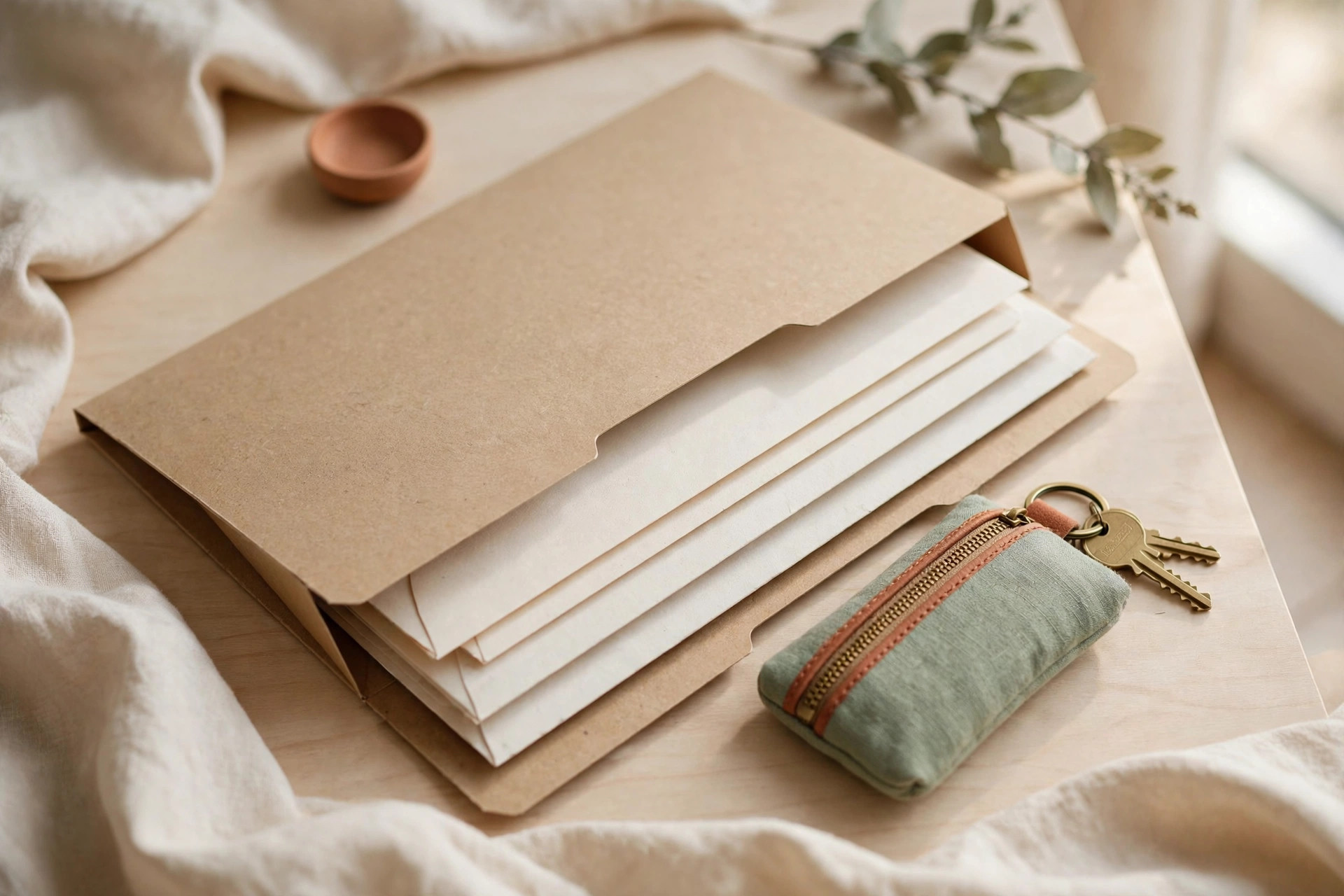
5. Use one slim accordion file or a single magazine holder of hanging folders. An accordion file with 12 to 13 pockets, roughly 13 by 10 by 2 inches when full, holds a whole household’s active files and stands upright on a bookshelf. Label the pockets by category, not by company: Housing, Insurance, Medical, Vehicle, Tax, School, Work, Pets. Companies change; categories do not.
6. Limit yourself to eight folders, maximum. Every folder beyond eight is one you will forget to check. If a category holds fewer than three documents, merge it — “Vehicle” and “Insurance” can share a pocket if you only own one car. A slim system works because it forces decisions.
7. Store the file box where you actually handle paper, not where it looks tidy. A filing box hidden in a bedroom closet gets used twice a year; the same box on a shelf by your desk or kitchen bookshelf gets used every week. If your paperwork corner is also your work corner, pair this with 17 Small Desk Supply Organization Ideas for Tiny Home Offices so the desk stays clear for the filing.
Vital documents go-bag: passports, leases, insurance
Some documents are the papers you need in an emergency — the worst time to hunt through a drawer. Keep them together, apart from everyday filing, in something you can grab in 30 seconds.
8. Pack a go-bag folder for vital documents. A zippered document wallet or slim fire-resistant pouch, about 14 by 10 inches, holds passports, birth certificates, lease or mortgage papers, insurance policies, car titles, and emergency contacts. Keep it in one fixed spot — a shelf by the door or the top dresser drawer — and tell every adult in the house where it is.
9. Keep a scanned backup of everything in the go-bag. Scan each vital document into a password-protected folder on your phone or cloud storage, separate from everyday files. If the originals are ever lost or damaged, the scans speed up replacement. Do not store passport or birth certificate scans in an unprotected shared album.
Bills and statements: paper vs digital split
Bills are the steadiest source of household paper and the easiest to shrink, because most need not exist on paper at all. Split deliberately, not by drift.
10. Switch recurring bills to paperless, one account at a time. Pick one biller per week — electricity first, then phone, then bank statements — and switch it to paperless, confirming the email address statements go to. Doing them all at once leads to missed confirmations; one a week takes a month and sticks. Keep a list of paperless accounts.
11. Keep a “this month” envelope for the bills that stay on paper. Some bills — rent receipts, a landlord’s paper invoice, a disputed medical bill — will stay physical. One envelope, labeled with the month, holds them all. When the month ends, file what must be kept, scan the rest for information, and shred what remains.
12. Pay bills in one weekly sitting, not as they arrive. Open the act pile once a week, pay everything due in the next seven days, and file or shred each bill once paid. Paying as mail arrives means handling paper five times a week and still missing the bill that came on a busy day.
The weekly 10-minute paper routine
A paperwork system lives or dies on its routine. Ten minutes a week is short enough to keep through busy months and long enough to stop small messes becoming weekend projects.
13. Run the same four steps every week, same day, same time. Pick a day — Sunday evening works for most households — and do four things in order: empty the inbox, pay anything due this week, file what belongs in the accordion file, and shred what is done. Set a phone reminder for the first four weeks.
14. End each session by checking the shelf, not the pile. Check your filing box and inbox tray: if both are tidy and the inbox is empty, you are done. If the filing box is bulging, purge one pocket before it becomes a second backlog. If a session regularly takes over 15 minutes, your system has too many categories or too much paper coming in.
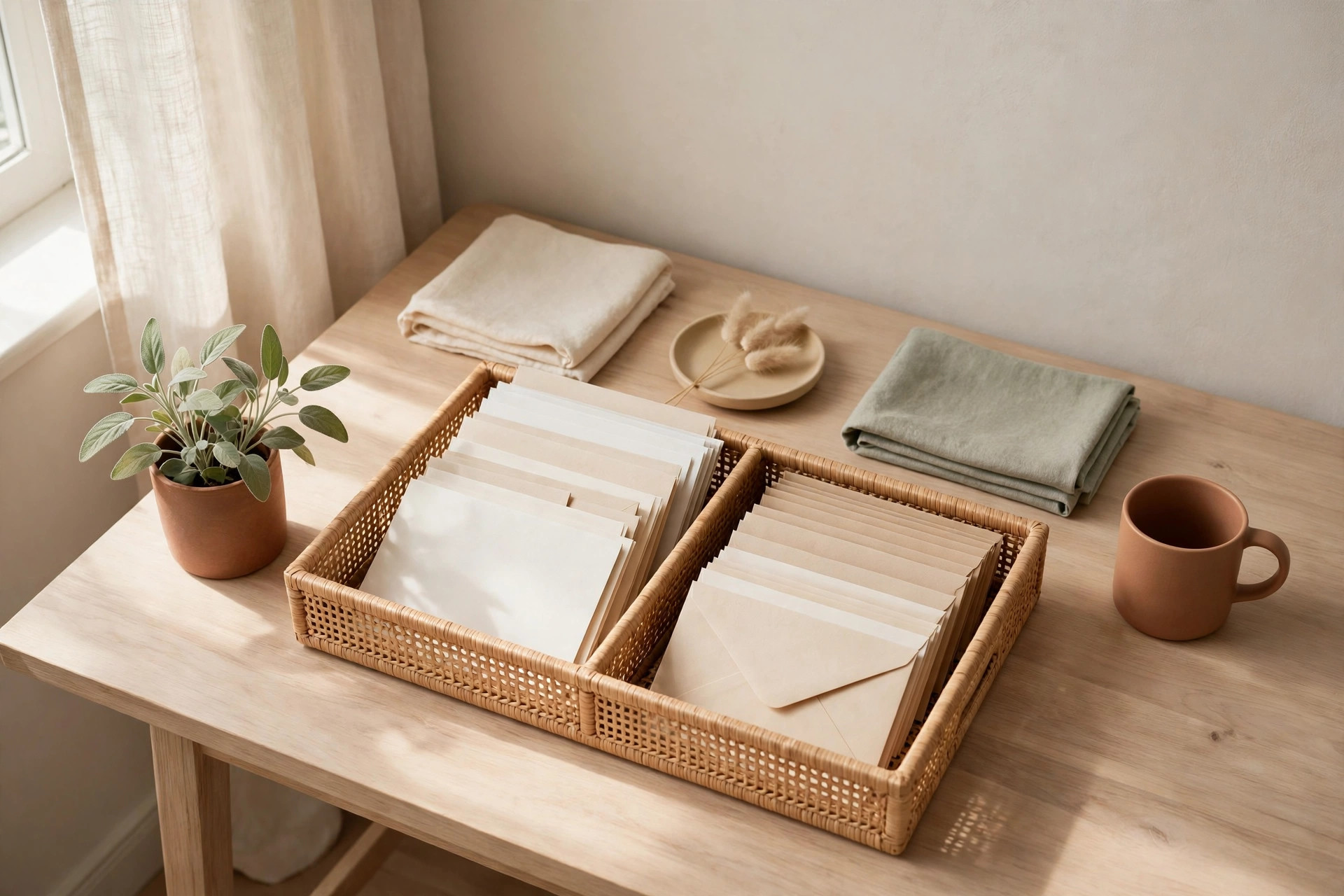
What to shred and when
Shredding is where most households hesitate: afraid of throwing away something important, they keep everything. A few rules remove the guesswork.
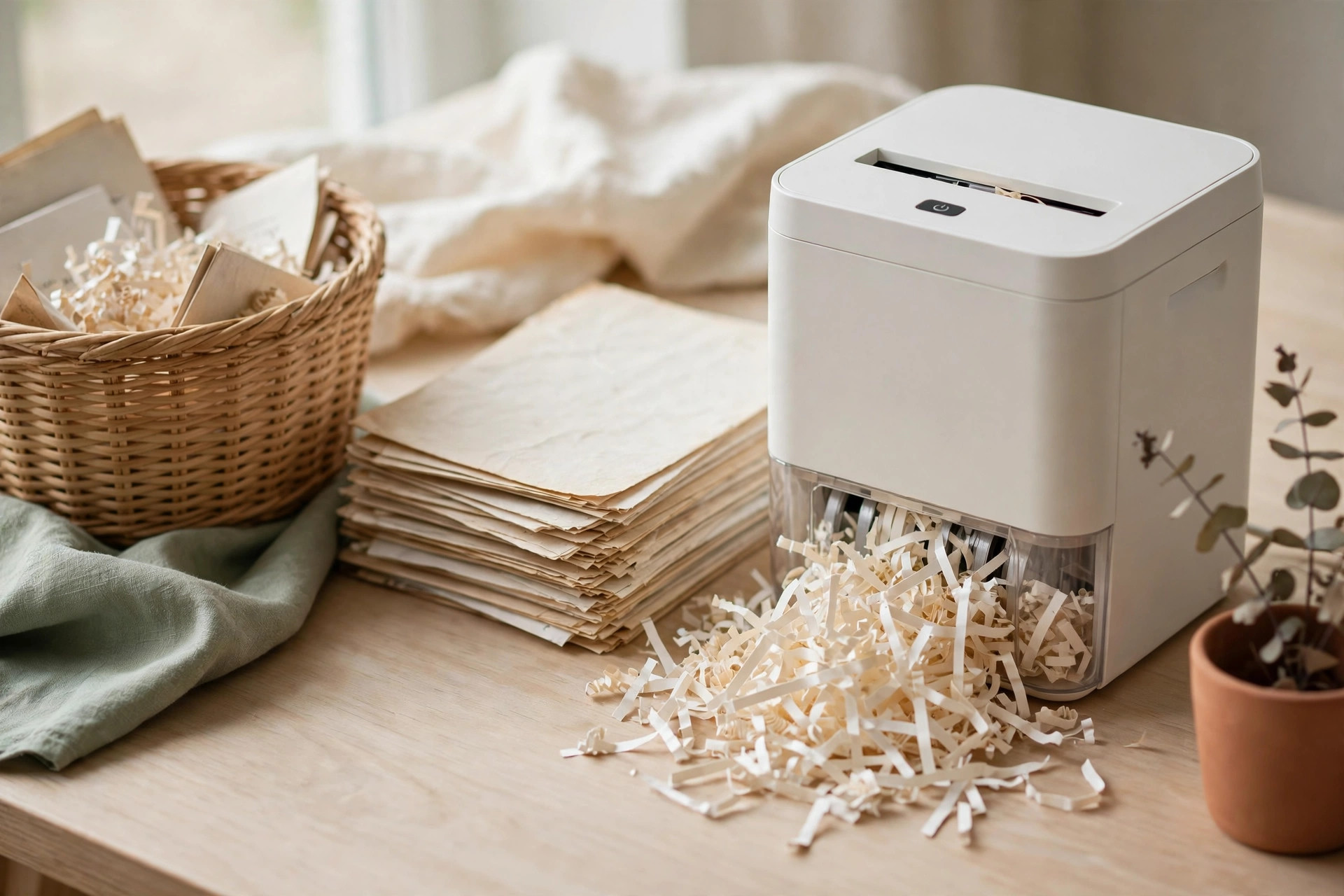
15. Shred anything with personal details you no longer need. That includes old bank and credit card statements, pay stubs older than a year, expired insurance cards, pre-approved credit offers, and anything showing full account numbers, signature, or date of birth. The U.S. Federal Trade Commission’s consumer guidance is a solid reference: FTC: Shredding personal documents. If your town runs a free shredding event, save a bag for it instead of buying a shredder.
16. Keep tax returns for at least three years, and vital records forever. Tax returns and supporting documents should be kept for at least three years from filing — when in doubt, keep the return and shred the clutter around it. Leases stay until a year after you move out, car titles until you sell the car.
Mistakes to avoid
Buying storage before sorting. A new filing cabinet or matching binders feels like progress, but it just gives clutter a nicer container. Sort first, then buy only enough storage for what survives.
Keeping paper “just in case.” “Just in case” is the most expensive phrase in home organization because it has no expiry date. If you have not needed a document in a year and a scan would serve, scan it and let it go.
One system per person. Separate piles per adult double the maintenance and guarantee nobody knows where anything is. One inbox, one filing box, one go-bag — shared systems survive because anyone can use them.
Filing by company instead of category. A folder for every bank, utility, and insurer multiplies fast and breaks when you switch providers. Categories stay stable; companies do not.
Frequently asked questions
How can I organize paperwork in a small apartment with no filing cabinet?
Use one slim accordion file with eight labeled pockets on a single bookshelf, plus one inbox tray by the door. That holds a household’s active paperwork in about two inches of shelf space, because every paper has exactly one place to go.
How long should I keep bills and bank statements?
Keep bills until paid and confirmed, then shred or recycle them unless needed for tax records. Bank statements can usually go after a year with digital copies; tax returns should be kept for at least three years from filing.
Can I go fully paperless with household paperwork?
Almost. Bills, statements, and receipts can nearly all go digital, but original vital records — passports, birth certificates, deeds, car titles — should stay on paper in a go-bag folder, with scans as backup. The goal is a small footprint, not zero paper.
What is the best way to stop paper piles from coming back?
One inbox tray emptied every evening, plus a 10-minute weekly routine to pay, file, and shred. Piles return when paper has no front door and no regular exit; fix those two things and the system mostly maintains itself. If your paperwork corner doubles as a workspace, our guide to Small Home Office Organization in a Corner shows how to keep it working for both jobs.
Conclusion
Paperwork in a small home needs no cabinet, spare room, or complicated system. It needs one inbox, eight folders, a go-bag for the vital few, and ten minutes a week. Start with the triage and set up the inbox today. Save this pin for later, and browse more ideas in our storage ideas collection for the next corner of your home.