IKEA organization hacks for small apartments work because IKEA solves the exact problem small apartments have: not enough space and not enough money. Every piece is modular, sized for tight rooms, and cheap enough that a mistake costs lunch money, not rent money. The catch is that not everything in that blue-and-yellow maze is worth your square footage. These 18 under-$25 hacks are the pieces worth buying — the rods, carts, inserts, and trolleys that actually earn their footprint in a small apartment.
Why IKEA Wins for Small Apartments: Modular, Cheap, Drill-Optional
Small apartments punish two things: furniture that doesn’t fit and mistakes you can’t afford. IKEA’s catalog dodges both. Most storage pieces come in narrow, stackable, or wall-mounted forms designed for rooms under 600 square feet, and nearly everything below $25 is light enough to hang, lean, or roll without a drill.
Three rules before you shop. First, measure first, browse second — know your shelf depths, ceiling clearance, and door widths before you look at anything. Second, buy for the exact gap, not the fantasy room. Third, cheap is a strategy, not a compromise: a $7 insert that doubles a cabinet shelf beats a $200 custom pull-out you’ll never install.
Closet Hacks: Rods, Inserts, and Slim Drawer Towers
1. Double your hanging space with a second rod
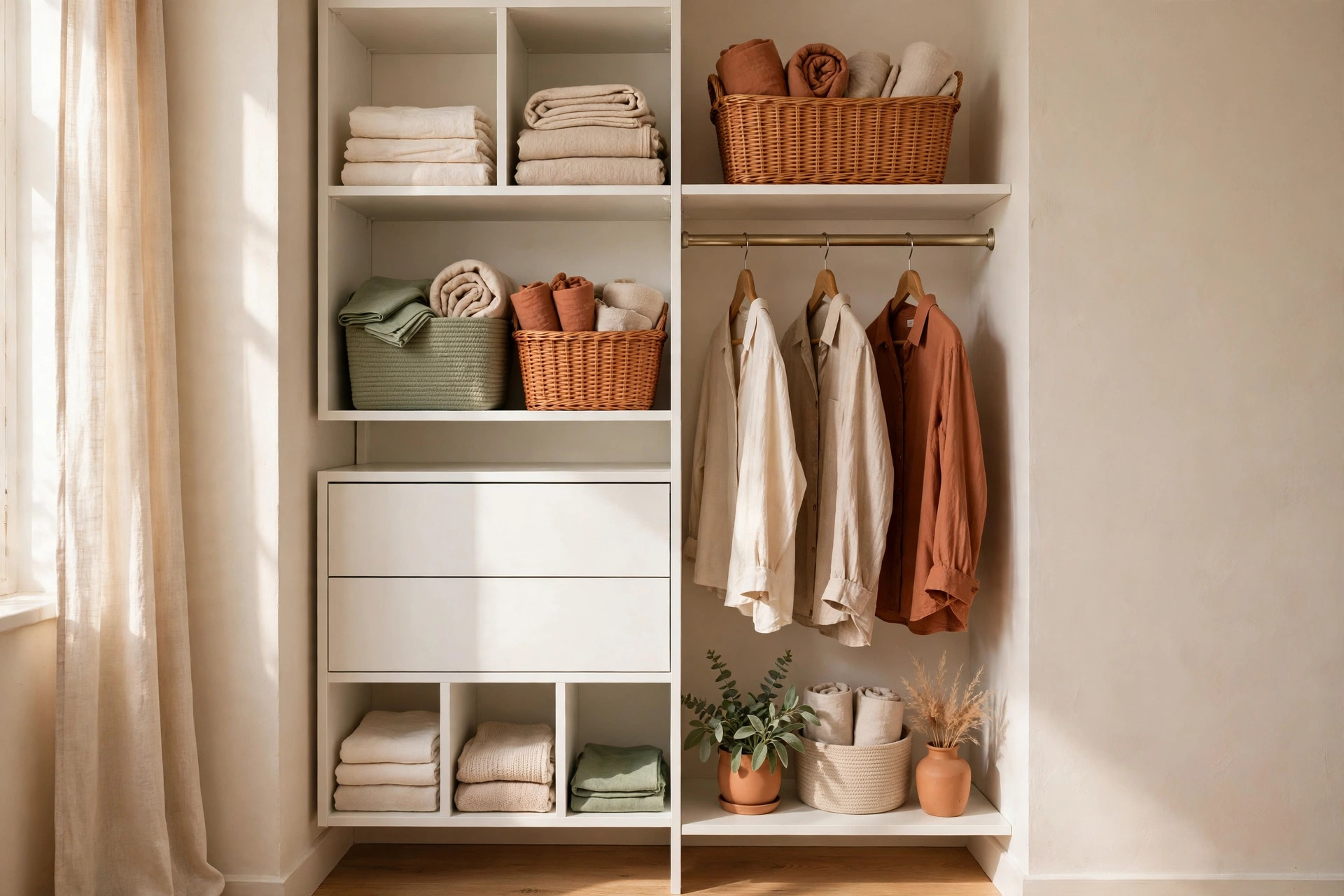
A closet rod extender (IKEA sells rod-and-bracket sets for under $15) hangs a second rail below the existing one for shirts and folded pants. It takes 10 minutes and adds roughly 3 feet of hanging space — the single highest-impact change in any small closet.
2. Add SKUBB boxes to every shelf
SKUBB storage boxes (around $5–10 each) turn deep, dark closet shelves into pull-out compartments for shoes, accessories, and off-season clothes. Uniform boxes look built-in and keep stacks from avalanching.
3. Use a slim drawer tower for the closet floor
A narrow drawer unit on the closet floor (under $25 for the smallest sizes) holds underwear, socks, and folded tees better than any stack on a shelf. Measure the width between the door frame and the hanging clothes first — you need about 12 inches clear.
4. Hook the door with an over-door rail
An over-door hook rail (under $10) gives you 5–6 hooks for tomorrow’s outfit, bags, and robes with zero holes. It lifts out cleanly on move-out day. For more on door storage, see 19 Vertical Storage Ideas for Small Apartments (Think Up, Not Out).
5. Corner-ize dead space with a small shelf insert
The 12 inches of dead space in a closet’s side corners fits a slim shelf insert or a hanging fabric shelf. That’s where scarves, belts, and rarely-worn items live — visible but out of the daily path.
Kitchen Hacks: Rails, Rolling Carts, and Shelf Inserts
6. Mount a KUNGSFORS-style rail for daily tools
A wall rail with S-hooks (around $10–15 for rail plus hooks) moves spatulas, measuring cups, and mugs off the counter and onto the wall. One 2-foot rail clears roughly a square foot of counter — gold in a galley kitchen.
7. Double cabinet shelves with VARIERA inserts
The VARIERA shelf insert (around $7) is the cheapest square footage you’ll ever buy. It splits one tall cabinet shelf into two usable levels for plates, bowls, and mugs. Two inserts (about $14) fix the worst cabinet in the kitchen.
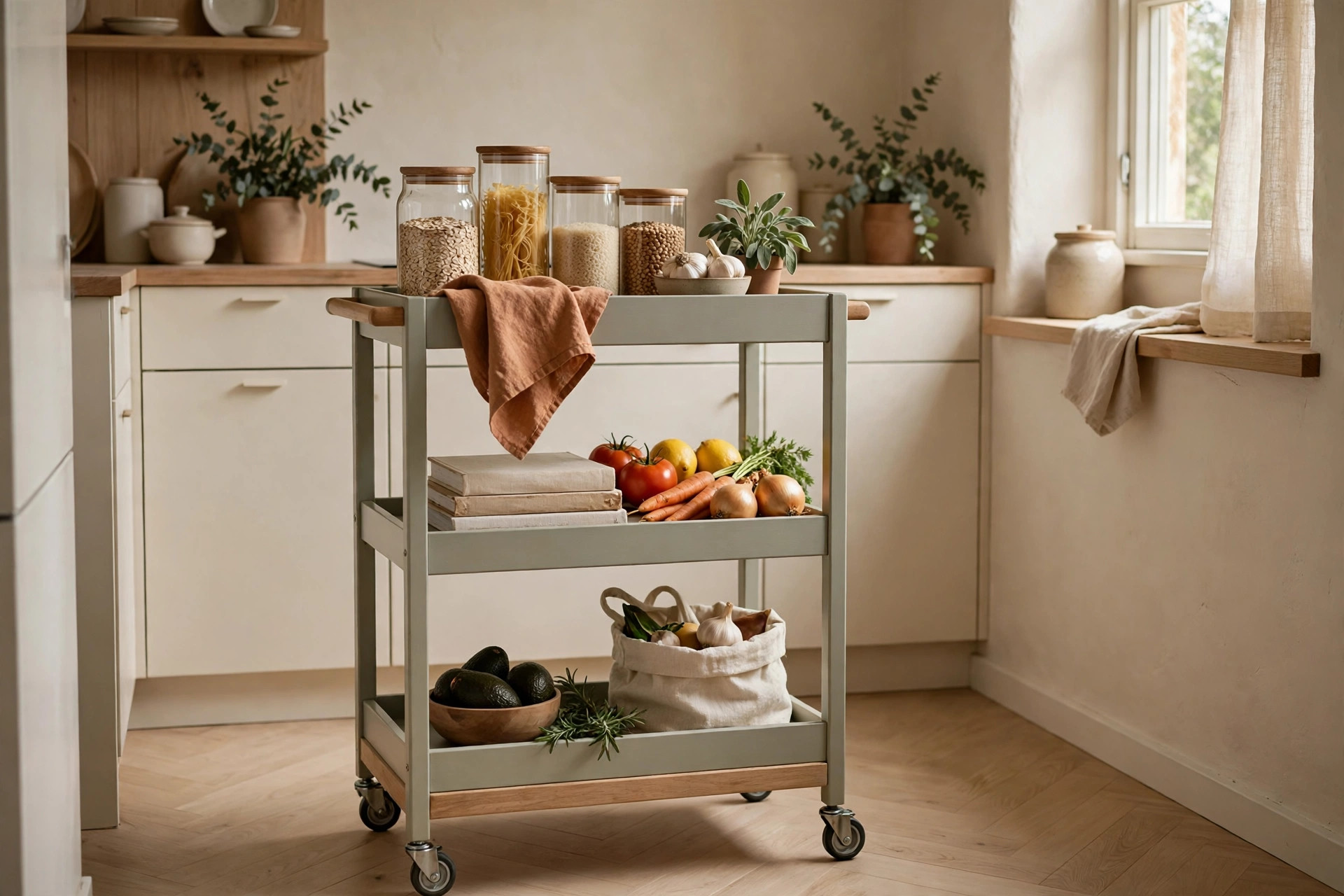
8. Roll a RASKOG-style cart into the gap
A slim rolling utility cart (around $25 for the smallest) squeezes into the 6-inch gap between the fridge and the counter and holds spices, oils, and produce. It pulls out for cooking and slides back for storage — a pantry on wheels.
9. Pegboard the pantry door with SKADIS
A SKADIS pegboard panel (around $15–20 with hooks) on the inside of a pantry or cabinet door holds measuring tools, wraps, and small baskets. Doors are the most underused square footage in a small kitchen. Related: 16 Spice Storage Ideas for Small Kitchens (No More Digging) if your spice situation is the real problem.
Bathroom Hacks: Trolleys, Wall Cabinets, and Over-Toilet Pieces
10. Trolley the bathroom
A slim 3-tier rolling trolley (around $20–25) beside the toilet or vanity holds towels, toilet paper, and toiletries where a cabinet would never fit. The top tier at arm’s height works as a landing spot for the products you use daily. See 18 Small Bathroom Storage Ideas That Make a Tiny Bathroom Work Harder for the full bathroom system.
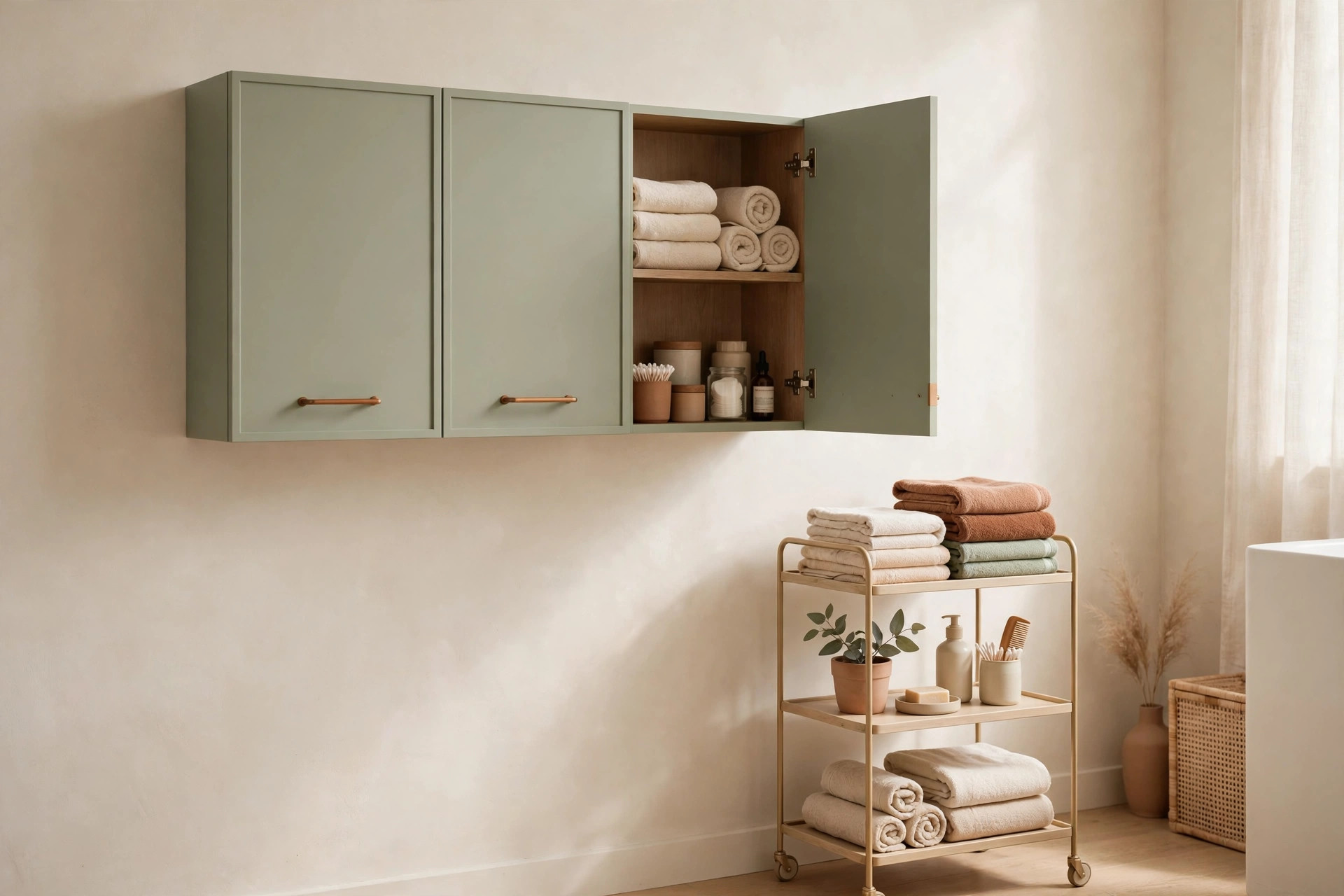
11. Hang a slim wall cabinet over the toilet
A narrow mirrored or plain wall cabinet (the smallest sizes run under $25) uses the 2 square feet above the toilet that every bathroom wastes. It holds medicine and daily products at eye level. Use the included wall anchors — this one piece is worth two small screw holes.
12. Over-toilet shelving for the tall stuff
If a cabinet feels like too much, two small floating shelves (LACK wall shelves run about $10 each) over the toilet hold folded towels, baskets, and a plant. Keep the bottom shelf above head-bump height — about 5 feet off the floor works for most people.
Entryway and Hallway Hacks
13. Row the wall with a peg rail
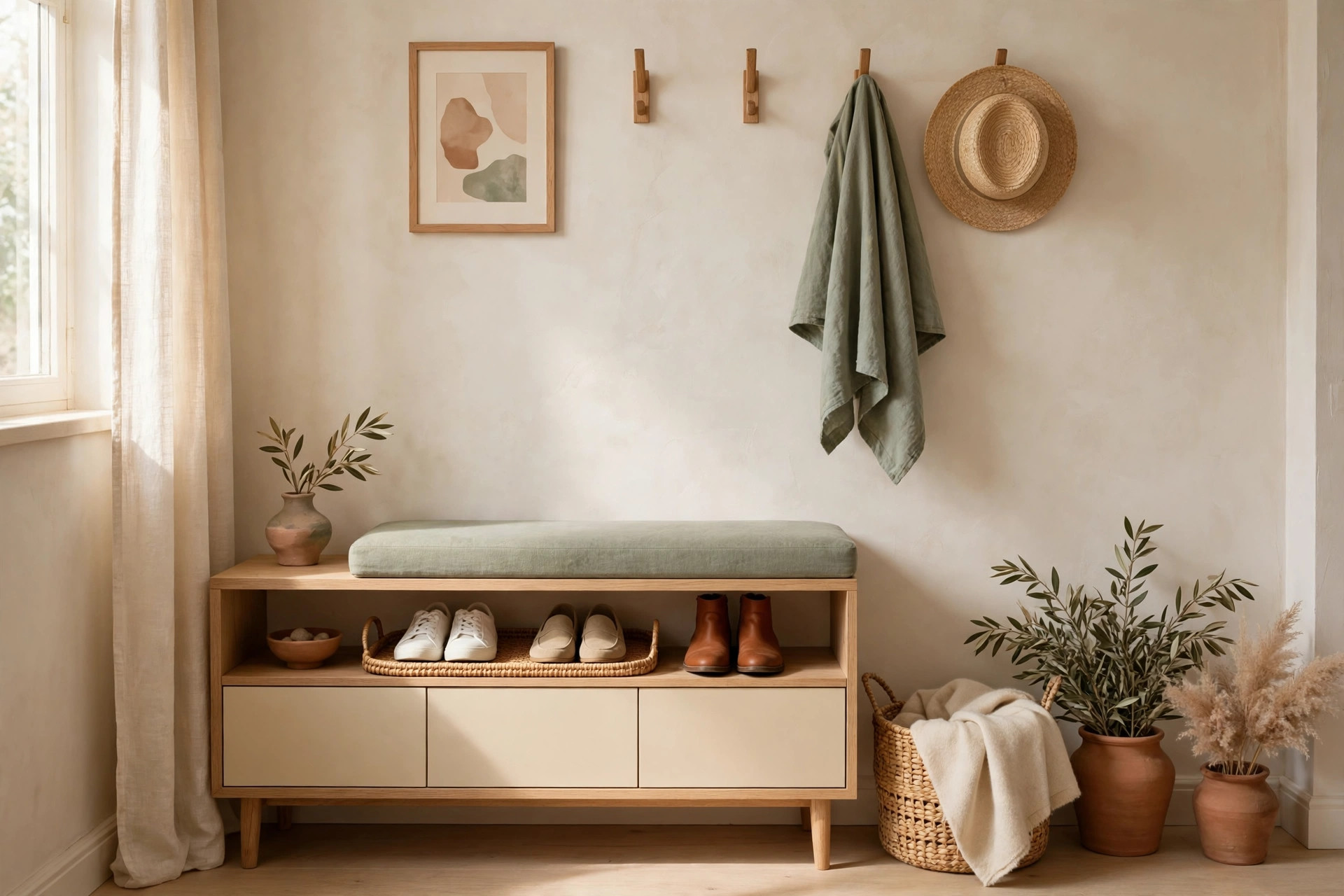
A wooden peg rail (under $15) along the entryway wall holds coats, bags, hats, and the dog leash in about 6 inches of depth. Mount it at 5 feet so long coats clear the floor. This is the renter’s coat closet.
14. Bench it with a TRONES-style shoe cabinet
A slim wall-mounted shoe cabinet (TRONES runs about $40 new, but single units and similar slim cabinets dip under $25 on sale or secondhand) tilts shoes into 7 inches of wall depth and tops out as a bench for putting shoes on. In a hallway with no closet, this is the whole system: shoes inside, keys and mail on top.
Under-Bed and Hidden Storage Hacks
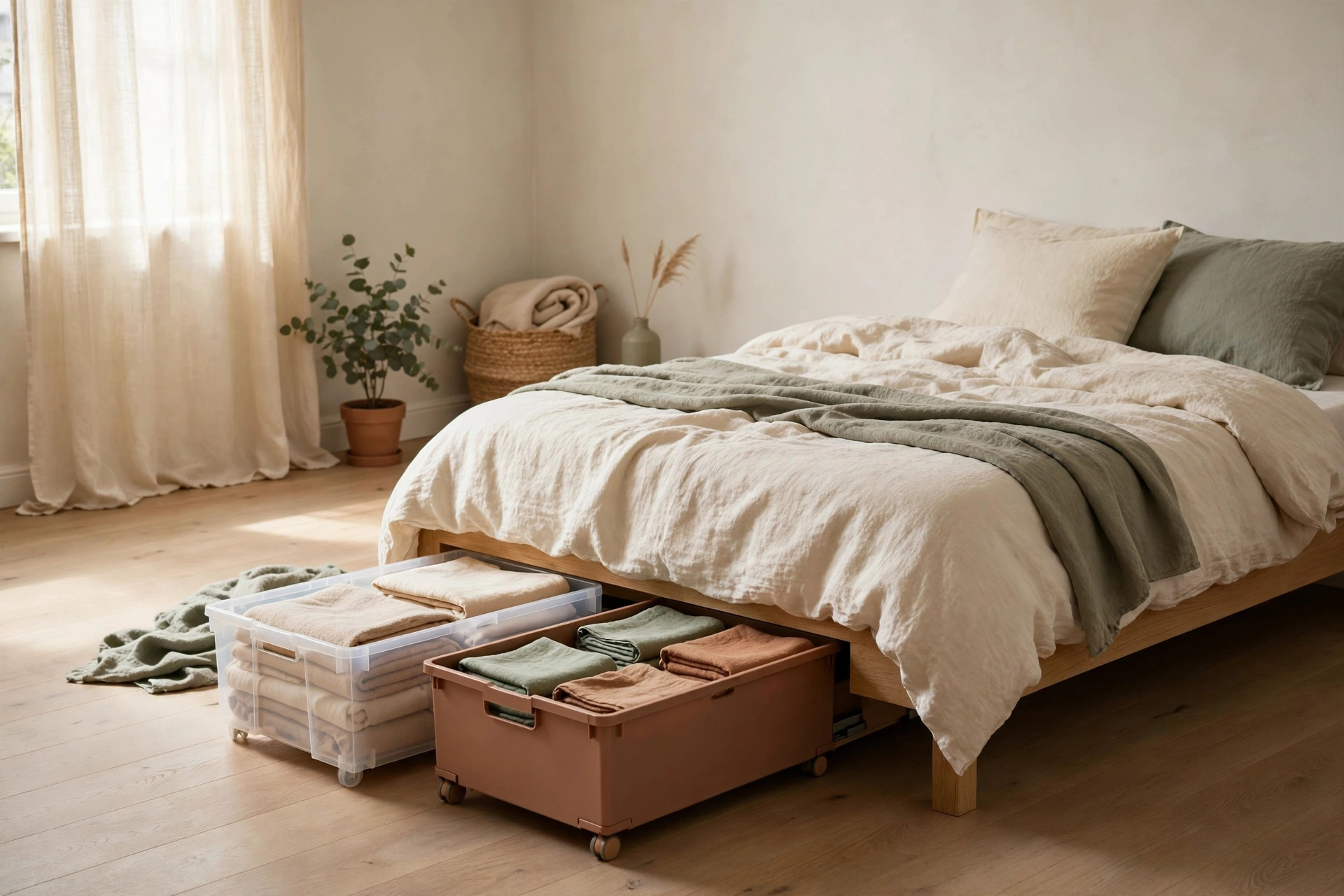
15. Box the under-bed zone with SKUBB
SKUBB under-bed storage boxes (around $10–15 each) fit the standard 6–8 inches of under-bed clearance and hold off-season clothes, extra bedding, and shoes. Two boxes replace a dresser drawer. The full under-bed playbook is in 18 Under-Bed Storage Ideas That Turn Dead Space Into a Dresser.
16. Riser-lift the bed for 4 more inches
Bed risers (around $10 for a set of four) lift a standard frame 3–4 inches, turning a 6-inch under-bed gap into a 10-inch one — enough for deeper boxes and rolled duvets. Check that the risers fit your bed leg shape before buying.
17. Hide the ugly with a LACK side table
A LACK side table (about $10) next to the bed or sofa hides a basket of clutter underneath while holding a lamp on top. It’s the cheapest “everything has a home” upgrade in the catalog — the basket underneath is the actual storage; the table is the disguise.
The $25 Rule: When to Hack vs When to Buy the Real Thing
18. Spend the savings where it matters
Here’s the whole $25 philosophy in one idea: hack the simple stuff, buy the hard stuff. Shelf inserts, bins, hooks, rails, and trolleys are simple — there’s almost nothing to break, so the cheapest version wins. Anything with moving parts that carries weight daily (drawer units, pull-out organizers, anything you sit or lean on) deserves the sturdier mid-range version. A $7 insert that fails costs $7; a $20 drawer unit that collapses costs your clothes and your Saturday.
The $25 line is also a commitment test. If a hack works for 3 months, upgrade the one you use most to the real version. If it doesn’t work, you’re out lunch money and you learned something.
Renter Rules: What Installs Cleanly and Removes Cleanly
Renters can use almost everything on this list. Fourteen of the 18 hacks need zero holes: trolleys, carts, bins, shelf inserts, risers, over-door rails, freestanding peg rails, and boxes all install cleanly and lift out on move-out day.
The four that need holes — wall rails, pegboards, wall cabinets, and floating shelves — use small screws that fill with a dab of putty. Where the lease is strict, swap to the drill-free alternative: tension rods instead of rails, freestanding shelves instead of wall-mounted ones, adhesive hooks (rated for the weight, and test one first) instead of screws.
Photograph every wall before you hang anything and keep the original hardware in a labeled bag. Move-out takes an hour when everything lifts out by design.
Mistakes to Avoid: What NOT to Buy at IKEA for Small Apartments
The big flat-pack furniture kits are where small apartments lose. A cheap bookshelf that sags in a year, a wardrobe that won’t survive the move, a bed frame with 47 parts — these cost more in frustration than they save in dollars. Buy the small accessories and inserts (the stuff on this list); be picky about the big furniture.
Second mistake: buying storage before purging. No $25 hack fixes a closet holding 40 shirts you don’t wear. Purge first, measure second, buy third.
Third: buying matching sets. Five identical bins look great on the shelf and waste space in real cabinets. Buy for the gap, not the aesthetic — uniformity comes from labels and color, not from identical boxes.
Frequently Asked Questions
What is the best IKEA organizer under $25 for a small apartment?
The VARIERA shelf insert, around $7 — it doubles every cabinet shelf it sits in. Two or three inserts (about $21) fix a small kitchen’s worst problem, the wasted vertical space inside cabinets.
Can I use these IKEA hacks in a rental without drilling?
Yes. Fourteen of the 18 hacks need zero holes — tension rods, trolleys, bins, shelf inserts, risers, and freestanding pieces all install cleanly. The other four use a few small screw holes that fill with putty on move-out, with adhesive or tension alternatives where leases are strict.
How do I organize a small apartment with IKEA on a $100 budget?
In order: VARIERA inserts for the kitchen (about $21), a SKADIS pegboard for the entryway (about $20), SKUBB boxes under the bed (about $15), and a pull-out bin under the sink (about $7). Roughly $63 fixes the four worst clutter spots. Save the rest for the one piece you discover you need after two weeks.
Do cheap IKEA organizers actually hold up in small apartments?
The inserts and bins do — there is almost nothing to break. Moving parts (drawers, pull-outs, trolleys) hold up if you respect their rated weight limits. The real risk is the multi-part furniture kits in section 7 — those are the pieces worth spending up on.
Conclusion
IKEA’s under-$25 pieces are the cheat code for small-apartment storage: modular, cheap, and mostly drill-free. Start with the inserts and bins, hack the simple stuff, and save your real money for the few pieces with moving parts. Save this pin for later — and browse /categories/storage-ideas/ for the next room to fix.