A tiny bathroom fails when every bottle, brush, and tube fights for the same two feet of counter. Without assigned storage, the sink collects clutter, the floor collects everything else, and the room feels cramped no matter how clean it is. These small bathroom storage ideas take the opposite approach: stop fighting for counter space and put the vertical zones to work — above the toilet, inside the vanity, on the shower walls, and on the back of the door.
Here are 18 concrete ideas organized by zone — no renovation required, renter-friendly wherever possible. Each names the product type, the measurements, and the trade-offs.
The bathroom triage: purge and measure first
Before buying anything, pull everything out of the vanity, drawers, shower, and medicine cabinet, and toss anything expired, dried out, or duplicated. Most tiny bathrooms shed a grocery bag of clutter here alone. These small bathroom organization ideas pair well with our 19 Tiny Bathroom Organization Ideas to Maximize Every Inch, which covers the room-wide rules behind each zone.
1. Set a one-category-per-zone purge rule
Allow exactly one storage home per product category, zone by zone. Two hand soaps on the counter? One stays, one goes under the sink as backup. This single rule stops the re-clutter cycle, and it takes about 20 minutes.
2. Measure every zone before you buy
Measure your vanity cabinet interior (width, depth, height, plumbing clearance), drawer depth, and the wall space above the toilet (usually 20–28 inches wide). Keep the numbers on your phone — roughly a third of small-space organizers get returned over a half-inch mismatch.
Over-toilet: the 2 square feet everyone wastes
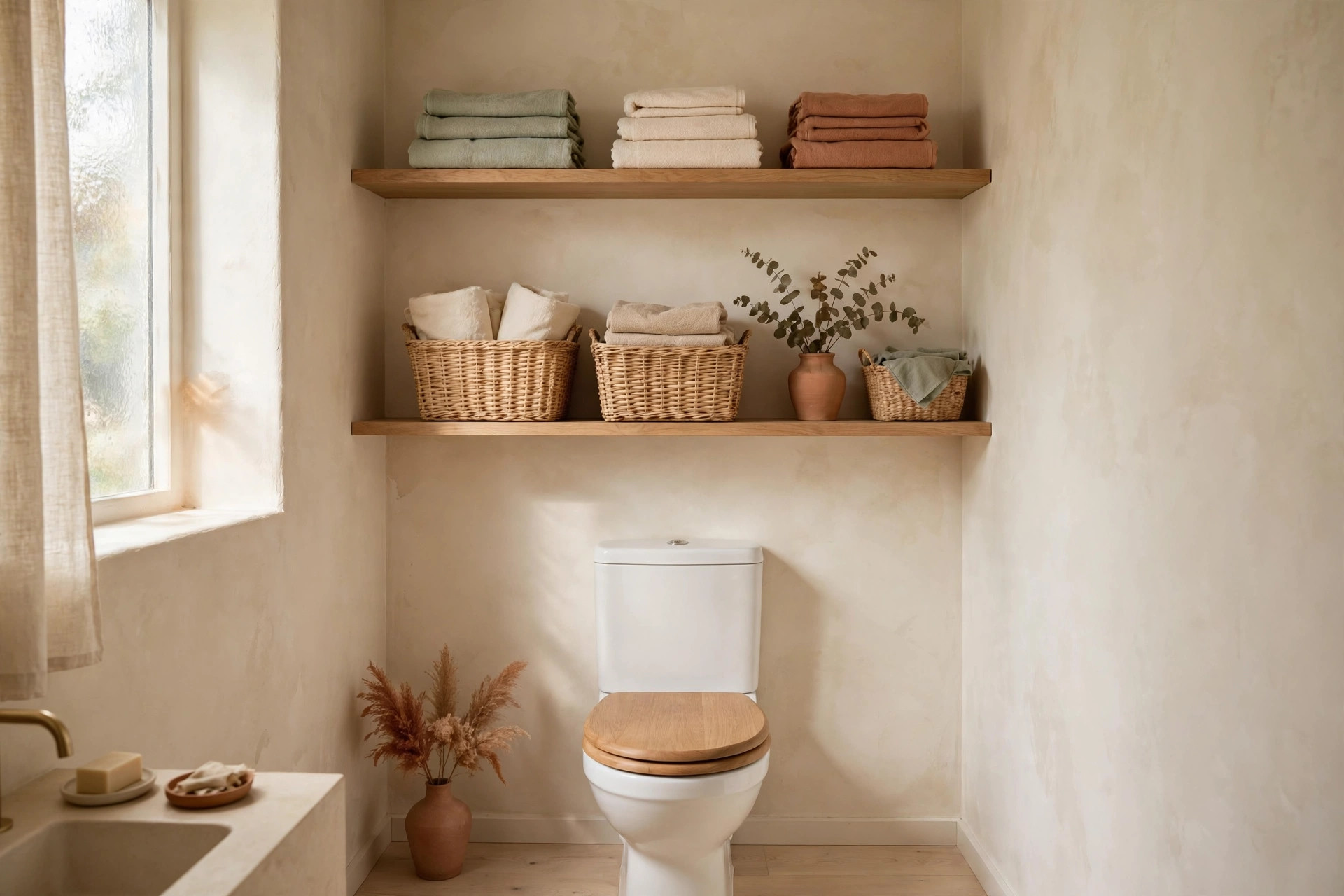
The footprint above the toilet tank is the largest unused storage zone in a tiny bathroom, and it needs zero floor space. Keep items here lightweight and easy to dust.
3. Add an over-toilet etagere
A freestanding over-toilet shelf unit (typically 23–25 inches wide, 63–66 inches tall) gives you two to three shelves with zero drilling — ideal for renters. Rolled towels and a small plant up top, daily items at arm’s reach below. On uneven tile, adhesive furniture pads fix wobbling legs in seconds.
4. Mount two floating shelves instead
If you can drill, two floating shelves 10–12 inches deep, spaced 12–15 inches apart, hold more than an etagere with less visual bulk. Leave at least 15 inches above the tank so the lid lifts fully, and use brackets rated for 15+ pounds per pair.
5. Slide a 6-inch rolling cart beside the toilet
The dead gap between the toilet and the wall or vanity is often 6–8 inches wide — exactly the width of a slim rolling cart. Three tiers hold cleaning supplies, extra toilet paper, and backup toiletries where nothing else fits. Under 5 inches, use a wall-mounted basket instead. For towel overflow that outgrows even this zone, our Tiny Linen Closet Organization Ideas covers where else towels can live.
Vanity cabinet and drawer zones: every inch assigned
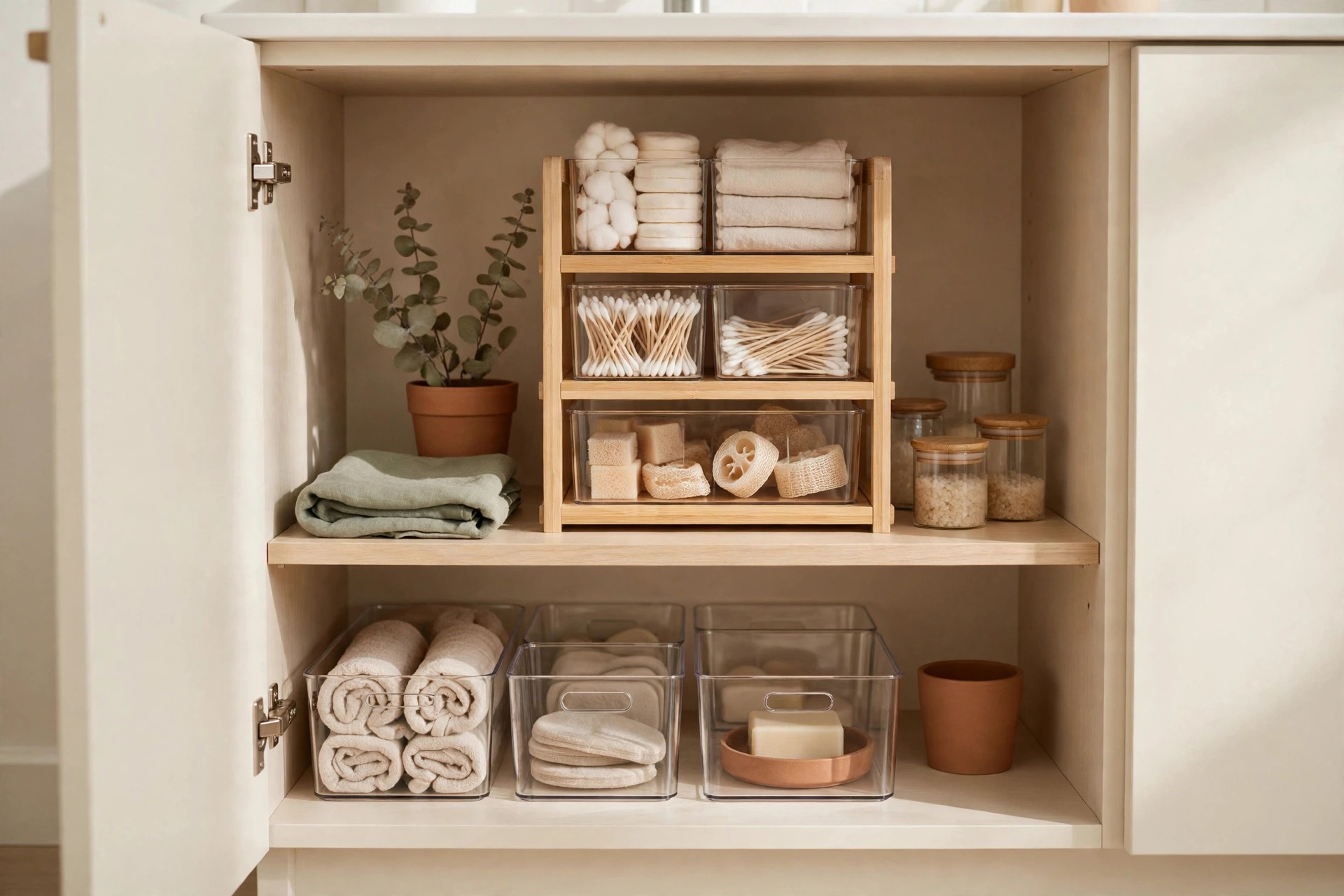
The cabinet under the sink is usually a dark cave where bottles fall over behind the pipes. The fix isn’t more space — it’s assigned zones so nothing migrates.
6. Stack 10×6×6-inch bins around the pipes
Two or three stackable bins, roughly 10×6×6 inches, fit on either side of the drain pipe: one for cleaning, one for backup toiletries, one for first aid. Use clear or labeled bins — in a dark cabinet, opaque bins become junk drawers with lids.
7. Divide the drawer with adjustable bamboo inserts
Expandable bamboo dividers (typically 13–17 inches wide when extended) split one drawer into four or five lanes: dental, hair, face, medications, miscellaneous. For deep drawers, add a shallow tray on top of one half — it doubles the drawer without a new container.
8. Add a tiered under-sink shelf on one side
A two-tier under-sink shelf riser (around 11×6 inches per tier) lifts bottles above the pipe maze: daily items on top, bulky backups below. It only works where the pipe clearance allows — measure the vertical gap under your trap first, since tight plumbing kills this option fast.
Shower and tub walls: suction, tension, and corner caddies
The shower has one hard storage constraint: everything must survive constant water and steam. That rules out wood, cardboard, and anything that rusts. Suction and tension products work here, but only on smooth, non-porous surfaces.
9. Install a corner tension pole caddy
A floor-to-ceiling tension pole (usually adjusts 62–106 inches) turns an empty shower corner into four or five baskets with zero drilling. Tighten it with real force — it shouldn’t budge when you pull down on it — and re-tighten every few months, because steam loosens tension over time.
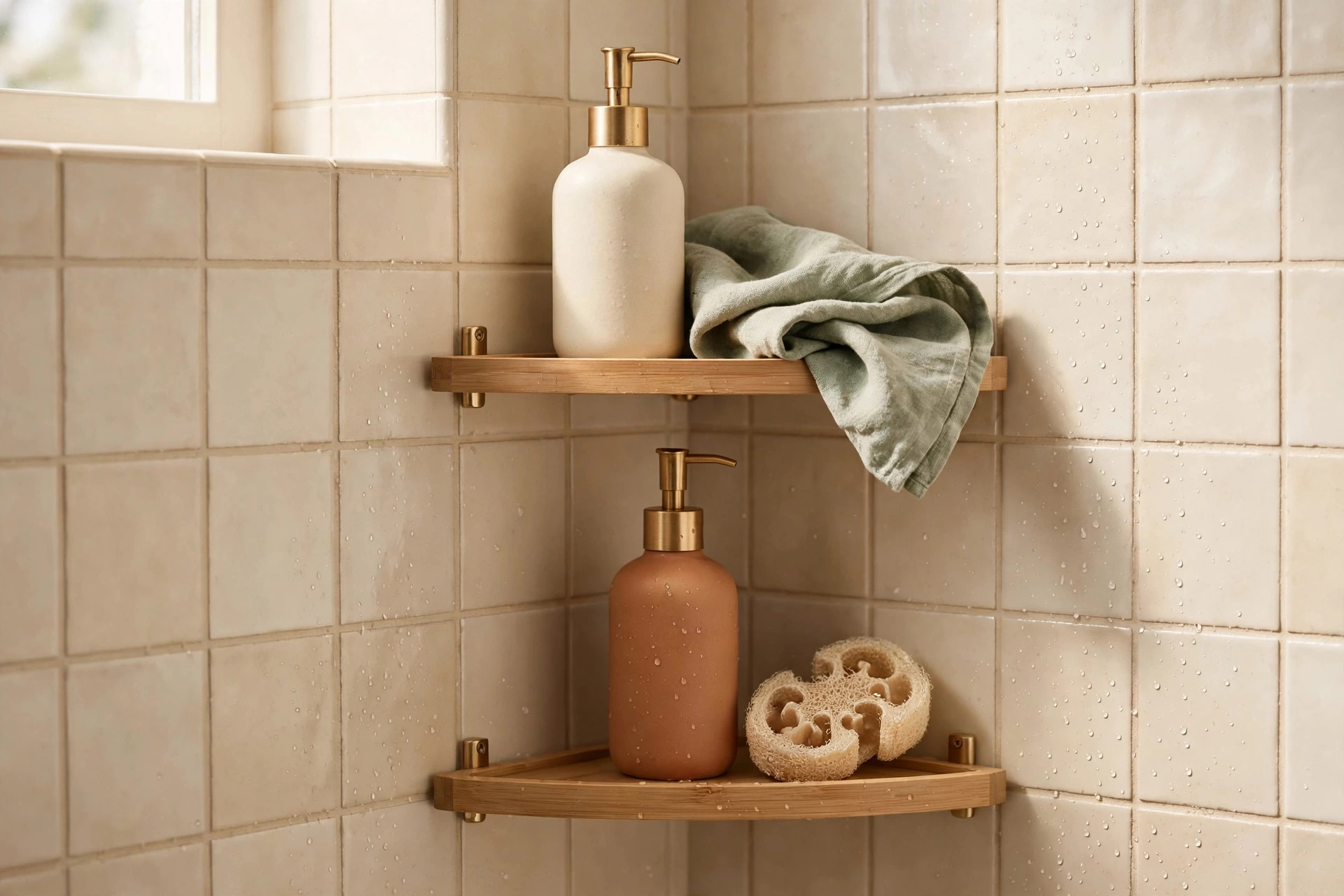
10. Use heavy-duty suction shelves on smooth tile
Large twist-lock suction shelves rated for 10+ pounds hold full-size shampoo bottles on smooth glazed tile and come off without a mark — genuinely renter-safe. They need a completely flat, clean surface: wipe the tile with rubbing alcohol before pressing them on, and skip this idea on textured tile.
11. Hang an over-showerhead organizer
A rustproof stainless or plastic over-the-showerhead caddy adds two shelves in the dead space above head height — perfect for tall bottles that don’t fit corner baskets. Choose one with a silicone-wrapped hook so it doesn’t scratch the fixture, and tug-test the showerhead pipe before loading it up.
The back of the door: towels, robes, hair tools
The back of the bathroom door is roughly 18 square feet of storage most people ignore — where towels, robes, and heat tools should live. Check clearance first: over-door products add about an inch of thickness.
12. Mount an over-the-door towel bar
A double or triple over-the-door towel bar holds two or three towels where they’d otherwise pile on the vanity or floor. Pick one with foam or rubber padding so it doesn’t scuff the finish, and test that the door still closes and latches — on many bathroom doors, only a slim flat-hook design fits. For weight limits and no-drill mounting by door type, see our Over-the-Door Organization Ideas for Every Room.
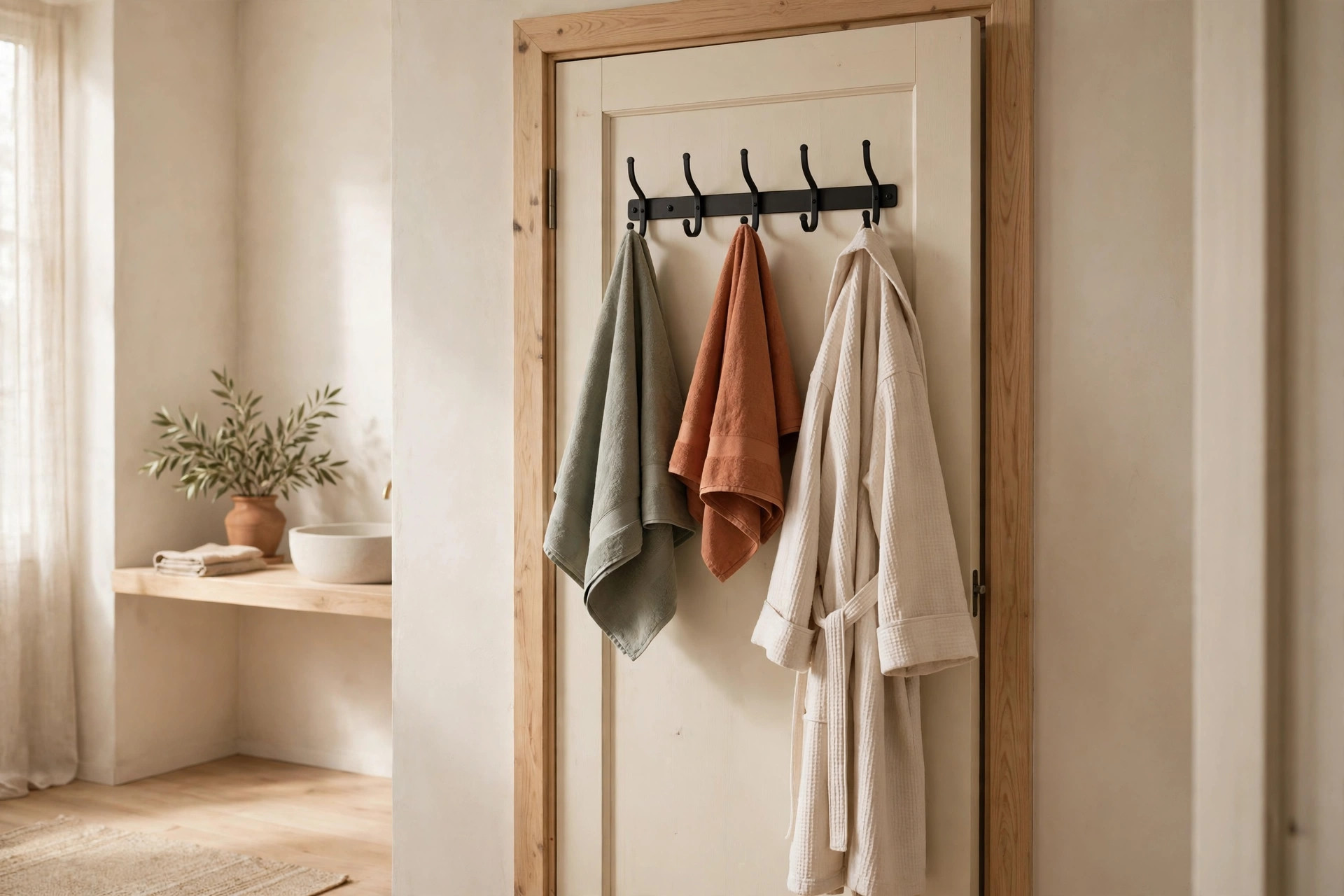
13. Run a hook rail for robes and hair tools
Four to six over-door hooks on a single rail, spaced 4–5 inches apart, give robes, pajamas, and wash bags a permanent home. Put hair tools on one heat-resistant hook at the far end, away from fabric.
14. Add a clear pocket organizer for overflow
A clear over-the-door pocket organizer (the shoe-pocket style) swallows the extras: spare soap, contact lens solution, travel minis, sunscreen. The clear pockets are the whole point — in a dark bathroom, you find what you can see. Keep heavier items in the lower rows so it doesn’t pull the door off-balance.
Medicine cabinet and mirror storage swaps
Swapping a tiny 16-inch medicine cabinet from 1985 is the single biggest storage upgrade you can make for under $50 in parts (plus installation).
15. Swap in a deep mirrored cabinet
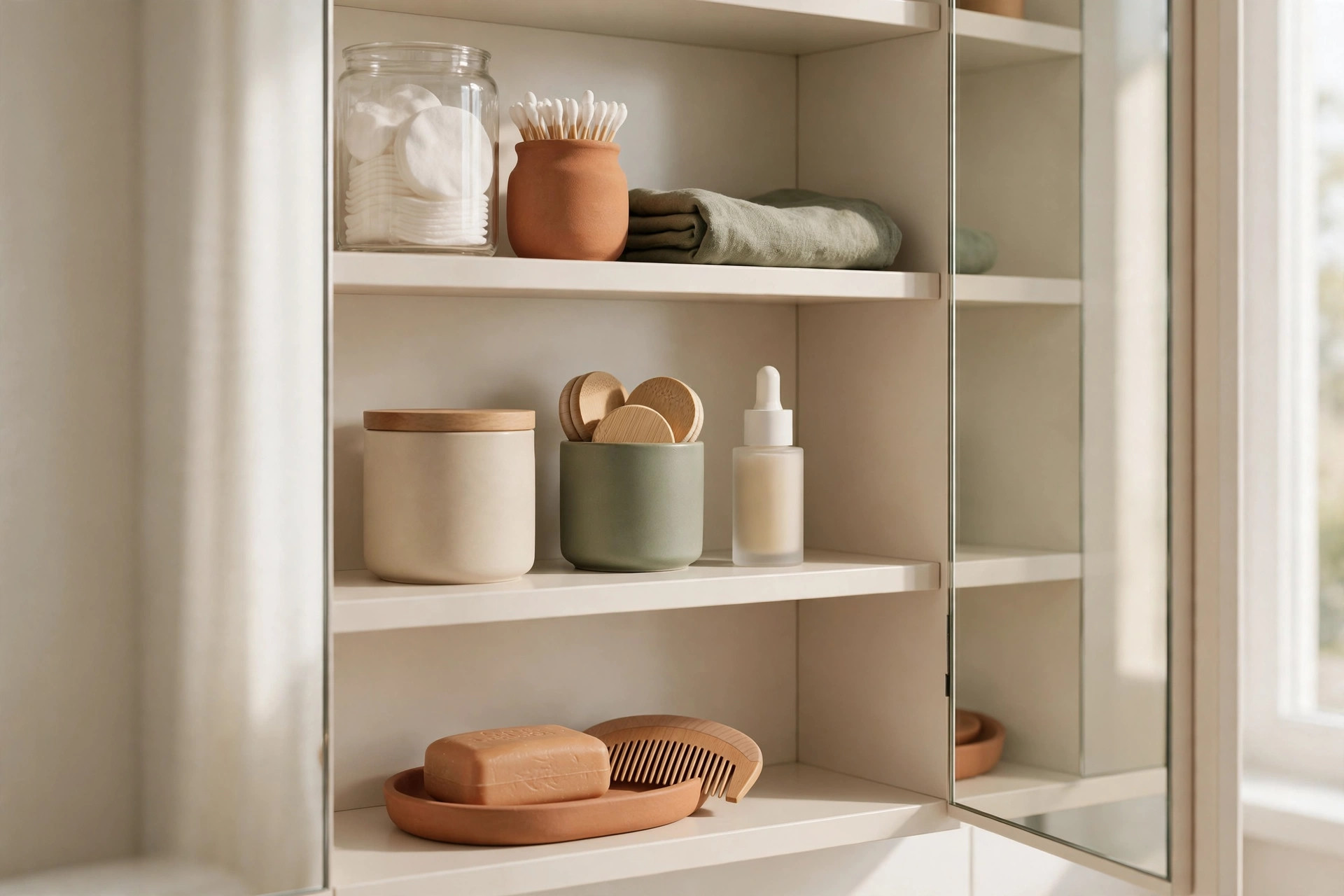
Replace a shallow cabinet with a 6-inch-deep recessed or surface-mount mirrored cabinet, typically 20–30 inches wide. The extra 2 inches of depth over old cabinets is the difference between bottles falling out and bottles standing in rows. It requires drilling into studs — landlords vary on this, so ask first.
16. Add a magnetic strip inside the cabinet door
A self-adhesive magnetic strip on the inside of the medicine cabinet door holds tweezers, nail clippers, bobby pins, and small metal tools that otherwise sink to the bottom of a drawer. Keep it to the door only — magnets on the interior walls block the shelving — and buy a strip rated for humidity.
What NOT to store in a humid bathroom
A tiny bathroom with poor ventilation can sit at 70%+ humidity for hours after a shower. Some things degrade, lose potency, or grow mold in that. Moving them out frees surprising space.
17. Re-home moisture-sensitive items
Perfumes lose their scent profile in heat and humidity; medications can lose potency and shouldn’t live in bathroom cabinets; razors and metal tools rust; unsealed cotton pads harbor bacteria. Move perfumes to the bedroom and medications to a cool, dry drawer elsewhere.
18. Store only sealed, humidity-proof items in the bathroom
What stays in the bathroom should survive steam: sealed bottles, tubes, screw-cap jars, bar soap in a draining dish, cleaning products, towels. If it’s unsealed, paper-based, or reactive to moisture, it belongs somewhere else. This edit alone frees an entire shelf for most people.
Mistakes to avoid and what NOT to buy
Buying storage before purging. Every idea above assumes you triaged first. Adding bins to a bathroom that still holds three years of expired products just organizes the clutter.
Sized-for-everywhere organizers. “Universal” under-sink racks that ignore your specific plumbing are the most returned organizers in this category. Measure first, buy second — always.
Suction cups on textured tile. They will fall at 2 a.m., guaranteed. Use tension poles or over-door products on textured walls instead.
Open wicker and wood baskets in the shower zone. They look beautiful and grow mold within weeks in constant steam. Keep wood and wicker in dry zones.
Storing everything in the shower. A shower crammed with ten bottles means nine of them get wet for no reason. Daily items in the caddy, everything else under the sink or in the cabinet.
Ignoring door swing and lid clearance. Shelves that block the tank lid, or door organizers that stop the door latching, get removed within a week. Mock up with painter’s tape before committing.
Frequently Asked Questions
How do I store towels in a bathroom with no linen closet?
Roll instead of fold — rolled towels take roughly a third less shelf space. Use the over-toilet shelves (ideas 3–4) for daily towels, hang the rest on an over-the-door towel bar (idea 12), and keep one slim 6-inch rolling cart (idea 5) for overflow.
Can I use suction-cup organizers in a rental bathroom?
Yes — if your tile is smooth and non-porous. Heavy-duty twist-lock suction shelves hold full-size bottles and remove without a trace, making them genuinely renter-safe. On textured tile, fiberglass, or painted walls, switch to tension poles and over-door products instead.
How can I keep a tiny bathroom from feeling cluttered?
Cap the visible items: nothing on the counter except soap and one tray, everything else behind doors or in bins. Uniform containers help — mismatched bottles read as clutter even when organized. Keep the palette tight (ivory, sage, terracotta).
Can I store cleaning products under the bathroom sink?
Yes — it’s the best home for them. Under-sink space is dark and rarely opened, which suits cleaners. Keep them in one labeled bin (idea 6), away from medications and personal care products, bottles standing upright.
Every zone now has a job: purge and measure first, towels above the toilet and behind the door, every vanity inch assigned a category, and the shower holding only what gets wet daily. Eighteen ideas, no renovation, most of them renter-safe. Save this pin for later, then browse more renter-friendly layouts in our small-spaces collection.