If your linen closet is barely deeper than a cereal box and every sheet set comes out wrinkled, you are not alone — tiny linen closet organization is one of the hardest storage puzzles in a small home. Narrow depth means standard bins don’t fit, tall stacks topple, and one yanked fitted sheet sends the whole pile sliding.
Here’s the good news: a closet this small doesn’t need a big-budget makeover. It needs a system built around its one defining constraint — depth — plus folding that survives daily use, zones that keep sets together, and a few slim products that earn their footprint. Follow these ideas and your narrow closet can hold everything a full-size one does, without the avalanche.
Measure the closet: depth determines everything
Before buying a single bin, measure the inside depth of your closet from the back wall to the door frame, and the height between shelves. Most tiny linen closets are 12 to 16 inches deep, and that single number decides everything you can put in them.
Write down three numbers: usable depth (back wall to the inside of the closed door — doors swing in, stealing 1–2 inches), shelf-to-shelf height, and the narrowest shelf width. A shelf that is 13 inches deep will not take a “fits most closets” 15-inch bin, and a 10-inch gap between shelves won’t hold stacked bath towels.
Then apply the golden clearance rule: leave roughly one inch of breathing room around every bin or stack. If your depth is under 14 inches, rule out traditional pull-out baskets entirely and plan around slim bins, file-folding, and vertical door storage instead. That single decision saves you the most common mistake in small reach-in closets too: buying storage sized for a closet you don’t have.
The fold system: file-folding for shelves
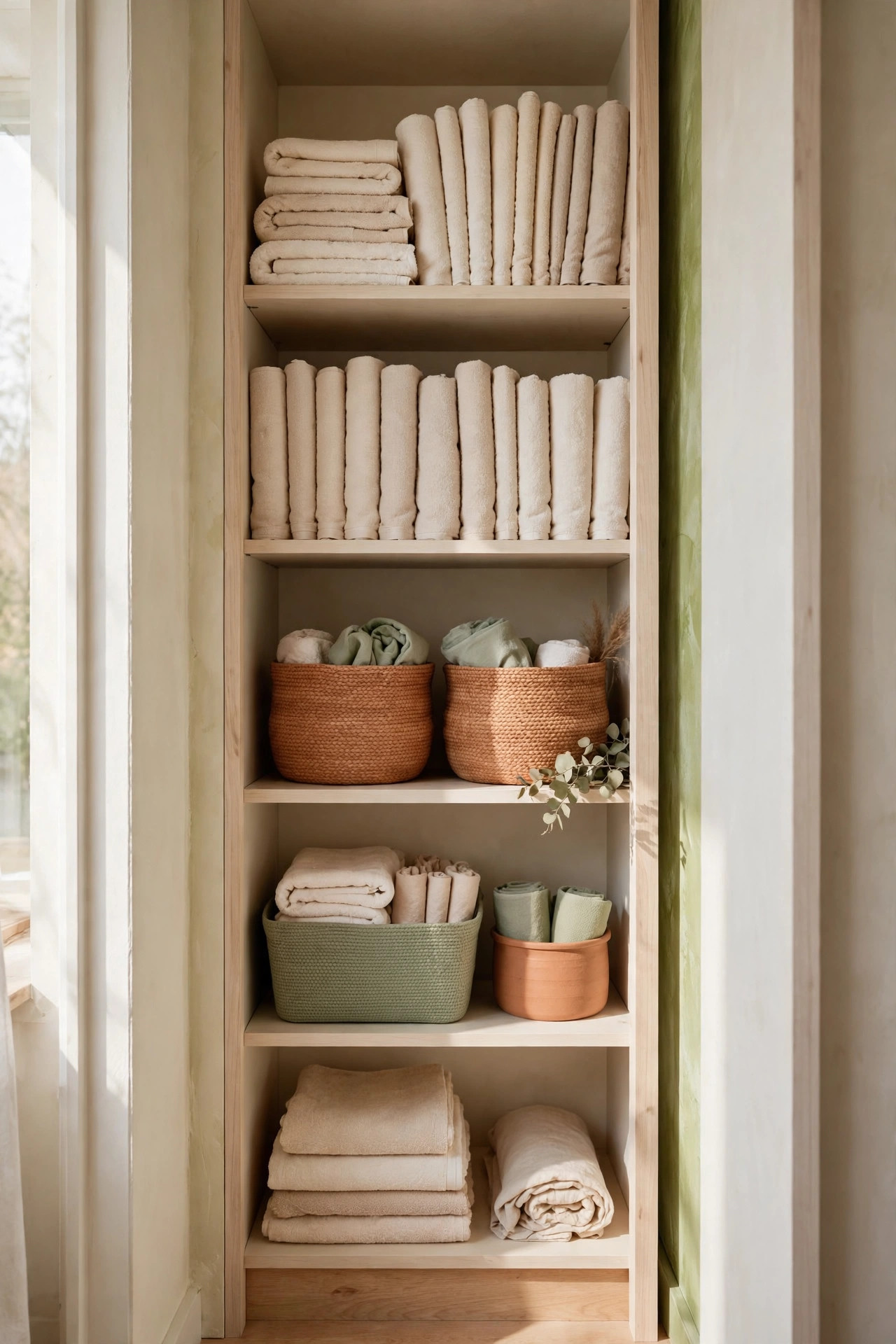
Standard linen folding is designed for deep closets: big flat rectangles stacked high. In a tiny linen closet, those stacks are the enemy — you can’t see what’s in the middle, and grabbing the third set down collapses everything above it. File-folding fixes both problems.
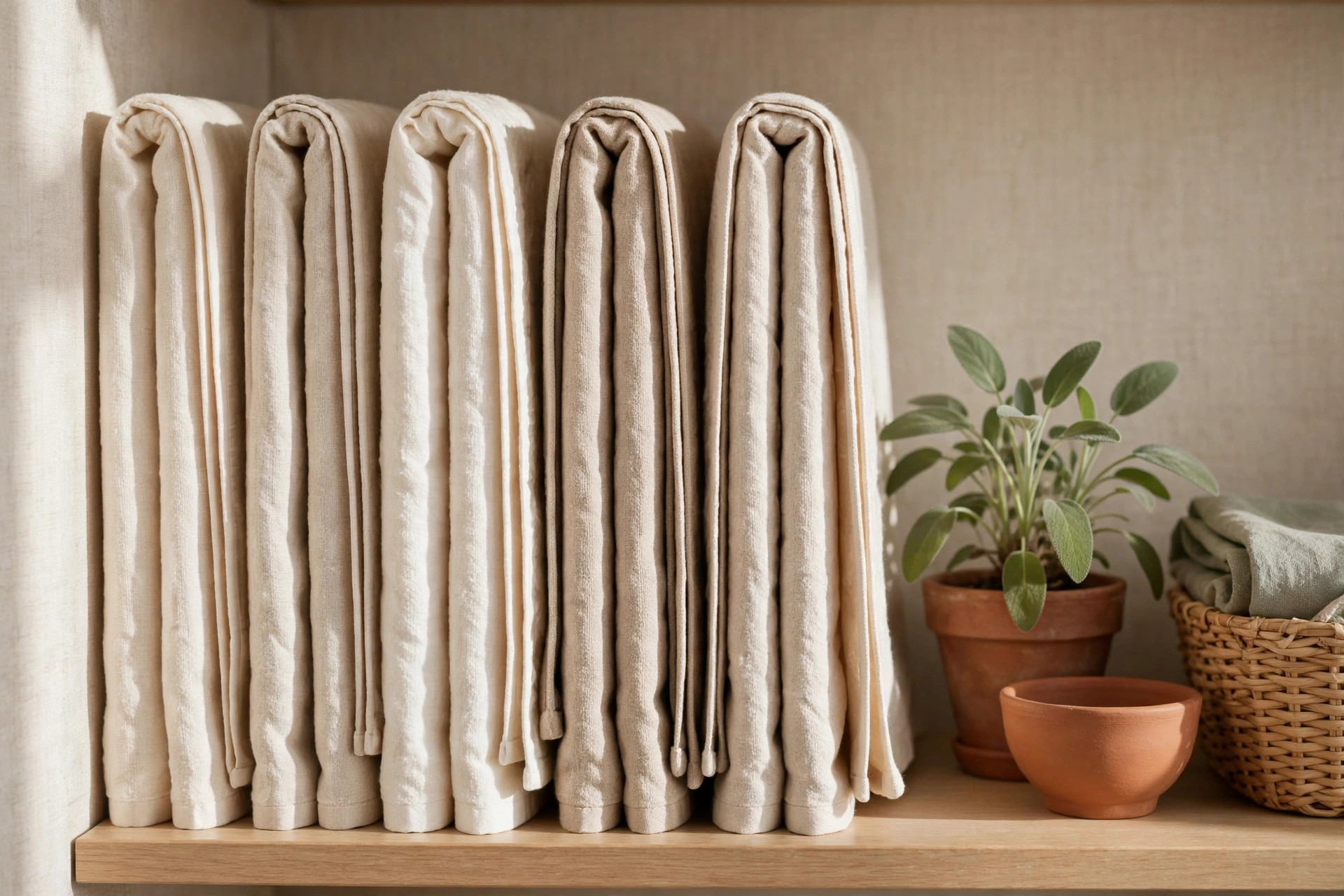
File-fold each sheet, pillowcase, and towel into a rectangle roughly the depth of your shelf minus an inch, then stand the rectangles upright in a row like files in a drawer. Every item becomes visible at a glance, and you can pull one out without touching its neighbors. For a 12-inch-deep shelf, fold to an 11-inch rectangle.
To keep sheet sets together, place the folded fitted sheet and flat sheet inside their matching pillowcase, then file-fold the whole bundle. That trick alone ends the daily hunt for the missing pillowcase.
For a visual refresher on the technique itself, Martha Stewart’s guide to folding sheets so they actually stay neat walks through the corners step by step — then apply your own measurements on top.
Shelf zones: everyday, guest, seasonal
A tiny linen closet fails when everything competes for the same prime shelf. Zones end that fight. Divide your shelves into three territories — everyday, guest, and seasonal — and assign each to the shelf that matches how often you reach for it.
Everyday (chest to eye level): the towels you use this week, one spare sheet set per bed, washcloths. These should be grab-able in two seconds, so this zone gets the file-folding and the most accessible shelf — usually the one at chest height, not the top.
Guest (middle-to-top shelf): guest towels, a second sheet set, the air mattress sheets. You reach here maybe twice a month, so it’s fine if these sit higher.
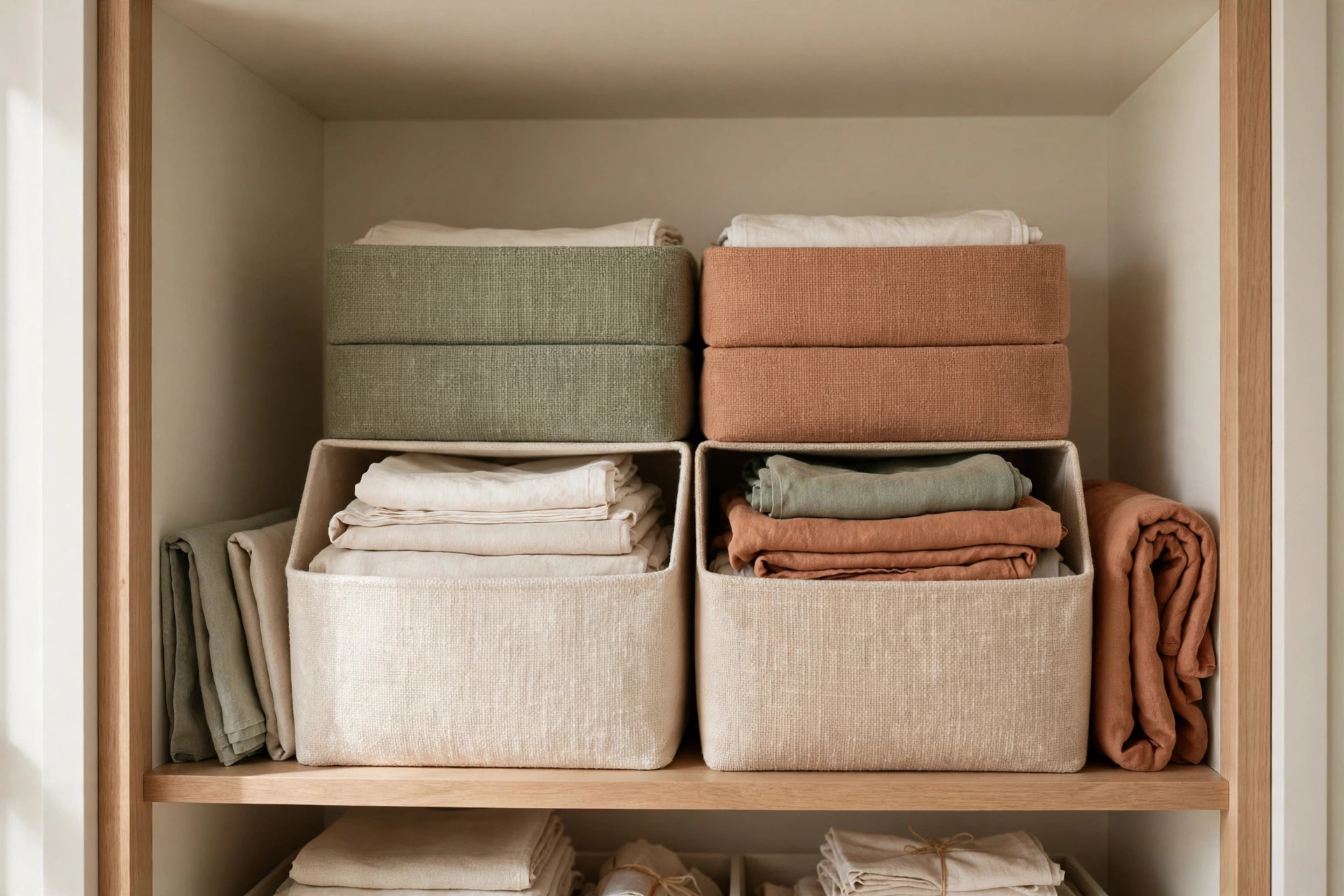
Seasonal (top shelf or floor): flannel sheets in summer, beach towels in winter, the spare quilt. These get swapped twice a year and should never block anything you touch weekly. Store them in a vacuum-seal bag or a labeled fabric cube so the zone stays sealed until swap day.
Keep duplicates ruthlessly in check: most households need two sheet sets per bed in active rotation and one spare — a third set is what turns a tidy zone into a stuffed one.
Rolling carts for narrow closets
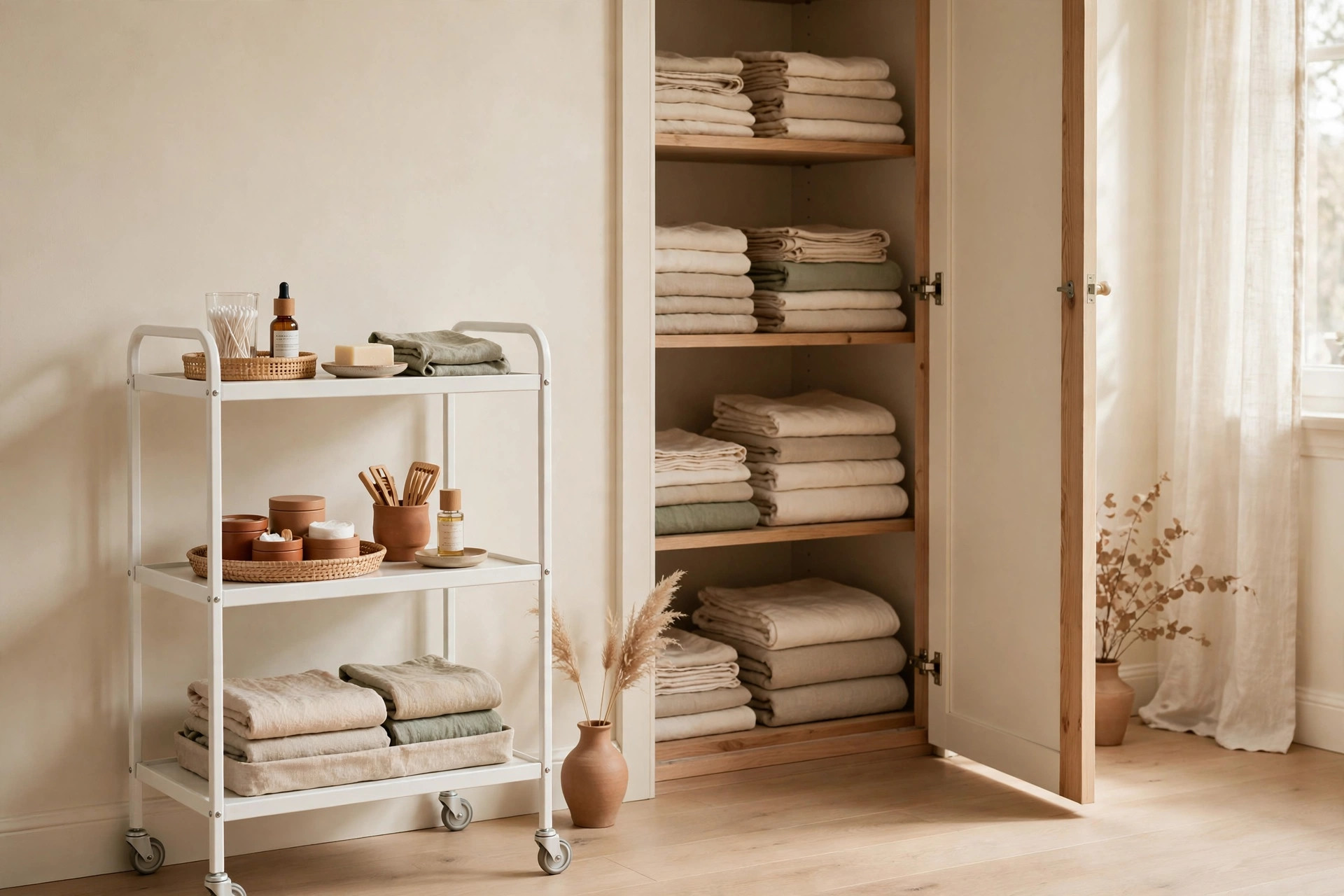
If your linen closet has a gap of floor space beside the lowest shelf — or a hallway wall within arm’s reach of the closet — a slim rolling cart is the single highest-impact product you can add. The magic numbers are 4- to 6-inch-wide carts designed for the gaps between appliances; they slide into dead space and roll out with everything visible.
Use the cart for the loose, grabby items that clutter shelves: dryer sheets, stain remover, linen spray, spare pillowcases, sewing kits, the travel-size toiletries for the guest room. Three tiers are plenty; four gets wobbly. Keep the top tier shallow (2–3 inches tall) for small items and the bottom tier deeper for bulky ones like extra blankets.
For renters, the cart’s real advantage is that it creates storage without touching the closet at all — nothing mounted, nothing drilled, and you take it with you when you move. Similar no-drill workarounds run through our renter-friendly closet ideas. Measure the cart against your gap before buying: a “4-inch” cart often measures 5.5 inches with the wheels included.
Door storage: hooks and slim racks
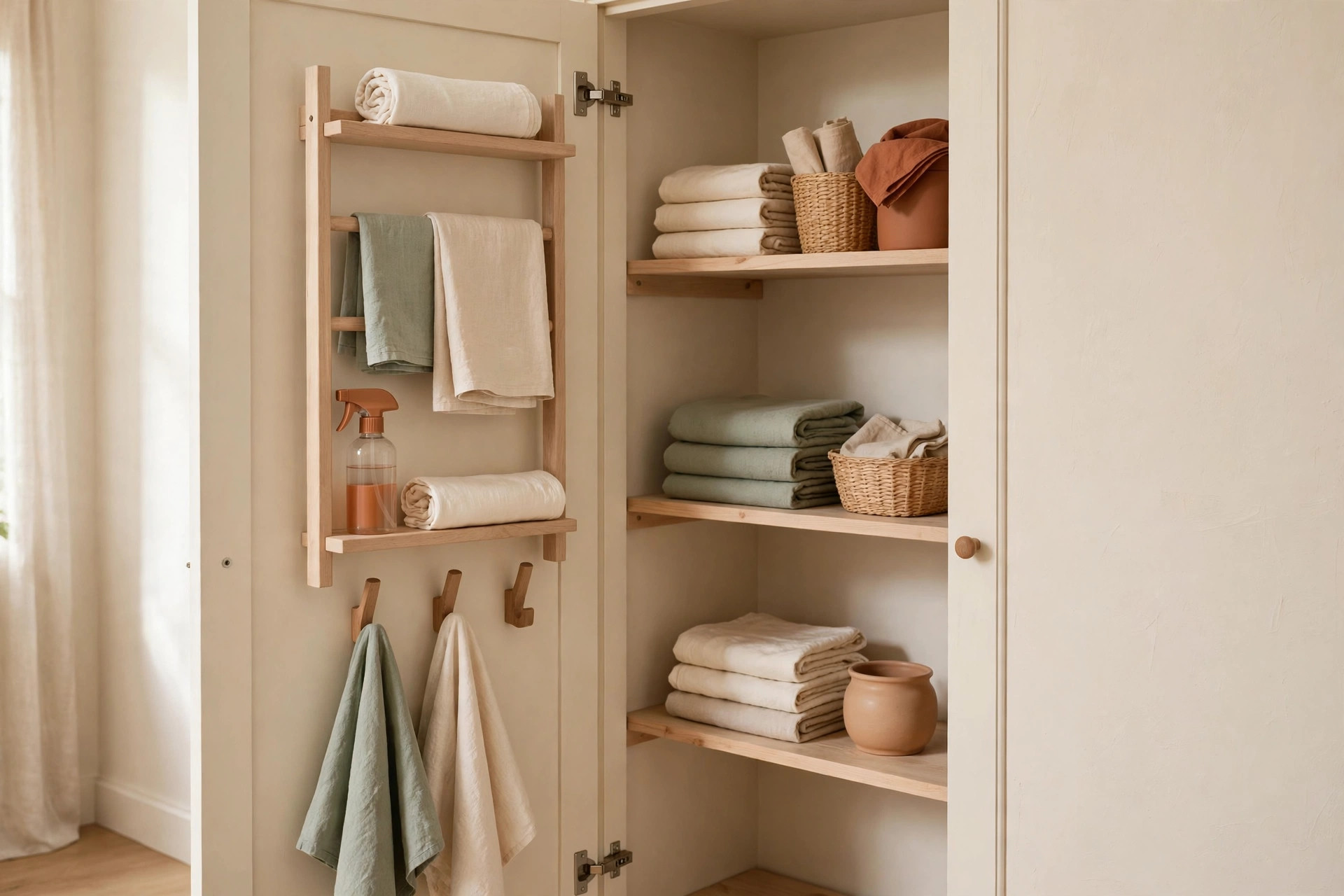
The back of the closet door is free square footage most people waste. In a closet that is 12–16 inches deep, over-the-door storage can add the equivalent of an entire extra shelf — as long as you keep everything under about 3 inches thick so the door still closes.
Over-the-door wire racks with 2–3-inch-deep shelves are the workhorse: they hold rolled washcloths, travel toiletries, lint rollers, and folded pillowcases without stealing shelf space. Use adhesive or over-the-door hooks (not screw-in) on the back of the door for the lint roller, a small lint brush, and a mesh bag of spare buttons or safety pins — the tiny items that vanish into shelf corners.
One caution: weight. Door-mounted racks sag when overloaded, and a sagging rack keeps the door from closing — which defeats the purpose. Cap door storage at roughly 10 pounds total. Washcloths, dryer sheets, and sprays are ideal; wet towels and heavy blankets are not.
Label every shelf, not every item
In a closet this small, labeling feels like overkill — until the first time someone else puts the guest sheets on the everyday shelf and the system silently collapses. Labels are what make the zones survive other humans.
Label the shelf edge, not individual items. A simple label on each shelf lip — “EVERYDAY,” “GUEST,” “SEASONAL” — takes two minutes and turns any restack into a five-minute job instead of a reorganization project. Keep the wording at two words max so it’s readable at a glance.
Skip labeling inside bins: in a tiny closet, a bin is one layer deep, so you can see everything in it the moment you open the shelf. The exception is the top shelf and anything opaque — label those bins too. This same “label the zones, not the stuff” discipline keeps small laundry closets tidy too.
The seasonal swap routine
Tiny linen closets stay organized only if the contents stay current — and the seasonal swap is the mechanism. Twice a year, spend 20 minutes rotating the stock, and the closet never outgrows itself.
The routine:
- Pull everything out of the seasonal zone and lay it on the bed.
- Set aside anything stained beyond saving, threadbare, or unused for a full year — donate or discard it. A tiny closet has no room for maybes.
- Vacuum-seal or cube the off-season linens (flannels out in spring, beach towels in in fall) and return them to the top shelf.
- Bring the in-season items down to their zones, re-file-fold anything that’s slumped, and toss in one cedar sachet per shelf to keep things smelling fresh.
Tie the swap to a date you’ll remember — daylight saving time changes, or the first week of spring and fall. Twenty minutes twice a year beats two hours of emergency reorganization every winter.
Mistakes to avoid: what NOT to buy
Most tiny linen closet organization projects fail at the store, not at the closet. Before you buy anything, run your cart past these traps.
Oversized “linen closet” bin sets. If the packaging shows a deep walk-in closet, the bins are sized for it. A 16-inch-deep bin physically cannot fit a 13-inch-deep shelf, and no amount of wishing changes that. Always buy to your measurements from the first section, not to the photo on the box.
Stacking wire baskets. Open-wire sides snag towel fibers and stretch fitted sheets, and baskets are terrible at the one thing this closet needs: keeping folded rectangles upright. Shallow solid bins or simple shelf dividers do the job better for half the price.
Scented sachets pressed directly against stored linens — specifically lavender oil sachets left touching white sheets, which can stain. Keep any sachet in the corner of the shelf, not inside a folded set.
Buying matching “aesthetic” storage before measuring. Coordinated cream baskets look beautiful on the product page and crush flat against a shelf that’s two inches shallower than expected. System first, aesthetic second.
Frequently asked questions
How do you organize a linen closet that is very narrow?
Measure the depth first, then build around file-folding: fold linens into rectangles one inch shallower than your shelf depth and stand them upright in rows. Add zone labels (everyday, guest, seasonal), use the door back for slim over-the-door racks, and keep a slim rolling cart in the adjacent gap for loose items.
Can a tiny linen closet hold sheets, towels, and blankets for a whole household?
Yes, if you enforce the two-sets-per-bed rule and keep seasonal items sealed on the top shelf. Two sheet sets per bed in active rotation, one towel set per person plus one spare, and one blanket per bed covers nearly every household. A third set of anything is the tipping point where a tiny closet overflows — that’s the item to donate.
What is the best way to fold sheets for a small linen closet?
File-folding: fold the fitted sheet and flat sheet to a uniform rectangle, tuck both inside the matching pillowcase to keep the set together, then stand the bundle upright like a file folder. Every set stays visible and nothing gets buried under a stack. For bath towels, three folds in half plus one fold into thirds gives a rectangle that stands on its own in most shallow shelves.
How often should you clean out a linen closet?
Do a full seasonal swap twice a year (spring and fall), pulling the seasonal zone out, discarding anything worn or unused for a year, and re-file-folding anything that’s slumped. Between swaps, the system maintains itself as long as the shelf labels stay on — relabels take two minutes and prevent the slow drift back to chaos.
In the end, a tiny linen closet doesn’t need to be bigger — it needs to be smarter. Measure the depth, file-fold everything into uniform rectangles, zone the shelves by how often you reach for things, and keep the seasonal swap on the calendar. Do that, and the narrowest closet in the house becomes the most organized one. Save this pin for later, and browse more ideas in our storage ideas collection.