You want plants in your apartment, but every pot eats floor space you do not have, and the windowsills are already crowded. The usual result is a sad row of pots on the kitchen counter and a trailing plant that keeps getting knocked over. These indoor plant display ideas small apartment renters actually use put greenery on walls, ledges, and furniture you already own, so your home feels alive without feeling smaller.
The trick is not buying fewer plants. It is giving each plant a home that does not compete with your daily life: a shelf that was empty air, a ledge that was wasted depth, a side table that was doing one job and can now do two. Below are 15 ideas grouped by where they live in your apartment, plus the watering and grouping rules that keep the setup looking intentional.
The light map: matching plants to your windows
Before you buy a single shelf, spend one afternoon watching your light. Check each room in the morning, at midday, and in late afternoon, and note which windows get direct sun, which get bright indirect light, and which corners stay dim all day. This prevents the classic failure: a sun-lover dying in a north-facing corner while a low-light plant scorches on a south-facing sill.
1. Map each window before you place a single plant
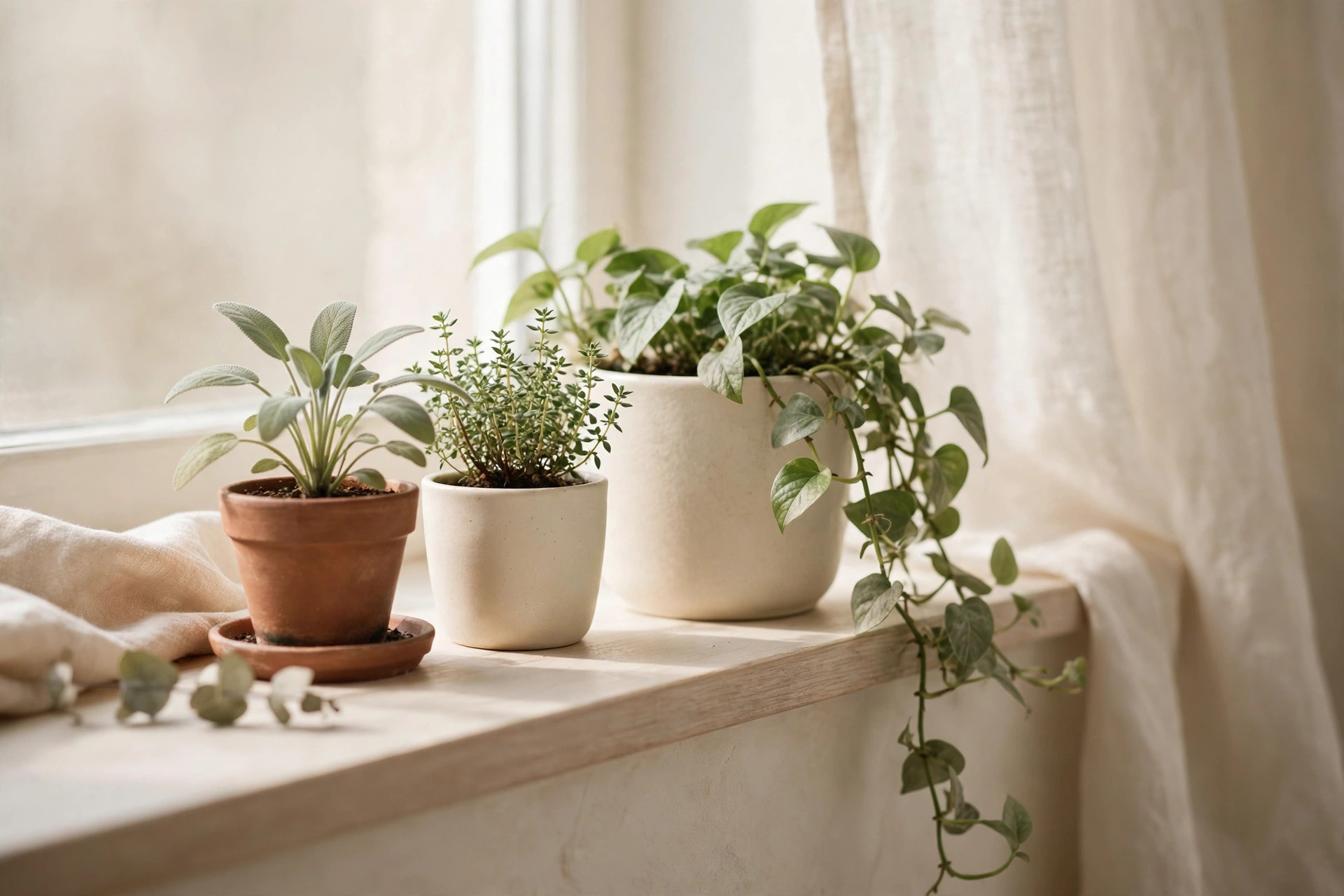
South-facing windows give the strongest light and suit succulents, cacti, and most herbs. East-facing windows offer gentle morning sun that pothos, philodendron, and ferns love. North-facing windows are low light, so reserve them for snake plants, ZZ plants, and peace lilies.
2. Put the display where the light already is, not where it looks prettiest
A shelf in a dark hallway looks stylish for about two weeks, until the plant on it starts dropping leaves. If your best light is the kitchen window, that is where the plants go, even if you pictured them in the living room. A spot with under three hours of indirect light a day needs a low-light plant or a small grow bulb in an existing lamp.
Wall shelves and hanging planters for floor-free green
Walls are the biggest unused surface in a small apartment. A plant on a wall shelf costs zero floor space, stays out of foot traffic, and draws the eye upward, which makes the ceiling feel higher. The same logic that makes vertical storage ideas for small apartments work for books and bins works just as well for plants.
3. Run one long floating shelf above eye level
A shelf roughly 36 to 48 inches long, mounted 6 to 8 inches below the ceiling or above a door frame, holds a row of trailing plants like pothos and string of pearls without touching your floor plan. Mount into studs, not just drywall anchors, because a shelf full of watered pots is heavier than it looks. Use lightweight plastic or resin planters inside decorative covers rather than solid ceramic.
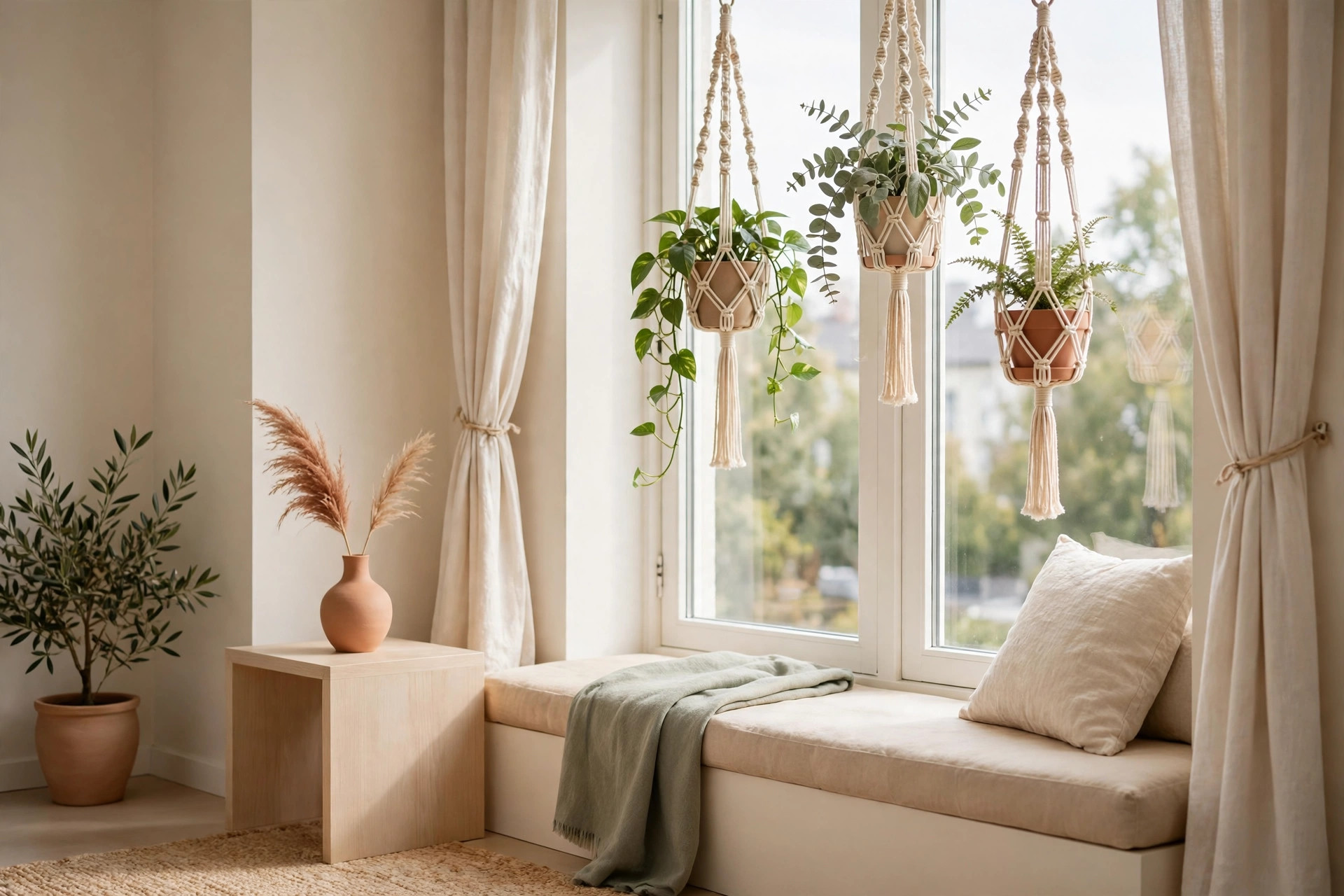
4. Hang planters from ceiling hooks in dead corners
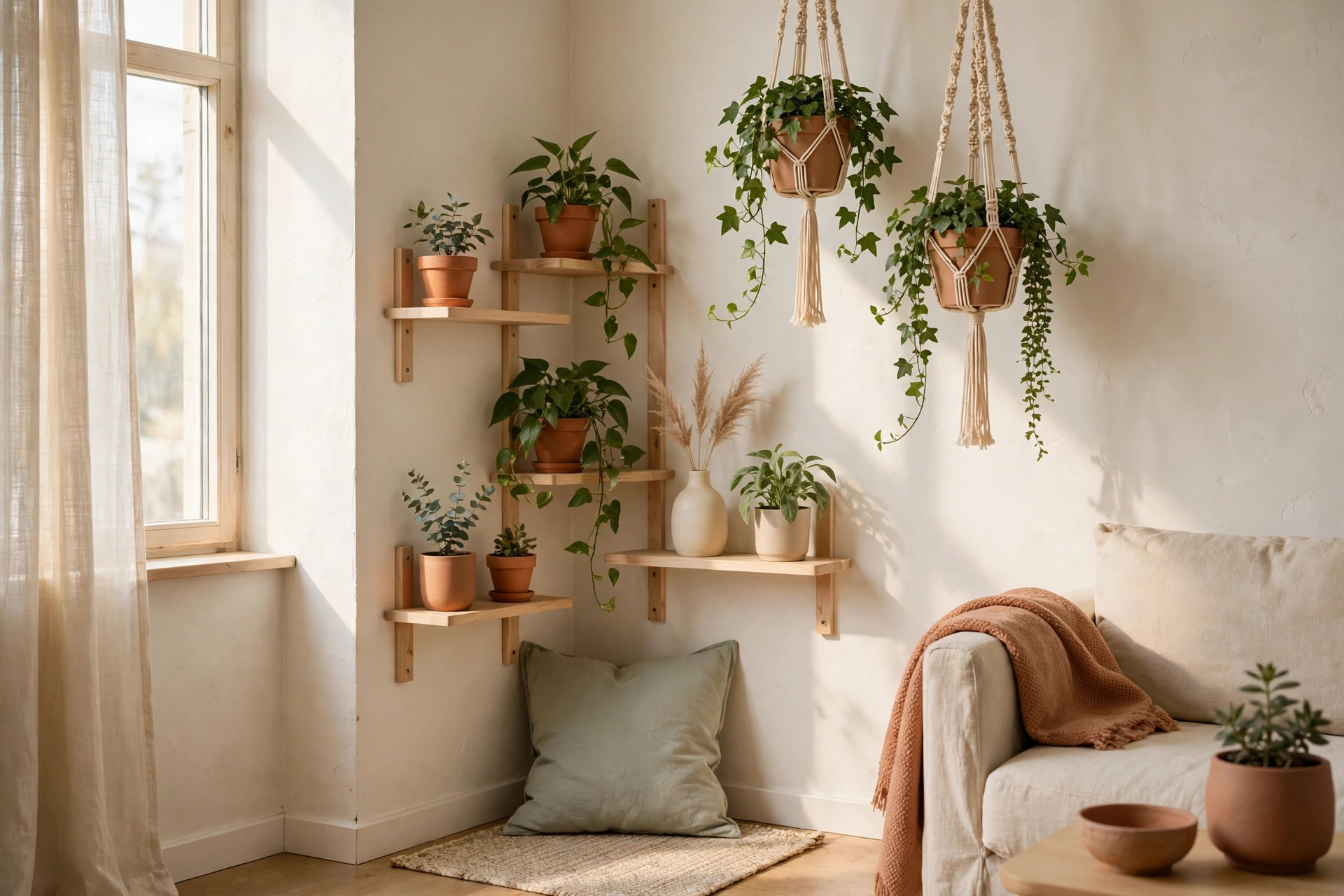
The corner above a reading chair, the ceiling beside a tall bookcase, and the space over a bathtub are all spots nothing else uses. A ceiling hook rated for at least 15 pounds, a macrame hanger or simple metal ring, and a trailing plant turn that dead air into a display. Hang at a height you can reach for watering without a step stool, and keep hanging plants away from door swings and ceiling fans.
5. Build a staggered shelf trio instead of one big unit
Three small shelves at different heights on one wall, each holding one or two pots, look like a designed display rather than a storage afterthought. Staggering also matches plants to light: the highest shelf gets the most light, the lowest suits shade-tolerant varieties. Leave at least 12 inches of clearance above each shelf so plants can grow and you can lift pots out for watering.
Window ledges and sill extenders
Windows are the obvious plant spot, and that is exactly why they get overcrowded. A standard sill is only about 4 to 6 inches deep, which fits one row of small pots and nothing else. Extending that depth doubles your display space for almost no money.
6. Add a sill extender board for a second row of plants
A pine board cut to the width of your window, about 8 to 10 inches deep, resting on the sill and supported by two small brackets, turns a single row into a deep ledge. The back row holds taller plants like snake plants, the front row holds small pots like succulents and herbs. Most landlords accept it since it rests on the sill, but check your lease before drilling brackets.
7. Use a tension-rod hanging shelf inside the window frame
A shower-style tension rod mounted across the inside of a window frame, with small S-hooks holding hanging planters, puts plants directly in the light without touching the sill at all. This works best for lightweight trailing plants and small herbs, and it leaves the sill free for pots that need a solid surface. Measure the frame width before buying, and test the rod’s grip by pulling down firmly before hanging anything breakable.
Plant stands that double as side tables
When a plant display also serves as furniture, it stops costing space and starts earning it. The best small-apartment plant stands are the ones guests set a coffee cup on without realizing the stand was bought for a plant.
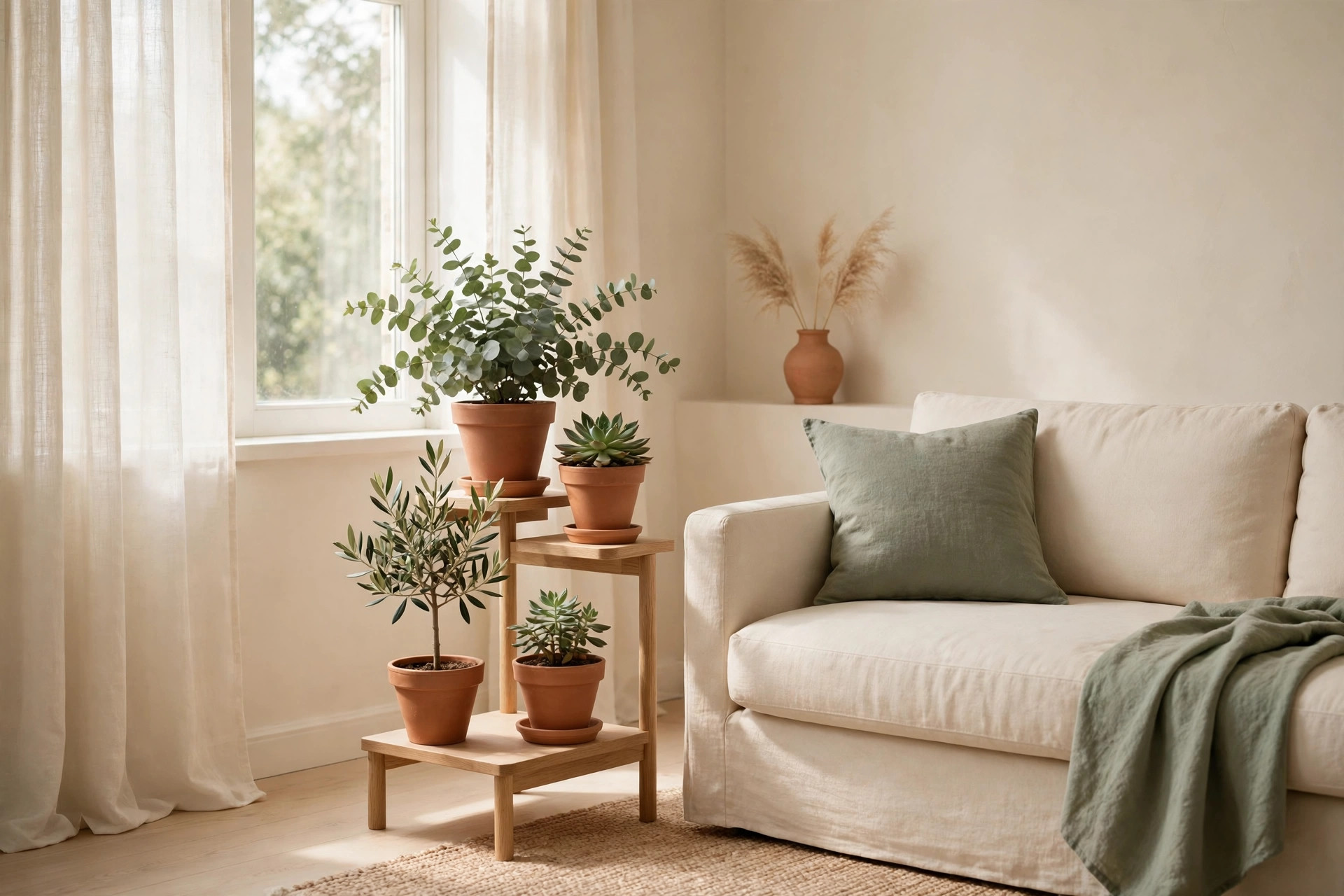
8. Replace a side table with a two-tier plant stand
A two-tier stand about 18 inches wide and 24 inches tall fits beside a sofa or bed and holds two or three plants on the lower tier while the top tier works as a normal side table for a book, a phone, and a mug. Choose a stand with a solid top surface, not an open ring, so cups sit flat, and keep a coaster on it, because a cold drink and a plant pot cause the same ring stains.
9. Use a rolling plant caddy under a tall plant
Large floor plants like fiddle-leaf figs and monsteras are the hardest to place in a small apartment because they cannot be moved for cleaning. A rolling caddy with lockable casters, sized to the pot, lets you slide the plant out to mop, rotate it a quarter turn every two weeks for even growth, and push it back against the wall. Lock the casters once it is in place.
Watering and drainage without mess
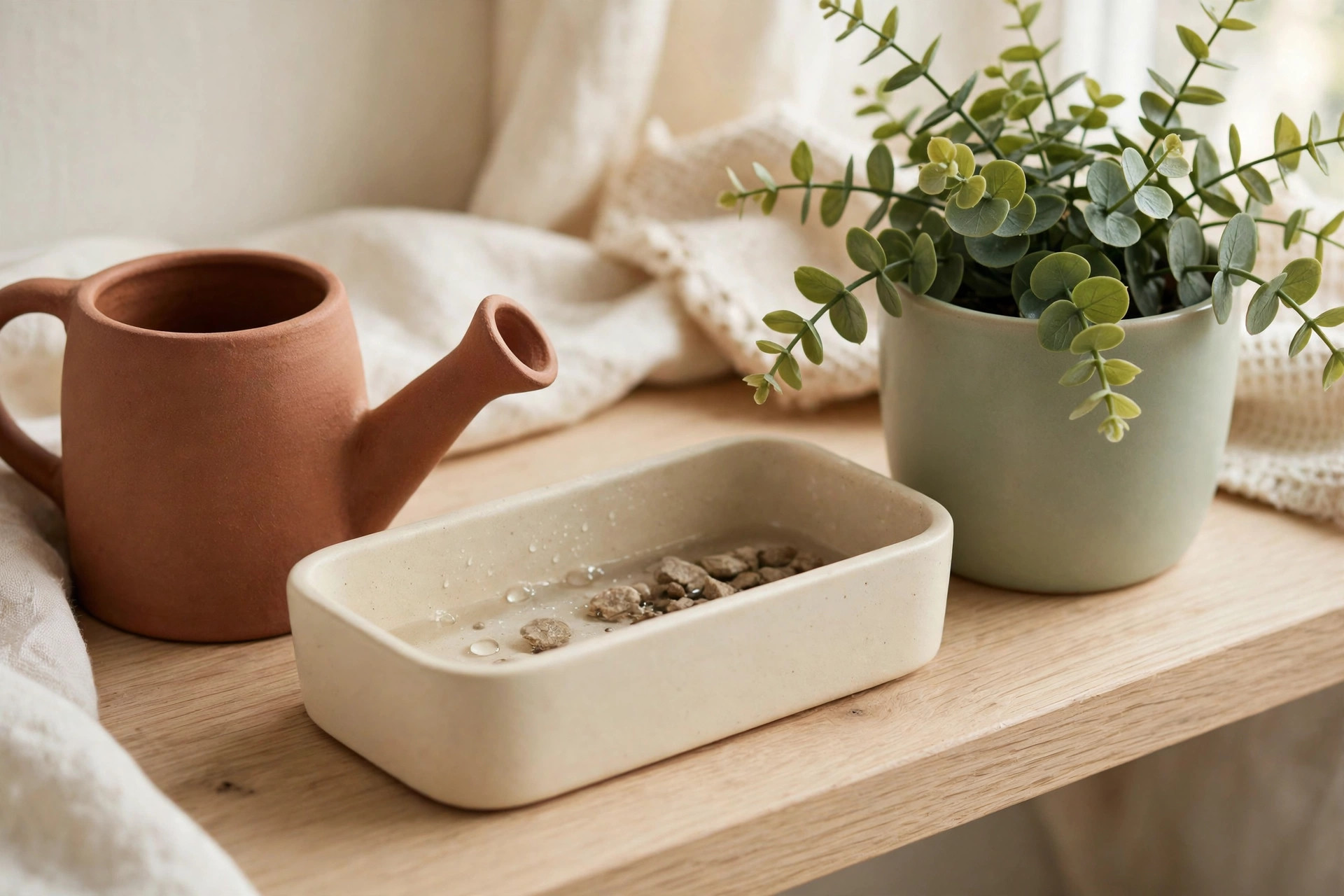
A plant display in a small apartment fails the moment watering leaves puddles. Because pots now sit on shelves, ledges, and furniture, your watering system matters as much as your display system. The goal is simple: water travels from can to soil and never reaches your floor, your shelf, or your landlord’s paint.
10. Water plants in the sink or tub, then return them to their display
Carry shelf and ledge plants to the sink once a week, water thoroughly until water runs from the drainage hole, let them drain for 10 to 15 minutes, and only then put them back. This one habit prevents the slow drip that ruins shelves and warps sill boards. For hanging plants, water with a long-spout can and hold a bowl under the pot for a minute.
11. Switch to self-watering pots for hard-to-reach displays
Self-watering pots hold a reservoir at the base and let the plant draw water up through a wick, so a plant on a high shelf or a hanging planter needs refilling every two to three weeks instead of weekly attention. Check the reservoir often, since an empty one looks exactly like a full one from below. Self-watering pots suit pothos, peace lilies, and ferns; succulents and cacti prefer to dry out and do worse in them.
Grouping plants: the cluster rule for small rooms
One plant on every surface looks like clutter. The same plants grouped into a few deliberate clusters look like a collection. This is the difference between a home that happens to have plants and a home designed with plants, and it costs nothing.
12. Group plants in odd numbers: three or five per cluster
Three plants of different heights on one shelf, or five pots clustered on a stand, read as intentional. Two plants side by side tend to look like a pair that lost its friends, and six or more in one spot start to look like a nursery. Vary the heights: one tall plant, one medium, and one trailing plant per cluster gives the group a shape instead of a flat line.
13. Repeat one pot style across the whole apartment
Matching pots in one material and color family, such as terracotta, matte white ceramic, or woven baskets, make fifteen plants look like one collection even when the plants themselves are completely different. If you already own a random set, slip them into matching outer covers rather than repotting everything.
14. Anchor each cluster to a piece of furniture
A cluster floating on an empty wall looks like storage; the same cluster on the shelf above a desk, beside a sofa, or on a stand next to the bed looks like part of the room. Tie at least one cluster to each main zone, living, sleeping, and kitchen, so greenery feels distributed rather than dumped in one corner. A cluster on a window seat or under-window storage bench is an easy anchor if your apartment has one.
15. Leave one surface completely plant-free
The discipline that makes fifteen plants work in a small apartment is restraint: pick one surface, usually the dining table or the kitchen counter, and keep it permanently clear of plants. That empty surface gives the eye a rest, gives you a practical workspace, and stops the apartment from tipping from “full of plants” into “overrun by plants.”
What to skip in tiny spaces
Not every plant idea scales down. Skip floor-standing plant ladders wider than 24 inches, because they eat the same floor space as a bookcase while holding fewer plants. Skip large statement trees in rooms under 150 square feet, because a six-foot plant dominates the space and blocks light from everything behind it. Skip glass terrariums on high shelves, because they are heavy, hard to clean, and trap heat against the wall in summer. Skip moss poles and elaborate supports for plants you do not yet know how to keep alive: master watering first, then add accessories. And skip buying plants before you have a spot for them: an unplaced plant lives on the floor.
Mistakes to avoid
- Watering on a schedule instead of checking the soil. Plants need water when the top inch of soil is dry, not every Sunday. A ten-second finger test prevents both root rot and drought.
- Putting every plant in the brightest window. Direct sun scorches ferns, calatheas, and most tropical plants. Bright indirect light is the sweet spot for most houseplants, so reserve direct-sun sills for succulents and herbs.
- Using pots without drainage holes. A pot with no hole turns every watering into a gamble, and in a small apartment the first sign of trouble is usually a smell. If you love a pot without a hole, use it as an outer cover with a plain nursery pot inside, and empty the cover after watering.
- Blocking airflow behind big clusters. Plants pushed tight against a wall in a humid corner invite pests and mold. Leave at least an inch of air behind each pot, and wipe leaves monthly so dust does not block light.
- Forgetting the weight of watered soil. Wet soil roughly doubles a pot’s weight. Before mounting a shelf or hanging a planter, assume the full watered weight, not the dry weight, and choose hardware rated for it. For detailed light requirements by plant type, the Royal Horticultural Society’s houseplant guides are a reliable reference (rhs.org.uk).
Frequently asked questions
How many plants are too many for a small apartment?
There is no fixed number, but there is a fixed test: if every surface is covered, walkways feel tight, or watering takes more than 20 minutes a week, you have too many. For most studios and one-bedrooms, 10 to 15 plants grouped into three or four clusters feels lush without feeling crowded.
Can I hang plants from the ceiling in a rental apartment?
Usually yes, if you use a small ceiling hook screwed into a joist or a sturdy ceiling anchor and fill the hole when you move out. Check your lease first, and avoid adhesive ceiling hooks for anything heavier than a small air plant, since they fail without warning and drop the pot.
What is the best plant display for a windowless room?
A wall shelf with a low-light plant like a snake plant or ZZ plant, plus a small grow bulb in an existing lamp, is the most practical setup. Skip sun-loving plants entirely in windowless rooms, and do not expect a grow light to turn a dark bathroom into a greenhouse.
How do I keep plant displays from looking cluttered?
Group plants into a few clusters instead of scattering them, repeat one pot style across the apartment, and keep one surface completely clear. The same approach that keeps small living room storage looking calm, fewer zones with clear boundaries, works for plants too.
Do I need special shelves for plants?
No, but the shelf must be mounted into studs or rated for the watered weight of the pots, and it needs clearance above it for growth and watering access. A standard floating shelf works fine as long as the hardware and the saucer underneath are chosen with wet soil in mind.
Conclusion
Fifteen plants in a small apartment work when they live on walls, ledges, and furniture that already exist, when each one sits in the light it actually needs, and when watering never reaches your floors or shelves. Start with the light map, build one cluster at a time, and keep one surface clear.
Save this pin for later, and browse more ideas in our small spaces collection when you are ready for your next corner.