You reach for a simple gold chain and pull up a knotted ball of necklaces, one earring with no partner, and a bracelet tangled around both. Ten minutes later you are wearing something else, and the piece you actually wanted is still in the pile. The jewelry organization ideas small spaces actually work with fix exactly this, with no bigger bedroom, no dressing room, and no expensive armoire. They follow one rule: every piece gets its own spot, sized to how often you wear it, so nothing touches anything it can tangle with. The 17 ideas below apply that rule from audit to travel.
The tangle test: why jewelry fails in a pile
Jewelry tangles because chains, hooks, and posts sit loose together and catch on each other every time you reach in. A pile also hides pieces, so you buy duplicates, and speeds up tarnish as pieces rub in humid air. Fix that before buying a single organizer.
1. Run the 10-minute tangle audit
Empty every jewelry spot onto a clean towel. Untangle what can be saved, set aside anything broken or unworn for a full year, and count what is left by type. Most people find ten daily pieces buried under thirty occasional ones.
2. Sort by type before you buy anything
Group keepers into necklaces, earrings, rings, and bracelets, and measure your longest necklace from clasp to pendant. That length decides your hanging space: a 16-inch chain needs about 18 inches of clear drop, a 30-inch statement necklace about 32 inches. Buying first is how people end up with a beautiful tray that fits nothing they own.
Necklaces first: hooks, stands, and tangle-free hanging
Necklaces cause most jewelry damage, so fix them first: hang each chain vertically, with air between neighbors, clasp closed.
3. Give every chain its own S-hook
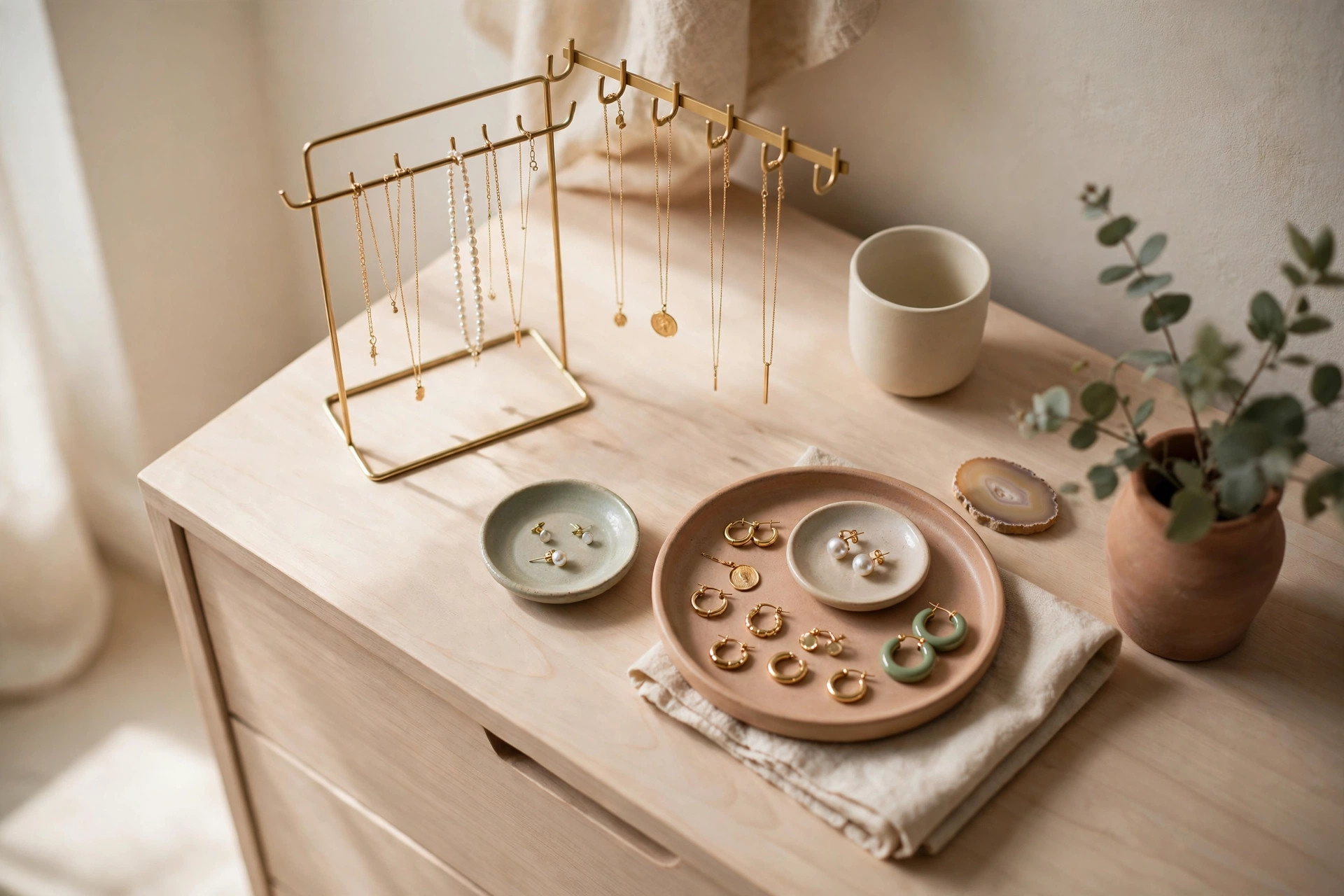
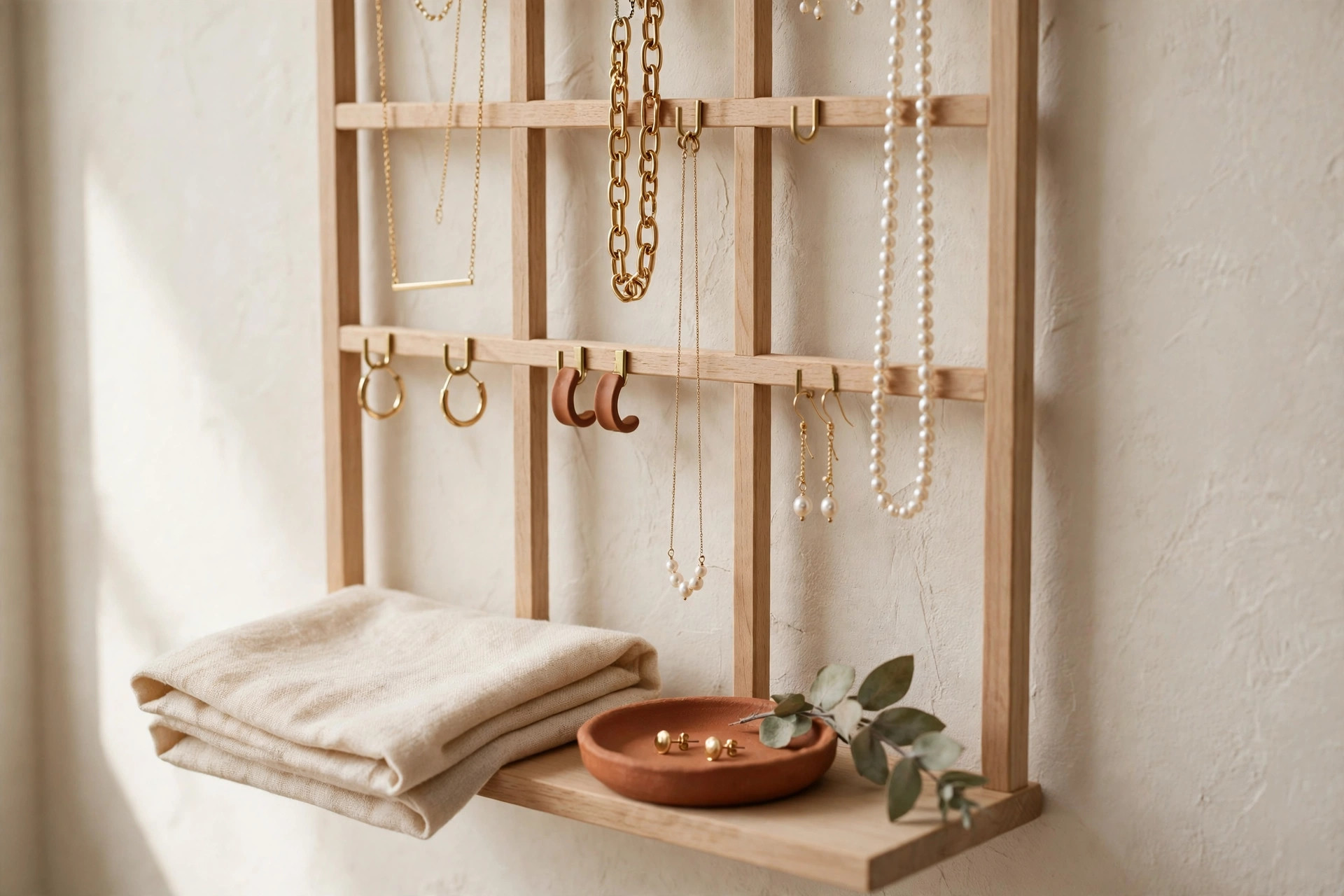
A row of small S-hooks, spaced about 2 inches apart inside a closet door or on a strip of wood, is the cheapest tangle-free system that exists. Hang one necklace per hook, clasp closed.
4. Use a tiered necklace stand for daily pieces
A T-bar or tiered stand holds the five to seven necklaces you reach for each week. Keep one tier per length — short chains up top, long chains on the lowest bar — so pendants do not rest on the bar below.
5. Build a necklace rail from a strip of hooks
If you own more than a dozen necklaces, mount a 24-inch wooden strip with 10 to 12 evenly spaced hooks inside your closet at eye level, where the door swing will not knock chains together. The same no-drill thinking runs through many renter-friendly closet organization ideas, and adhesive strips rated for at least 3 pounds per hook hold it on a smooth closet wall without a single hole.
Earrings: pairs stay together with boards, trays, and ice-cube trays
Earrings fail differently from necklaces: they do not tangle, they separate. One stud rolls to the back of a drawer, its partner stays in the dish, and the pair is effectively lost. Every system below is really a pair-keeping system.
6. Pin pairs to a felt earring board
Stretch felt over a small corkboard, prop it on your dresser, and push earring posts straight through so each pair sits side by side. A standard 8-by-10-inch board holds roughly 15 to 20 pairs. Keep it at eye level — a board you crouch to read is one you will stop using.
7. Sort studs in an ice-cube tray
A lidded ice-cube tray is the best small jewelry storage idea for studs, and it costs almost nothing. Each compartment holds one pair, the lid stops pairs from migrating when the drawer slides, and you can label the edge by category with a strip of tape. Use compartments at least 1 inch square.
8. Keep dangling earrings in a shallow tray with dividers
Long earrings should lie flat in a single layer, not hang where they swing and snag. A tray no more than 1 inch deep, with dividers making 2-inch-wide channels, gives each pair its own lane. Line it with velvet or felt so posts do not scratch. If dresser drawers are crowded, this tray fits inside a small dresser organization system, where one shallow drawer becomes the jewelry drawer.
Rings and bracelets: rolls, dishes, and drawer dividers
Rings roll away; bracelets snag on everything. Both need contained, padded homes, not open dishes.
9. Roll rings in a padded ring roll
A fabric ring roll — a padded strip with slots that rolls up and ties closed — holds rings in a single row, each in its own slot, and slips into a drawer or bag taking no more space than a sunglasses case. Rolled rings cannot knock together, so stones stay protected.
10. Give bracelets a dish and a bar
Chunky bangles go on a bracelet bar or short rod, slipped on like rings, so they stay upright and visible. Delicate chain bracelets go in a small lidded dish, one per compartment, clasp closed — the same rule as necklaces, because a chain bracelet is just a short necklace. Cap a dresser dish at three pieces or it becomes a pile again.
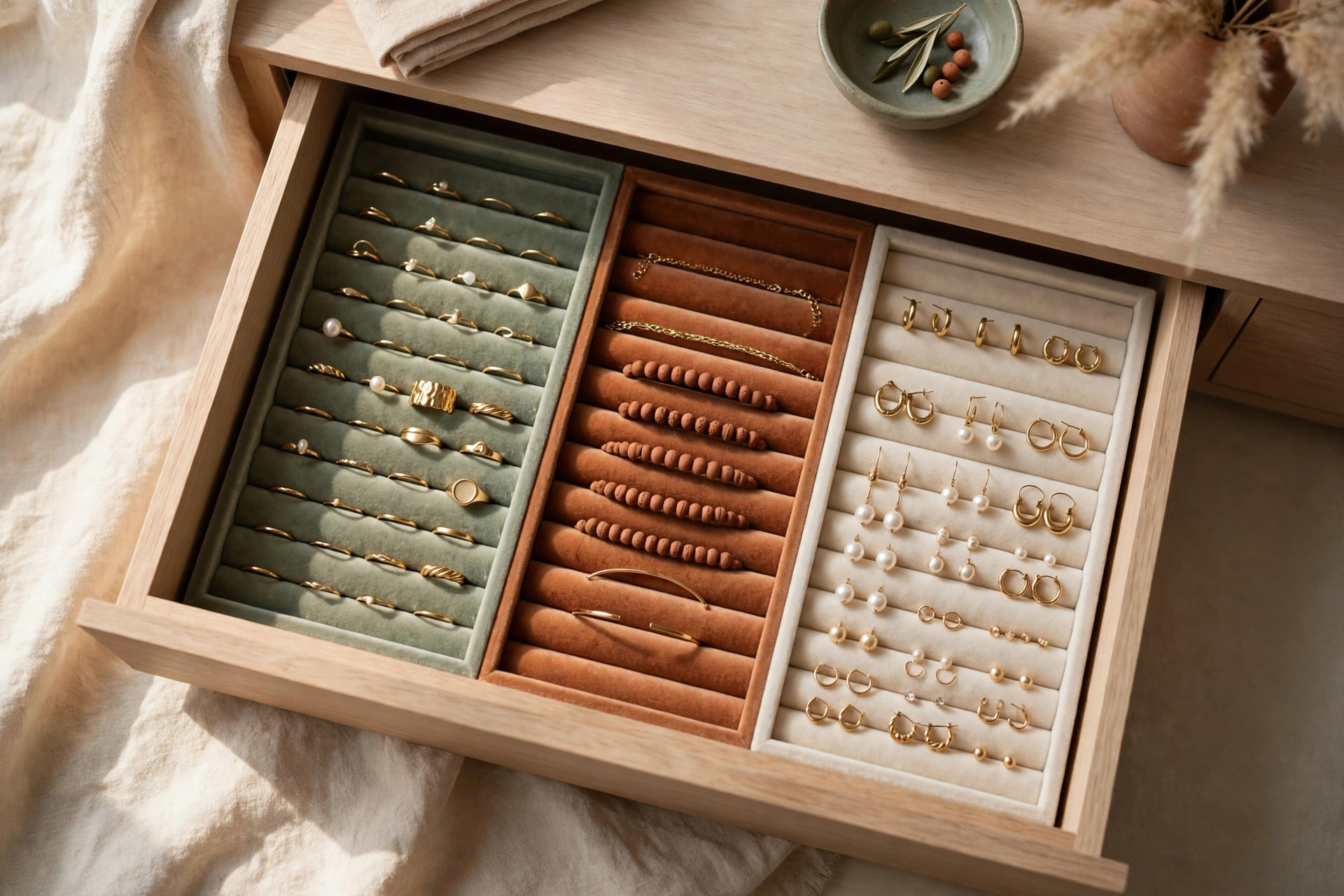
11. Divide one drawer into a jewelry grid
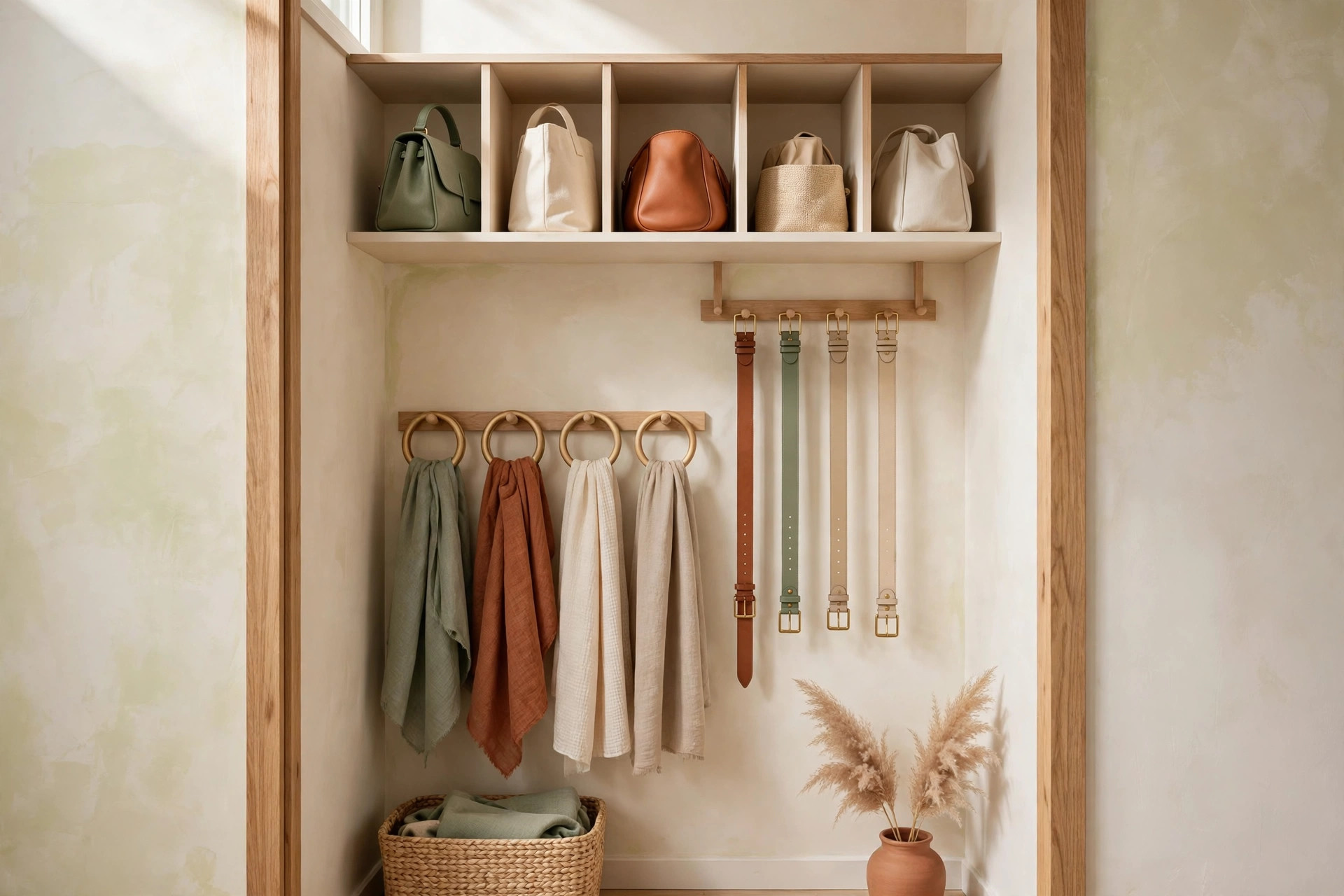
Fit a spare shallow drawer with spring-loaded dividers or a grid insert: compartments roughly 3 by 3 inches for rings and earrings, 3 by 6 inches for bracelets. Keep the drawer under 4 inches deep; deep drawers invite stacking. The same one-home treatment works for scarves, belts, and bags in the wider accessory organization ideas for small closets.
Drawer vs wall vs door: picking the system for your space
No single system suits everyone. Ask: how much wall or door space can you use, can you drill, and do you dress at a dresser or inside a closet?
12. Choose the drawer system if you dress at a dresser
Drawer storage wins when you dress at a dresser, rent and cannot drill, or prefer jewelry out of sight. Its weakness is capacity: one shallow drawer holds roughly 30 to 40 pieces comfortably. Measure the drawer first and buy inserts to fit your drawer’s exact measurements, not a generic size.
13. Choose the wall or door system if your closet is the dressing room
Wall and door systems win when dresser space is scarce, when you own many necklaces, and when seeing everything at once helps you wear what you own. A mirror with hidden storage, an over-door organizer, or a hook rail inside the closet door all use space that otherwise holds nothing. Keep displays out of direct sun, which fades stones and dries leather cords.
Travel jewelry: rolls and pouches that prevent knots
Travel undoes organized jewelry fast: a roll tossed loose in a suitcase still lets chains shift and knot. Your travel system must be a smaller version of your home system.
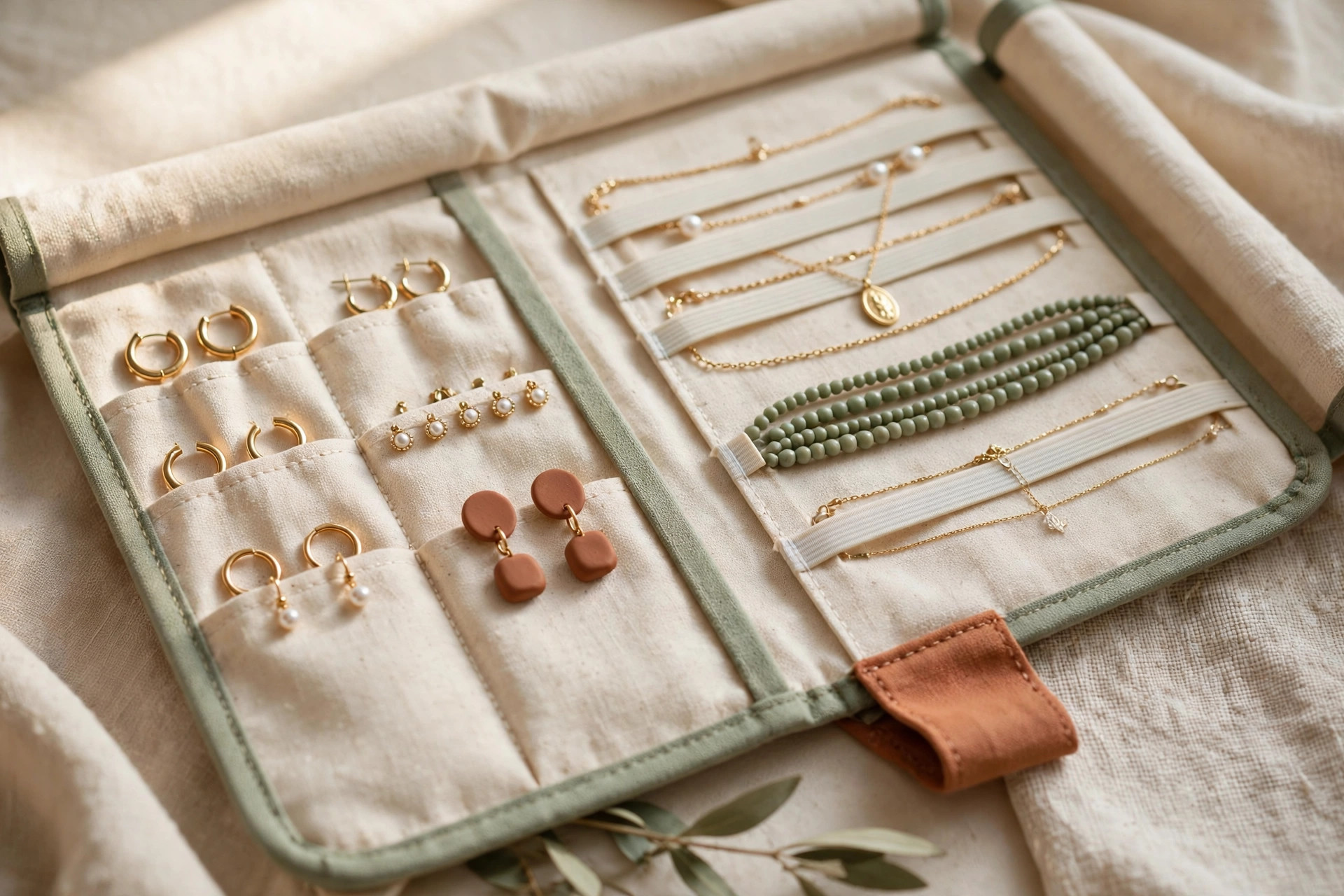
14. Pack a roll with individual pockets
A travel roll with separate zip or snap pockets — one pocket per piece, plus a small padded roll for rings — is the only travel setup worth buying. Lay each necklace flat in its own pocket, clasp closed, and roll the case snugly so nothing shifts. Pack it in the center of your suitcase, surrounded by soft clothes.
15. Use the straw trick for necklaces in a pinch
With no roll handy, thread each chain through a drinking straw, clasp it closed, and lay the straws flat in a pouch. The straw keeps the chain rigid and straight, so it physically cannot knot around its neighbors. Press earring pairs through a spare button or cardboard square first, so they stay paired.
The daily rotation: what lives out vs what lives away
The final ideas are not products but a habit: a daily rotation separating what you wear from what you store.
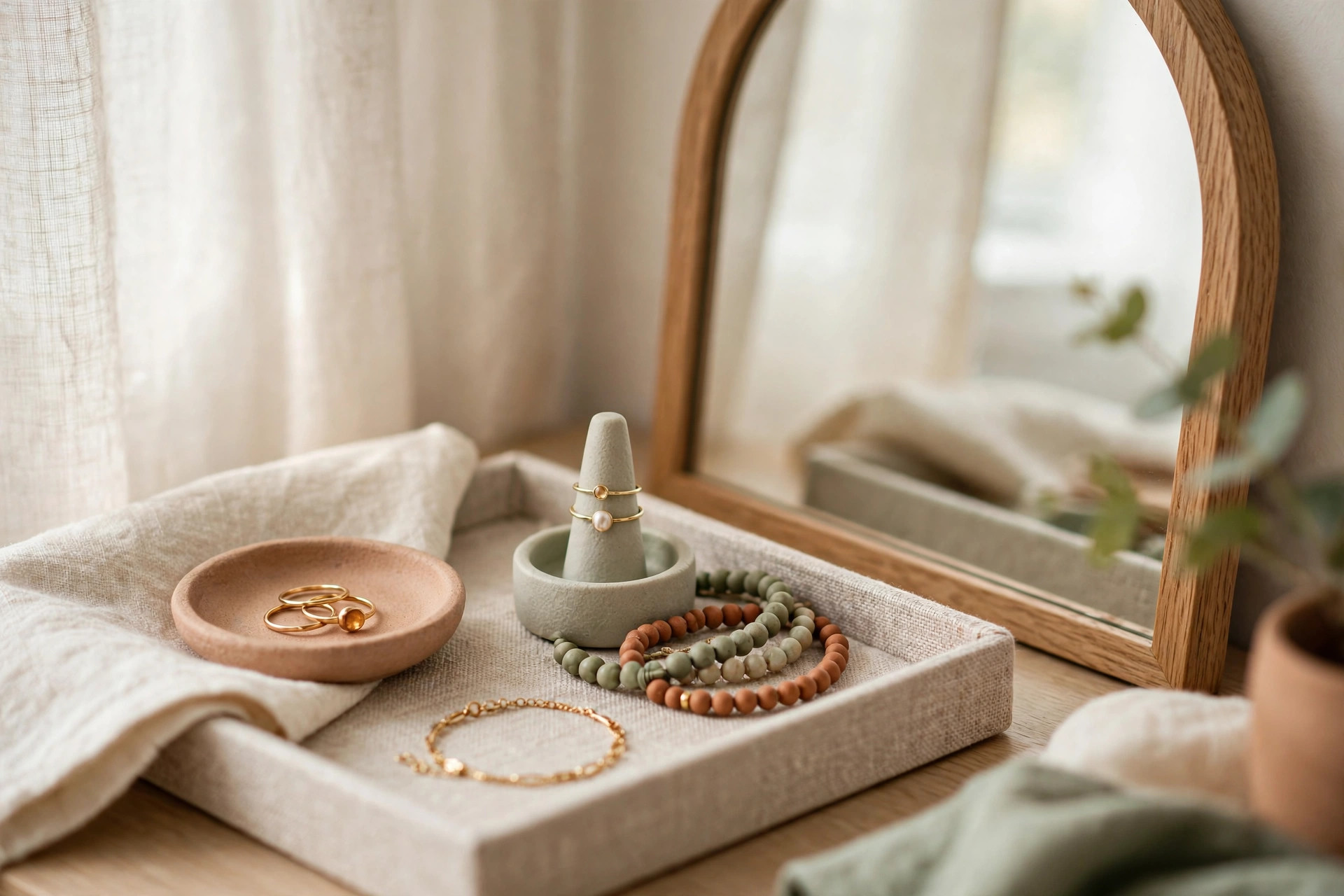
16. Keep a 7-piece daily tray by your mirror
Choose the seven pieces you reach for most and keep them in a small tray where you get dressed. Everything else lives in its real home: the drawer grid, the hook rail, or the roll.
17. Rotate seasonally, once every three months
Four times a year, spend fifteen minutes swapping the daily tray and the front row of your drawer for seasonal pieces. While you rotate, wipe each piece with a soft cloth and check clasps and posts for wear.
Mistakes to avoid
The fastest way to wreck a good system is to buy before sorting, which leaves you with organizers that fit nothing you own. Hanging several chains on one hook recreates the tangle you just escaped. Do not store silver in a bathroom: steam and humidity tarnish it quickly, so keep jewelry in the bedroom. Avoid open bowls for mixed pieces — a bowl is just a pile with nicer edges. Never store jewelry in direct sunlight; heat and light fade stones and weaken elastic on stretch bracelets.
Frequently asked questions
How do I keep necklaces from tangling in a drawer?
Hang them instead of laying them flat whenever possible. If a drawer is your only option, lay each necklace in its own narrow compartment, clasp closed, in a single layer with no overlapping chains.
Can I organize jewelry in a very small apartment with no extra furniture?
Yes. The whole system can live on the back of one door: adhesive hooks for necklaces, a felt board for earrings, and a small over-door pocket organizer for rings and bracelets. No new furniture is needed, and everything comes down cleanly when you move.
What is the best way to store silver jewelry so it does not tarnish?
Keep silver in a closed container — a lidded tray, a zip pouch, or a roll — with an anti-tarnish strip inside, and store it in the bedroom rather than a humid bathroom. Wipe pieces before putting them away, since skin oils speed up tarnish.
How many pieces should I keep in my daily rotation?
Seven is a good cap: enough variety for a week of outfits without decision fatigue, and few enough that the tray stays tidy. If you wear more, expand to ten, but set a hard limit and enforce the one-in, one-out rule.
Conclusion
Tangle-free jewelry is not about owning less or buying more organizers. It is about giving every piece one home — hung, slotted, or compartmentalized — and keeping a small daily rotation within reach while the rest stays properly stored. For more small-space closet systems, browse our closet organization ideas, and save this pin for later so your next jewelry sort takes minutes, not an afternoon.