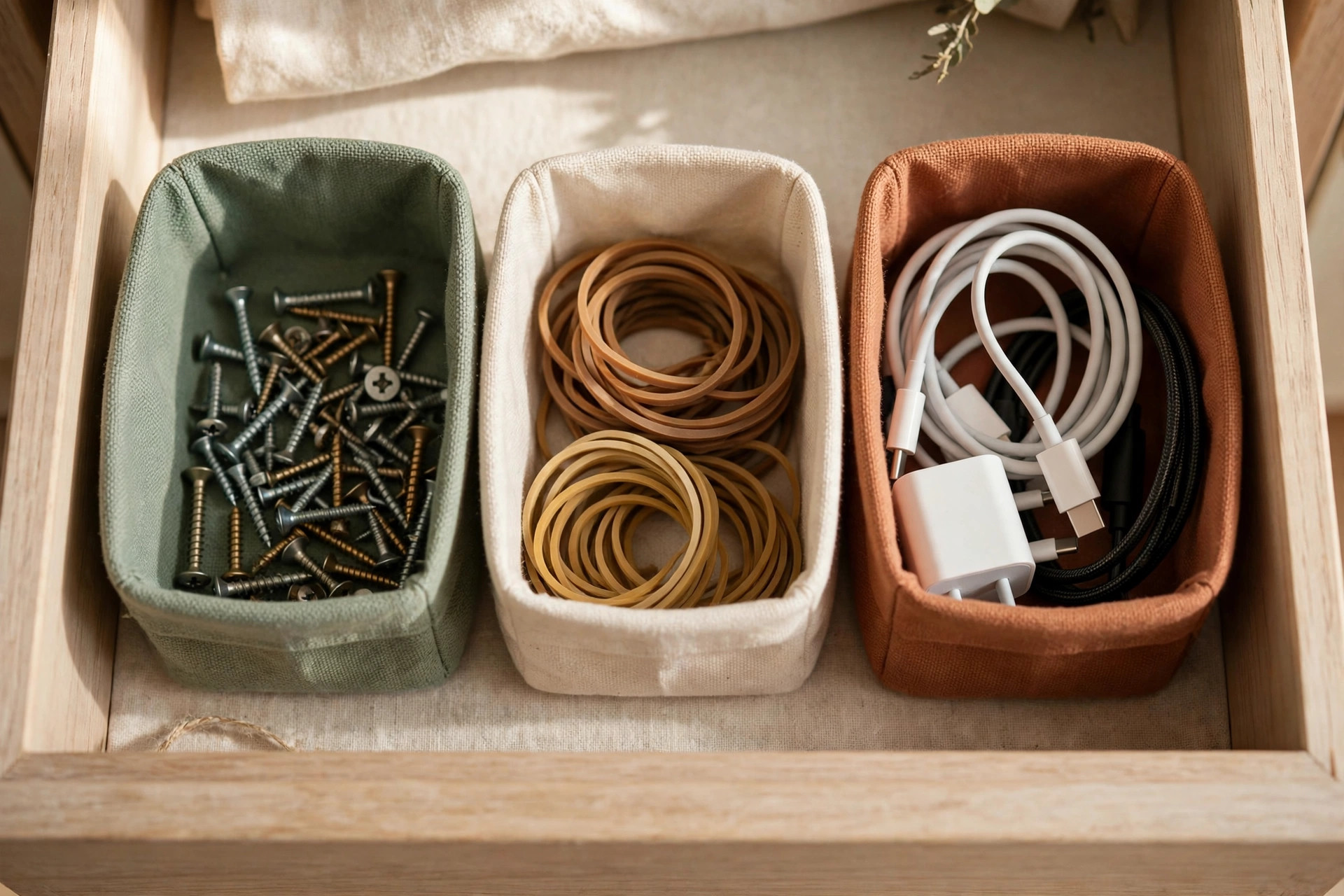
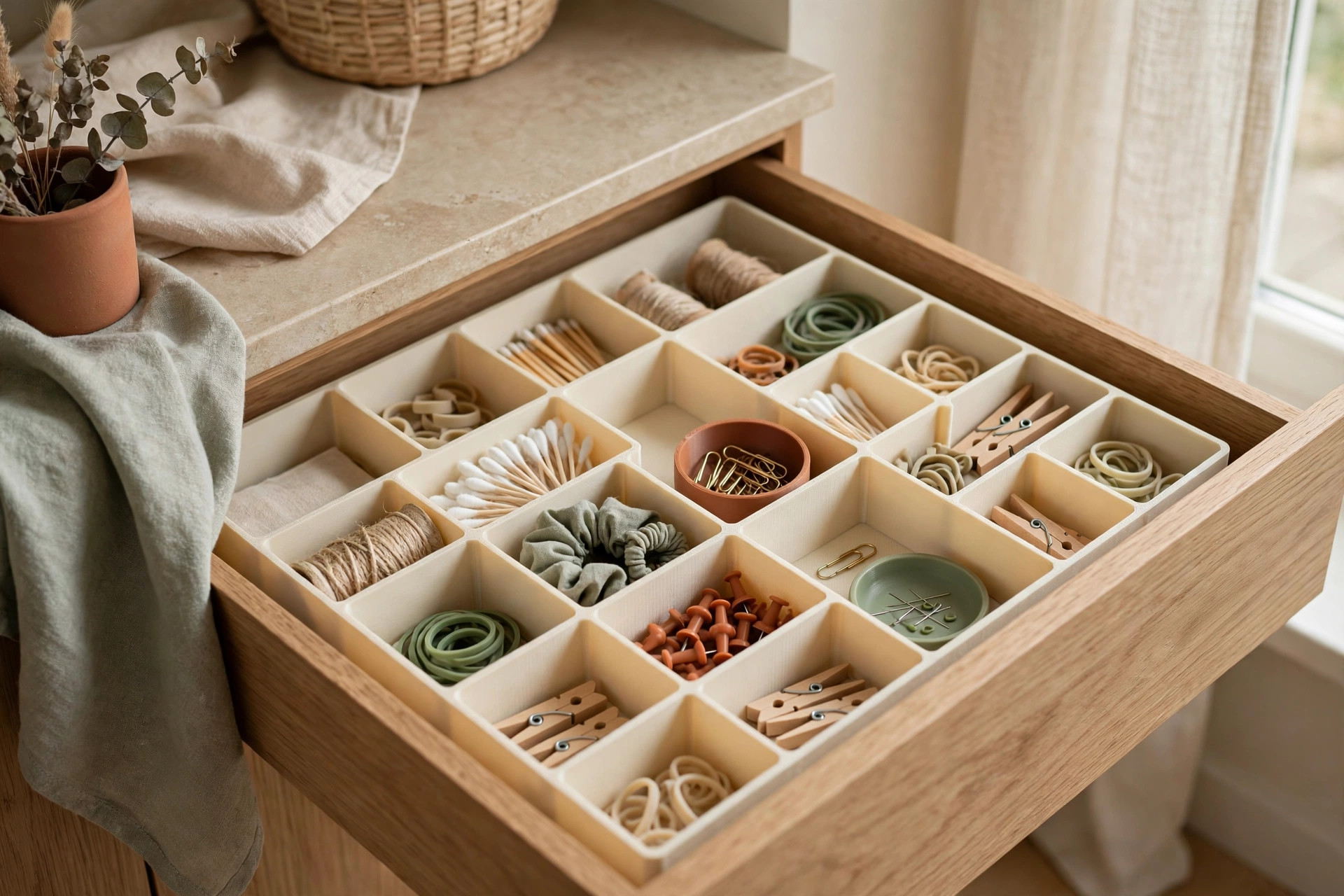
Every home has one: the drawer you open for a battery, a pen that works, or a pair of scissors, and close again when you cannot face the tangle inside. Junk drawer organization ideas usually fail not because the drawer is too small, but because it has no job description. Everything lands there by default, so nothing has a place, and finding one small thing means digging through everything else. This guide fixes that with a kitchen junk drawer organization system you can finish in an afternoon: empty the drawer once, sort it honestly, give every keeper a zone, and run a short monthly reset that stops the mess from creeping back.
The junk drawer audit: empty it, sort it, face what lives there
You cannot organize what you cannot see. Take everything out, wipe the drawer clean, and spread the full collection on a counter. Most people find duplicates: three pairs of scissors, pens that no longer write, and chargers for devices they no longer own. That pile is why the drawer never stays tidy, because no divider can fix a drawer holding twice what it should.
Idea 1: Empty the drawer completely onto a tray or towel. Test pens, batteries, and lighters as you go. Anything broken, dried out, or unidentified goes into a bag for disposal or recycling. Old batteries never go in household trash; find a drop-off point through Call2Recycle’s battery recycling locator.
Idea 2: Sort what remains into keep, relocate, and remove piles. Keep means you use it at least monthly near the kitchen or entryway. Relocate means it works but lives better elsewhere, like a toolbox. Remove means it is broken, expired, or duplicated beyond reason.
Dividers first: why loose items always slide back into chaos
A drawer without dividers is a slope, not storage. Every open and close shakes loose items toward the back, small things sink under larger ones, and within a week the drawer looks as it did before. Dividers stop that slide, and they matter more than any pretty container.
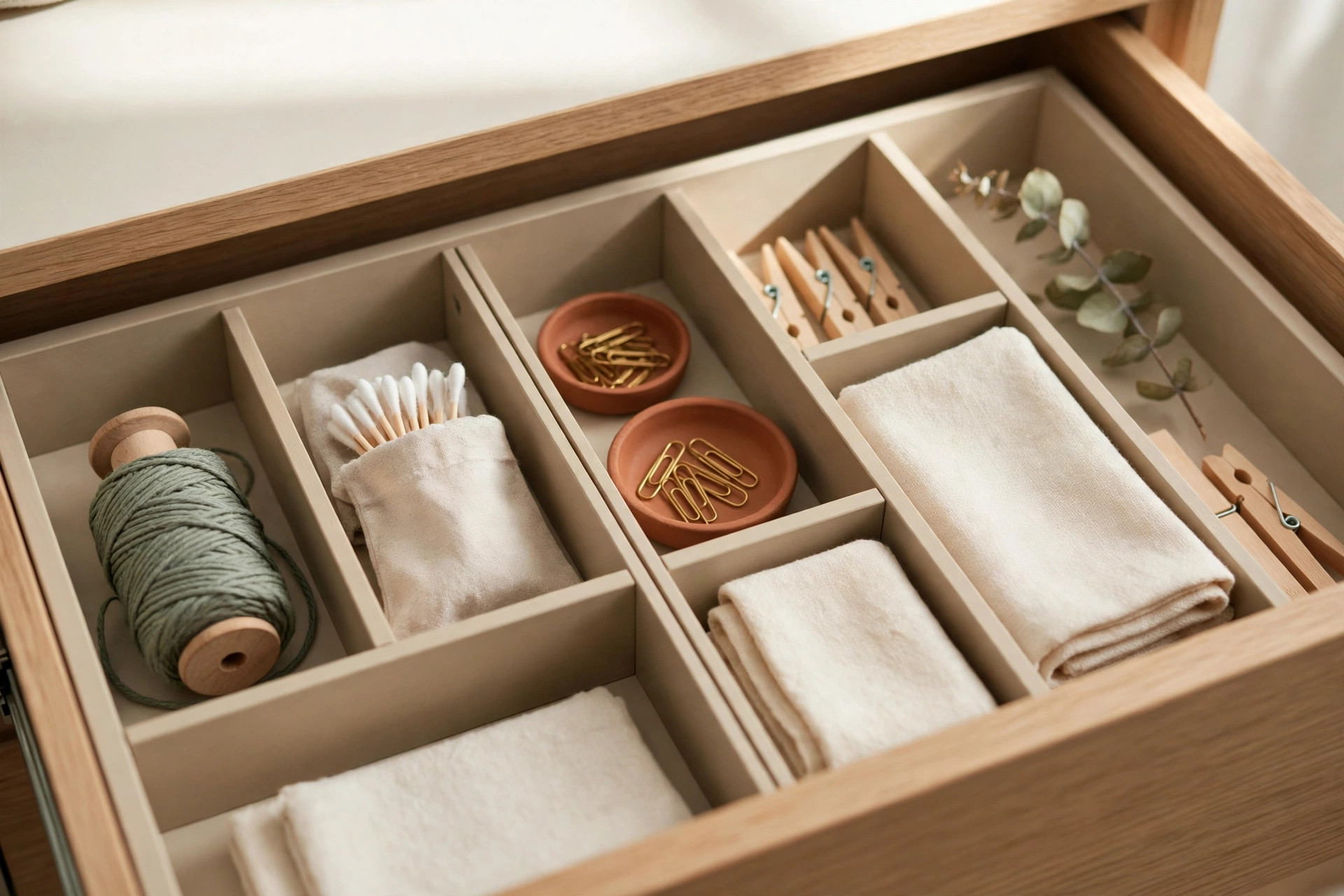
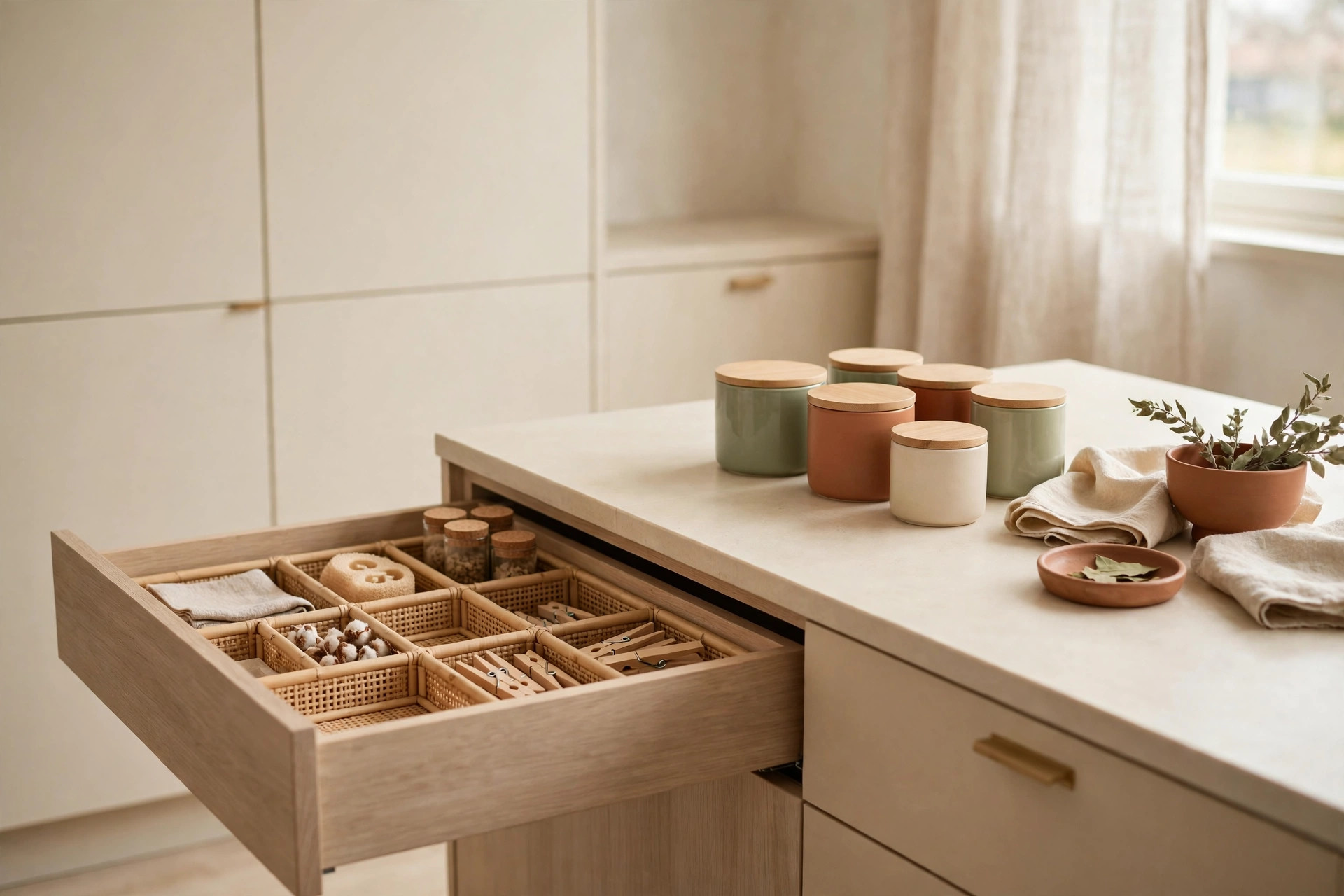
Idea 3: Fit adjustable dividers before you buy a single tray. Spring-loaded or expandable dividers split the drawer into two or three channels matched to its actual width. Measure the interior first, in inches, and choose dividers that expand to that range rather than guessing.
Idea 4: Leave one flexible channel with no fixed container. This holds odd-shaped items like a tape measure or a small flashlight. If every inch is boxed in, the next new item lands on top of the system. The same divider-first logic applies in Kitchen Drawer Organization Ideas for Tiny Drawers, where narrow drawers need dividers even more than wide ones.
Zones inside one drawer: tools, batteries, tape, and daily grab items
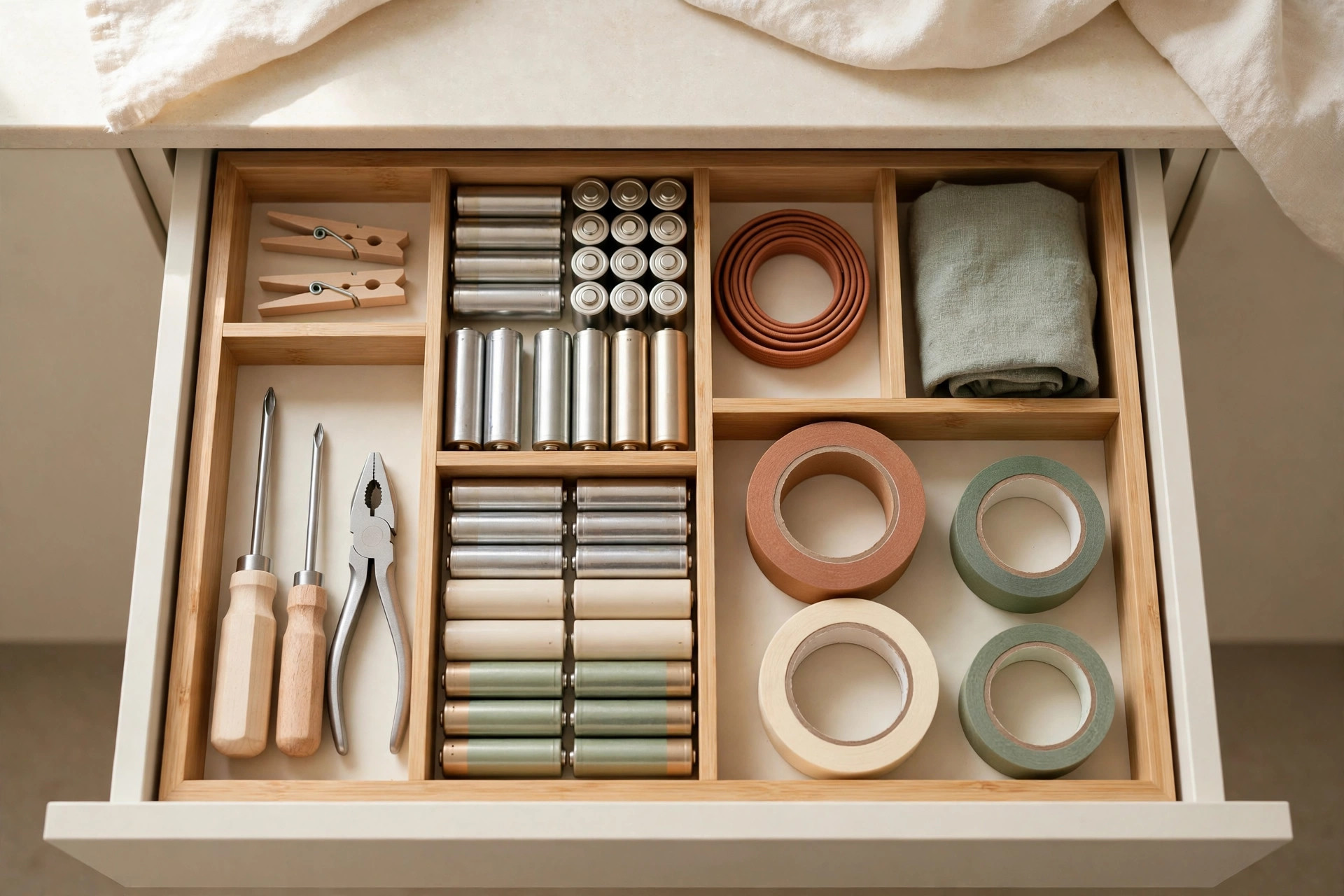
Zones are the difference between a tidy drawer and a usable one. Group items by how you reach for them, not by size. The front should hold what you grab daily, and the back should hold what you need weekly or less.
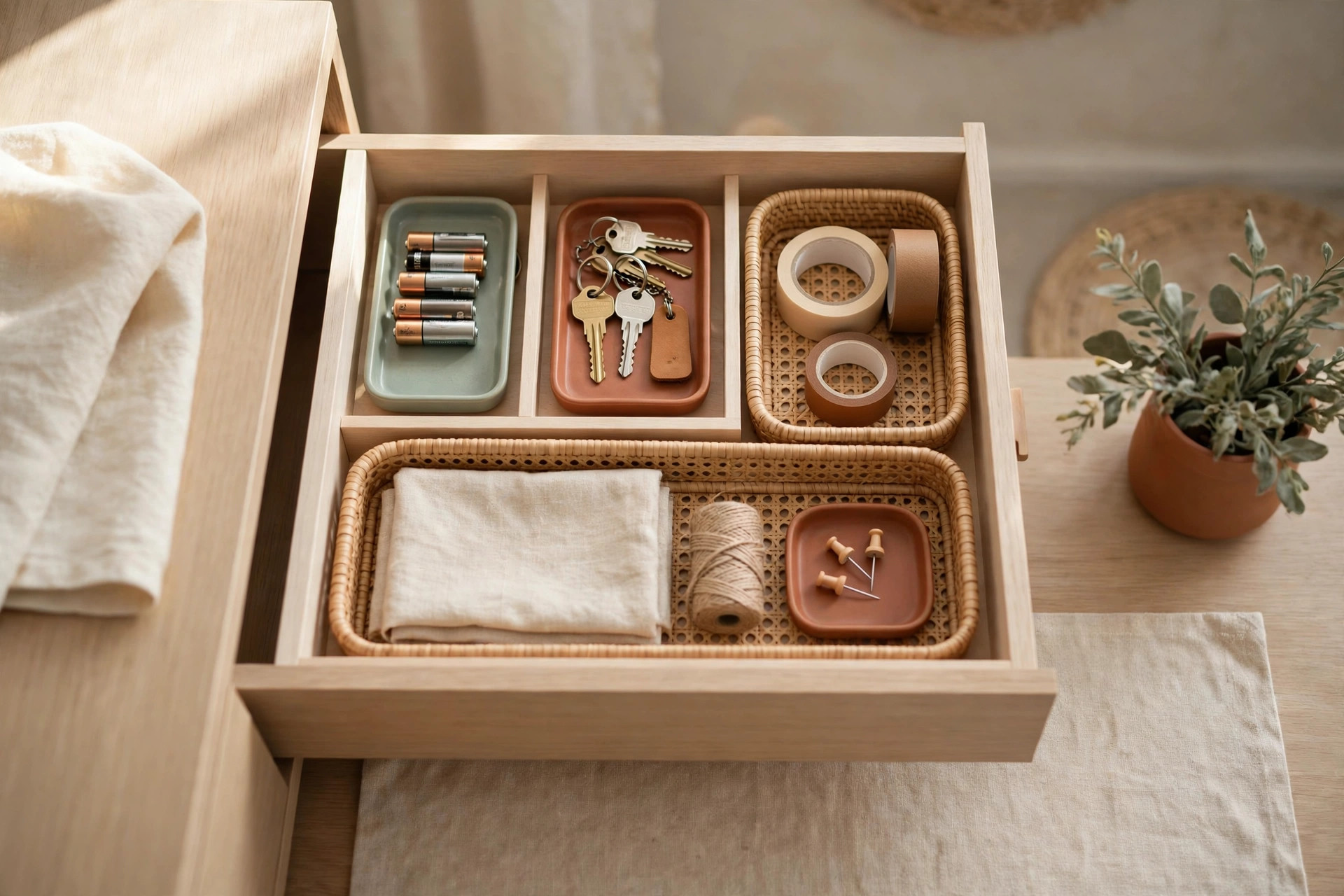
Idea 5: Put a daily-grab zone at the very front. Pens, a notepad, keys, and lip balm belong here, in a shallow tray no deeper than about 2 inches so you can see everything at a glance.
Idea 6: Give batteries their own lidded section at the back. Loose batteries roll, leak, and hide under everything. A small lidded box, roughly 4 by 3 inches, keeps AA and AAA batteries upright and separated, with a rubber band around each size group to stop mixing. Keep batteries away from paper clips and safety pins, which can short them if they touch both ends.
Idea 7: Keep tape, adhesives, and fasteners in one middle zone. Masking tape, electrical tape, super glue, rubber bands, and pushpins share a job: quick household fixes. A narrow tray, about 3 inches wide, holds a roll of tape upright with a small cup beside it for rubber bands and binder clips.
Small containers and trays that fit awkward drawer shapes
Standard organizers assume standard drawers, and junk drawers are rarely standard. Shallow drawers reject tall bins, deep drawers swallow small items, and L-shaped drawers leave dead corners.
Idea 8: Use shallow trays, not tall bins, in drawers under 4 inches deep. A tray about 1.5 to 2 inches tall lets you see every item without stacking, while a tall bin hides the bottom layer and becomes a second junk pile.
Idea 9: Drop tiny cups into dead corners for screws, pins, and nails. The awkward gap at the back of a drawer is perfect for one small cup, such as a silicone muffin cup or a small spice jar. These tiny items cause the most mess for their size because they scatter everywhere when loose.
Idea 10: Line the drawer with a non-slip liner cut to size. A thin rubberized liner, trimmed about half an inch short of the drawer edges so it lies flat, stops trays from sliding every time the drawer opens.
What belongs elsewhere: the 5 things to evict today
Some items feel like junk-drawer items only because they have nowhere else to go, but the junk drawer is the worst home for them. Evicting them often frees a quarter of the drawer or more.
Idea 11: Move instruction manuals and old warranties to a single binder or folder. Manuals for appliances you still own belong in one labeled binder on a shelf, not folded into a drawer where they wrinkle and get forgotten.
Idea 12: Relocate rarely used tools to a toolbox or utility shelf. A full screwdriver set, a hammer, and a wrench belong with your other tools, not competing with pens and batteries. Keep only one multi-tool or one small screwdriver in the junk drawer for quick fixes. The same rule clears counters: deciding what earns its spot is the core of Small Kitchen Counter Organization: What to Keep Out (and What to Hide).
The remaining evictions need no new home, just a decision. Expired coupons and old receipts go in the recycling bin, because a drawer is not a filing cabinet. Mystery keys and chargers for devices you no longer own go in a bag for donation or e-waste recycling. Loose change belongs in a jar by the door, not scattered where it jams the drawer runners.
Labels and the one-in-one-out rule for catch-all drawers
Labels feel unnecessary in a drawer only you open, but they keep a system alive after the first month. Without them, zones drift: batteries creep into the tape section, and the next person to use the drawer has no idea where anything belongs.
Idea 13: Label each zone with a removable label or masking tape. Write the zone name in plain words, like “batteries” or “daily grab,” on the front edge of the tray or the drawer wall where you see it when the drawer opens.
Idea 14: Apply a one-in-one-out rule to every new item. When something new enters the drawer, something old must leave it: finish a pen before adding a new one, or move an old charger to the e-waste bag when a new device arrives.
The 10-minute monthly junk drawer reset
A junk drawer does not need a deep clean every month. It needs a short, scheduled reset that catches drift before it becomes chaos. Ten minutes is enough because the zones and dividers already exist; you are maintaining a system, not rebuilding one.
Idea 15: Run the reset in four timed passes: pull, toss, return, and wipe. Spend two minutes pulling out anything sitting on top of the zones, two minutes tossing broken pens and trash, four minutes returning strays to their zones or proper rooms, and two minutes wiping the liner and pushing trays back into place.
Idea 16: Do a 60-second tidy every Sunday night. Open the drawer and put back the two or three things that migrated during the week. Sixty seconds a week prevents the slow creep that makes the monthly reset necessary.
Idea 17: Set a seasonal purge date for the whole drawer, four times a year. At the start of each season, empty the drawer once more, retest every pen and battery, and ask whether each zone still earns its space.
Mistakes to avoid: over-buying organizers before sorting
The most common junk drawer mistake happens before the drawer is even empty: buying a full organizer set, in matching colors, for a drawer whose contents you have not counted yet. The set looks tidy on day one and fails by week three, because it was sized for an imagined drawer, not the real one. Sort first, measure second, and buy last, buying only pieces that fill a gap you actually found. If your drawer is already sorted and you want budget-friendly trays, the shopping strategy in Dollar Tree Organization Hacks That Actually Look Good helps you pick pieces that fit instead of grabbing whatever looks handy.
Other mistakes are quieter but just as damaging. One giant bin for everything recreates the junk pile inside a box. Clear containers for a drawer nobody sees waste money on looks; opaque trays work just as well and hide visual noise. Sentimental items like old photos get damaged by batteries and tape, so move them to a proper keepsake box.
Frequently asked questions
How to organize a junk drawer without buying anything?
Start with the audit, then repurpose what you already own: small bowls, silicone muffin cups, rubber bands, and cardboard folded into a divider all work. Zones matter more than containers.
Can a junk drawer stay organized with kids in the house?
Yes, if the drawer has a clear daily-grab zone and a firm rule about what goes back. Give children one small section of their own, such as a cup for crayons, and keep sharp tools, batteries, and medicines in a separate drawer or a high cabinet they cannot reach.
How often should I clean out a junk drawer?
A quick tidy once a week and a ten-minute reset once a month is enough for most households, with a full empty-and-sort purge four times a year.
What size dividers fit a standard kitchen junk drawer?
Most kitchen junk drawers are roughly 12 to 18 inches wide and 3 to 4 inches deep, so adjustable dividers that expand across that width work best.
Conclusion
A calm junk drawer is not about perfect containers or a bigger drawer. It is about an honest audit, dividers that stop the slide, zones you can remember, and a short monthly reset that keeps the system alive. Work through these 17 ideas in order, starting with emptying the drawer today. Save this pin for later, or explore more ideas in storage ideas.