A small dresser in a tiny bedroom has one of the hardest jobs in the house: holding a full wardrobe in a footprint barely wider than a nightstand. When it fails, the whole room feels messy — clothes migrate to the chair, the floor, and the dresser top itself. The fix is not a bigger dresser. These small dresser organization ideas work precisely because the space is small: every drawer gets one clear job, and nothing hides.
Below are 17 ideas in the order you should do them — audit first, dividers second, folding third, and a weekly reset last. Followed in order, they let a standard 3- or 4-drawer dresser hold a complete everyday wardrobe.
The dresser audit: what actually belongs in each drawer
Before you buy a single divider, empty every drawer onto the bed. This is the step most people skip, and it is why most dresser systems collapse within a month — you cannot organize clothes you do not wear into a space that was never measured for them.
1. Sort everything into keep, relocate, and let-go piles. Keep means worn in the last 30 days or needed this season. Relocate means it belongs elsewhere — gym clothes to a hook by the door, off-season sweaters to storage. Let-go means stained, stretched, or unworn for a year. A drawer is roughly 12 to 15 inches deep and 24 to 30 inches wide, holding about 8 to 12 folded tees or 4 to 6 pairs of jeans. If your keep pile exceeds that per drawer, the audit is not finished.
2. Count by category, then assign drawers by volume — not by habit. Tally real numbers: 14 tees, 6 pairs of jeans, 5 sweaters, 10 pairs of socks. The biggest category gets the deepest drawer, usually the bottom one, because heavy items belong low. Let the counts decide, not habit.
Drawer dividers: the non-negotiable first buy
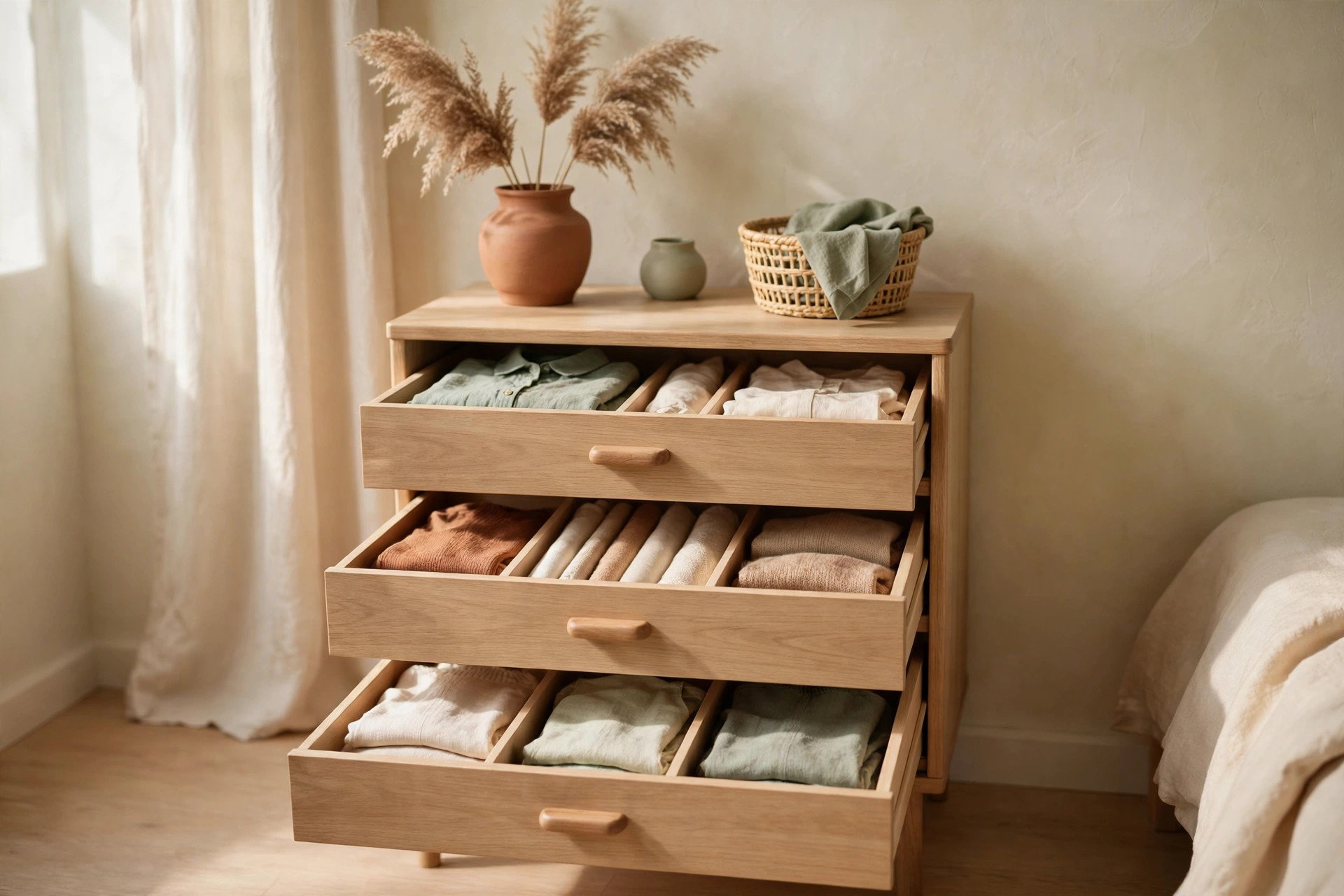
Dividers are the single purchase that changes everything. Without them, folded clothes slump sideways the first time you pull a shirt out, and within a week the drawer is a pile again. With them, every stack has walls.
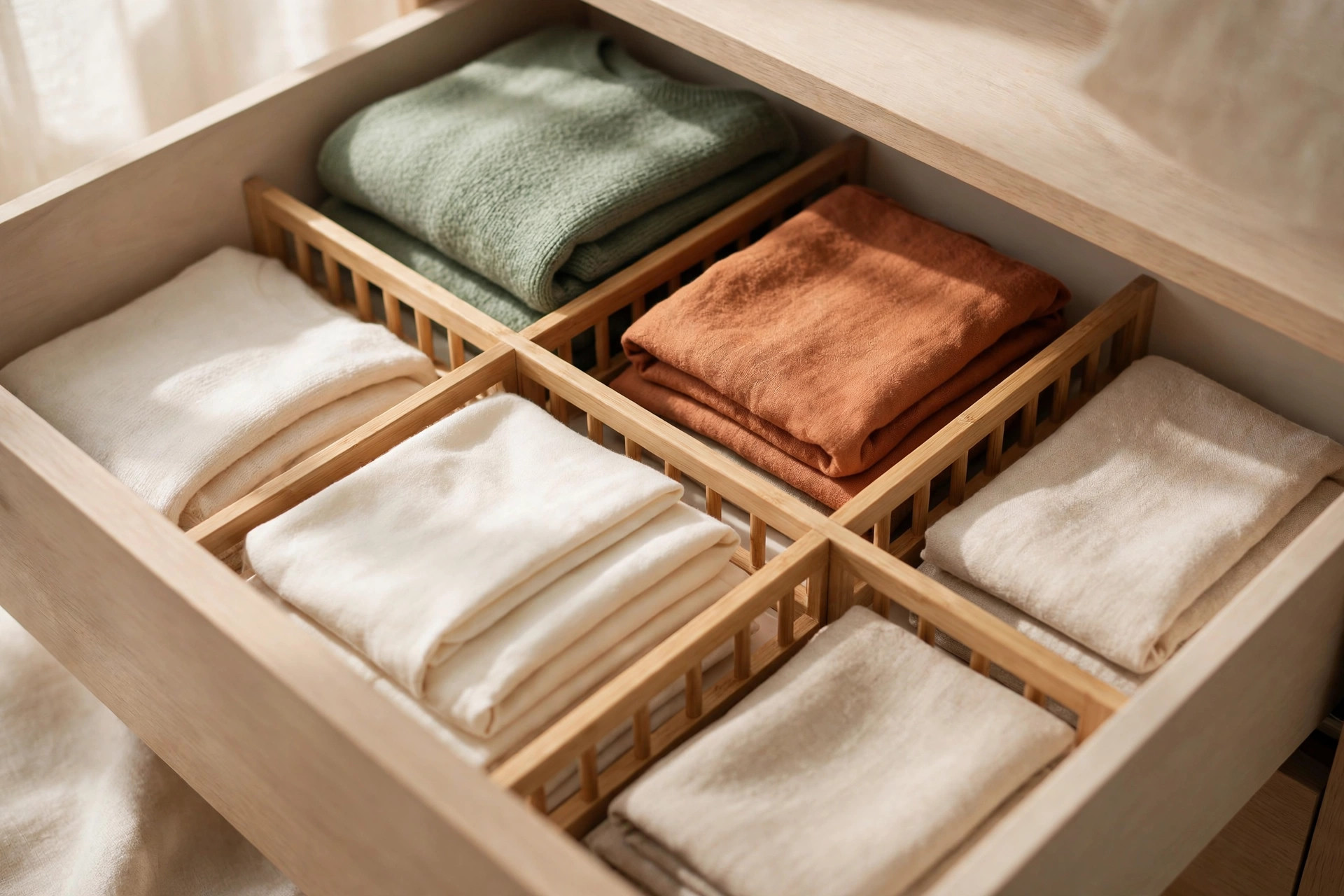
3. Use spring-loaded dividers for the main clothing drawers. These expandable plastic or bamboo dividers grip the drawer walls and create adjustable lanes, usually 4 to 6 inches wide for tees and 8 to 10 inches for jeans. They cost a few dollars each, need no tools, and move when your wardrobe changes. Measure interior depth first — most fit drawers 12 to 17 inches deep, but shallow dressers under 12 inches need the short version.
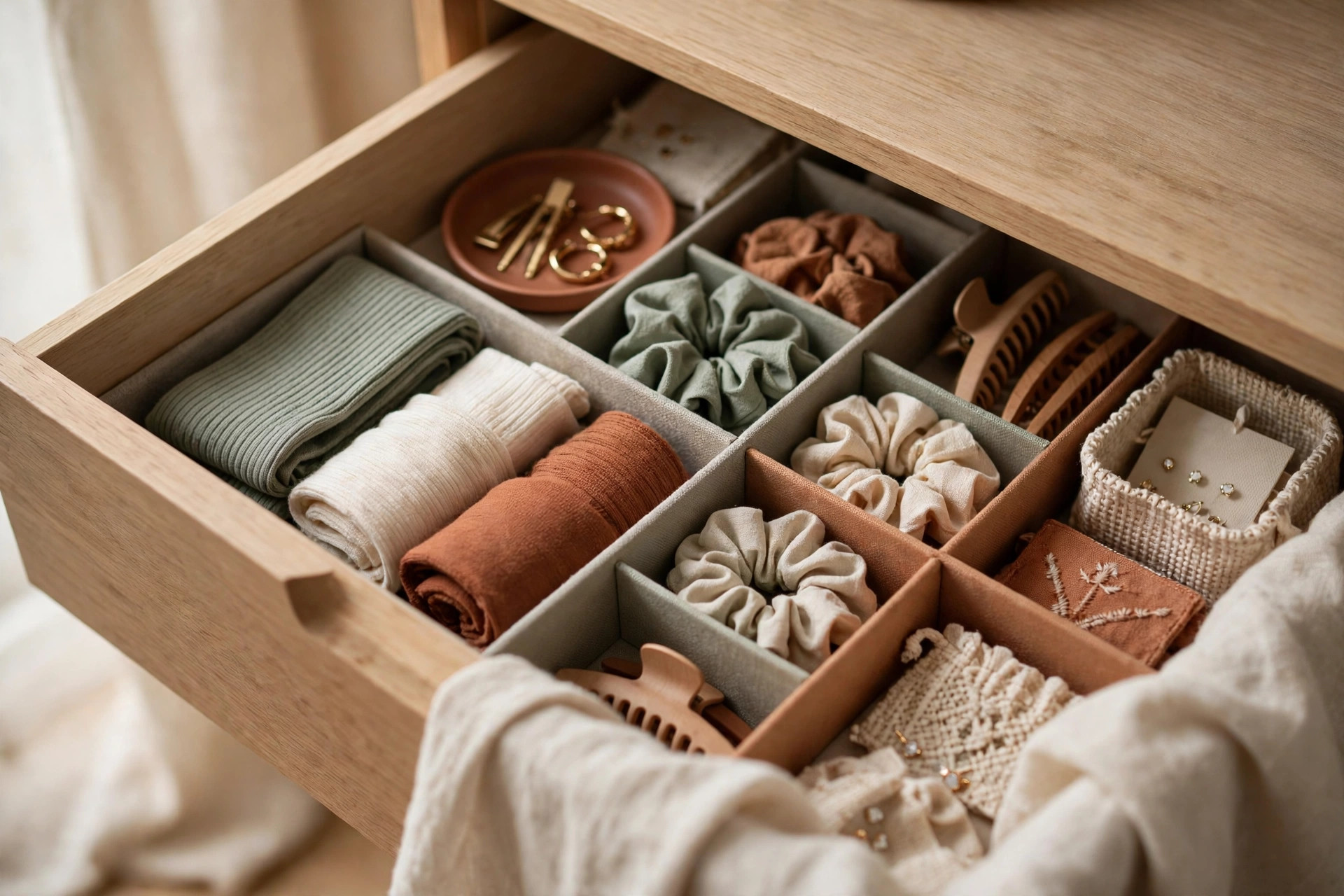
4. Use small fabric bins inside the divider lanes for anything that slides. Dividers hold stacks upright, but socks, underwear, and rolled belts still slip underneath them. A 6-by-6-inch fabric bin sits inside each lane and corrals the small stuff. One bin per category, no mixing: socks never share a bin with underwear.
File-folding clothes so drawers hold twice as much
Traditional stacking hides everything below the top item, so you dig, unfold, and refold — and the drawer ends up messier than when you started. File-folding fixes this by standing clothes upright like files, so you see every item at a glance.
5. File-fold tees and casual tops into upright rows. Lay the shirt flat, fold both sides in to a rectangle about 6 inches wide, then fold into thirds so it stands on its own. Line the shirts up in a divider lane, spines facing up. A standard lane holds 8 to 10 file-folded tees where a stack held 5 or 6, and you can pull one out without disturbing the rest.
6. Roll, don’t fold, soft knits and leggings. Chunky sweaters and leggings resist file-folding because they spring open. Roll them tightly into cylinders about 4 inches wide and stand them upright in a bin. This works best in the bottom drawer, where deeper space fits two rows of rolls side by side.
7. Keep one “grab zone” at the front of each drawer. Reserve the front 4 inches — the part your hand reaches first — for the 3 to 5 items you wear most often. Everything else files behind it. This prevents the daily rummage that destroys an otherwise perfect system. If your wardrobe is small enough that a capsule approach appeals to you, our guide to 17 capsule wardrobe organization ideas for tiny closets shows how to shrink the inventory so the dresser holds less.
Assign every drawer a job: tops, bottoms, sleep, accessories
A dresser works when each drawer has exactly one job. The moment a drawer holds “tops and also some scarves and also the swim stuff,” it becomes a junk drawer with a nicer name.
8. Give each drawer a single category and label it — even if only you see the label. Top drawer: underwear and socks. Second: tees and tanks. Third: bottoms. Bottom: sweaters and sleepwear. Small adhesive labels inside each drawer front make the system survive tired evenings when willpower is gone. If you share the dresser, this is non-negotiable — two people with different mental maps will destroy an unlabeled system in a week.
9. Put the most-used drawer at waist height, not the top. The top drawer is the easiest to reach, so it tempts people into storing everyday tees there — but it is also the shallowest, often only 5 to 6 inches deep. Save it for flat, small items and put daily tees in the second drawer, where the depth fits a full file-folded row.
Small-item systems: socks, underwear, and accessories without chaos
Small items are where dresser organization goes to die. They are soft, oddly shaped, and numerous, and they migrate into every corner unless they have their own containers.
10. Pair socks before they enter the drawer — never inside it. Keep a small basket on the dresser or laundry shelf, and pair socks the moment they come out of the dryer. Singles go in the basket, not the drawer, so the drawer only ever holds matched pairs. Roll each pair and stand it upright in its bin: a 6-by-6-inch bin holds roughly 10 to 12 pairs.
11. Use a honeycomb insert or grid organizer for underwear and accessories. A collapsible honeycomb insert turns one drawer into 12 to 16 separate cells, each holding one or two items. Underwear, bras, belts, and small accessories each get their own cells, so nothing tangles and nothing disappears under a pile. This is one of the best dresser drawer organization ideas for renters, because it needs zero modification: the insert lifts out when you move.
The dresser top: what earns surface space and what doesn’t
The dresser top is prime real estate in a tiny bedroom — often the only flat surface besides the bed. Treat it like a shelf with a strict capacity, not a landing strip.
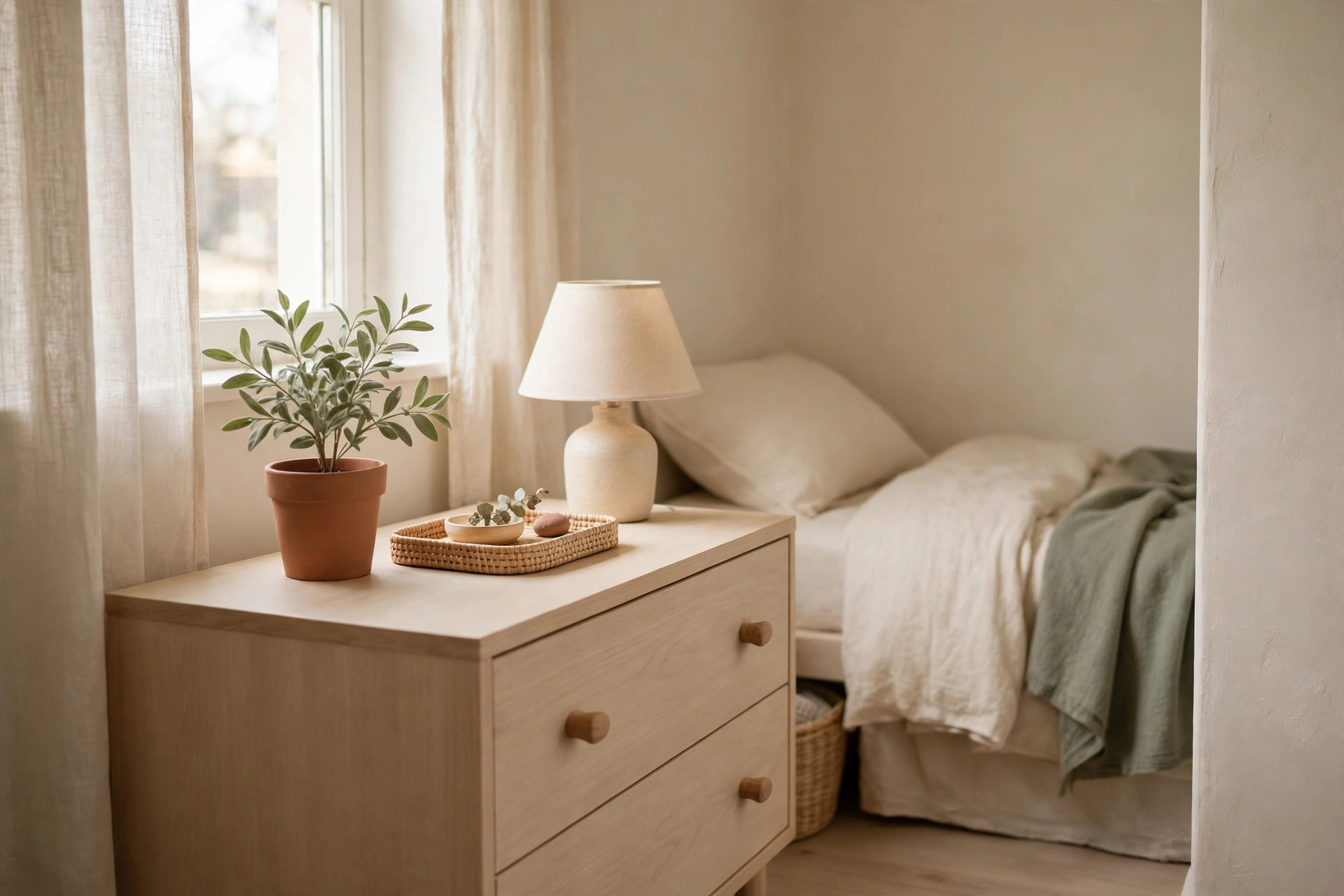
12. Limit the top to five items, and give each one a tray or boundary. A lamp, a small tray for keys and wallet, a plant or framed photo, a book you are reading, and one decorative object. That is the full list. A shallow tray — roughly 10 by 7 inches — for daily-carry items is the key: it creates a visible edge, and the moment the tray overflows, you know something has to leave.
13. Move the “dresser top overflow” to its real home tonight, not someday. The pile on a dresser top is almost never dresser stuff — it is mail, chargers, bags, and things waiting for a decision. Spend two minutes each evening returning them to their actual homes: mail to the entryway, chargers to the desk, the bag to its hook. If an item has no home anywhere in the room, the room needs a different storage solution. For bedrooms with no closet at all, our guide to bedroom storage ideas for small rooms with no closet covers the freestanding pieces that take pressure off the dresser entirely.
Overflow rules: when the dresser is full, something leaves
Every dresser has a capacity, and pretending otherwise is how drawers end up stuffed shut. Overflow rules are the pressure valve that keeps the system honest.
14. Keep one empty bin — the “outbox” — for overflow, and empty it weekly. When a drawer is full and a new item arrives, the new item goes in the outbox, not crammed into the drawer. Once a week, decide for each outbox item: does it replace something in the drawer, go to another storage spot, or leave the house? This is also where seasonal rotation starts: when summer clothes come out, winter clothes go into the outbox and then into longer-term storage. If under-bed space is available, our guide to 18 under-bed storage ideas that turn dead space into a dresser shows how to move off-season clothes out of the dresser without losing access to them.
15. Apply the 90-day test to anything you have not worn. Mark items you are unsure about with a small card in the drawer. If the card is untouched after 90 days, the item goes. In a tiny bedroom, keeping clothes you do not wear costs you the one thing you cannot buy more of: drawer space. One item out frees roughly the space of two folded tees — often the difference between a drawer that closes and one that does not.
The weekly 5-minute dresser reset
No organization system maintains itself. The difference between a dresser that stays organized for a year and one that lasts a month is a tiny, regular reset — not a big seasonal overhaul.
16. Run the reset on the same day you do laundry. While clothes are in the washer, spend five minutes on the dresser: refold anything that has slumped, re-pair stray socks, return top-of-dresser strays to their homes, and check the outbox. Tying the reset to laundry works because the dresser is half-empty at that moment — the easiest time to straighten it — and because the habit already exists. Set a phone reminder for the first four weeks.
17. Do a 60-second drawer check every night before bed. Open each drawer, straighten the front row, and close it. That is the whole ritual. It takes less time than brushing your teeth, and it catches small drifts — a slipped divider, a shirt pulled halfway out — before they compound into a full reorganization job. A minute a day protects the hour you spent setting the system up.
Mistakes to avoid
- Buying organizers before measuring. Drawer interiors vary by inches even on the same dresser. Measure length, width, and depth of every drawer before ordering — a divider half an inch too long is useless.
- Folding everything the same way. Match the fold to the fabric: file-fold firm cottons, roll soft knits, stack only heavy denim.
- Letting one drawer become the junk drawer. Give batteries, cables, and papers their own home — a desk drawer, a wall hook, a small box on a shelf — and keep clothing drawers for clothing only.
- Overstuffing after laundry day. A drawer filled to the brim cannot be used without messing it up. If clean laundry does not fit, something in the drawer needs to go to the outbox.
- Styling the dresser top before organizing the drawers. A pretty top over chaotic drawers lasts about three days. Drawers first, styling second — always.
Frequently asked questions
How many clothes can a small dresser actually hold?
A standard 3-drawer dresser holds roughly 30 to 40 folded items plus underwear and socks: about 10 to 12 tees per drawer and 4 to 6 pairs of jeans. A 4- or 5-drawer dresser adds room for sweaters and sleepwear. If your wardrobe is bigger than that, the answer is not a bigger dresser — it is a smaller wardrobe, seasonal rotation, or a second spot like under-bed bins.
Can you organize a dresser without buying dividers?
Yes, but it is harder to maintain. Rolled washcloths, small cardboard boxes cut to drawer height, and repurposed shoe boxes work as free dividers. The key property is the same: rigid walls that stop stacks from slumping sideways. If your free dividers are flimsy, they will collapse within weeks, so replace them with proper dividers when you can.
What is the best way to organize a dresser shared by two people?
Split it vertically, not by drawer type: one person gets the left half of every drawer, the other gets the right half, with a divider down the middle. Sharing by drawer fails because the bottom drawers are deeper and one person always ends up with more space. Label each person’s zones.
How do I keep dresser drawers organized with kids’ clothes?
Use the same system at a smaller scale: one bin per category, file-folding for tops, and a weekly reset tied to laundry day. Kids’ clothes are smaller, so one drawer can hold a full week’s outfits file-folded in a row. Let kids pick their own bin colors — a system they chose is one they are more likely to keep.
Should the dresser top hold a TV in a tiny bedroom?
Only if there is genuinely nowhere else for it, and only if the TV replaces — not joins — the other top items. A TV consumes the entire surface, so your daily-carry items need a new home, usually a wall shelf or a tray on the nightstand. In most tiny bedrooms, wall-mounting the TV is the better trade.
Conclusion
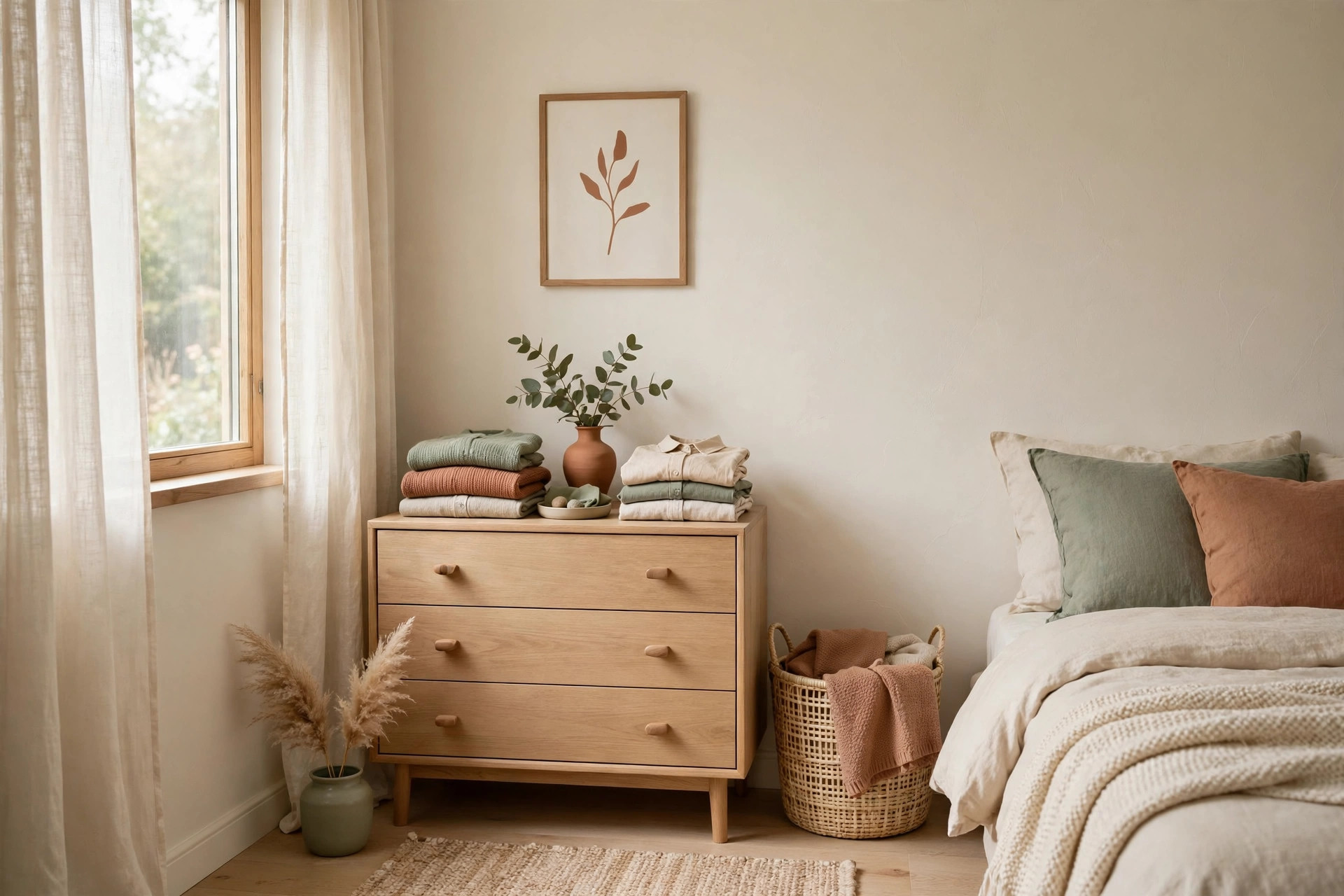
A small dresser does not need more space — it needs a system: audit first, dividers second, one job per drawer, small items in their own cells, a disciplined top, overflow rules, and a five-minute weekly reset. Follow the 17 ideas in order and your dresser stops being the room’s problem. Save this pin for later, and browse more ideas in our small-spaces collection when your next corner needs the same treatment.