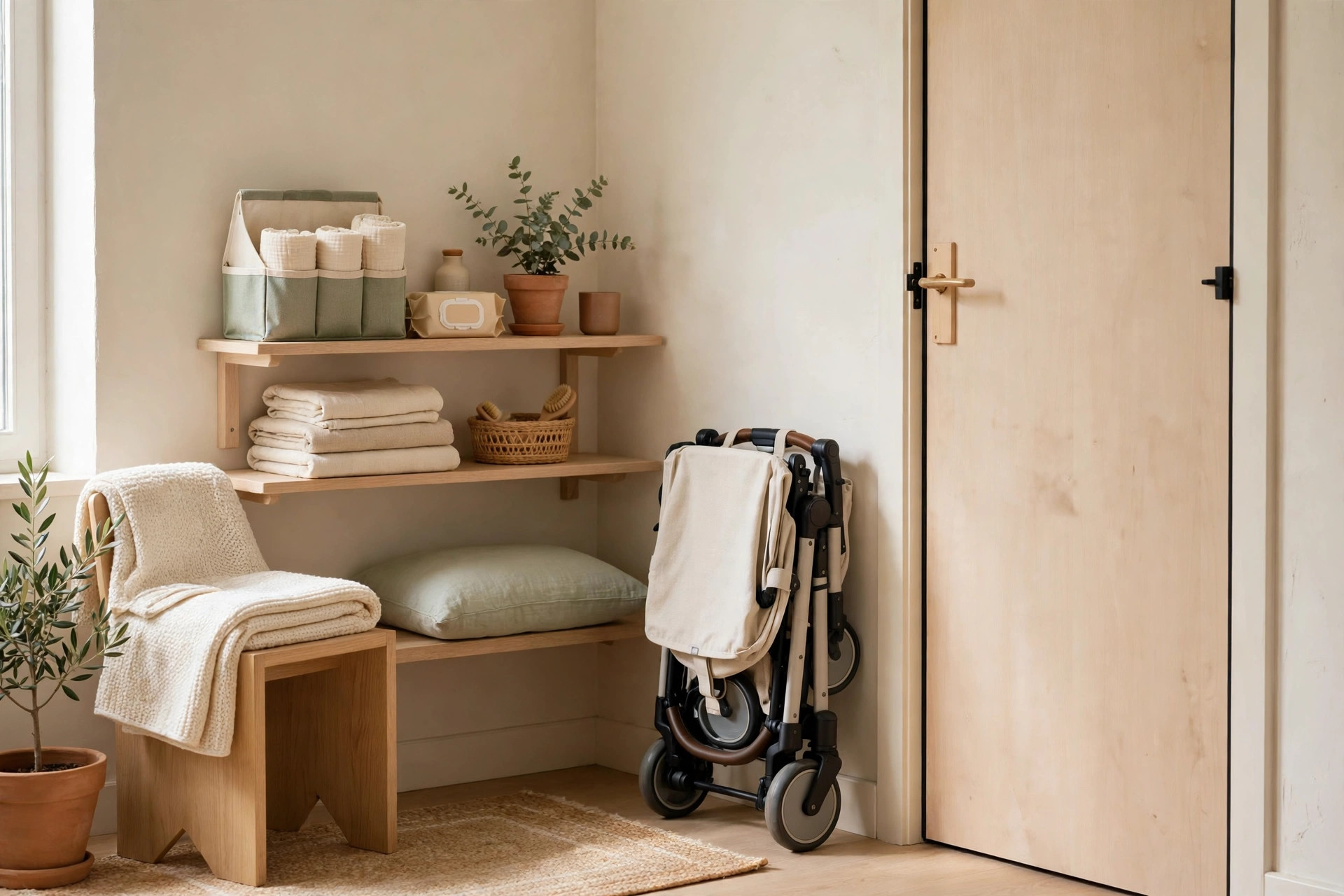
A tiny dining nook should be the coziest corner of your home, but in most small kitchens it becomes the dumping ground: mail piles up, chargers snake across the table, and by dinner there is nowhere left for a plate. Good small dining nook organization is not about buying more furniture. It is about deciding what the table is actually for, giving everything else a home nearby, and building a reset habit so the table stays clear. These 15 ideas cover storage seating, fold-down tables, wall storage, tabletop rules, and linens for real tiny kitchens where every inch has to earn its keep.
The nook audit: how the table is really used
Before you buy anything, watch how your table is used for one week. Most tiny tables serve three or four jobs: breakfast spot, laptop desk, mail landing zone, and only occasionally a full dinner. Measure the tabletop, count your weekday place settings, and note what lands on it daily. That list is your storage brief.
1. Map the table’s four daily jobs before buying anything
Write down what the table does each day: eating, working, sorting mail, holding bags or keys. If it is a desk for six hours and a dining table for one, plan storage for the desk job first. A tray for work supplies and a wall hook for bags beat a bigger table.
2. Measure the real footprint, not the wish footprint
A place setting needs about 24 inches of width and 30 inches of depth, plus roughly 30 inches behind a chair to pull it out. Tape those dimensions on the floor and walk the path with a grocery bag in hand. If the taped zone blocks the fridge door or walkway, the table is too big or in the wrong spot, and no organizer will fix it.
Banquette and bench seating with hidden storage
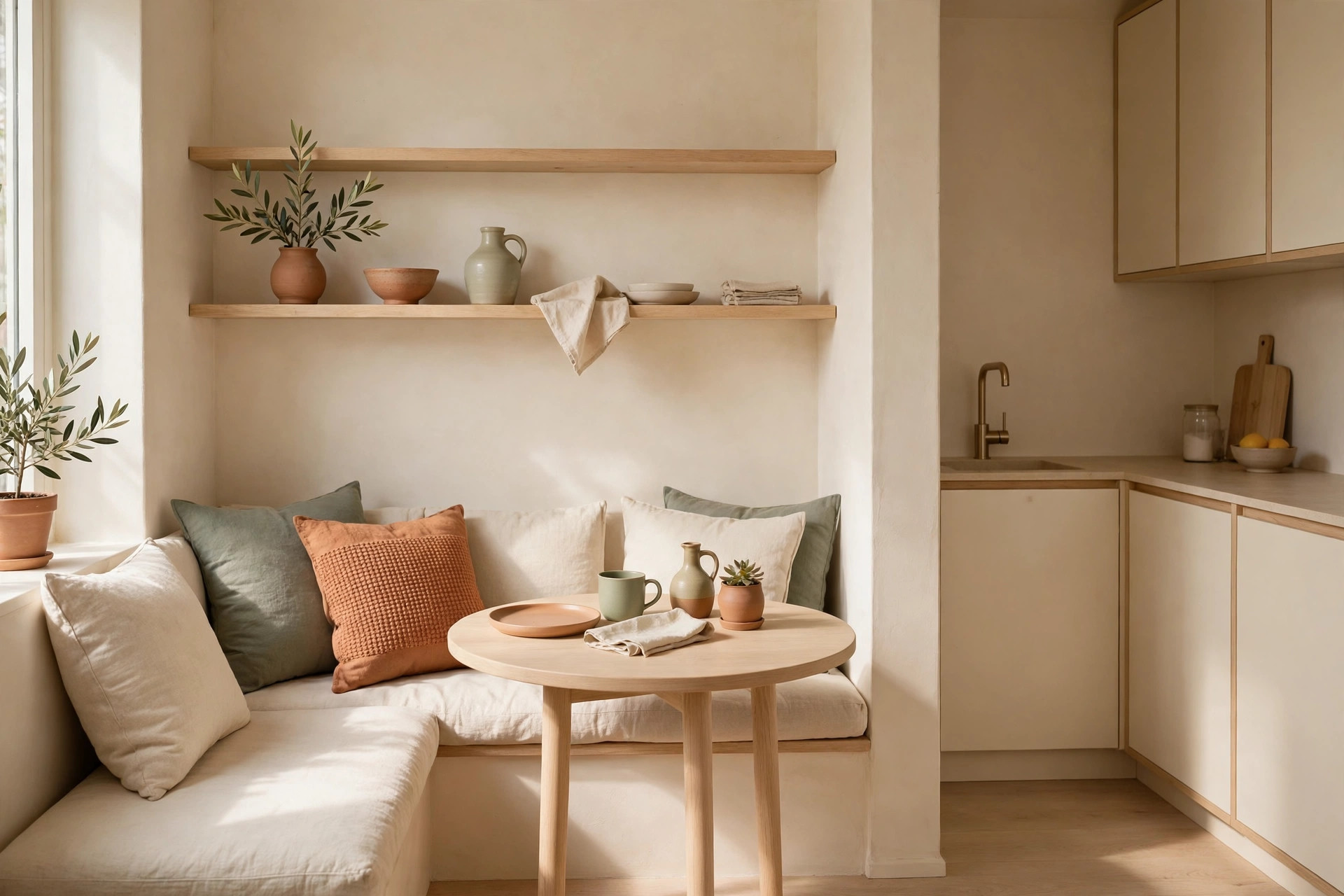
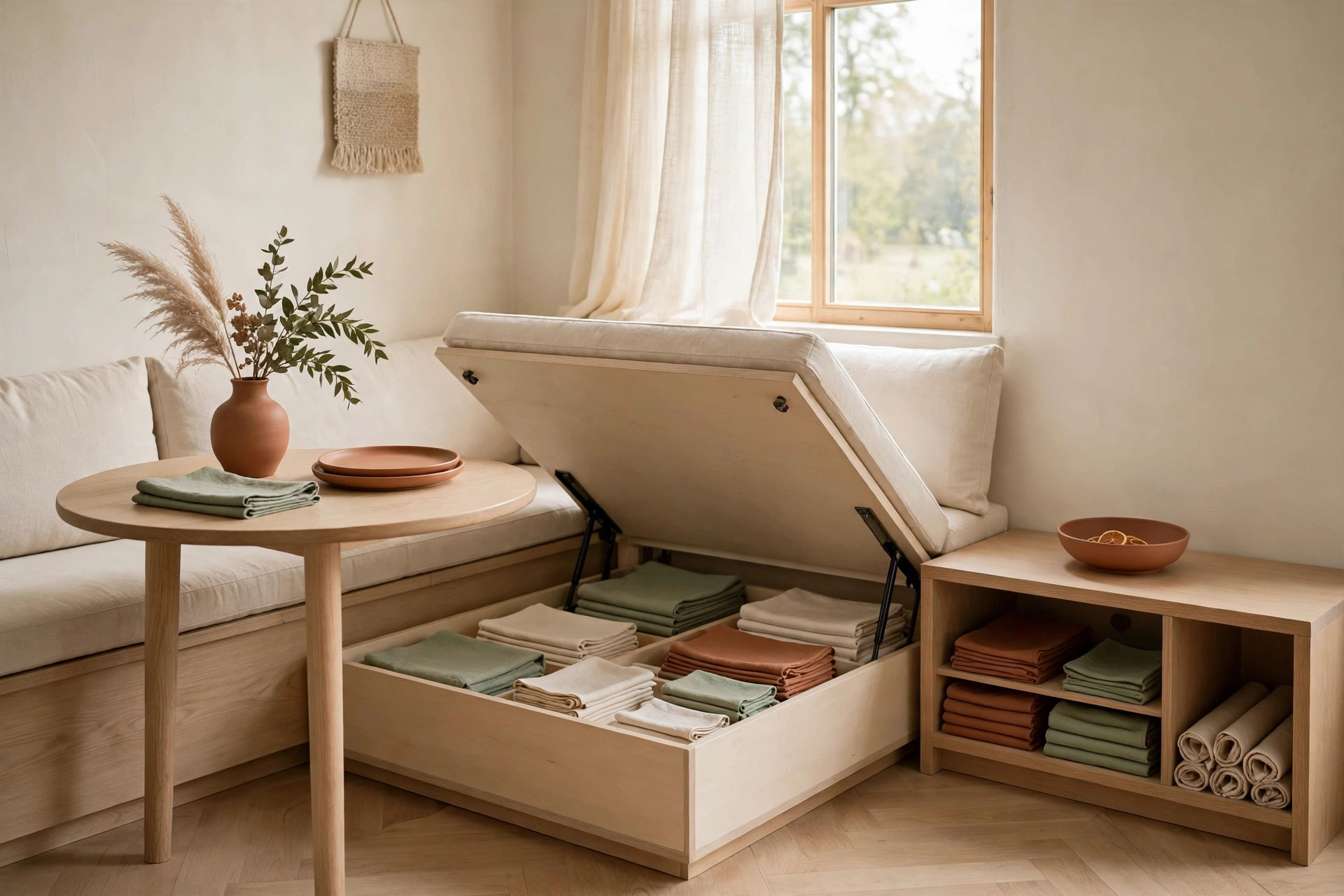
A banquette turns a dead corner into the best seat in the house. Built against the wall, it seats more people in less floor space than chairs, and the base is a storage goldmine. A freestanding bench gives you most of the benefit with no construction.
3. Build bench storage into the seat base
A bench with a lift-up seat or front drawers holds table linens, board games, or rarely used serving dishes. Aim for a seat height of 17 to 19 inches and a depth of 16 to 18 inches. Divide the inside with one or two upright dividers so items do not slide into an unreachable pile.
4. Choose a banquette back that works as a shelf
A banquette with a low back panel, about 12 inches above seat height, doubles as a narrow shelf for a plant or candle. Keep it no more than 6 inches deep so diners never bump their heads. Renters can get the same look with a freestanding bench plus a picture ledge above it.
5. Park seating that disappears under the table
In a nook under 40 square feet, chairs are the real space hog. Pick backless stools or a bench that slides fully under the table so the walkway stays open between meals. A bench also seats three children where two chairs would fit. For more on space-saving seating, see 15 Fold-Down Table Ideas for Tiny Kitchens (Eat-In Space That Disappears).
Fold-down and drop-leaf tables for tiny footprints
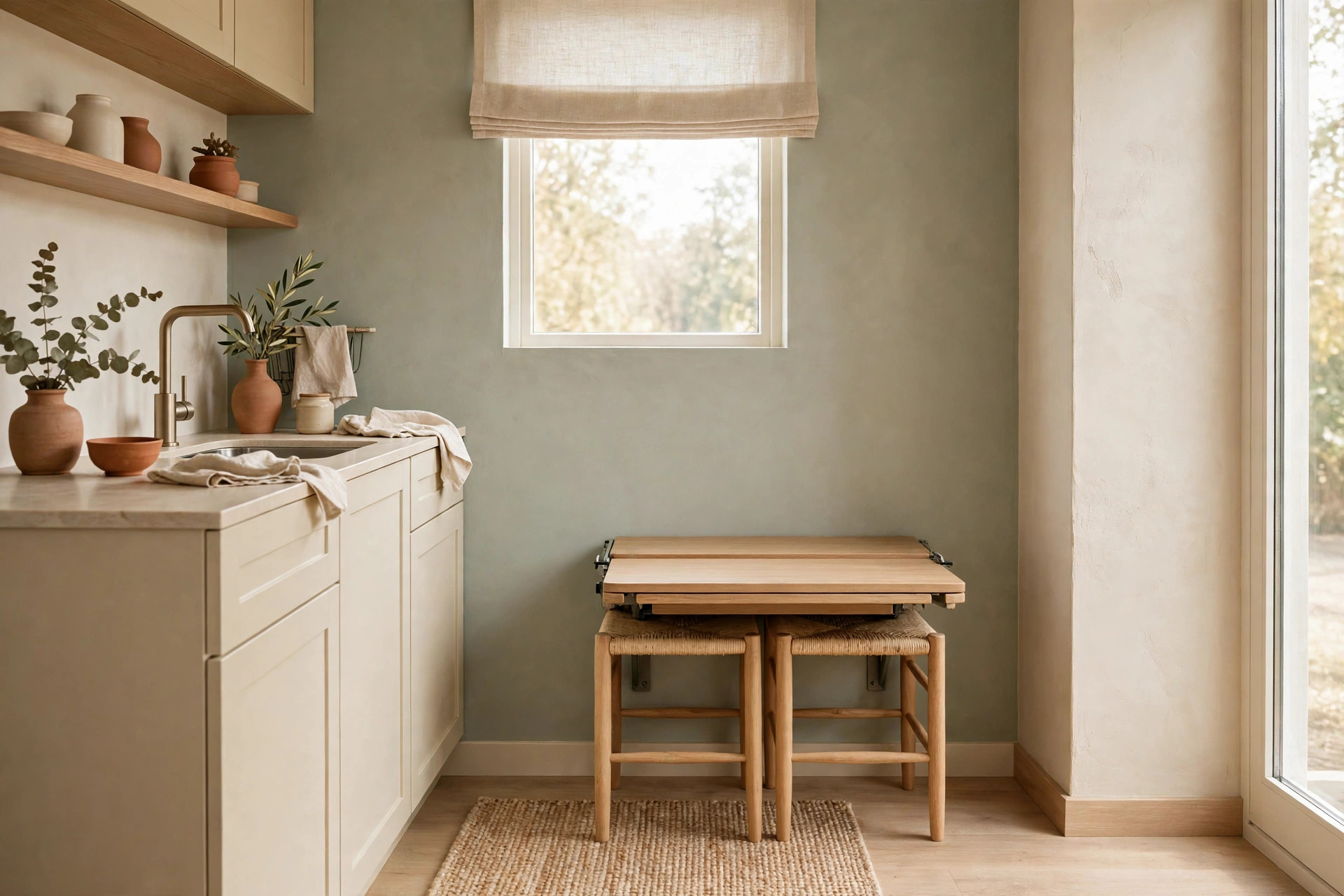
When the nook is really a wall and a walkway, the table itself should be able to vanish. Fold-down and drop-leaf tables give you a full surface at mealtimes and zero footprint the rest of the day, the single biggest win for tiny dining area ideas.
6. Mount a drop-leaf table on the nook wall
A wall-mounted drop-leaf table, typically 30 to 36 inches wide and 24 to 30 inches deep when open, folds flat to about 6 inches when closed. Anchor at least one bracket into a stud, or use toggle bolts rated for 100 pounds or more per pair on drywall. Open it for meals, fold it for floor space.
7. Use a gateleg table as a corner console
A gateleg table with a narrow 12-to-15-inch fixed center slides into a corner as a console between meals and opens to seat two or four when the leaves go up. It needs no wall mounting, so it is renter-friendly, and the closed center still holds a fruit bowl or mail tray. Park it nearest the kitchen so serving dinner is a short carry.
8. Let a rolling cart be the second table
A rolling kitchen cart with a 24-by-36-inch top works as a serving station at dinner and a bonus surface for one person at breakfast. Lock all four casters before anyone eats at it. After the meal, it rolls back against the counter holding the air fryer and produce basket.
Tabletop storage: what earns a permanent spot
A tiny table can hold about three permanent items before it feels cluttered. The rule is simple: if you use it at nearly every meal, it earns a spot. Everything else lives within arm’s reach but off the table.
9. Give the table a three-item limit
Pick three permanent residents: salt and pepper, a small condiment caddy, and one decorative item like a tiny plant or candle. Put them on a single tray no larger than 12 by 8 inches so they read as one tidy group. Anything that does not fit on the tray does not live on the table.
10. Move the overflow to a one-step-away station
Napkin rings, extra condiments, placemats, and the charging cable all belong on a nearby shelf, cart, or bench compartment, not on the table. The test is one step: if you can reach it without leaving your seat, it is close enough. This is the heart of small apartment dining storage, because the table stays clear without making every meal a scavenger hunt.
Wall storage above and beside the table
The walls around a dining nook are usually empty, and they are the cheapest storage in the room. Used well, they hold everything the table used to hold, at eye level, without taking an inch of floor.
11. Hang a rail and shelf combo beside the table
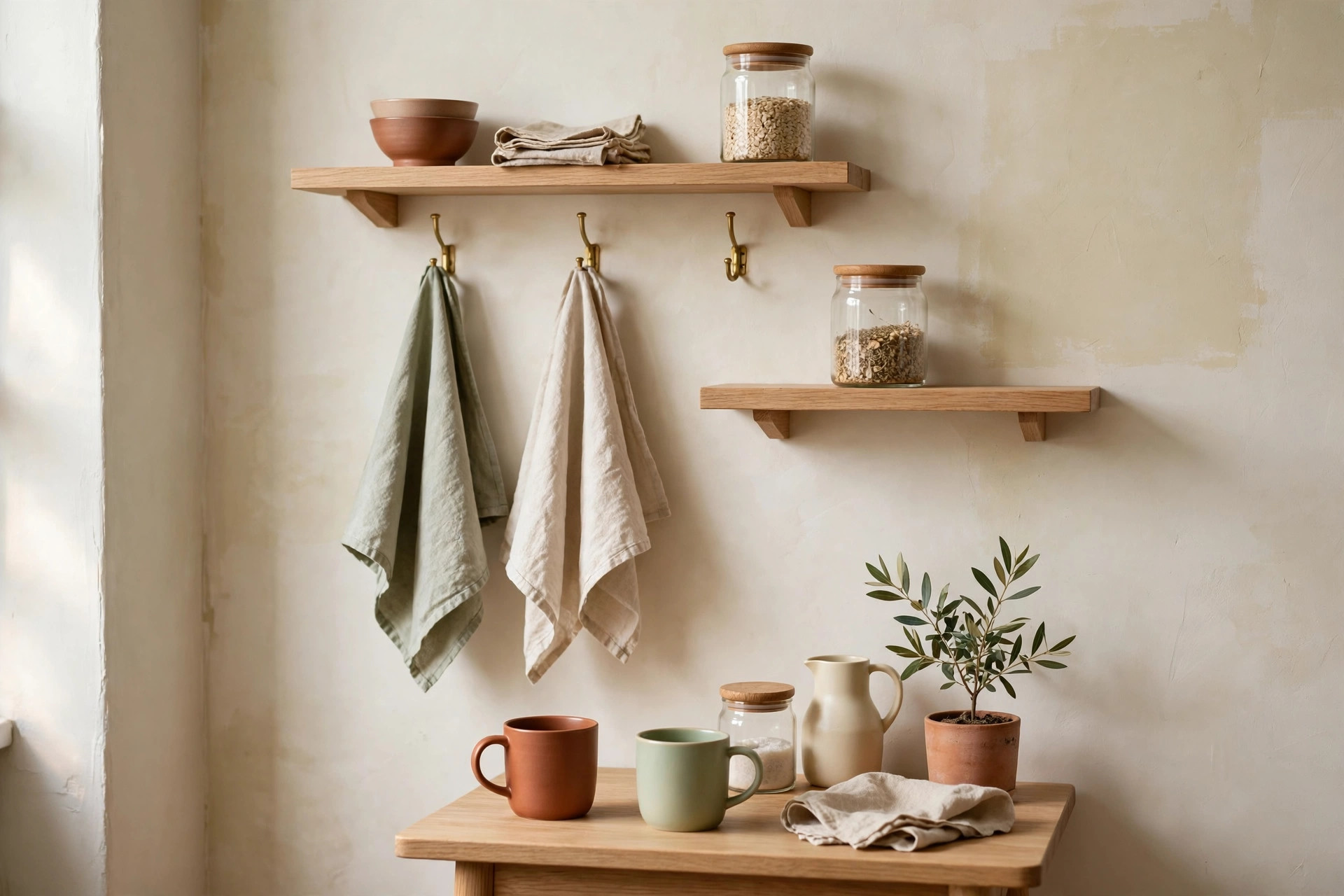
A wall rail with S-hooks holds mugs or a hanging fruit basket, while a single shelf 12 inches above the table holds the condiment caddy and linens between meals. Keep the shelf no deeper than 8 to 10 inches so diners never hit their heads. The zone-mapping method in 17 Kitchen Wall Storage Ideas for Small Kitchens (No Counter Space Wasted) shows how to share one wall between storage, table, and decor.
12. Use the wall behind the bench for vertical storage
The wall behind a banquette or bench is prime real estate: a narrow picture ledge for cookbooks, a small menu board, or two stacked shelves for placemats and napkins. Keep daily items at seated arm height and display items higher. If the nook shares a wall with the kitchen counter, check Small Kitchen Counter Organization: What to Keep Out (and What to Hide) before adding shelves, so counter clutter does not migrate to the nook wall.
Placemats, napkins, and table linens in small spaces
Linens make a tiny nook feel finished, but a drawer full of tablecloths is dead weight in a small apartment. Keep a small, hardworking linen kit where setting the table takes seconds.
13. Keep a four-placemat kit in the bench or nearest drawer
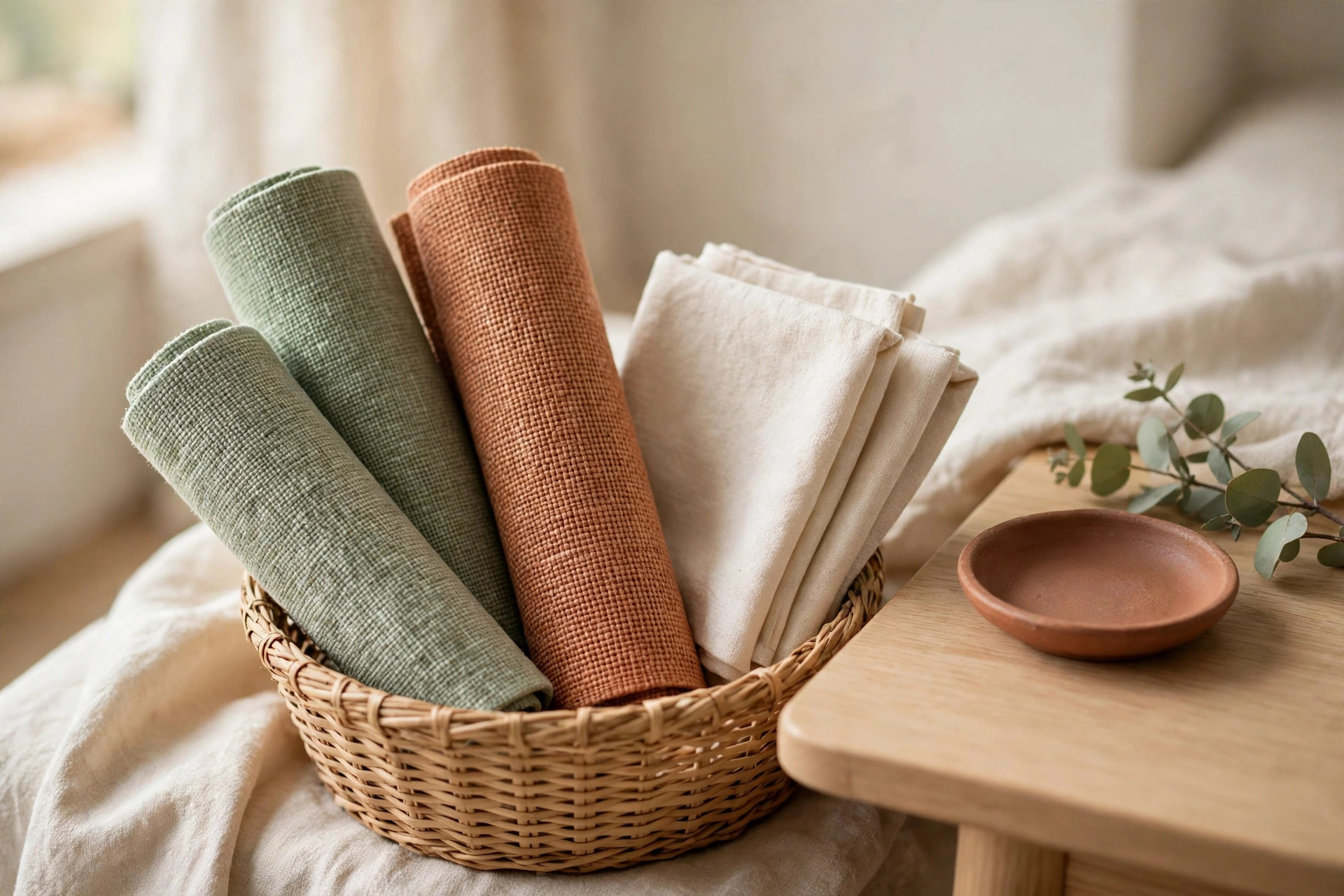
Four wipe-clean placemats, about 12 by 18 inches each, plus eight cloth napkins rolled upright in a small bin, cover daily meals and one guest. Rolled napkins fit a 6-inch-wide bin and are easy to grab one-handed. Skip the full tablecloth unless you use it weekly; a washable runner gives the same finished look and stores rolled in far less space.
14. Store linens by meal, not by type
Instead of one pile of placemats and one pile of napkins, make two or four small bundles, each with one placemat and two napkins tied or clipped together. Grabbing one bundle sets one place in seconds. Keep the bundles in the bench seat, a nearby drawer, or a basket on the wall shelf.
The 2-minute table reset after every meal
No organization system survives a table that is never cleared. The reset is the habit that protects everything above it, and it only works if it is short enough to do every time.
15. Run the same five-step reset after every meal
Clear dishes to the sink, return the tray items to their spots, wipe the surface, put stray items in a small catch-all basket by the nook, and empty that basket once a day. Set a phone timer for two minutes the first week until the sequence is automatic. The basket gives homeless items a temporary home so they never colonize the table.
Mistakes to avoid
Buying a table before measuring the swing is the number-one regret: a table that opens into the fridge door or blocks the walkway will be folded away and never used. Skipping the stud finder is a close second, since a loaded wall-mounted table trusted to drywall alone will pull out. Do not buy seating that cannot tuck under or against the table. Avoid glass tops in a tight nook, and never mount a fold-down table within 24 inches of the cooktop, where grease and heat ruin the finish.
Frequently asked questions
How do I keep a small dining table clear every day?
Give the table a three-item limit on a single tray, move everything else to a one-step-away station, and run the 2-minute reset after every meal. The reset matters more than any organizer: a table cleared daily stays clear.
Can a dining nook work in a kitchen with no spare wall?
Yes. A gateleg table parked in a corner needs no wall mounting, and a rolling cart can serve as a bonus surface. If even a corner is taken, a drop-leaf table on a counter end or windowsill ledge can create a two-person spot.
What size table fits a tiny dining nook?
Two diners need at least 24 inches of width per setting and about 30 inches of depth, plus roughly 30 inches behind chairs to pull them out. A 30-inch round table suits two people, while a 36-inch drop-leaf with both leaves up seats four for occasional guests.
Where should table linens go in a small apartment?
In the bench seat, the nearest kitchen drawer, or a basket on the nook wall shelf, bundled by place setting so one bundle sets one seat.
A tiny dining nook does not need more space; it needs clearer rules. Audit how the table is really used, seat people on storage, let the table fold away when it is not needed, and protect it all with a 2-minute reset. Browse the small-spaces collection and save this pin for later.