Shoes pile up by the door, coats slide off the hook, and every time you leave the house you are hunting for keys with one shoe on. If that sounds like your hallway, small entryway bench ideas with hidden storage are the fix that does three jobs at once: a place to sit while you lace up, a place to stash the clutter, and a visual anchor that makes a tiny hall feel finished instead of chaotic. A bench is not just furniture in a small entryway — it is the one piece that can hold the whole drop zone together without eating the walkway.
Below are 16 ideas, grouped by the kind of storage each bench hides. Measure your hall first, then pick the style that fits your width, your shoes, and your lease.
Why a bench beats a chair in a small entryway
A chair gives you a seat. A bench gives you a seat, a shelf, and a landing strip — all in the same footprint. In a hall barely wider than a doorway, that difference matters more than anywhere else in the home.
1. Swap a single chair for a two-person bench
A standard dining chair is about 18 inches wide and holds one person and nothing else. A 36-inch bench seats two side by side and, with a lift-top or cubbies underneath, stores four to six pairs of shoes in the same space. It also slides flush against the wall, while a chair’s legs and back stick out into the walkway.
2. Use the bench as your daily reset station
Keep a small tray or shallow basket on one end for keys, sunglasses, and the mail you need on the way out. When you come home, shoes go under the bench, the bag goes on it, and the keys go in the tray. This is the same reset habit behind 15 small entryway organization ideas (even with no foyer): the bench becomes the boundary between “outside stuff” and “inside home.”
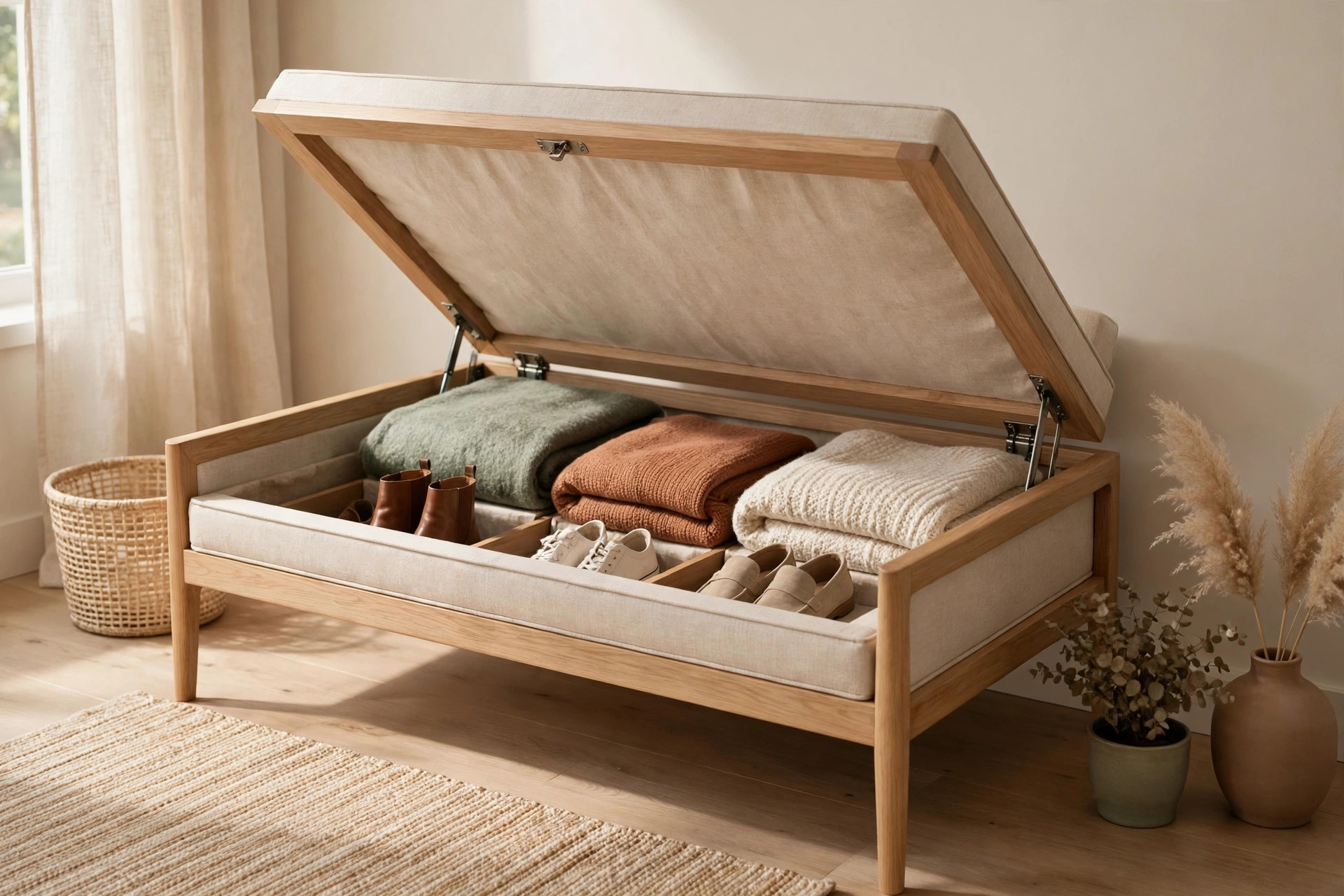
Lift-top benches: the hidden compartment that holds the clutter
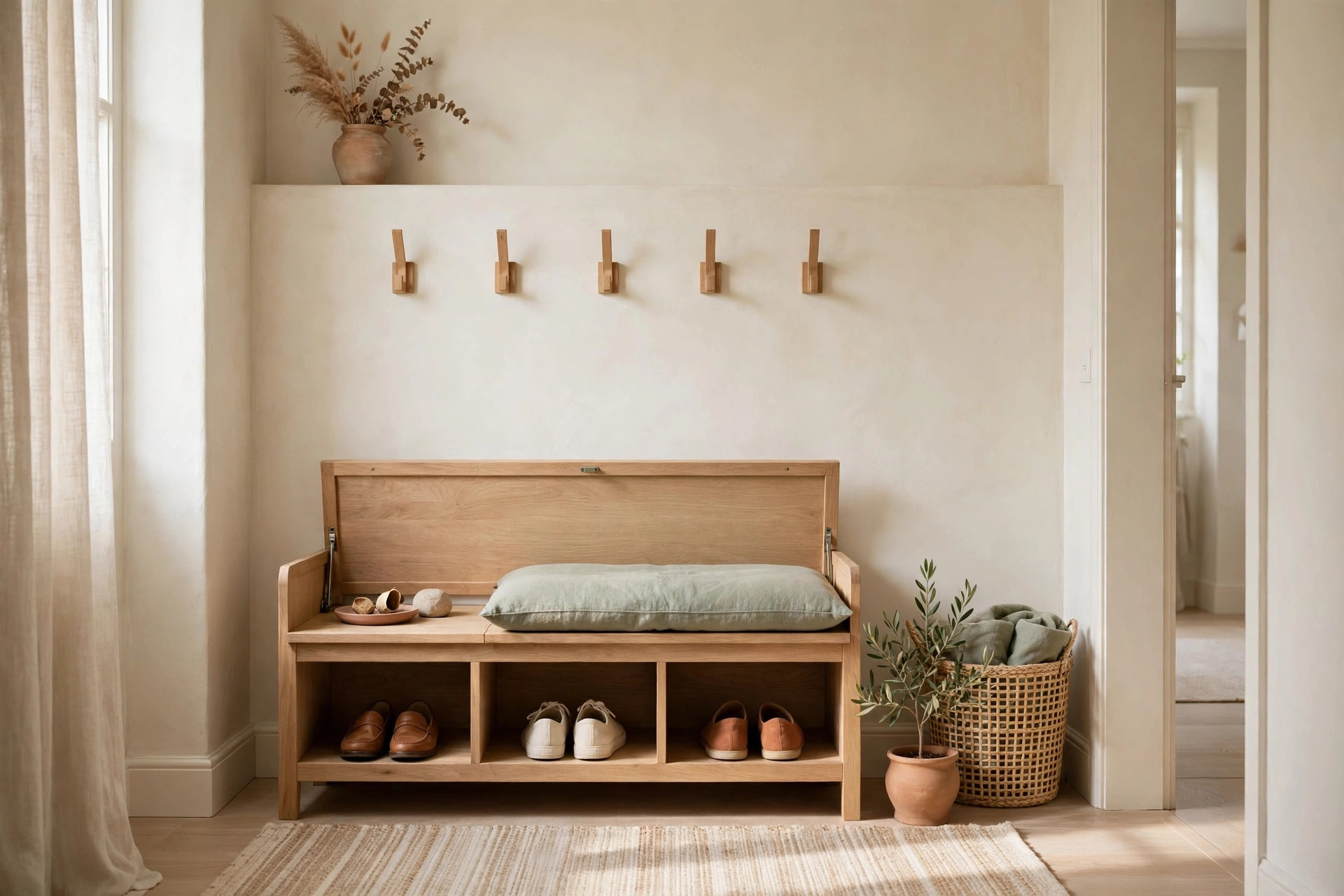
A lift-top bench is the simplest hidden storage. The seat hinges up, and everything you want out of sight — dog leashes, reusable bags, winter hats, the spare umbrella — drops into one deep compartment. Nothing is visible from the hallway.
3. Choose a lift-top bench with a stay-open hinge
A cheap lift-top lid slams shut on fingers and on whatever you are putting away. Look for a soft-close or stay-open hinge, the kind used on toy boxes. The lid should hold itself open at about 90 degrees so you can load it with both hands. Test it in the store: lift the lid halfway and let go. If it stays, buy it. If it drops, skip it.
4. Divide the compartment with a removable box
One big empty compartment turns into a junk drawer fast. Slide a shallow open-top box or fabric bin inside, about 12 inches wide, to hold the small things — gloves, scarves, sunscreen, the spare house key in its pouch. The rest stays free for bulky items like a folded raincoat. When the box gets messy, lift it out, sort it on the kitchen table, and drop it back in.
Shoe cubbies under the seat: pairs off the floor
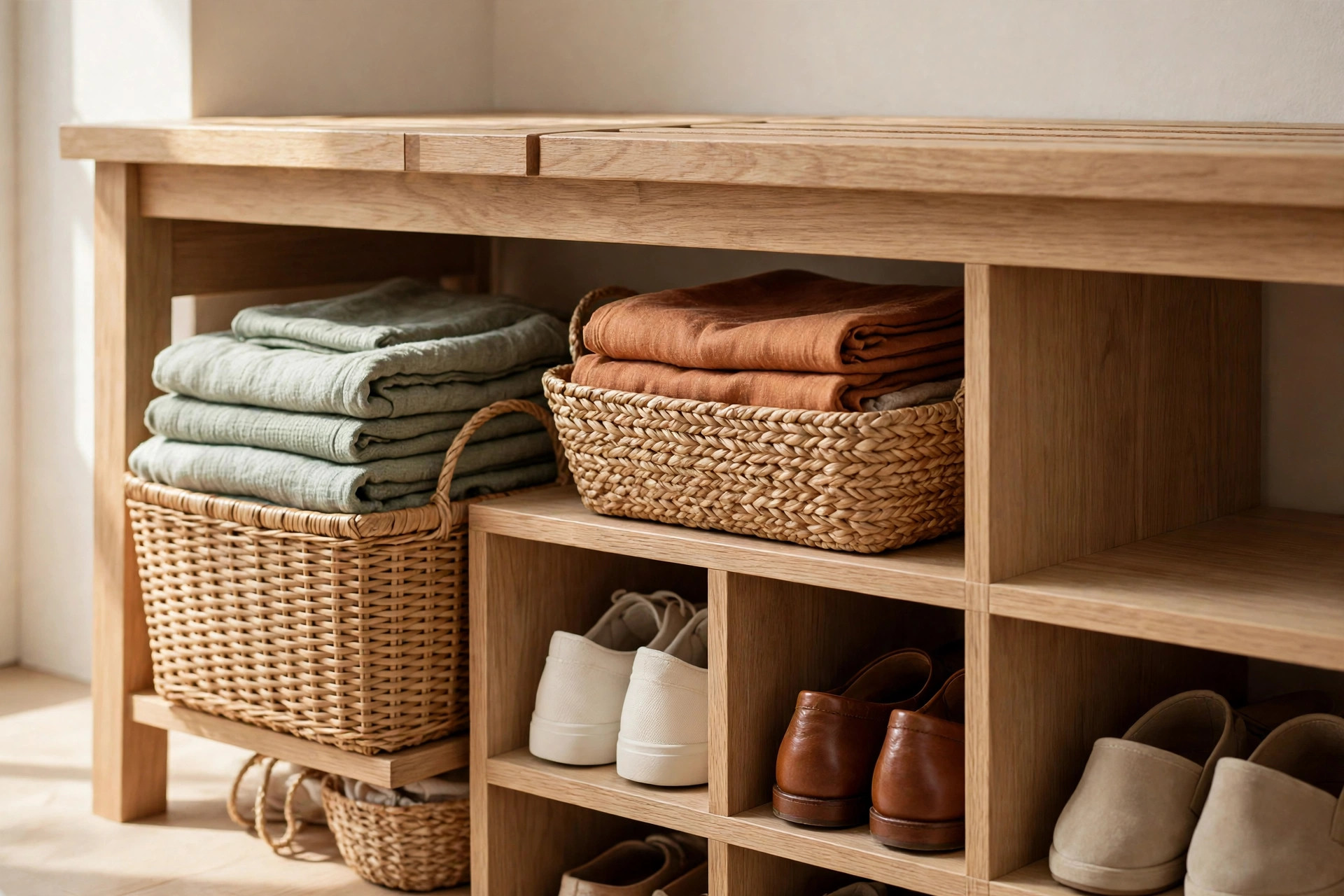
Open cubbies are the fastest shoe storage there is — no doors to open, no lids to lift. Each pair gets its own slot, and the floor stays clear. The trade-off is visibility: cubbies look tidy only if every pair actually goes in its slot.
5. Size cubbies to your shoes, not to the bench
Most ready-made cubby benches have slots about 12 inches wide and 10 inches tall, which fits sneakers and flats but not tall boots or chunky winter shoes. Before you buy, measure your bulkiest pair. If your boots are taller than the cubby opening, store them elsewhere and reserve the bench for everyday shoes. Two cubbies per person is a realistic rule: one pair in use, one pair resting.
6. Add a boot tray under the bench for wet days
A low boot tray — about 30 by 15 inches — slides under an open-base bench and catches rain, snow, and mud before it reaches the floor. On dry days it stays tucked away; on wet days you pull it out and set the wettest pair on it. It also protects wood floors from winter salt and grit. For more ways to end the door pile, see 18 shoe storage ideas for small apartments (no pile by the door).
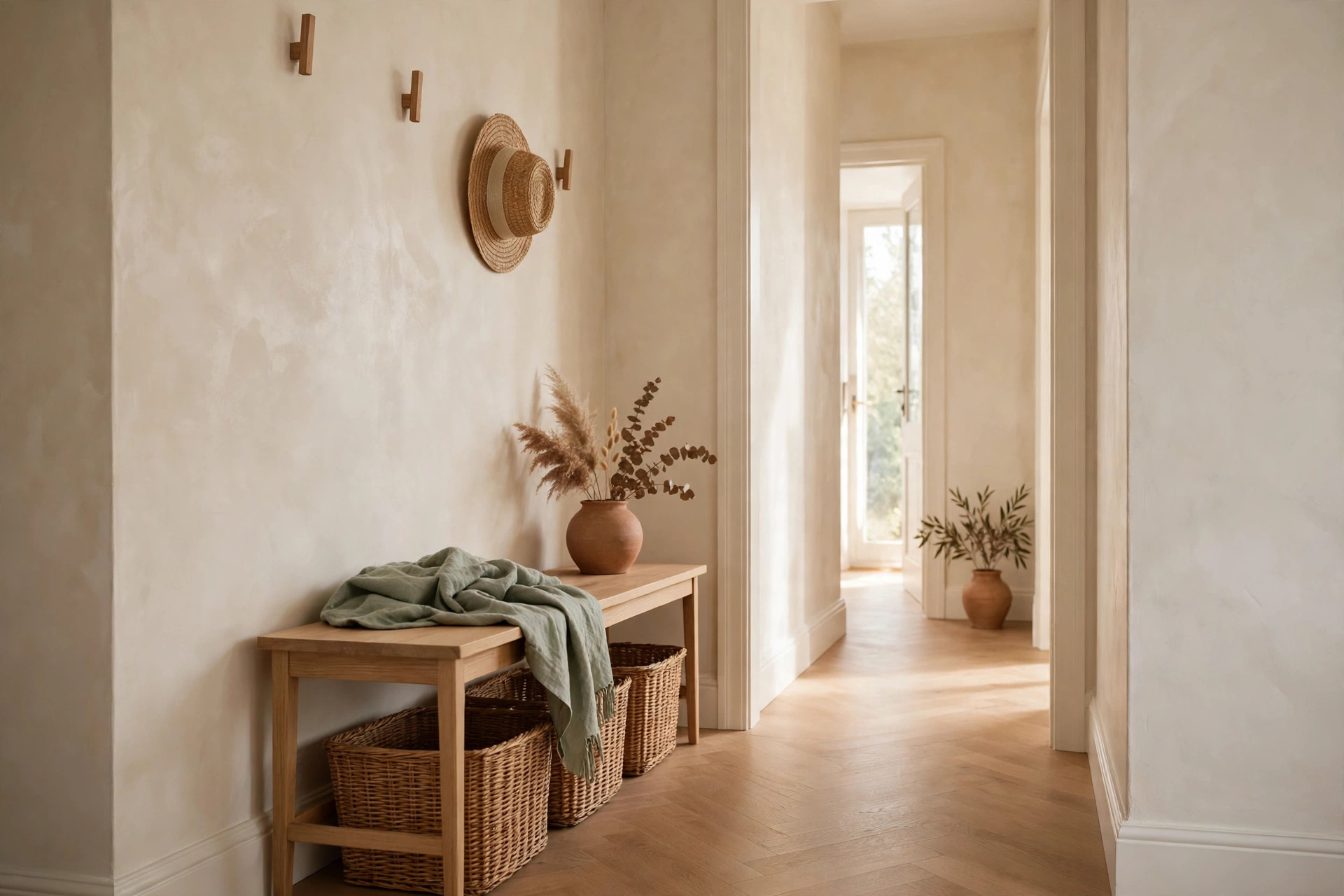
Slim benches for halls under 3 feet wide
A hall under 3 feet wide leaves almost no room for furniture. A standard 18-inch-deep bench would leave only 18 inches of walkway — too tight for carrying a laundry basket or a stroller. Slim benches, at 11 to 14 inches deep, are built for exactly this problem.
7. Go 12 inches deep and wall-mounted if you can
A bench 12 inches deep still seats an adult comfortably for the 30 seconds it takes to put on shoes, and it leaves a 24-inch walkway in a 3-foot hall. A wall-mounted (floating) bench is even better: with no legs touching the floor, you can sweep underneath it and slide a slim shoe tray or slippers under the seat. If your lease allows two screws into a stud, a floating bench is the best upgrade for a narrow hall.
8. Pick a bench with a back ledge, not a backrest
A full backrest eats 3 to 4 inches of depth and pushes you forward off the seat. In a narrow hall, a better option is a low back ledge — a 2-inch raised lip at the back of the seat. It stops cushions and bags from sliding off, gives you something to lean a pillow against, and costs almost no depth. Pair it with hooks above, and the ledge doubles as a narrow shelf for a small plant or photo.
Bench + hooks combo: the full drop zone in one wall
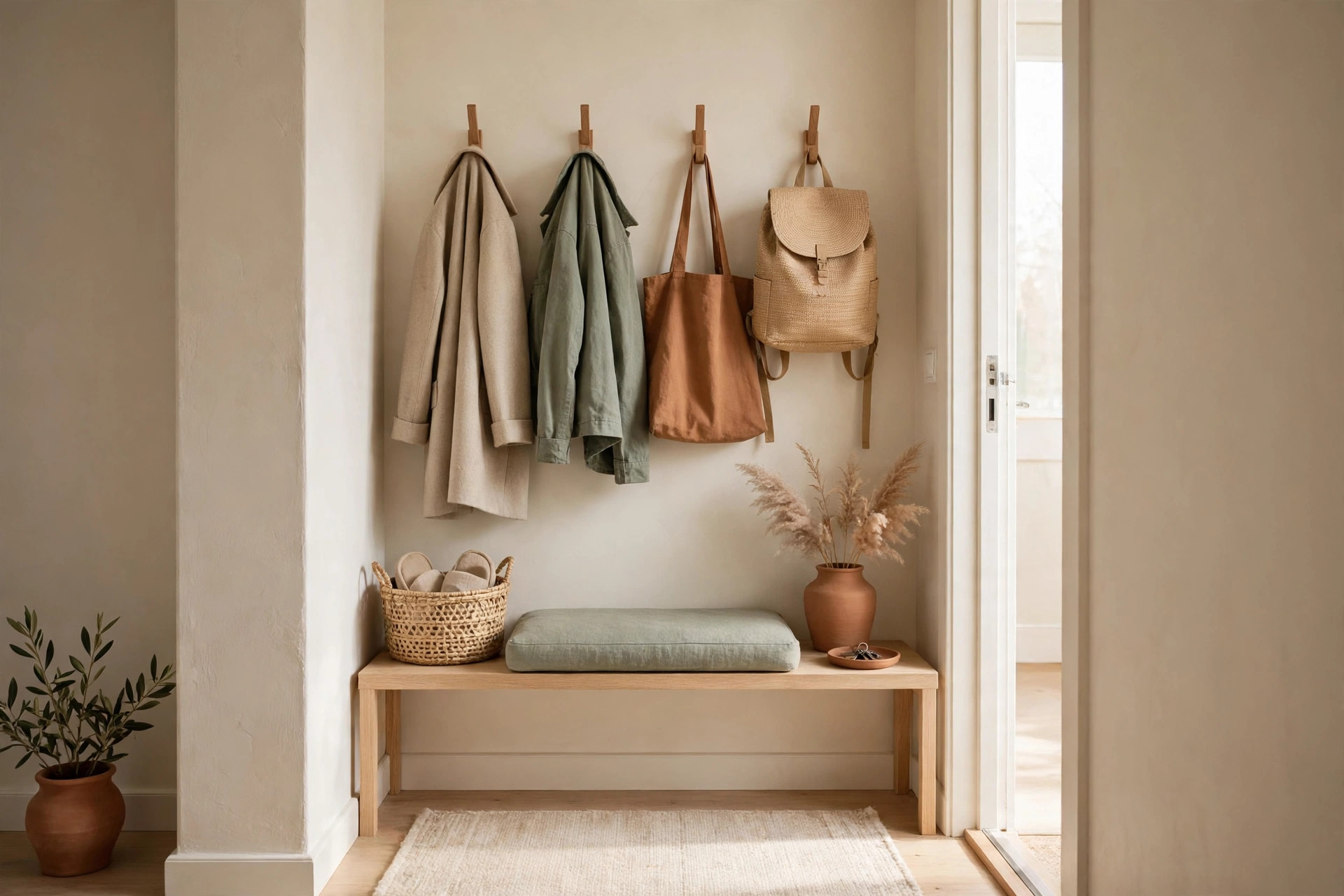
A bench alone handles sitting and shoes. Add hooks above it and the same stretch of wall handles coats, bags, and hats too. The whole drop zone fits on one wall, which is exactly what a small entryway needs.
9. Mount hooks 60 inches from the floor, 8 inches apart
Hooks at about 60 inches high are reachable for most adults and out of reach of toddlers who would pull coats down. Space them about 8 inches apart so a winter coat on one hook does not swallow the next. One hook per person, plus one spare for guests, is enough — more hooks just invite more clutter. A bench with a matching hook rail sold as a set keeps the wood tone consistent, which matters in a small space.
10. Add a shelf above the hooks for the things you grab last
A single shelf mounted 12 inches above the hook rail holds the items you reach for as you leave: sunglasses, a hat, the dog’s leash, a small basket for outgoing mail. Keep it shallow — 6 to 8 inches deep — so it does not crowd the hooks below. Check that it clears your longest coat by at least 2 inches, or it will push coats forward off their hooks. If your entryway has no closet at all, pair this wall with the strategies in 16 entryway coat storage ideas for apartments without a closet.
Baskets and bins inside the bench: what goes where
Open benches with shelves underneath work best when each shelf has a basket or bin. The basket hides the mess, and its position tells everyone in the house where things belong.
11. Assign one basket per person, one bin per category
Give each person a basket for their own gear, then add one shared bin for the household stuff that belongs by the door — reusable shopping bags, the umbrella, the pet’s leash and treats. Baskets should be about 2 inches narrower than the shelf opening so they slide in and out without catching. Woven seagrass or cotton rope baskets look like decor; clear plastic bins make it obvious when something is missing.
12. Label the bins you cannot see into
If you use solid baskets or fabric bins, label them. A simple tag tied to the handle — “Shoes,” “Bags,” “Winter” — is enough. Without labels, a solid bin becomes a mystery box within a month, and nobody opens mystery boxes. Rotate the contents twice a year: winter gear comes out in October, summer gear goes in, and anything nobody used in six months leaves the bench.
Renter-safe benches: freestanding, no drilling, moves with you
Renters cannot always mount a floating bench or a hook rail. The good news is that the best small entryway benches are freestanding — they need nothing from the wall at all.
13. Choose a freestanding bench with a weighted base
A lightweight bench slides across the floor every time someone sits down hard or a child climbs on it. Look for a bench that weighs at least 25 pounds, or one with rubber feet and a low center of gravity. A bench with storage inside is naturally heavier once loaded, which helps.
14. Use a leaning hook rail instead of a mounted one
If you cannot drill for hooks, use a leaning ladder-style rail or a freestanding coat rack placed directly behind or beside the bench. A leaning rail holds four to six hooks without a single screw. It also moves with you: when you move apartments, the bench and the rail go in the same load. Keep the rail narrow — under 24 inches wide — so it does not crowd the bench.
Styling a small bench so it looks like furniture, not storage
A storage bench only works if you actually want it in your hallway. The difference between “storage unit” and “furniture” is styling: a cushion, a throw, and one or two objects that have nothing to do with storage.
15. Add a slim cushion and one throw, nothing more
A cushion 2 to 3 inches thick makes the bench comfortable enough to sit on every day, and it hides the lid seam on a lift-top bench. Pick a washable fabric — entryways get dirty — in a color that matches the wall or the floor, not a loud accent. One folded throw draped over the end adds softness. Stop there. A bench buried under pillows and blankets is a bench you cannot sit on.
16. Style the top with two objects, not five
Two objects are enough: a small tray for keys on one end and a single vase, candle, or framed photo on the other. The middle stays empty so there is always somewhere to set a bag. If the bench top becomes a display shelf, it stops being a seat — and a bench nobody sits on is just a low shelf with a cushion. Keep the top clear enough that you could sit down without moving anything.
Mistakes to avoid
Buying before measuring. The most common error is ordering a bench that is 2 inches too deep or 4 inches too wide for the hall. Measure the hall width, the door swing, and the space the bench needs when its lid opens. Write the numbers down before you shop.
Choosing open shelves with no baskets. An open shelf under a bench collects shoes, bags, and clutter in plain sight. Without baskets, the bench looks messier than having no bench at all.
Picking a seat height that is wrong. A seat height of 17 to 19 inches is right for most adults. Taller than 20 inches makes your feet dangle; shorter than 16 inches makes standing up awkward.
Ignoring the door swing. A bench placed where the front door swings open will get hit, scratched, or block the door. Stand in the doorway and swing the door fully open before you decide where the bench goes.
Storing everything in the bench. The bench holds the daily essentials — shoes, bags, keys, the coat you wear today. Seasonal gear, spare shoes, and anything you use less than once a week belongs in a closet or under the bed.
Frequently asked questions
Can a small entryway bench fit in a hallway under 3 feet wide?
Yes, if you choose a slim bench 11 to 14 inches deep. A 12-inch-deep bench leaves a 24-inch walkway in a 3-foot hall. Wall-mounted benches work best here because the floor underneath stays open for a shoe tray or slippers.
What is the best storage bench for a rental apartment?
A freestanding lift-top or cubby bench that needs no wall mounting. Look for one that weighs at least 25 pounds so it does not slide, with rubber feet to protect the floor. Pair it with a leaning hook rail if you cannot drill for hooks.
How many pairs of shoes fit in an entryway bench?
A 36-inch bench with cubbies typically holds four to six pairs of everyday shoes. A lift-top bench of the same size holds about the same, plus bulky items like a folded raincoat. Plan on two cubbies per person and store off-season shoes elsewhere.
Is a lift-top bench or a cubby bench better for a small entryway?
Lift-top benches hide clutter completely and suit people who want a clean look, but you have to lift the lid to reach anything. Cubby benches are faster — you slide shoes in and out without opening anything — but they only look tidy if every pair goes in its slot. If your household is good at putting things away, choose cubbies; if not, choose a lift-top.
Conclusion
A small entryway bench with hidden storage does the work of three pieces of furniture in the footprint of one: a seat, a shoe rack, and a closet shelf. Pick the style that matches your hall — lift-top for a clean look, cubbies for speed, slim and floating for narrow halls — measure before you buy, and give every item in the bench a home. Browse more ideas for tight spaces in our small-spaces collection, and save this pin for later so you have the measurements handy when you shop.