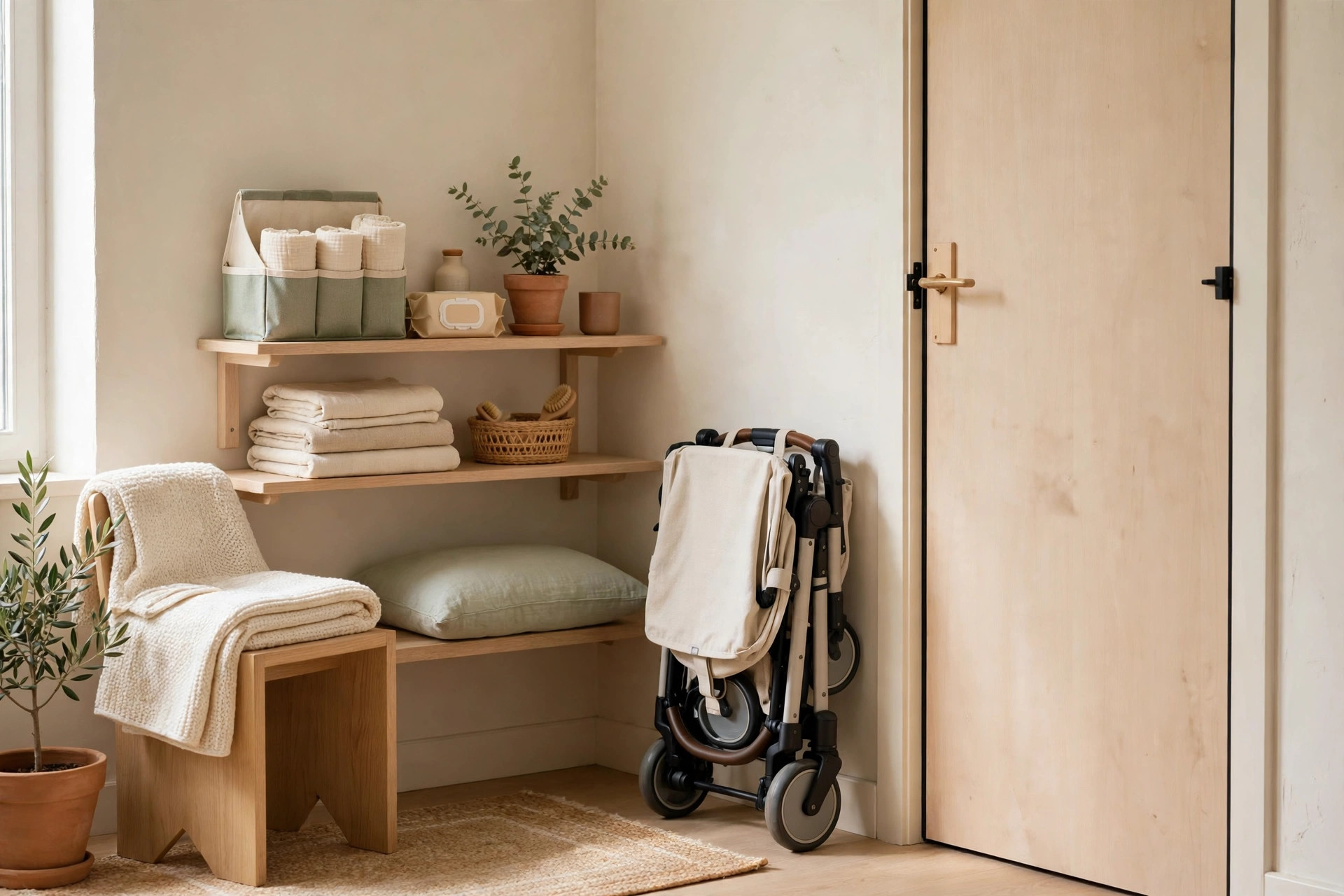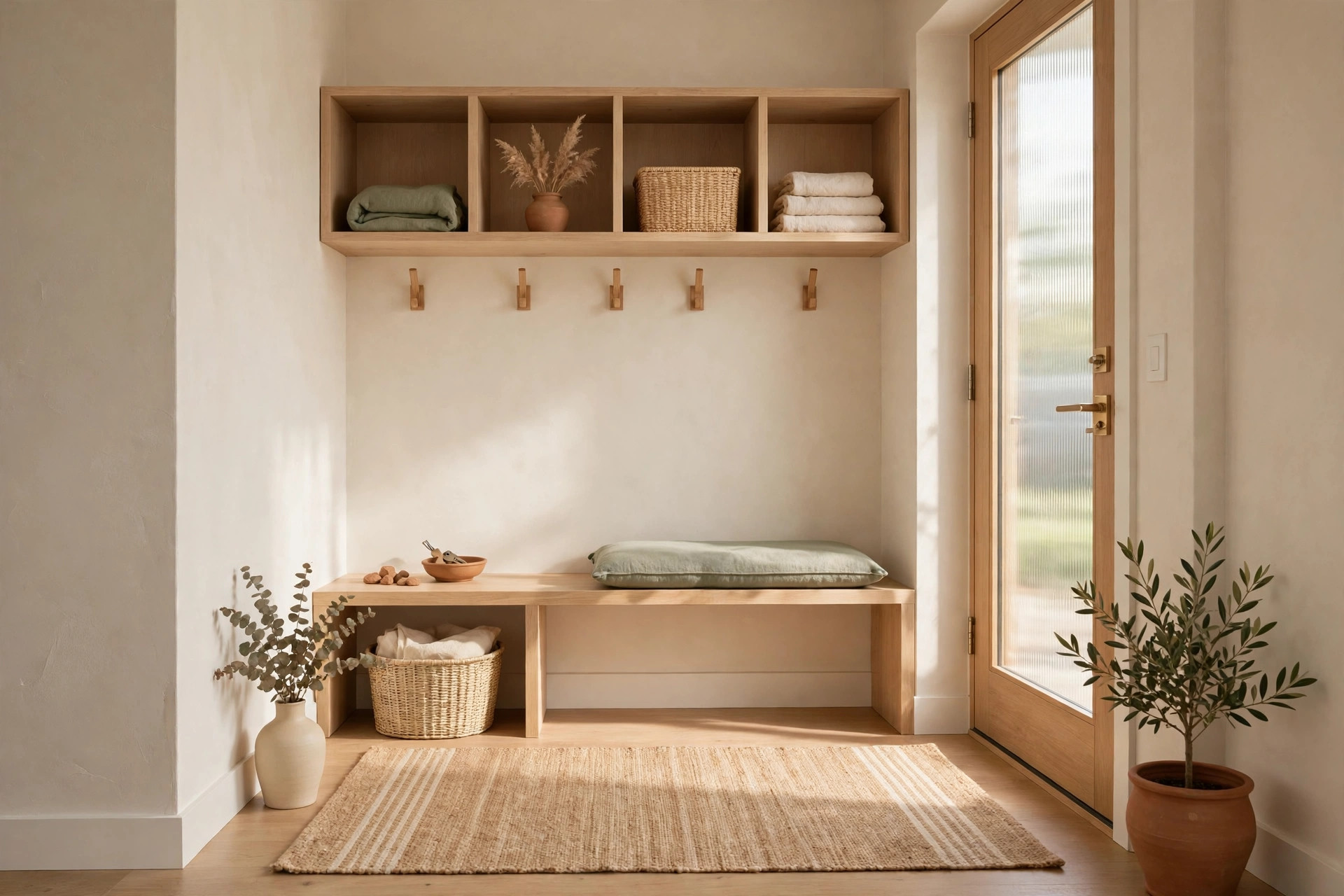
A mudroom is the hardest-working room in a house: it catches coats, shoes, and wet gear before they invade the living space. Apartment dwellers almost never get one. What you get instead is a front door that opens straight into the living room, a pile of shoes by the threshold, and keys that vanish every morning. These small mudroom ideas apartment dwellers actually use rebuild the function of a mudroom in a few square feet of entryway — a defined zone that catches and contains everything at the door, so the rest of your home stays calm. No dedicated room required, no landlord disputes, and every idea below works in a rental.
The mudroom mindset: catch-and-contain at the door
A real mudroom runs on one principle: every item gets a home within arm’s reach of the door. Coats, shoes, bags, keys, mail, the dog leash — if it crosses the threshold with you, it lands here, not ten feet into the living room. You do not need a whole room for that. You need 12 to 18 inches of depth along one entryway wall and one labeled spot per item.
1. Give every person one landing tray
Shared surfaces become shared messes. Set out one shallow tray or small lidded basket per household member — roughly 12×9 inches, labeled. Keys, wallet, sunglasses, and today’s mail live in the tray. Nobody searches the whole apartment anymore; they check their tray.
2. Apply the 12-inch rule to everything
Measure 12 inches out from the wall and treat that strip as your mudroom footprint — deep enough for a slim shoe cabinet, a row of boot trays, a narrow bench, or a leaning coat rack. A disciplined footprint means the zone never swallows the hallway. If an item cannot live inside the 12-inch strip, it belongs elsewhere.
Defining the zone without walls: rugs, paint, furniture
A mudroom without walls still works if the zone reads as one place. Signal that this patch of floor is the entry system and everything beyond it is the clean zone — once the boundary is visible, the habit of dropping gear inside it sticks.
3. Let a rug draw the border
A low-pile, washable runner or 3×5-foot rug marks the zone better than anything else. Pick a dark pattern that hides footprints and keep it fully inside the door swing. Park the boot tray at one end of the rug so the visual frame contains the clutter. Washable is non-negotiable — this rug does the dirtiest job in the apartment.
4. Divide the entry with furniture, not walls
Float a slim open bookcase, bench, or low cubby unit perpendicular to the wall, two to three feet from the door. The furniture back becomes your mudroom wall: hooks on one side, seating on the other. A 30-inch-wide unit separates the zones without blocking light or traffic.
For a door that opens directly into the main room, 15 Small Entryway Organization Ideas (Even With No Foyer) covers slim consoles and daily resets for that exact layout.
Wall lockers and cubbies scaled for apartments
Vertical lockers are the heart of a real mudroom, and apartments have more vertical space than floor space. Wall-mounted lockers leave the floor clear underneath for a boot tray or a bench that slides under.
5. Install a narrow hall tree, not a wide one
Apartment-scale hall trees run 24 to 30 inches wide, about 12 inches deep, and 70+ inches tall. Choose the bench-and-tower style: hooks up top, cubbies in the middle, storage bench underneath. One 28-inch unit gives two adults a full station in less floor space than a dining chair.
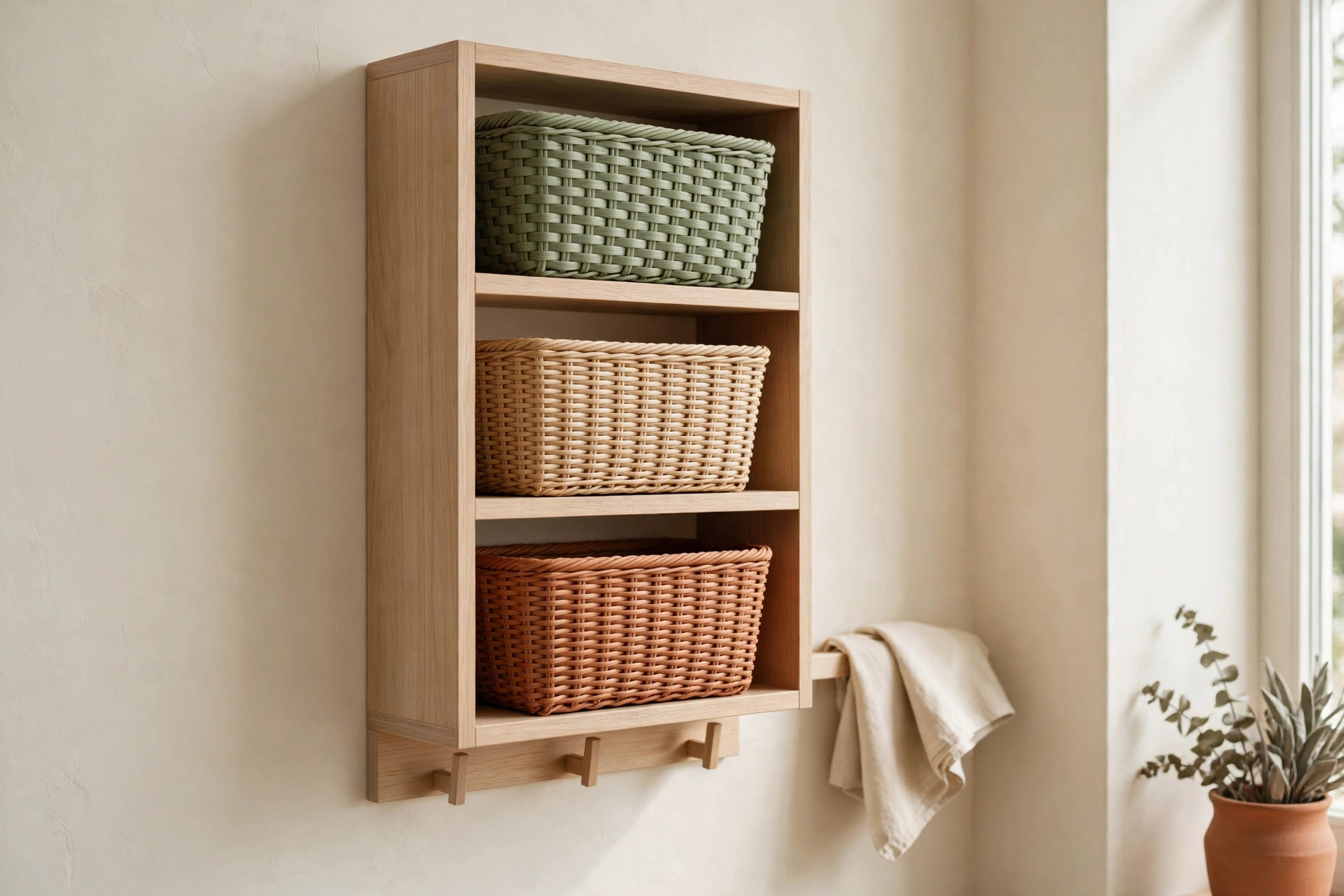
6. Build a wall-mounted locker shelf with hooks
Mount a floating shelf about 66 inches high — above the splash zone, within hand’s reach — and screw four to five double hooks into the studs or the shelf’s mounting board. Add a shallow cubby box for hats and gloves. Because it is wall-mounted, drips land on a tray below instead of a wooden base.
7. Use the back of the entry closet door
If you have a coat closet but no mudroom, hang a fabric or wire cubby organizer inside the closet door for reusable bags, scarves, the umbrella, and pet waste bags. Coats keep the closet; small daily items get their own lockers. See the no-drill rules in Over-the-Door Organization Ideas for Every Room.
Boot trays and wet-weather gear stations
Wet weather separates a mudroom from a coat rack. A real mudroom catches rain, snow, and mud before they touch the floor — and an apartment entry needs that protection more, since the floor beyond is your living space.
8. Size a boot tray with a real lip
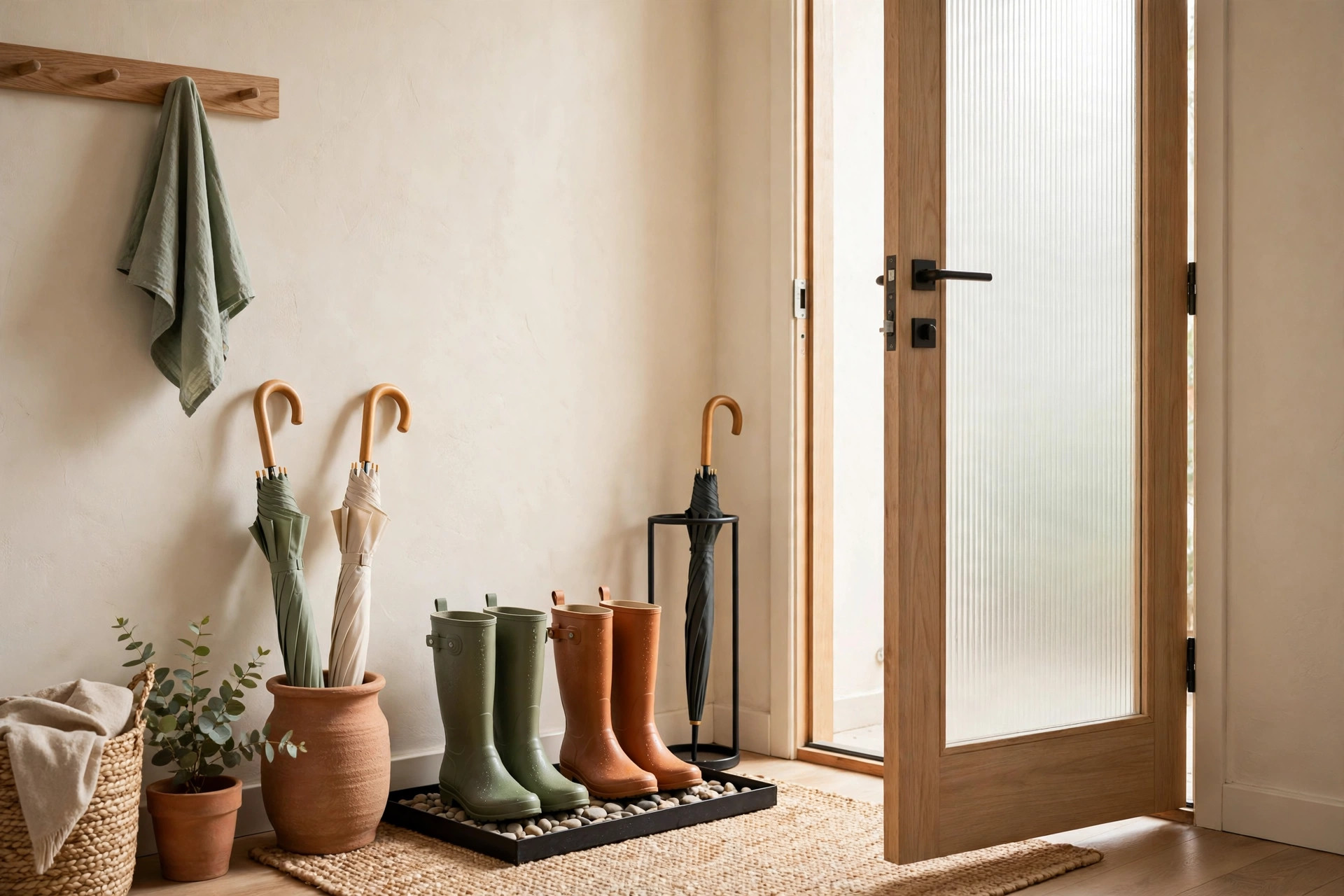
A proper boot tray holds at least one inch of water with raised edges on all four sides — flat mats are not trays. Pick a 36- to 42-inch tray for two adults with a ridged surface so shoes drain. In rentals, set the tray on a washable rug layer so splashes land on launderable fabric, not the landlord’s floor.
9. Build a drip-dry corner for umbrellas and leashes
Set one tall, narrow umbrella stand (about 8 inches in diameter) inside the zone, plus a self-adhesive hook for the dog leash above the tray. Wet umbrellas dry standing up instead of dripping across the room, and the leash hangs where you grab it on the way out. In freezing climates, a compact electric boot dryer sits on the tray edge and dries boots overnight.
For the rotation system that keeps only the current week’s pairs at the door, 18 Shoe Storage Ideas for Small Apartments (No Pile by the Door) covers vertical towers and seasonal swaps.
The command center: keys, mail, and charging in one spot
Every mudroom needs a nerve center where the small things land and tomorrow gets staged. In an apartment, one wall panel — roughly cutting-board size, at eye level — is enough.
10. Mount a command rail for keys, mail, and sunglasses
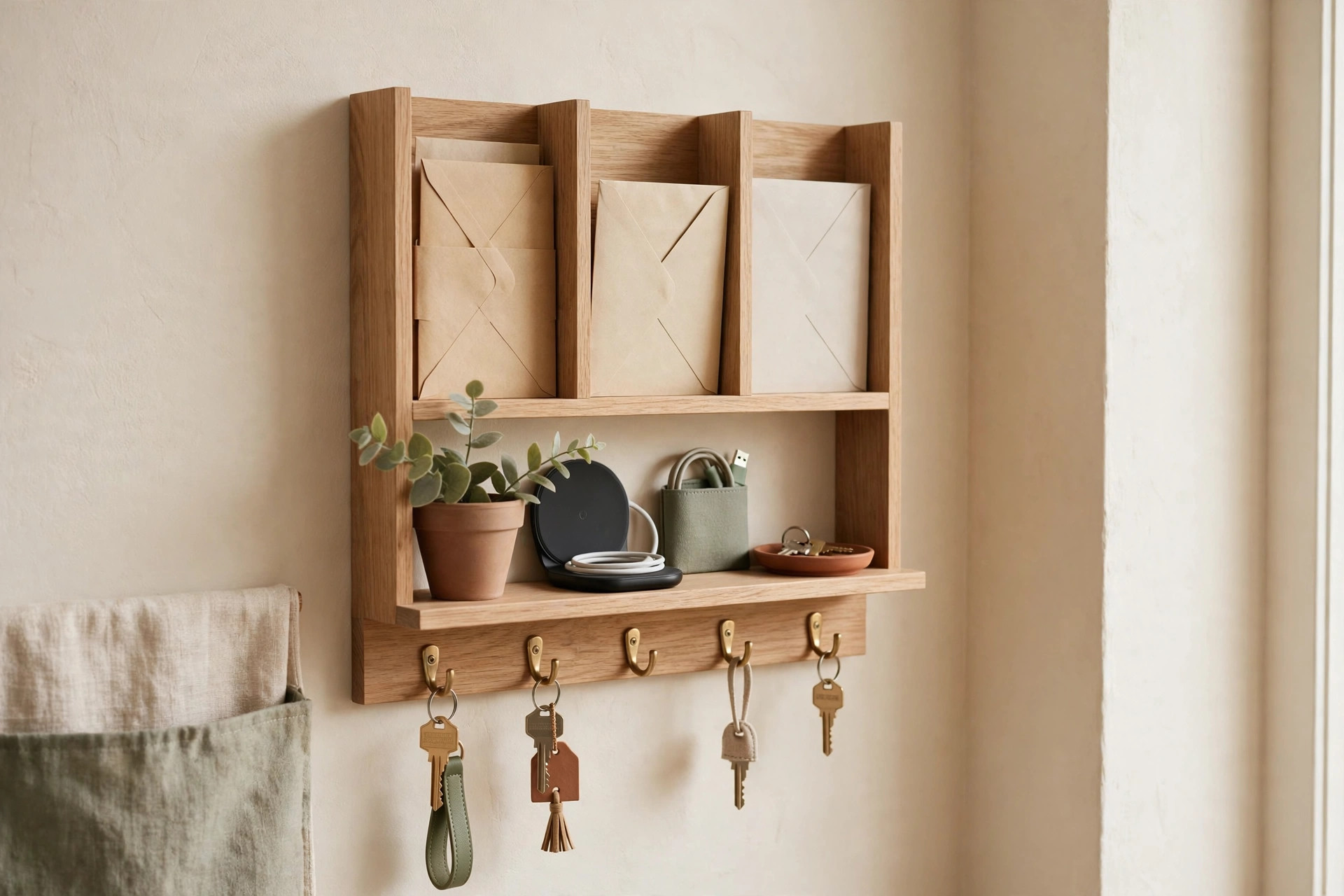
A 20- to 24-inch rail with five hooks and a mail pocket handles the daily carry: keys on hooks, mail in the pocket, sunglasses on their own hook. Mount it at 60 inches — visible on entry, reachable without stooping. Sort mail the second it lands: junk to recycling, bills in the pocket, nothing sitting longer than a week.
11. Add a charging spot where devices sleep by the door
Plug a compact multi-port charger into the outlet nearest your rail and rest a small dock beside it. Phones, earbuds, and the power bank charge where you drop your keys — no more dead-phone mornings. A dock with short cables keeps cords off the console.
12. Reserve one hook for tomorrow’s go-bag
Dedicate the last hook — or one cubby — to whatever leaves with you tomorrow: the gym bag, the work tote, the school backpack. Pack it the night before. This one habit turns the mudroom from storage into a system.
Seasonal swaps: mudroom gear that changes with weather
Apartment mudrooms are too small for year-round gear, so they change with the season: only the current season lives in the entry zone. Everything else goes to deep storage and swaps in during a 20-minute changeover.
13. Rotate cubby bins twice a year
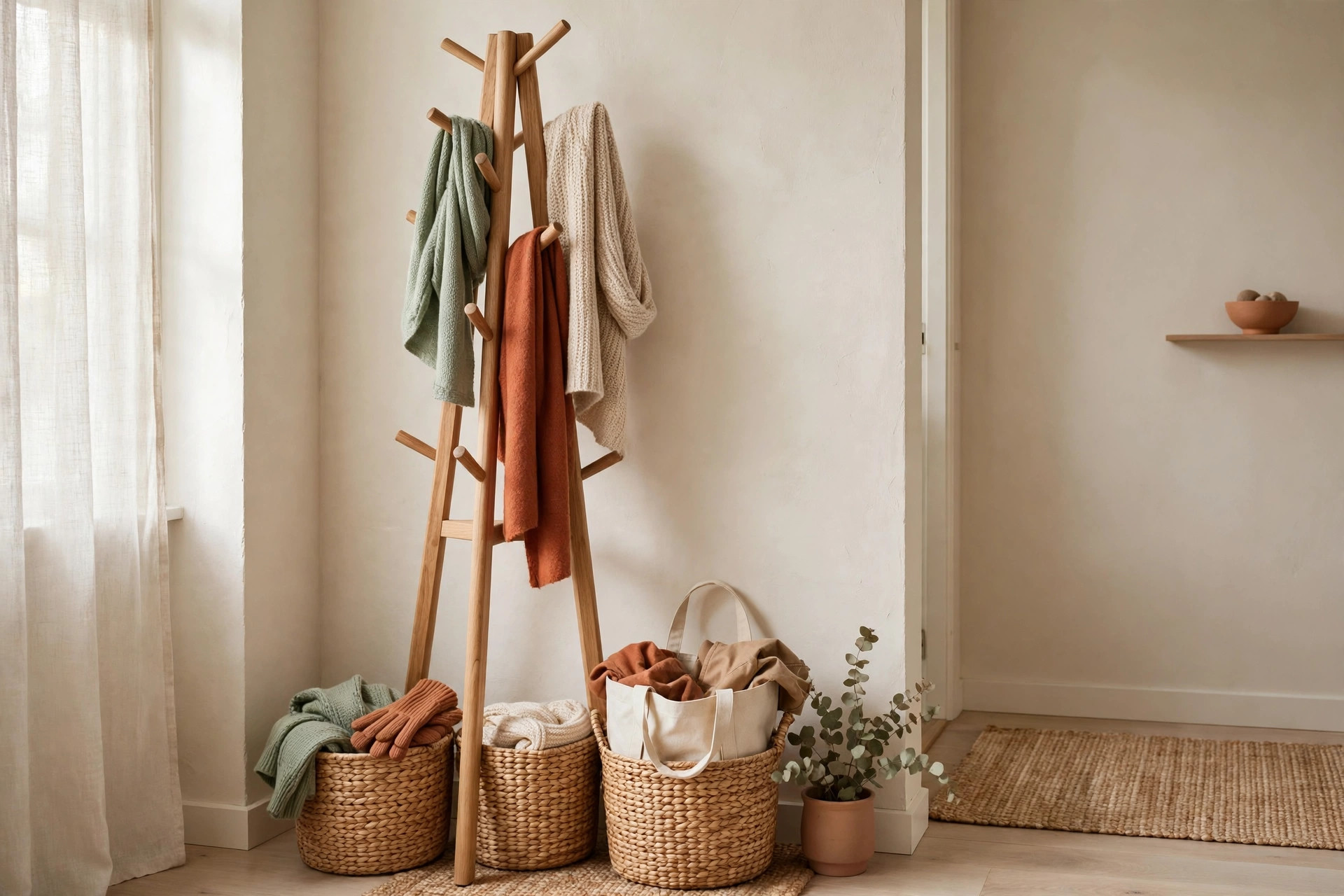
Keep two labeled bins per person in the zone — or one shared shelf — with only the current season’s small gear: sunscreen in summer, gloves in winter. When the weather turns, the bins move to a closet in one trip. Twenty minutes, twice a year.
14. Swap coat hooks, not closets
Give the current season’s coats the prime hooks and move last season’s to the back of the closet. Heavy winter coats off the hooks in April frees two to three spots each; back out in October. A garment bag keeps stored coats clean.
Rental-friendly builds: freestanding systems that move with you
Renters cannot always drill or mount — but freestanding systems lean, stand, and slot in with zero wall damage, and they move with you when the lease ends.
15. Choose a freestanding cubby bench with lockable wheels
A two- or four-cubby bench on locking casters is the ultimate renter’s base: a seat for lacing shoes, storage for lidded gear bins, and it rolls aside for cleaning. When you move, the whole mudroom rolls onto the truck in one piece.
16. Stack a no-drill leaning locker tower
Leaning ladder-style shelves rest against the wall at an angle on rubber feet — no screws, no damage. Hats on the narrow top shelves, folded bags and gloves in the middle, a boot tray tucked underneath. It works in dorms, sublets, and strict rentals.
Mistakes to avoid (and what NOT to buy)
Do not buy the oversized farmhouse hall tree. A 48-inch-wide solid-pine hall tree will swallow an apartment entry and block the door swing. Anything over 32 inches wide is too big.
Do not skip the tray and buy the mat. A flat doormat lets meltwater run straight onto the floor. The lipped boot tray costs only slightly more and is the whole point of the wet-weather station.
Do not enclose wet gear. Shoe cabinets are wonderful — for dry shoes. Wet boots and dripping umbrellas need open air; close the cabinet and you build a mildew incubator.
Do not let the zone sprawl. The mudroom’s greatest enemy is success: everyone adds one more item until it overflows. Once a month, walk the zone with a bag and re-home anything not used at the door. Five minutes, monthly.
Do not buy single-purpose gadgets first. Use a plain hook and tray for two weeks before buying a key finder or umbrella dryer. Most mudroom problems are solved by a defined spot, not a device.
Frequently asked questions
Can you have a mudroom in a studio apartment?
Yes — a studio mudroom is a defined zone: a rug, a 12-inch strip along one wall, a wall rail for keys, and a boot tray. The freestanding and no-drill ideas above are designed for exactly this.
How do I stop shoes from piling up by the door?
Give each person a fixed door limit — two to three pairs — enforced by a boot tray sized for that number. When the tray is full, something goes to the closet. The limit, not the storage, ends the pile.
How do I build a mudroom without drilling any holes?
Use the freestanding builds: a cubby bench on locking wheels, a leaning locker tower, an over-the-door organizer, and a freestanding coat rack. Removable adhesive hooks rated for the weight handle the command rail without one hole.
How do I place a mudroom zone in an apartment with no foyer?
Use the first wall inside the front door — ideally the one you face on entry. A rug or furniture divider marks the boundary; idea 4’s divider creates the zone when the door opens straight into the living room.
A defined entry zone changes how your whole apartment feels: gear stops migrating into the living space, mornings get quieter, and the front of your home works as hard as a real mudroom. Browse the small spaces collection — and save this pin for later.