A baby does not arrive alone. The crib, the stroller, the bouncer, the bath tub, and roughly forty tiny outfits all show up at once — and in a one- or two-bedroom apartment, there is nowhere for them to hide. Small nursery storage ideas are not about buying more furniture. They are about giving every item a small, specific home so the nursery stays a nursery instead of swallowing the whole apartment. These 17 ideas use zones, a rolling cart, and a ruthless rotation system to keep baby gear under control. Start with the zones, then the cart, then the purge.
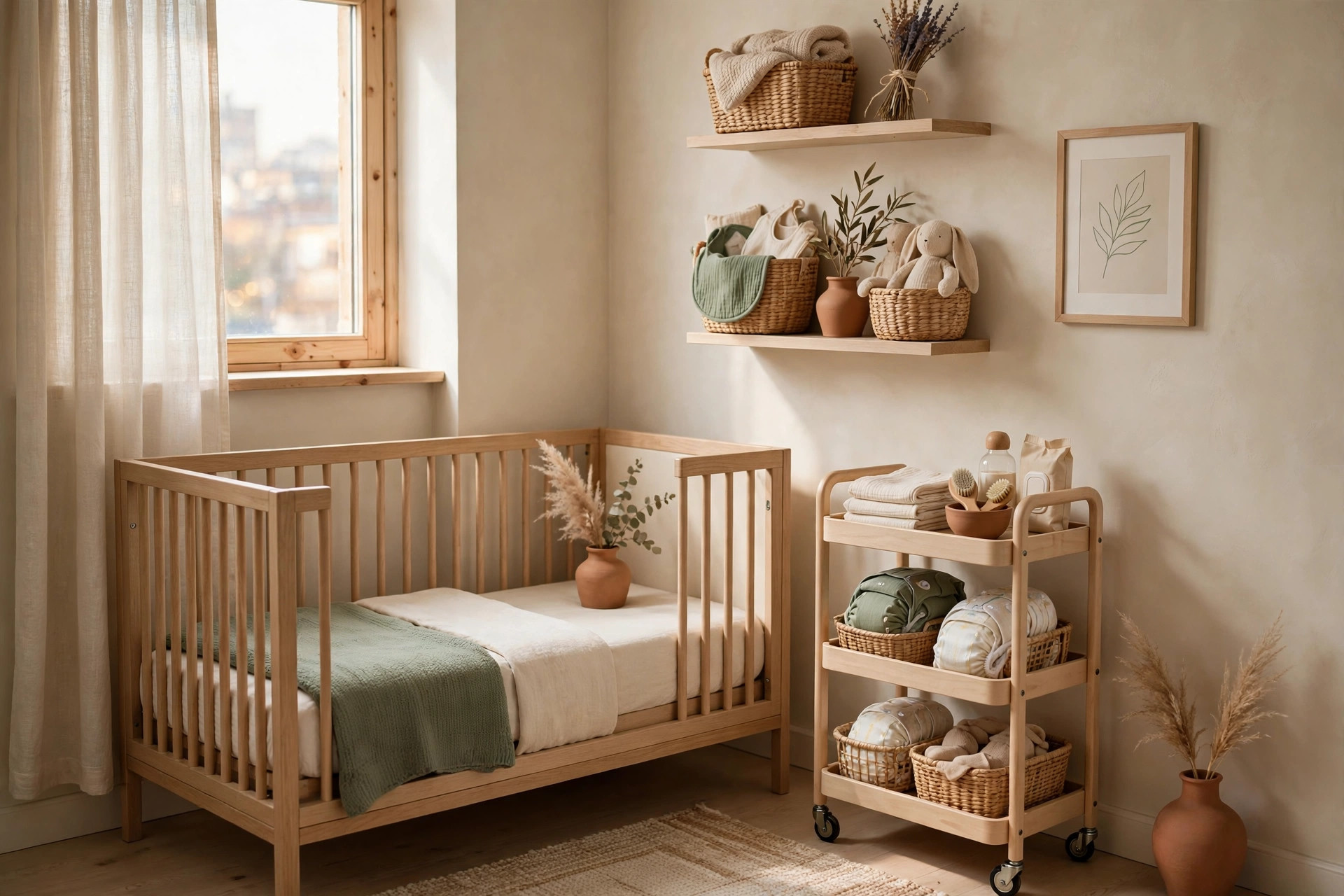
The nursery zone map: sleep, change, feed — in one corner
1. Draw the zones on paper before you buy anything
Measure your nursery corner and sketch it: crib against the longest wall, changing spot to the right, feeding chair nearest the door. This ten-minute sketch stops the most common mistake — a dresser blocking the crib rail or a glider that cannot rock. Leave at least 24 inches clear between the crib and the changing spot.
2. Give each zone one storage piece and nothing more
The sleep zone gets the crib and one under-crib bin, the change zone gets the rolling cart (see idea 5), and the feed zone gets a small side table or a chair-arm pocket. When the piece is full, something must leave before anything new comes in.
Crib-side storage: what lives within arm’s reach at 3 a.m.
3. Hang a crib-side pocket organizer on the outside rail
A fabric pocket organizer with 6 to 8 pockets, hung on the outside of the crib rail (never inside, where it becomes a hazard), holds two sleep sacks, a pacifier clip, a flashlight, and a spare fitted sheet — at hand height, with zero floor space.
4. Keep a lidded mini bin under the crib for night changes
Slide one low, lidded bin — about 24 by 12 by 6 inches — under the crib, holding three diapers, a travel pack of wipes, a change of pajamas, and a small trash bag. Everything for a night change lives in that one bin, so you never open a drawer in the dark.
The diaper station: a rolling cart beats a changing table
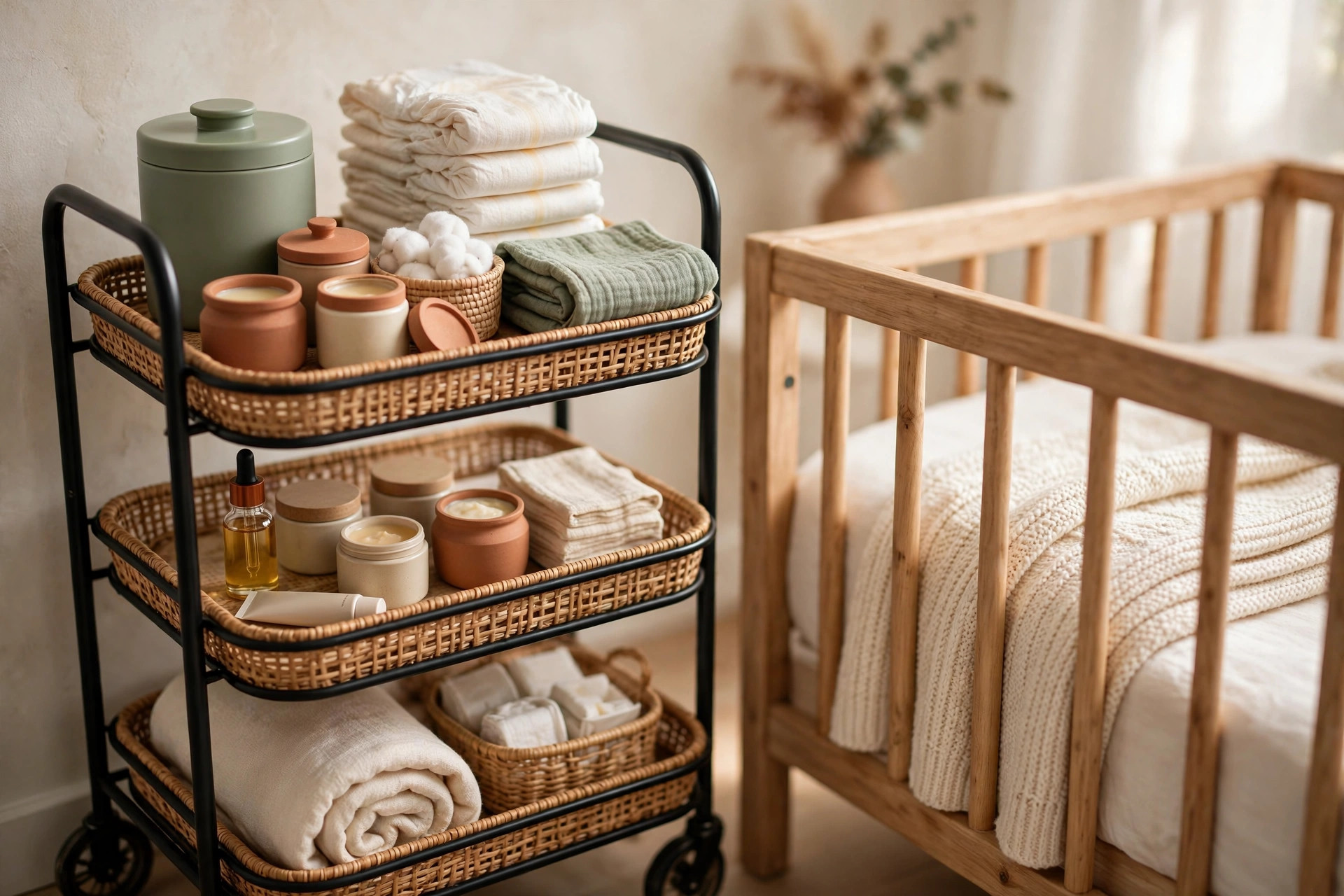
5. Build the cart in three tiers: top, middle, bottom
Stock the top tier with what you touch every change: diapers, wipes, and diaper cream. The middle tier holds the next change of clothes, a small towel, and a spare changing pad cover. The bottom tier holds the bulk stash — unopened diapers, wipe refills, and pail bags. What you reach for most sits at waist height; the heavy bulk sits low.
6. Park the cart between the crib and the closet
The cart’s home base is the gap between the crib and the closet door — a dead strip of floor 18 to 24 inches wide. Parked there, it is one step from the crib and one step from the closet, so you can grab a clean outfit and a diaper in the same trip.
Closet zones for clothes that are outgrown monthly
Babies outgrow clothes every six to eight weeks, so the closet is a conveyor belt, not a wardrobe.
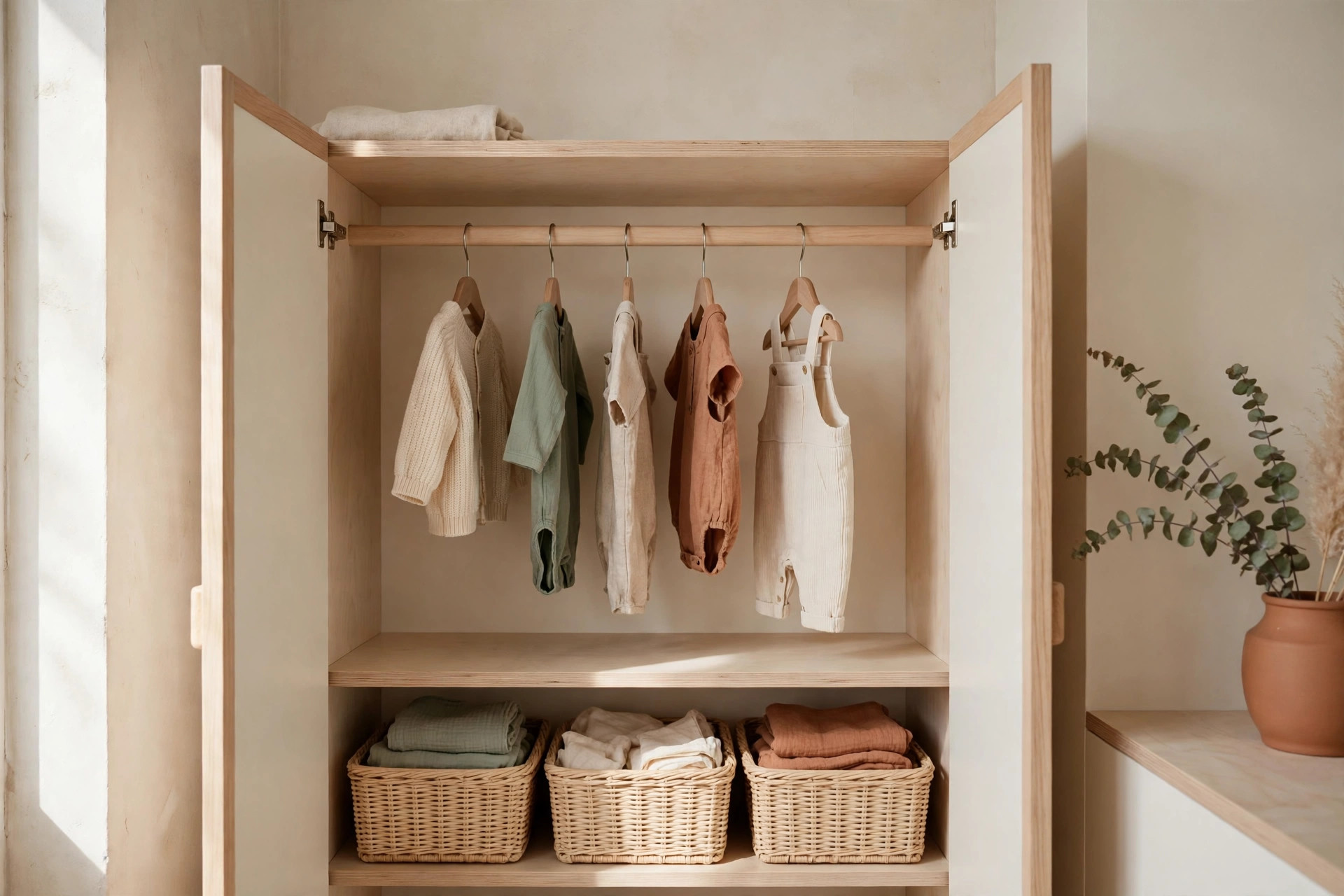
7. Divide the closet rod into three size zones with shelf dividers
Split the closet rod into three zones with shelf dividers: current size left, next size middle, outgrown right. Each zone gets about 10 to 12 hangers, no more. When the current-size zone empties, slide the next-size clothes left and the outgrown clothes into the purge bin. For more, see our 14 Kids Closet Organization Ideas for Small Bedrooms.
8. Use one labeled bin per size for everything that is not hanging
Folded clothes, socks, and hats live in small fabric bins on the closet shelf — one bin per size, labeled with masking tape and a marker. A bin holding about 8 to 10 folded outfits is the right size; anything bigger becomes a dumping ground.
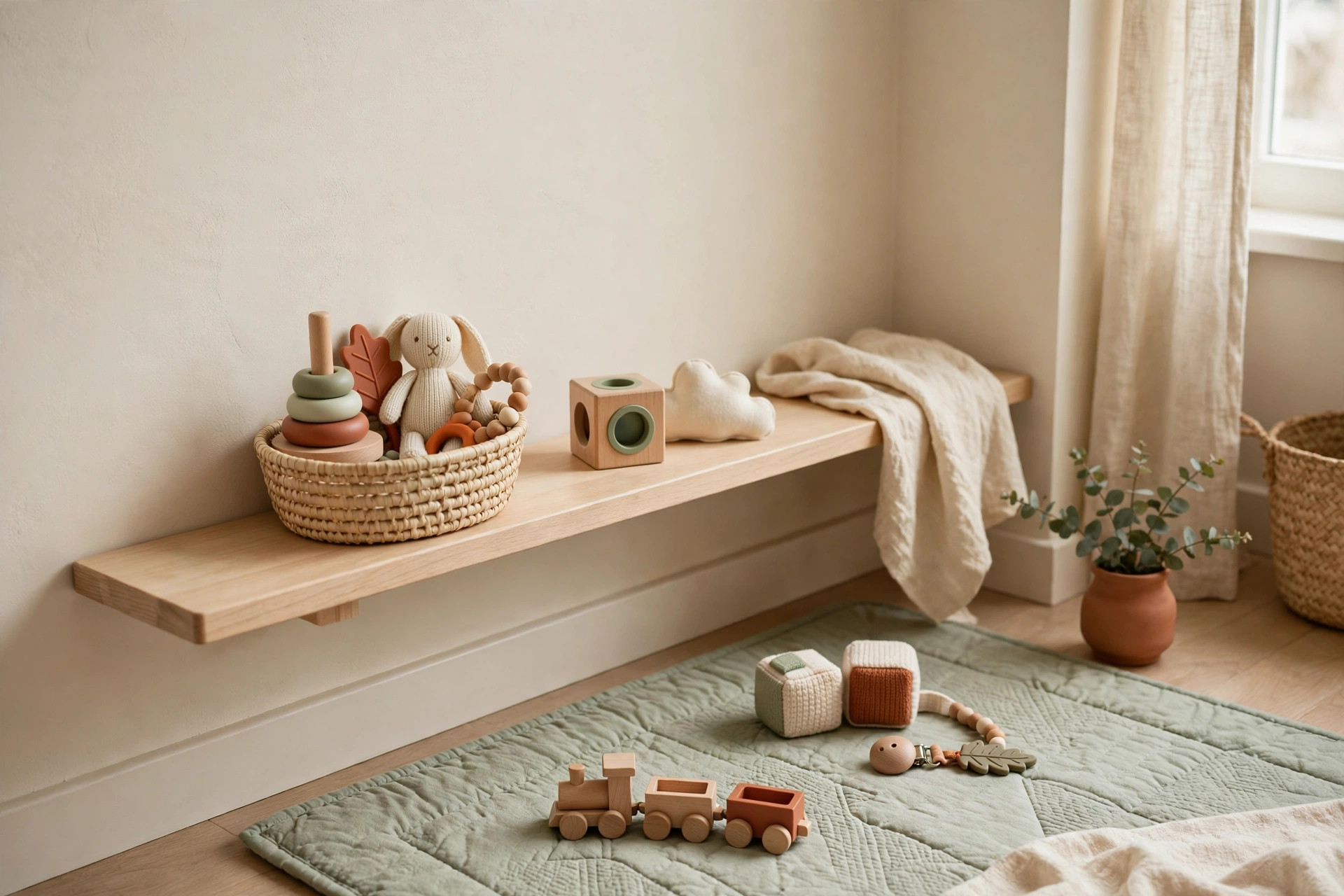
Toy rotation: 5 out, the rest stored
A baby plays with about five toys at a time; the rest sit on the floor. Rotate: five out, the rest stored, swapped weekly.
9. Keep a rotation bin on the top closet shelf
Choose one lidded bin — about 18 by 12 by 12 inches — and put every toy that is not in this week’s rotation inside it, on the top closet shelf. Label it “rotation” so nobody mistakes it for storage to unpack. When the bin is full, no new toy enters.
10. Swap five toys every Sunday, not whenever you remember
Every Sunday, put the five current toys back in the rotation bin and pull out five different ones. The swap takes three minutes and gives your baby “new” toys without spending a dollar. If a toy has sat in the bin for two full rotations without being missed, it goes in the purge bag. Our guide to 18 Kids Toy Storage Ideas for Small Living Rooms has more rotation ideas for when toys spill into the living room.
Vertical storage: wall shelves above the danger zone
The walls above about 48 inches — higher than a standing toddler can reach — are the only free real estate left.
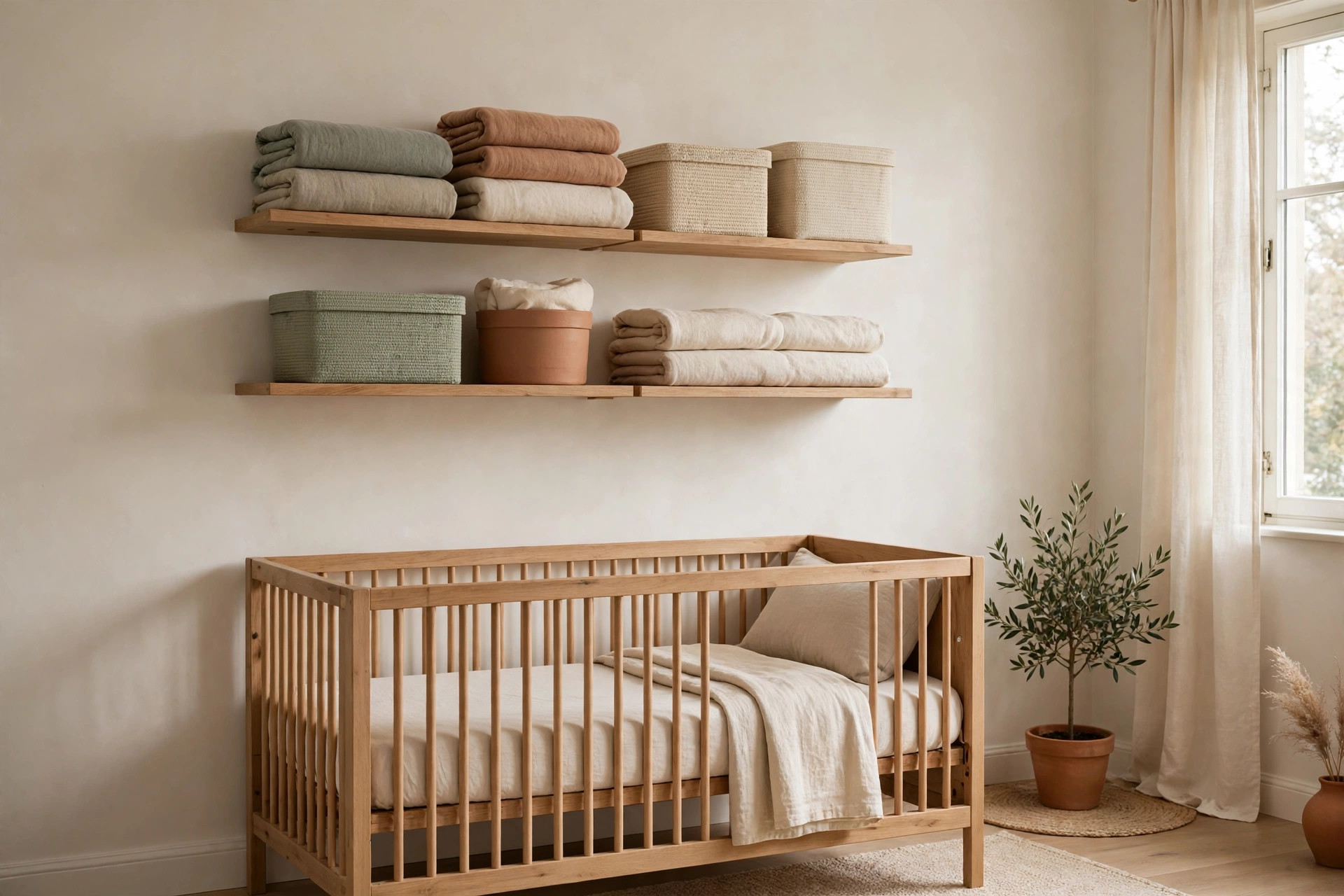
11. Mount two short shelves above the dresser, not above the crib
Install two floating shelves, each about 24 inches long, on the wall above the dresser — never above the crib, where anything that falls lands on the baby. The lower shelf holds this week’s books; the upper shelf holds keepsakes and the next-size clothes bin. Renters: use adhesive picture ledges rated for at least 5 pounds per shelf, and check them monthly.
12. Hang a wall file for papers, cards, and appointment slips
A single wall-mounted file pocket holds vaccination records, daycare forms, and the pediatrician’s appointment card. Paper is the sneakiest nursery clutter — it arrives in handfuls and ends up stacked on the dresser. One file pocket, emptied once a month, keeps it contained.
Hiding the gear: stroller, bouncer, and bath-time clutter
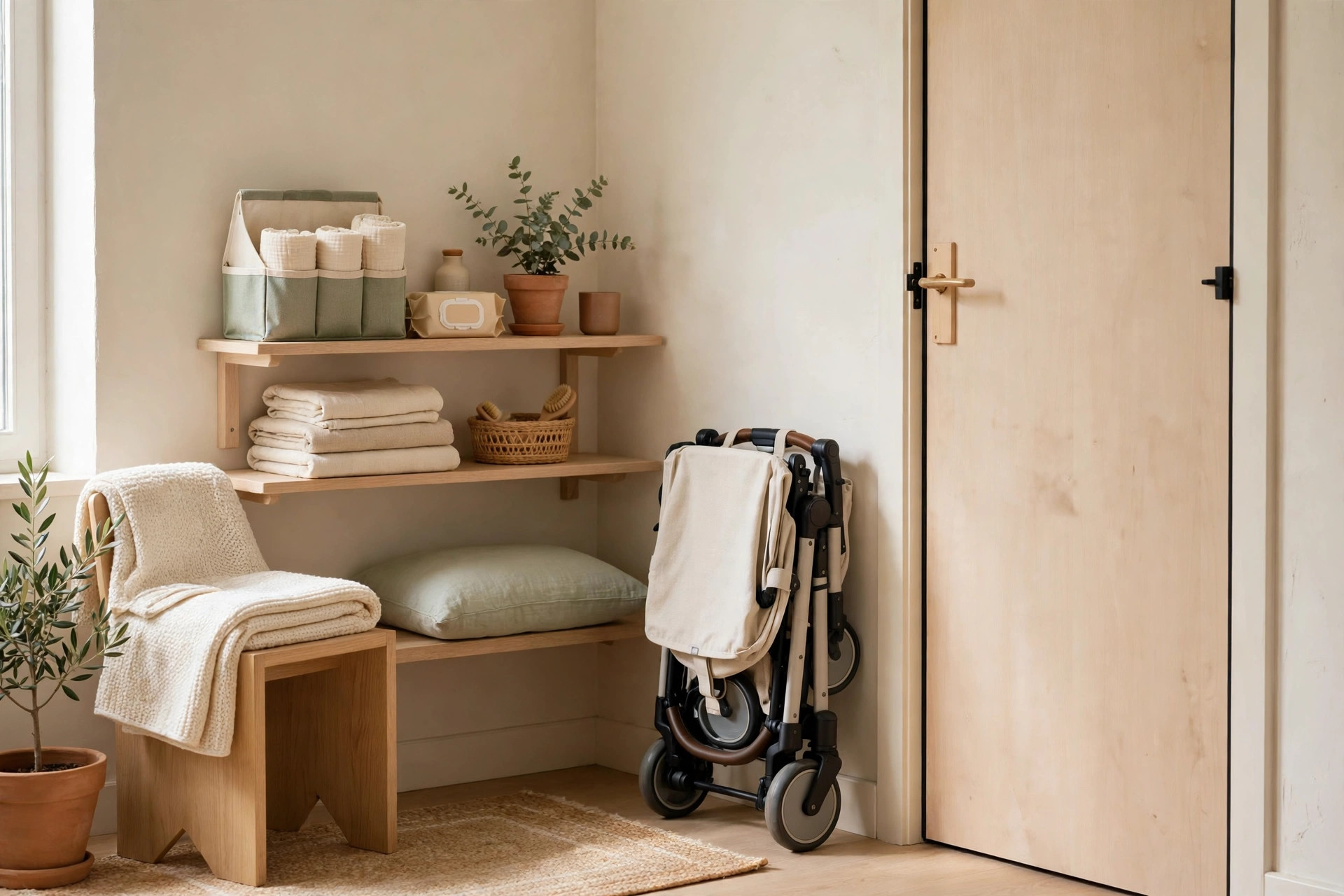
The stroller, the bouncer, and the bath tub eat the most floor — park, fold, or hang them. For more, see our 16 Baby Gear Storage Ideas for Small Apartments.
13. Give the stroller one parking spot and fold it flat every time
Pick one parking spot — behind the front door or in the hallway nook — and fold the stroller flat every time you come home. An unfolded stroller takes up roughly 12 square feet; folded, about 3. A stroller left open “just for now” is still open at bedtime.
14. Hang the bouncer and bath tub on the bathroom door
A bouncer folds to about 4 inches thick, and a baby bath tub nests inside a larger tub. Hang the folded bouncer on a sturdy over-the-door hook on the bathroom door, and store the bath tub inside the bathtub or on a high shelf. Bath-time clutter lives in one small suction-cup caddy on the tub wall.
The monthly outgrow purge
15. Run a 15-minute purge on the first of every month
Set a reminder for the first of the month. Walk the nursery with one bag: clothes that no longer fit, toys the baby ignores, gear they have outgrown. Fifteen minutes is enough — you only check three places: the closet, the rotation bin, and the cart’s bottom tier.
16. Keep a labeled “outgrown” bag by the front door at all times
A reusable shopping bag on a hook by the front door is your always-on purge bin. The moment you notice a onesie is too small, drop it in the bag instead of putting it back on the shelf. When the bag is full, it leaves with you on the next errand run.
17. Photograph keepsakes, then let the rest go
You do not need to keep every outfit. Pick one keepsake per size — the going-home outfit, the first holiday outfit — photograph the rest, and let them go. Store the keepsakes in one small box, about 12 by 12 by 8 inches, on the top shelf.
Mistakes to avoid
Buying nursery furniture before measuring. A standard dresser is about 18 inches deep and 36 inches wide — a quarter of a 6-by-8-foot corner. Measure first, buy second, and favor pieces under 16 inches deep.
Storing anything above the crib. Shelves, frames, and mobiles over the crib are a safety risk — the U.S. Consumer Product Safety Commission advises a clear sleep area. Keep the wall above the crib bare; see the CPSC’s safe sleep guidance.
Buying the full-size version of everything. A full-size high chair, play yard, and changing table cannot all fit in a tiny apartment. Choose the fold-flat or compact version of at least two of the three.
Keeping outgrown clothes “just in case.” “Just in case” is how a closet fills with three sizes of clothes your baby will never wear again. Unless you are saving it for a specific next baby, it goes in the outgrown bag.
Storing diapers in bulk inside the nursery. A month’s supply of diapers is roughly the size of a laundry basket. Keep one week’s worth in the nursery and the rest in a hall closet.
Frequently asked questions
How can I organize a nursery in a one-bedroom apartment?
Give the nursery one corner of the bedroom, divided into sleep, change, and feed zones, with one storage piece per zone. Use a rolling cart instead of a changing table, keep five toys out, and run a monthly outgrow purge.
Can a nursery work without a closet?
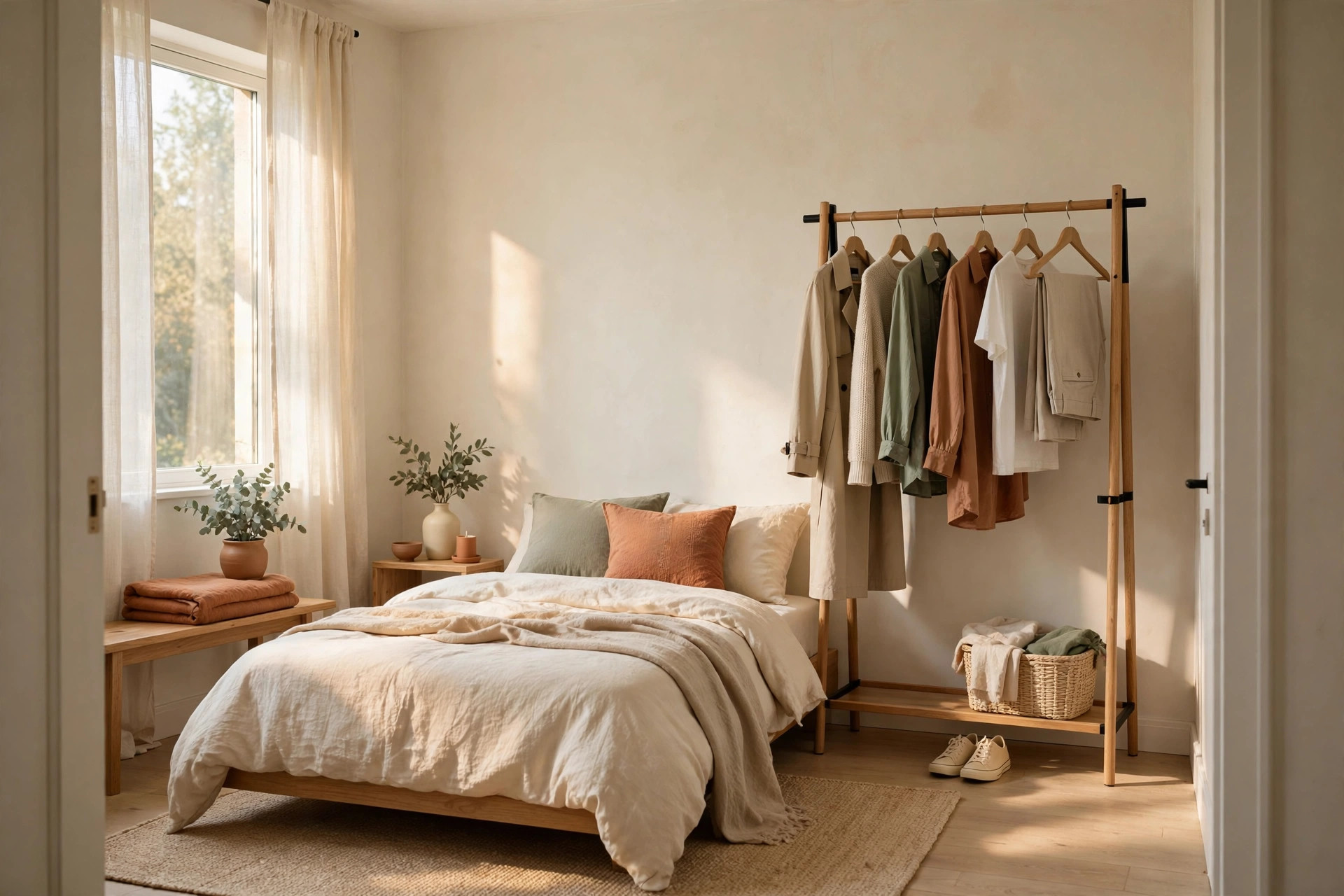
Yes. A rolling cart handles diapers and daily clothes, an under-crib bin holds night essentials, and two wall shelves above the dresser hold books and the next size up. A freestanding garment rack replaces a closet rod.
How many toys should a baby have out at once?
About five. Rotate them weekly from a single bin on the top closet shelf. Babies play more deeply with fewer toys, and five toys take up almost no floor space.
What is the best storage for a tiny nursery on a budget?
A three-tier rolling cart, one under-crib bin, and two wall shelves cover almost everything, and together they cost less than a single changing table. Add labeled fabric bins and a bag by the door for the outgrow purge.
Conclusion
A tiny apartment nursery works when every item has a zone, a cart, or a bin — and a date to leave. Map the corner, keep five toys out, and purge once a month. Save this pin for later, and browse more ideas in the small-spaces category.