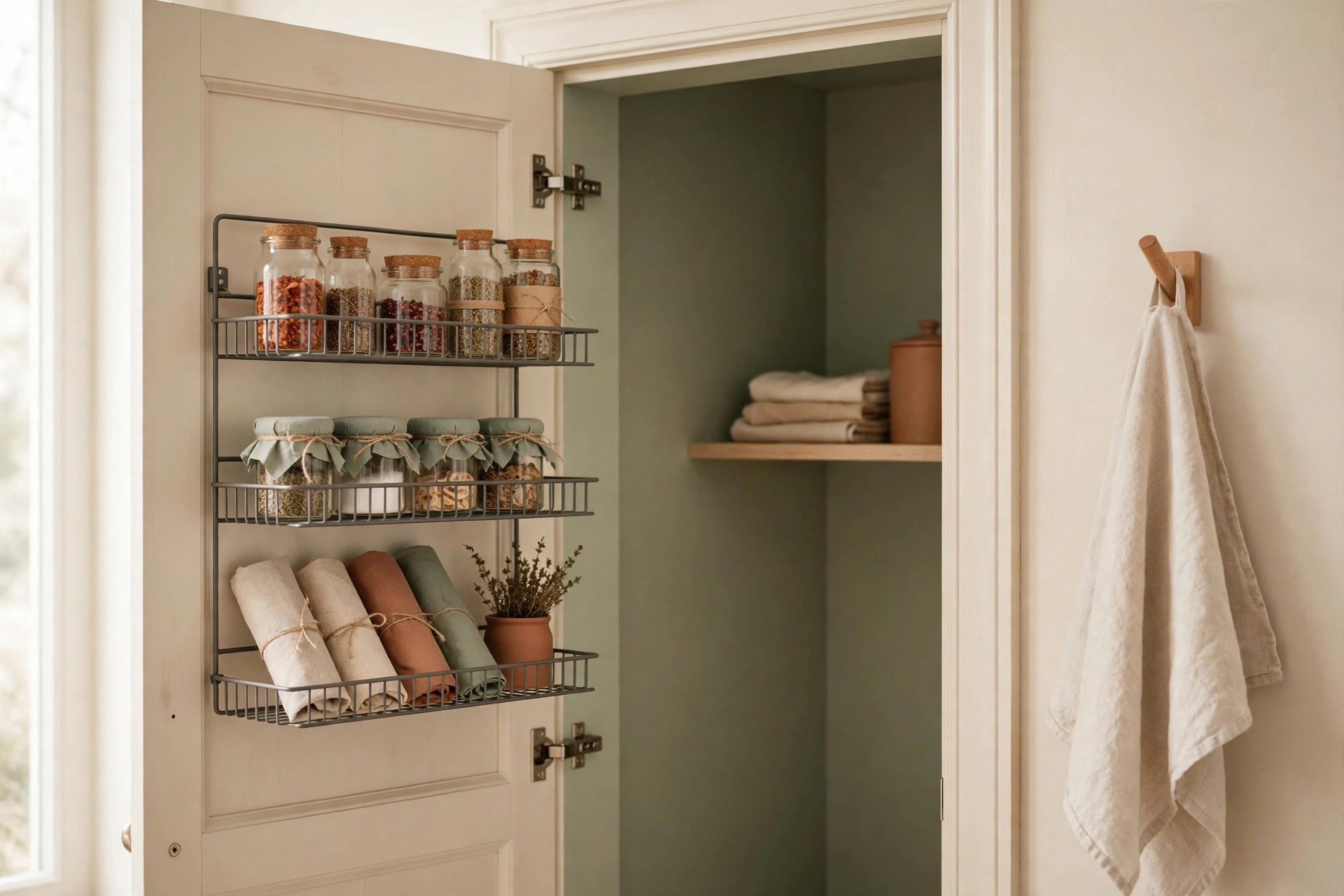
Open your pantry and look at the door — not the shelves, the door itself. That flat, empty panel is roughly the size of an extra shelf, and right now it is doing nothing. Small pantry door organization works because it adds storage without taking a single inch from your shelves, counters, or floor. The best door setups hold the small things that always get lost inside a pantry: spice jars, snack bags, and foil boxes. Here are 17 practical ideas to turn that wasted panel into the hardest-working storage spot in your kitchen.
Measure the door: clearance, hinges, and weight limits
Measure before you buy.
1. Check clearance on both sides of the door
Measure the depth from the door’s inner face to the closest shelf, wall, or appliance. Most pantry doors offer only about 3 to 4 inches of usable depth before a rack starts bumping shelves. Leave at least half an inch of clearance at the hinge side, and filter every rack by depth first, not by looks.
2. Test the hinges and set a weight budget
Open the door halfway and let go. If it drifts or sags, the hinges are already tired, and a loaded rack will make it worse. Tighten the hinge screws; if one spins freely, replace it with a longer screw or a hollow-door anchor. Keep the total loaded weight under about 20 pounds, and spread the load across the full height of the rack.
Wire racks: the classic pantry door upgrade
Wire racks are the classic pantry door storage idea: affordable and fully visible.
3. Hang an over-the-door wire rack for instant shelves
An over-the-door rack hooks over the top of the door, so it needs no screws and no tools. Choose one with adjustable baskets: a tall basket for cereal boxes, a shallow one for sauce packets. Check that the hooks clear your door’s thickness first — standard interior doors are about 1 3/8 inches thick.
4. Screw a mounted wire rack into solid wood for a permanent fix
On a solid wood door, a screwed-in rack is sturdier and holds more than a hook-over version. Use short screws that will not poke through the front — about 3/4-inch screws are usually right. Put the top basket at eye level and keep the lowest basket at least 6 inches above the floor so it clears the door sweep. For a broader look at pantry systems beyond the door, see these small pantry organization ideas.
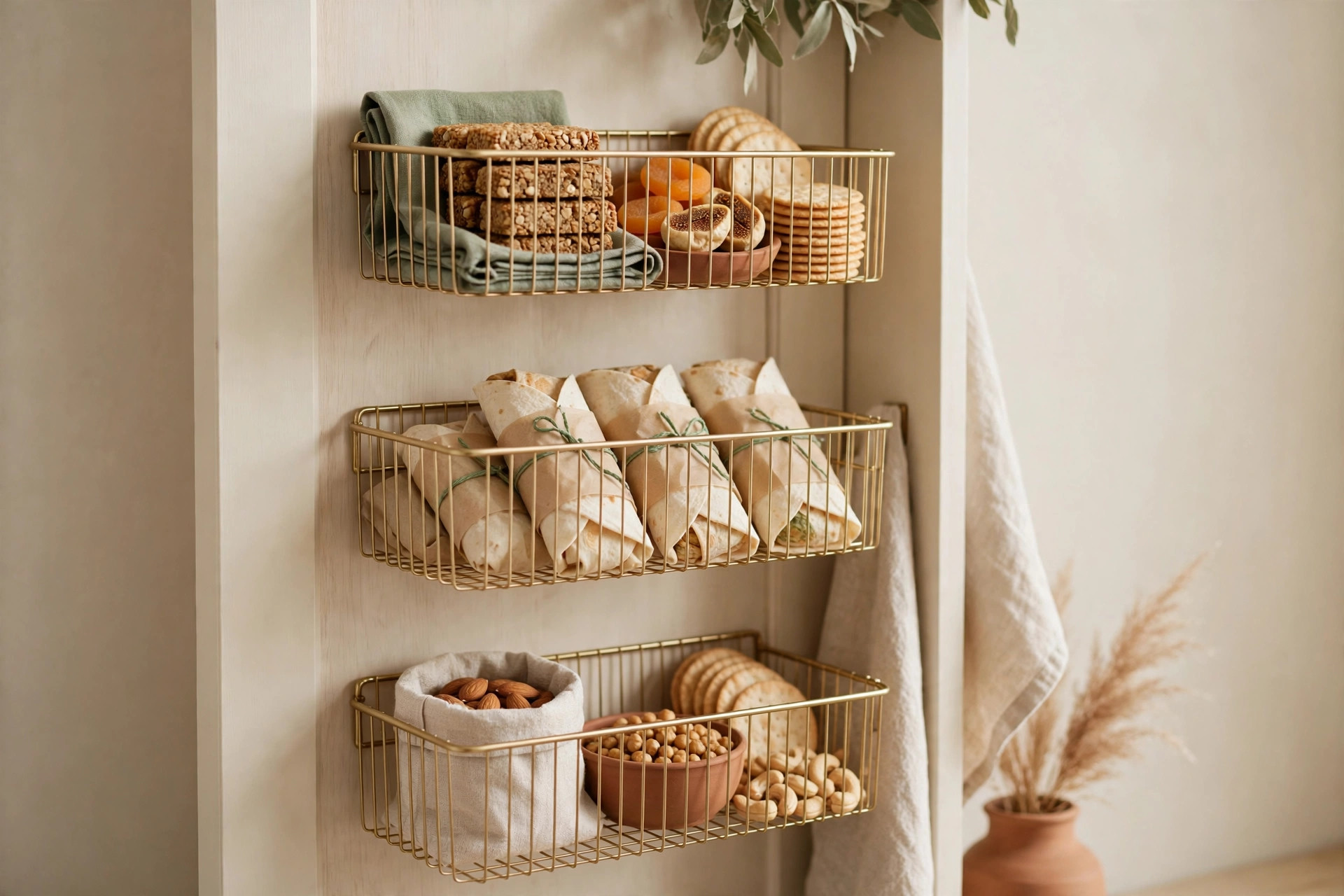
Slim baskets and bins for snacks and wraps
Snacks and wraps are the worst pantry clutter: light, oddly shaped, and always sliding to the back of a shelf.
5. Use narrow baskets for snack bags, one category per basket
Assign each basket a single category — granola bars, crackers, kids’ snacks — and label the front of each basket. Slim baskets about 3 inches deep hold a surprising amount, and open wire sides let you see when a category is running low. Keep heavy bulk bags on a shelf; door baskets are for daily grab-and-go items.
6. Stand foil, wrap, and bags upright in a tall slim bin
Boxes of foil, plastic wrap, and parchment are long and thin, and stack badly on a shelf. A tall, slim bin on the door lets them stand upright like books, so you can pull one box out without the rest toppling. Measure your longest box first — most wrap boxes are about 12 inches long — and choose a bin at least an inch taller.
7. Add small clear bins for packets, pouches, and single-serve items
Sauce packets, oatmeal pouches, and single-serve coffee pods vanish inside deep shelves. A small clear bin on the door keeps them visible, so you can spot the last packet before you run out. Sort by type, not by brand: all taco seasoning together, all instant oatmeal together. When a bin overflows, stop buying that category until it is used up.
Spice storage on the door: jars, clips, and racks
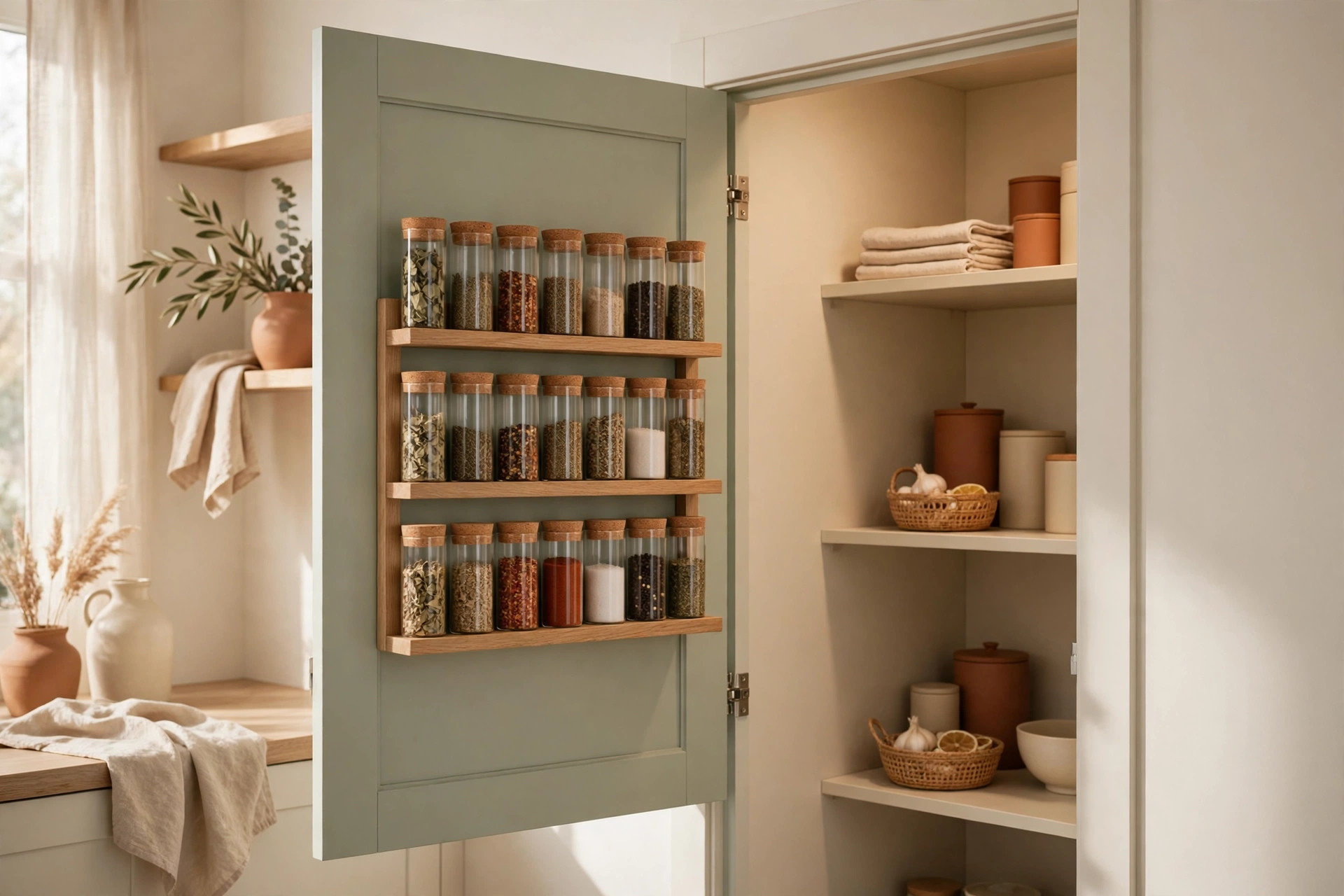
Spices are the single best use of pantry door space: light, small, and used daily. If your spice collection has outgrown its current home, these spice storage ideas for small kitchens cover shelf and drawer options too.
8. Mount a spice rack with adjustable shelves on the door
A door-mounted spice rack with adjustable shelves adapts to tall and short jars. Set the shelves so the tallest jar fits with about half an inch to spare, and put your most-used spices at eye level in the middle of the rack. Standard 4-ounce spice jars are about 4 inches tall, so a rack with 4.5-inch shelf spacing works for most collections.
9. Clip small spice jars to the door with gripper clips
Gripper clips hold individual jars by their lids or bodies and let you arrange spices in any pattern that fits your door. They work best for uniform jars, so decant spices into matching small jars if yours are mixed shapes. Leave about a quarter inch of gap between jars to stop the clatter, and label the lids as well as the jars.
Cleaning and utility supplies behind the door
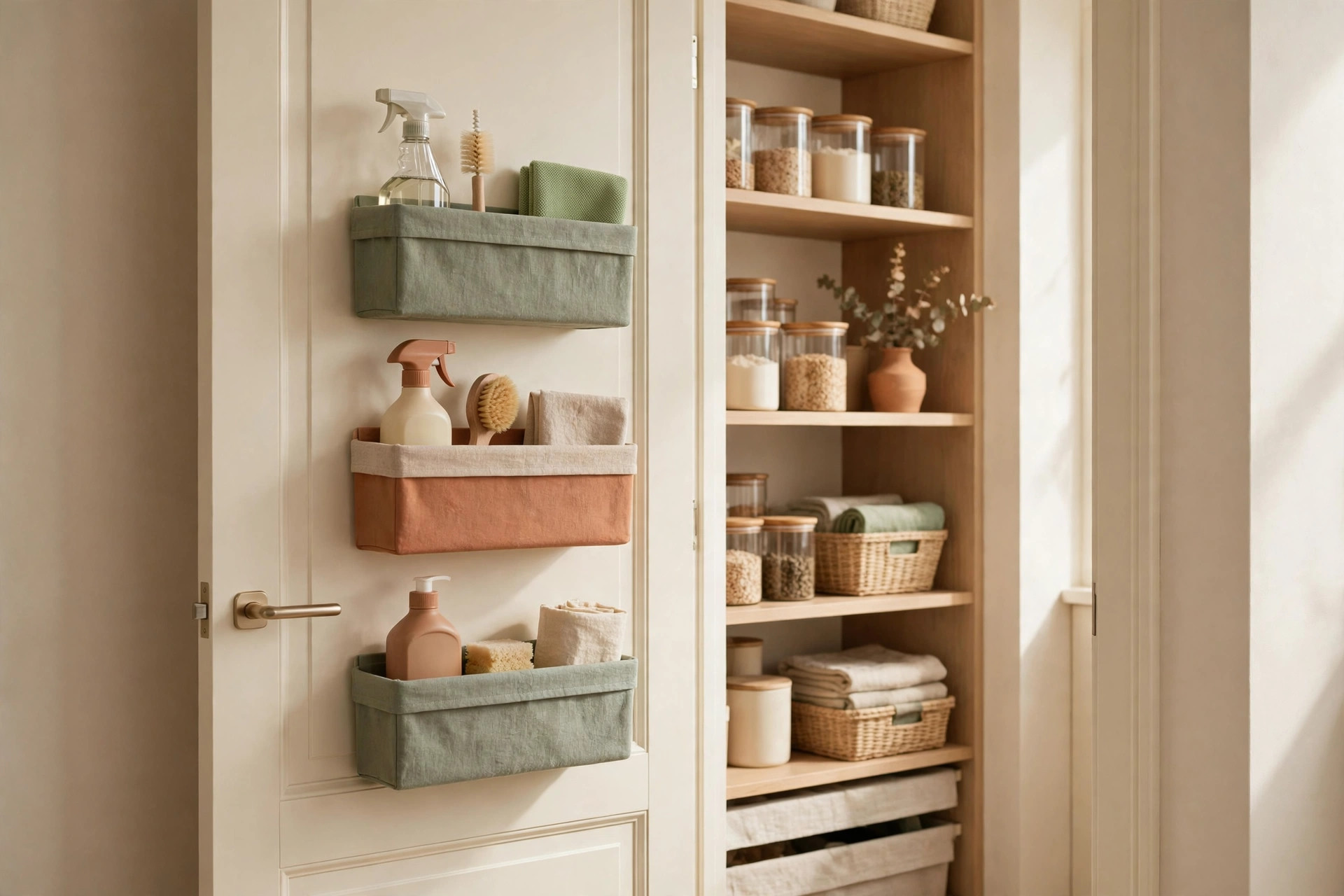
The inside of a pantry door is prime real estate for supplies you reach for between meals.
10. Hang spray bottles from hooks on the door’s lower half
A row of sturdy hooks on the lower half of the door holds spray bottles by their trigger handles, keeping them upright and off the shelf. Put the most-used bottle — usually an all-purpose cleaner — closest to the handle side. Never hang anything that could leak directly above food.
11. Add a slim caddy for sponges, brushes, and scrub pads
A slim wire caddy, about 3 inches deep, corrals sponges, scrub brushes, and scouring pads in one spot. Choose an open mesh caddy so wet sponges can drain and dry, and empty it once a week. For a full system beyond the door, these cleaning supply closet organization ideas show how to zone all your supplies in one place.
Renter-safe door organizers that leave no marks
Renters often assume door storage means drilling, but some of the best pantry door rack organization options need no holes at all.
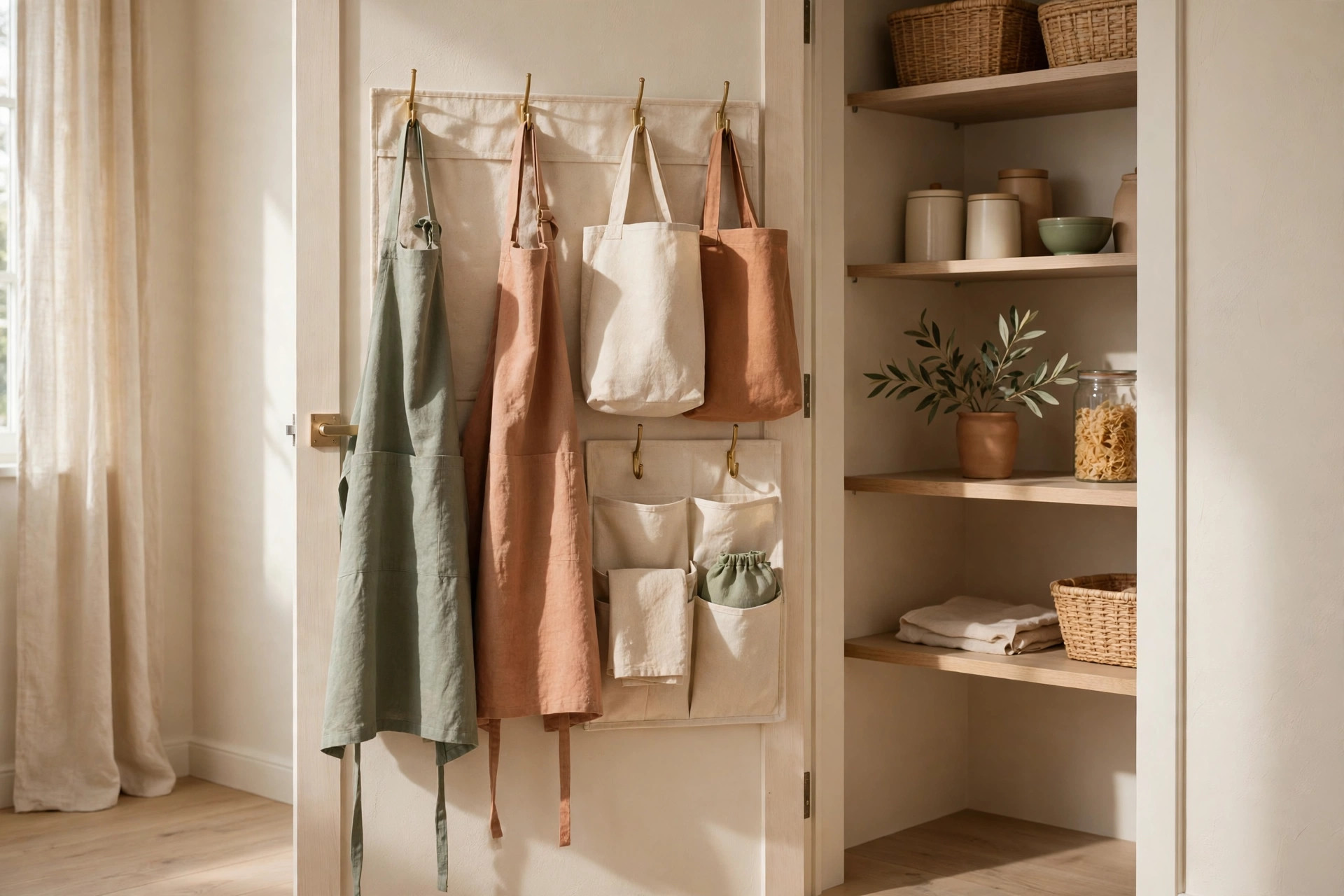
12. Use over-the-door hooks and racks that lift off cleanly
Over-the-door organizers lift off when you move, leaving nothing behind. Protect the door’s top edge with felt pads where the hooks grip, and check them every few months — a shifted hook can wear through paint. If your door is thin or hollow, keep the load light and spread it across two hooks.
13. Try adhesive-mounted baskets rated for your door’s surface
Adhesive baskets work on smooth, painted doors but fail on textured or unpainted wood, so test one strip on a hidden spot first. Choose strips rated for at least twice the weight you plan to hang — a basket holding 5 pounds of snacks needs strips rated for 10 pounds. When you move out, pull the strips straight down slowly to protect the paint.
Keeping door storage from becoming a junk pile
A door rack fails the same way a junk drawer does: one random item at a time.
14. Set a one-in, one-out rule for every door basket
Every time a new item goes into a door basket, something old must come out or be used up. This single rule stops the slow creep that turns organized baskets into clutter within a month. Apply it strictly to snacks and packets. When a basket is full, the answer is never a bigger basket — it is fewer items.
15. Label every basket, even if you think you will remember
Labels do the remembering for the whole household, not just for you. A simple label — “Snacks,” “Wraps,” “Spices” — stops other people from putting random items in the wrong basket, which is how most door systems fall apart. Use removable labels so you can change a basket’s job without residue.
The weekly door reset
Even the best system drifts. A five-minute weekly reset keeps pantry door storage ideas working.
16. Do a five-minute door check every week
Once a week, scan every basket. Pull out anything expired, empty, or in the wrong basket, wipe the baskets down, and push everything back into its labeled spot. Do it on trash day, so expired packets leave the house immediately. If the reset takes longer than five minutes, the system has too many items.
17. Reassign one basket a month to match how you actually cook
Cooking habits change with the seasons, and your door should change with them. Once a month, look at which basket you reach for most and which you ignore, and swap their positions or change a basket’s job. Summer might mean a basket for grill seasonings; winter might mean one for baking supplies. For ideas that work in every room, browse these over-the-door organization ideas.
Mistakes to avoid
The most common pantry door mistake is overloading: a rack stuffed with cans will sag the door and strain the hinges. Keep cans on shelves and reserve the door for light items. The second mistake is buying before measuring — a rack too deep for your clearance gap is useless. The third is mixing food and cleaning supplies on the same door panel, which risks leaks onto food. Finally, skip baskets so deep you cannot see inside — that is just a small, vertical junk drawer.
Frequently asked questions
Can I put a rack on a hollow-core pantry door?
Yes, with limits. Keep the total loaded weight under about 20 pounds, spread the load across the full height, and prefer over-the-door hooks or adhesive mounts over screws.
How deep can a pantry door rack be?
It depends on your clearance gap. Measure from the door’s inner face to the nearest shelf or obstacle; most pantries allow about 3 to 4 inches. Buy a rack at least half an inch shallower than your measurement.
What should I never store on a pantry door?
Heavy cans, glass bottles of oil, and anything that could leak onto food. Doors are for light, small, frequently used items: spices, snacks, wraps, and packets.
Do over-the-door racks damage the door?
Usually not, if you use felt pads where the hooks grip and keep the load reasonable. Remove adhesive strips slowly and straight down when you move out.
Conclusion
Small pantry door organization turns a panel you ignore into storage you use every day. Measure first, keep the load light, give every basket one job, and reset the door weekly. Save this pin for later, and explore more ideas in our kitchen category.