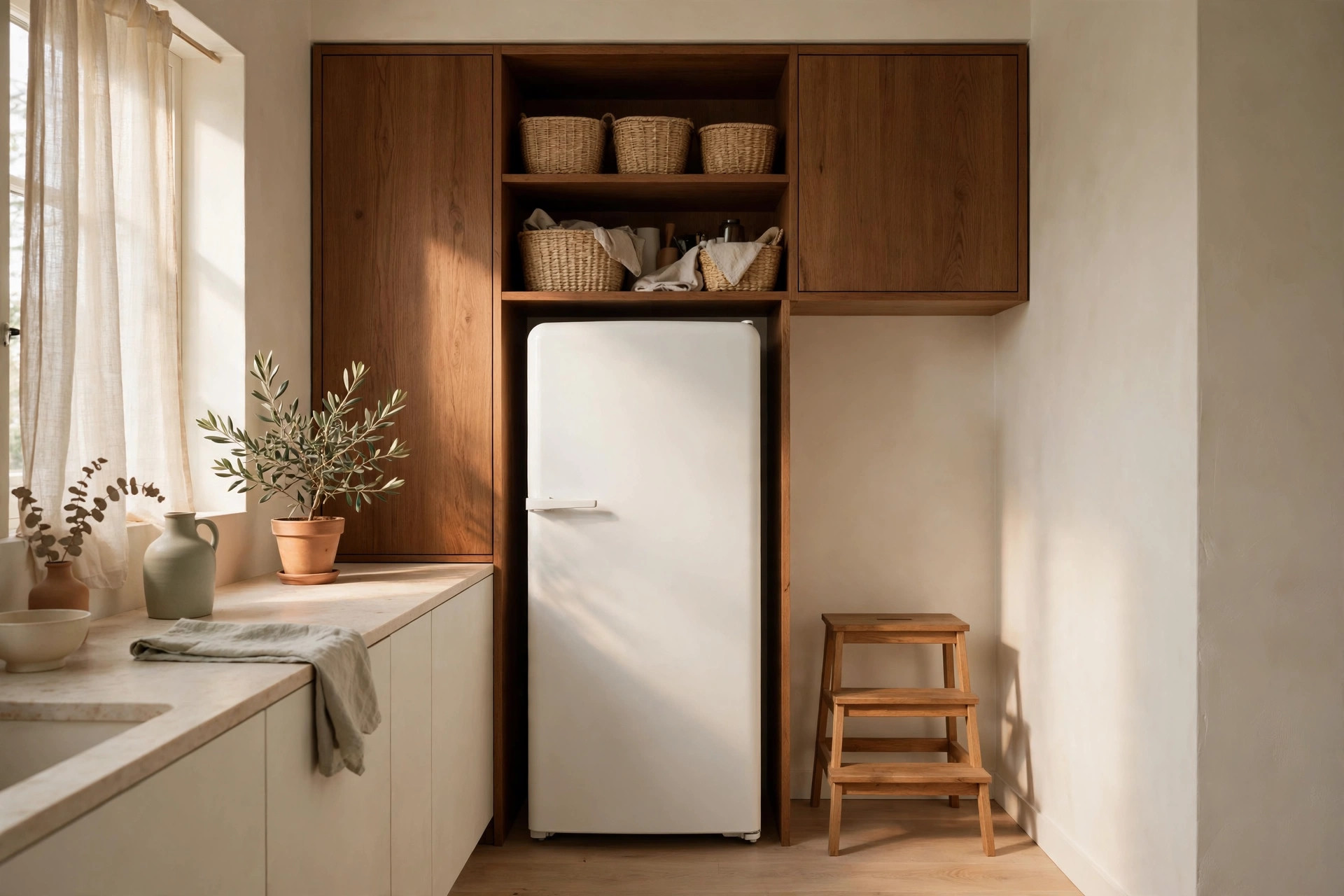
Small pantry organization ideas matter most when your “pantry” is one narrow cabinet or a shelf the landlord clearly gave up on. The real problem is never square footage — it’s that every shelf is a junk drawer, nothing is visible, and half the cans in the back are older than your lease. The fix: give every shelf a job, make everything visible, and stop storing things that don’t belong. Here are 17 ideas that do exactly that, plus a full system for kitchens with no pantry at all.
The pantry purge: what expires and what shouldn’t be there
You can’t organize clutter — you can only rearrange it. Before buying a single bin, empty every pantry shelf and do a ruthless sort. This step alone usually frees up 20 to 30 percent of the space.
Idea 1: Pull everything out and audit by date
Set every item on the counter and check dates in batches. Toss anything expired, stale, or unidentifiable, then group the survivors into keep, donate (unexpired and sealed), and relocate (items that belong elsewhere). Work with a trash bag and a donation bag open so nothing sneaks back onto the shelf.
Idea 2: Evict the non-food residents
Lightbulbs, paper towels, pet food, cleaning sprays, and the graveyard of reusable bags do not belong in food storage. They eat shelf space and make every search harder. Move them to a hallway or laundry area, or free up room using these small kitchen cabinet organization ideas. One exception: a small bin of backup dish soap is fine if you truly have nowhere else — just not inside the food zone.
Zone by meal: breakfast, cooking, snacks, backstock
Once only food remains, assign every shelf a job. Zones turn a random pile into a system: you always know where breakfast lives, where cooking ingredients live, and where the extras live.
Idea 3: Create a breakfast zone on the easiest shelf
Put oats, cereal, peanut butter, honey, coffee, and tea together on the most accessible shelf, at or just below eye level. Breakfast is the most rushed meal, so it earns the prime spot. If you eat the same breakfast most days, keep a small tray with exactly those items so grabbing them is one motion.
Idea 4: Build a cooking zone with everything in grab range
Group cooking ingredients by task, not by type: oils, vinegars, canned tomatoes, broth, pasta, rice, and your five most-used spices in one place. If two ingredients always get used together, they live together. Taco night ingredients in one bin, stir-fry sauces in another. This ends the nightly excavation through the back of the shelf for the sesame oil.
Idea 5: Corral snacks and backstock separately
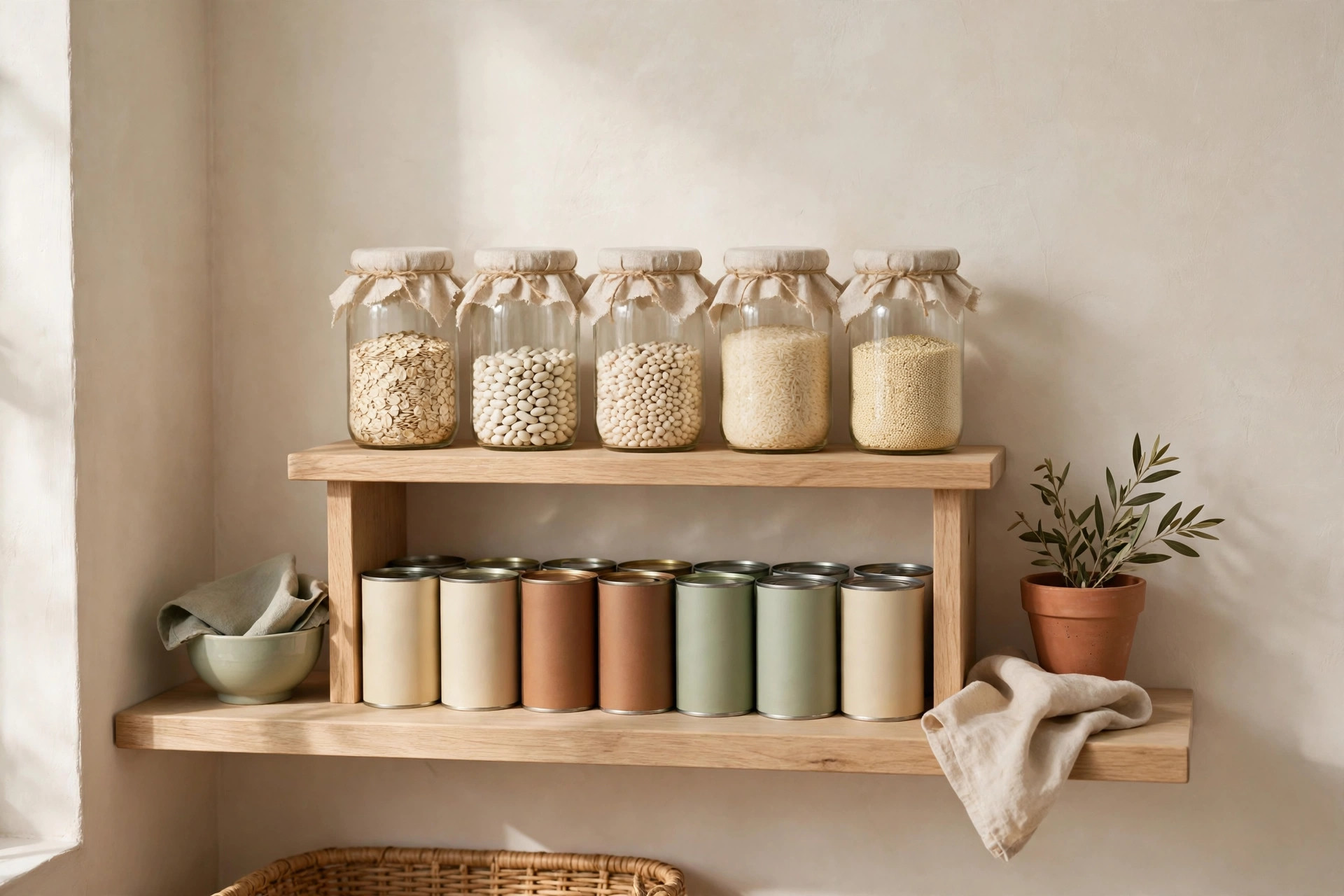
Snacks get their own visible zone — a shallow bin so single-serve bags don’t avalanche. Backstock (duplicates and bulk buys) goes on the highest or deepest shelf, with one rule: nothing backstock moves to a prime shelf until the prime spot runs empty. Label the backstock shelf so everyone in the household stops re-buying what’s already there.
Clear bins and the uniform-container rule
Bins are the foundation of every small pantry that stays organized. But random bins just move clutter into smaller containers — uniformity is what creates the calm.
Idea 6: Use clear bins so you can see stock levels
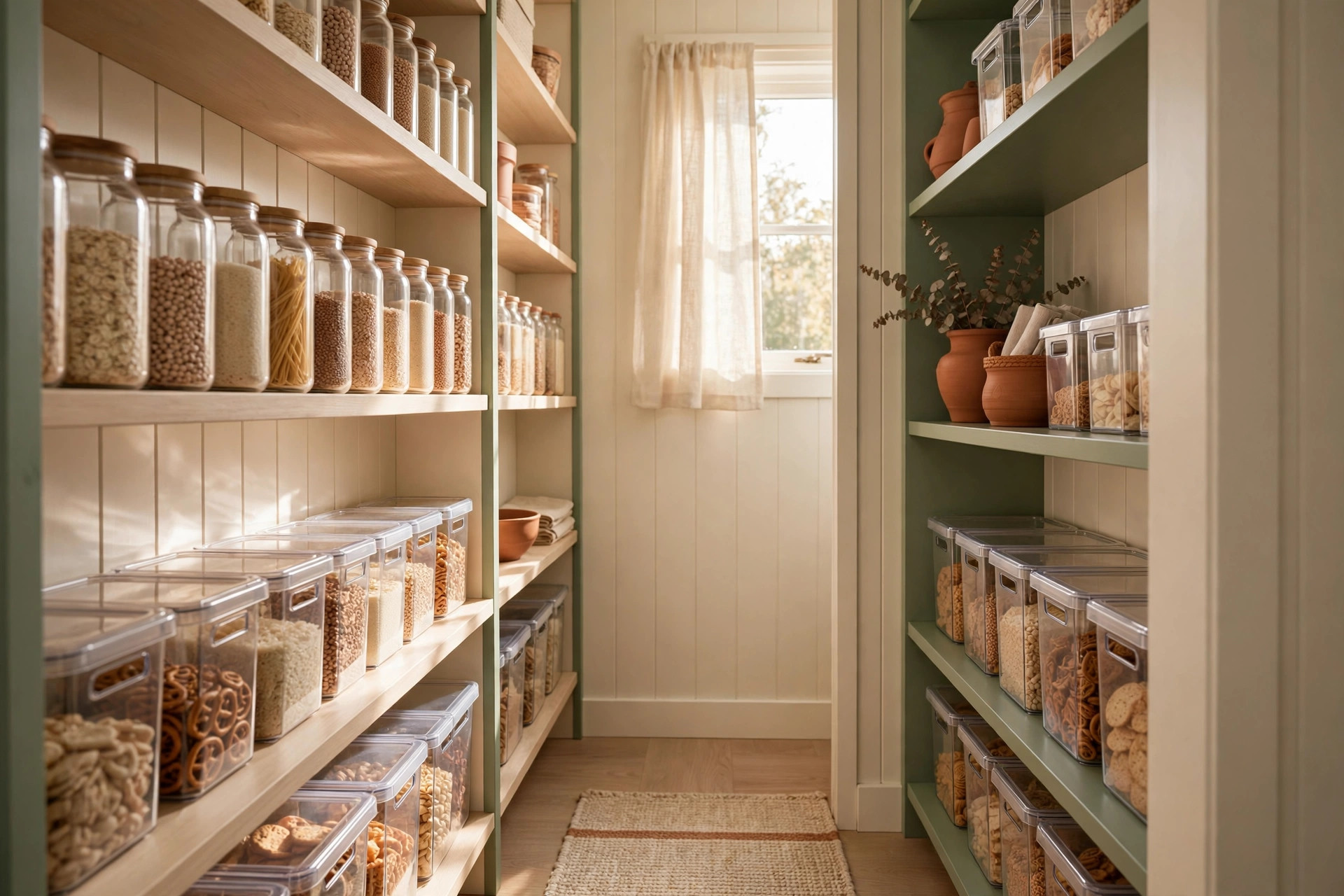
Clear plastic or glass bins beat opaque baskets in a small pantry because you can see at a glance what’s running low. Buy two or three sizes that stack or nest, and dedicate each to one category: packets, cans, snack bars. Shallow 4-inch-deep bins work best on narrow shelves — deep bins become black holes where things get buried.
Idea 7: Decant dry goods into uniform square containers
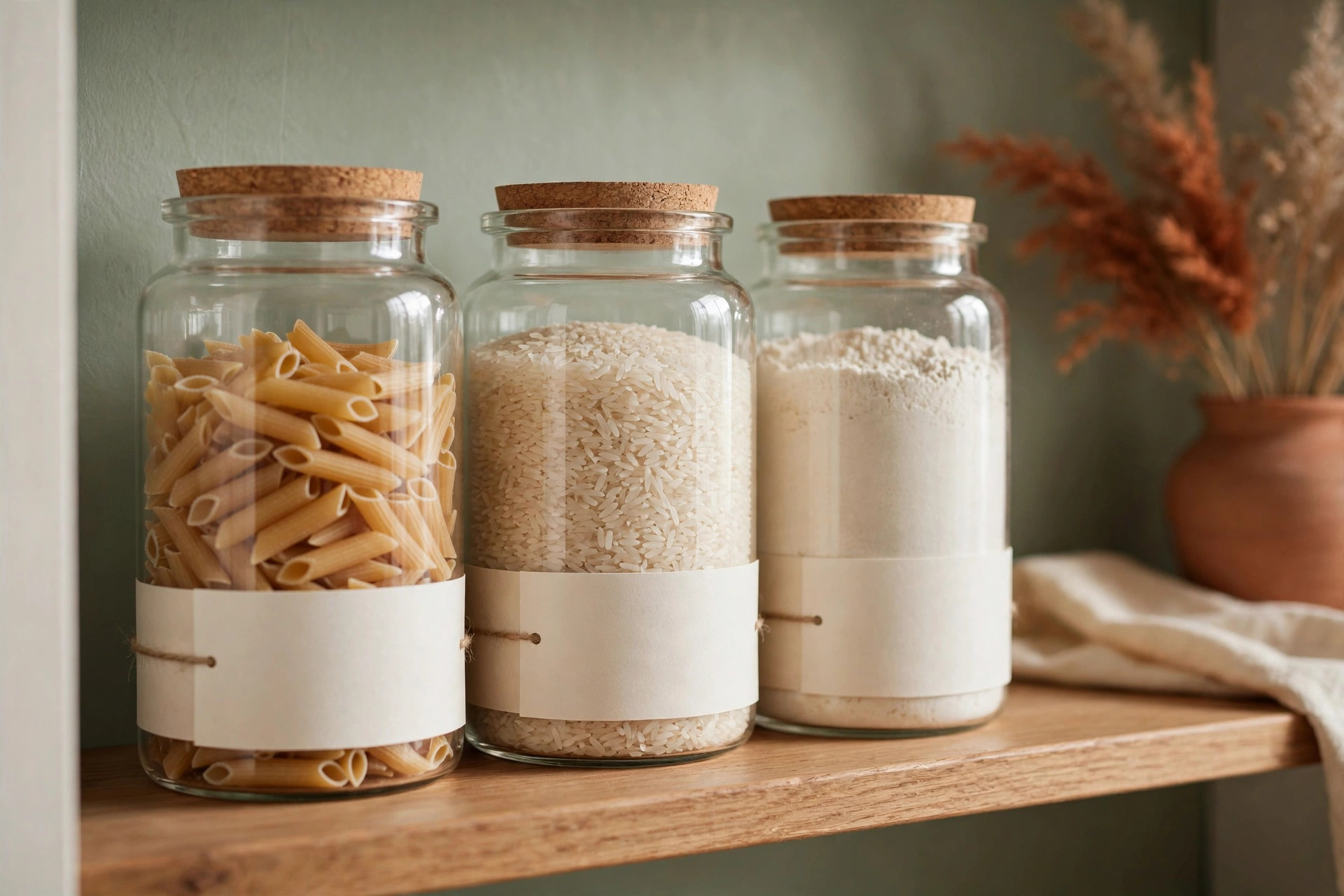
Square and rectangular containers pack edge-to-edge with zero wasted gaps; round jars leave dead space. Decant only the staples you use constantly — flour, sugar, rice, oats, coffee — not everything, or you’ll spend your life washing containers. Choose airtight lids and label contents plus purchase date. Stackable 10×6×6-inch containers are a solid default size for small shelves.
Idea 8: One rule for loose packets — the packet bin
Gravy mixes, seasoning packets, drink mixes, and oatmeal sachets are pantry entropy. Give them exactly one bin: a small upright bin or repurposed magazine holder where packets stand vertically, labels facing out. When the bin is full, nothing new comes in until you use some up. This single rule ends the packet sprawl that ruins most small pantries.
Shelf risers and turntables for deep shelves
Small pantries waste space vertically — a 14-inch gap between shelves with 8-inch cans means half your storage is empty air. Risers and turntables reclaim it with zero screws.
Idea 9: Add shelf risers to double usable shelf space
A shelf riser is a small platform that turns one shelf into two levels. Measure shelf depth before buying — a 12-inch-deep shelf wants an 8-to-10-inch riser so cans don’t overhang. Put short cans and jars on the riser, taller bottles behind it. Freestanding risers need no installation, and wire or bamboo versions cost roughly a third of what custom shelving would.
Idea 10: Put a lazy Susan on every deep shelf
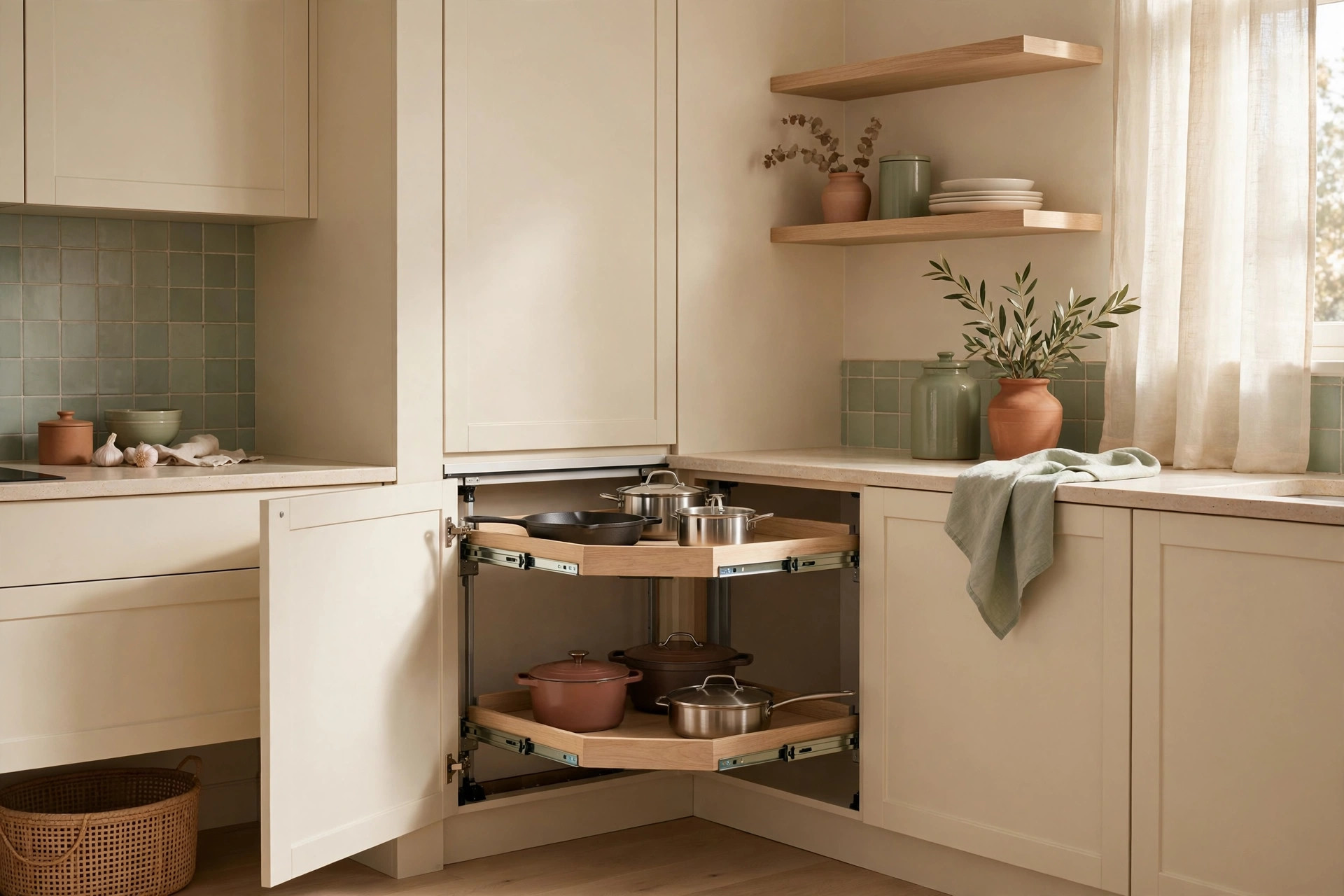
Deep shelves are where food goes to die. A 10-to-12-inch turntable means the olive oil in the back spins to the front with one flick. Use turntables for bottles, vinegars, sauces, and vitamins — anything tall and narrow that gets lost. In a cabinet rather than a walk-in, a two-tier turntable solves the height problem and the depth problem in one device.
The door is a pantry too: racks and slim organizers
The inside of a pantry door is free square footage most people never use. It’s shallow, accessible, and perfect for the small items that vanish on shelves.
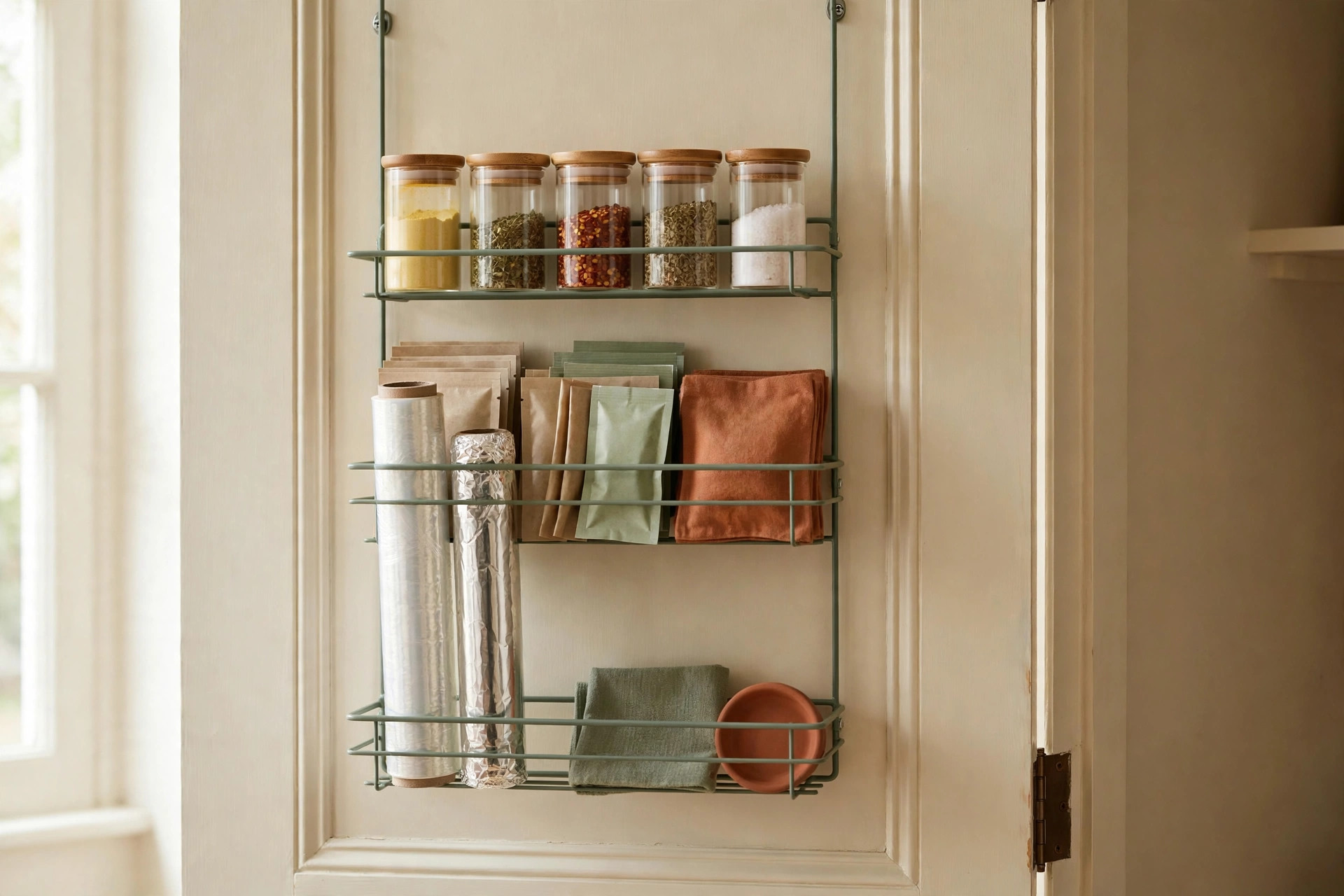
Idea 11: Hang a spice-and-packet rack on the door
An over-the-door rack with 2-to-3-inch-deep tiers holds spices, packets, and small bottles perfectly. Depth matters: anything deeper keeps the door from closing or eats interior shelf space. Renters should pick a rack that hangs over the door top or mounts with adhesive strips instead of screws. For more door-hanging options beyond the pantry, these over-the-door organization ideas cover every room.
Idea 12: Use slim wall-mounted organizers beside the pantry
If the pantry door can’t hold a rack (glass or bi-fold doors), mount a slim organizer on the wall or cabinet side right next to it. Flat wire racks hold wraps, foils, and baggies; narrow tiered shelves hold spices. These kitchen wall storage ideas include renter-safe mounting options. Same principle: move thin, frequently grabbed items out of the pantry box and onto a vertical surface.
No pantry? The cabinet-cart-closet workaround
No built-in pantry is not a deal-breaker. A no-pantry kitchen simply borrows pantry space from elsewhere. Pick one of these three and build the same zone system inside it.
Idea 13: Dedicate one cabinet and treat it like a pantry
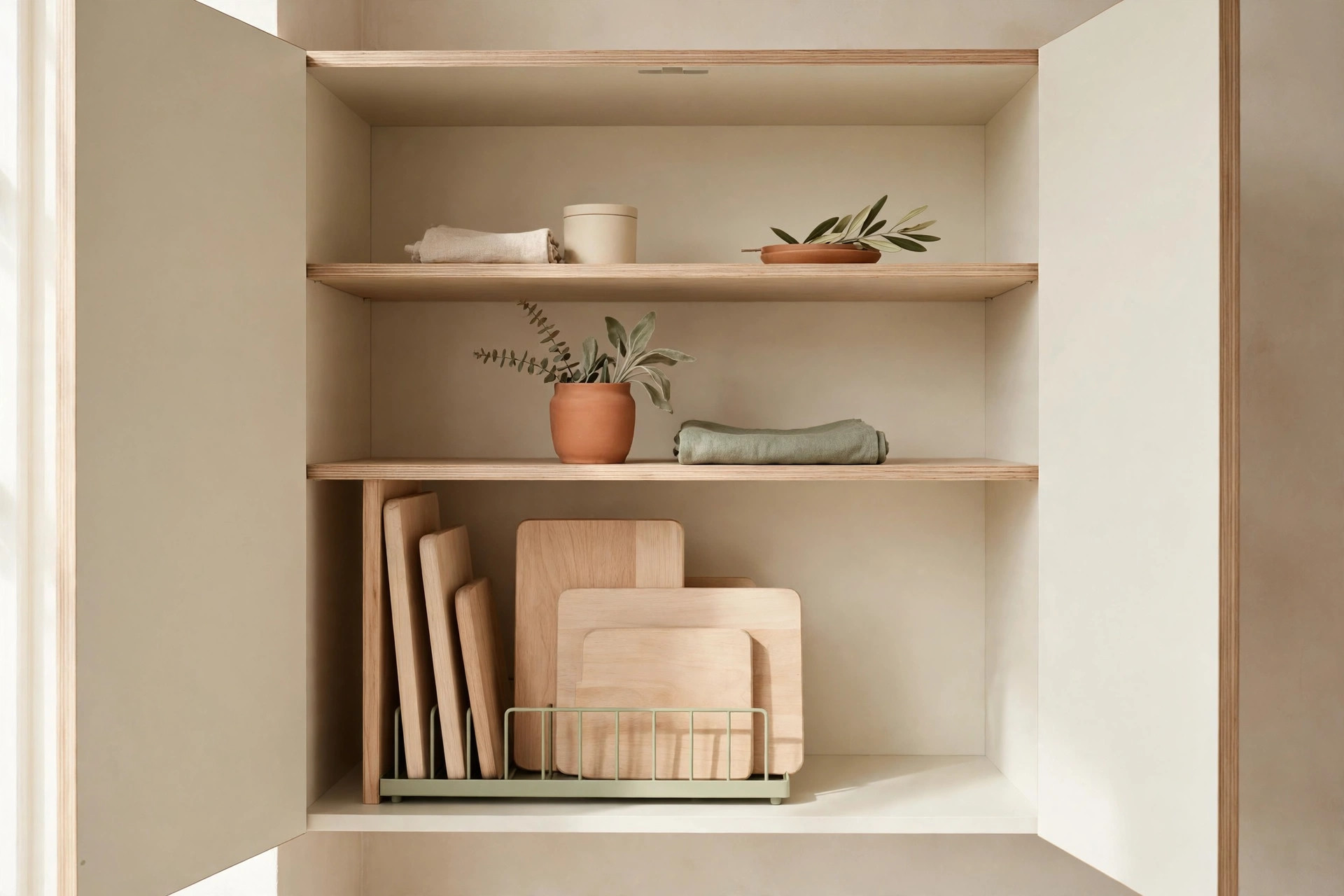
Choose the cabinet closest to your prep area — ideally within two steps of the stove. Strip it to food only, then run the zone system at miniature scale: breakfast on one shelf, cooking on another, snacks in a bin. Shelf risers, door-mounted racks, and stackable bins are exactly what turns one cabinet into a functioning pantry. One cabinet done well beats three done messily.
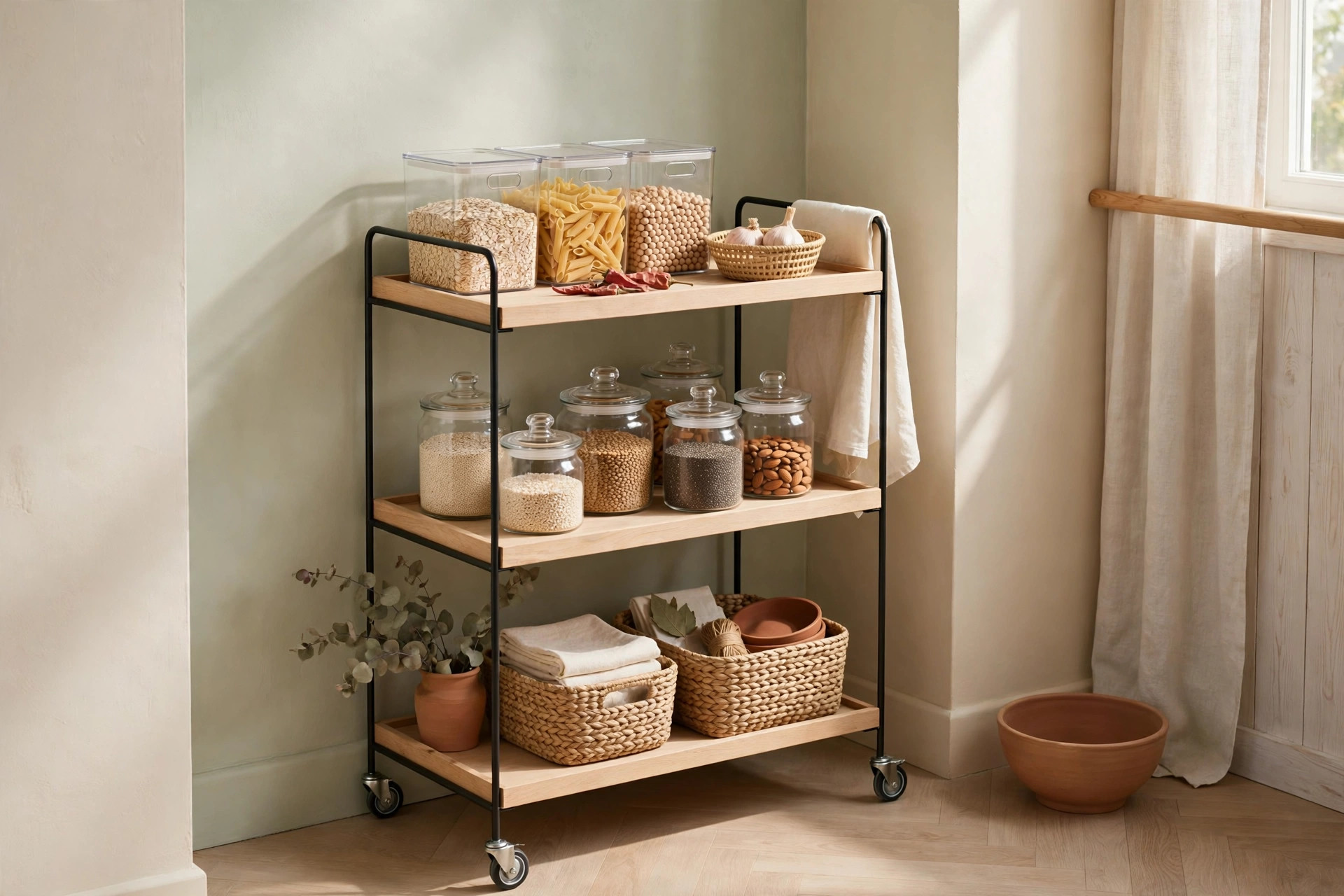
Idea 14: Roll in a slim utility cart as a mobile pantry
A three-tier utility cart about 17 inches wide fits in the gap between the fridge and the wall or slides into a corner. Load it by zone: top tier for daily grab items (oils, salt, pepper), middle for snacks and breakfast, bottom for backstock. The wheels are the feature — roll it to your prep spot while cooking, roll it back after. When guests come over, drape a linen over it and it disappears against the wall.
Idea 15: Claim a closet shelf and decant there
A hall closet, linen closet, or the top shelf of a coat closet near the kitchen makes a fine overflow pantry. Clear one shelf, line it with uniform bins, and store backstock, bulk buys, and small appliances there. Masking tape and a marker beat fancy labels in dark closets. Keep only daily-use items in the kitchen itself.
Labels and the weekly 5-minute pantry reset
Organization isn’t a project, it’s a habit. Labels and a tiny weekly reset are what keep a small pantry from sliding back into chaos within a month.
Idea 16: Label every bin and container
Labels are how a system survives contact with other household members. Label bin fronts with their category and containers with contents plus date — painter’s tape and a marker work fine and peel off cleanly when categories change. The test: if a houseguest walked in, could they tell where everything goes from the labels alone? When the system is readable, everyone maintains it.
Idea 17: Run a 5-minute pantry reset every week
Pick one day — trash day works well — and spend five minutes: toss anything expired, push backstock forward, pull daily items to the front, wipe up crumbs. Set a phone timer so it stays five minutes. This habit is the difference between a pantry that stays organized for a year and one that needs a full overhaul every three months. Miss a week? Just do it next week — the system holds.
What NOT to buy: mistakes to avoid
Small pantries punish bad purchases because there’s nowhere to hide them:
- Oversized bulk containers. A 20-pound bag of rice sounds economical until it eats half your cabinet. Buy staples in sizes that match your space, not your ambitions.
- Matching canister sets before you purge. Decant after the audit — otherwise you’ll buy containers for food you’re about to throw away.
- Deep opaque baskets. Pretty baskets on deep shelves become mystery boxes. If you can’t see inside, you’ll forget what’s there and buy duplicates.
- Organizers you didn’t measure for. Shelf height is the silent killer. A turntable half an inch too tall turns a shelf into a decoration.
- Single-purpose gadgets. A dedicated avocado holder earns its space only if you eat avocados daily. Everything else is clutter wearing a costume.
Frequently asked questions
How do I organize a pantry that’s only one shelf?
Treat it like a mini-pantry: purge hard, add a shelf riser to create a second level, use clear shallow bins for categories, and move backstock to a closet or cabinet elsewhere. One shelf with zones beats three shelves of chaos.
Can I create a pantry if my kitchen has no pantry at all?
Yes. Dedicate one cabinet, roll in a slim utility cart, or claim a closet shelf — ideas 13 through 15 above cover all three. The zone system works at any size; only the location changes.
Should I decant everything into matching containers?
No. Decant only the five to eight staples you use constantly. Decanting everything creates a maintenance burden that kills the system within a month. Everything else stays in its packaging, organized in bins.
How often should I clean out my pantry?
Do the 5-minute weekly reset to catch expired items, plus a full purge once or twice a year — spring and fall are natural anchors. Seasonal purges catch holiday baking supplies and summer snack clutter.
Conclusion
A small pantry works when every shelf has a job, everything is visible, and nothing that isn’t food sneaks in. Zones, clear bins, risers, and a door rack handle the tiny-pantry case; a dedicated cabinet, cart, or closet shelf handles the no-pantry case. Run the five-minute weekly reset and the system maintains itself. Save this pin for later, and browse the full kitchen collection for more small-space kitchen wins.