A small kids room has to do two jobs at once: hold a surprising amount of stuff and still leave clear floor for playing. When every toy, book, and outgrown sweater fights for the same few square feet, tidying feels pointless because the mess returns within an hour. The kids bedroom storage ideas small rooms benefit from most are not bigger furniture but lower, simpler systems: storage at kid height, one obvious home per category, and a floor kept as open as possible. You do not need a bigger room. You need fewer decisions, lower shelves, and zones your child can actually use without your help.
Kid-height first: storage kids can actually reach and use
The biggest reason small kids rooms stay messy is that the storage was designed for adults. High shelves and lidded boxes on top of wardrobes require a grown-up, so toys end up on the floor. Flip the rule: anything your child uses daily should sit between their knees and their shoulders, with no climbing.
1. Set the “kid zone” from floor to shoulder height
Measure your child standing flat-footed, then mark their shoulder height on the wall. That band is the kid zone. Daily toys, books, and clothes live inside it; everything above it is adult-only storage for spares and seasonal items. A low bookcase around 24 to 30 inches tall, a cube shelf laid on its side, or a short dresser all work well. When a child can see and grab something without asking, they can also put it back without asking.
2. Swap one tall unit for two low ones
A single tall wardrobe or bookcase eats visual space and puts half its storage out of reach. Two low units along one wall do the opposite: they double as a display ledge on top, keep everything reachable, and make the room feel wider rather than taller. Leave at least 3 feet of clear floor in front of them for play. If the room is very tight, a low unit under the window works as both storage and a reading perch with a cushion on top.
Low open bins for toys: one bin, one kind of toy
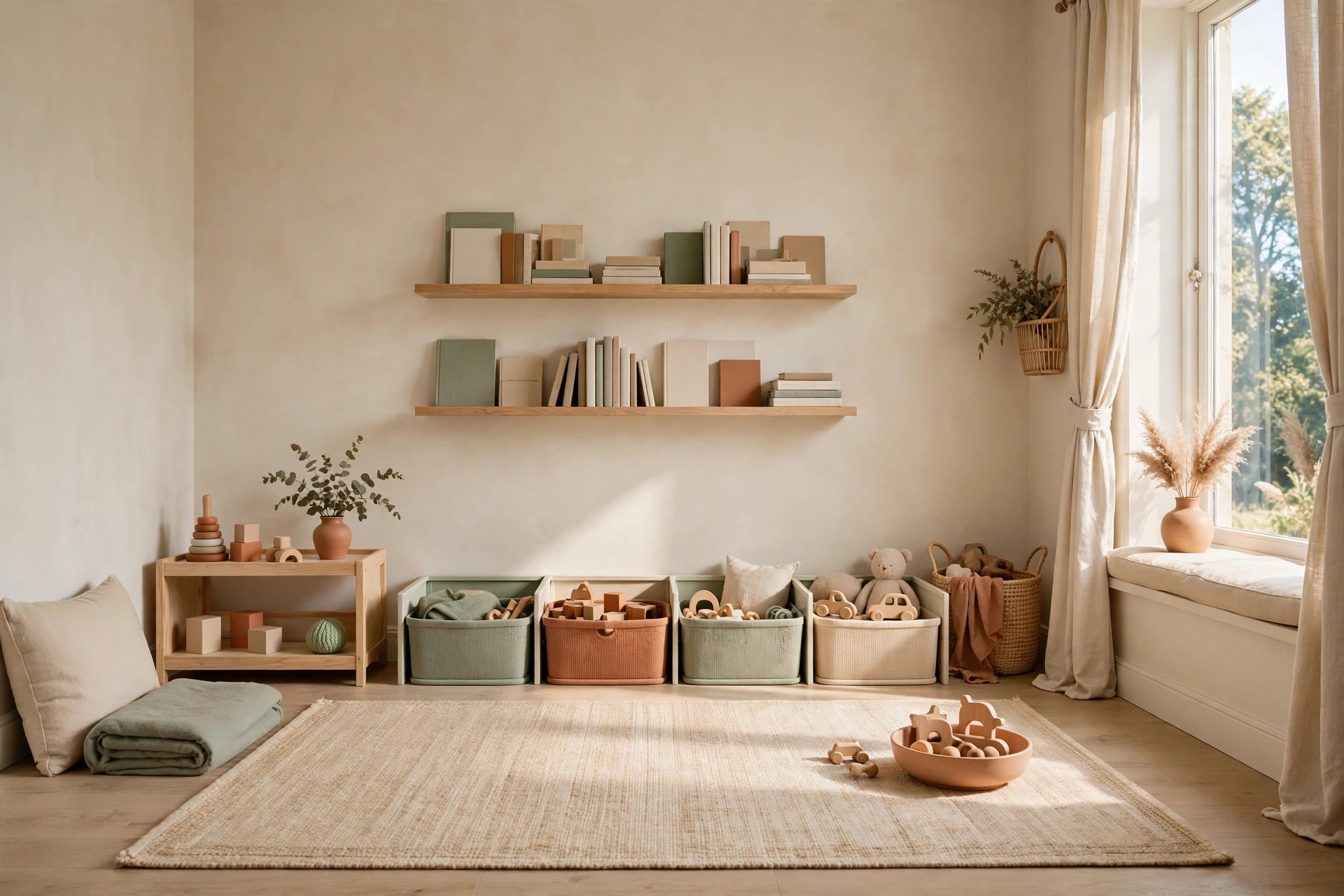
Open bins beat lidded boxes for young children because there is no lid to lose, no latch to fight, and no need to remember what is inside. The trade-off is that open bins look messy when they hold mixed junk, so the rule is strict: one bin, one kind of toy.
3. Use open-front bins sized for small hands
Choose bins roughly 10 to 12 inches wide and 6 to 8 inches deep, light enough for a child to pull out and slide back. Fabric bins with handles suit cube shelves; sturdy plastic bins suit a low trolley. Label each bin with a picture (see labels below) and keep the count low: four to six bins cover most rooms. If a seventh category appears, something else must leave or rotate out.
4. Give bulky toys a floor-level home, not a pile
Ride-ons, large building sets, and stuffed animals need a different solution than small figurines. A low rolling cart, a wide basket on the floor, or one large bin parked in a corner keeps them contained without stacking. The rule stays the same: the basket holds one category only, such as soft toys, so your child never has to dig through it. For more ideas on keeping playthings contained in tight living areas, see our guide to kids toy storage ideas for small living rooms.
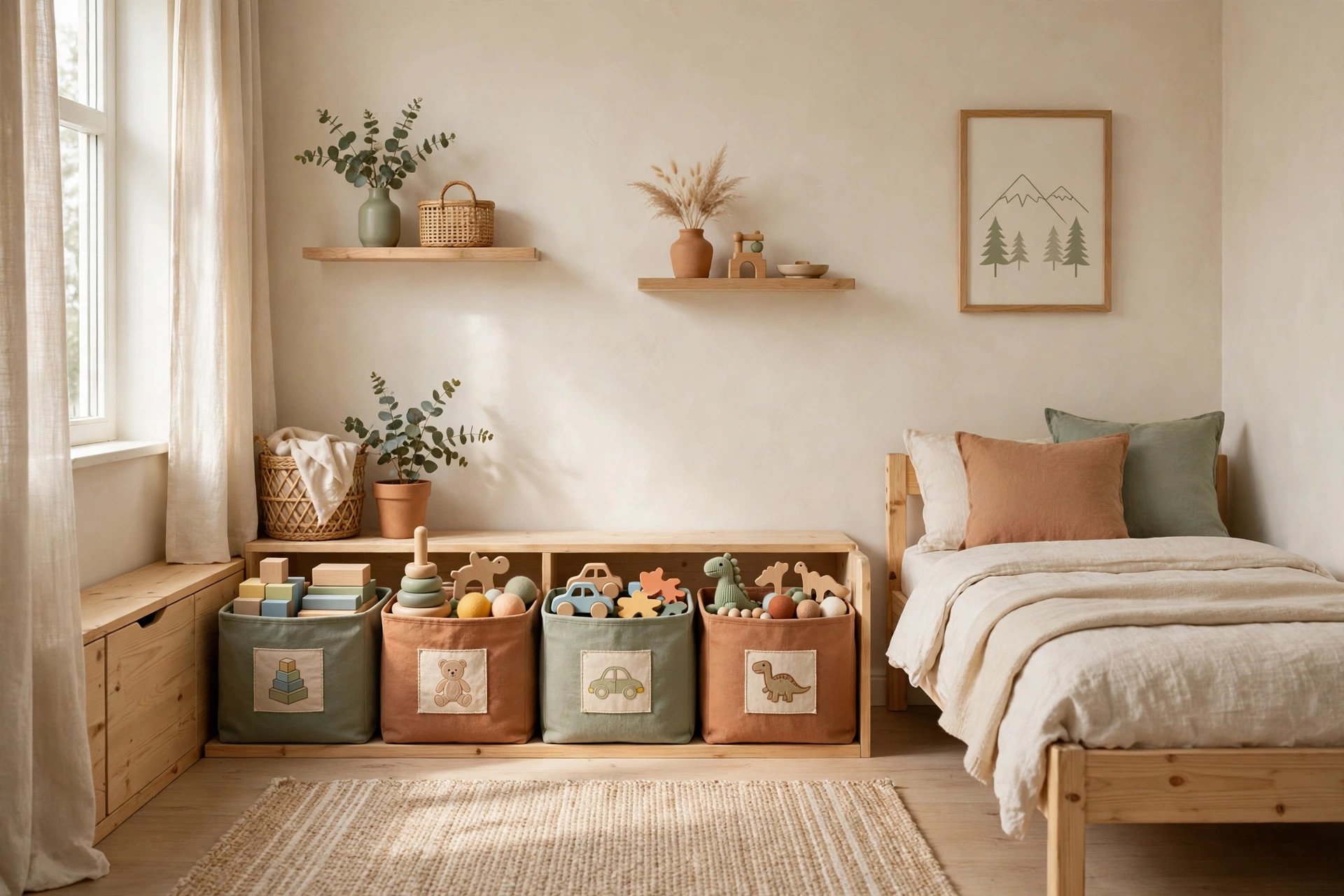
Wall shelves for books and display, floor clear for play
Walls are free storage in a small room. Books and display items belong on the wall; daily toys belong low. That split keeps the floor clear.
5. Mount two picture-ledge shelves at kid-eye level
Picture ledges, the shallow shelves with a lip at the front, are ideal for children’s books because the covers face outward. A child picks a book by its picture, not its spine, so front-facing books get read far more often. Mount two ledges about 36 to 42 inches high, or lower for toddlers, with sturdy wall anchors. Keep each ledge to six to eight books so choosing stays easy and re-shelving stays quick.
6. Reserve one high shelf for display only
One shelf above adult reach, around 60 inches or higher, is the place for trophies, special keepsakes, and the finished Lego set that is no longer played with. Display items up high look intentional instead of cluttered, and they stay safe from daily play. Keep this shelf to a single row with breathing room between objects. If display starts creeping down onto the low shelves, it is quietly stealing play storage, so edit it back twice a year.
Under-bed zones for outgrown and seasonal items
The space under a bed is roughly 30 to 40 square feet in a twin bed, more storage than a small dresser. The mistake is treating it as one dark dumping ground. Split it into zones and it becomes the room’s best overflow storage.
7. Divide under-bed space into two labeled zones
Slide two flat bins or zippered bags under the bed: one for outgrown clothes waiting to be passed on, one for seasonal items such as winter coats or swim gear. Label the ends facing outward so you can identify them without pulling everything out. Flat bins under 6 inches tall fit most standard bed frames; if the bed sits directly on the floor, inexpensive risers add 4 to 6 inches of clearance. Our guide to under-bed storage ideas for small bedrooms covers bin types and dust-proofing in more detail.
8. Keep a “too small, too big” box in constant rotation
Children outgrow clothes fast, and outgrown items left in drawers crowd out clothes that fit. Keep one small box in the closet or under the bed for outgrown clothes. Whenever you spot something too small during laundry or dressing, it goes straight in the box. Once the box is full, bag it for donation, hand-me-downs, or storage elsewhere. The same box in reverse catches clothes bought a size too big: they wait there until they fit instead of cluttering the daily drawers.
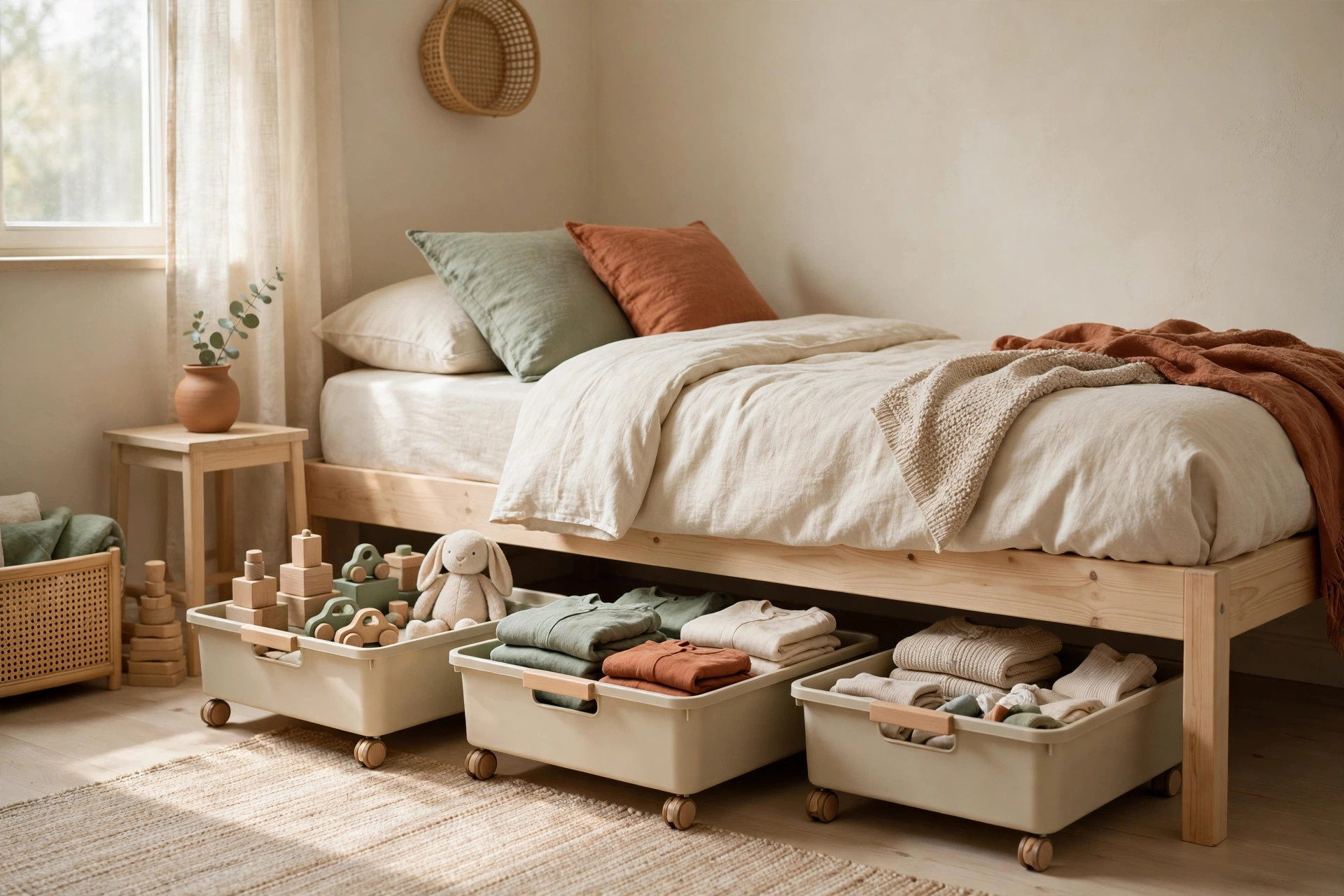
Closet zones sized for small clothes and shoes
A standard closet is built for adult clothes, which wastes the lower half of the space in a kids room. Re-zoning it for small clothes, small shoes, and small reach makes it hold far more.
9. Lower the hanging rod and add a second one
Children’s clothes are short, so a single rod at adult height wastes the bottom 2 feet of the closet. Lower the main rod to about 40 inches, or add a second rod below it at around 24 inches, and hanging capacity roughly doubles. Shirts and pants fit on both rods; dresses and coats take the upper rod only. A tension rod kit costs little and most renters can install one without drilling into studs.
10. Zone the closet floor for shoes and daily outfits
The closet floor is prime real estate for small shoes, which otherwise scatter across the bedroom. A low shoe rack or a row of small baskets keeps pairs together and visible. Reserve one basket for tomorrow’s outfit if mornings are a battle: choosing the night before removes one decision from the morning rush. For a full closet plan, see our kids closet organization ideas.
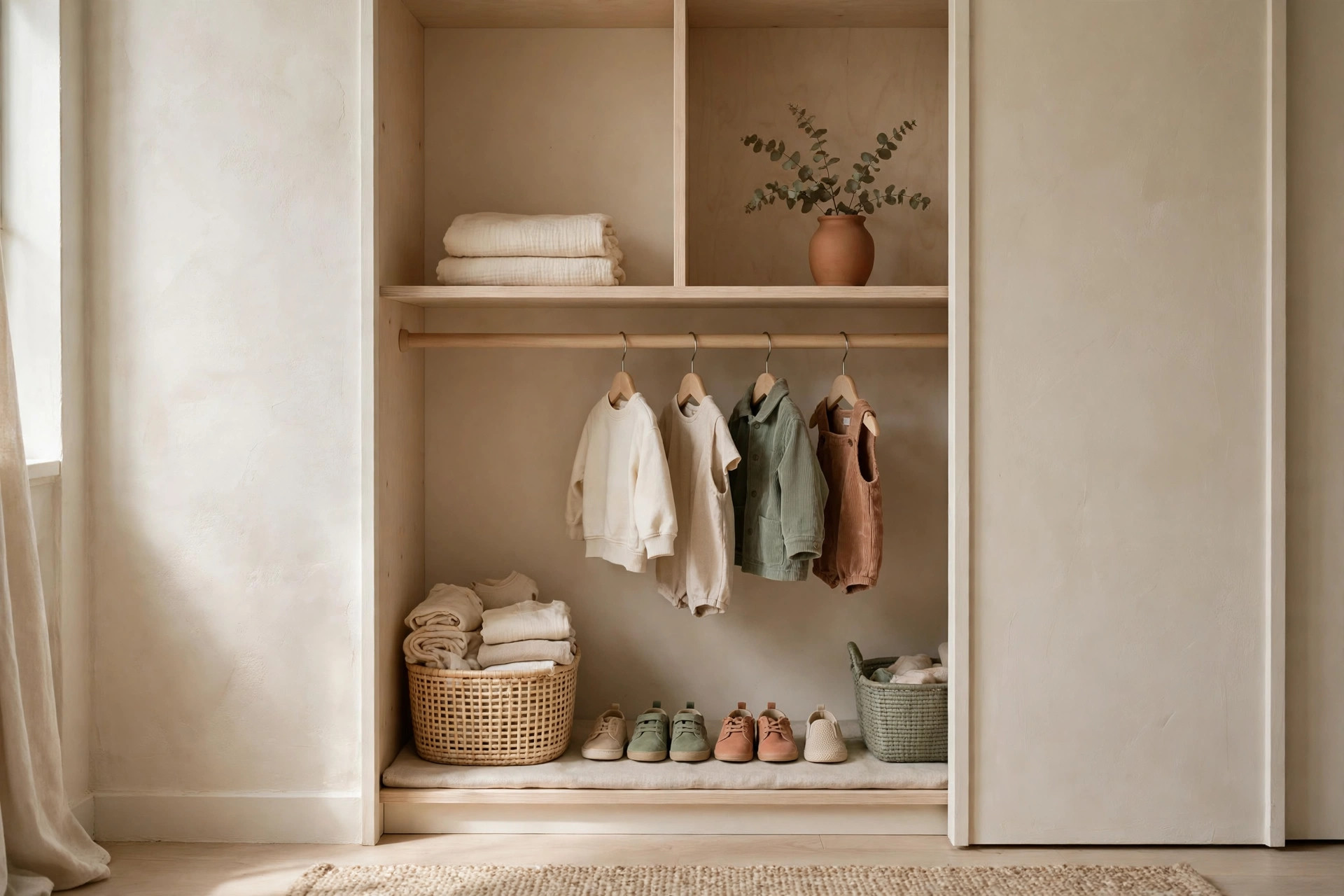
The toy rotation system that halves visible clutter
Toy rotation is the highest-impact idea here for small kids room organization. Instead of displaying every toy at once, keep half in play and half stored away, then swap them every two to three weeks. The room instantly looks half as cluttered, and returning toys feel new again.
11. Sort toys into two equal rotation boxes
Gather every toy and sort into categories first: building, pretend play, art, puzzles, vehicles, soft toys. Split each category roughly in half and pack one half into a labeled rotation box stored in the closet, under the bed, or on a high shelf. Keep the other half in the open bins. The halves should be equal in appeal so the swap feels fair, not like a downgrade.
12. Swap on a fixed schedule, not when the mess peaks
Pick a swap day, such as the first Saturday of the month, and stick to it. On swap day, your child helps choose which toys go away and which come back, which avoids the feeling that toys are being taken away. The swap takes about 15 minutes once the boxes exist. If a toy is never chosen across two rotations, it is a strong candidate for donation.
13. Keep one “quiet box” for small pieces
Tiny pieces, such as puzzle parts and game tokens, cause the worst clutter because they migrate everywhere. Keep one lidded box, used only at a table or on a tray, for these small items. The rule is simple: small pieces stay in the quiet box or on the tray, never loose on the floor.
Labels kids can read: pictures before words
A storage system only works if the child can read it. For pre-readers and early readers, that means pictures, not words. Even older children tidy faster with a picture plus a word.
14. Photograph the contents of each bin
Take a photo of what belongs in each bin, print it small, and tape it to the front. A photo beats a drawing because it shows the exact toys, including color and size. Replace the photo when the contents change, such as after a rotation swap. One clear photo of two or three representative items is enough.
15. Use color coding for shared rooms
In a room shared by siblings, give each child a color: blue bins and labels for one child, green for the other. Shared items, such as books and art supplies, get a neutral color. Color coding ends the “whose mess is this” argument. Keep the colors consistent across bins, baskets, and hooks.
The 5-minute nightly tidy kids can run themselves
Even the best tiny kids bedroom storage fails without a closing routine. The nightly tidy is short, timed, and always the same, so it becomes a habit, not a negotiation.
16. Run a “tidy song” cleanup before bed
Set a timer for five minutes and play one song. The job is to return everything to its labeled home before the song ends. Younger children need you to tidy alongside them at first; older children can run it alone. Keep the scope fixed: floor clear, bins back on shelves, books on ledges. Do not add extra jobs such as dusting or laundry, or it stops feeling finishable.
17. End with a “launch pad” by the door
The last step of the nightly tidy is the launch pad: one hook and one small basket by the bedroom door for tomorrow’s essentials, such as the school bag, shoes, and a jacket. Packing it the night before means mornings start calm instead of with a search. The launch pad also catches items that would otherwise end up dumped on the bedroom floor overnight.
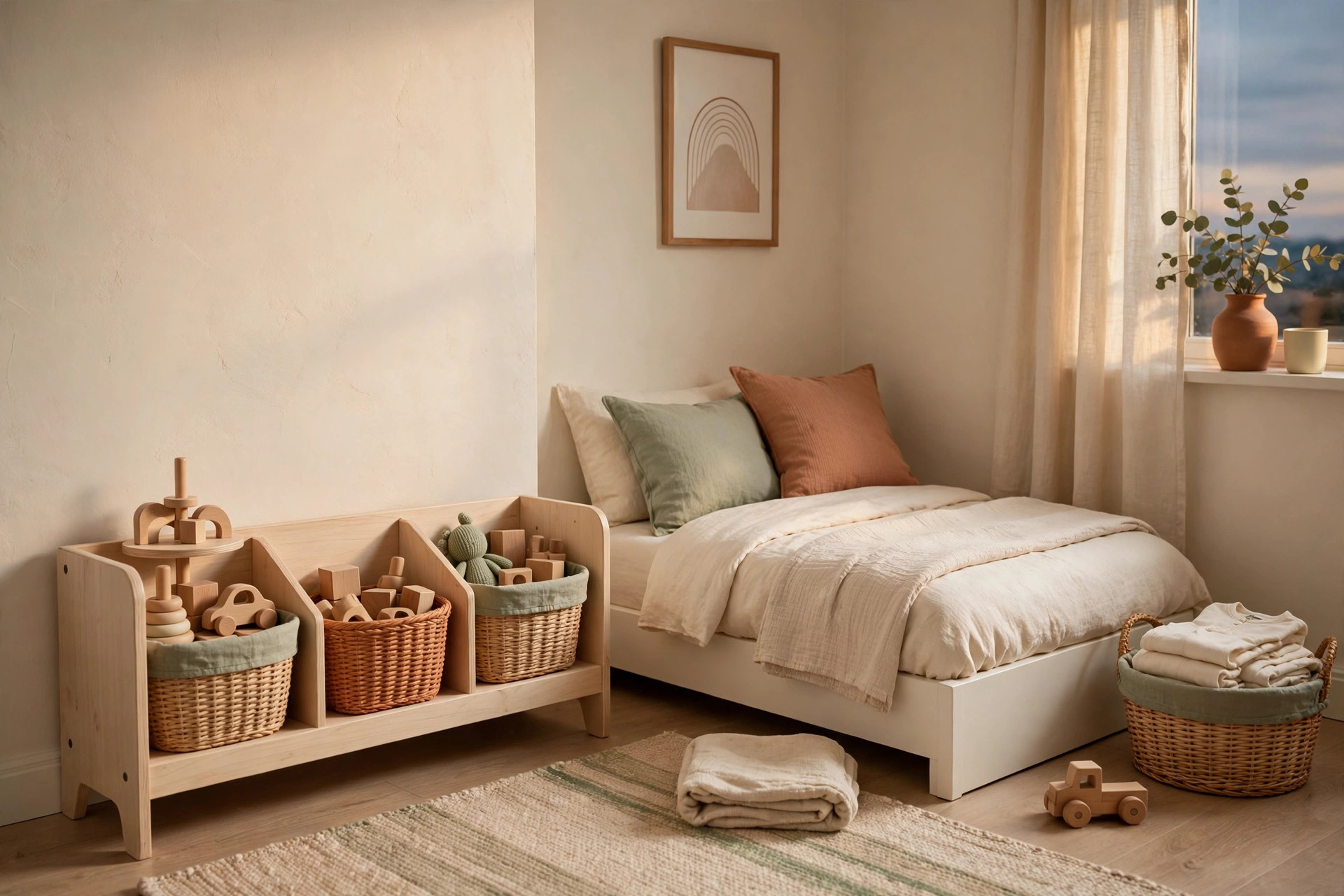
Mistakes to avoid
The most common mistake is buying storage before decluttering. New bins filled with toys nobody plays with just hide the problem and eat floor space. Sort, donate, and rotate first, then buy only the bins the remaining toys need.
A second mistake is choosing lidded, stackable boxes for daily toys. They look neat in the store, but children avoid them because every play session starts with unstacking and unlidding. Save lidded boxes for rotation storage and seasonal items, and keep daily toys in open bins.
A third mistake is storing everything at adult height “to keep it tidy.” High storage guarantees the floor becomes the real storage. If your child cannot reach it alone, it is not their storage.
Finally, avoid one giant toy box. A single deep box turns into a digging pit where favorite toys sink to the bottom. Several small, single-category bins always beat one big box in a small room.
Frequently asked questions
How many toys should a small kids bedroom hold?
Keep only what fits the bins you already own: for most small rooms, four to six open bins of daily toys plus one rotation box out of sight. If a new toy arrives and every bin is full, one old toy leaves or rotates out.
Can toy rotation work for toddlers?
Yes, with shorter cycles and fewer choices. Toddlers do well with three to four bins in play and a swap every one to two weeks, because novelty matters more than variety at that age. Let the toddler point to which toys return.
What is the best storage for a room shared by two kids?
Zone by child rather than by toy type: each child gets their own bins, color, and shelf section, with shared items in neutral bins between them. A low shelf split down the middle keeps ownership clear and arguments short.
How do I organize a kids room with no closet?
Use the same zones without the closet: a low wardrobe or garment rack replaces hanging space, under-bed bins hold seasonal clothes, and wall hooks hold bags and jackets. Our guide to bedroom storage ideas without a closet shows how to build those zones with no built-in storage.
How can I get my child to tidy up without a daily battle?
Make tidying short, timed, and predictable: the same five-minute routine, at the same time, with the same labeled homes every night. Praise the finished floor, and tidy alongside younger children until the habit sticks.
Conclusion
A small kids room stays tidy when storage sits at kid height, every toy has one labeled home, and half the toys rest in rotation instead of on display. Start with the kid zone and the open bins, add rotation next, and finish with the five-minute nightly tidy. For more ideas, browse our small-spaces collection and save this pin for later.