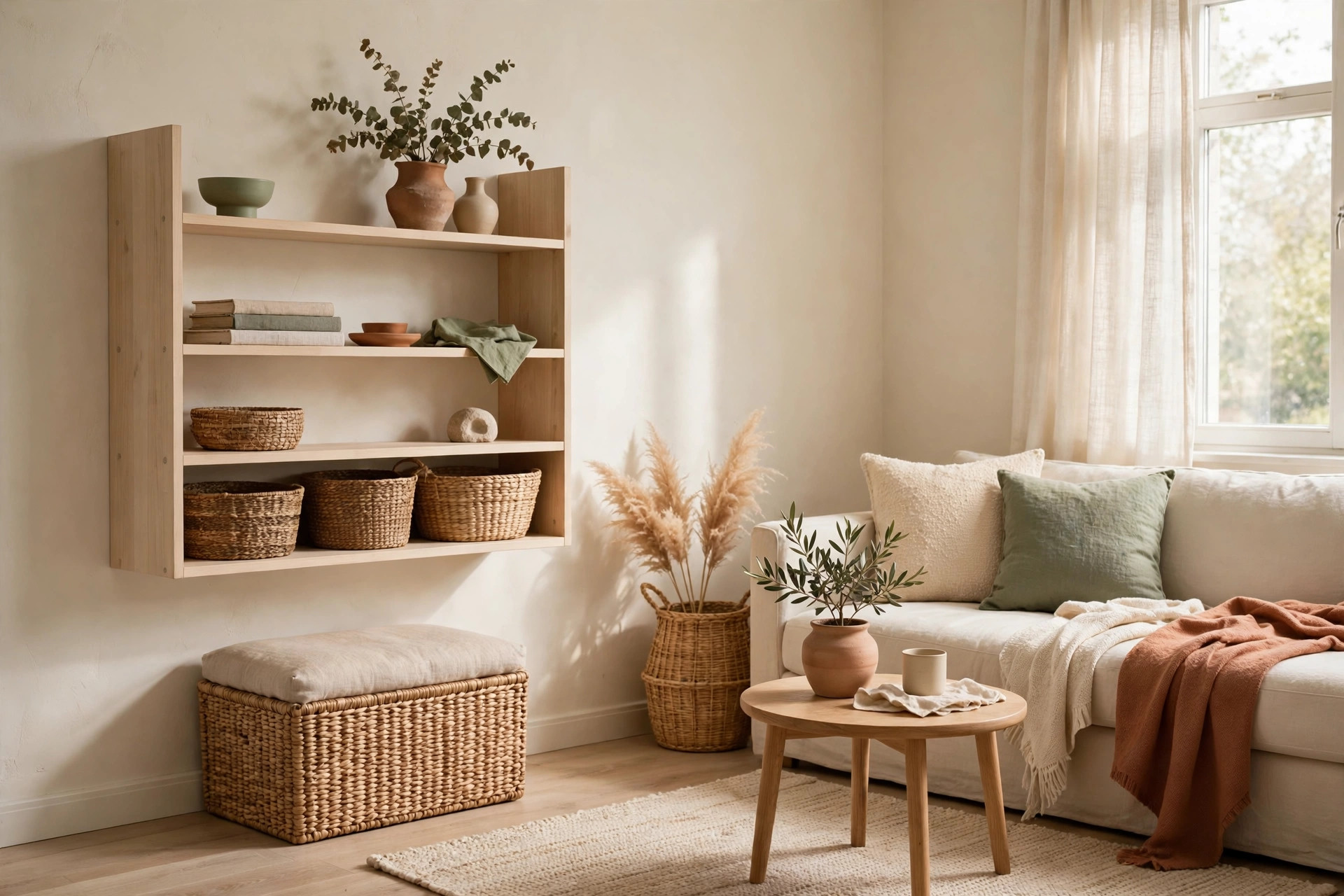
These bookshelf organization ideas assume one reality: in a small apartment, you have one bookcase — maybe two — and it must hold your books, hide your clutter, and look good doing it. A stuffed, sagging shelf makes the whole apartment feel chaotic; a styled one makes even a 400-square-foot studio feel finished. The problem isn’t that you own too much — it’s that one piece of furniture is doing three jobs with no plan. This guide fixes that with 16 practical ideas: an edit test that decides what earns a shelf, calm styling rules like the triangle layout, bins and baskets that hide the ugly on lower shelves, tricks for using a bookcase as a room divider, and a twice-yearly reset that keeps the whole system working for years.
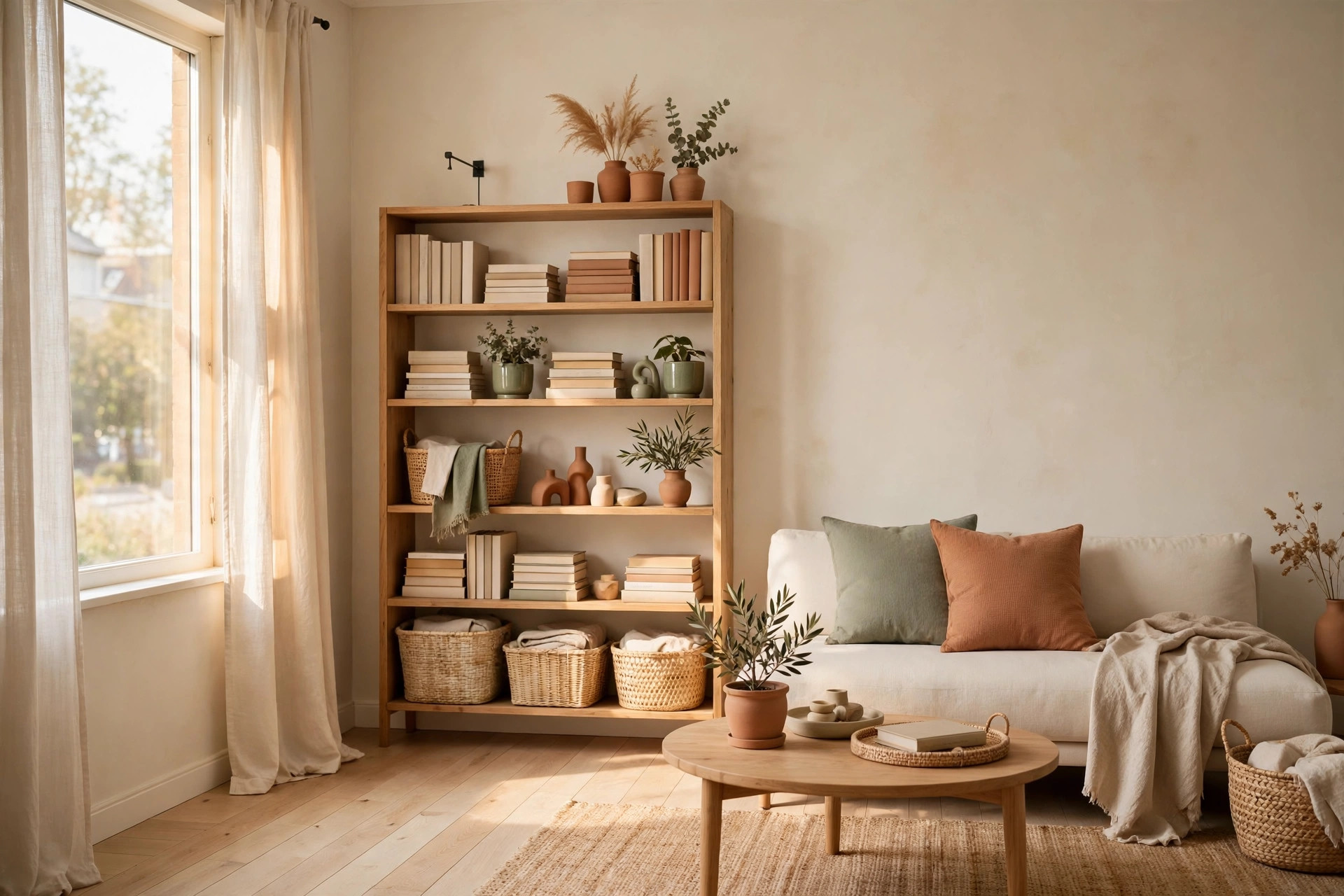
One bookcase, two jobs: storage and display
Your bookcase is a multitasker, not a library. Every shelf has to justify itself twice: does it store something you need, and does it look cared-for?
1. Give every shelf a written job
Before touching a book, assign each shelf: shelf one is books you re-read, shelf two is current projects and charging cables, shelf three is pretty storage (games, linens, keepsakes in bins). Assigned shelf jobs mean the bookcase fills on purpose, not by accident, and everything has a named home.
2. Put the pretty at eye level, the practical at the floor
Eyes land on the middle two shelves first, so style those: favorite books, a small plant, a framed photo. Drop the unglamorous storage — cleaning supplies, paperwork boxes, spare toiletries — on the bottom shelves in closed bins. That’s half of small apartment bookshelf styling: same stuff, placed where it doesn’t shout.
The purge-edit: what earns a shelf in a small apartment
Editing what goes in matters more than how you arrange it. The purge is a 20-minute habit you repeat before every re-style, not a weekend project.
3. Run the one-touch keep test
Pick up each book once: will you re-read, reference, or truly treasure it? No means it leaves — donation box, friend, or buy-nothing group. One tall bookcase holds 60 to 120 books comfortably; the rest is decoration costing you a storage slot. Re-shelve only what passed.
4. Use the two-box rule for everything that isn’t books
Non-books that want shelf space — manuals, chargers, notebooks — must fit one of two boxes: a slim “use weekly” tray on an upper shelf, and a labeled closed box below for the rest. If it fits neither, it belongs in a drawer. The bins enforce the system when your willpower fades, which is why these bookcase organization ideas keep working.
Vertical styling: the triangle rule for tidy shelves
Small apartments win on vertical space, and vertical storage ideas for small apartments start with the bookcase you already own.
5. Style each shelf in a triangle
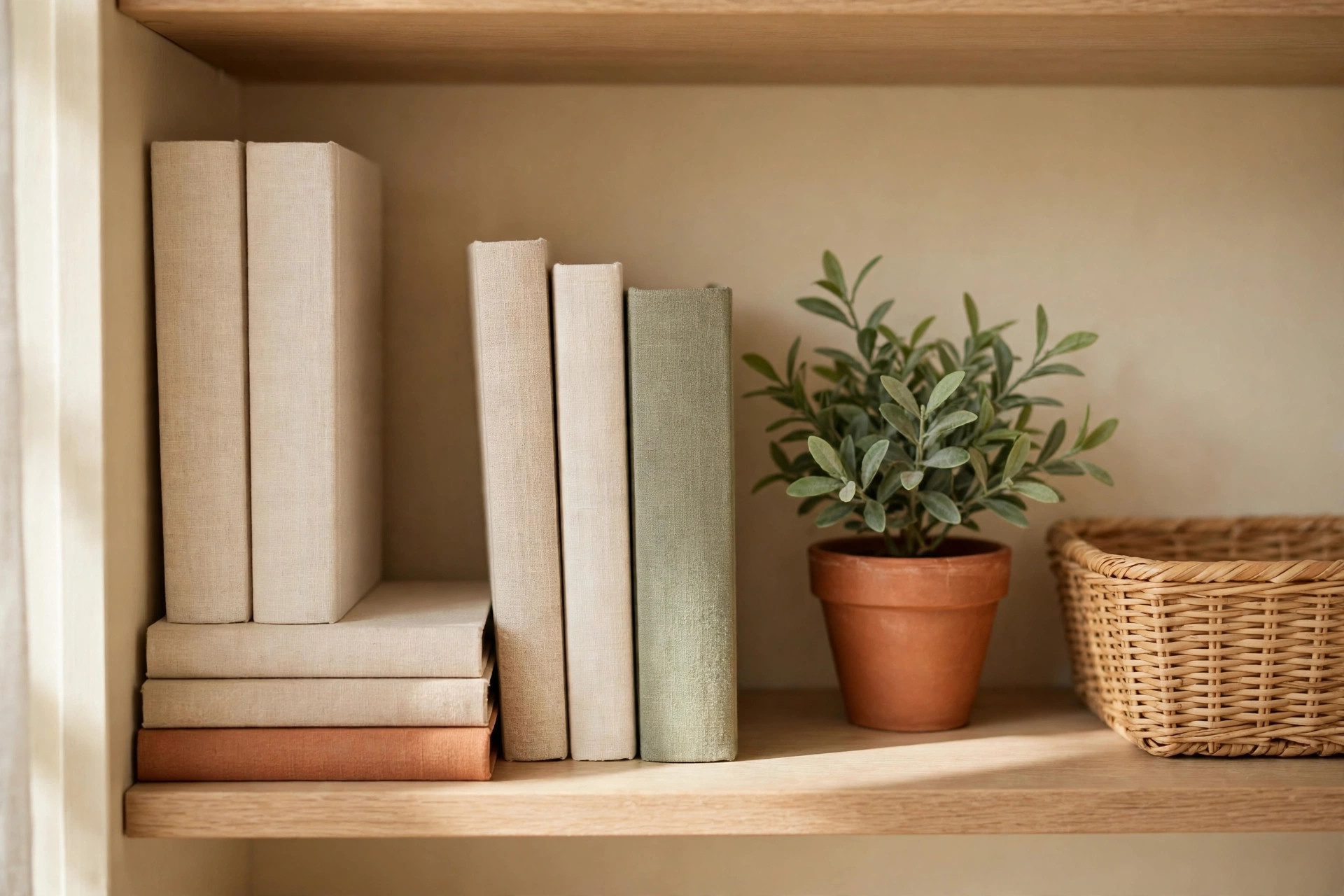
Arrange each shelf in a rough triangle: tallest item (upright books, a tall vase) on one end, descending to something short on the other — a horizontal book stack with a candle, a small bowl. The eye follows the slope and reads the shelf as one calm unit. Repeat or mirror the direction on adjacent shelves and the bookcase looks designed, not dumped.
6. Leave 30 to 40 percent of every shelf empty
Air separates a styled shelf from a crowded one. Aim for one-third of each shelf showing nothing but the shelf — it lets books slide out, rests your eye, and makes the unit look bigger. If a shelf is packed wall to wall, remove a row of books before styling anything else.
7. Build height with risers and book stacks
When shelves feel flat, create levels: stack three to four large books flat and top them with a candle or frame; tuck a 3-inch wooden riser under a plant so it clears the books beside it. Mixing vertical rows, horizontal stacks, and raised objects breaks the “all spines in a row” monotony — and a flat stack doubles as a display stand.
Bins and baskets on the lower shelves: hiding the ugly
The lower third of a bookcase is where real life lives — paperwork, tools, charging bricks, the router. Closed storage here isn’t cheating; it’s the system.
8. Match bin color to the bookcase, not to each other
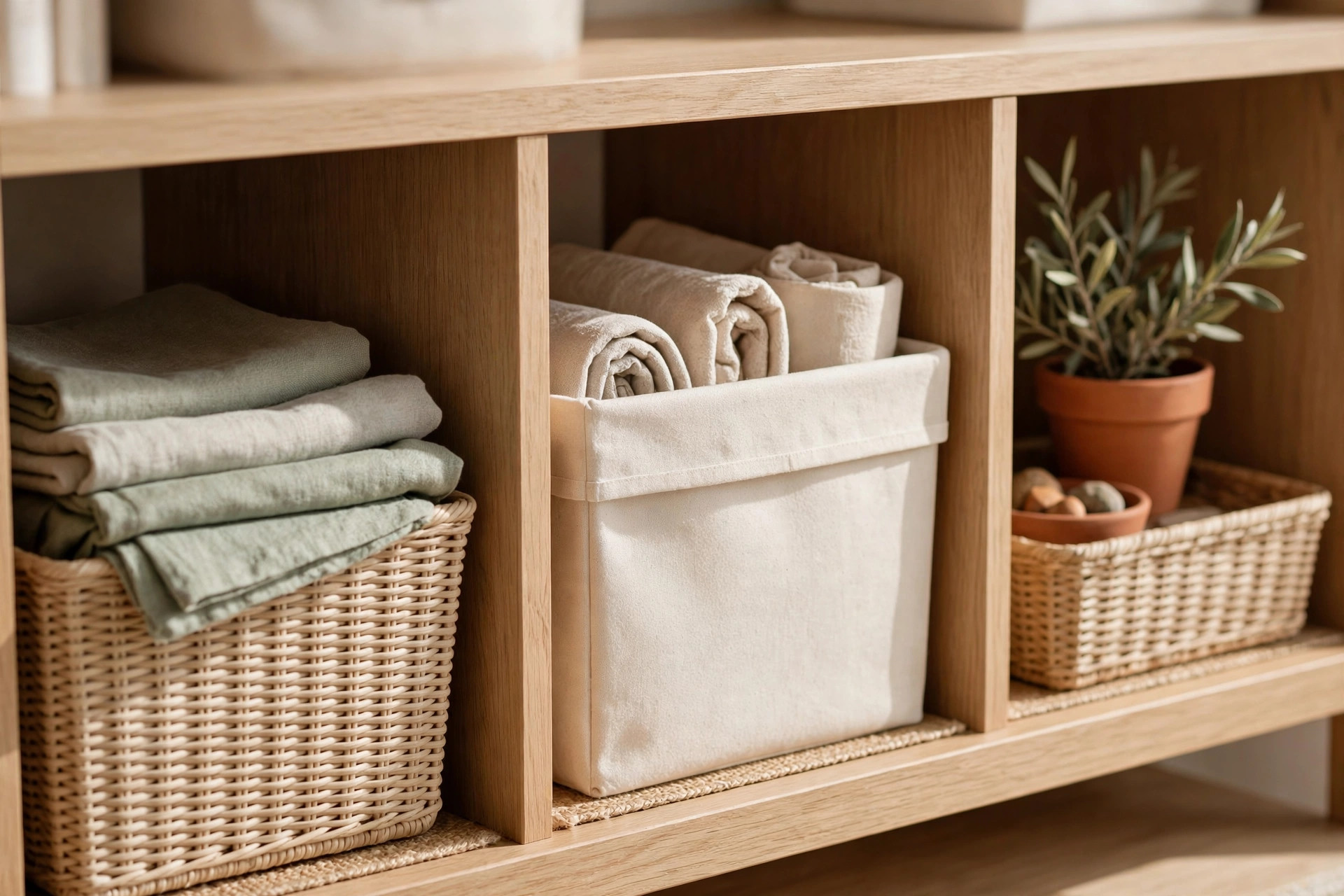
Buy bins in one material that echoes the shelf — seagrass or cotton canvas against wood, matte white or gray against painted shelves — sized to fill the opening with half an inch of clearance per side (measure first — most shelves fit 10–12-inch cubes). Mismatched bins scream “storage unit”; matched bins read as furniture.
9. Park paper flat in upright magazine files
Manuals, warranties, and keep-forever mail go into upright magazine files — one per category — filed vertically like books. Label each spine (“apartment docs,” “medical,” “tax”). Three to four files hold a surprising amount of paper and pull out like books. Anything that can’t earn its file after six months gets recycled.
10. Treat a deep basket like a drawer
One handled basket on a lower shelf swallows the homeless smalls: chargers, spare batteries, the TV remote, the sewing kit. The rule: the basket is the drawer, so smalls never live loose on a shelf again. It pulls out and carries to the sofa — loose-item chaos drops to zero when everything has one catch-all.
Color and size grouping: when it works, when it’s fussy
Color-coordinated shelves photograph beautifully but can fight with finding your books. Here’s the honest middle ground.
11. Group by height first, then loosen color within each shelf
Slope each shelf’s spines — tall left, short right, or a gentle pyramid from center. Height grouping looks calm and keeps every book findable. Then let colors fall where they may; if one neon spine jolts against five cream ones, tuck it behind the row. Tidy look, no rainbow you can’t browse.
12. Face-out display your five favorites
Pick five books you’re proud of — beautiful covers, the ones guests ask about — and face them outward like a shop window, leaning on a bookend or small easel. Face-out display buys the styled-shelf look for almost no effort, and five is few enough to never feel like a bookstore. Our small home office organization corner uses the same face-out trick to make one corner pull double duty.
Bookcases as room dividers in studios and open plans
In a studio, a freestanding bookcase is the most renter-friendly room divider — no drill, no landlord fight. It has rules of its own, though.
13. Use an open-backed bookcase so both sides get light
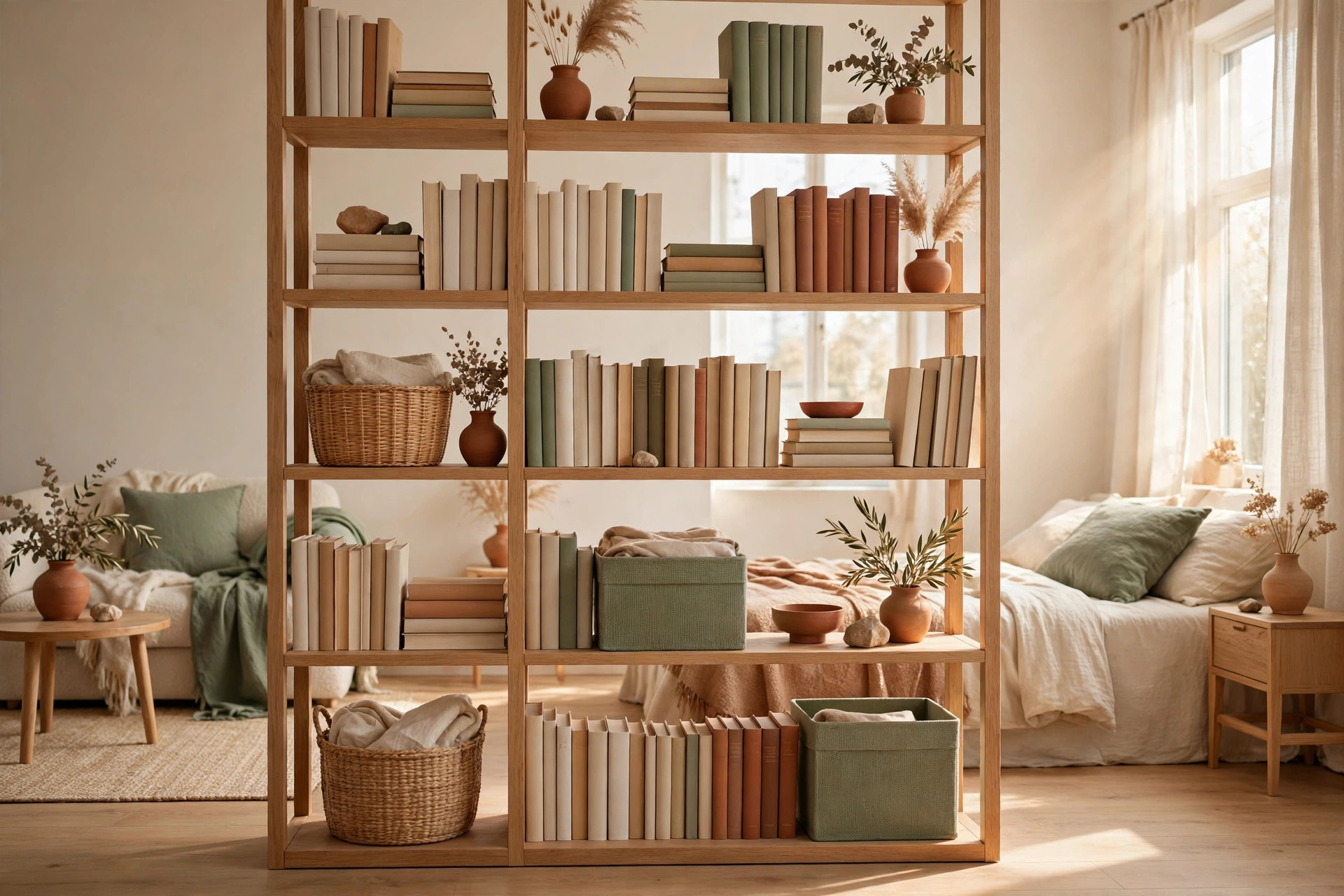
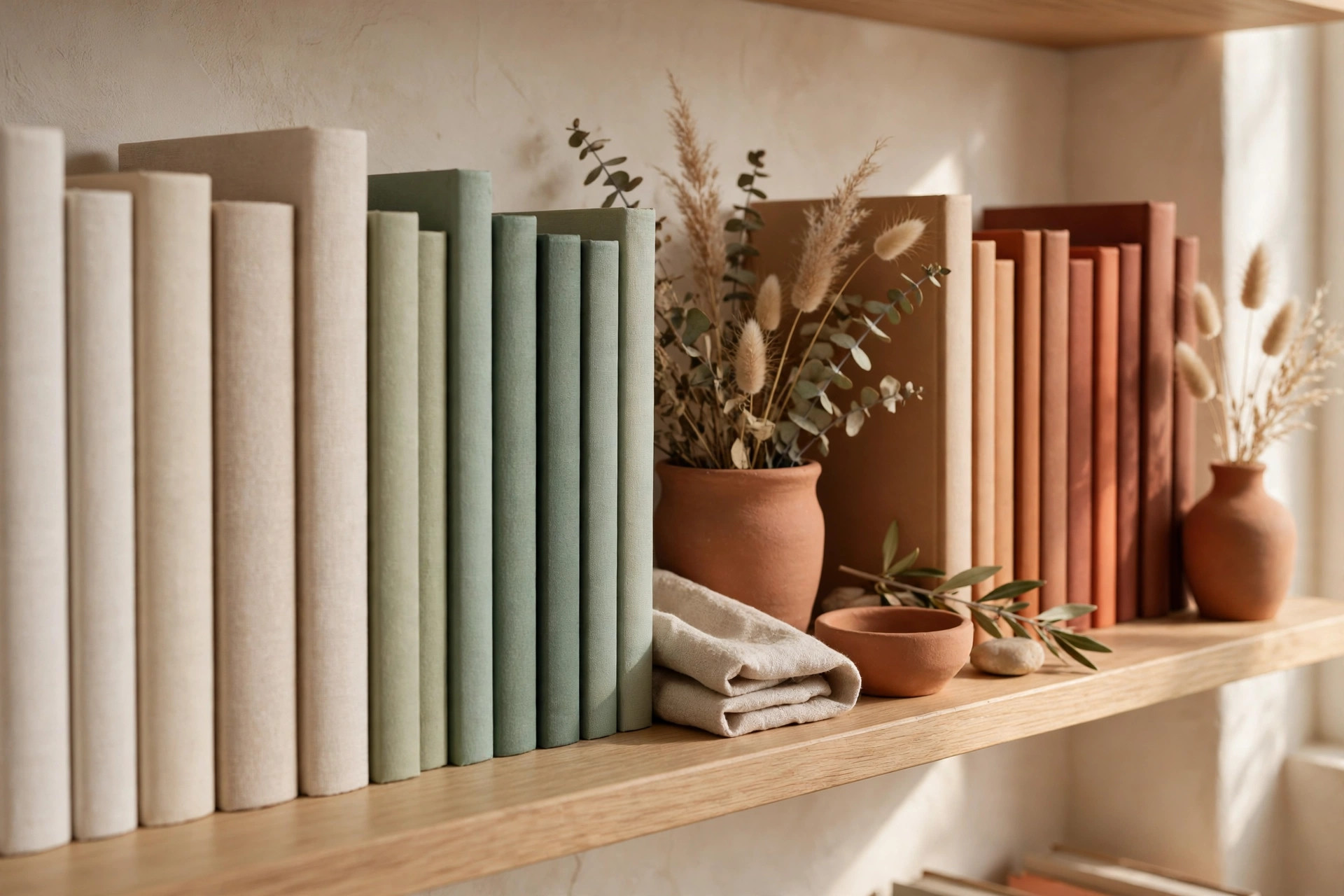
A solid-backed bookcase used as a divider turns the far side into a cave. Choose an open-back or cube-style unit so light passes through and both sides can be styled — books facing the living side, soft storage bins facing the bed side. Place it perpendicular to the wall with 2 feet of walkway on the busy side, top under 5 feet. Our guide to creating zones in a studio apartment shows where dividers should sit.
14. Anchor any divider bookcase before you style a single book
A freestanding bookcase mid-room can tip — and a falling bookcase full of books is genuinely dangerous. Anchor the top to a wall or ceiling bracket where you can; otherwise strap it to a heavy low piece and load the heaviest items on the bottom shelves. The U.S. Consumer Product Safety Commission’s Anchor It! guidance shows how to fit anti-tip kits — a $15 kit is the cheapest insurance in the room.
Keeping it dusted and edited: the 6-month shelf reset
Bookshelves are dust magnets, and a styled shelf decays at roughly one junk item per month. The reset is the maintenance half of these bookcase organization ideas — without it, the styling lasts about eight weeks.
15. Run the 30-minute reset every six months
Twice a year — tie it to the clock change — clear one shelf at a time, dust with a microfiber cloth (dry first), and re-shelve using the triangle rules from idea 5. The reset catches the drift: the migrated candle, the mail on the pretty shelf, the sideways “temporary” book. Thirty minutes per bookcase, twice a year, and it never needs a full redo.
16. Follow the one-in, one-out rule for books
Every new book triggers a choice: which existing book leaves? This one rule keeps ideas 1 through 15 alive, because small-apartment shelf space is a zero-sum game. No “I’ll read it someday” exceptions — if it can’t beat a book you own for a slot, it doesn’t get the slot.
Mistakes to avoid: what NOT to buy
These purchases quietly sabotage bookcase organization ideas in small apartments — skip them.
- Deep cube organizers bought for books. 13-inch-deep cubes swallow paperbacks into a dark cave where titles vanish. Cubes are for bins and games; books want 8–10-inch-deep shelves.
- Tiny decorative objects in bulk. Twelve miniatures reads as clutter, not charm. One statement piece per shelf — a vase, a framed print — and everything else earns its place by being useful or loved.
- Bookends that don’t grip. Lightweight decorative bookends slide and collapse the row. Get weighted metal L-bookends (around 5 inches tall) that tuck under the books — the row’s weight holds them.
- Matching “shelf decor sets.” Pre-matched vases and boxes make your bookcase look like everyone else’s, and the boxes store nothing. Buy storage first (bins that fit your openings), then add one decor piece at a time.
- A second bookcase before the first is edited. More shelves never fix an un-edited collection. Run the purge-edit (ideas 3 and 4) first.
Frequently asked questions
How do you organize bookshelves in a small apartment without them looking cluttered?
Edit first, style second. Purge to books you re-read, reference, or love; assign each shelf a job; keep a third of every shelf empty; and bin the bottom shelves for everything unpretty. Clutter comes from too much stuff per inch, not from the wrong styling trick.
Can I use a bookcase as a room divider in a studio apartment?
Yes — pick an open-backed unit under 5 feet tall, place it perpendicular to the wall, and style both sides. Anchor it with an anti-tip kit where possible, load the heaviest items lowest, and leave a clear walkway on the busy side.
How do I keep my bookshelf from getting dusty?
Dust shelves and book tops with a dry microfiber cloth during the 6-month reset, and run a feather duster across the tops monthly — two minutes. Closed bins on lower shelves collect far less dust than open piles, so binning the ugly also cuts the cleaning.
Should I organize books by color?
Only if you rarely need to find specific books. Group by height first — tall to short per shelf — which looks calm and keeps every spine findable. Reserve color grouping for one display shelf of face-out favorites.
Conclusion
Sixteen ideas, one goal: a bookcase that stores what you need, hides what it should, and makes your small apartment look intentional. Save this pin for later, and browse our decorating guides for more small-space ideas.