A spare duvet, two extra blankets, and a set of winter sheets can swallow an entire closet shelf — and in a small apartment, that shelf is space you cannot afford to lose. Bedding is bulky, seasonal, and awkwardly shaped, which is why it ends up draped over chairs, stuffed on top of wardrobes, or crammed into bags you dread opening. These bulky bedding storage ideas work by splitting bedding into two groups: everyday blankets you actually reach for, and off-season sets that only need a home twice a year. Below are 15 ideas in order, from measuring your stash to a twice-yearly swap routine that stops the pile from growing back.
Measure the bulk: what your bedding actually takes
Before you buy a single bin, find out how much bedding you own and how much room it really needs.
1. Fold, stack, and measure each set before buying anything
Take every duvet, blanket, and sheet set out of its hiding place and fold each one the way you would store it. Measure the folded stack — a folded queen duvet is typically around 15 by 12 by 8 inches, while a thick winter comforter can be closer to 18 by 14 by 10 inches. Note the numbers, then measure your spaces: under-bed clearance, closet shelf depth, and wardrobe top. Buy containers to fit those numbers — a bin even an inch too tall for your under-bed gap will end up in the hallway.
Vacuum bags: when they help and when they hurt
Vacuum bags shrink a puffy duvet to roughly a third of its size, but they are also the easiest storage tool to misuse.
2. Vacuum-seal off-season duvets you will not touch for months
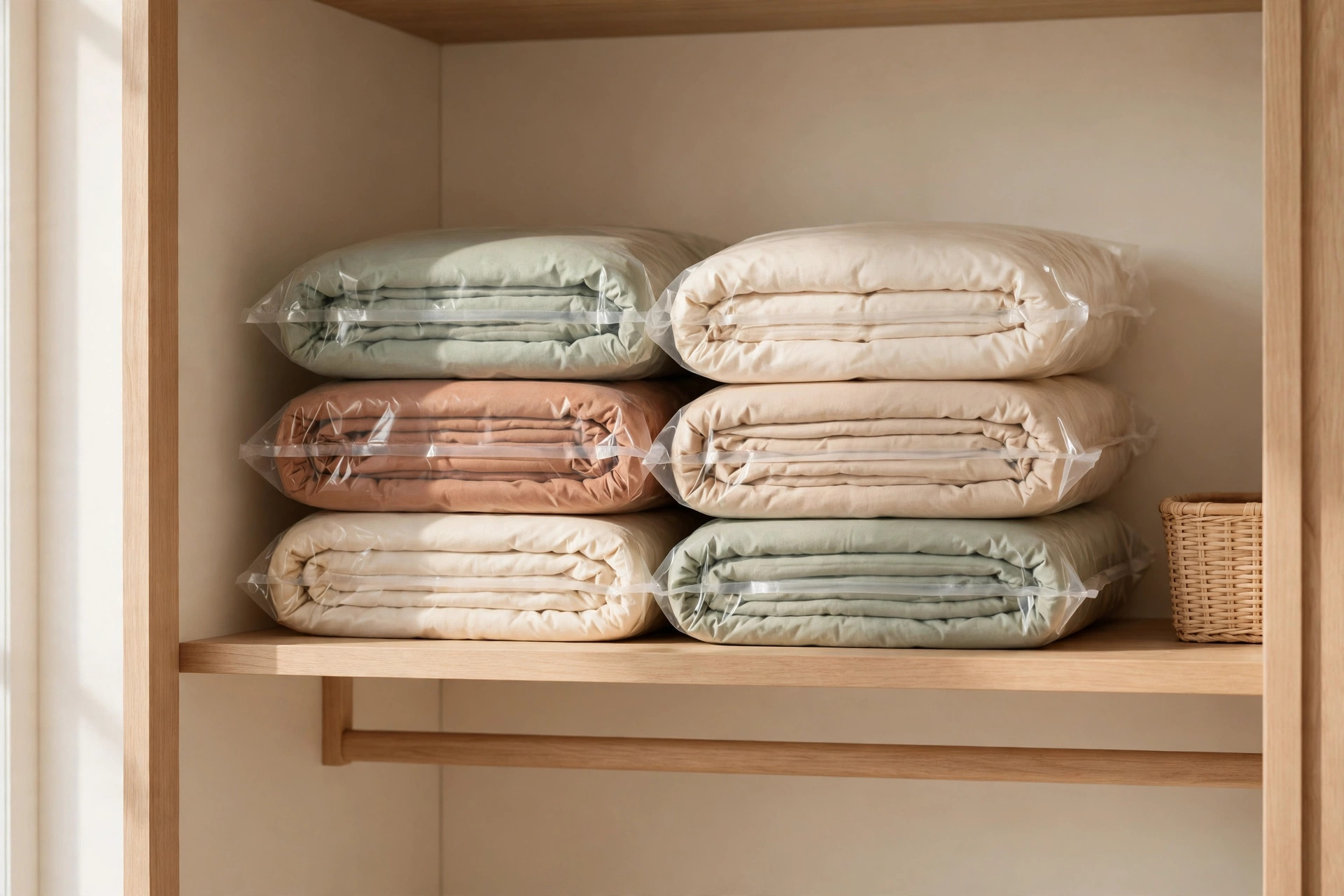
A vacuum bag is ideal for the heavy winter duvet that sits unused from spring through autumn. Fold the duvet loosely, slide it in, seal the bag, and draw the air out until the package lies flat. Flat packs stack neatly on a high shelf or slide under a bed, and the seal keeps out dust and moths. Label each bag — “Winter duvet, queen” — so you are not opening three bags in November.
3. Skip vacuum bags for down, feather, and everyday bedding
Down and feather fillings can lose loft if compressed for months, leaving a flat duvet that never fully fluffs back up. Daily-use blankets are a worse fit still: re-sealing a bag every evening gets old fast, and seams tear within weeks. Keep down and daily-use bedding in breathable storage; reserve vacuum bags for synthetic-fill, off-season pieces.
Under-bed flat storage for off-season bedding
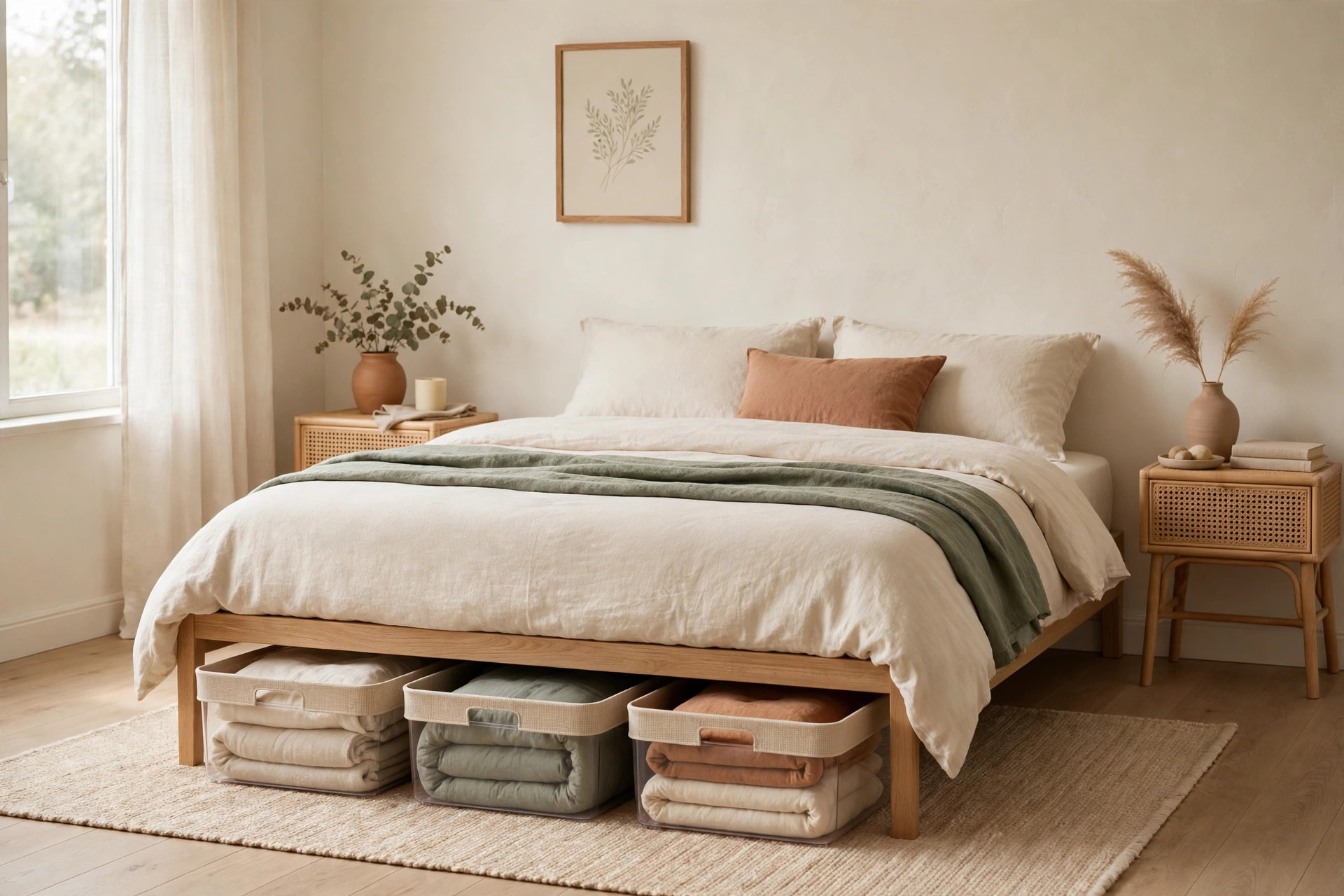
Under-bed space is the best home for off-season bedding in a small apartment: wide, flat, and out of sight. For more ways to use this zone, see these under-bed storage ideas for small bedrooms.
4. Use low-profile rolling bins for the sets you swap most
Rolling bins about 6 inches tall slide under most bed frames and pull out without moving the bed. One bin per bedding set keeps things simple: one for the winter duvet, one for the summer set. Choose lidded bins, with larger soft wheels if your bedroom is carpeted — small hard wheels snag on rugs.
5. Try flat zippered bags when clearance is under 6 inches
If your bed frame sits low, rigid bins will not fit. Flat zippered storage bags, roughly 40 by 18 by 6 inches, are made for exactly this gap. They hold a folded queen duvet or two blankets, zip shut against dust, and mould to the space instead of fighting it.
Top-shelf and high-closet bedding zones
High shelves are hard to reach, which is exactly what makes them right for bedding you touch twice a year — if you organize them so bags don’t go up there to be forgotten.
6. Give each bedding set its own labelled bin on the top shelf
One bin per set, labelled on the side visible from below, turns a high shelf into a filing system. Use lightweight fabric or thin plastic bins — a heavy box full of bedding is awkward and unsafe to lift down from above your head.
7. Stack folded bedding vertically with shelf dividers
Folded bedding stacked flat on tall shelves becomes a wobbly tower that collapses when you pull out the bottom set. Shelf dividers spaced about 12 inches apart create upright slots so each set stands like a book — you can pull one out without disturbing the rest. This works best for sheet sets and lighter blankets that fold into tidy rectangles.
Baskets and ottomans for everyday blankets
Everyday blankets need to be within arm’s reach of the sofa or bed and easy to put away — otherwise they end up on the floor.
8. Keep one woven basket by the bed or sofa for daily throws
A single large basket, roughly 18 inches across, holds two to three folded throws and looks like decor rather than storage. The rule: the basket holds only blankets currently in use. When a fourth appears, one leaves — back to its proper zone or out of the apartment.
9. Choose a storage ottoman that earns its floor space
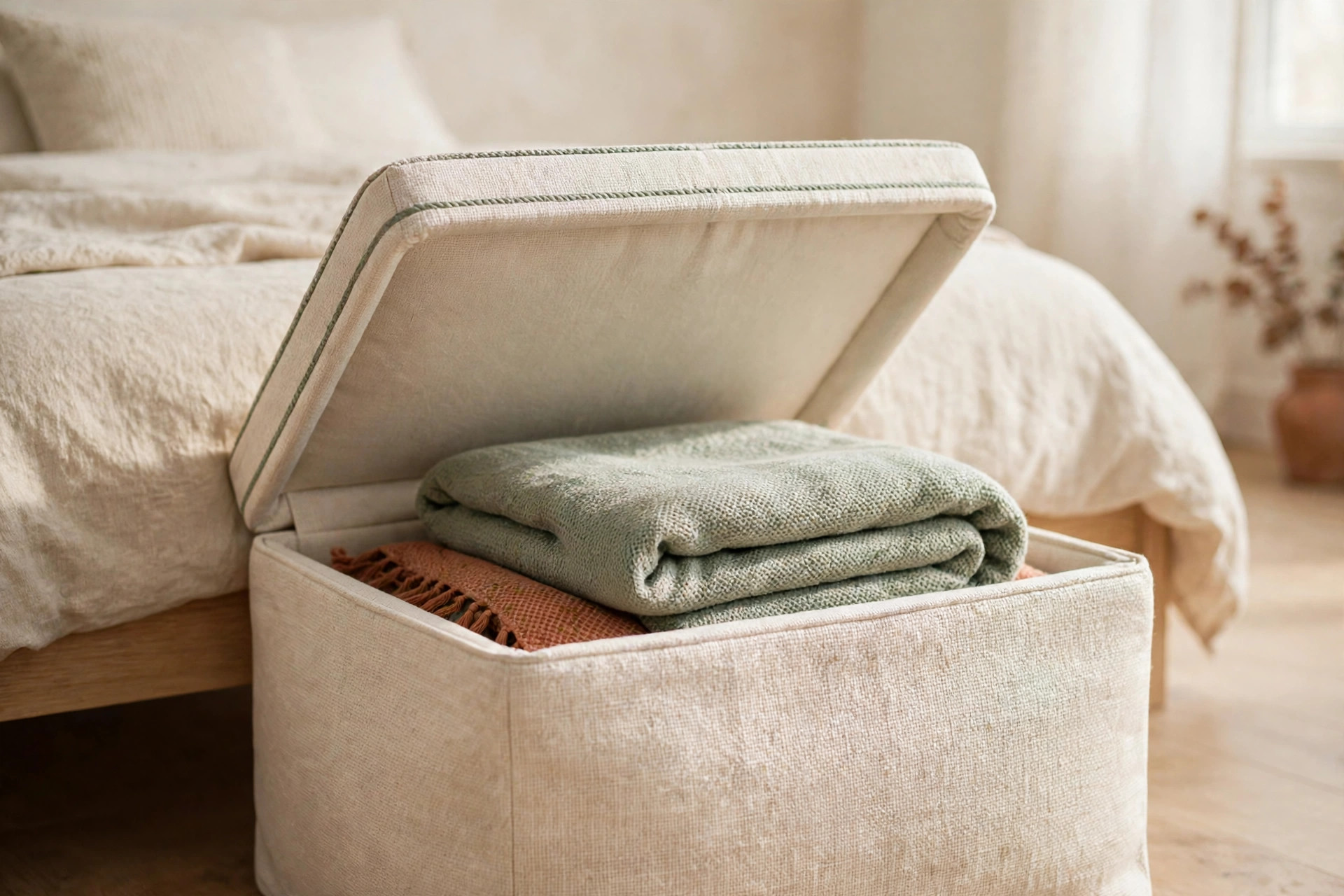
A storage ottoman at the foot of the bed or beside the sofa gives you a seat, a footrest, and a home for one or two everyday blankets. Look for a hinged lid and washable lining, since stored blankets pick up dust over time. If your room has no closet at all, the same double-duty logic applies throughout — see these bedroom storage ideas for small rooms with no closet for the full approach.

Linen closet vs bedroom: splitting the stash
When both a linen closet and bedroom storage exist, what goes where depends on how often you use each item, not on where it happens to fit today.
10. Keep the current set and one spare in the bedroom
Your bedroom should hold the bedding on the bed, one complete spare set, and the everyday blankets from the basket or ottoman. That is it — so a 2 a.m. sheet change never involves a hunt through off-season bags.
11. Move off-season and guest bedding to the linen closet
The linen closet takes the winter duvet in summer, the summer set in winter, and the guest bedding. Organize it by season, not item type: a “winter” shelf and a “summer” shelf beat separate piles you must reassemble each swap. If your linen closet is tiny, these tiny linen closet organization ideas show how to make a narrow closet hold twice as much.
Keeping stored bedding fresh and dust-free
Stored bedding goes musty for two reasons: it went in damp, or it sat in a sealed container with no airflow for months. Both are preventable with a short routine at packing time.
12. Wash and dry bedding completely before it goes away
Never store bedding straight off the bed. Wash it, then dry it until fully dry — not “mostly dry.” Even slight dampness trapped in a sealed bag turns musty within weeks and can encourage mildew. If you line-dry, give duvets a full day in moving air, then finish on low in the dryer for 20 minutes.
13. Use breathable cotton bags for long-term storage
For bedding stored longer than a few months, especially natural fibres like cotton and wool, breathable cotton bags beat plastic: they keep dust out while letting air circulate. Add a cedar block or lavender sachet for moth protection, and skip scented dryer sheets, which can leave residue over time.
The seasonal bedding swap routine
A bedding system only works if the swap itself is easy. If switching seasons takes an afternoon of hunting and refolding, you will put it off — and the winter duvet will live on the sofa for a month.
14. Pack each season as one labelled swap box
Instead of storing duvets, sheets, and pillowcases separately, pack the outgoing season as one complete set in one box: duvet, fitted sheet, flat sheet, and pillowcases together. On swap day you lift out one box and put one box back — fifteen minutes, and nothing gets left in a forgotten corner.
15. Put the swap on the calendar twice a year
Pick two dates — late October and late April suit most climates — and treat them as fixed appointments. On swap day, wash the outgoing set before packing it, wipe out the bin, and check for damp or damage. Two short sessions a year keep the system running.

Mistakes to avoid
Storing bedding damp is the fastest way to wreck the system — mustiness can take multiple washes to remove. Buying containers before measuring is second: oversized bins that don’t fit your bed clearance or shelf depth become clutter themselves. Third, don’t vacuum-seal down or feather bedding for months, or you risk flattening the loft permanently. Fourth, avoid lofts, garages, or anywhere damp or unheated; humidity is hard on fabric. Finally, don’t keep every set you’ve ever owned — two sets per bed plus one guest set is the limit in a small apartment.
Frequently Asked Questions
Can I store a duvet in a vacuum bag long-term?
Yes, for synthetic-fill duvets stored for one season at a time. Avoid long-term vacuum storage for down and feather duvets, which can lose loft if compressed for many months; breathable cotton bags are the safer option there.
How do I store bedding in a small apartment with no linen closet?
Split the stash between under-bed flat storage for off-season sets and a basket or storage ottoman for everyday blankets. The top shelf of your wardrobe can take one labelled bin per set.
What is the best way to keep stored blankets smelling fresh?
Wash and fully dry blankets before storing them, use a breathable cotton bag, and add a cedar block or lavender sachet. Air bedding for a few hours before putting it back on the bed after months in storage.
How many bedding sets should a small apartment keep?
Two complete sets per bed plus one guest set is the practical maximum. If you have more, keep the newest and best-condition sets and pass the rest on.
Conclusion
Bulky bedding stops being a problem once everyday blankets and off-season sets live in separate, labelled zones: under the bed or up high for twice-yearly swaps, and in a basket or ottoman for daily throws. Measure first, pack dry, and let the calendar handle the swap. For more ideas, browse the storage ideas category — and save this pin for later.