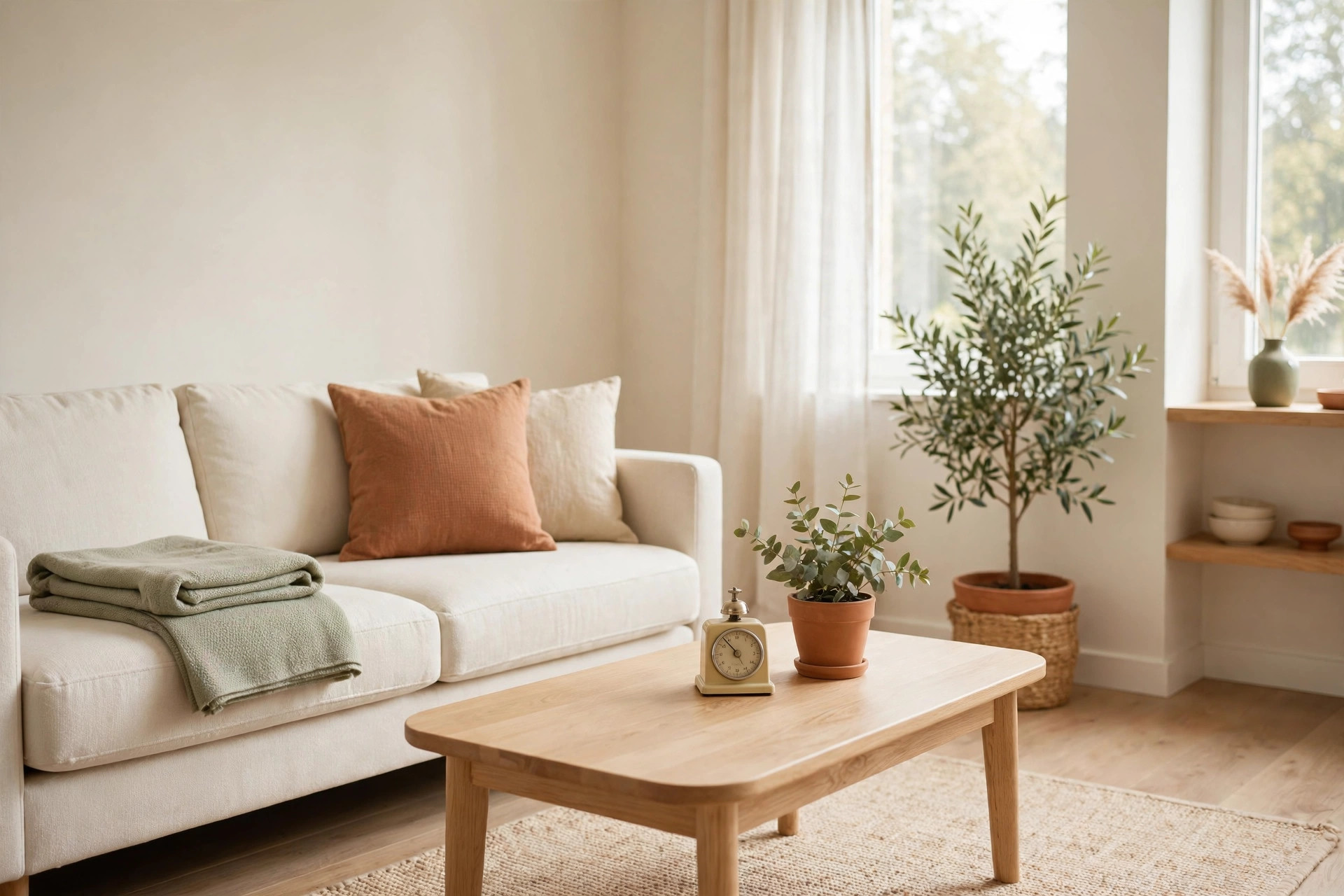
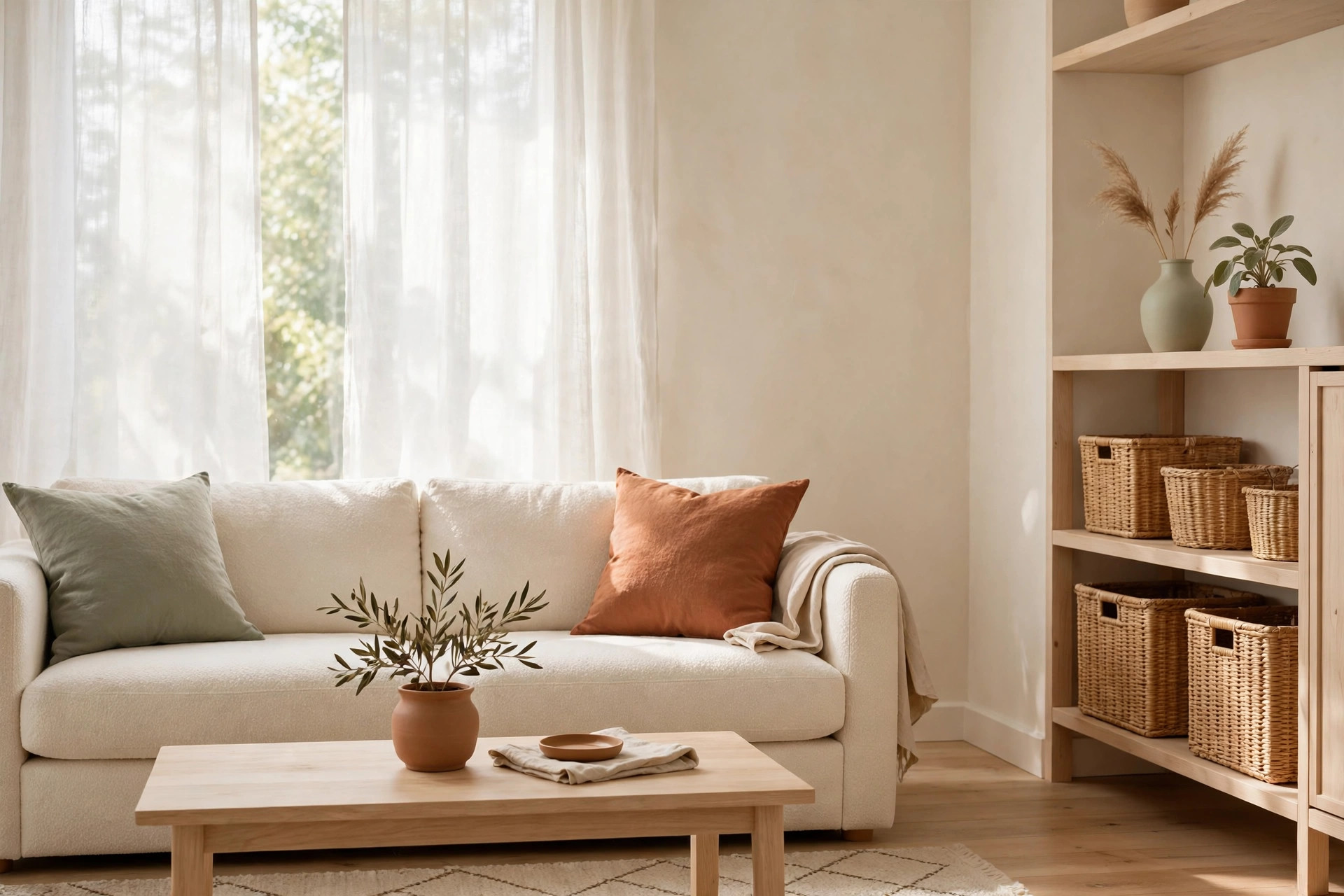
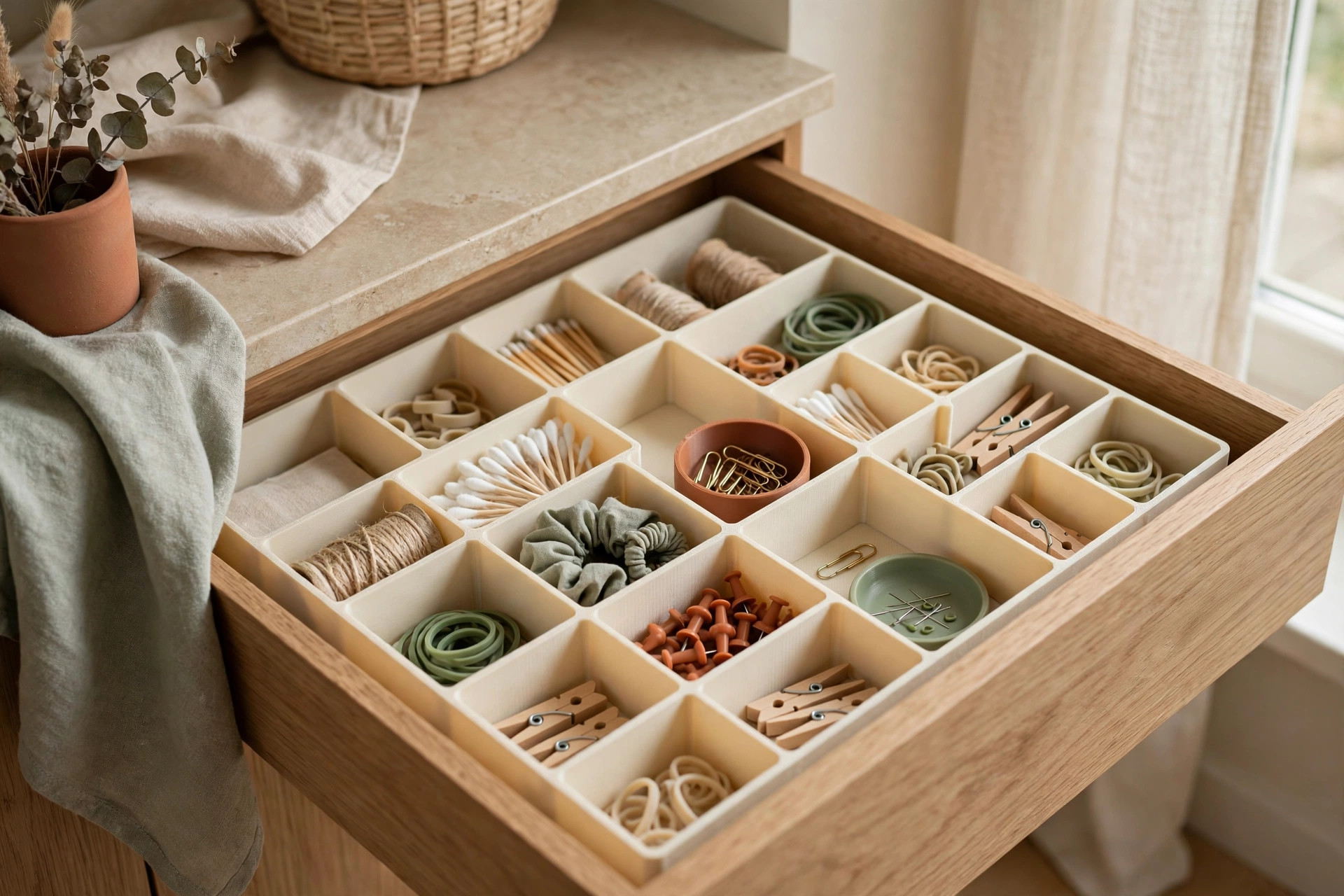
This is a guide to board game storage ideas small apartments can live with, starting with an honest truth: the tower of boxes in the corner is not a storage system, it is a pile that punishes you every game night. You dig out the game at the bottom, the stack wobbles, a lid slides off, and pieces end up under the sofa. This guide fixes that: audit your collection, store boxes vertically like books, shrink bulky games into bags and cases, and hide the rest in furniture you already own, so every game is easy to find and put away.
Audit the collection: what you actually play decides what stays
Before you buy a single bin or shelf, sort your games into three groups: played in the last three months, played in the last year, and not touched in over a year. The first group earns prime shelf space, the second goes to secondary storage, and the third stays only if you genuinely plan to play it again, not because it was expensive or a gift.
1. Run a three-pile sort before you buy anything
Empty every game spot at once, closet shelf and coffee-table box included, and sort each game into “play often,” “play sometimes,” and “not played in a year.” Most collections shrink by a third here, and that freed space beats any organizer.
2. Photograph the box contents before you downsize anything
If you plan to ditch boxes later, photograph each box lid, the board, and the setup diagram in the rulebook, and keep the photos in one phone album. You keep the art, the setup reference, and the resale information even after the bulky box is gone.
Vertical shelving: storing boxes on their sides like books
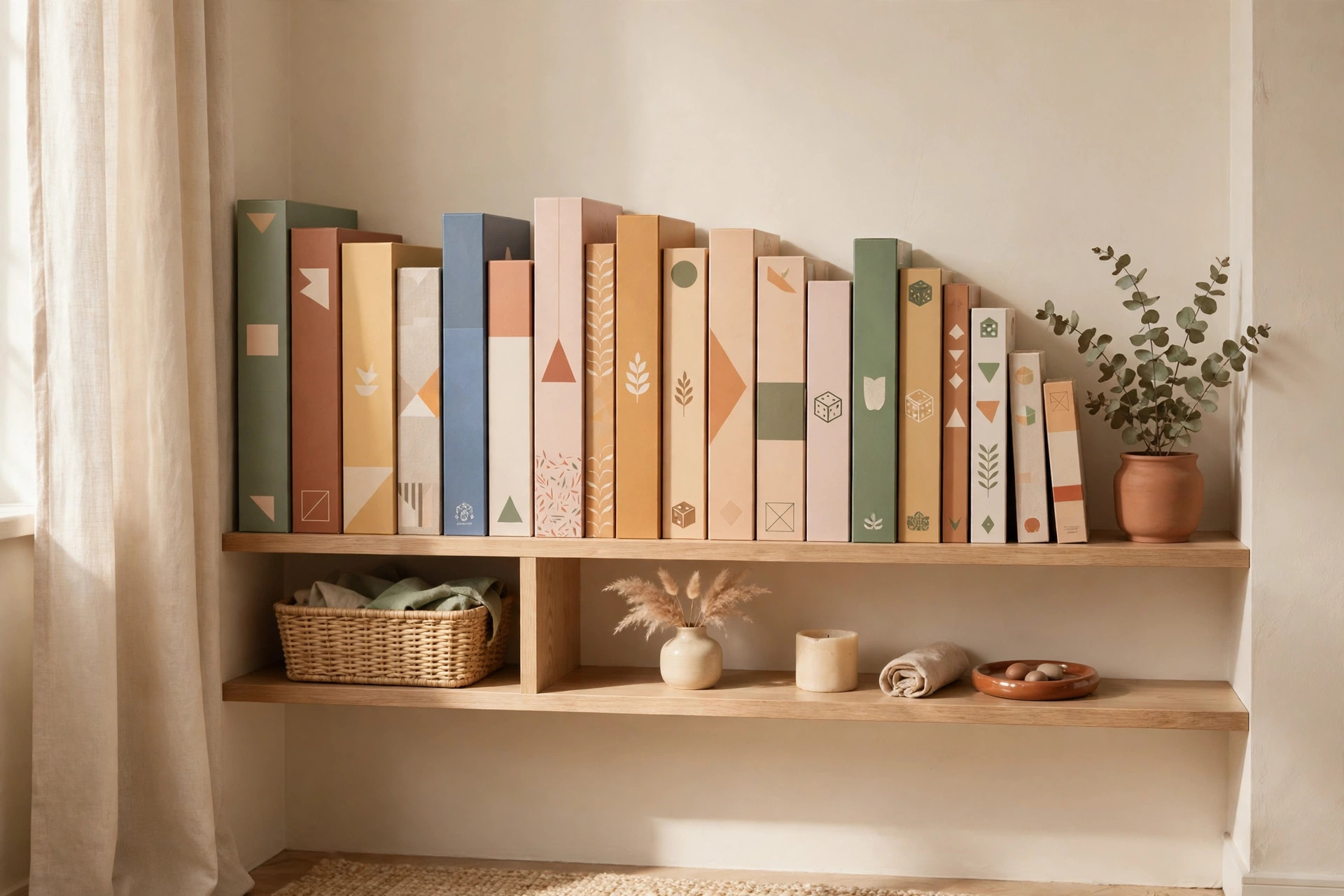
Flat-stacked boxes are the root of the tower problem: the game you want is always underneath two you do not want. Storing boxes on their sides, spine-out like books, turns a stack into a shelf you can browse without disturbing anything else.
3. Turn one bookshelf cube into a game library
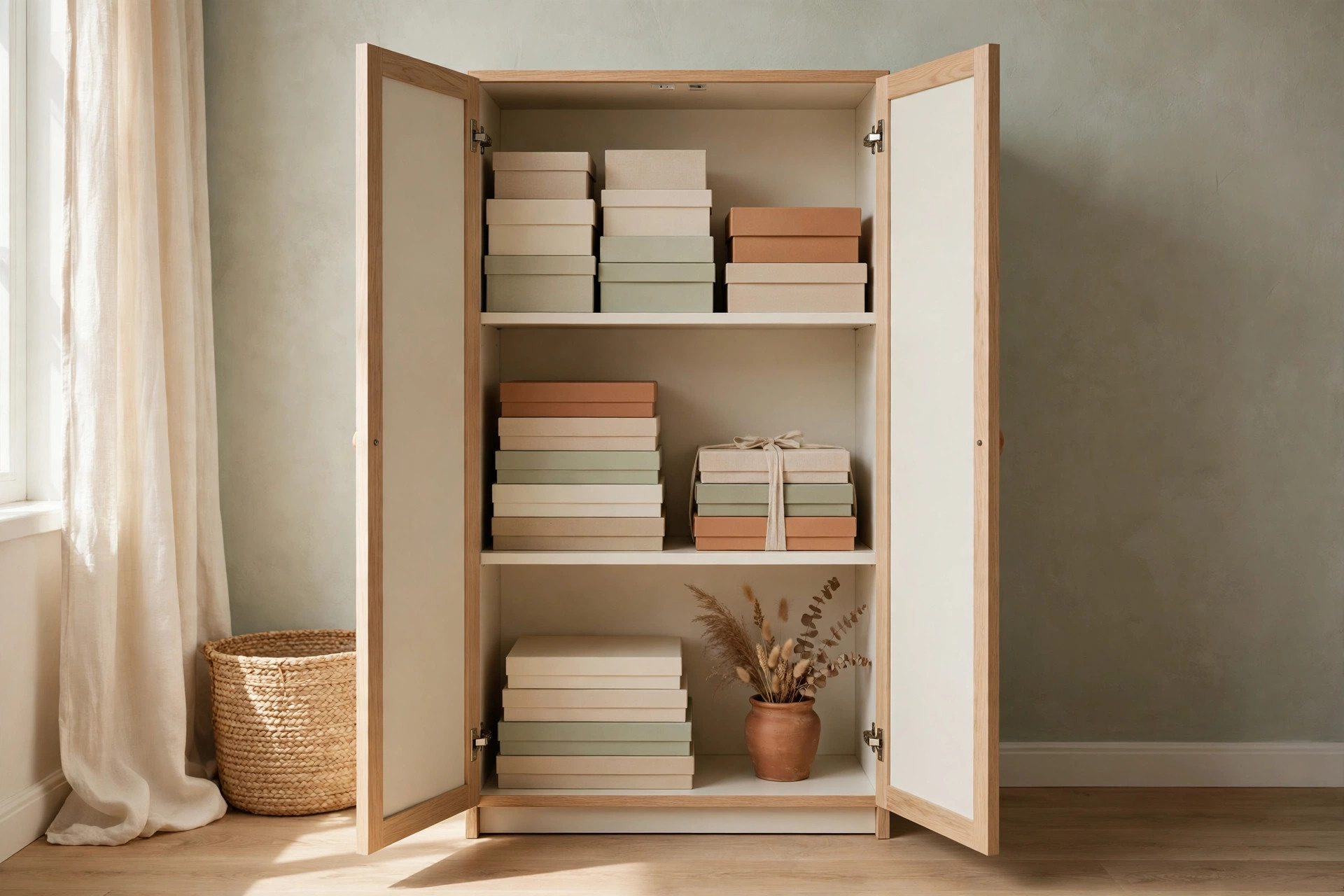
Stand boxes upright in a cube shelf or bookcase, spines facing out. Sort by player count or game length, so you can grab a quick two-player game or a long Saturday game at a glance. If a box is too tall for the cube, lay it flat on top of the row, never underneath it. Our guide to bookshelf organization for small apartments covers shelf sizing and row spacing.
4. Add a bookend or tension divider so rows stay upright
A row of game boxes collapses the moment you pull one out. A heavy bookend or shelf divider at the end of each row keeps the rest standing. Leave one finger-width of slack so boxes slide out without tearing corners.
5. Face the most-played games at eye level
Put weekly games between waist and eye height, monthly games on the top or bottom shelf, and seasonal party games highest of all.
Ditch the box: zip bags and compact cases that save 70% of space
A standard board game box is mostly air; the board, cards, and pieces often fill less than a third of it. Moving a game into a zip bag or compact case can cut its footprint by roughly 70 percent, turning a shelf of ten games into a shelf of thirty.
6. Move medium games into labeled zip bags with a printed insert
For games with a folding board and a modest set of pieces, use a heavy-duty gallon-size zip bag. Put the board, cards, and bagged pieces inside, plus a small card noting the game name, player count, and play time. Stand bags upright in a bin or magazine holder, label out, and flip through them like files.
7. Use CD-style cases and small plastic cases for card-heavy games
Card games and small-box games fit well in zippered CD cases, small craft cases, or slim plastic pencil boxes. One case per game, labeled on the spine, takes up about the width of a paperback. Lined up in a drawer or basket, a whole card collection fits where two big boxes used to sit.
8. Keep one “game night kit” bag ready to grab
Pick your three or four most-played games, bag them, and keep them together in one tote or basket by the door or sofa. When friends come over, you grab one bag instead of raiding three shelves.
Slim cabinets and console tops that hide games in plain sight
Not every game needs to look like a game. In a small apartment, the best storage is often furniture that does two jobs: a console, bench, or cabinet that holds games behind a closed door while looking like ordinary living room furniture.
9. Fill a narrow console or media cabinet with bagged games
A slim console cabinet, roughly 12 to 14 inches deep, holds a surprising number of bagged or cased games. Keep the most-played titles in the front row of each cupboard and the rest behind them. With the doors closed, the collection disappears visually, which matters a lot in a studio. For more double-duty furniture ideas, see our small living room storage ideas.
10. Use the top of a low cabinet as the game table staging zone
The flat top of a low cabinet is the perfect staging zone: the game in play lives there between sessions, and the next game up waits beside it. Add a small tray for pieces in use, so a half-finished game does not colonize the dining table.
Under-bed and closet-top zones for the rarely played games
Games you play twice a year do not deserve living room real estate. They deserve a labeled, dust-free home out of the way, where they wait until their season comes around.
11. Store seasonal and party games in a flat under-bed bin
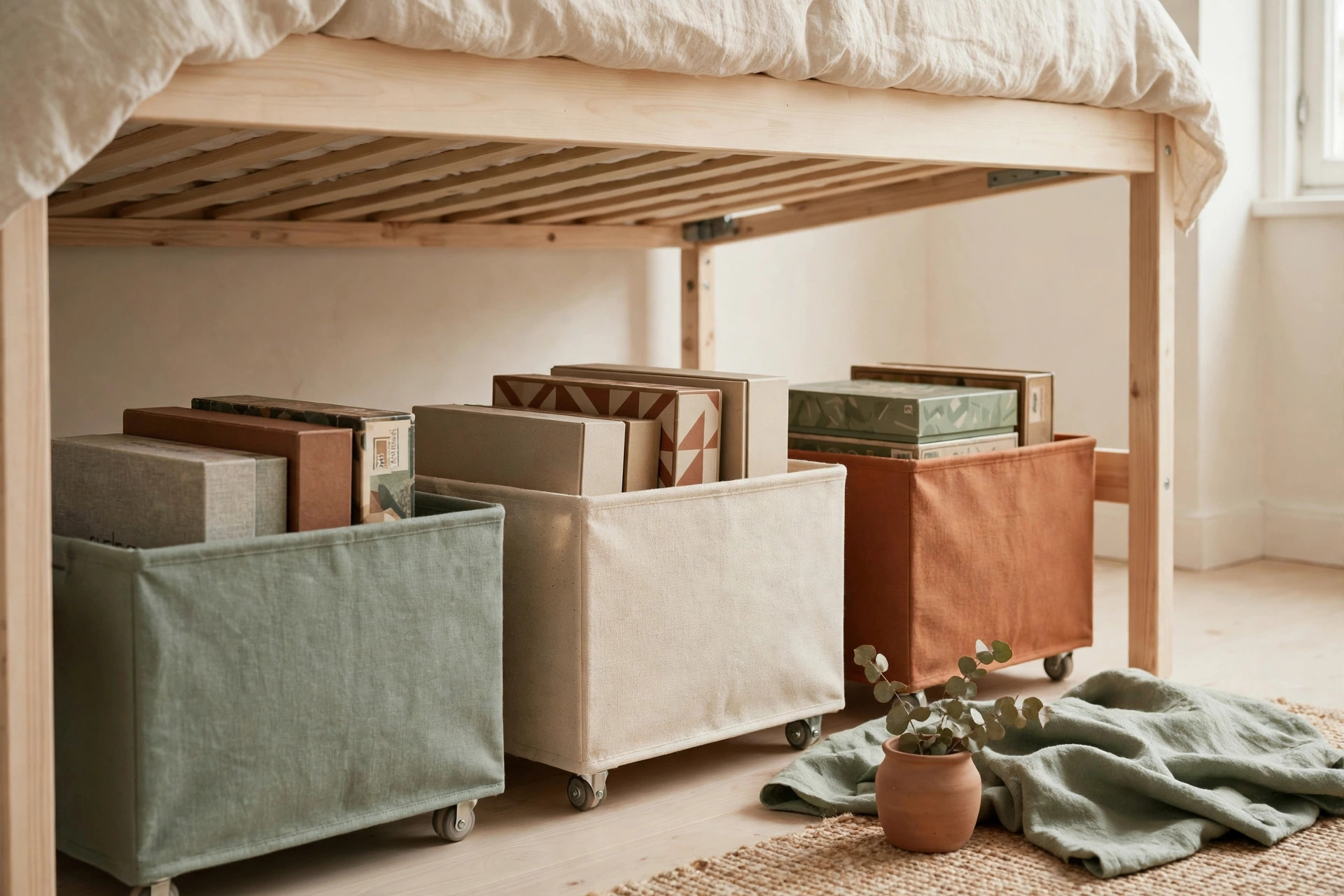
A flat bin, about 6 to 7 inches tall, slides under most bed frames and holds several bagged games or two or three flat boxes. Label the short end facing out. Party and holiday games belong here, not on the living room shelf. Our under-bed storage ideas for small bedrooms covers bin sizing and bed clearance.
12. Reserve the closet-top shelf for the big-box, rarely played titles
The top shelf of a closet is ideal for oversized boxes that fit nowhere else: legacy games, deluxe editions, and boards too big to bag. Keep them in one row, spines out. Rule: a game that has not come down in a year goes into the next audit pile.
Small-box and card games: pouches, binders, and drawer trays
Small games cause a different problem: too small to shelve neatly, they scatter across drawers, bags, and jacket pockets. Give them one dedicated home and they stop disappearing.
13. Give every small game its own pouch in a single basket
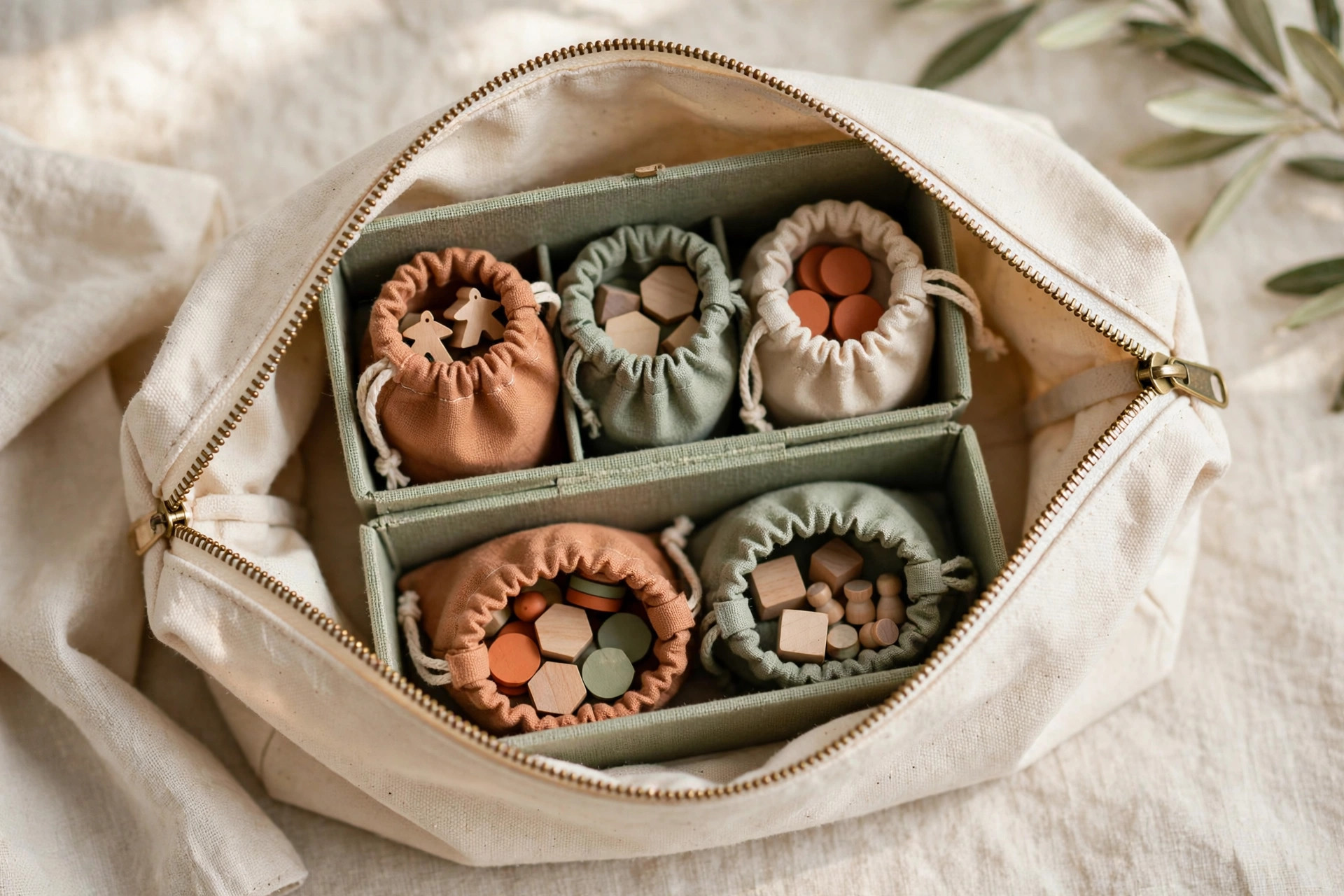
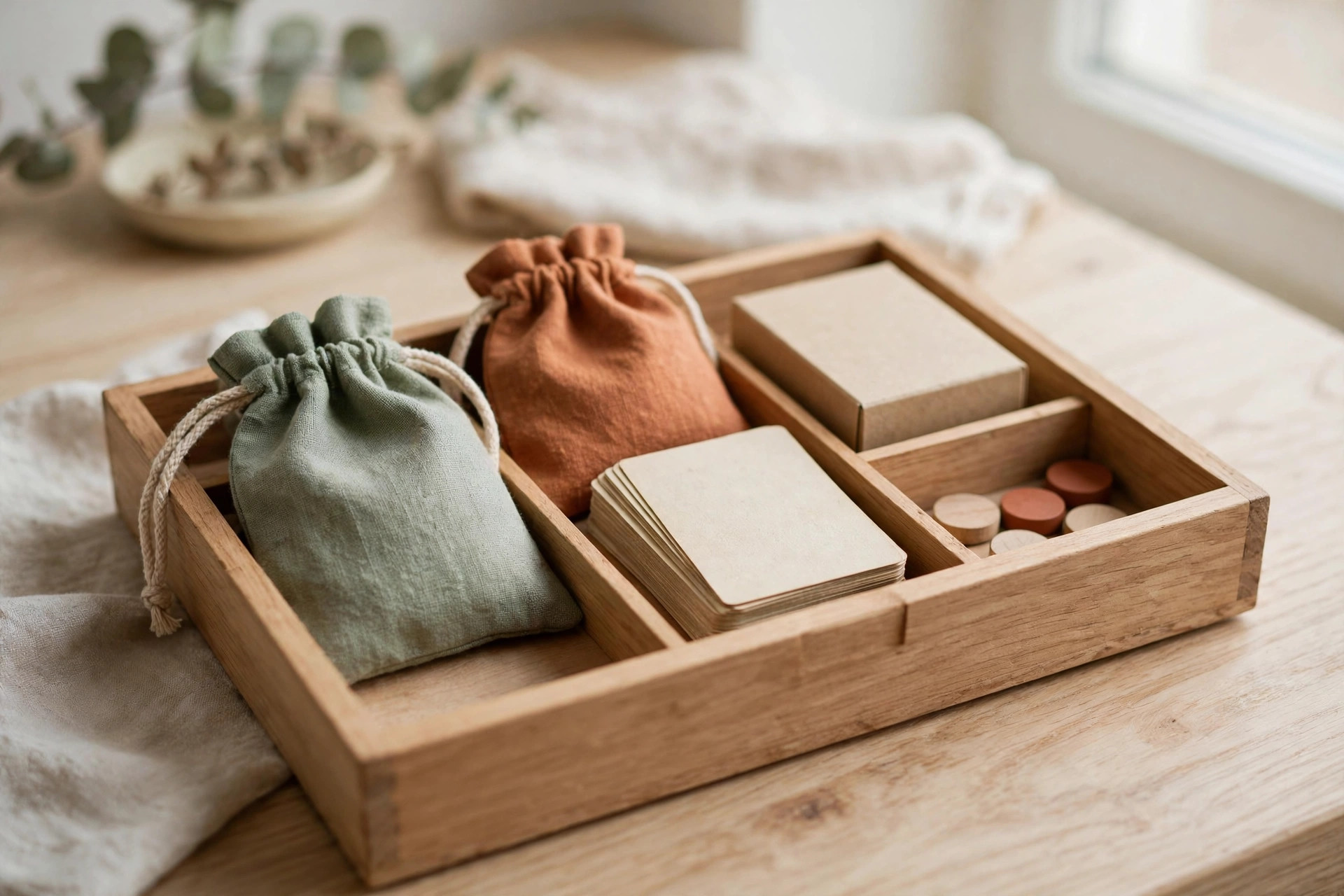
Small drawstring pouches, one per game, corral cards, dice, and tiny tokens that otherwise migrate everywhere. Keep all pouches in one basket or drawer, each labeled with the game name, and keep the basket wherever you play: by the sofa or in the bag you take to a friend’s place.
14. File card games in a binder with pocket pages
For a large card-game collection, a three-ring binder with trading-card pocket pages works well. One game per pocket section, with its rules card in the first pocket. The binder stands on a shelf like a book, holding a dozen small games in the space of one board game box.
Keeping pieces together: bagging, labeling, and inventory tricks
A game with missing pieces is a game nobody wants to play. Piece management is unglamorous, but it separates a collection you use from one you apologize for.
15. Bag pieces by player color, not by piece type
Instead of one bag of all tokens, give each player their own small zip bag with their color’s pieces, plus one bag for shared components. Setup takes minutes, and cleanup is each player returning their bag. A silica gel packet in damp-prone spots keeps cardboard from warping.
16. Keep a one-page inventory list inside the game
A list inside the lid noting each component’s piece count spots a missing token before game night, and makes lending painless.
The one-in-one-out rule that stops the tower from growing back
Storage systems fail not because they are badly designed, but because new games keep arriving and nothing ever leaves. A simple rule protects the system you just built.
17. Apply one-in-one-out from the day the system is finished
Every new game that enters the apartment means one game leaves it: sold, gifted, or donated. Decide which game goes before you buy the new one, not after. This keeps the shelf count constant, the only way a small apartment collection stays manageable.
18. Schedule a ten-minute seasonal audit
Four times a year, spend ten minutes asking one question per game: did I play this since the last audit? Move unplayed titles to the secondary zone, and anything unplayed for a full year into the donate-or-sell pile. Ten minutes a season beats a full weekend reorganization every year.
Mistakes to avoid
Stacking heavy boxes flat crushes lids and warps boards; store them vertically or not at all. Buying organizers before auditing wastes money on bins sized for a collection you no longer own. Storing games in a damp corner or hot attic invites warped boards and musty cards. And keeping every expansion box beside the base game doubles shelf space for components you could bag together in one case.
Frequently asked questions
Can I store board games vertically without damaging the boxes?
Yes, for most games. Boxes must be snug enough to stay upright but not so tight that pulling one out tears a corner. Very heavy boxes, and boxes with loose inserts, are better stored flat or re-bagged.
How do I store board games in a small apartment with no shelf space?
Bag or case your most-played games and keep them in furniture you already own: a media cabinet, a storage bench, an under-bed bin, or a drawer. Ten bagged games fit in one small basket, so you need a basket’s worth of space, not a bookshelf.
What is the best way to store board games without their boxes?
Use heavy-duty zip bags for board games and slim zippered cases for card games, with a labeled card inside noting name, player count, and play time. Keep a photo of the original box lid and setup diagram on your phone.
How can I keep board game pieces from getting lost?
Bag pieces by player color, keep shared components in their own bag, and tape a short inventory list inside each game. Count pieces when a borrowed game returns, and store small bags inside the game’s own case, not loose in a drawer.
Conclusion
A small apartment does not have to mean a small game collection, it just means a deliberate one. Audit honestly, store vertically, bag what you can, and let the rarely played games wait out of sight. Browse more ideas in our storage ideas category, and save this pin for later so your next game night starts with playing, not digging.