Parcels arrive at your building faster than anyone collects them, and the result is the same in almost every apartment block: a pile by the front door, a box nobody recognises, and a hallway you have to step around. Good package room organization fixes both ends of that problem at once. It gives the shared room in your building a clear system, and it gives your own front door a small drop zone that catches deliveries before they become clutter. These 15 ideas cover both, so whether you are a resident trying to keep your hallway clear or someone pushing your building to do better, you will find something you can start this week.
The Two Package Problems: Building Room and Your Front Door
Most delivery chaos comes from two places, and they need different fixes. The building’s package room is a shared space with no single owner, so parcels drift and labels face the wall. Your front door has the opposite problem: it is entirely yours, but it has no system at all, so every delivery lands on the floor. Treat them as one system with two zones.
1. Give the building room and your front door separate jobs
Let the building room handle bulk: large boxes, anything that needs a signature, and parcels for neighbours who are away. Let your front door handle only what fits in one small drop zone — the parcel you expect today and the envelope you need tonight. When the building room tries to do everything, it fills up; when your front door tries to do everything, your hallway fills up.
2. Walk both spaces with fresh eyes before buying anything
Spend ten minutes in the package room and ten minutes at your own front door. Count how many parcels are there on a normal day, measure the wall space you could use, and note where the door swings. A room that holds six parcels on a Tuesday and forty in December needs a different system from one that holds six all year.
Labelled Cubbies: One Slot per Flat, Sized for Real Parcels
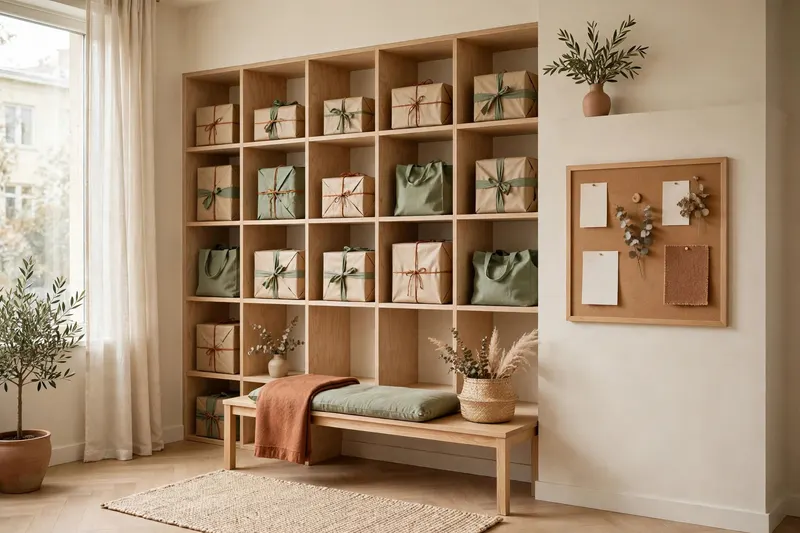
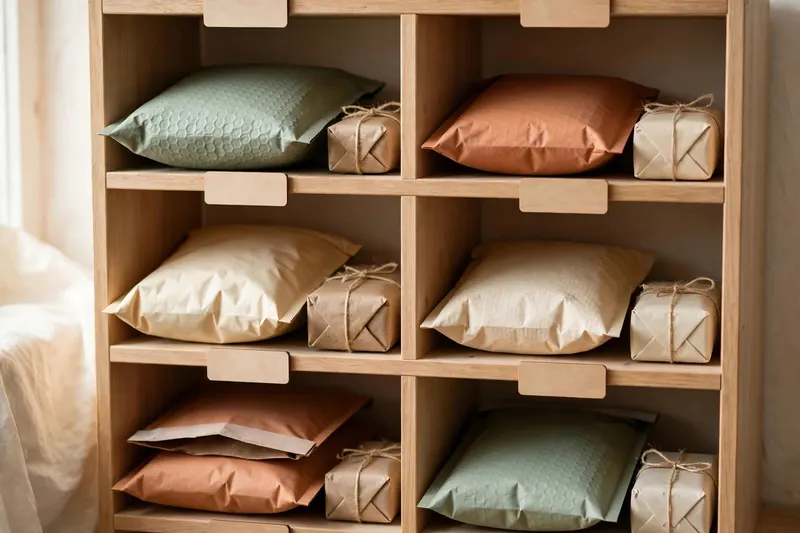
Cubbies only work when the label is bigger than the parcel and the slot is bigger than the box. Tiny pigeonholes built for letters are the reason most package rooms fail: a shoebox-sized delivery will not fit, so it goes on the floor, and the floor becomes the system. Build for the parcels you actually receive.
3. Size cubbies for the most common parcel, not the smallest
Plan around the standard online-shopping box, roughly 12 by 10 by 8 inches. A cubby that holds that size comfortably, with a little air around it, will take most deliveries. Add a row of deeper cubbies — about 16 inches deep — for the occasional large box, and keep one open shelf at the bottom for oversized items.
4. Label every slot with flat number and a name, in large print
Use flat numbers at least 2 inches tall, printed in a bold font on a light background, with the resident’s surname underneath in smaller type. Put the label on the front edge of the shelf, not inside the cubby where a parcel hides it. When a courier can find flat 12 in three seconds, parcels land in the right slot the first time.

A Shelf System That Survives the Christmas Rush
December can triple the parcels in a building, and a shelf system designed for a quiet Tuesday will collapse under it. The answer is not more shelves; it is shelves that flex. A system that holds its shape when the volume spikes is the difference between a busy room and a buried one.
5. Use adjustable shelving with 14-inch gaps as the default
Fixed shelves waste the space above small parcels and crush the space below large ones. Adjustable brackets or a simple boltless shelving unit lets you set most gaps at about 14 inches — enough for a standard parcel with room to lift it out — and move one shelf up when a tall box arrives. Leave one shelf per unit empty at the start of December, so the rush has somewhere to go.
6. Add a folding overflow table for peak weeks only
A wall-mounted folding table, about 24 by 18 inches, gives the room a temporary landing surface that disappears when the rush ends. Couriers set parcels on it, residents sort from it, and it folds flat against the wall for the other eleven months of the year. It costs little, needs two screws and a stud finder, and keeps the floor clear in the busiest weeks.
The Logbook Habit: Who Collected What, and When
A package room without a record is a room where parcels vanish and nobody can prove anything. The logbook is the cheapest security the room will ever get: a notebook, a pen on a string, and a habit that takes ten seconds per parcel.
7. Keep a simple sign-out sheet at the door
Rule a notebook into four columns — date, flat number, parcel description, and signature or initials — and hang it on a clipboard by the door with a pen tied to it with string. When you collect a parcel, you write one line. When a parcel goes missing, the book shows whether it was collected, when, and by whom.
Cold and Fragile Parcels: A Marked Shelf, Not the Floor
Not every parcel can sit in a cubby for three days. Groceries, meal kits, and anything marked fragile need a spot of their own, clearly marked, where they will be seen first and handled gently. The floor is the worst place for both: cold parcels leak, and fragile parcels get stepped on.
8. Mark one shelf for cold and perishable deliveries
Choose the shelf nearest the door, label it “COLD — COLLECT TODAY” in large letters, and keep it empty unless a cold parcel arrives. A small insulated bag or a lidded cooler box on that shelf buys a few extra hours for groceries in summer, and the bright label tells every resident at a glance that something there cannot wait.
9. Give fragile parcels a top shelf and a red tag
Fragile items belong on the top shelf, where nothing gets stacked on them, with a red tag or a red sticker on the label side. The rule is simple and worth writing on the wall above the shelf: nothing goes on top of a red-tagged parcel, ever. Couriers already mark these boxes; the room just has to respect the marking instead of burying it under heavier boxes.
Your Home Drop Zone: Shelf, Hook, and a Delivery Note
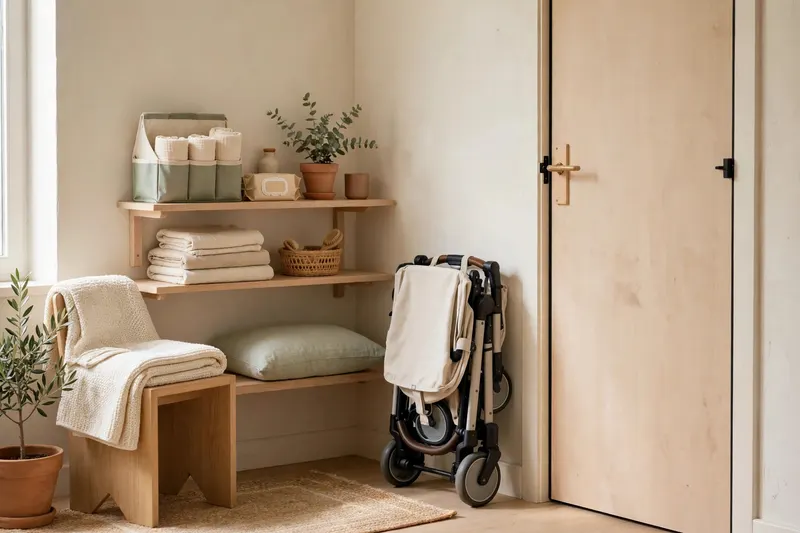
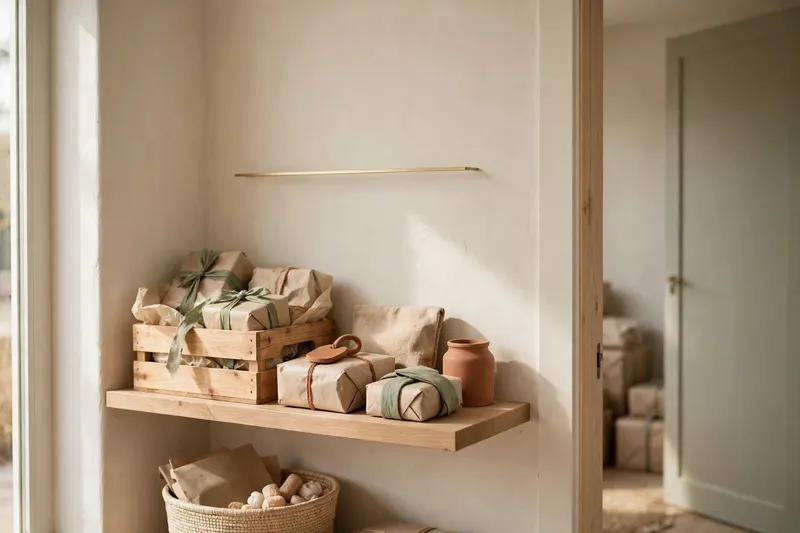
The building room handles the bulk, but your front door still needs its own system. A home drop zone is a small setup — a shelf, a hook, and a note — that catches deliveries before they spread across your hallway. It works in a rented flat with no drilling, and it takes about half an hour to set up.
10. Put a narrow shelf by the door for parcels only
A shelf about 24 inches wide and 10 inches deep, mounted at waist height or standing on a slim console, holds one or two parcels and nothing else. The rule that makes it work is that the shelf is for deliveries only: no keys, no mail, no shoes. When the shelf is full, that is your signal to open the parcels and put things away. For ideas on the space around your door, see 15 Small Entryway Organization Ideas (Even With No Foyer).
11. Add one strong hook for bags and a small tray for envelopes
A single adhesive or over-door hook holds the reusable shopping bag or the tote you carry parcels in, so bags stop living on the floor. Under the shelf, a shallow tray about 12 by 9 inches catches envelopes and small packets that would otherwise slide off the shelf or get kicked under furniture. Empty the tray every evening — envelopes take thirty seconds to open.
12. Leave a delivery note on the door for couriers
A short laminated note — “Please leave parcels on the shelf inside the door” or “Please leave with flat 12 if no answer” — tells the courier exactly what to do when you are out. Keep it to two lines, large print, in the language your local couriers read. A note that is too long gets ignored; a note that is too vague gets the parcel left in the hallway.
What to Ask Your Building Manager For
Some fixes need the building, not just you. Managers respond to specific, cheap, written requests far better than to general complaints about “the package room being a mess.” Ask for one thing at a time, name the cost, and offer to help.
13. Ask for a labelled shelf unit and a lockable cabinet
Request one adjustable shelving unit for the package room and one small lockable cabinet — about 36 inches wide — for high-value or sensitive parcels. The cabinet needs only a simple key or code lock, and the key can sit with the building manager or concierge. Fewer lost parcels means fewer complaints for the manager to handle.
14. Ask for a written parcel policy, one page long
A one-page policy that says where parcels go, how long they are kept, and what happens after a set number of days turns an argument into a rule. Suggest a holding period of about seven days, after which the manager contacts the resident and then returns or donates the parcel. Put the policy on the wall by the door and send a copy to every flat. If your building has shared spaces that already run on simple rules, our guide to 16 Small Mudroom Ideas for Apartments shows how a small shared zone stays tidy when everyone knows the rules.
Keeping the Hallway Clear: The 24-Hour Rule
The final idea is the one that holds all the others together. A package room and a drop zone both fail the same way: parcels that nobody collects. The fix is a time limit, applied kindly and consistently, so the room resets itself every day.
15. Apply a 24-hour rule to every parcel, in both zones
Collect your parcels within a day of delivery, and nudge neighbours gently when a parcel has sat for two days. In the building room, a small dated sticker on each parcel makes its age visible at a glance — anything with a sticker older than a week gets a reminder note under the flat’s door. At home, the same rule applies to your shelf: if a parcel has sat unopened for a day, open it that evening. For more ways to keep a shared pass-through clear, see 17 Narrow Hallway Storage Ideas for Small Homes.
Mistakes to Avoid in a Package Room
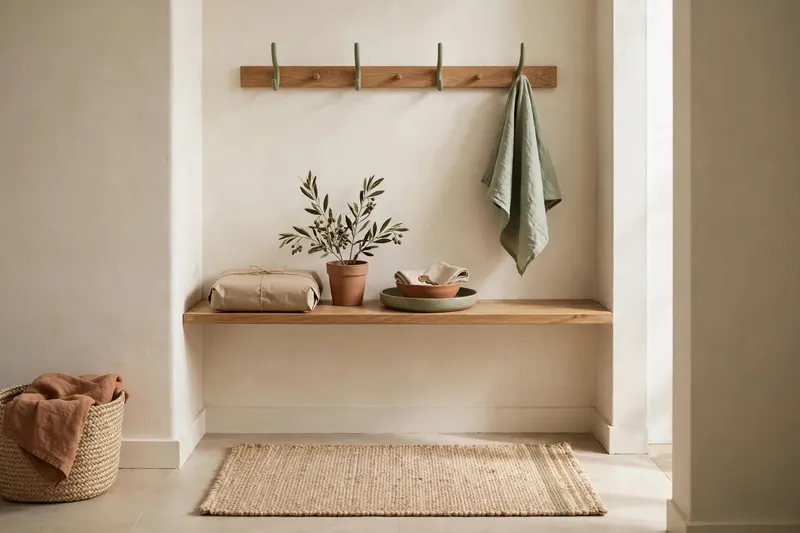
The most common mistake is buying storage before measuring the parcels, which leaves you with pretty cubbies that fit nothing. The second is labelling by name only, which breaks the moment a new resident moves in or two neighbours share a surname — always use flat numbers first. The third is putting the logbook on a shelf instead of on the door, where it gets forgotten. And the last is treating the floor as overflow storage: once parcels live on the floor, every other rule quietly stops working.
Frequently Asked Questions
Can I organize a package room if I am only a tenant, not the owner?
Yes. Labels, a logbook, a folding table, and a delivery note are all renter-friendly and need no permission. For shelves or a cabinet, send your building manager one written request naming the item and its approximate cost.
How long should a building keep an uncollected parcel?
About seven days is a fair standard. After that, the manager should contact the resident once, then return the parcel to the sender or donate it. Whatever period your building chooses, write it down and post it in the room.
What is the best size for package room cubbies?
Plan around the standard online-shopping box, roughly 12 by 10 by 8 inches, with a few deeper cubbies of about 16 inches for larger deliveries. One open shelf at the bottom handles oversized items.
Where should I put parcels that need to stay cold?
On a clearly marked shelf near the door, labelled for cold items and same-day collection, with an insulated bag or lidded cooler box if your building provides one. Never leave cold parcels on the floor, where they leak and get kicked.
A Tidy Package Room Starts With One Labelled Shelf
A tidy package room is not a renovation; it is a handful of labels, a shelf that fits real parcels, a logbook by the door, and a rule that nothing sits for more than a day. Start with the zone you control — your own front door — and take the building fixes to your manager one request at a time. Save this pin for later, or browse more ideas in our small spaces collection.