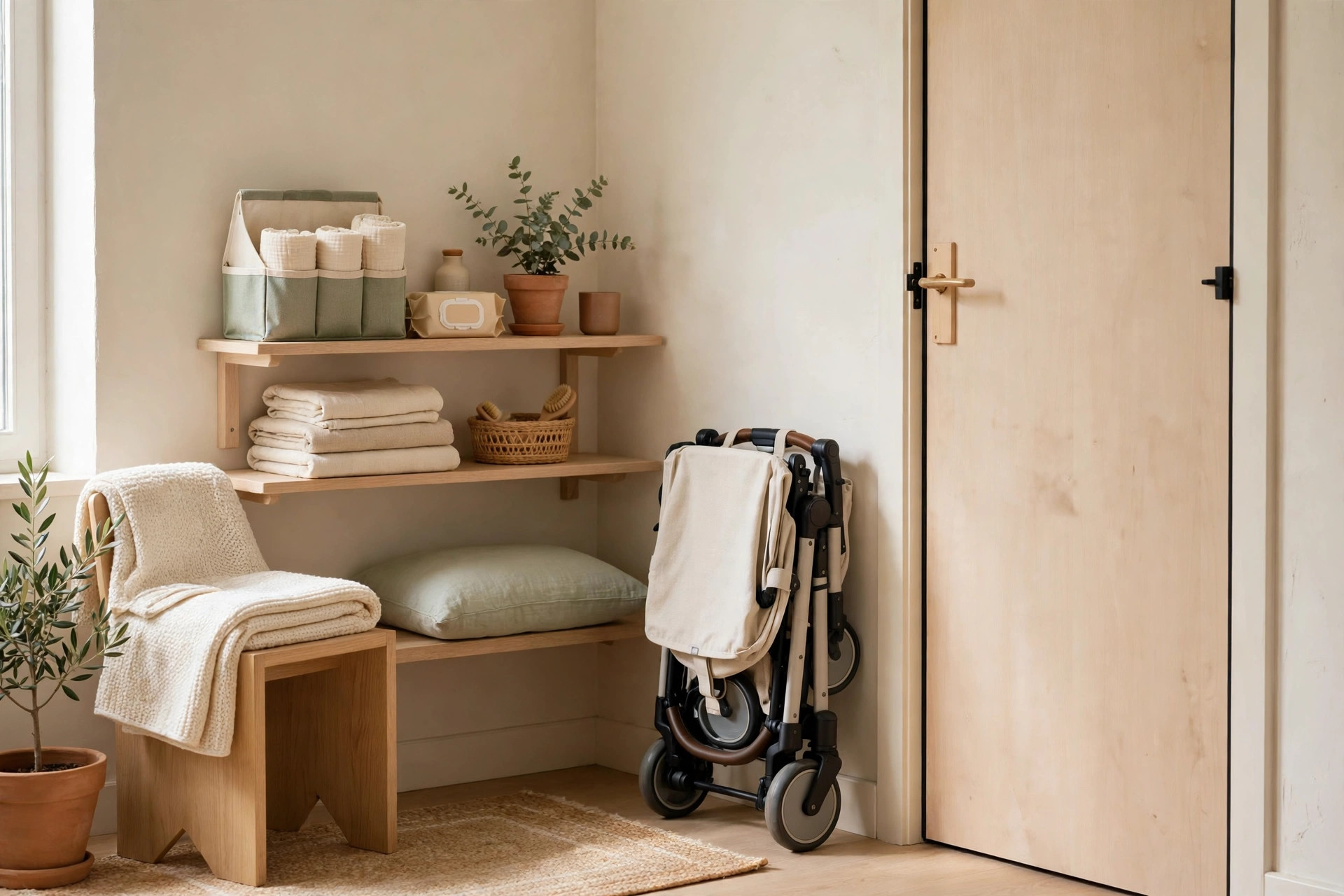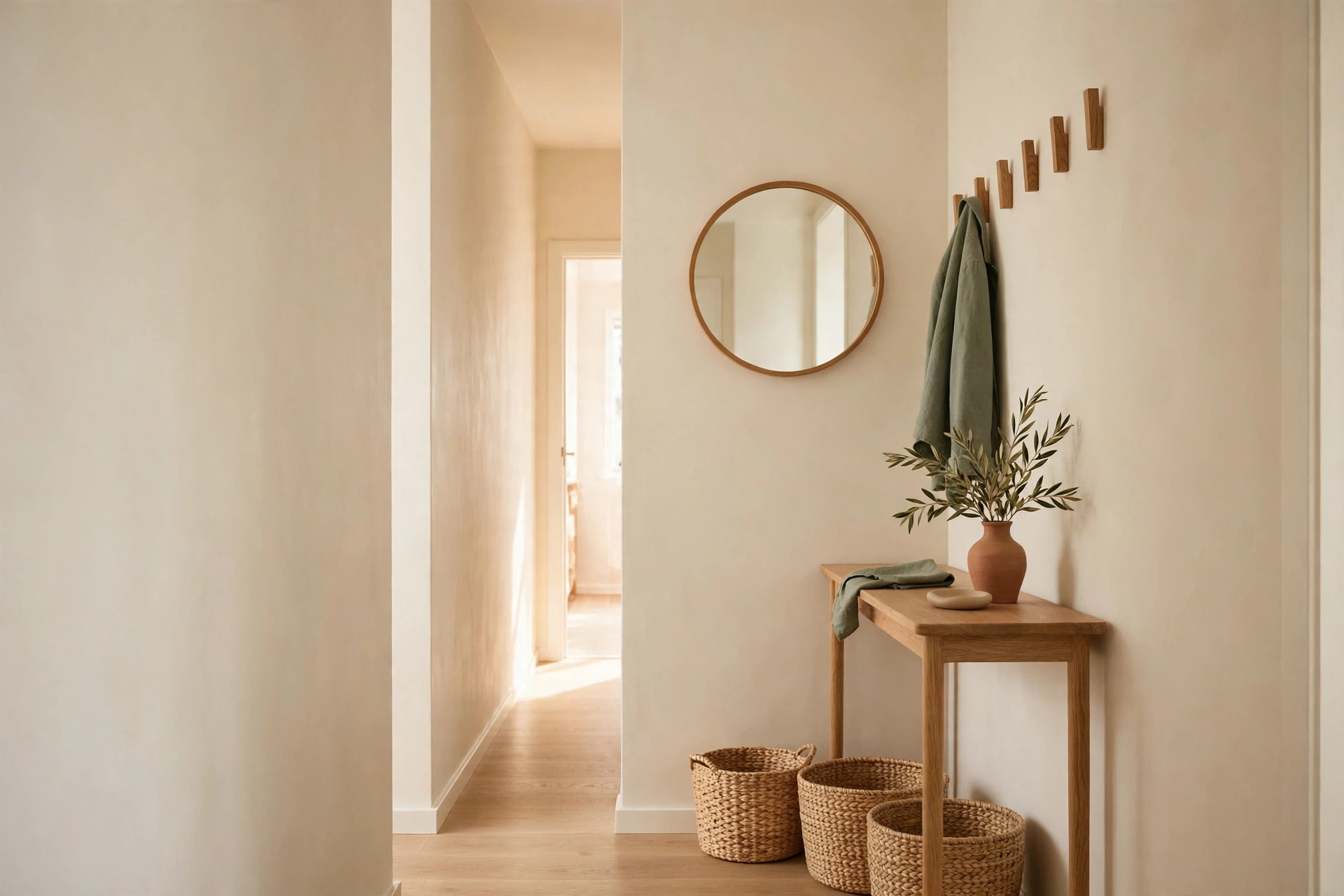
A narrow hallway is the most walked-through and least used space in a small home. Coats end up on the nearest chair, shoes line the skirting boards, and the mail lives on whatever flat surface is closest to the door. These narrow hallway storage ideas fix that without stealing the walkway: slim furniture, shallow wall storage, and hidden zones that hold everyday things while keeping the passage clear. By the end, you will have a plan matched to your hallway’s actual width. Every idea below includes the measurements and placement details you need, so you can get it right the first time.
Measure first: clearance rules that keep narrow halls walkable
One piece of furniture two inches too deep is all it takes to turn a passage into an obstacle course.
1. Tape out your traffic lane before you shop
Measure the width wall to wall, the narrowest pinch point, and the swing arc of every door that opens into the hall. Lay painter’s tape on the floor to mark anything you plan to add. If you brush it every time you pass, the piece is too deep. Keep at least 36 inches of clear walking width in a main hallway.
Slim consoles and benches that don’t block traffic
The right depth for most narrow halls is 10 to 12 inches — deep enough for keys and mail, shallow enough to stay out of the way.
2. Choose a 10-inch console instead of a standard one
Standard consoles run 14 to 16 inches deep, which is too much for most small-home hallways. Look for one in the 8-to-12-inch range with a lower shelf for a basket. Keep the top to three things: a tray for keys, a dish for sunglasses, and one decorative item.
3. Add a storage bench with a lift-up or open base
A bench gives you somewhere to sit while putting on shoes, and the space underneath or inside it holds the shoes themselves. Pick one no deeper than 14 inches and no longer than half the hallway’s straight run. Give each person one basket, and keep one spare pair of shoes per person maximum in the hall.
4. Try a floating bench or wall-mounted shelf-seat
If floor space is truly tight, a wall-mounted bench or sturdy floating shelf at seat height (about 18 inches) gives you the perching spot without legs eating into the walkway. Anchor it into studs, not just drywall, since it will take real weight.
Wall ledges, picture rails, and shallow shelves
Shallow storage above hip height keeps the floor clear without narrowing the passage at all.
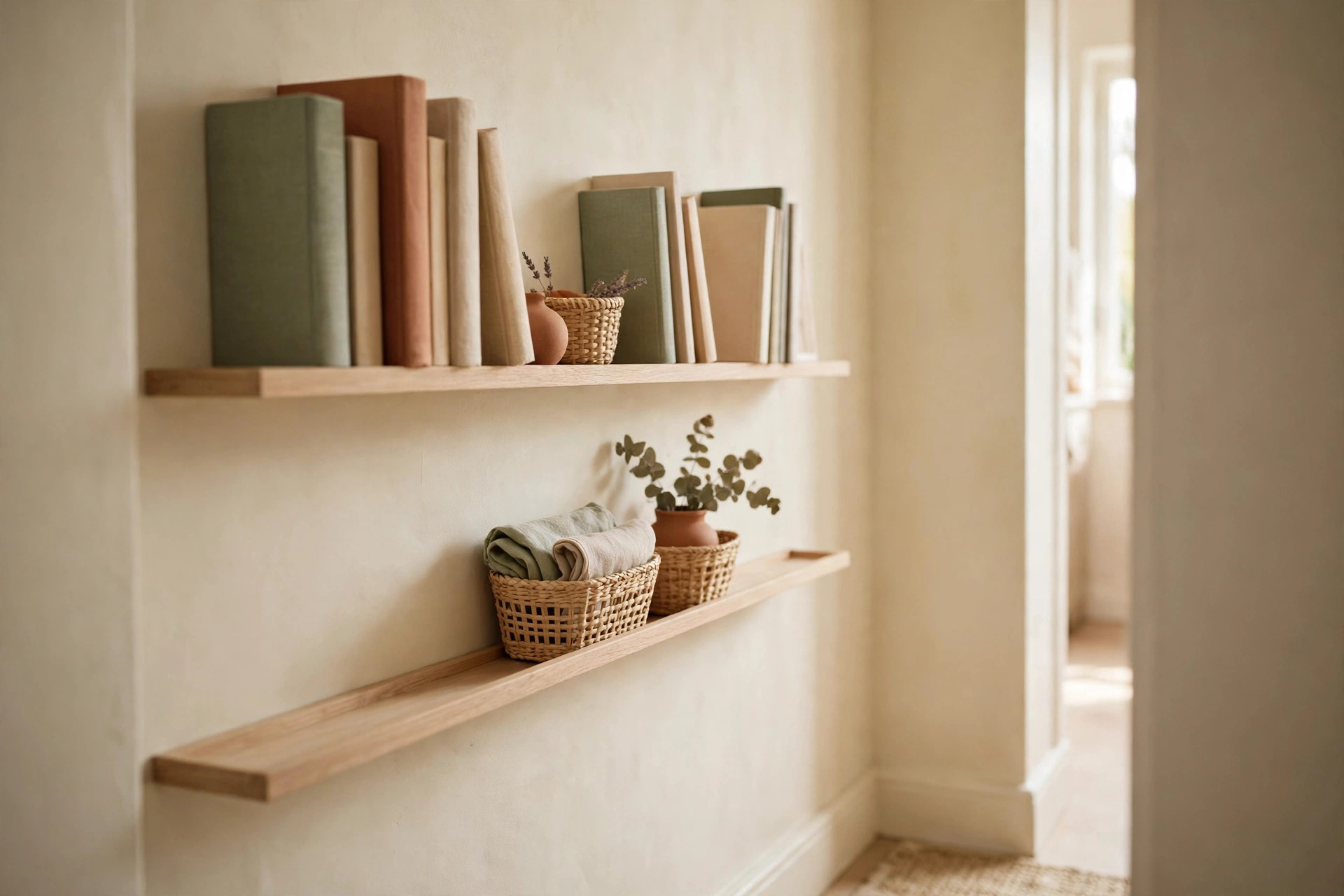
5. Run a picture ledge for books, art, and small plants
A picture ledge is a shelf about 3 to 4 inches deep — too shallow to block anyone, deep enough for framed photos, paperbacks, or a small trailing plant. Mount one at eye level and a second higher up if the ceiling allows.
6. Install a shallow shelf above door height for out-of-season gear
The strip of wall above a door frame is dead space in almost every hallway. A single shelf mounted about 7 feet up, 8 to 10 inches deep, holds a lidded bin of out-of-season hats, gloves, or scarves.
7. Stack two or three floating shelves for a mini library or display
Two or three floating shelves spaced 12 to 14 inches apart turn an uninterrupted wall into a slim bookcase that only juts out 8 inches. Put daily-use items on the lowest shelf, display pieces higher up, and leave one shelf partly empty.
Hooks, peg rails, and hanging storage for coats and bags
Hooks work only if they sit where the habit already happens — right where you walk in.
8. Mount a peg rail at two heights for adults and kids
A peg rail with 4 to 6 pegs, mounted at about 66 inches for adults, covers coats, bags, and hats in a single strip. In a family hallway, add a second rail at about 42 inches so kids can hang their own things — a hook a child cannot reach is a coat on the floor. If your hallway doubles as the entry, our guide to small entryway organization ideas for homes with no foyer covers the full drop-zone setup.
9. Use individual hooks inside the door swing zone
The wall space right beside the front door — even a strip as narrow as 12 inches — is prime hook territory, because it is where you naturally stop when you come in. Mount two or three sturdy single hooks there for the bag and coat you reach for every day.
10. Hang a slim pocket organizer on the back of a hallway door
The back of an interior door is free real estate. A slim hanging organizer with clear or fabric pockets holds scarves, gloves, dog leads, and sunscreen. Keep it to weekly-use items.
Built-in nooks and alcove shelving in wasted wall space
Alcoves and odd wall jogs look like flaws but are ready-made storage bays that add zero inches to the hallway.
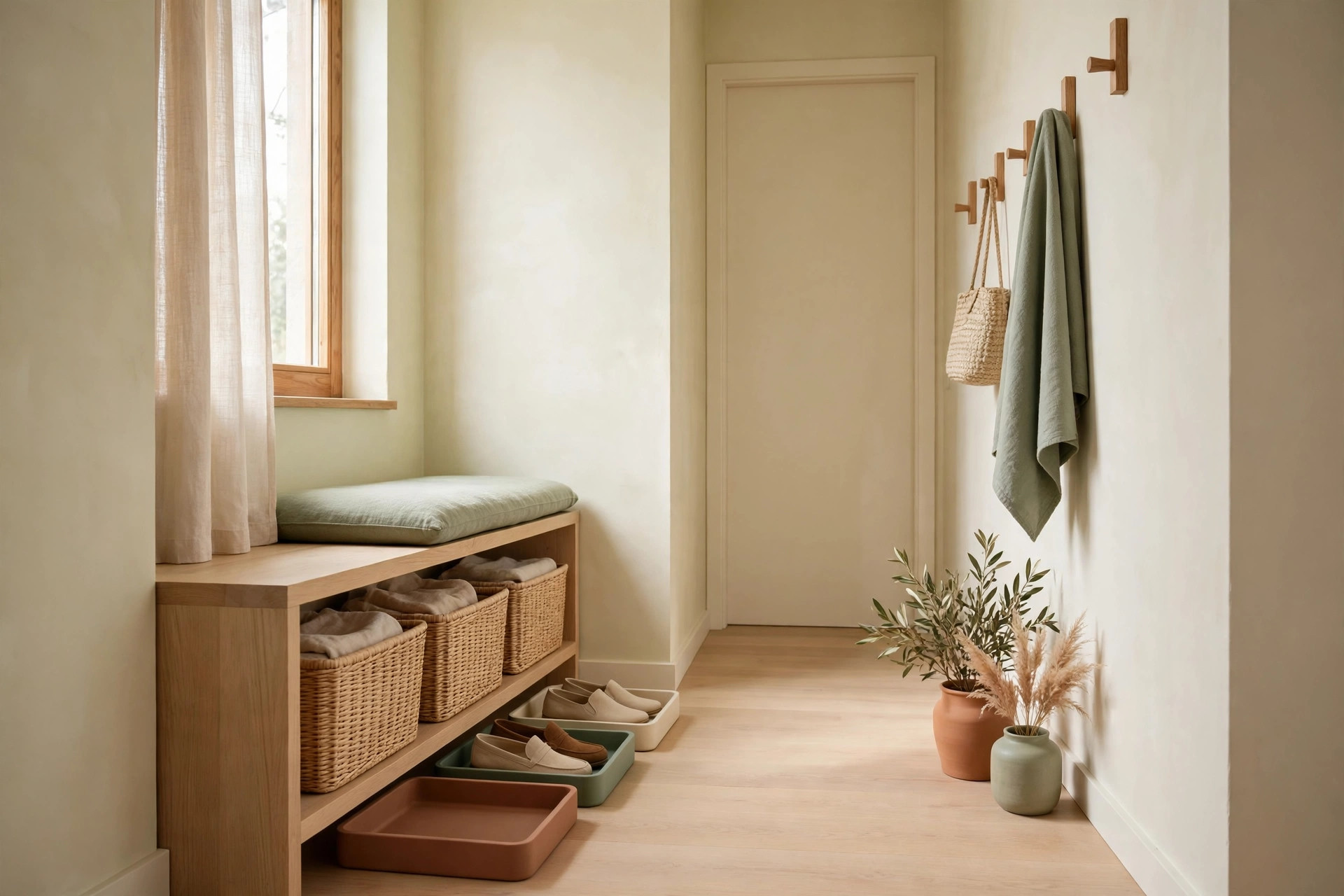
11. Turn a wall recess into open shelving
If your hallway has a recessed niche — even one only 6 inches deep — fit it with two or three shelves cut to the exact width. Shallow niches suit books, folded linens, or a row of baskets. Paint the inside the same color as the wall so it reads as architecture.
12. Build a recessed niche between the studs
Between two wall studs there is a cavity about 14 inches wide and 3.5 inches deep — enough for a recessed shelf for keys, mail, and small electronics. This is a weekend project with basic tools: cut the drywall, frame the opening, add a back and shelves, and trim it out. Check for wiring and plumbing before cutting.
Hidden storage: under-bench, over-door, and stair-wall zones
Hidden zones hold the overflow — seasonal gear, spare shoes, bags you use monthly — so the visible hallway stays calm.
13. Use lidded baskets under the bench for shoe overflow
One lidded basket per person holds the shoes that do not fit the daily rack, and the lid keeps the visual noise down. If your hallway ends at a staircase, see our guide to under stairs storage ideas for small homes for measured plans for that dead triangle.
14. Add an over-door shelf above interior doors
The wall above interior doors holds a shallow shelf for light, infrequently used items: spare linens, gift wrap, or a bin of chargers and cables. Keep each bin under about 5 pounds so you can lift it down safely.
15. Fit slim cabinets along the stair wall
The wall alongside a staircase often has a long, low stretch that standard furniture cannot use. Slim wall-mounted cabinets, 10 to 12 inches deep, follow that line and hold cleaning supplies, board games, or a first-aid kit.
Lighting and mirrors that keep a narrow hall feeling open
Light and mirrors keep a storage-filled hall from feeling like a tunnel.
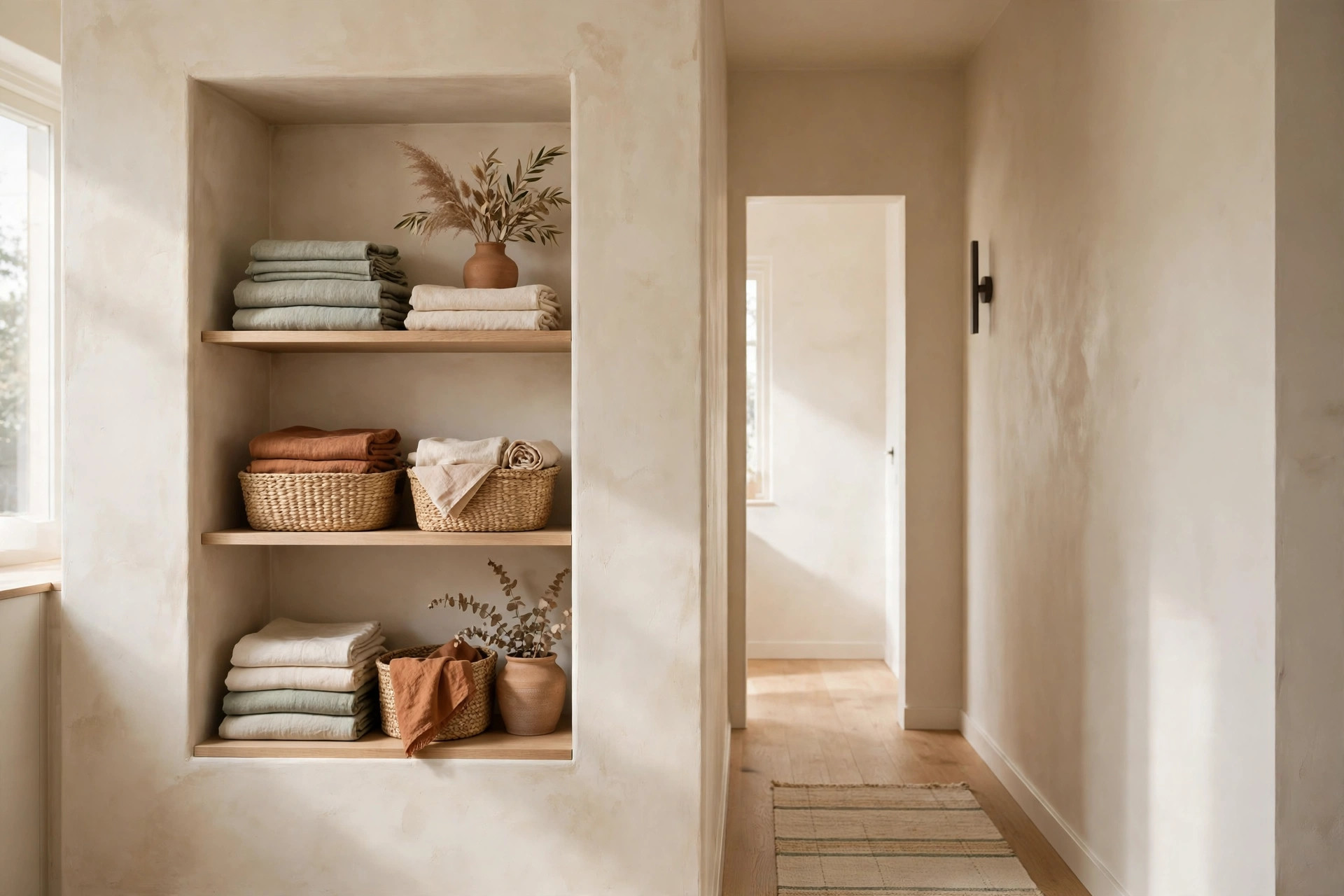
16. Hang one large mirror and add layered light
A single large mirror — ideally opposite or beside a light source — doubles the sense of width in a narrow hall. Pair it with layered lighting: a flush-mount ceiling light plus a plug-in sconce or battery wall light at eye level. Stick to warm white bulbs (around 2700K) and slim mirror frames.
The hallway reset: keeping it a passage, not a dumping ground
Every hallway system fails the same way: one item left “just for now” becomes the permission slip for the next ten.
17. Run a two-minute nightly hallway reset
Once a day, walk the hallway with a small basket: shoes back to the bench, coats back to hooks, mail to its tray or the recycling, bags to their hook. Two minutes is enough because the systems above give everything a place. If a hall closet competes for the same coats and shoes, our hall closet organization ideas for tiny entry closets show how to divide the job so neither one overflows.
Mistakes to avoid
- Buying furniture before measuring. A console two inches too deep is a daily bruise on your hip. Measure first, shop second.
- Using deep bookcases as hallway storage. A 12-inch-plus bookcase in a 40-inch hallway leaves you squeezing past your own shelves.
- Hanging hooks where you never stop. Hooks by the back door help nobody if everyone enters through the front.
- Letting the hallway hold overflow from every room. The hall is a passage, not a spare room.
- Blocking the light. Tall, dark furniture at the end of a hallway kills the daylight that makes it feel open.
Frequently asked questions
How wide should a hallway be to add storage?
It needs about 36 inches of clear walking width after storage is added. In a 48-inch hallway, that leaves room for a 10-to-12-inch console or shelf.
Can you put storage in a hallway without making it feel cramped?
Yes, if you keep storage shallow, light in color, and mostly above hip height. Wall-mounted pieces that do not touch the floor, a large mirror, and warm layered lighting all keep a hallway feeling open.
What is the best storage for a very narrow hallway?
Hooks, peg rails, picture ledges, and shallow shelves, because they add storage without reducing floor width. A slim over-door organizer and a recessed niche between studs add even more capacity.
How do I keep shoes from piling up in the hallway?
Give shoes one defined home — a bench with baskets, a slim shoe rack, or a tray — and cap the hall to one or two pairs per person. Run the two-minute nightly reset to return strays, and move out-of-season pairs to a closet.
How can renters add hallway storage without drilling?
Command strips and adhesive hooks hold light items like keys, hats, and small bags, and freestanding slim consoles and leaning shelves need no wall fixings at all.
Conclusion
A narrow hallway stops being wasted space the moment every item in it has a shallow, specific home — a hook for the coat, a basket for the shoes, a ledge for the mail — and the walkway stays clear. Start with the tape measure, add one zone at a time, and protect it with the two-minute reset. For more small-home ideas, browse the small-spaces category, and save this pin for later so the plan is waiting when you are ready to start.